

You step back from the window, and the view looks wrong. The Arizona sun is bright outside, but through the screen everything looks darker, flatter, and dusty, almost like the screen keeps going black for no obvious reason.
Around Phoenix, Scottsdale, Chandler, Tempe, Gilbert, and Paradise Valley, that complaint usually has nothing to do with electronics. It's a window screen problem. Fine desert dust sticks to mesh, pollen settles into corners, monsoon grime bakes on, and constant sun exposure changes the material itself. From inside the house, the result is the same. Your light drops, your view dulls out, and the screen starts to look black.
From Bright Views to Black Screens
A lot of homeowners assume every dark screen has the same fix. It doesn't. Some screens only need a careful cleaning. Others are made to look darker by design. Some have reached the point where the mesh has broken down from sun exposure and won't come back, no matter how much you scrub.
That's why the first move is diagnosis, not cleaning. A stepwise troubleshooting method works best when you verify the basics before moving to deeper causes, and that same logic applies here, as noted in this CompTIA-style troubleshooting reference. If a screen looks black because it's loaded with surface grime, cleaning helps. If it looks black because the material is failing, cleaning wastes time and can even tear the mesh.
Practical rule: Treat a dark screen like a symptom, not a diagnosis.
In Arizona, the climate makes that distinction more important. Dust here is fine enough to settle into the weave, and the sun is hard on everything left outdoors. That combination creates two very different problems that can look nearly identical from across the room.
A quick visual check often tells you a lot:
- If the darkness looks patchy or dirty, you may be dealing with dust, pollen, or residue.
- If the screen looks evenly dark, it may be a sun screen or privacy-style material doing what it's supposed to do.
- If it looks faded, chalky, or brittle, the mesh may be breaking down.
If you're comparing standard insect mesh to darker solar mesh, this guide on screen light and visibility helps explain why some screens naturally reduce brightness more than others.
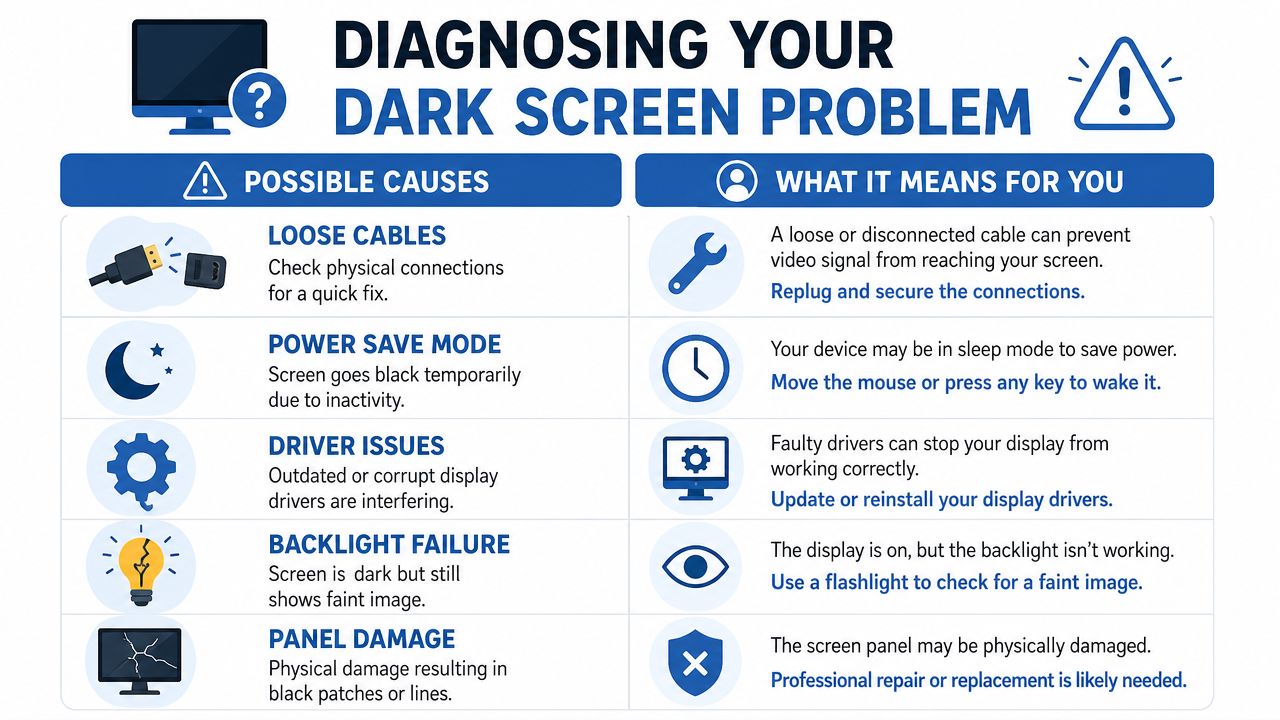
Diagnosing Your Dark Screen Problem
Before you bring out soap and a hose, look at the mesh in direct daylight. Most “black screen” complaints we see on windows fall into three buckets. The fix depends on which one you have.
Built-up dirt and desert residue
This is the most common and the most fixable. Dust settles into the mesh, then moisture from sprinklers, monsoon humidity, or light rain helps it cling. Over time, the screen stops looking like a fine grid and starts acting like a filter packed with grime.
Common signs include:
- A dull gray or black film that's heavier near the bottom of the frame
- Dirty runoff marks where water has hit the screen before
- Clearer spots after a fingertip swipe, which usually means surface contamination
If you also notice grime collecting at the sill or corners, there may be a larger moisture and debris issue around the window assembly. These Moore Construction Co. window tips are useful for understanding how moisture patterns around windows can add to residue problems.
Screens that are dark by design
Some homeowners think the screen keeps going black when the screen is doing its job. Certain sun shades and darker screen materials are designed to appear dark from specific angles to block light and add privacy, according to this angle-related screen discussion.
That matters in Arizona, where solar screens are common. They reduce glare and help with heat, but they also change how the view looks from inside. If the darkness is uniform and the mesh is still flexible, intact, and clean, you may not have a cleaning problem at all.
A screen that looks dark from one room angle and normal from another may be behaving as designed.
Material failure from sun exposure
This often results in wasted time. They keep washing a screen that isn't dirty enough to explain the problem. The mesh has aged out.
Look closely for these clues:
| What you see | What it usually means |
|---|---|
| Chalky residue on the mesh or frame | Surface breakdown from sun exposure |
| Brittleness when touched | The material has dried out and weakened |
| Tiny tears or pinholes | The mesh has lost integrity |
| Permanent discoloration after washing | Cleaning won't restore it |
If the surrounding area also shows stubborn organic buildup, this guide on mildew on a windowsill can help you separate screen issues from frame and sill contamination.
Effective DIY Screen Cleaning Techniques
When the mesh is dirty but still sound, a careful cleaning can make a big difference. The key is matching the method to the level of buildup. Most mistakes happen when people jump straight to aggressive scrubbing or high-pressure rinsing.
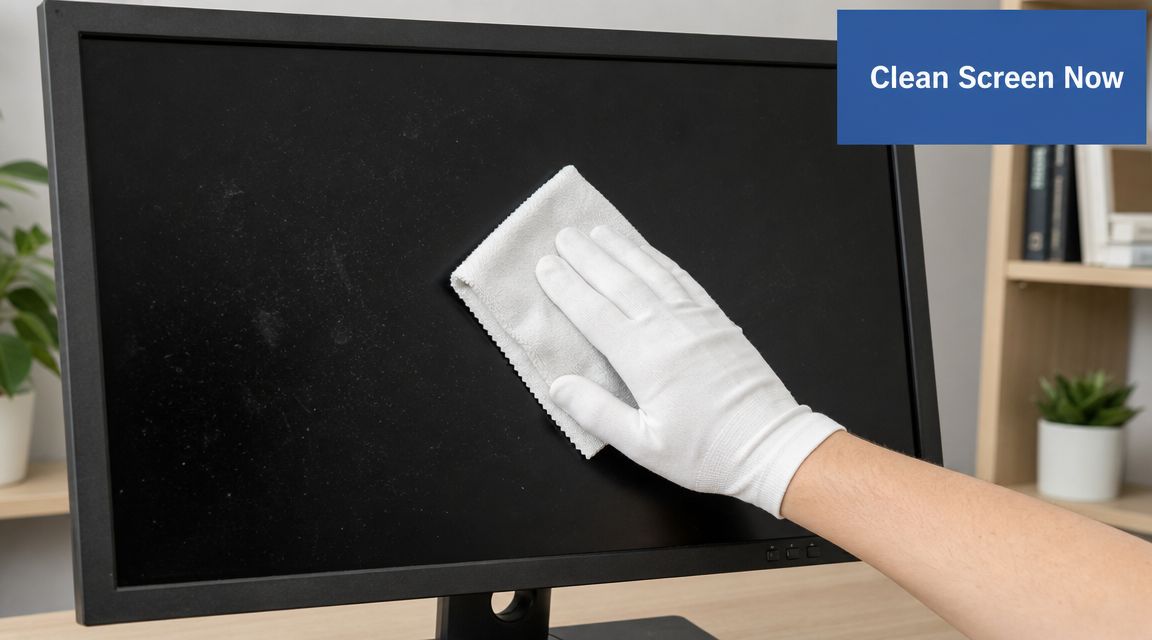
Start dry when the dust is light
If the screen looks dusty but not caked, stay dry first. That keeps loose Arizona dust from turning into mud and spreading into the frame corners.
Use simple tools:
- Microfiber cloth for light surface dust
- Soft-bristle hand brush to loosen debris from the mesh
- Vacuum with a brush attachment if you want to pull dust away instead of pushing it around
Work from top to bottom on both sides. Support the screen with your free hand so you don't bow the frame or stretch the mesh. If the screen flexes too much, ease up.
A light maintenance clean often works better than an occasional deep attack. Once dirt gets wet and bakes back in, it's harder to remove cleanly.
Use soap and water for heavy buildup
If the mesh looks dark from packed dust, pollen, or sticky grime, remove it and wash it flat. A driveway, patio table, or pair of sawhorses works well as long as the surface is clean.
Follow this order:
- Remove the screen carefully. Don't bend the frame at the corners.
- Lay it flat. Flat support keeps pressure even while scrubbing.
- Mix mild dish soap with warm water. Keep it gentle.
- Scrub with a soft brush. Work both sides with light pressure.
- Rinse with a garden hose on low pressure. High pressure can stretch or tear mesh.
- Let it air dry fully before reinstalling. Trapped moisture can encourage mildew.
For homeowners who want another practical walkthrough, this easy way to clean window screens from Sparkle Tech Screen Service is a solid reference for basic handling and cleanup.
Field note: If dirty water runs black on the first rinse and clears up after a gentle second pass, you're likely dealing with surface buildup, not failed material.
What doesn't work well
Some cleaning habits create more problems than they solve.
- Pressure washers can damage mesh and loosen spline
- Stiff deck brushes can fray older screens
- Bleach-heavy mixes may discolor parts and dry materials out
- Scrubbing in place while the screen is installed often pushes grime deeper into tracks and sills
If you want a more complete maintenance approach, this guide on how to clean window screens covers handling, drying, and routine care in more detail.
A quick visual demo can also help if you're deciding whether to tackle the job yourself.
A simple decision point
After the screen dries, hold it up to the light. If the view is clearer and the mesh looks even, the cleaning worked. If it still looks dark, chalky, or blotchy, stop scrubbing and move to diagnosis for material failure.
When Cleaning Is Not Enough
A dark screen that stays dark after a careful wash usually isn't dirty anymore. It's worn out. That's the distinction many homeowners miss, and it matters because over-cleaning a failing screen often finishes the job the sun already started.
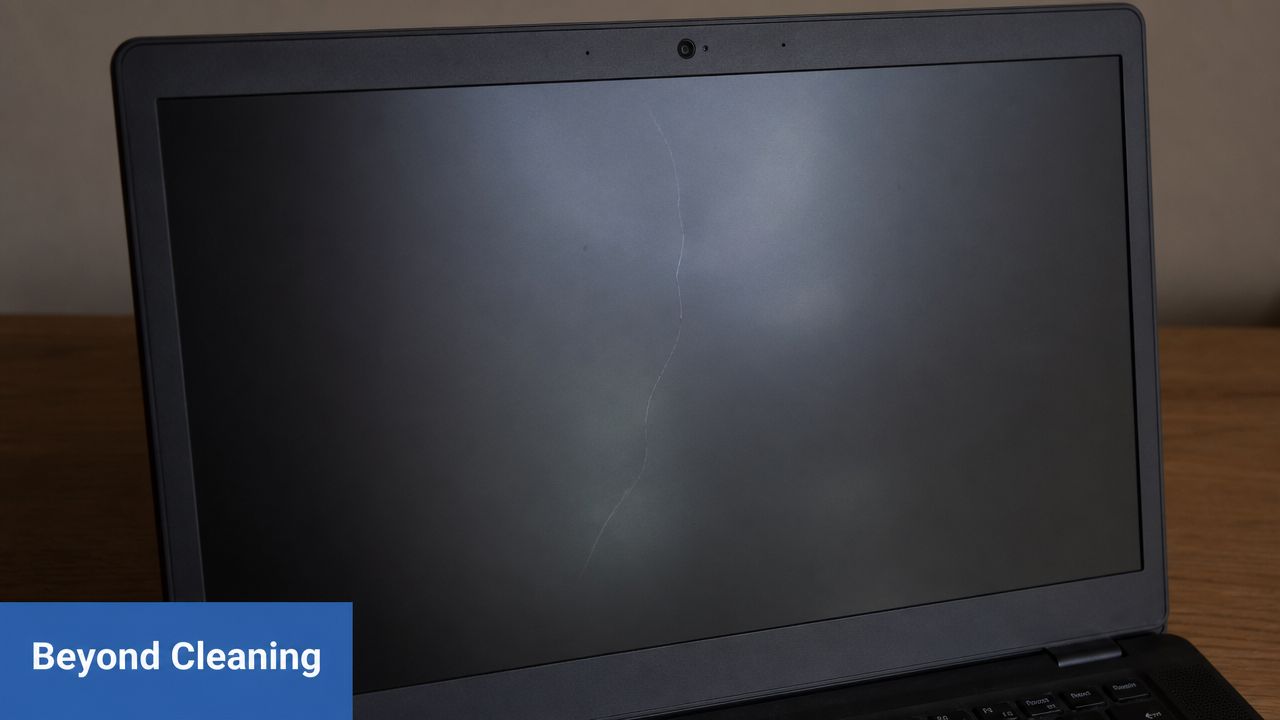
A useful way to think about it comes from a broader troubleshooting idea. A black screen can be a symptom with multiple causes, from a simple settings issue to hardware failure, as explained in this Ask Leo discussion of black screen causes. Window screens work the same way. Sometimes the problem is surface dirt. Sometimes the material itself has failed and needs replacement.
Signs the mesh has reached the end
A failed screen usually gives you more than one warning sign:
- The mesh feels brittle instead of flexible
- The color looks faded or uneven even after drying
- A chalky film returns after cleaning
- Small holes appear near corners or stress points
- The screen sags or tears easily during normal handling
These aren't cosmetic annoyances. They affect visibility, airflow, insect protection, and how the whole window looks from indoors.
Why more scrubbing makes it worse
Older mesh doesn't respond like healthy mesh. Brushes catch it more easily. Water pressure opens weak spots. Pulling the screen in and out of the frame can twist corners or widen tears.
If a screen still looks black after a careful cleaning and drying cycle, cleaning is no longer the fix.
At that point, replacement is usually the smarter move. Fresh mesh restores the view, and it also avoids the cycle of repeated cleaning on material that won't recover. If you're weighing repair parts or a full re-screen, this screen kit guide can help you understand the pieces involved before you decide.
The Professional Touch for Screens and Windows
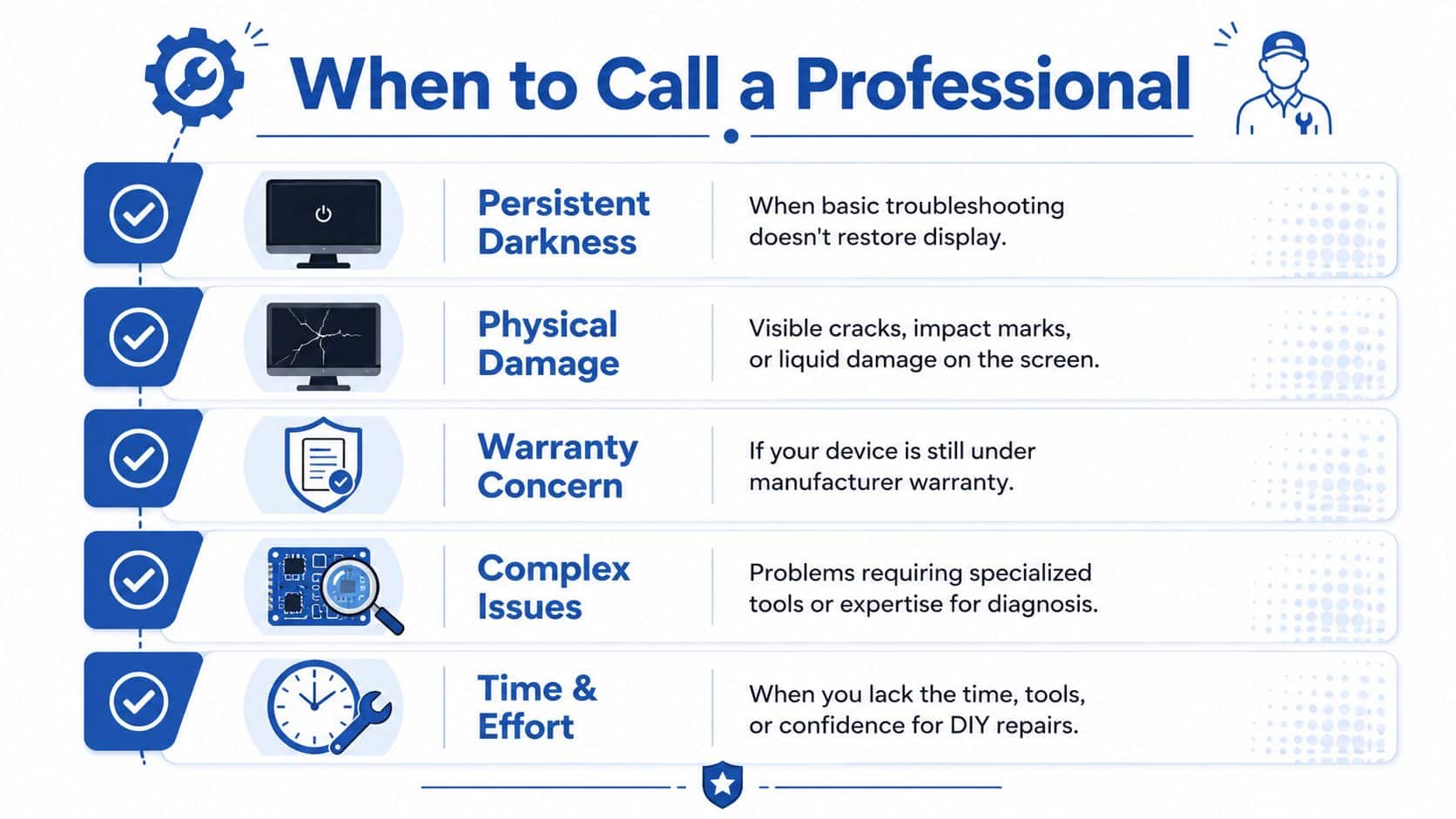
A lot of Arizona screen problems look simple from the patio. Then the screen comes out of the frame, the mesh starts shedding black residue onto your hands, and the job turns into something else.
That is usually the point where a professional visit saves time and prevents damage.
On service calls, we are not just washing mesh. We check whether the dark look is coming from packed-in desert dust, oxidized screen material, bent frames, dirty tracks, or glass haze behind the screen. In Phoenix-area homes, it is often a combination. Fine dust settles into the weave, intense sun cooks older mesh, and homeowners end up cleaning the same screen over and over without getting a clear result.
What a professional process changes
A good service visit improves the full window opening, not just the screen panel.
| Area | What gets addressed |
|---|---|
| Screen condition | Embedded dust, weakened mesh, tears, loose spline, and frame wear |
| Glass visibility | Dirt and mineral film on the window behind the screen |
| Tracks and edges | Packed debris that blows back onto clean screens |
| Access problems | High windows, wide openings, and screens that are hard to remove safely |
That fuller approach matters because a dark screen complaint is often a stacked problem. The mesh is dusty. The tracks are holding grit. The glass behind it has a dull film. Clean one layer and the whole window still looks dark from inside.
Where outside help makes sense
Professional help makes sense when the work carries some risk, or when the screen is past the point where cleaning will help.
- The screens are on upper floors and access is awkward or unsafe
- The mesh leaves black residue on your hand or looks sun-burned after cleaning
- The frames are warped or stuck and can bend during removal
- The property has many windows and screen, glass, and track cleaning need to be done together
- You need re-screening or replacement decisions instead of another round of scrubbing
At South Mountain Window Cleaning, LLC, we see this a lot on homes and commercial properties across the Phoenix area. A screen that "keeps going black" may only need a proper wash. It may also be worn out from years of UV exposure and ready for new mesh. That distinction is what generic cleaning advice usually misses.
The practical takeaway is simple. If the darkness comes from Arizona dust, careful cleaning usually fixes it. If the mesh itself has gone chalky, brittle, or permanently dark from sun damage, replacement is the better repair.