
There’s nothing quite like the feeling of having freshly cleaned windows, but if you forget the screens, you’re only doing half the job—especially out here in dusty Phoenix. At South Mountain Window Cleaning, we know the best approach is a simple one: take the screens off, give them a gentle scrub with a mild soap and water solution, rinse them well, and let them air dry completely. It’s a straightforward process that improves your view, boosts your home’s curb appeal, and even helps your indoor air quality.
Your Guide to Crystal-Clear Window Screens
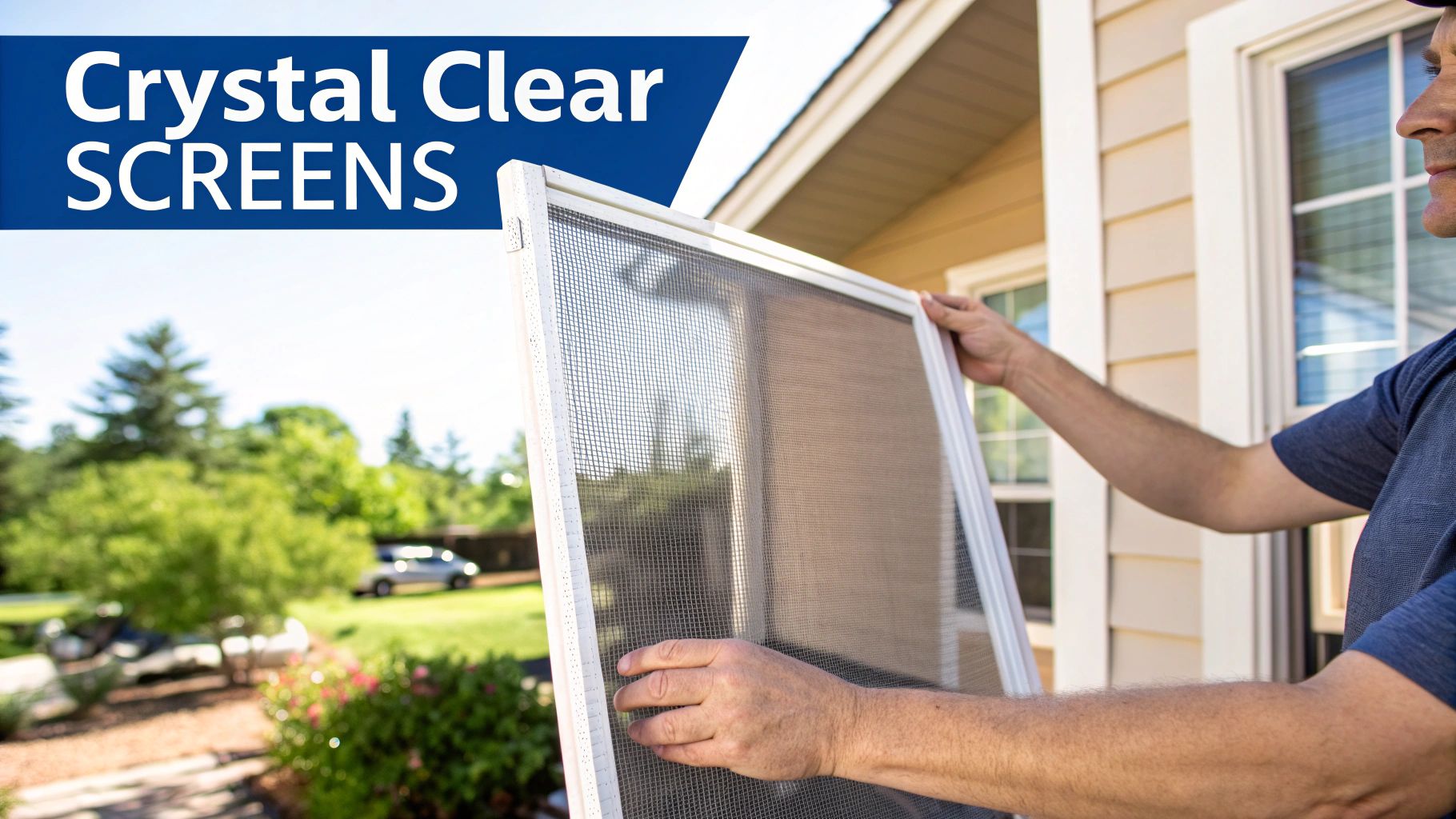
It’s easy to overlook your window screens, but they do more than just block your beautiful Arizona views when they’re dirty. They act as a filter, catching all the dust, pollen, and debris that would otherwise find its way into your home. As that grime builds up, it can seriously restrict airflow and dim the natural light that makes your space feel bright and open.
Here in places like Scottsdale and Paradise Valley, that desert dust is a constant battle. That makes regular screen cleaning an essential part of keeping your home looking and feeling its best. A good wash doesn’t just make things look cleaner; it actually helps your screens last longer by getting rid of the gunk that can wear down the mesh over time.
Why Screen Cleaning Matters in Arizona
Homes all across the Valley—from Gilbert to Tempe—are up against some unique challenges. The combination of intense sun and that fine layer of dust creates a stubborn film that can feel impossible to get off. This guide is all about giving you practical, real-world advice for cleaning the most common types of screens we see on residential, commercial, and even high-rise properties around here, like fiberglass, aluminum, and solar screens.
We’ll walk you through everything from the basic tools you’ll need to some pro-level techniques for getting a spotless finish. Of course, clean screens are just one part of the equation. For a complete picture, check out our in-depth guide on the best way to clean windows.
A clean screen is the first step to a truly clean window. It allows for maximum sunlight and fresh air, transforming the feel of any room without requiring a major renovation.
Whether you’re a serious DIYer or just looking to keep things tidy between professional visits from a team like ours at South Mountain Window Cleaning, these steps will help you get that flawless look. If you’re looking for a complete approach to making your glass sparkle, you might find these additional tips on how to get windows like new helpful, too.
Setting Up for a Mess-Free Cleaning Day
Before you get started, taking a few minutes to prep your workspace is going to make the whole job go a lot smoother and save you from cleaning up a bigger mess later. The idea is to create a simple, effective cleaning station that keeps your screens—and your property—safe and sound.
First, find a good spot to work. A flat, shaded area on your driveway, patio, or even a patch of lawn works great. Working in the shade is a big deal, especially under that intense Arizona sun. It stops your cleaning solution from evaporating the second it hits the screen, which is what causes those annoying soapy streaks. Also, make sure the area drains well so you don’t end up with a giant puddle or a mud pit.
Gathering Your Essential Supplies
Here’s the good news: you probably have everything you need lying around the house. No need for fancy, specialized equipment to get a professional-level clean.
Here’s a quick list of what to grab:
- A soft-bristle brush: A brush with gentle bristles is your best friend here. It’ll scrub away all that caked-on dust and grime without snagging or tearing the delicate mesh.
- Microfiber towels: Keep a few clean, dry ones handy for wiping down the frames and catching any drips.
- A bucket: One bucket for your soapy water is all you’ll need.
- Gentle dish soap: Just a few drops of a mild dish soap will create the perfect cleaning mix.
- A garden hose with a spray nozzle: A gentle spray or shower setting is key for rinsing without blasting a hole in your screens.
It can be tempting to grab a powerful chemical cleaner, but trust me, that’s a huge mistake. Harsh cleaners will eat away at fiberglass mesh, can discolor aluminum frames, and might even strip the protective coating right off your expensive solar screens.
A simple solution of warm water and a tiny bit of dish soap is the safest and most effective cleaner for pretty much every type of window screen out there. It’s gentle on the material but surprisingly tough on that stubborn Arizona dust.
The Importance of Safe, Gentle Cleaning Solutions
The move toward eco-friendly products isn’t just some trend; it’s about being practical and protecting the surfaces around your home. You can see this shift happening across the entire cleaning industry. The market for window cleaners, valued at USD 2.68 billion in 2023, is expected to shoot up to USD 5.34 billion by 2031. A big driver for that growth is the demand for green solutions that skip the harsh chemicals. You can read more about this trend in the full research on the window cleaners market.
If you’re looking for a DIY alternative for tougher spots like hard water stains, a 50/50 mix of white vinegar and water can work wonders. Just be sure to rinse it off completely when you’re done. When in doubt, always start with the gentlest method first. This approach guarantees your screens get clean without you accidentally damaging them, helping them last for years.
Cleaning Techniques for Different Screen Types
Not all window screens are created equal, and you can’t just use a one-size-fits-all cleaning method—that’s a fast track to causing damage. The screens on your Phoenix home have different needs based on what they’re made of. Getting that perfect, streak-free clean without stretching the mesh or ruining a protective coating is all about tailoring your technique.
For the most common types, a gentle touch is always best. When it comes to standard fiberglass and aluminum screens, the goal is to lift away dirt without getting too aggressive. You don’t need fancy chemicals; a simple mix of warm water with a few drops of mild dish soap creates a surprisingly powerful—and safe—cleaning solution.
Before you even get to washing, you have to get the screens off. This infographic breaks down how to remove them properly based on their design.
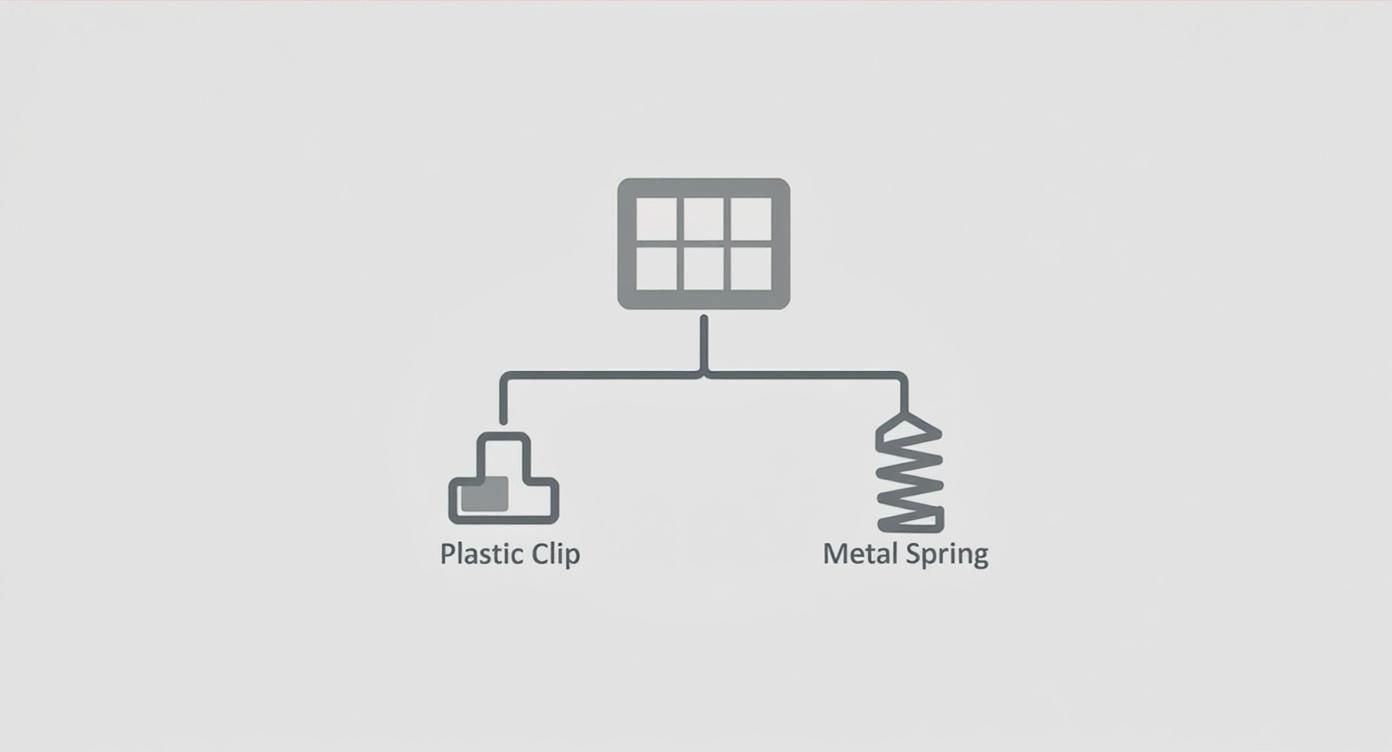
This little guide is a lifesaver. It shows you whether you’re dealing with clips or springs, which dictates the right removal technique and helps you avoid accidentally bending a frame.
Handling Standard Fiberglass and Aluminum Screens
Once you’ve got your fiberglass or aluminum screens out and laid flat, it’s time for the wash. Dip a soft-bristle brush into your soapy water and gently scrub the entire surface. We find that working in overlapping, circular motions is the best way to loosen that stubborn desert dust and pollen that loves to get trapped in the mesh.
The key is to avoid pressing down too hard. You can easily stretch or even tear the material if you get carried away. Let the soap and bristles do the work for you. After scrubbing both sides, give the screen a thorough rinse with a garden hose on a gentle spray setting. You want to make sure every bit of soap residue is gone, because any soap left behind will just become a magnet for more dirt.
A More Delicate Approach for Solar Screens
Solar screens, which you see everywhere in sunny spots like Gilbert and Chandler for their UV-blocking magic, need a more delicate touch. These screens usually have a tighter weave and a special coating that can be damaged by harsh scrubbing or chemicals. The same mild dish soap and water solution is perfect, but you’ll want to swap the brush for a soft sponge or a microfiber cloth.
Think of cleaning solar screens as wiping, not scrubbing. A gentle back-and-forth motion is all it takes to remove dirt without hurting the screen’s effectiveness. Too much pressure can actually strip off that protective coating, which reduces its ability to block heat and UV rays.
Keeping these specialized screens in top shape is crucial. If you want to get into the weeds on their care, check out our professional guide to sun screen cleaning in Phoenix, Arizona.
Tackling Stubborn Arizona Grime
Sometimes, a basic wash just won’t cut it against caked-on grime or those pesky hard water spots. For those tougher jobs, a 50/50 solution of white vinegar and water works wonders. Just spray it directly onto the problem areas, let it sit for about five minutes to dissolve the mineral deposits, and then give it a gentle scrub before rinsing completely.
The science behind screen cleaners has actually come a long way. Many new formulas focus on biodegradable, non-toxic ingredients that cut through dust without leaving streaks or damaging delicate materials. Even though many of these products are for electronics, the core idea of using non-abrasive, residue-free agents is exactly what we’re doing here. This is why a simple soap or vinegar solution works so well—it cleans thoroughly without causing any harm.
Drying and Reinstalling Screens Like a Pro
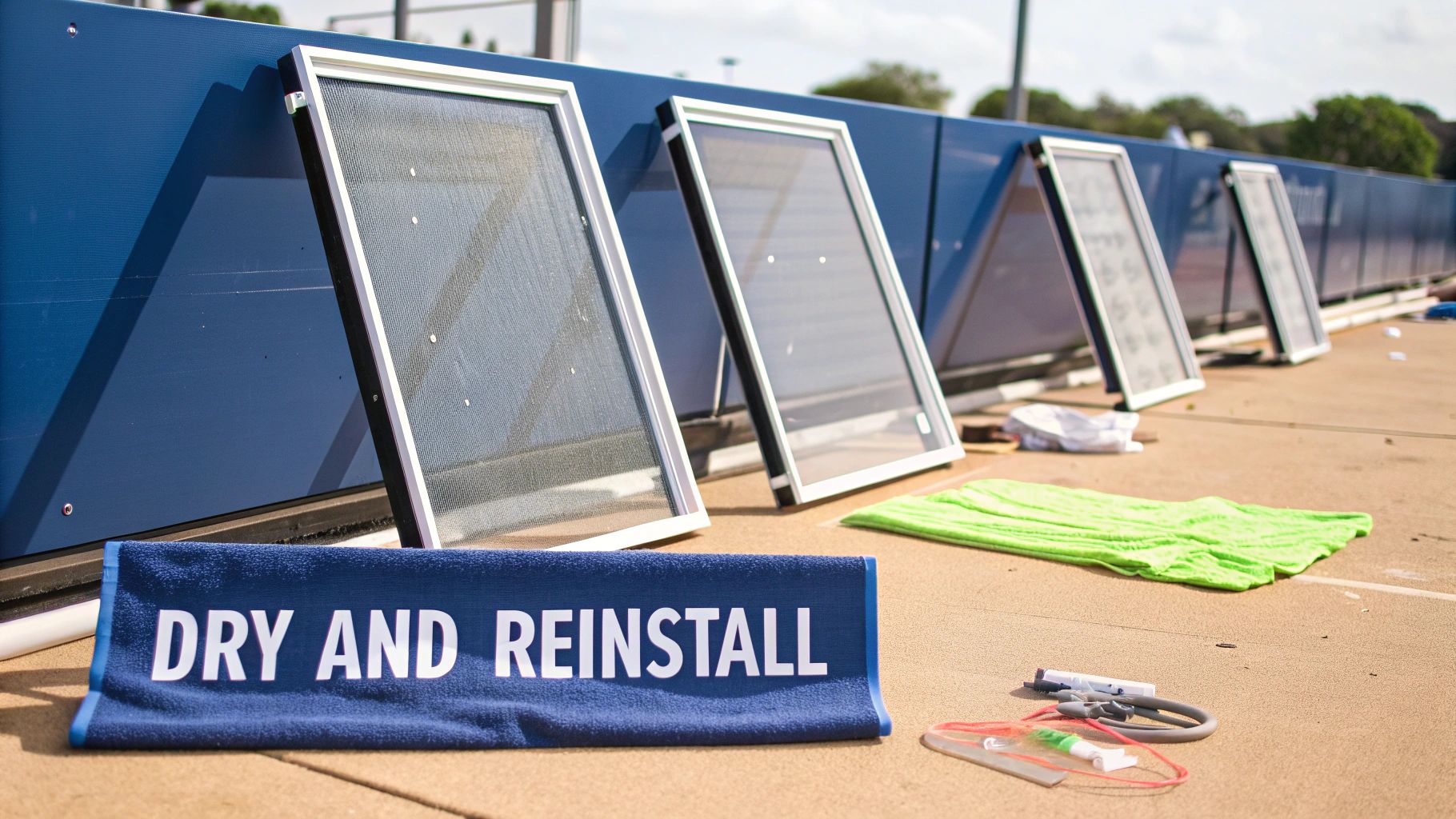
After you’ve given your screens a good wash, it’s easy to want to rush through the last few steps. But trust me, how you dry and reinstall them is just as crucial as the cleaning itself. If you don’t dry them properly, you can end up with frustrating issues like sagging mesh or even warped wooden frames. Rushing now can completely undo all that hard work.
The best way to do it? Just let them air-dry completely. This is the gentlest approach and it makes sure the screen mesh keeps its tension without any risk of damage from heat or aggressive wiping. Give them a good shake to get rid of excess water and find a safe spot for them to rest.
You can prop them up against a wall or lay them flat on a clean surface, like a towel on your patio. The important thing is that air can circulate around both sides of the screen. Here in the Arizona sun, this usually only takes an hour or two.
Final Inspection and Minor Repairs
Before you pop those screens back into the window frames, take a minute for a quick once-over. This is the perfect time to catch small issues before they become big headaches that let pests sneak inside. Look closely at both the mesh and the frame.
Here’s what our team always looks for:
- Small Tears or Holes: Even a tiny rip can easily get bigger over time.
- Bent Frames: A slightly bent aluminum frame can often be gently straightened back into shape.
- Loose Splines: Check that rubber gasket holding the screen in place. Sometimes it can pop out of the frame’s channel.
Finding a small tear doesn’t mean you need to run out and buy a whole new screen. Most hardware stores sell simple screen repair kits that are incredibly easy to use. These kits usually come with a small patch that you can apply in minutes, saving you from a much bigger bill down the road.
Don’t skip the final inspection. A two-minute check while the screen is out can save you the headache of finding pests in your home or having to replace a screen that could have been easily repaired.
Reinstalling for a Perfect Fit
Once your screens are bone-dry and have passed your inspection, it’s time to put them back where they belong. If you paid attention to how they came out, reinstallation should be a pretty smooth process. The main goal is to get a secure, flush fit against the window frame.
Start by inserting the top of the screen into the upper channel of the window frame. Next, gently push the bottom of the screen toward the lower channel until you feel it click or settle snugly into place. If your screens have pull tabs or springs, use those to help guide it in securely.
Whatever you do, don’t try to force a screen into place. If it feels stuck, just take it out and try again. A properly seated screen won’t rattle and creates that perfect seal to keep your home comfortable and pest-free.
Maintaining Screens and When to Call for Help
Now that your window screens are sparkling, keeping them that way is all about simple, consistent care. A little routine maintenance goes a long way, especially here in the relentless Phoenix desert. Sticking to a schedule will prevent that heavy, caked-on buildup and make your next deep clean a whole lot easier.
We like to think of screen care in two parts: light dusting and deep cleaning.
A quick pass with a vacuum’s soft brush attachment or a dry microfiber cloth once a month can work wonders. This simple step grabs that loose layer of Arizona dust before it gets a chance to really stick.
For a deep clean like the methods we’ve already covered, you should plan on doing it at least twice a year. For anyone living in areas like Tempe or Chandler, a great rhythm is once after the spring pollen season and again after the summer monsoon storms have passed.
Knowing When to Call a Professional
While DIY cleaning is fantastic for most situations, some jobs are just better, safer, and more efficiently handled by the pros. It’s not about giving up; it’s about making the smart call to get a flawless finish without risking your safety or your property.
You should definitely consider calling for help in these common scenarios:
- Hard-to-Reach Windows: Any screens on a second story or higher are a serious safety risk. Our professional team at South Mountain Window Cleaning has the right ladders, safety gear, and training to handle residential, commercial, and even high-rise jobs without any drama.
- Severe Oxidation: If your older aluminum screens have that chalky, white film that just won’t wash off, that’s oxidation. A professional service has access to specialized products that can often restore them, saving you from a full replacement.
- Stubborn Contaminants: Screens caked with paint overspray, artillery fungus, or other nasty gunk often require more than just soap and water.
- You’re Just Plain Busy: A thorough screen and window cleaning can easily eat up an entire weekend. If your schedule is packed, hiring a pro is the most efficient way to get it done right.
The decision to hire a professional often comes down to two things: safety and results. For high-rise buildings in Phoenix or homes with tricky window setups, the expertise of a trained team is invaluable.
The professional window cleaning industry is a huge part of the cleaning services market, which was valued at around USD 55.7 billion worldwide back in 2020. The industry depends on experienced pros to tackle demanding jobs safely. In fact, across the US and Canada, the average age of a window cleaner is 48—that speaks volumes about the level of experience needed to handle complex jobs correctly.
Ultimately, if a screen is damaged beyond what a simple wash can fix, it needs more than just a cleaning. If you spot significant tears or bent frames during your inspection, it’s probably time to look for professional window screen repair services.
For a comprehensive clean that covers both the screens and the glass, our guide on how to do your own window cleaning in Phoenix has some great extra tips. But when the job feels too big or too high, South Mountain Window Cleaning is always ready to step in.
Common Questions About Cleaning Window Screens
Even with the best instructions, you’re bound to have a few questions when you tackle a job like this. We get it. Homeowners all over the Phoenix area run into the same little snags, from dealing with stubborn mineral stains to just figuring out how often they really need to do this.
Here are the answers to the questions our team hears the most.
Is It Okay to Use a Pressure Washer on My Screens?
Please don’t. While it seems like a great shortcut, a pressure washer is just way too aggressive for any kind of window screen. It’s the fastest way to stretch, rip, or otherwise ruin the mesh.
This is especially true for solar screens. That high-pressure blast can literally strip off the protective UV coating, which completely defeats their purpose. All you really need is a regular garden hose with a gentle spray nozzle—it’s more than enough to get the job done safely.
Pro Tip: When you’re rinsing your screens, think more along the lines of watering a delicate flower, not blasting grime off your driveway. A light shower setting will wash away soap and dirt without damaging the mesh or the frame.
How Often Should I Clean Screens in Arizona?
Living in the Valley, a good, deep cleaning twice a year is the sweet spot. We usually suggest doing it once after the spring pollen dies down and again after the summer monsoons are over. This clears away the worst of the buildup before it can cause any real problems.
Of course, a little upkeep between those deep cleans makes a huge difference. Every month or two, give them a quick pass with a vacuum’s soft brush attachment. It’ll keep the dust from piling up and make your big cleanings go much, much faster.
What’s the Best Way to Get Rid of Hard Water Stains?
Ah, the dreaded hard water spots. Those chalky white marks are a fact of life here, but they aren’t impossible to remove. The best trick we’ve found is a simple 50/50 mix of white vinegar and distilled water.
Put the solution in a spray bottle and hit the stained areas directly. Let it sit for about five minutes. That gives the acid in the vinegar enough time to work its magic and break down those mineral deposits.
After it’s had a chance to soak, give it a gentle scrub with a soft brush and rinse the screen completely with your hose. Just make sure you don’t let the vinegar mixture dry on the screen, as that can create a whole new set of problems.
Why Do My Screens Still Look Dirty After I’ve Washed Them?
This is a really common one, especially with older screens that have been baking in our sun for years. If you’ve scrubbed them well and they still look faded or grimy, the issue probably isn’t dirt at all.
There are a couple of things that could be happening:
- Oxidation: If you have older aluminum screens, they can develop a chalky, grey film. That’s a chemical reaction happening to the metal itself, and you can’t just wash it off.
- Sun Damage: Fiberglass screens get brittle and discolored over time from constant UV exposure. That faded look is permanent damage to the material, not a layer of dirt.
If a second, more focused cleaning doesn’t change anything, the screen material itself has likely just reached the end of its life. At that point, your best bet for getting that clear view back is to look into getting them replaced.
When the DIY approach just isn’t cutting it, or you’re dealing with second-story windows that are a pain to reach, it’s time to call in the pros. For a perfect, streak-free clean for both your windows and screens anywhere in Phoenix, Scottsdale, Paradise Valley, Chandler, Tempe, and Gilbert, give South Mountain Window Cleaning a call for a fast, free quote. Check us out at https://www.southmountainwindowcleaning.com.