

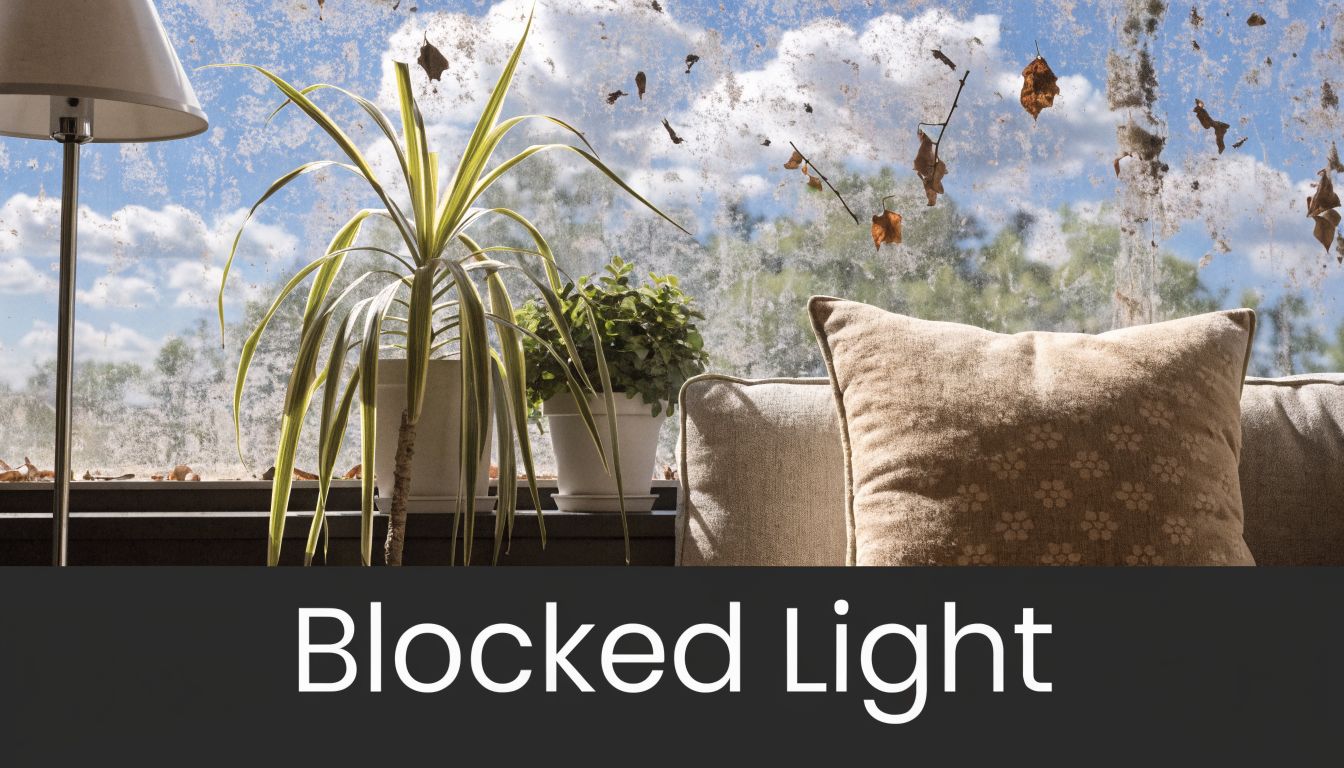
You open the blinds in the morning expecting that sharp Arizona sun to flood the room, and instead the light looks tired. The glass may be fine. The actual issue is often sitting right in front of it: a screen coated with desert dust, pollen, and the chalky residue our water leaves behind.
In Phoenix, Scottsdale, Paradise Valley, Chandler, Tempe, and Gilbert, screen light drops fast when screens get neglected. A thin layer of buildup softens the view, dims natural light, and makes the whole room feel flatter than it should. Clean screens don't just look better. They let your windows do their job.
Brighten Your Home The Right Way
A lot of homeowners assume dirty windows are the whole issue. Then you remove one screen and hold it next to an uncleaned one. The difference jumps out immediately. The screened opening with less dust looks brighter, sharper, and more open, even before the glass gets touched.
That matters in Arizona homes where natural light does a lot of work. It makes living rooms feel bigger, keeps kitchens from feeling closed in, and gives indoor plants a better shot near the window. When screens get packed with grime, they turn into a filter you never wanted.
What Arizona does to your screens
Phoenix-area screens deal with a rough mix of conditions:
- Fine dust: It settles into the mesh and hangs on after windy days.
- Pollen and organic debris: It sticks to corners, spline channels, and lower screen edges.
- Hard water: A quick hose-off often leaves mineral spotting once the water dries.
- Relentless sun: UV exposure fades mesh and can make older material stiff and brittle.
Practical rule: If a room still feels dull after the blinds are open, inspect the screen before assuming you need different glass, paint, or lighting.
Sometimes homeowners pair screen maintenance with bigger upgrades to bring in more daylight. If you're comparing larger window styles, this guide on upgrading to energy-efficient bow windows is a useful companion because it looks at how window design changes light and comfort. And if you want a broader look at why glass and screen care matter together, this overview of the benefits of clean windows connects the dots well.
Screen light is part of the view
People talk about clear glass all the time. They don't talk enough about the screen sitting inches away from it. In practice, screen light is the amount of usable natural light and clarity that makes it through the mesh and into your living space.
When the screen is clean, straight, and still structurally sound, your home feels brighter without changing anything else. That's the right place to start.
Your Step-by-Step Screen Cleaning Method
A good screen cleaning job is simple, but it isn't careless. In Arizona, the main mistake is blasting screens with too much pressure and then letting hard water dry on them. That leaves you with stretched mesh, bent frames, or mineral spots that look worse than the dust you started with.
Set up before you wash
Remove the screen carefully and label it if you're doing several windows. Painter's tape on the frame works well, especially when multiple screens are similar in size. Lay each screen on a clean, flat surface like a patio slab, garage floor, or a moving blanket on the driveway.
Use a basic kit:
- Bucket with mild dish soap: A few drops is enough.
- Soft-bristle brush: Upholstery brushes and soft hand brushes are safer than stiff deck brushes.
- Microfiber cloths: For final wiping and edge cleanup.
- Gentle hose nozzle: You want flow, not force.
Avoid power washers completely. They can tear mesh, loosen spline, and twist lightweight aluminum frames.
The cleaning order that works
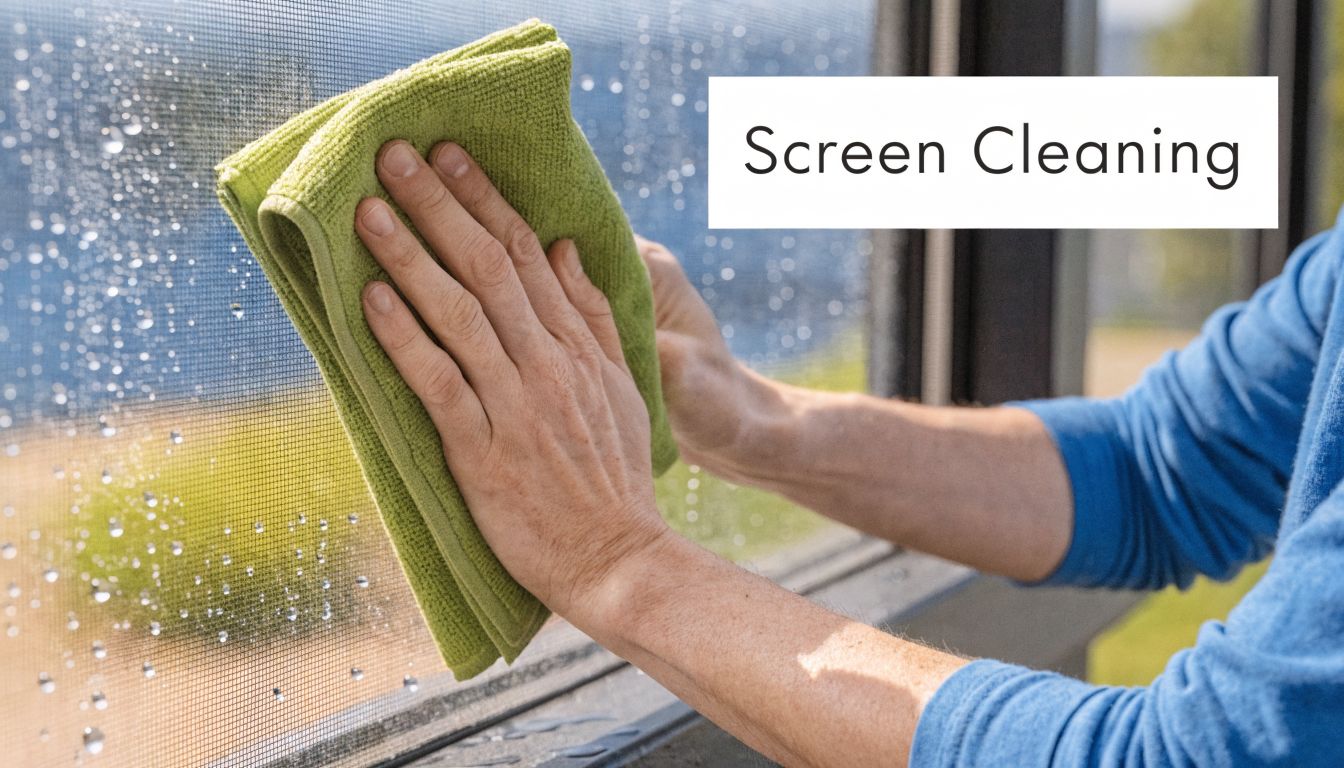
Start dry if the screen is heavily dusty. A soft brush or microfiber cloth removes loose debris before water turns it into mud. Then wash both sides with soapy water, brushing from top to bottom so you aren't dragging dirt back into clean areas.
Use light pressure. You're trying to lift dirt from the mesh, not press the mesh out of shape.
- Brush off loose debris first: Focus on corners and bottom rails where dirt packs in.
- Wash the front side: Short strokes are easier to control than broad scrubbing.
- Wash the back side: Dust often clings there too, especially on windows facing traffic or open desert.
- Rinse gently: Let the water carry soap away instead of forcing it through the mesh.
- Dry before reinstalling: A microfiber wipe helps prevent spotting.
For homes with large patio enclosures or specialty screening, this article on cleaning lanai screens without damage is worth reading because the same low-pressure approach applies.
Wet screens should dry in shade when possible. Direct heat can bake mineral residue onto the surface if your rinse water isn't ideal.
A more detailed walkthrough on how to clean window screens properly is helpful if you're doing the whole house at once and want a repeatable process.
What to watch for while cleaning
Cleaning is also inspection time. Look at the screen under light and check for pinholes, slack mesh, corner separation, and brittle spots. If the mesh feels stiff or cracks when handled, washing won't solve the underlying problem.
This quick video gives a useful visual on gentle technique and handling.
Where people usually go wrong
The biggest DIY errors are predictable:
- Too much pressure: It distorts mesh and weakens the screen.
- Dirty work surface: Grit under the frame can scratch or bend it.
- Reinstalling too soon: Damp edges collect fresh dust fast.
- Ignoring the frame track: A clean screen put back into a dirty track won't stay clean long.
If you stay gentle, stay organized, and keep hard water in mind, you can get very solid results on reachable screens.
Troubleshooting Common Screen Damage
Some screen problems are cosmetic. Others cut down screen light, weaken the frame, or let bugs in. The trick is knowing which issues are worth repairing and which ones are just delaying replacement.
Small damage you can usually fix
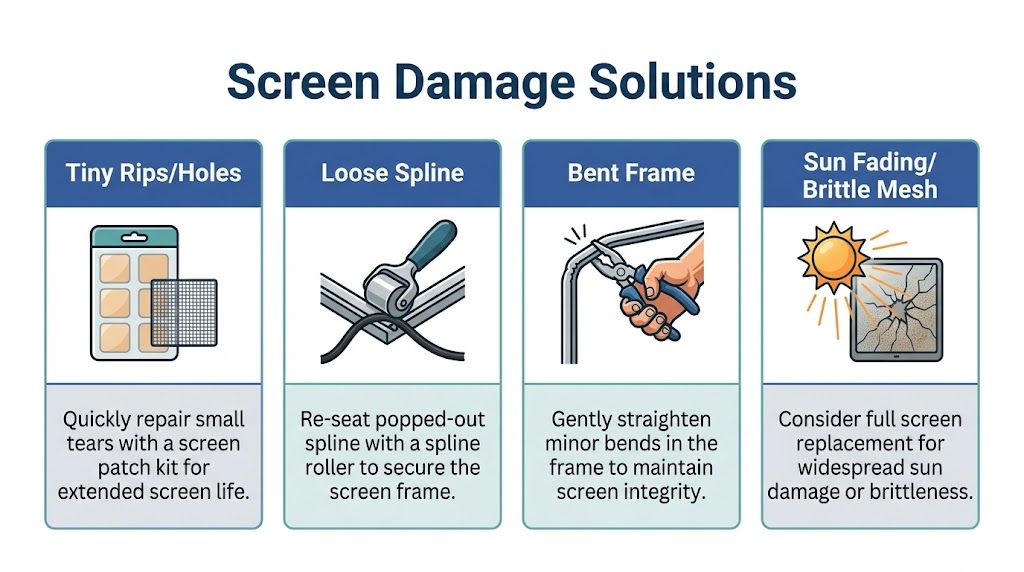
Tiny rips and pinholes are the easiest. A screen patch kit from a hardware store can work well when the rest of the mesh is still flexible and secure. Clean the area first, apply the patch carefully, and make sure it doesn't create a puckered spot that catches more dirt.
Loose spline is another common one. If the rubber spline has popped out in one section and the mesh itself still looks healthy, you can often re-seat it with a spline roller. Work slowly around the frame so you don't crease the material.
Damage that needs a closer look
Bent frames are more complicated. A slight bend can sometimes be straightened gently by hand or with padded pliers, but once a frame is badly tweaked, the screen may never sit right again. That means gaps, poor fit, and a rattling screen every time the wind picks up.
Sagging mesh usually points to age, poor tension, or a spline that has lost its grip. Re-splining can solve it if the material is still in good shape. If the mesh is faded and tired, re-splining old material often turns into a frustrating do-over.
If the screen no longer sits flat in the opening, don't force it. A tight fit in the wrong shape can damage the frame tabs or the window channel.
Sun damage is the Arizona deal-breaker
The harshest problem in the Valley is sun damage. Older mesh can bleach out, feel dry, and become brittle after long exposure on west-facing and south-facing windows. Once that happens, patches don't hold well and routine cleaning can make the weakness obvious.
Use this rule of thumb:
- Patch it if the hole is small and the surrounding mesh is still flexible.
- Re-spline it if the frame is sound and the mesh has loosened.
- Replace it if the material is brittle, cracking, or failing in several areas.
If you're dealing with a screen door rather than a standard window screen, the repair logic changes a bit because door screens take more impact and more frame stress. This guide on screen door care and repair is a practical next step.
A repaired screen should restore both function and appearance. If the fix leaves it warped, patchy, or noticeably darker in one area, replacement is usually the better call.
Choosing Screens for Maximum Light and Durability
When replacement time comes, material choice matters more than is typically expected. The right screen depends on whether you care most about maximum natural light, toughness, or heat control on a sun-beaten side of the house.
Standard fiberglass is the common default because it's affordable and easy to work with. It does the job, but it isn't always the best choice for a homeowner trying to improve screen light. High-visibility mesh gives a cleaner, less obstructed look, while solar screen fabric trades some visible light for shade and comfort.
Comparing the common options
| Material Type | Natural Light | Durability | Best For |
|---|---|---|---|
| Standard fiberglass | Good | Good | Everyday window screening on most homes |
| High-visibility mesh | Very good | Moderate | Homeowners who want a clearer view and brighter rooms |
| Aluminum mesh | Good | Moderate to good | Areas where rigidity matters and a crisp fit is important |
| Solar screen fabric | Lower visible light | Good | West-facing and south-facing windows with heavy heat load |
The trade-off most people miss
A brighter screen isn't always the better screen. On a room that already gets hammered by afternoon sun, a high-visibility mesh can bring in more daylight but also more heat and glare. In those locations, many homeowners prefer the balance that solar screens offer.
That same trade-off shows up in projection and display work too. Guidance on ambient-light-rejecting screens and room placement makes a smart point: material alone doesn't solve everything. Placement and the direction of incoming light matter just as much. Window screens are similar. The best mesh on the wrong exposure can still disappoint.
Think about the whole opening
If you're considering larger screened outdoor living areas, this overview of adding a screen room to your home helps frame the durability-versus-comfort decision at a bigger scale. For porches and patios, this guide to the best screen options for porch use is also useful.
Choose based on how the window is used. Bedroom windows, patio-facing living room windows, and west-facing office windows often need different answers. The goal isn't to buy the fanciest mesh. It's to match the material to the light, exposure, and wear that window receives.
DIY Cleaning vs Professional Screen Service
DIY works fine for a few easy screens. If you've got a single-story home, stable footing, and enough space to wash and dry screens properly, handling the simple ones yourself makes sense.
The calculation changes when screens are high, oversized, fragile, or spread across an entire property. That's where time, safety, and finish quality start to matter more than the idea of saving a little effort.

What DIY does well
Homeowners can usually manage:
- Ground-floor screens: Especially on accessible patios and front rooms.
- Light dust removal: If buildup hasn't baked on.
- Minor spot checks: Catching little tears before they grow.
That said, many people underestimate how quickly a simple screen cleaning day turns into ladder work, frame sorting, hose management, drying space issues, and reinstallation mistakes.
Where pros make the biggest difference
Professional service is strongest when access or finish quality becomes difficult. Multi-story homes in Scottsdale hillsides, larger homes in Paradise Valley, and commercial buildings in Phoenix often have screens that aren't safe or practical to handle casually.
A trained crew also knows how to avoid the common Arizona problems. Hard water spotting, frame damage, brittle mesh handling, and dirty track recontamination are all fixable with the right process. For commercial properties, there is another layer: appearance standards. Indoor digital displays maintain visual clarity at 800 to 1,500 nits in controlled environments, while outdoor LED displays often require 5,000 to 10,000 nits for visibility in direct sun, according to Colorlight's indoor LED brightness guide and Colorlitled's outdoor LED brightness guide. In practical terms, dirt and residue on protective surfaces can noticeably hurt readability, especially on lower-brightness indoor screens.
Cleanliness matters more on moderate-brightness surfaces than many managers realize. A dusty storefront display or interior lobby screen can look dull long before the hardware is the problem.
Safety is the deciding factor
Second-story screens, awkward rooflines, and high-rise access should push the decision immediately toward professional help. No clean screen is worth a fall.
For building owners and facility managers, professional service also gives you consistency. The work gets done on schedule, the screens go back in correctly, and the property keeps its brighter, sharper look without pulling staff into side tasks they weren't hired to do.
Keeping Your Arizona Views Bright and Clear
The best screen light comes from three habits working together. Clean the screens before buildup hardens, repair small problems while they're still small, and replace worn material with a mesh that fits the room and exposure. That approach keeps the house brighter and avoids the slow decline that makes windows feel older than they are.
Arizona's climate is hard on screens. Dust gets everywhere, hard water leaves marks fast, and strong sun shortens the life of neglected mesh. But screens don't need complicated care. They need regular attention and a little judgment about when cleaning stops being enough.
LED technology itself has come a long way since the first visible-spectrum LED was invented in 1962 by Nick Holonyak Jr. at General Electric, and modern LEDs now use 10 times less energy than a conventional incandescent lamp, with LED lighting making up about 75% of the global lighting market as of 2024, according to this history of LED and LCD screens. But whether the light source is the sun outside your window or a display inside a storefront, dirty surfaces still get in the way of usable light.
If you'd rather spend your weekend enjoying the view than wrestling with screens in the driveway, getting expert help is the easiest path to a cleaner, brighter result.
South Mountain Window Cleaning, LLC helps homeowners, property managers, and businesses across Phoenix, Scottsdale, Paradise Valley, Chandler, Tempe, and Gilbert keep windows and screens looking their best. If you want cleaner screens, clearer glass, and safer service for hard-to-reach areas, contact South Mountain Window Cleaning, LLC for a fast quote.