

It’s a frustrating cycle, isn't it? You scrub what looks like mildew on your windowsill, and just a few days later, it’s back. That stubborn, recurring film is a sure sign you’re dealing with more than just a dirty sill—it’s an underlying moisture problem, and it’s turned your sills, frames, and tracks into a perfect home for fungus. As the trusted window cleaning experts for Phoenix and Scottsdale, South Mountain Window Cleaning is here to help you solve this issue for good.
Why Mildew Keeps Appearing on Your Windowsills
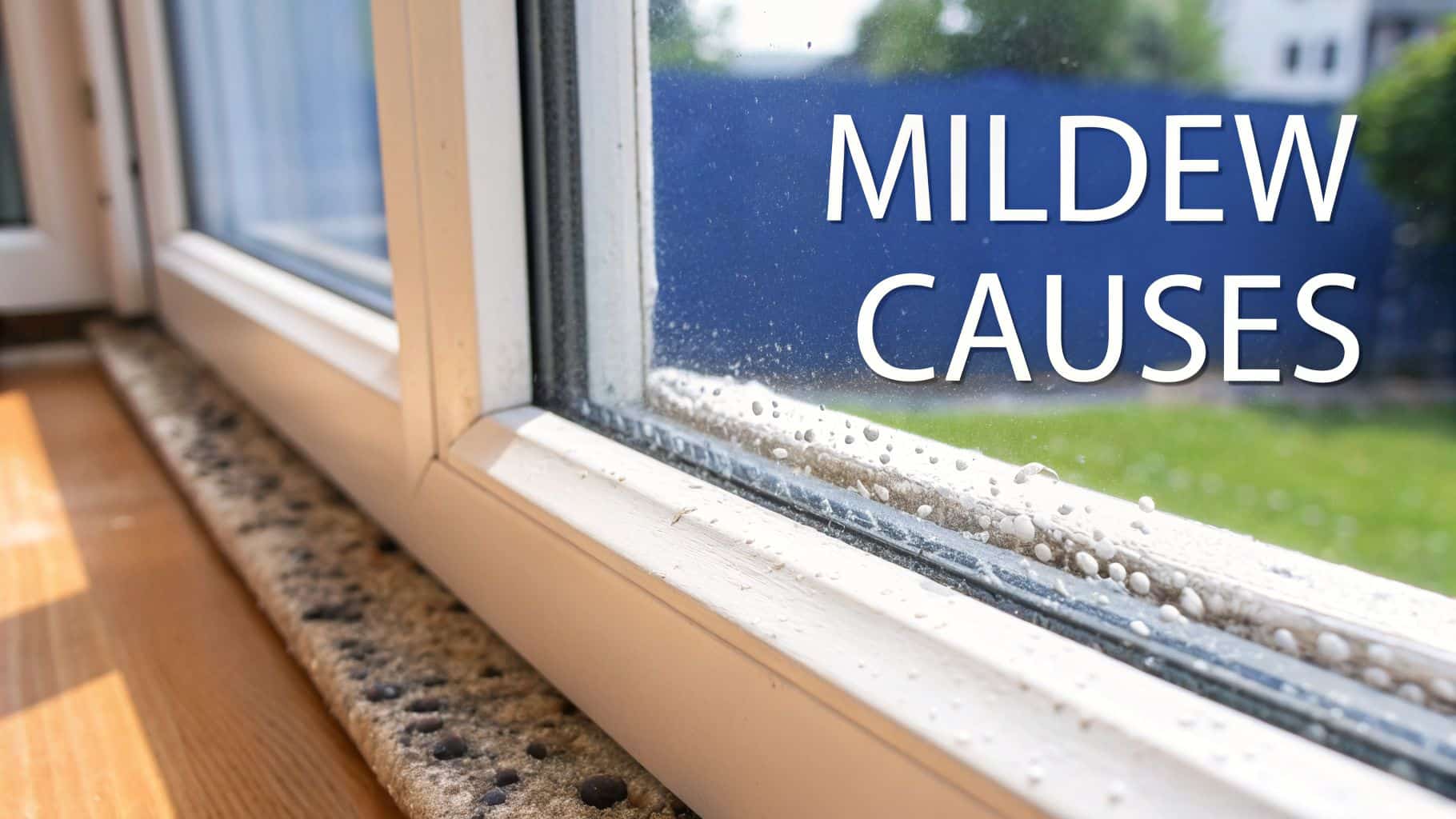
That dark film isn't just a sign that you missed a spot. It's a symptom of the environment right there on your window. Mildew is a fungus, and like any fungus, it needs two things to get going: moisture and organic matter to eat. Your windowsills, unfortunately, often serve up both on a silver platter.
As a window cleaning company serving Phoenix, Scottsdale, and across the valley, we see this issue constantly. The number one culprit is almost always condensation.
The Role of Condensation and Climate
Here in Arizona, the huge temperature difference between the blazing sun outside and your cool, air-conditioned home inside causes moisture to bead up on the glass and frames. We’ve all seen our windows "sweat." This condensation provides a steady water source for mildew spores just waiting to spring to life.
We see this problem peak during two specific times of the year:
- Summer Monsoons: That sudden jump in humidity outside clashes with the AC running full blast inside, creating a ton of condensation.
- Winter Mornings: Cool nights followed by warm, sunny days create a similar temperature battle on your glass, leaving moisture behind.
As experts in residential and commercial window care, we’ve found that over 80% of recurring mildew issues in the Phoenix area are directly linked to unmanaged window condensation. Ignoring it allows mildew to flourish.
Other Contributing Factors
Condensation is the main offender, but other issues can make your windowsills an even more inviting home for mildew. Poor ventilation is a big one. Stale, stagnant air, especially in humid rooms like bathrooms and kitchens, lets that moist air settle on cool surfaces—your windows being a prime target.
Then there’s the food source. An accumulation of dust, dirt, and other organic gunk gives mildew something to feast on. Things like dust, pollen, and even dead skin cells gather in the window tracks and on the sills, basically setting out a buffet. This is exactly why keeping your tracks clean is just as crucial as wiping the glass. For a closer look at that, check out our guide on how to clean window tracks and stop that buildup.
The material of your window frame also plays a part. Porous surfaces like painted wood can actually soak up moisture, letting mildew take root deep inside where it's much harder to get out. While vinyl and aluminum frames aren't porous, mildew can still thrive in the tiny crevices and along the caulk lines. Getting a handle on these causes is the first real step toward getting rid of that mildew for good.
Is It Mildew or Something More Serious?
Before you break out the cleaning supplies, you need to know exactly what you’re dealing with. That dark stuff on your windowsill might just be harmless mildew, but it could easily be a more serious type of mold. Figuring this out is the first and most critical step, because it tells you whether this is a DIY job or one for the pros.
Think of mildew as a surface-level problem. It typically looks powdery or a bit downy and shows up as gray, white, or sometimes yellowish patches. It’s the result of a little too much moisture, but it hasn’t set up a permanent home in your walls just yet. You can usually wipe it right off.
Mold is another story entirely. It's an invader. Mold often looks fuzzy or even slimy and comes in darker colors like black, green, or deep orange. The biggest difference is that mold grows roots, digging deep into porous materials like wood and drywall. This isn’t just a stain; it's a structural problem in the making.
Mildew vs Mold: A Quick Identification Guide
To give you a better idea, let's compare them side-by-side. As window cleaners working across the Valley, from Chandler to Tempe, we see both all the time, especially after a good monsoon season brings in that extra humidity. Knowing what to look for makes all the difference.
| Characteristic | Mildew | Mold |
|---|---|---|
| Appearance | Powdery or downy texture that lies flat on the surface. | Fuzzy, slimy, or velvety texture that can be raised. |
| Color | Typically gray, white, or yellowish. | Often dark green, black, red, or even orange. |
| Growth Pattern | Spreads outward across the surface of the sill. | Can grow in patches and may indicate penetration into the material. |
| Smell | Usually has a faint, musty odor. | Often has a stronger, more pungent and earthy smell. |
Being able to spot these differences is key. Mildew is mostly a cosmetic headache that you can handle yourself with the right techniques. If what you're seeing looks more like mold, especially the dark black kind, it’s time to proceed with caution.
The presence of black, slimy growth is a significant red flag. Certain types of black mold can pose serious health risks and often indicate a more substantial, hidden moisture problem that requires professional assessment and remediation.
If you’re seeing aggressive growth or anything that looks like the "mold" column above, your best bet is to pause the DIY project. For a much deeper dive into the risks, we explain how to handle black mold on window sills in our dedicated article. Taking a moment to properly identify the problem will help you make the right call for your home and your health.
Safely Removing Mildew from Your Windowsills
Alright, you’ve confirmed it's mildew on the windowsill. Good. Now it’s time to get that stuff off safely and make sure it doesn't come right back. This is more than just a quick wipe-down; we need to use the right approach to kill the fungus at its source without wrecking your sills.
Let's start by getting your supplies together. The good news is, you probably have most of what you need lying around the house.
The Best Cleaning Solutions to Use
For a lot of minor mildew on a windowsill, you really don't need to go nuclear with harsh chemicals. Our team at South Mountain Window Cleaning has seen simple DIY solutions work wonders for many homeowners in Gilbert and Paradise Valley.
- White Vinegar Solution: Just mix white distilled vinegar and water 50/50 in a spray bottle. It's our go-to starting point. The acetic acid in vinegar is great for killing surface mildew and making it harder for it to return.
- Hydrogen Peroxide: Got some tougher spots? A standard 3% hydrogen peroxide solution works well. Spray it on, let it bubble for about 10 minutes, and then wipe. It’s a natural anti-fungal and much gentler on surfaces than bleach.
Of course, you can grab a store-bought mildew remover. If you do, just make sure it’s safe for your specific windowsill material—whether that's wood, vinyl, or paint. No matter what you use, always test it on a small, hidden area first to be safe.
We strongly advise against using chlorine bleach on painted or wooden windowsills. It's an aggressive chemical that can discolor paint, damage the wood fibers underneath, and its fumes can be irritating. More importantly, it may not effectively kill the mildew's underlying roots.
Prepping the Area for Cleaning
Before you start spraying, a little bit of prep will save you a much bigger cleanup job later. Trust us on this. Just lay an old towel or some plastic sheeting on the floor under the window to catch any drips.
Next, and this is a step people always want to skip, grab a vacuum with a brush attachment. Use it to get all the loose dust and gunk out of the sill and track. If you don't, you’re just going to make a muddy paste when you add your cleaner.
The guide below is a quick reminder of what you’re looking for, confirming you're tackling the right problem before you get scrubbing.
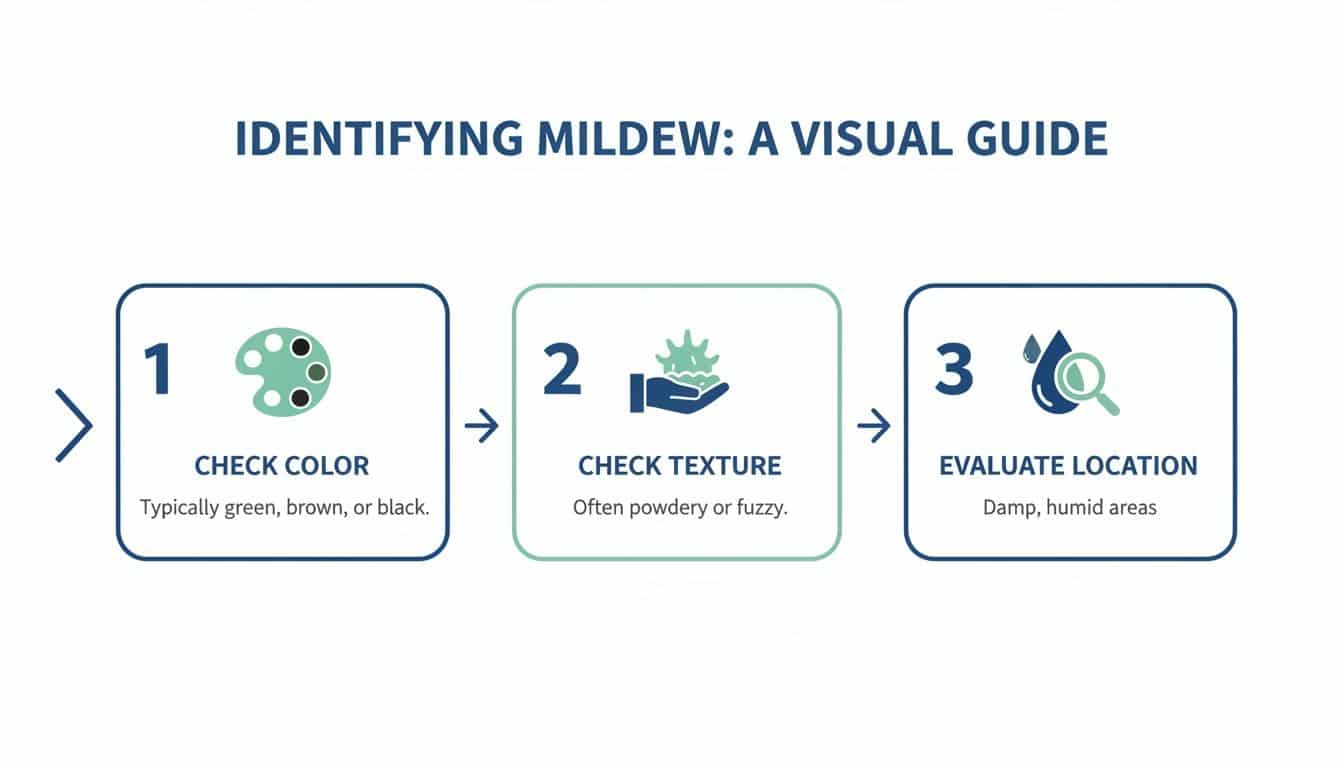
Knowing how to spot mildew by its powdery texture and location is half the battle.
The Right Way to Scrub and Dry
Now for the main event. Spray your chosen solution generously over the windowsill, making sure to hit every spot where you see mildew. Let that solution sit and do its thing for at least 10-15 minutes.
Once it's had time to work, grab a soft-bristled brush—an old toothbrush is perfect for this—and start scrubbing. A toothbrush is ideal for getting into the tight corners and window tracks where mildew loves to set up shop. Gentle, circular motions will lift the mildew without scratching your paint.
After a good scrub, wipe the whole area down with a damp microfiber cloth to remove the gunk and any leftover cleaning solution. This is also a great opportunity to give the inside of your glass a good once-over. For a full rundown, you can check out our guide on how to properly clean inside windows.
Last, but most importantly, you have to thoroughly dry the windowsill with a clean, dry cloth. Any moisture left behind is an open invitation for the mildew to come right back. This isn't just a small annoyance; mildew is a surprisingly common issue. It affects an estimated 40% of urban windowsills each year. Industry reports even show it can cost property managers 10-15% in lost rent due to unkempt appearances.
On the flip side, routine cleaning contracts have been shown to cut down mildew recurrence by a whopping 65%. It's especially vital for businesses—in places like Tempe, clean storefronts can boost sales by as much as 12%. You can dig into more market data about window cleaning service trends on Deep Market Insights if you're curious.
Long-Term Strategies to Prevent Mildew's Return
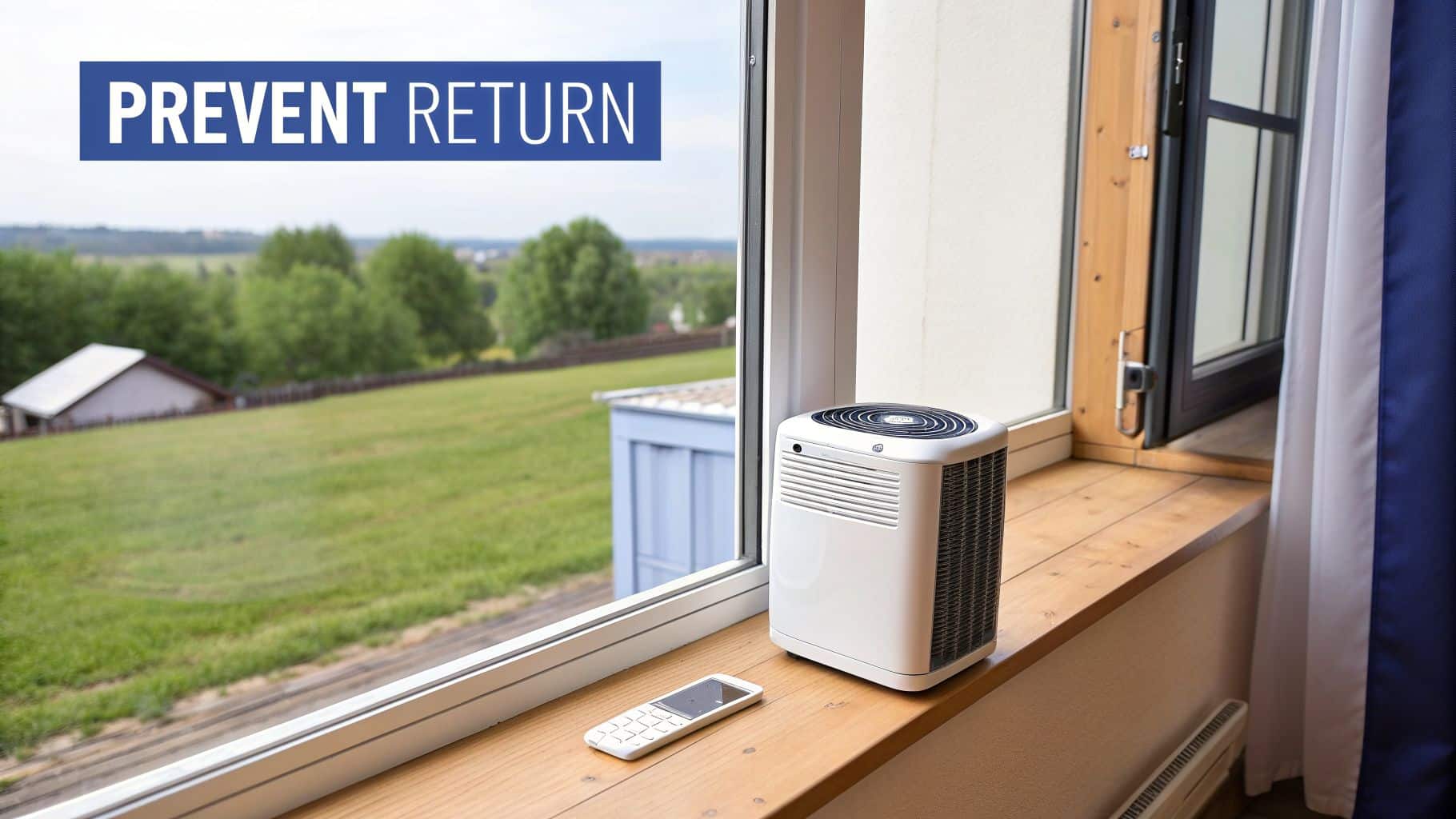
So you’ve managed to clean that ugly patch of mildew on your windowsill. That’s a good start, but the job isn't done. If you don't tackle the conditions that let it grow in the first place, you're just hitting a reset button until it comes back.
True prevention is all about getting to the root of the problem. It means creating an environment where mildew just can't get a foothold. This boils down to three things: controlling moisture, getting the air moving, and doing some simple, routine cleaning.
Master Moisture Control
Mildew needs water to live. Here in Arizona, that water usually comes from condensation—that constant battle between your cool indoor AC and the brutal heat outside. Getting that moisture under control is your best defense.
- Wipe Down Daily: The easiest fix is often the best one. Just keep a microfiber cloth handy and wipe away any condensation you see on your windows. This is especially important first thing in the morning or during monsoon season.
- Run a Dehumidifier: For rooms that get extra humid, like bathrooms or the kitchen, a dehumidifier can be a game-changer. If you can keep your indoor humidity below 50%, you’ll make it incredibly tough for mildew to grow.
This tiny bit of daily effort takes away the main thing mildew needs to survive. It's a simple habit that really pays off.
Preventing mildew isn't just about looks. It’s about keeping your home healthy. That recurring mildew can be the first sign of a bigger moisture issue that might be hidden, which can hurt your home's value and your air quality.
Improve Airflow Around Windows
Mildew loves stagnant, humid air. When you get the air moving around your windows, you stop that moist air from sitting there and condensing on the cool glass. The good news is, you don’t need any expensive upgrades to do it.
A smart long-term fix is to look at your window treatments. High-quality insulated and thermal curtains can help stabilize the temperature on the glass, which cuts down on condensation quite a bit. Even just leaving your blinds or curtains open for a few hours every day can make a big difference.
Also, think about where you put your furniture. If you push a sofa or a bookshelf right up against a window, you're trapping air and creating a perfect little humid pocket for mildew. Pulling furniture just a few inches away from the wall can dramatically improve airflow.
Commit to Routine Maintenance
Finally, you have to cut off mildew's food supply. Dust, pollen, skin cells, and all sorts of other organic gunk love to collect on sills and in window tracks. A regular cleaning schedule starves the mildew out.
For businesses and commercial properties, proactive track cleaning is a must. At South Mountain Window Cleaning, we’ve seen that our professional services can cut mildew recurrence by up to 70%. For businesses in places like Scottsdale and Chandler, that can mean saving thousands on future problems. This is more than a dirt issue; it's a health issue, since spores can trigger allergies in 20 million Americans every year. You can discover more insights about the impact of professional cleaning services on Grand View Research.
When to Call a Professional Window Cleaning Service
While a lot of small mildew patches on a windowsill are something you can tackle yourself, there are definitely situations that are clear signals it’s time to call in the professionals. Knowing when to wave the white flag can save you a ton of time, prevent real damage to your home, and make sure the problem is handled safely.
Sometimes, it feels like no matter how much you scrub, the mildew comes right back. If you find yourself cleaning the same spots every few weeks, you're fighting a losing battle. That quick regrowth usually means the problem has gone deeper than what surface cleaners can handle, and you need a stronger, professional-grade solution from a company like South Mountain Window Cleaning.
Identifying When You Need Expert Help
Take a good look at the size and type of growth you're dealing with. A small spot on one windowsill is one thing. But when you see large patches spreading across multiple windowsills, that’s a real concern. It points to a bigger moisture problem that needs a professional eye to track down the source.
Here are a few other clear signs you should call for backup:
- Signs of Damage: If you spot bubbling paint, soft spots in the wood, or discoloration on a windowsill under the mildew, that’s a bad sign. It means moisture has likely caused wood rot.
- Persistent Black Growth: Is the growth slimy, dark, and looks like what people call "black mold"? It’s always best to let a professional service handle it to avoid any potential health risks.
- Inaccessible Areas: For second-story windows, high-rise buildings, or just hard-to-reach spots, safety comes first. Our team at South Mountain Window Cleaning has the right training and equipment to handle these jobs without any risk.
For building owners and property managers in Phoenix and Scottsdale, letting mildew sit on sills can do more than just look bad. It can harbor bacteria and risk a potential 18% increase in tenant complaints. Calling a pro isn't just about cleaning; it’s about protecting your investment and reputation.
The Value of a Professional Service
So, what does a professional service like ours really bring to the table? We do a lot more than just wipe away the visible gunk. Our technicians are trained to properly assess the situation and use specialized tools for a deeper, longer-lasting clean. It's a common question if window cleaning companies clean screens, tracks, and sills, and the answer is that any thorough, reputable company absolutely should. It’s all part of the job.
We use a pure-water system that filters out all the mineral impurities. This leaves a spot-free finish that actually helps repel new dirt and mildew spores from settling. For the really tough jobs, we use professional-grade, eco-friendly cleaning agents that are strong enough to kill stubborn mildew but are safe for your family, pets, and landscaping.
This is especially crucial for commercial properties and high-rise facilities in the Phoenix metro area, where our experience and $2 million insurance policy provide essential peace of mind.
If you’re tired of fighting a persistent mildew problem, learn more about our professional window cleaning company. Let our expert team come out and restore the health and clarity of your windows for good.
Got Questions About Windowsill Mildew? We’ve Got Answers.
Even after you've cleaned up, you might still have some lingering questions about that pesky mildew. It’s totally normal. As window cleaning pros, we get asked these questions all the time by folks across Phoenix, so let's get right to it.
"Can I Just Use Bleach on My Painted Wood Sills?"
We hear this one a lot, and our advice is simple: please don’t. Bleach is a really harsh chemical that can do a number on your painted sills. It can easily strip the paint right off, damage the wood underneath, and often won't even get to the root of the mildew.
A much better starting point is a simple mix of white vinegar and water. It's way gentler on the surface and usually does the trick for minor spots. If you're dealing with something more stubborn, that's where we come in. Our team uses professional-grade cleaners that are tough on mildew but safe for your paint.
"Is This Mildew on My Windowsill Actually Bad for My Health?"
While a little bit of common household mildew is often just an eyesore, it can definitely cause problems for people with allergies, asthma, or other respiratory sensitivities.
If you see a lot of it, it keeps coming back no matter what you do, or you're worried it might be black mold, it's smart to treat it seriously. Our professional cleaning services in places like Gilbert and Tempe don't just wipe away the ugly stuff—we help clear the air in your home, too.
A lot of people think only black mold is a health concern. The truth is, any fungal growth, mildew included, can release spores into the air that irritate family members and affect your home's air quality.
"My House is New! Why Does Mildew Keep Back?"
This is a huge one, especially in newer homes we service around Scottsdale and Paradise Valley. Modern homes are built to be super airtight, which is fantastic for keeping your cooling bills down. The downside? It traps humidity and creates poor air circulation.
That trapped moisture turns your cool windowsills into the perfect spot for mildew to grow. Getting into the habit of running exhaust fans and wiping away condensation helps a ton. But for a real, long-term solution, nothing beats regular professional window and track cleaning to keep the problem from starting in the first place.
"How Often Do I Really Need Professional Window Cleaning to Stop Mildew?"
For most homes here in the Valley, we find that a professional window and track cleaning twice a year does the job perfectly. This schedule is great for clearing out the dust, pollen, and other gunk that mildew loves to eat, stopping it before it ever gets a foothold.
Now, if you have a commercial property or a home in a particularly dusty or humid spot, bumping that up to a quarterly service might be a smart move. It’s the best way to guarantee your windows stay crystal clear and mildew-free for good.
Tired of seeing mildew reappear on your windowsills? Let the experts at South Mountain Window Cleaning provide a lasting solution. We serve residential, commercial, and high-rise properties across Phoenix, Scottsdale, Paradise Valley, Chandler, Tempe, and Gilbert, Arizona. Schedule your free, no-obligation quote today and enjoy perfectly clear, mildew-free windows. Visit us online at https://www.southmountainwindowcleaning.com.