
A cracked screen on a door, patio enclosure, or storefront panel always seems to show up at the worst time. The tear starts small, the frame sags a little, and then dust, bugs, and loose mesh make the whole opening look neglected. In Arizona, where sun and grit work on every exterior surface, a good screen repair service is less about appearance alone and more about keeping the property usable, sealed, and presentable.
Understanding Screen Damage and Repair Options
A homeowner usually notices the problem before anyone else does. A screen door starts rattling in the wind, a patio screen has a corner pulled loose, or a window screen shows a clean tear where a pet leaned against it. Those issues seem minor at first, but they change how the opening performs, especially when you're trying to keep out dust, pests, and direct sun.
What professional repair actually covers
A proper repair visit starts with the condition of the mesh, the frame, and the spline, because those parts fail in different ways. A clean tear in the mesh may be repairable with patching if the damage is small and the frame is still square. If the frame is bent, warped, or loose at the corners, the right fix may be a frame rebuild or replacement instead.
The key is matching the repair to the failure point, not just covering the visible damage. That's why a screen that looks “bad” isn't always expensive to fix, and a screen that looks “small” isn't always a quick patch. If you want a simple maintenance baseline before calling anyone out, this screen cleaning guide is useful for spotting damage early and keeping dirt from hiding edge splits.
Practical rule: if the screen still fits tightly and the damage is only a small opening in the mesh, repair is often straightforward. If the screen no longer seats properly, the problem is usually structural, not cosmetic.
Arizona properties see a lot of sun stress. That matters because dry heat makes weaker materials age faster, and fine dust works into corners where the frame and mesh meet. The result is often not one dramatic failure, but a chain of smaller ones that show up as loosened edges, brittle mesh, and poor fit.
Types of Screen Repairs and Common Issues
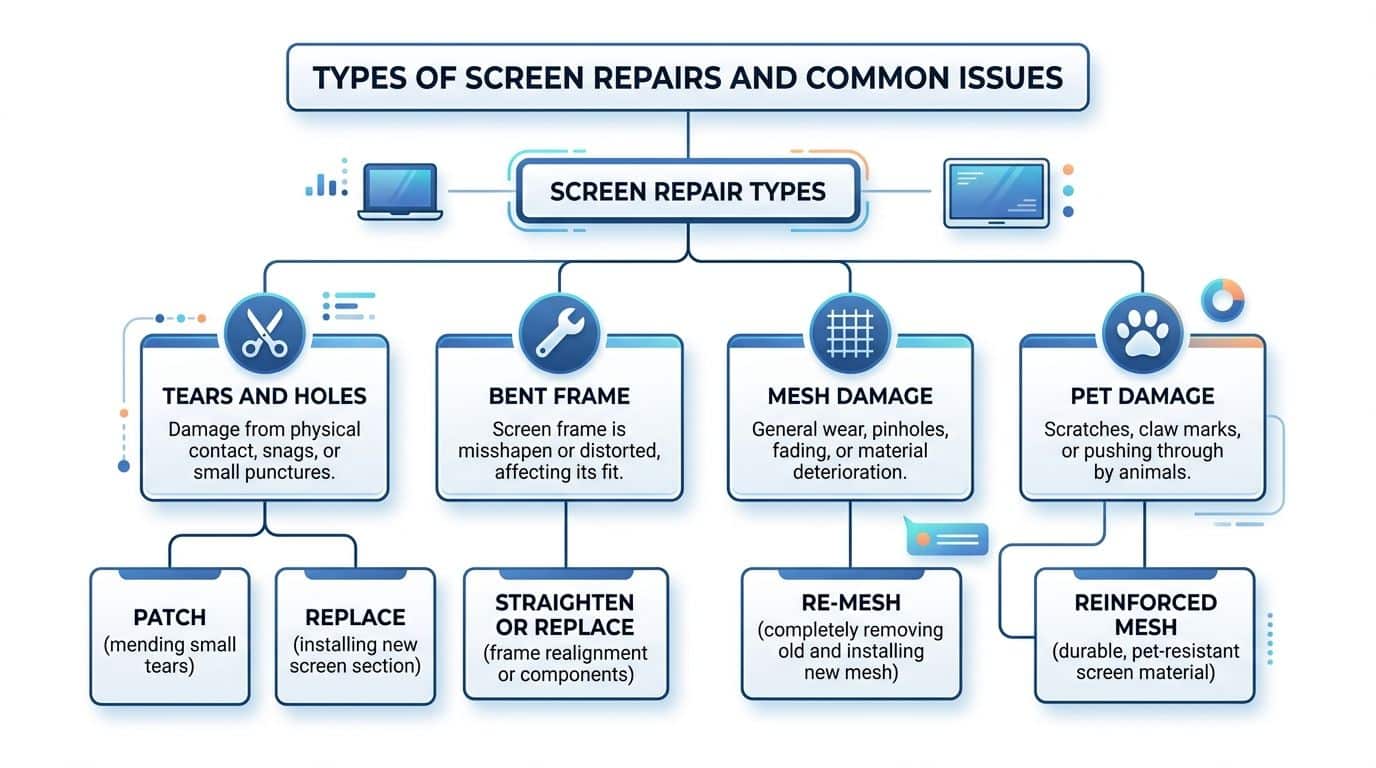
The fastest way to judge a screen problem is to identify which part failed first. If you see a small tear with the frame still sitting flush, the repair is usually about the mesh. If the opening no longer holds tension, the issue may be the frame, the spline channel, or both.
Common damage patterns to look for
Tears and holes usually come from pets, branches, or general wear. Small openings can often be patched, but larger ones usually need a full re-mesh because patching a worn area can leave the screen uneven and visually obvious.
Bent frames are more serious than they look. A frame that's twisted won't hold tension evenly, so even a fresh mesh can sag or pop loose later. In practice, that means the repair has to address the shape first, then the screen itself.
Mesh damage from age or sun exposure often shows up as brittleness. The screen may still look intact until someone touches it, then it cracks or frays along the edges. When that happens, a re-mesh is usually the honest fix.
Pet damage tends to be concentrated near the bottom rail or corners where dogs push and cats climb. Reinforced mesh can help in those spots because it's built for repeated contact rather than occasional impact.
Dust storms and strong UV exposure make all of these problems worse over time. A screen that's already stretched, faded, or loose will fail sooner than one that was installed correctly and kept clean. For property managers, that difference matters because a weak screen can make a tidy property look neglected long before anyone notices a broken window.
A good technician also checks whether the corner pieces, clips, and tension points are still doing their job. If those small parts are damaged, the screen may keep failing even after the mesh is replaced.
DIY Screen Repair Versus Professional Service
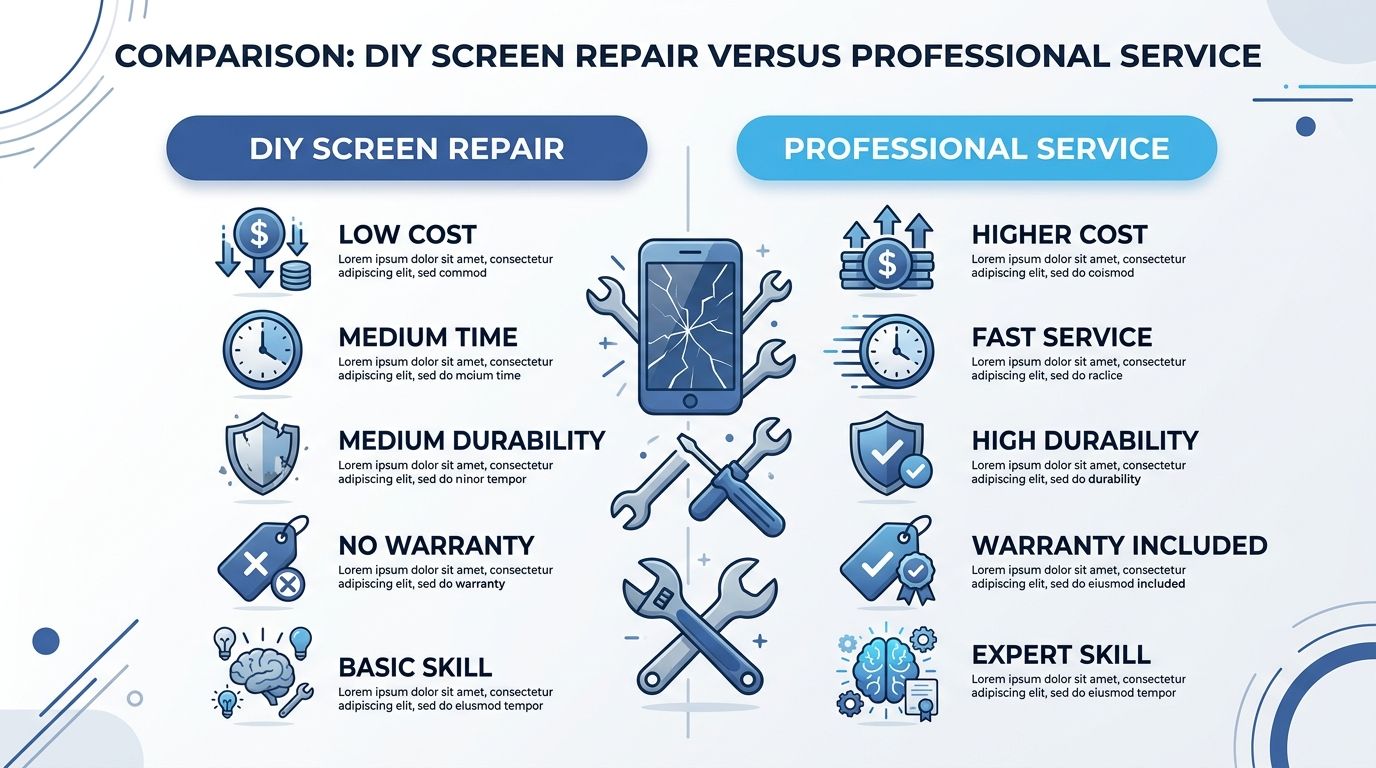
DIY repair works best when the job is simple and the screen is easy to access. A small patch, a basic spline replacement, or a like-for-like screen on a standard ground-level opening can be reasonable for a handy homeowner. Once the frame is bent, the opening is oversized, or the screen sits in a hard-to-reach place, the risk of a poor fit climbs fast.
Where DIY makes sense, and where it doesn't
DIY has one clear advantage, lower upfront cost. The trade-off is that the result depends entirely on your measurement accuracy, tool quality, and patience. If the mesh is cut too tight or the spline isn't seated evenly, the screen can loosen again, wrinkle, or bow under heat.
Professional work costs more at the start, but it usually includes proper fit, better material selection, and warranty protection. It also avoids the common false economy where a homeowner buys a kit, installs it once, then pays again when the repair fails in the sun. For a practical parts overview before deciding what to attempt yourself, the parts guide from Joey'z Shopping is a useful example of how matching the right components to the right opening affects results.
If you're comparing a project against a service call, the decision often comes down to access and tolerance for mistakes. A screen on a second-story window or a custom patio enclosure leaves very little room for improvisation. A shop can also bring the right screen kit materials to size, which matters when the opening isn't standard.
Good rule of thumb: if the screen is easy to remove, easy to measure, and the frame is straight, DIY may work. If any one of those three is uncertain, professional repair usually saves time and repeat work.
Screen Repair Costs and Economic Decision Making
The smartest repair decision starts with the frame of reference, not the invoice. A screen repair service usually makes sense when the frame is sound, the mesh is the main failure point, and the opening still fits the home's needs. Replacement is the better call when the structure is bent, the material is badly aged, or the repair would only patch over a larger problem.
A practical choice also depends on how the screen will be serviced. On-site work is usually the better fit when the opening is part of a window or door that is already installed and the frame can be handled safely. Mail-in repair can work for some removable parts, but it adds packing, shipping, and the risk of damage in transit, which matters when the screen is oversized, fragile, or already out of alignment. In Arizona, heat exposure makes that decision even more important because a weak repair can fail faster once it goes back into direct sun.
What drives the price
Size is one of the biggest cost factors because larger openings use more material and take more time to tension correctly. Material type matters too, since stronger mesh and specialty frames take more care to fit cleanly. Accessibility also changes the equation, because ground-level work is simpler than a high or awkward opening.
For a rough comparison from another repair market, screen damage on smartphones is often expensive enough that owners weigh repair against replacement, but that comparison is only useful as an analogy, not as a direct price guide for window or door screens. For the same reason, claims about phone-screen pricing from Times of India should stay in their own context, since property screens use different materials, labor steps, and service needs. The useful lesson is simple, the repair model affects the bill just as much as the damage itself.
| Screen Repair Cost Comparison | DIY Cost | Professional Cost | Time Required |
|---|---|---|---|
| Small mesh patch | Lower upfront material cost | Higher than DIY, but usually includes fit and labor | Short for either route |
| Full re-mesh | Material-only if you already own tools | Labor plus materials | Moderate |
| Frame straightening or replacement | Usually unpredictable after tool purchase | More predictable quote | Moderate to longer |
| Hard-to-reach installation | Risk rises with mistakes | Safer and faster in practice | Often faster overall |
Use the screen's age as a filter. If the mesh is brittle and the frame has already been repaired once, replacement may be the more rational choice. If the screen is otherwise solid, a targeted repair keeps the opening functional without paying for work you do not need.
Delayed repairs usually cost more in the end because a loose or damaged screen stops sealing the opening cleanly. That can mean more dust intrusion, more pest issues, and more wear on nearby trim and tracks.
A clean screen is easier to inspect, and that is where this screen cleaner resource fits into the decision. Maintenance and repair work together. When screens stay clean, small tears, loose corners, and spline problems are easier to spot before they turn into a larger service call.
The Professional Screen Repair Process
A professional repair visit should feel orderly, not guess-driven. The technician starts by checking the screen opening, the frame condition, and the way the mesh sits in the channel. That first pass matters because a bad measurement or the wrong material choice will show up later as sagging, popping, or uneven tension.
What happens on site
First comes the assessment. The technician looks for tears, bent rails, damaged corners, and signs that the opening no longer matches the original size. Then they measure the frame and select mesh and spline that fit the application, because the wrong combination can look fine on day one and fail after heat exposure.
The next step is the actual repair, often using specialized tools that standard hand kits can't match. For window and door screens, that means clean cutting, controlled tensioning, and careful alignment so the finished screen sits flat and secure. On more advanced display work, high-precision equipment can isolate micro-scale faults with tools designed for trace repair, but for property screens the same principle applies, the right equipment protects the surrounding material while fixing the damaged area.
Before the technician leaves, they test the fit and check that the screen opens, closes, or seats properly. If the property has multiple screens, it helps to point out the worst ones first so the service call focuses on the biggest problems. The linked screen door service page can also help homeowners understand how door-specific repairs differ from standard window work.
Clean measurements matter more than fast hands. A screen that fits right the first time is usually the one that lasts.
Benefits of Professional Screen Repair Service
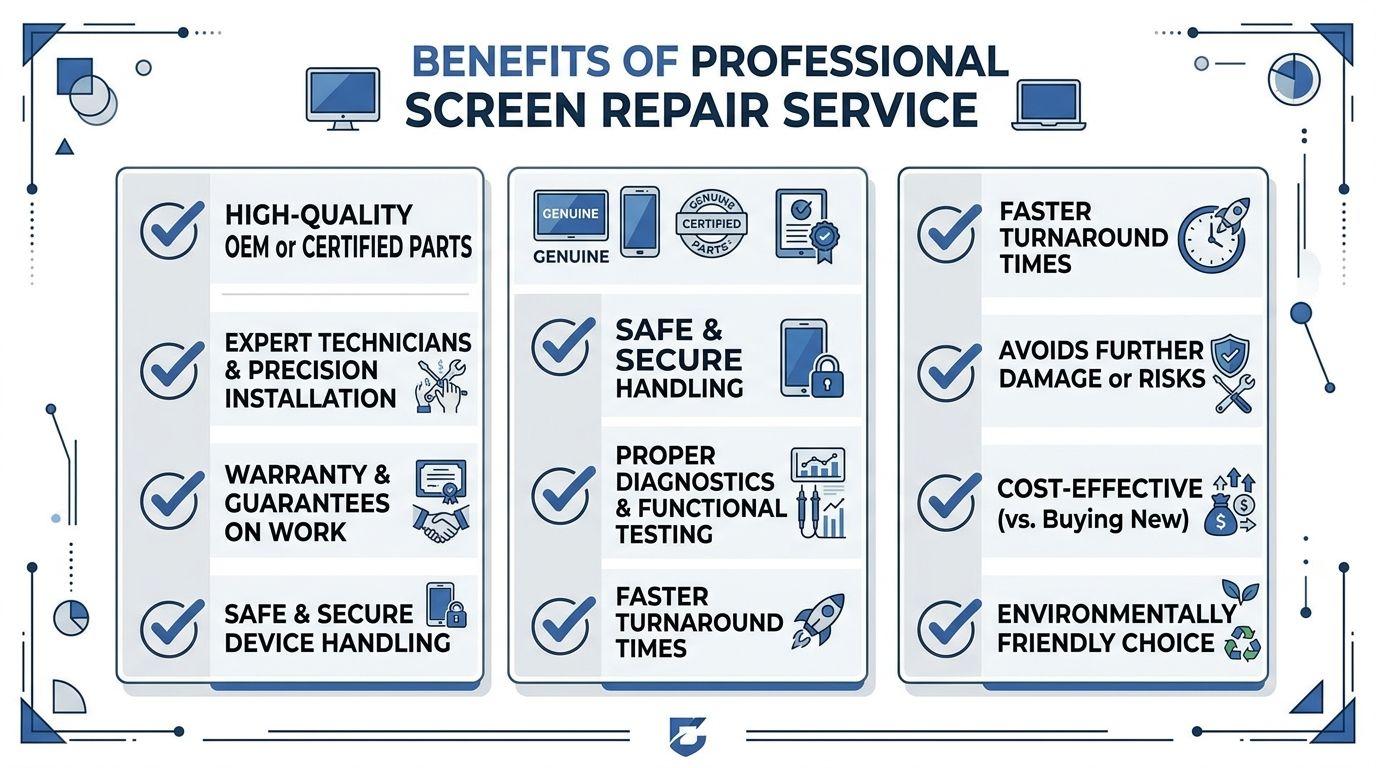
The biggest advantage of hiring a professional is not just that the screen gets fixed. It's that the repair is done with the right materials, the right fit, and a clear understanding of what caused the failure in the first place. That reduces the chance of repeat work, which is where DIY repairs often end up costing more than they saved.
What you get beyond the visible fix
Warranty protection gives you a clear path if the material or workmanship fails. That matters because a screen that loosens again in Arizona heat isn't just an annoyance, it's a sign the repair didn't match the environment.
Specialized tools and techniques help the technician seat the screen evenly and avoid damaging the frame during installation. The difference is obvious on older openings, where a standard kit can make the frame look worse while a proper service keeps the finished edge clean.
Safety becomes important on multi-story properties, tall openings, and hard-to-reach enclosures. A professional can work without improvising from ladders or forcing awkward angles, which reduces risk and usually improves the quality of the finished result.
Time savings also matter more than people expect. A homeowner who has already made one failed DIY attempt often spends more time correcting mistakes than they would have spent getting the job done professionally from the start.
Added value shows up in the details, too. A technician may spot related frame wear, track issues, or loose hardware before they become a bigger repair bill. That's one reason a well-done service can preserve property appearance better than a quick patch.
Why South Mountain Window Cleaning Delivers Trusted Screen Repair
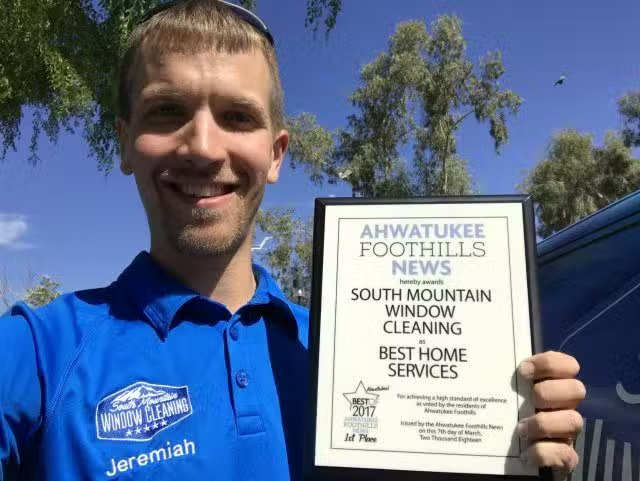
South Mountain Window Cleaning serves Phoenix, Scottsdale, Paradise Valley, Chandler, Tempe, and Gilbert, and that local focus matters because Arizona screens fail in ways that out-of-state advice doesn't always cover. The combination of sun, dust, and heavy seasonal use makes fit and material choice more important than a generic quick fix. For commercial managers comparing vendors, the company also uses computerized scheduling and carries a $2 million insurance policy for commercial properties, which helps when service needs to be coordinated around tenants, storefront hours, or building access.
Their broader exterior-cleaning work also gives them a practical advantage on screen-related jobs. When a crew already handles window and screen care, it's easier to notice broken frames, dirty tracks, and wear patterns that separate simple maintenance from a real repair need. That kind of bundled service is especially useful for property managers who want one visit to handle multiple exterior issues instead of juggling separate contractors.
For teams trying to compare service providers, the booking profitable contractor jobs resource is a useful reminder that responsiveness and scheduling systems affect whether a quote turns into completed work. In screen repair, that matters because a delayed response can turn a small tear into a larger replacement job.
South Mountain Window Cleaning backs its work with a 100% satisfaction guarantee and brings a reputation built on 400+ five-star reviews. The clean-cut, safety-trained crew is set up to handle residential and commercial work, and that matters when the job includes more than just swapping mesh. For homeowners, it means the repair fits the property. For managers, it means the service can be planned, documented, and completed with less disruption.
If your screen is torn, loose, bent, or just not sealing the way it should, South Mountain Window Cleaning, LLC can help with repair and exterior maintenance that fits Arizona conditions. Visit South Mountain Window Cleaning, LLC to request a free quote and get the screen, window, and exterior care your property needs.