
If you're looking through your windows right now and the light seems dull even after the glass is clean, there's a good chance the screens are the problem. In Phoenix, Scottsdale, Chandler, Gilbert, and the rest of the Valley, screens collect a mix of fine dust, pollen, road grit, and monsoon residue that regular rinsing doesn't fully remove. The result is a hazy view, reduced airflow, and screens that look older than they are.
A lot of screen cleaner advice online is too generic for Arizona homes. It assumes mild weather, soft rain, and ordinary dust. That isn't what we deal with here. Our sun bakes grime onto mesh, wind drives fine particles deep into corners, and a quick hose-down often turns dry dust into a muddy film.
The good news is that screen cleaning isn't complicated when you use the right process. What matters is matching the method to the material, working in the right order, and knowing when a basic screen cleaner is enough and when you need a full wash.
Gathering Your Screen Cleaning Supplies
Before you scrub anything, identify what kind of screen you're cleaning. Fiberglass screens are the most common on Arizona homes and they handle routine cleaning well, but they can stretch or tear if you press too hard. Aluminum screens are more rigid and hold shape better, though older ones can bend at the frame corners. Solar screens need the gentlest touch because the denser mesh and darker material show wear faster if you use aggressive brushes or harsh chemicals.
That matters because the wrong setup causes more damage than dirt ever did. A stiff deck brush, strong solvent, or high-pressure nozzle can ruin mesh, loosen spline, or leave visible wear lines that stand out in direct sun.

Start with the essentials
For most homeowners, a reliable screen cleaner kit is simple:
- Soft-bristle brush for loosening dry dust without fraying mesh
- Vacuum with brush attachment for routine dry cleaning
- Microfiber cloths for frames and final wipe-down
- Bucket for mixing a mild solution
- Neutral or mildly alkaline detergent for wet cleaning
- Hose with gentle spray for rinsing
- Towels or drying rack space so the screens can dry fully before going back in
Optional tools help, but they aren't mandatory:
- Compressed air or blower on a gentle setting for dry debris in corners
- Screen removal tool or flat putty knife for stubborn tabs or tight frames
- Spray bottle for controlled application on small screens
- Bright handheld light to check for missed residue and pinholes
Practical rule: If a cleaner smells harsh enough that you hesitate to use it indoors, it's probably the wrong product for routine residential screens.
There's also a good reason many pros have moved away from older chemical-heavy methods. Screen cleaning used to be a labor-intensive process built around hazardous solvents. Industry changes after 1999 introduced safer, more efficient chemistry that let professionals process dozens of screens per hour for pennies each, according to Easiway's history of screen cleaning methods. For a homeowner, the takeaway is simple. You don't need aggressive chemistry to get good results.
Pick a cleaner that won't create new problems
For Arizona homes, I lean toward mild, low-residue solutions. Heavy soaps can leave film, and film grabs dust faster. If you want a resource for lower-waste product choices, Fillaree's low-waste cleaner recommendations are worth reviewing before you stock up.
A few buying notes help:
- Skip strong solvents on residential window screens unless the manufacturer specifically allows them.
- Use less soap than you think you need. Most screens respond better to a light wash than a foamy soak.
- Match the tool to the screen. Solar screens need softer agitation than standard fiberglass.
- Keep a separate cloth for frames. Dirty frames can transfer grime right back onto clean mesh.
If you want to compare homeowner tools with the gear used in the trade, this overview of what professional window cleaners use gives a practical look at the difference between basic kits and pro setups.
How to Clean Different Types of Window Screens
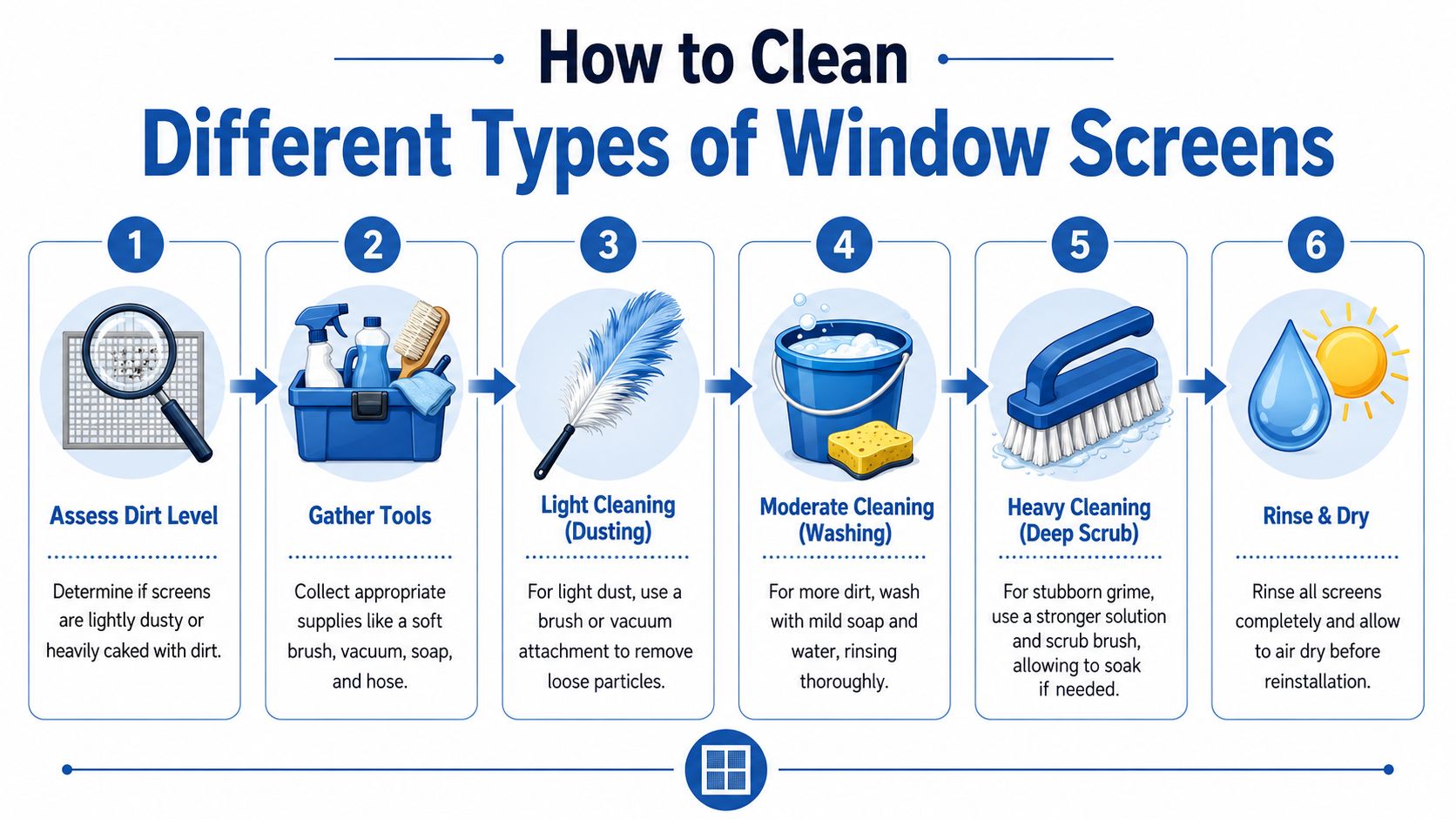
Light dust and heavy buildup need different methods. Treat every screen like it needs a soaking wash, and you'll waste time. Treat every screen like it just needs a quick dust-off, and the embedded grime stays put.
Use the dry method for routine dust
For lightly dusty screens, leave them installed and work dry first. This is the easiest way to stay ahead of normal Valley dust between deeper cleanings.
Follow this order:
- Inspect the mesh and frame first. Look for loose corners, brittle spline, bent frames, or torn mesh.
- Remove loose particulate. Use a vacuum with a soft brush attachment, or a very soft hand brush.
- Work from top to bottom. That keeps loosened dust from settling back onto areas you've already cleaned.
- Brush both sides if you can access them. Outside-facing buildup is usually heavier.
- Check the screen in angled light. If the mesh still looks cloudy, move to a wet clean.
That sequence lines up with the strongest process guidance available. A repeatable cleaning workflow should start with inspection, then dry debris removal, then washing, then rinsing, followed by verification under bright angled light. A medical cleaning framework used as a general process benchmark also stresses evaluating the result, handling unresolved defects manually, and repeating the cycle until quality requirements are met in this cleaning methodology discussion. For screen cleaning in Arizona, that repeat-and-verify habit matters because residual dust often hides until the sun hits it.
A screen can look clean in the shade and still show a fine film the moment afternoon sun comes through it.
Use the wet method for caked-on grime
If the screen has months of dust, mud speckling, pollen buildup, or greasy residue, remove it and wash it flat or upright in a controlled area. A driveway, patio, or shaded side yard works well.
Use this method:
- Take the screen out carefully. Support the frame so you don't twist it.
- Knock off dry debris first. A brush or vacuum prevents turning loose dust into sludge.
- Mix mild soap in a bucket. Keep the solution light.
- Wash with a soft brush. Use even pressure and long strokes, not hard circular scrubbing.
- Rinse thoroughly with gentle water. You want low residue, not force.
- Dry fully before reinstalling. Wet screens can trap fresh dust quickly.
For large patio sliders or oversized solar screens, wash one at a time. Leaning several dirty screens together usually transfers grime and can bend corners.
Match the method to the material
Here's the quick reference I use for homeowners.
| Screen Material | Best Cleaning Method | Key Considerations |
|---|---|---|
| Fiberglass | Dry vacuuming for maintenance, mild soap wash for deep cleaning | Don't press hard. Mesh can stretch or tear if scrubbed aggressively. |
| Aluminum | Dry brush or vacuum, followed by gentle wash and rinse | Watch for bent frames and oxidation on older screens. |
| Solar screens | Light vacuuming or very soft wash | Use the least aggressive brush. Dense mesh can hold dust, but harsh scrubbing can mark the material. |
If you're comparing replacement options or trying to understand why one screen type behaves differently than another, this guide to porch screen options is useful background.
What usually goes wrong
Most DIY screen cleaner problems come from technique, not effort.
- Too much pressure: Homeowners try to scrub through the dirt and end up deforming the mesh.
- Too much soap: Leftover residue attracts dust and leaves the screen looking dull again fast.
- No final inspection: The mesh dries, the sun hits it, and streaks or dusty patches appear.
- Direct harsh sun during cleaning: Soap flashes dry and leaves residue before you can rinse.
A better standard is simple. Clean in shade, use a mild solution, rinse thoroughly, and check the screen from an angle before reinstalling it.
Removing Stubborn Arizona Dust and Stains
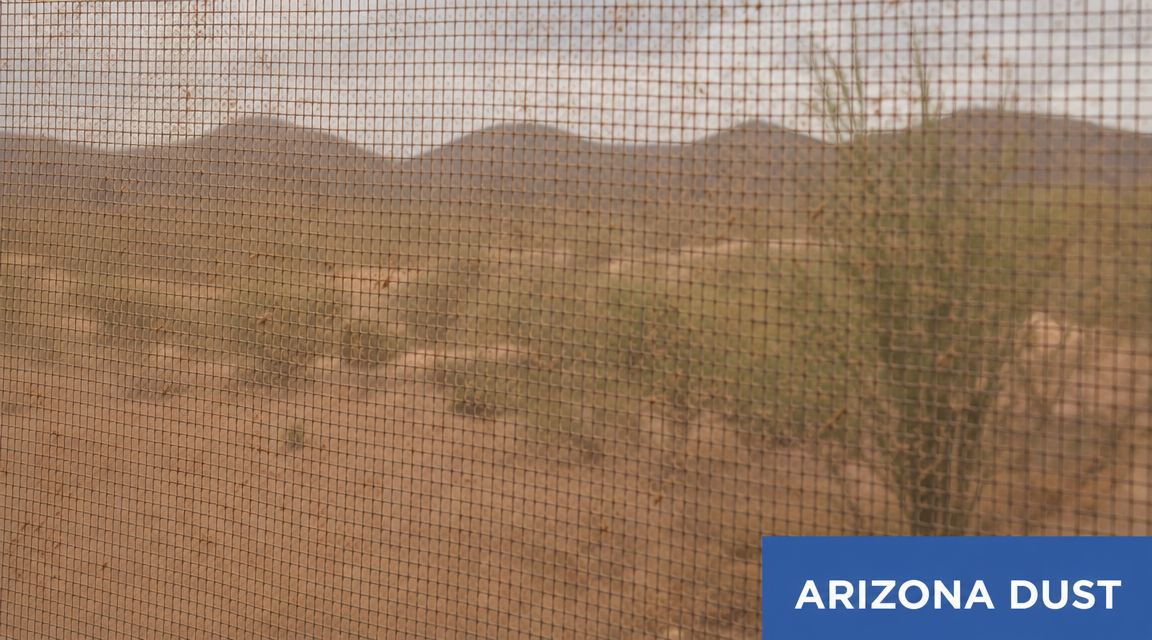
Arizona dust behaves differently than ordinary surface dirt. After a monsoon event, screens often hold a fine, clay-like layer that clings to the mesh. Spray it with water too soon and you don't wash it away. You smear it into the screen.
Agitate first, then wash
For stubborn dust, the best method is a two-step process.
First, loosen the dry contamination. Use a vacuum with a soft brush attachment or a soft hand brush and work both sides if possible. You're trying to break the bond between the dust and the mesh before any moisture gets involved.
Second, wash and rinse. Once the loose fines are out, a mild screen cleaner solution and gentle brushing will remove what remains without turning the whole surface into mud.
If you hose down a dusty screen before removing the dry layer, you're making cleanup harder, not easier.
This matters most on screens that face open desert, busy roads, or west-facing exposure. Those locations usually take the worst hit from wind-driven grit.
Deal with stains separately
Not every mark on a screen is dust.
- Hard water spots: These usually show up near sprinklers or overspray zones. Clean the screen itself gently, then address the glass and nearby residue with the right method. If the spotting extends onto the window, this hard water stain removal guide covers the glass side of the problem.
- Sun fading: If the material looks bleached, chalky, or uneven in color, cleaning won't restore the original finish. That's wear, not dirt.
- Greasy residue: Outdoor kitchen areas, grill zones, and some patio setups leave a sticky film that traps dust. Wash these screens separately so the residue doesn't spread to cleaner ones.
Know when the screen is clean enough
Perfection isn't always realistic on older mesh. The goal is clear airflow, better visibility, and removal of active grime. If a screen still looks dull after thorough dry agitation, mild washing, and a clean rinse, inspect for oxidation, embedded staining, or sun damage.
One thing I tell homeowners all the time in Phoenix is this. A dirty screen and a worn-out screen can look similar from ten feet away. Up close, the difference is obvious. Dirt comes off unevenly. Worn material stays faded no matter what you use.
Troubleshooting Common Screen Damage
Cleaning is often when damage finally becomes obvious. Dust hides tears, dirty corners hide loose spline, and sun-brittle mesh can look fine until you touch it. A good screen cleaner routine should include a quick repair decision before the screen goes back in.
Repair or replace
Use a simple framework.
- Small puncture or tiny tear: Usually repairable with a patch kit if the rest of the screen is in good condition.
- Long tear along the mesh: Replacement is usually the better call because patches become obvious and don't hold as well.
- Loose spline: Often repairable if the frame is still straight and the spline channel is intact.
- Bent frame corners: Sometimes fixable, but badly warped frames rarely sit right again.
- Pet claw damage: Localized holes can be patched short-term, but repeated damage often means upgrading the material.
If you need the actual parts and tools, this screen repair kit guide helps you sort out spline, rollers, and patch options.
What to inspect during cleaning
Run through these checkpoints before reinstalling:
Mesh tension
The screen shouldn't sag or ripple heavily in the frame.Spline condition
Brittle, shrinking, or cracked spline won't hold the mesh for long in Arizona heat.Frame squareness
Set the screen flat and look for rocking or corner lift.Tabs and pulls
Torn pull tabs make future removal harder and often lead to bent frames.
A clean screen that doesn't fit right is still a problem. If the frame is loose or twisted, dirt will come back faster and the screen won't seal properly.
Temporary fixes versus lasting fixes
Patch kits are fine for small damage in low-visibility spots. They're not a great long-term answer for front-facing windows, view windows, or large tears. On those screens, replacement usually looks better and functions better.
The same goes for sun-brittle mesh. If the material feels fragile when you brush it, more cleaning won't help. It just means the screen has reached the end of its useful life.
A Simple Screen Maintenance Schedule
The easiest way to keep screens looking good in Arizona is to stop treating them like a once-a-year project. Short maintenance cycles work better than occasional heavy scrubbing.
Follow a seasonal rhythm
Here's a practical schedule for Valley homeowners:
- Spring: Dry clean screens, check for winter grime, and inspect for torn mesh before heat ramps up.
- Before monsoon season: Clear existing dust so storms don't cement old dirt into the mesh.
- After major dust events: Spot-clean the worst screens first. Don't wait for every screen to become equally dirty.
- Fall: Do a deeper wash on the screens that took the brunt of summer weather.
- Winter: Inspect frames, tabs, and spline while usage is lower.
This is where priority cleaning matters. Research on cleaning order found that prioritizing the highest-impact areas first produces better outcomes than treating everything with equal effort. In the Comet study, the recommendation system outperformed comparison approaches, improving prediction accuracy by up to 52 percentage points and by 5 percentage points on average in that data-cleaning context, according to the Comet research summary. For homeowners, the practical translation is to clean the most visible or most heavily soiled screens first.
Decide which screens matter most
Don't start with the least important windows. Start here:
- Front elevation screens because curb appeal shows dirt fast
- Main living area view windows because haze is most noticeable there
- West-facing and roadside screens because they usually collect the heaviest grime
- Patio and slider screens because they get handled more and clog tracks faster
If someone in the home is sensitive to scents, these fragrance-free cleaning tips are a useful reference when choosing products for seasonal upkeep.
A simple rule works well. If a screen affects your view, airflow, or the way the front of the house looks, it should move to the top of the list.
When to Call for Professional Screen and Track Cleaning
DIY cleaning works well for routine maintenance. It stops making sense when the job becomes awkward, risky, or too time-consuming to do thoroughly.
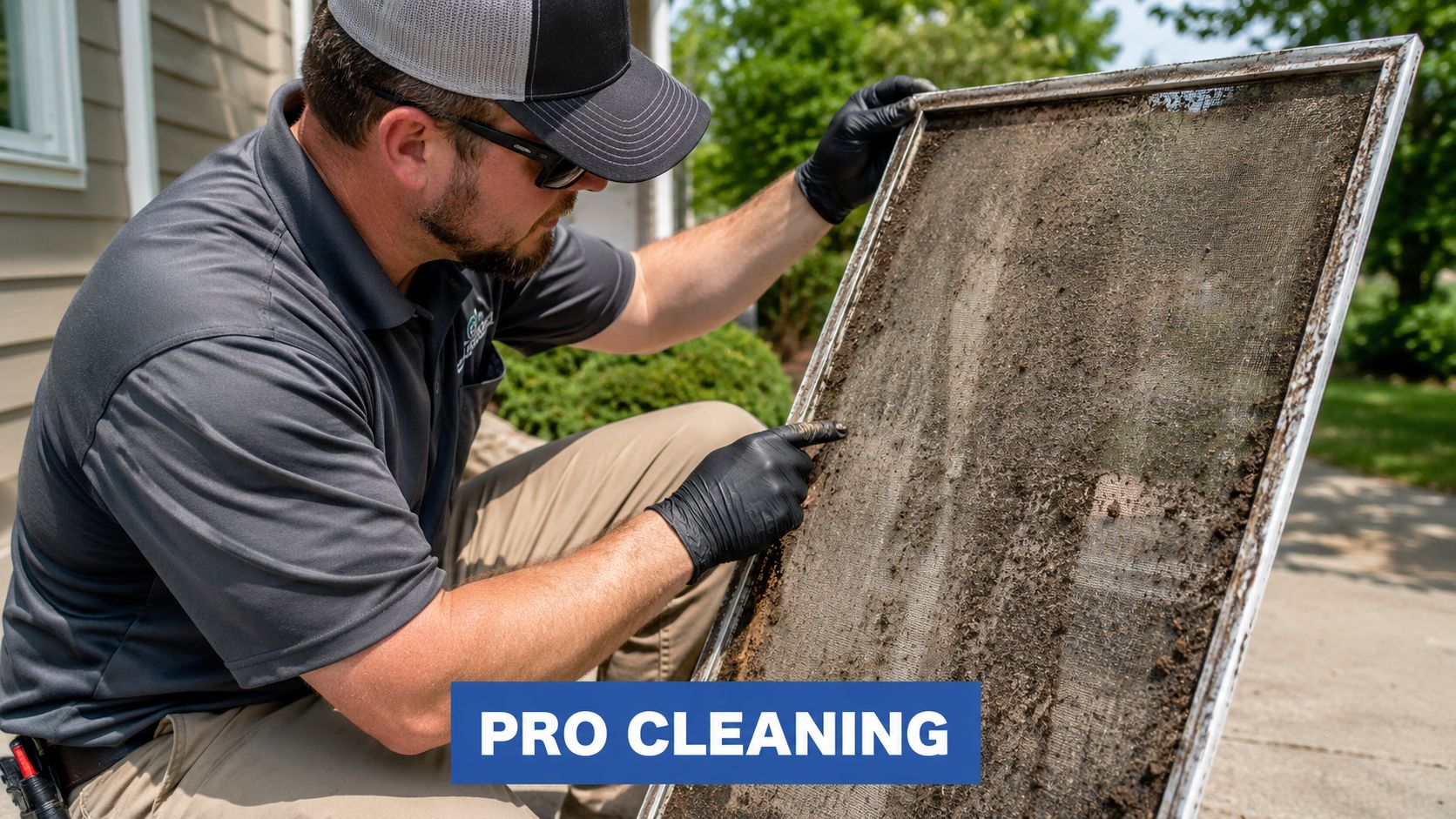
Large patio screens are a good example. They're bulky, easy to rack out of shape, and frustrating to clean without enough space. Second-story screens are another. What starts as a simple screen cleaner project turns into ladder work, awkward removal angles, and a higher chance of frame damage or personal injury.
Signs the job has outgrown DIY
A professional visit makes sense when you notice any of these:
- Tracks packed with compacted dirt that keeps windows or sliders from moving smoothly
- Multiple damaged screens that need both cleaning and repair decisions
- Heavy post-monsoon buildup across the whole house
- Second-story access issues or oversized screen panels
- Repeated disappointing results after you've already washed the screens yourself
Why tracks change the equation
Screens are only part of the problem. On many Phoenix homes, the tracks are worse. Dust, pet hair, leaf fragments, dead insects, and dried mud collect in corners and drainage points. If those tracks stay dirty, clean screens and windows don't stay clean for long.
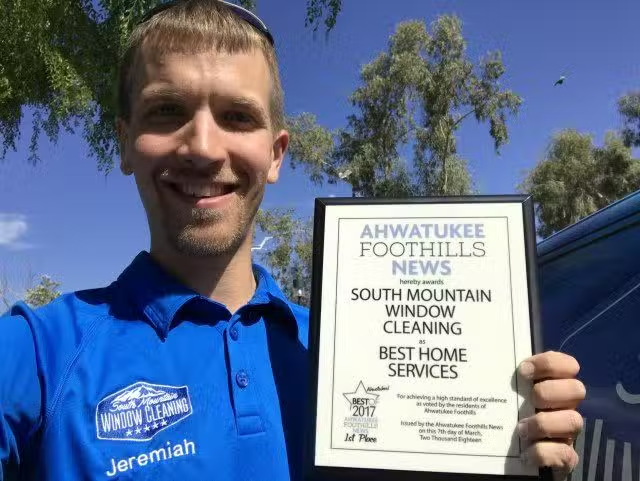
That's also where a full-service approach helps. South Mountain Window Cleaning includes screen cleaning as part of its residential window cleaning service lineup, alongside screen repair options when the mesh or frame needs more than washing. For homeowners who want the tracks cleaned properly too, that combination is often more practical than piecing it together with store-bought tools.
The hardest part of many screen jobs isn't the mesh. It's the buildup hiding in the frame channels and tracks.
Professional service also makes sense when you want consistency. A trained crew can remove, wash, inspect, dry, and reinstall screens without turning the patio into a cleaning station for half the day. For commercial properties and larger homes, that efficiency matters even more.
If your screens still look dusty after a basic wash, or your tracks are packed with Arizona grit, South Mountain Window Cleaning, LLC can help. The team serves Phoenix, Scottsdale, Paradise Valley, Chandler, Tempe, Gilbert, and nearby Valley communities with residential, commercial, and high-rise window cleaning, including screen and track care. Request a fast, free quote if you'd rather have the screens, glass, and tracks cleaned in one visit.