
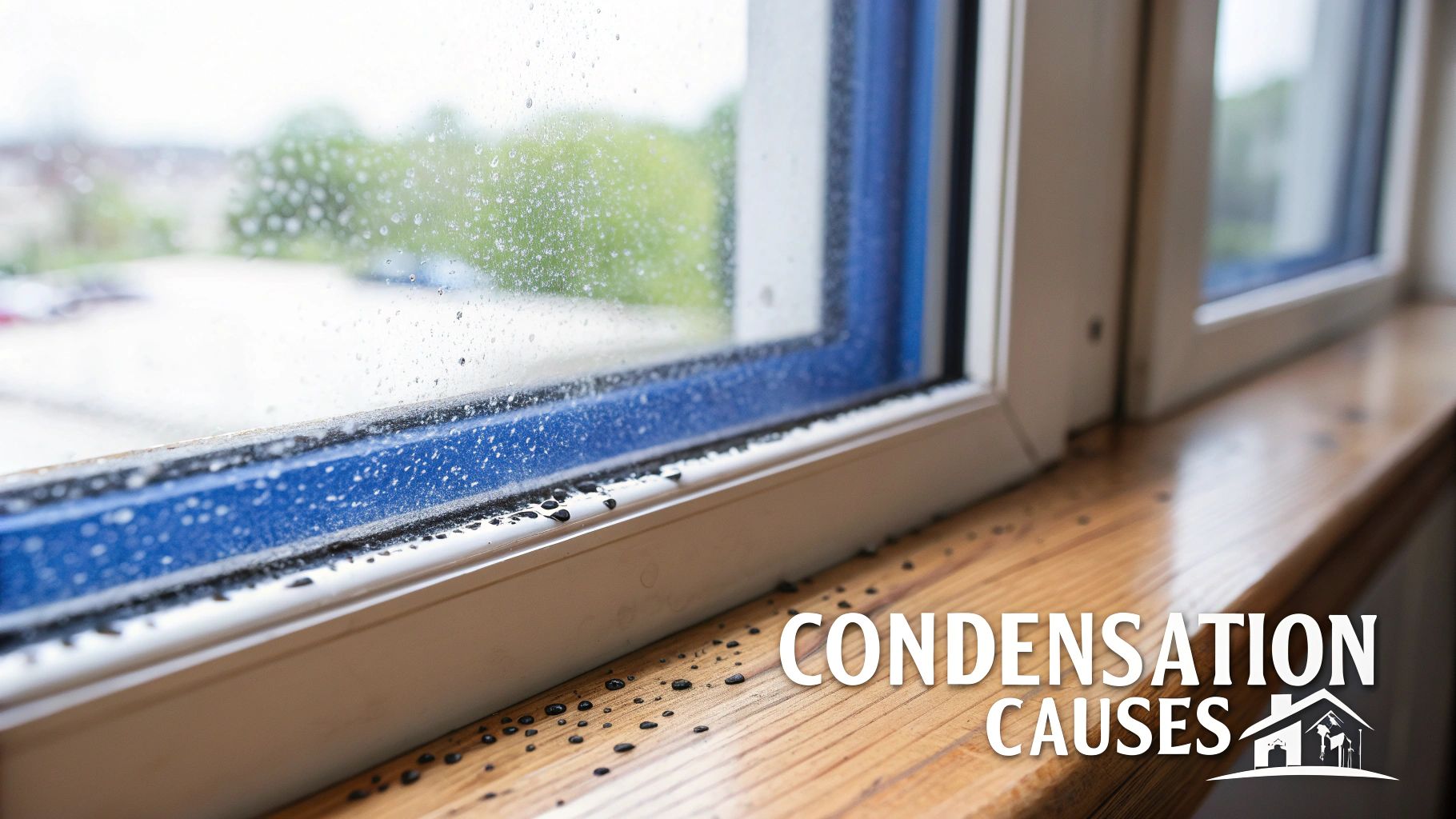
It’s a frustrating cycle for so many Phoenix homeowners: you spot those ugly dark specks of black mold on window sills, scrub them away, and a few weeks later, they’re back. The real culprit here is almost always one thing: excess moisture. That moisture turns your window sills—whether they're wood, painted drywall, or just dusty—into the perfect breeding ground for mold.
This unwanted guest isn't just appearing out of nowhere; it's a direct result of condensation building up on your cool window panes and then dripping down onto the sill. At South Mountain Window Cleaning, we've helped countless homeowners in Phoenix, Scottsdale, and across the Valley tackle this issue, and it always starts with understanding the cause.
Why Does Mold Keep Coming Back on My Window Sills?
It seems strange to be dealing with a moisture problem in a dry climate like ours in Arizona, but the issue actually starts inside your house. Believe it or not, our everyday activities are usually behind the condensation that fuels mold growth.
Think about it. A long, hot shower, boiling water for pasta, or even running the dishwasher—all these things pump a surprising amount of water vapor into the air. This cranks up your home's indoor humidity. When that warm, humid air hits a cooler surface, like the glass of your window, it turns right back into liquid water.
From there, gravity takes over. The tiny water droplets run down the glass and pool on the sill below. That small, consistent puddle is everything mold needs to move in and set up shop.
The Perfect Environment for Growth
Once you have moisture, the mold spores that are always floating around in the air have found a place to call home. But water isn't the only thing they need; they also need a food source. Luckily for them, your window sills provide a full buffet.
- Organic Materials: The dust, dirt, and skin cells that naturally settle on window sills are the perfect meal for mold.
- Porous Surfaces: Wood sills and the surrounding painted drywall are porous, meaning they soak up moisture. This lets mold put down deep roots, making it much harder to get rid of for good.
- Debris in Tracks: The tracks of your windows are notorious for trapping leaves, pollen, and other gunk from outside, creating another food source when mixed with condensation.
When you combine constant moisture with a steady food supply, you’ve created a tiny, self-sustaining ecosystem for mold. This isn't just an issue of cleanliness; it's about controlling the environmental factors that let mold thrive in the first place.
Arizona-Specific Challenges
Living in the Valley brings its own unique set of challenges that can make black mold on window sills a particularly stubborn problem. While we love our dry heat most of the year, a few key things can seriously increase the risk of condensation.
The big one, of course, is our monsoon season. That sudden jump in outdoor humidity during the summer makes it incredibly difficult to manage the moisture levels inside your home. Your AC is running full blast, creating a huge temperature difference between your cool interior and the hot, muggy air outside. That contrast is what really drives window condensation.
To make matters worse, a lot of homes around Phoenix, Scottsdale, and Tempe—especially older ones—still have single-pane windows. These offer next to no insulation, so the glass gets much colder than the air inside your home, essentially rolling out the welcome mat for condensation.
To get a clearer picture, let's break down the main reasons mold loves Phoenix-area window sills.
Key Factors Fueling Mold Growth on Phoenix Window Sills
This table highlights the primary culprits behind that recurring mold problem, helping you pinpoint exactly what's going on in your home.
| Contributing Factor | Why It Matters in Arizona | Common Example |
|---|---|---|
| Monsoon Humidity | The huge spike in outdoor humidity from July to September makes indoor moisture control extremely difficult. | Your AC is running constantly, but the windows are still sweating every morning. |
| Single-Pane Windows | Common in older Valley homes, these windows offer poor insulation, leading to very cold glass surfaces. | Condensation forms easily on the glass, even when it's not raining outside. |
| Poor Ventilation | Bathrooms and kitchens without proper exhaust fans trap steam and humid air inside the house. | The bathroom mirror is still foggy an hour after a shower, and that moisture is circulating. |
| Leaky Window Seals | Damaged or old seals allow a small amount of rain and humid air to seep in, creating a damp environment. | You notice water stains or a damp feeling on the drywall right below the window after a storm. |
| Dust Accumulation | Our dusty desert environment means window sills and tracks collect "mold food" very quickly. | A fine layer of dust is always present, providing a constant food source for any mold spores that land there. |
As you can see, it's a combination of our unique climate and common home features that creates this persistent problem.
You might be shocked at how fast mold can grow. In the right conditions, mold can take over a damp spot in just 24 to 48 hours and spread from there. What starts as a little condensation can become a big headache very quickly.
Ultimately, getting rid of mold for good is about more than just scrubbing. You have to tackle the root cause of the moisture. That means improving ventilation, checking your window seals, and making sure your home's exterior is in good shape. Clogged gutters, for instance, can cause water to overflow and seep into your window frames from the outside. If that's a concern, you might find our guide on how to clean gutters safely helpful. Taking a holistic approach is the only way to win the battle and keep your window sills clean and clear.
The Hidden Health Risks Hiding on Your Window Sills
When you spot those dark, fuzzy patches on your window sills, it’s easy to write them off as just another cleaning chore. But it’s a lot more than an eyesore—it’s a warning sign that your home's air quality might be taking a hit.
You might be tempted to ignore a small spot, but the truth is that any mold, regardless of color, releases microscopic spores into the air. The very air your family breathes day in and day out.
A lot of people think only the infamous "toxic" black mold, Stachybotrys chartarum, is the one to worry about. That’s a common myth. In reality, any mold species can cause trouble. Those airborne spores are allergens, and they can set off a whole range of physical reactions that mess with your family's health.
Is It Mold or Just Allergies?
Here in the Phoenix area, seasonal allergies are a fact of life. That makes it incredibly easy to mistake the symptoms of mold exposure for a simple reaction to pollen or dust. We’ve seen countless homeowners in Scottsdale and Chandler treating what they think are allergies, never realizing the real culprit is growing right on their window sills.
Think about it. Are you dealing with any of these?
- A Nagging Cough or Constant Sneezing: Especially one that seems to get worse when you're inside.
- Itchy, Watery Eyes: That classic red, irritated look that feels just like hay fever.
- Unexplained Skin Rashes: Sometimes, dermatitis or other skin irritation is your body’s reaction to mold.
- A Stuffy, Runny Nose: The kind of congestion that just doesn’t quit, even with allergy meds.
These symptoms pop up because your immune system flags the inhaled mold spores as a threat and goes on the attack, causing inflammation. What feels like a stubborn cold could actually be your body fighting the air in your own home.
This isn't just a minor issue, especially here in the Southwest. The health risks from black mold on window sills are a serious concern in Phoenix, which shockingly has the nation's third-highest rate of mold allergy sensitization among patients, sitting at 19%. While true toxic mold is rare, even the more common, non-toxic black molds are notorious for triggering coughing, watery eyes, and other miserable symptoms. You can get more details on the regional impact from mold allergy insights on Molekule.com.
Why Some People Are at Greater Risk
For a healthy adult, a little mold might just be a minor annoyance. But for some people, the health risks are much higher, making quick and thorough removal a top priority.
A clean, mold-free home isn't just about looking good—it's a cornerstone of a healthy living space. For sensitive people, even a tiny patch of mold can turn their daily life upside down and lead to serious health issues.
The danger is most serious for:
- Children: Their respiratory systems are still developing, making them more vulnerable to irritation from mold spores. This can even lead to or worsen asthma.
- The Elderly: A naturally weaker immune system means older adults have a harder time fighting off respiratory infections and other problems caused by mold.
- Anyone with Asthma or Allergies: If you already have asthma, breathing in mold spores can be a direct trigger for a severe and sudden attack.
- Those with Compromised Immune Systems: For anyone with a condition that weakens their immunity, the body just can't effectively fight off mold-related illnesses.
Recognizing these health threats really drives home why you can't ignore those little black spots on your window sills. This isn’t just about aesthetics; it's about taking a proactive step to protect the health of everyone under your roof.
A Practical Guide to Removing Mold Safely
So, you’ve spotted a small patch of black mold on your window sills. The good news is, you can often handle this yourself with the right game plan. Tackling mold isn't just about wiping it away; it’s about doing it safely to protect yourself and stop the spores from turning your Phoenix home into their new playground. Before you grab any cleaning spray, your first thought must be personal protection.
The single biggest mistake we see homeowners make is disturbing mold without any gear on. The moment you start scrubbing or spraying, you can send millions of microscopic spores into the air. Breathing those in is exactly what leads to the health issues we mentioned earlier.
This is basically how it works—spores get airborne, you breathe them in, and symptoms can start to show up.
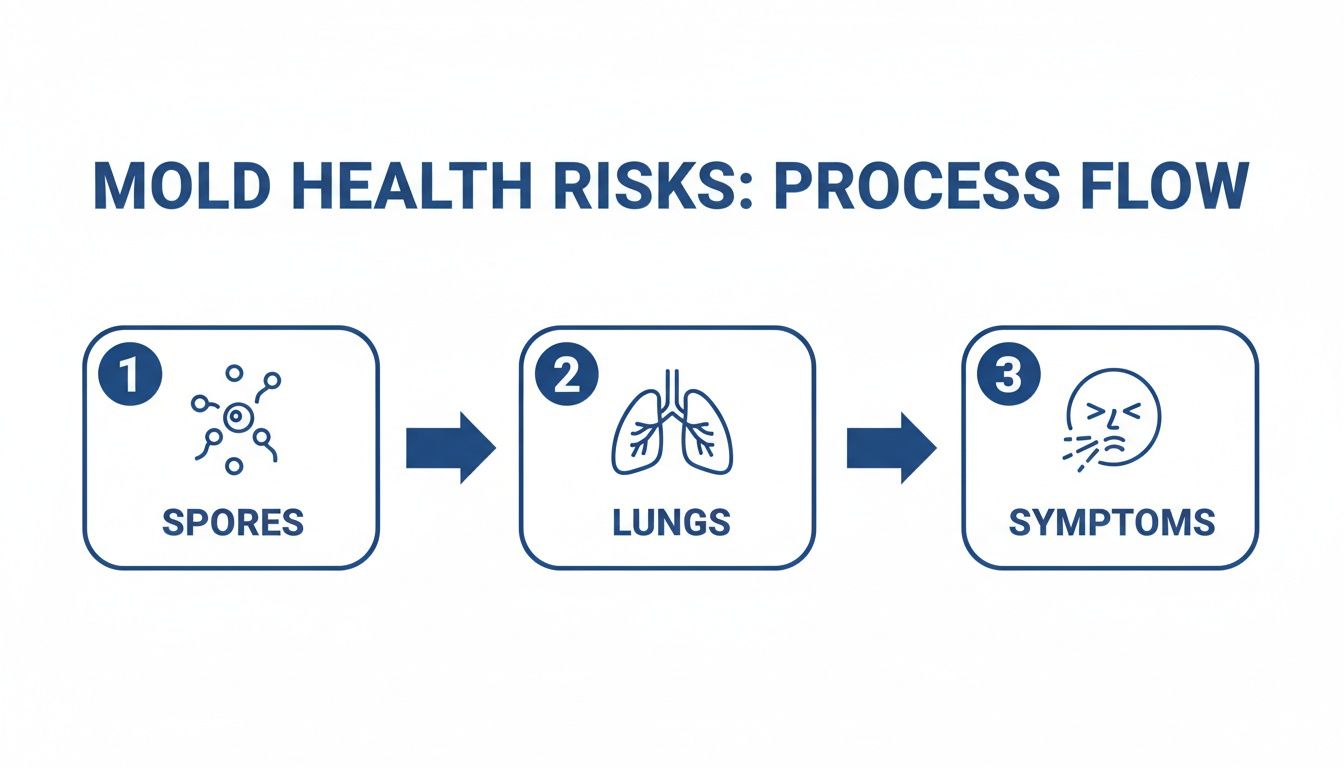
That picture makes it pretty clear: the real danger isn't the black spot you can see, but the invisible cloud of spores it can release into your home.
Assembling Your Safety Kit
Please don't underestimate the need for proper protective gear. This is a non-negotiable first step. Think of it as your personal armor against inhaling or even touching mold spores.
Here’s what your essential safety kit should have:
- An N95 Respirator: A simple dust mask just won’t do the job here. An N95 is specifically designed to filter out those tiny mold spores and keep them out of your lungs.
- Safety Goggles: Grab a pair that wraps around to shield your eyes from any cleaning solution splashes or airborne particles.
- Non-Porous Gloves: Rubber or neoprene gloves are perfect. They'll keep both the cleaning solution and the mold from contacting your skin.
- Old Clothing: Wear long sleeves and pants you don't care about. You'll want to either wash them in hot water immediately after or just toss them.
Preparing the Area for Cleanup
Once you're suited up, the next mission is containment. You need to isolate the work area to prevent mold spores from catching a ride on air currents to other rooms. It’s a simple but crucial step that keeps a small window sill problem from becoming a whole-house nightmare.
Start by shutting off your HVAC system and any fans in the room. It’s also a great idea to lay a plastic drop cloth on the floor under the window to catch any drips or debris. If the moldy window is near a doorway, you might even consider sealing it off with some plastic sheeting just to be extra cautious.
Expert Tip: Before you start scrubbing, lightly mist the moldy area with water from a spray bottle. This helps weigh down the spores, keeping them from going airborne as you clean.
Choosing the Right Cleaning Solution
A lot of people think bleach is the answer for everything, but it's often not the best choice, especially for porous surfaces like wood or the drywall around your windows. Bleach can kill the mold on the surface, but its water base can actually soak into the material and feed the mold's roots that you can't even see.
A much better—and safer—option is a simple solution of white vinegar. Its natural acidity allows it to penetrate porous materials and kill the mold right down to the source.
- For Non-Porous Surfaces (like vinyl or metal): A simple mix of mild soap and water is usually enough.
- For Porous Surfaces (like wood or drywall): Go with a solution of equal parts white vinegar and water in a spray bottle.
Let that vinegar solution sit on the moldy area for at least an hour before you start scrubbing. This gives it the time it needs to work its magic and kill the spores hiding inside the material.
The Cleaning and Drying Process
After the solution has had time to sit, get in there with a medium-bristle brush or a disposable rag and scrub the mold away. You want to be firm enough to remove all the staining but gentle enough that you don't damage the window sill's surface. An old toothbrush is perfect for getting into tight corners and window tracks.
Now for the most important step in preventing regrowth: the area has to be completely, 100% dry. Any leftover moisture is like rolling out the welcome mat for mold to come right back. Use dry cloths to wipe the area down, then point a fan at the sill for a few hours to make sure every last bit of moisture has evaporated.
When you're all done, carefully put every disposable item—your rags, brushes, gloves, and mask—into a plastic bag, seal it up, and take it straight to your outdoor trash can. A thorough cleanup is a cornerstone of great window care. For more tips on keeping your windows in fantastic shape, take a look at our guide on how to clean inside windows like the pros do. Following these steps ensures your hard work actually lasts.
Long-Term Strategies for a Mold-Free Home
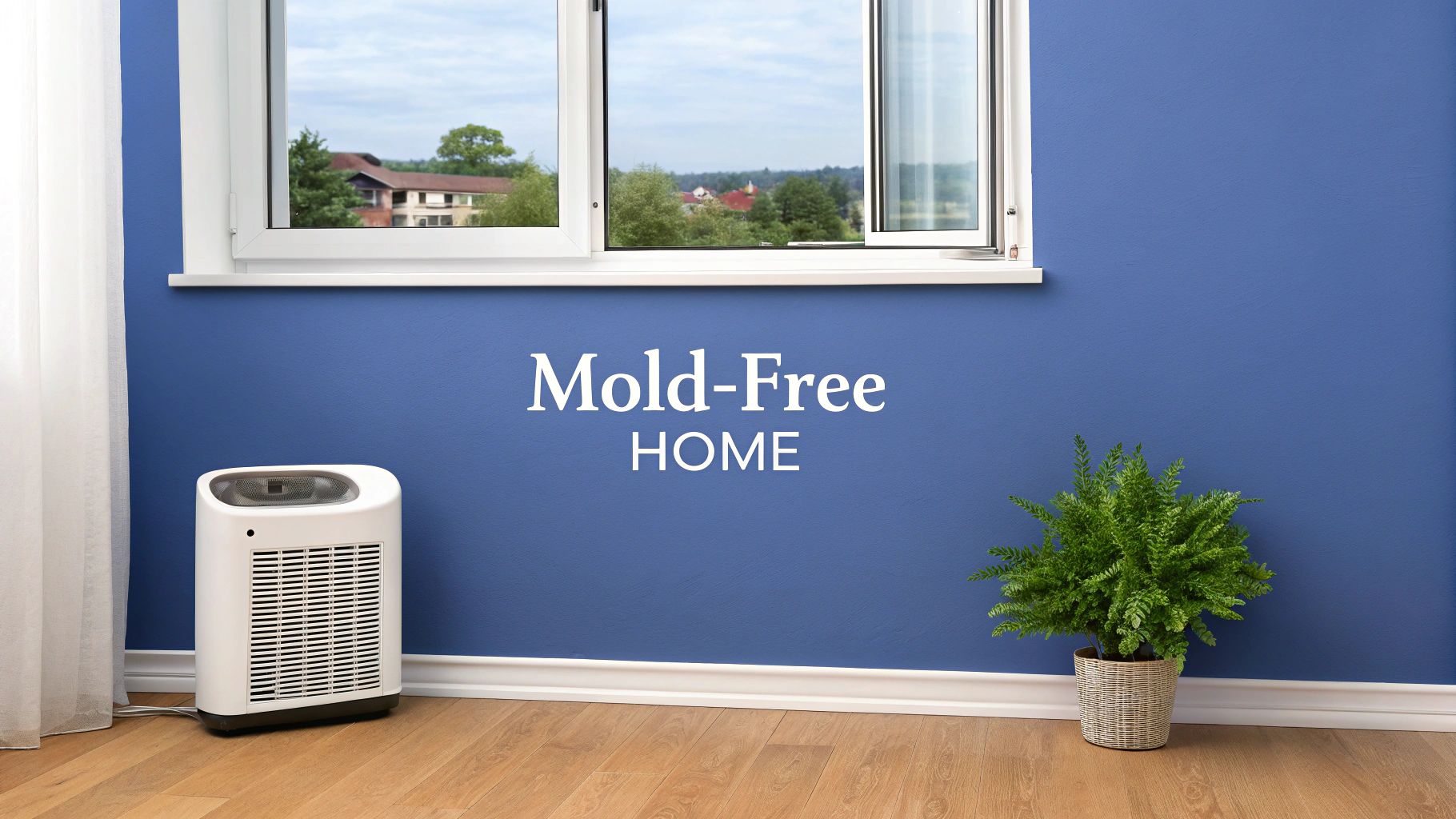
Getting rid of black mold on window sills is a great first step, but the real win is making sure it never comes back. To do that, you have to shift your thinking from reactive cleaning to proactive prevention. It’s all about creating an environment in your home where mold can’t get the foothold it needs to grow in the first place.
This comes down to controlling the one thing mold absolutely needs to survive: moisture. For homeowners in Phoenix, Scottsdale, and across the Valley, this involves a few key strategies designed for our unique climate. The mission is simple: manage indoor humidity, keep the air moving, and make sure your windows are in top shape to fight off condensation.
Master Your Indoor Humidity
Even in Arizona's famously dry climate, the air inside our homes can get surprisingly humid. Everyday life is the main culprit here, releasing a lot of water vapor into the air that eventually fuels mold growth on cool window panes.
Simple changes in your daily routine can make a massive difference. Think about the steam that comes from cooking a big pot of soup or taking a long, hot shower. If that steam has nowhere to go, it hangs in the air and settles on your windows as condensation.
Here are a few practical habits to get into:
- Use Exhaust Fans Religiously: Always run the exhaust fan in your bathroom during a shower and for at least 20-30 minutes after. Do the same with your kitchen's range hood whenever you're cooking.
- Space Out Your Houseplants: Plants naturally release moisture. Try not to cluster them together, especially near windows. This improves air circulation and stops you from creating a tiny, humid microclimate.
- Wipe Down Condensation Immediately: Notice your windows "sweating" in the morning? Don't just leave it. Grab a dry cloth and wipe it away before the moisture can pool on the sill.
Boost Your Home's Ventilation
Mold loves stagnant air. By improving the air circulation throughout your home, you can break up those pockets of humid air and keep surfaces drier, making it a much tougher place for mold to survive. You don't need some complex, expensive system—a few small adjustments can have a huge impact.
For instance, just opening your windows for 10-15 minutes a day (especially during cooler, less humid times) can flush out stale, moist air and pull in fresh, drier air. It's a simple act that disrupts the damp conditions mold thrives in. Running your ceiling fans on a low setting also keeps the air moving, even when the AC isn't kicking on.
Controlling moisture is the foundation of all mold prevention. By managing humidity and ensuring good airflow, you’re not just cleaning up a problem—you’re removing the core conditions that allow mold to thrive in the first place.
Getting a handle on moisture is crucial. For more advice on protecting your whole house, this guide on how to avoid mold in your home offers some great broader strategies. A whole-home approach is always the best defense.
Maintain Your Window Integrity
Your windows are the main line of defense between your air-conditioned home and the Arizona heat. If they aren't properly sealed or maintained, they become a weak spot where moisture—and mold—can easily sneak in.
Leaky seals around the window frame are a common problem, letting in humid air or even rain during monsoon season. This creates a damp environment right where mold loves to set up shop. A quick check can tell you a lot; run your hand along the edges of your windows and feel for drafts. That's a dead giveaway of a failing seal.
This is also where professional maintenance makes a real difference. At South Mountain Window Cleaning, our services go beyond just making the glass sparkle. We get in there and thoroughly clean out the window tracks, removing all the dirt, pollen, and organic gunk that mold uses as a food source. Clean tracks also help your window create a much better seal when it’s closed.
For a deeper dive into keeping every part of your window clean, check out our guide on how to clean window screens the right way. When you combine your own good habits with professional care, you build a powerful, long-term strategy for a healthy, mold-free home.
Knowing When to Call for Professional Help
Tackling a small spot of black mold on window sills yourself can feel like a win. But it's crucial to know when you're looking at a problem that's way beyond a simple DIY fix. Trying to handle a significant mold issue without the right training and gear can backfire, spreading spores all over your Phoenix home and making things much worse.
Knowing your limits is the first step to protecting your house and your family. There are some clear red flags that should make you put down the sponge and pick up the phone.
Clear Signs You Need an Expert
If any of this sounds familiar, your best and safest move is to bring in a professional. These aren't just minor inconveniences; they're signs that the mold problem is bigger than what you can see.
- It’s a Big Patch: The rule of thumb we go by is if the mold covers more than 10 square feet (think a 3-foot by 3-foot area), it's too big to handle on your own. An outbreak that large points to a serious moisture source that a pro needs to track down.
- That Musty Smell Won’t Go Away: You've scrubbed the visible mold off, but that damp, earthy smell is still hanging in the air. That's a classic sign mold is hiding where you can't get to it—inside the wall, under the floor, or deep in the window frame itself.
- The Mold Comes Right Back: You cleaned the sill, dried it out completely, and a few weeks later, it's back. This is the mold telling you that its water source is still active. A professional can find that hidden leak or condensation issue and fix it for good.
- You Spot Other Water Damage: Peeling paint, warped wood, or drywall that feels soft and crumbly around the window are major warning signs. This means water has soaked into the building materials, creating the perfect hidden breeding ground for a ton of mold.
When mold is widespread or keeps coming back, it’s no longer just a cleaning issue; it’s a symptom of a larger problem with your home's environment. Professional intervention is necessary to break the cycle for good.
Getting the Right Help for the Job
So, you've decided to call for help. Great! But who do you call? There are a couple of different pros involved in fixing a serious mold situation, and they each have their own specialty.
A mold remediation company is who you call for a full-blown interior infestation. These are the specialists with the heavy-duty containment gear, air scrubbers, and know-how to safely remove mold from inside your walls, attic, or crawlspace. If you've got a patch bigger than 10 square feet or that musty smell just won't quit, they're your first call.
An exterior cleaning specialist, like us at South Mountain Window Cleaning, is your first line of defense in preventing the problem from ever starting. We handle the outside factors that make your window sills a welcome mat for mold.
Here’s a quick guide to help you decide.
DIY vs Professional Help Decision Guide
| Situation | DIY Approach | When to Call a Professional |
|---|---|---|
| Small, visible spots of mold (under 10 sq. ft.) | Use a proper cleaning solution and follow safety steps. | If the mold returns quickly after cleaning. |
| A persistent musty odor after cleaning | You can try airing out the room, but this often isn't enough. | The smell means mold is likely hidden inside walls or floors. |
| Mold patch is larger than 3×3 feet | Do not attempt. You risk spreading spores. | This requires professional containment and removal. |
| Visible water damage around the window | You can't fix this with just cleaning. | A sign of a serious, ongoing moisture problem that needs expert diagnosis. |
| Family members have allergies or asthma | Use extreme caution. A mask is a must. | Protect your family's health; pros use proper air filtration. |
At the end of the day, your safety and your home's health are what matter most. Don't hesitate to call for backup if you feel the situation is beyond your control.
How Professional Window Cleaning Creates a Healthier Home
Think of our service as proactive environmental control. Mold needs two things to grow: moisture and a food source. Our professional window cleaning services, available across Scottsdale, Chandler, and the entire Phoenix metro, systematically take those away from the exterior of your windows.
We go beyond just the glass. Our process includes:
- Scrubbing out window tracks to get rid of the dirt, pollen, and organic gunk that mold loves to eat.
- Washing the entire window frame and sill, which removes existing spores and grime that trap moisture against the house.
- Keeping the building exterior clean, reducing the total amount of spores hanging around your home's entry points.
By keeping the outside of your home clean, we make it a much less inviting place for black mold to set up shop on your sills. A clean window isn't just about looks; it's a critical part of a healthy home. If you're ready to see the difference, you can learn more about the benefits of professional window cleaning and how we help homeowners breathe easier.
Common Questions About Window Sill Mold
To wrap things up, we'll answer some of the most frequent questions Phoenix homeowners and property managers have about dealing with mold. Think of this as the final once-over to tackle any lingering concerns about keeping your sills clean and your home healthy.
Is All Black Mold on My Window Sills Dangerous?
Not always, but you should treat it like it is. It's true that many types of mold look black, and not all of them are the infamous toxic Stachybotrys chartarum. That specific kind is actually less common on window sills because it needs something constantly soaked, like drywall after a big leak.
The thing is, any type of mold can trigger allergies and breathing issues. It’s especially tough on kids, the elderly, or anyone with asthma. The best move is to always treat any mold you see with caution and get rid of it immediately. It’s just not worth risking your home's air quality.
Can I Just Paint Over the Mold?
Please don't. Painting over mold is probably one of the worst things you could do. All it does is trap the mold and moisture underneath the paint, creating a perfect little greenhouse for it to thrive.
The mold will keep growing, feeding on the drywall and even the paint itself. Before you know it, that fresh coat of paint will start to bubble, peel, and look worse than before. The only real solution is to completely eliminate the mold and fix the moisture problem first. Then, and only then, should you think about repainting.
When dealing with persistent mold on window sills, many homeowners often wonder if their insurance policy will help with the costs. Learn more about whether does homeowners insurance cover mold to understand your options for larger infestations that require professional remediation.
How Does Professional Window Cleaning Prevent Mold?
A professional cleaning goes way beyond just the glass, tackling the stuff that helps mold get started in the first place. When we're on the job at South Mountain Window Cleaning, we're not just making your windows sparkle; we're cleaning out the entire system.
We get deep into the window tracks and sills, removing the buffet of organic material that mold loves to eat:
- Dirt and dust blown in from our desert winds
- Pollen from nearby plants and trees
- All the other gunk that traps moisture
By getting rid of this "food source," we make your window sills a terrible place for mold spores to land and set up shop.
Why Do My Windows Get So Much Condensation in Arizona?
It feels strange in such a dry climate, right? But it's all about the extreme temperature difference between your cool, air-conditioned home and the blazing Phoenix heat outside. When warm indoor air—say, from cooking or showering—hits the cold surface of your window, it condenses into water droplets.
This "window sweat" runs down the glass and pools on the sill. That little puddle is all it takes to create the perfect damp spot for black mold on window sills to grow. Keeping your window seals in good shape and managing indoor humidity is your best defense against it.
A clean, mold-free home starts with taking care of every part of your property, and that absolutely includes your windows. For a spotless, professional clean that helps protect your home from mold, trust the experts at South Mountain Window Cleaning, LLC. We proudly serve Phoenix, Scottsdale, Paradise Valley, Chandler, Tempe, Gilbert, and the surrounding communities with residential, commercial, and high-rise window washing services. Schedule your free, no-obligation quote today at https://www.southmountainwindowcleaning.com.