
Interior asbestos removal typically runs $5 to $20 per square foot in 2026, and encapsulation is the lower-cost option at $2 to $6 per square foot when the material is stable enough to seal in place. If you're staring at a remodel in Phoenix, a tenant turnover in Scottsdale, or a surprise test result in a Valley property, that's the starting point, not the vague national averages people throw around.
The problem is that most owners hear one number and assume it's a simple labor rate. It isn't. The quote usually covers containment, negative-air setup, bagging, disposal, and clearance testing, so the price rises with the size and difficulty of the work area, not just the visible asbestos itself. For a homeowner, that might mean a kitchen gut job gets expensive fast. For a facility manager, it can mean one awkward mechanical room pushes the bid higher than a whole open area would.
What Homeowners and Property Managers Need to Know About Asbestos Pricing
A Phoenix homeowner sees an old texture layer during a kitchen remodel. A Scottsdale manager finds suspect floor tile before a tenant improvement. The question is straightforward, what does asbestos removal cost per square foot, and what is the safest low-cost move? The direct answer is that interior removal usually lands at $5 to $20 per square foot, while encapsulation runs $2 to $6 per square foot when the material is stable enough to stay in place.
Why the square-foot number isn't a simple labor rate
That per-foot figure covers far more than hauling material out. Crews set up containment, control dust with negative air, bag waste correctly, send it to approved disposal, and finish with clearance testing. A job that looks small can still run into the low thousands once the setup, cleanup, and documentation are included.
Practical rule: If a quote sounds cheap, ask what is missing. If containment, disposal, or clearance is not itemized, the number is incomplete.
Pricing tracks project difficulty more than visible square footage. A clean, isolated room is one thing. A room tied into HVAC, finished walls, or a shared hallway is another. In the Valley, older construction often sits next to tight renovation schedules, so access and containment can push costs higher than the material itself.
For owners in Phoenix, Scottsdale, Paradise Valley, Chandler, Tempe, and Gilbert, the right first move is to treat the square-foot rate as a planning tool, not a final bill. If the material can be safely managed in place, encapsulation often makes better financial sense. If the area is already getting remodeled, removal is usually the cleaner long-term call.
Start with the property condition, not the bid. Exterior siding brings its own set of trade-offs, and this asbestos cement siding resource is a useful reference if you need to compare that work with interior abatement.
Breaking Down Asbestos Removal Cost Per Square Foot by Material and Location
Pricing varies by material and by where the material sits in the building. Walls and drywall often price between $8 and $13.50 per square foot, while floor tile and basement work commonly fall between $5 and $15 per square foot. The cost swing comes from containment, access, and cleanup time, not just the square footage on paper.
Interior materials that usually stay near the core range
Drywall and wall assemblies usually land higher than plain floor work because crews have to control more dust and protect finished surfaces around the work area. Floor tile can come in lower when it is intact and easy to isolate, but the price rises fast if it sits under cabinets, is bonded tightly to the subfloor, or runs through several rooms. Basement work often looks straightforward until the crew has to work around tight clearance, utilities, storage, and limited access.
| Material Type | Location | Cost Per Square Foot | Complexity Level |
|---|---|---|---|
| Walls and drywall | Interior walls | $8 to $13.50 | Moderate to high |
| Floor tile | Interior floors | $5 to $15 | Moderate |
| Basement materials | Basements | $5 to $15 | Moderate to high |
| General interior abatement | Interior spaces | $5 to $20 | Varies by access |
The Valley's older homes and commercial spaces make this even more important. A tidy room with clear access stays closer to the core range, while a cramped unit in Phoenix, Scottsdale, Paradise Valley, Chandler, Tempe, or Gilbert can climb because the crew spends more time setting containment and moving material out safely. That is where quotes start separating. Two jobs can share the same square footage and still land in very different price bands.
Exterior work is a different animal
Roofing and shingles drive costs up because crews need more access control, more protection, and tighter disposal coordination. Exterior materials such as roofs or shingles can run $50 to $150 per square foot because scaffolding, reach, and disposal complexity all add to the job. That is a separate cost bracket, and it should be priced that way from the start.
Roofs and siding punish bad planning. If access is awkward, the quote climbs fast, and a cheap bid usually means someone is undercounting labor or disposal.
For Phoenix and Valley properties, the takeaway is direct. Interior jobs usually stay closer to the standard band, while exterior projects can move well beyond it. Compare quotes only when the material, access conditions, containment setup, and cleanup standard are the same. Otherwise, you are not comparing competing bids, you are comparing different scopes.
Full Removal Versus Encapsulation and Which Option Fits Your Budget
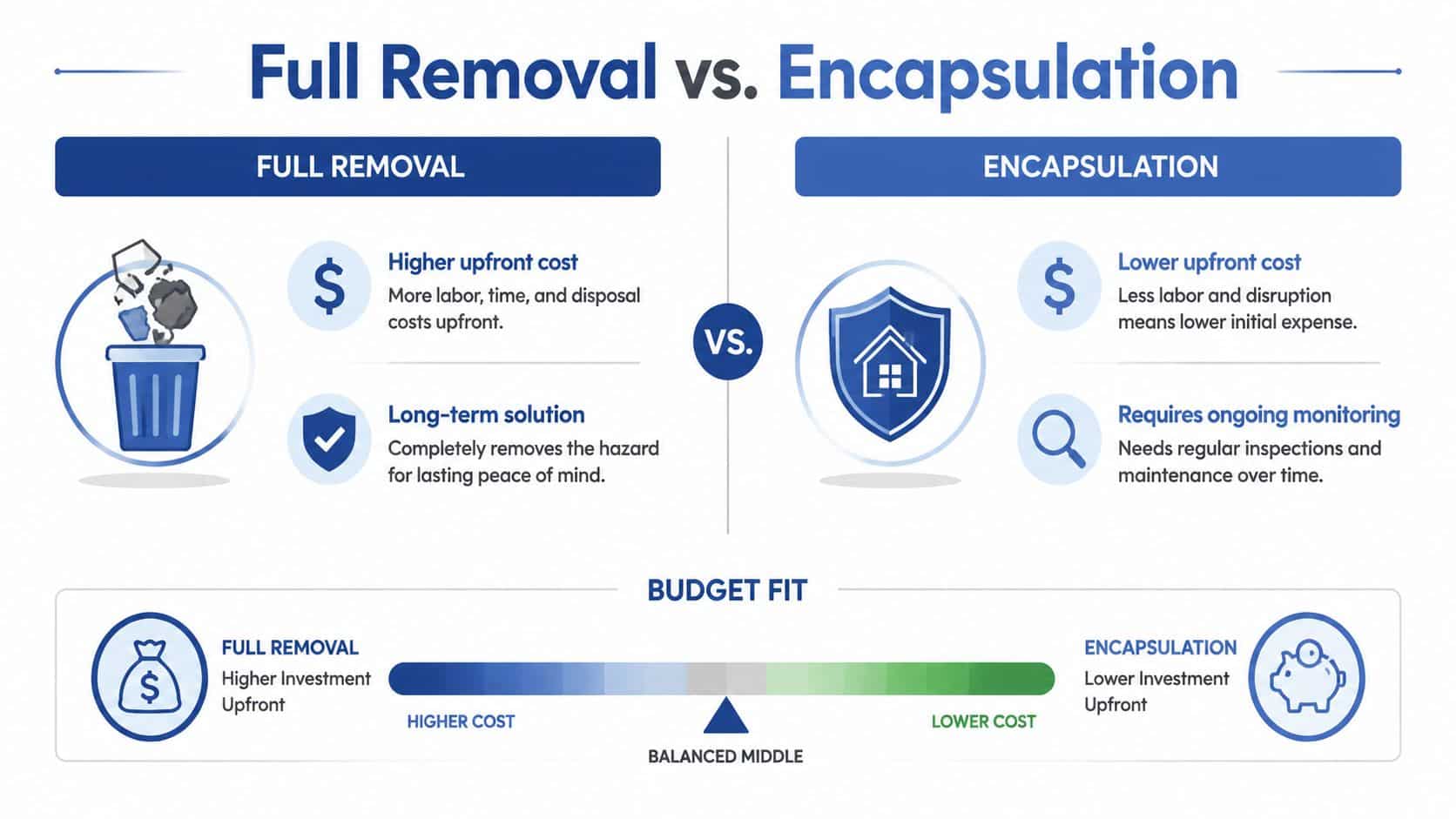
The cheapest safe option is not always full removal. Encapsulation usually costs $2 to $6 per square foot, which is roughly 40% to 60% less expensive than full removal when the material qualifies for sealing instead of extraction (This Old House). That gap is big enough to change the whole project budget, but only if the material is in decent shape and won't be disturbed soon.
When encapsulation makes sense
Encapsulation is the right move when asbestos-containing material is stable, intact, and not likely to be hit during future work. That's the kind of decision that fits a property owner who wants to hold costs down while keeping the building compliant. It also works better when the material is out of the way, not friable, and easy to monitor over time.
When removal is the smarter call
Full removal is the right answer when a renovation, demolition, or major systems upgrade is already on the calendar. It's also the cleaner choice when the material is deteriorating or sitting in a high-traffic area. In Arizona, the dry climate and strong sun can be hard on exterior materials over time, so a spot that looked manageable years ago may not stay that way forever.
Encapsulation is a budget play. Removal is a risk-elimination play. If you own a home you plan to keep, encapsulation may buy time. If you're opening walls, replacing finishes, or preparing a building for sale or teardown, pay for removal once and be done with it.
Bottom line: Don't choose the cheapest option, choose the one that fits the property's next five years.
The best bids will tell you why one method is safer than the other for your site. If a contractor pushes removal in a situation that clearly looks suitable for sealing, that's a sales pitch, not advice.
The Asbestos Abatement Process and What to Expect on Your Timeline
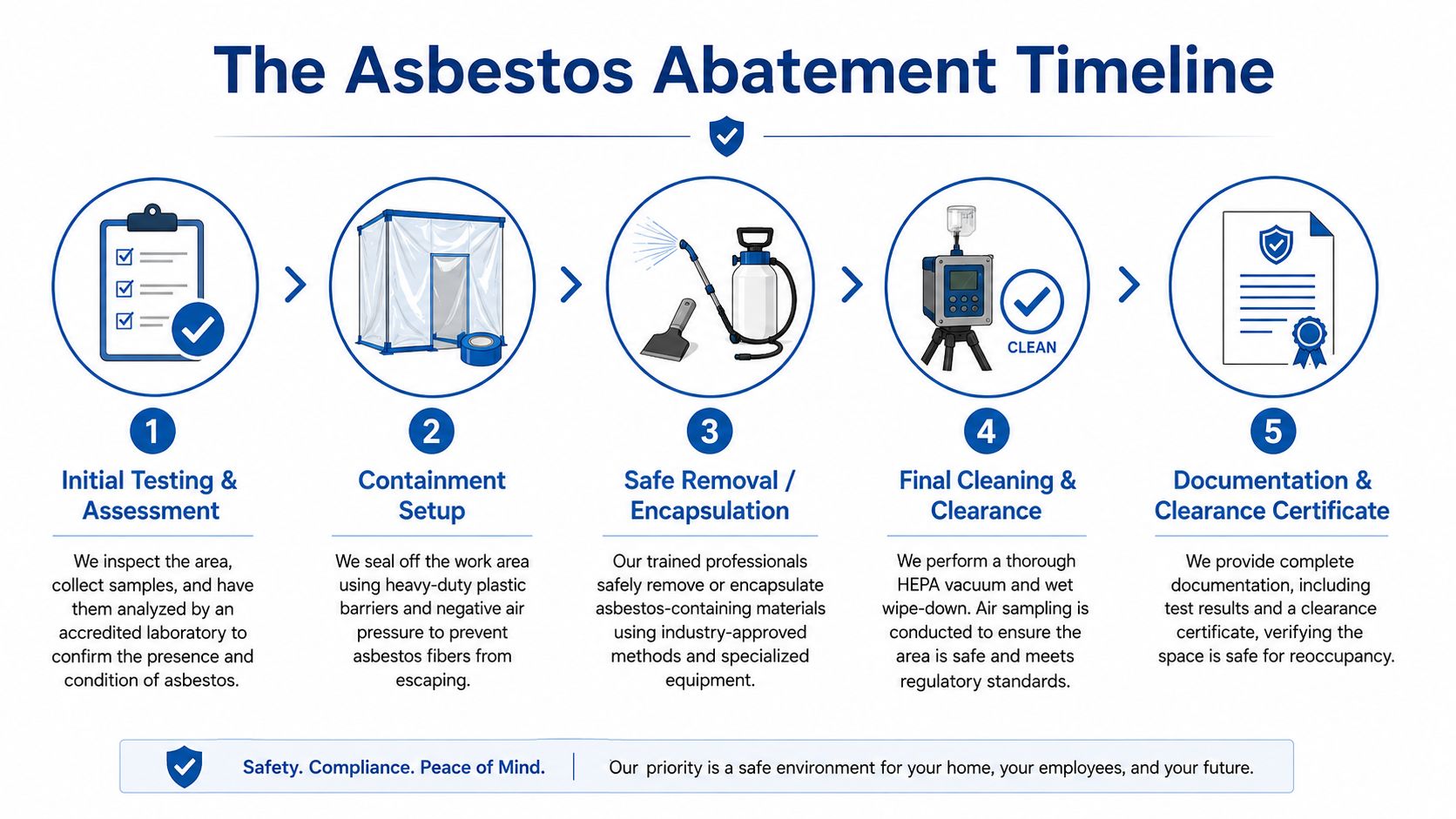
The price makes more sense once you see the work behind it. A proper job starts with inspection and sampling, then moves into containment, removal or encapsulation, cleanup, and clearance testing. If you want a clear inspection checklist before work starts, 2026 asbestos inspection advice for Arizona is a helpful reference for property owners who are still deciding how to proceed.
What happens during a compliant job
The inspector confirms what's present and where it sits. The contractor then seals the area, sets negative air, and builds the work zone so fibers don't spread. Trained technicians handle the removal or encapsulation, and the waste gets bagged and sent to approved disposal. Clearance testing comes last, because no one should re-enter a space before it's been checked.
A solid estimate should align with that sequence. If a proposal skips inspection, ignores air control, or doesn't mention final clearance, it's not a real abatement plan. It's a shortcut.
How long it usually takes
Small contained projects can move quickly, while whole-home or multi-area abatement takes longer because every phase has to happen in order. The work pace also depends on how many rooms must be sealed off and how much cleanup the crew has to do before the space is usable again.
If you manage a building in Chandler, Tempe, or Gilbert, timing matters as much as cost. A phased schedule can keep tenants moving, but only if the contractor understands containment and access logistics. For a smoother handoff after the work is done, post-construction cleaning guidance helps owners think through the final dust and finish-clean issues that follow any invasive project.
You're not paying for demolition. You're paying for controlled removal, legal disposal, and proof that the space is safe to use again.
Key Factors That Increase or Decrease Your Final Asbestos Removal Bill
A square-foot price gives you the starting point. The final bill moves up or down based on how hard the crew has to contain the work, reach the material, and meet local compliance requirements. In Phoenix and the surrounding Valley, that gap can be wide. Two properties can have the same square footage of asbestos, then land at very different totals because one job is straightforward and the other is buried behind finishes, tight access, or active building systems.
Containment and access drive the biggest swings
Containment gets expensive fast when a crew has to protect HVAC equipment, build layered barriers, or work inside occupied buildings where tenants stay in place. Accessibility carries the same kind of penalty. Material in crawl spaces, behind finished walls, or above a cramped attic floor takes more labor, more setup, and more time to clear safely.
The hidden line items owners forget
Inspection and testing come first, then permits, then disposal at licensed facilities. Those items often get buried in a quick quote, but they are part of why real project totals rarely match the headline square-foot number. National averages for asbestos abatement are roughly $1,170 to $3,240 (HomeAdvisor), but that range mixes simple contained jobs with larger, more difficult projects.
| Cost Driver | What It Changes |
|---|---|
| Containment complexity | More labor, more setup, more equipment |
| Accessibility | Longer work time, harder cleanup |
| Inspection and testing | Added pre-work and clearance steps |
| Permits and disposal | More coordination and compliance |
| Project scope | More rooms, more containment, higher totals |
For Phoenix-area owners, local conditions matter too. Permitting, disposal, and labor can vary across the metro area, and those differences show up in the quote. A contractor who prices a confined attic job the same way they price open, accessible material is not being efficient, they are leaving out real work.
Candid advice: The quote that looks cleanest on paper is not always the cheapest project. Pick the one that spells out every cost before the crew starts.
If you want a broader cost comparison for other property upgrades, this concrete polishing cost resource is a useful reminder that access and prep drive pricing in more trades than just abatement.
Red Flags to Watch for When Hiring an Asbestos Removal Contractor
A low quote is not a win if the contractor is unlicensed, uninsured, or sloppy with containment. For commercial owners and HOAs in Paradise Valley, Scottsdale, and Gilbert, that mistake can create liability long after the crew leaves. A legitimate contractor should be able to show current Arizona asbestos licensing, proof of insurance, and a clear compliance plan.
The warning signs I wouldn't ignore
- No proof of certification or licensing. If they can't show current credentials, walk away.
- Vague or unwritten scope of work. You need a clear breakdown of what gets removed, what stays, and how it gets contained.
- Pressure for immediate cash payment. That's not a sign of a professional operation.
- No detailed containment or cleanup plan. Real asbestos work lives or dies on containment.
- No references or project photos from similar Valley jobs. If they've done this work here before, they should be able to prove it.
Practical rule: A contractor who won't explain disposal, containment, and clearance in plain language probably doesn't do those things well.
You also want crews who arrive with proper respiratory protection and containment materials, not improvisation. Ask how they handle disposal, who performs air monitoring, and whether they've done comparable projects in occupied properties. If the answers are fuzzy, the price doesn't matter.
For a deeper look at insurance language and coverage expectations, bonded versus insured guidance is worth reviewing before you sign anything.
Practical Steps to Manage Costs and Protect Your Phoenix Property
If you want to control asbestos costs without getting reckless, do the boring things right. Start with an independent inspection, then get detailed bids that separate labor, containment, disposal, and clearance. Don't bundle asbestos work into a bigger renovation quote unless you can see every line item, because hidden scope is where budgets die.
A simple owner checklist
- Order the inspection early. Don't wait until demolition starts and the schedule is already burning.
- Time the abatement with planned renovations. One containment setup is cheaper than two.
- Ask for multiple itemized bids. Compare scope, not just price.
- Verify disposal and clearance. The job isn't finished until the paperwork says it is.
- Confirm contractor credentials. Licensing and insurance aren't optional.
Arizona property owners also need to respect the regulatory overlap. Federal EPA rules still matter, and disposal should go through approved facilities. In Maricopa County, that means you want a contractor who knows where the waste is going before the job starts, not after the dumpster is full. Summer heat is another real operational issue in the Valley, because it can affect scheduling, worker safety, and how long a containment zone can stay active.
The smartest savings usually come from planning, not bargaining. When owners combine testing with other pre-renovation inspections, line up the abatement with other construction phases, and insist on clean documentation, they avoid duplicate setup costs and ugly surprises. That's how you keep a remediation project from turning into a budget problem.
If your property needs exterior cleaning, window maintenance, or post-construction washdown after a renovation, South Mountain Window Cleaning, LLC can help keep the site sharp and presentable across Phoenix, Scottsdale, Paradise Valley, Chandler, Tempe, and Gilbert. Visit South Mountain Window Cleaning, LLC to request service and keep your building looking professional while you handle the bigger compliance work.