
Aluminum siding installation typically runs $6 to $10 per square foot, and for an average home that usually puts the total project in the $12,000 to $25,000 range. If you're pricing out a re-side in Phoenix, that national benchmark is useful, but it doesn't tell you which version of aluminum holds up under desert sun or where quotes tend to climb.
A lot of homeowners start this process after noticing the same pattern. Paint is fading faster on the sunniest walls, trim lines look tired, dust sticks to every textured surface, and the house no longer feels as sharp from the street as it should. In Phoenix, siding isn't just about appearance. It has to tolerate relentless UV, big day-to-night temperature swings, dust storms, and occasional monsoon moisture without looking worn in a few years.
That's why aluminum siding cost isn't just the number at the bottom of a proposal. The smarter question is what you're buying for that number. Panel thickness, finish quality, installation details, repainting needs, and how the installer handles expansion all matter more here than they do in milder climates.
Understanding the True Cost of Siding Your Home
If your house needs new siding, you're probably balancing two competing concerns. You want something that looks clean and modern, but you also don't want to buy a product that struggles in Arizona heat.
That tension is exactly where aluminum can make sense. It sits in the middle of the market on price, and when it's chosen well, it can hold up for decades. But “chosen well” matters. A low-grade panel on a heavily sun-exposed wall is a different purchase from a thicker, better-finished panel installed by a crew that understands desert movement and fastening.
Why homeowners get stuck on the wrong number
Most online pricing starts and stops with cost per square foot. That's useful, but it can also be misleading because two projects with the same wall area can price very differently. Window count, gables, trim detail, tear-off work, and finish upgrades all change the quote.
Phoenix homeowners also need to think beyond the panel itself. The siding has to work as part of a whole exterior system, including trim, moisture management, and transitions around windows and doors. If you're comparing materials broadly, it helps to review other durable exterior siding options so you're not judging aluminum in a vacuum.
Practical rule: The cheapest quote often leaves out the details that make siding last in extreme sun.
What to evaluate before you sign
A solid estimate should answer three questions clearly:
- What are you paying for up front: Materials, labor, removal, and finish work should be separated enough that you can see where the money goes.
- How will it behave in Phoenix: Ask how the product handles UV exposure, dust, and expansion.
- What will it take to keep it looking good: Some exteriors stay presentable with washing alone. Others need repainting later.
If your home has older cladding and you're still sorting through what's on the walls now, this guide to asbestos cement siding is worth reading before any removal work starts.
Gauging Your Budget National and Phoenix Price Ranges
The national baseline is straightforward. HomeGuide's aluminum siding cost data lists $6 to $10 per square foot in 2026, with a national average total cost of $18,500 for a standard 2,000 to 2,500 square foot home, and an overall project range from $8,000 to $40,000 depending on region, material grade, and architectural complexity.
That gives you a reliable starting point. It also tells you why online calculators can feel inconsistent. They're often pulling from very broad project types.
What those ranges mean in real life
A smaller, simpler house with fewer cut lines lands closer to the lower end. A larger home with more corners, more window trim, taller walls, and more removal work moves upward quickly. In Phoenix, labor availability, seasonal demand, and the need for sun-tough finishes can push quotes toward the upper half of the general range.
I'd treat Phoenix pricing as a local application of the national band, not a completely separate market. The desert climate doesn't automatically make every project cost more, but it often rewards better panel selection and better installation details. That's where homeowners either protect value or create future headaches.
| House Size (sq. ft.) | National Average Range | Phoenix-Area Estimated Range |
|---|---|---|
| 500 | $8,000 to $12,000 | Often near the lower end of the national range for simple layouts, but can rise with trim-heavy elevations |
| 2,000 to 2,500 | $12,000 to $25,000 | Commonly within the national range, with premium finishes and more complex elevations pushing higher |
| Larger or highly complex homes | Up to $40,000 | Can approach the high end when architecture, removal, and upgraded materials stack together |
Why Phoenix quotes often need more scrutiny
Here's where homeowners make a useful shift. Don't ask only, “Is this bid high or low?” Ask, “What assumptions is this bid making?”
For example, one contractor may price a straightforward install with standard finish options. Another may assume upgraded coatings or more labor around sun-exposed elevations. That doesn't mean one is wrong. It means the scope may not match.
Good siding budgeting starts with apples-to-apples comparisons. If two bids use different panel grades or different prep assumptions, the totals won't tell you much.
For a general example of how coatings and finish processes can change project pricing, NSP Coatings' cost guide is useful background reading even though it isn't a siding-specific Phoenix guide.
If you're planning a broader exterior refresh at the same time, it also helps to understand the cost of pressure washing so you can separate temporary cosmetic cleanup from a true siding replacement budget.
Beyond the Panels What Is Included in Your Estimate
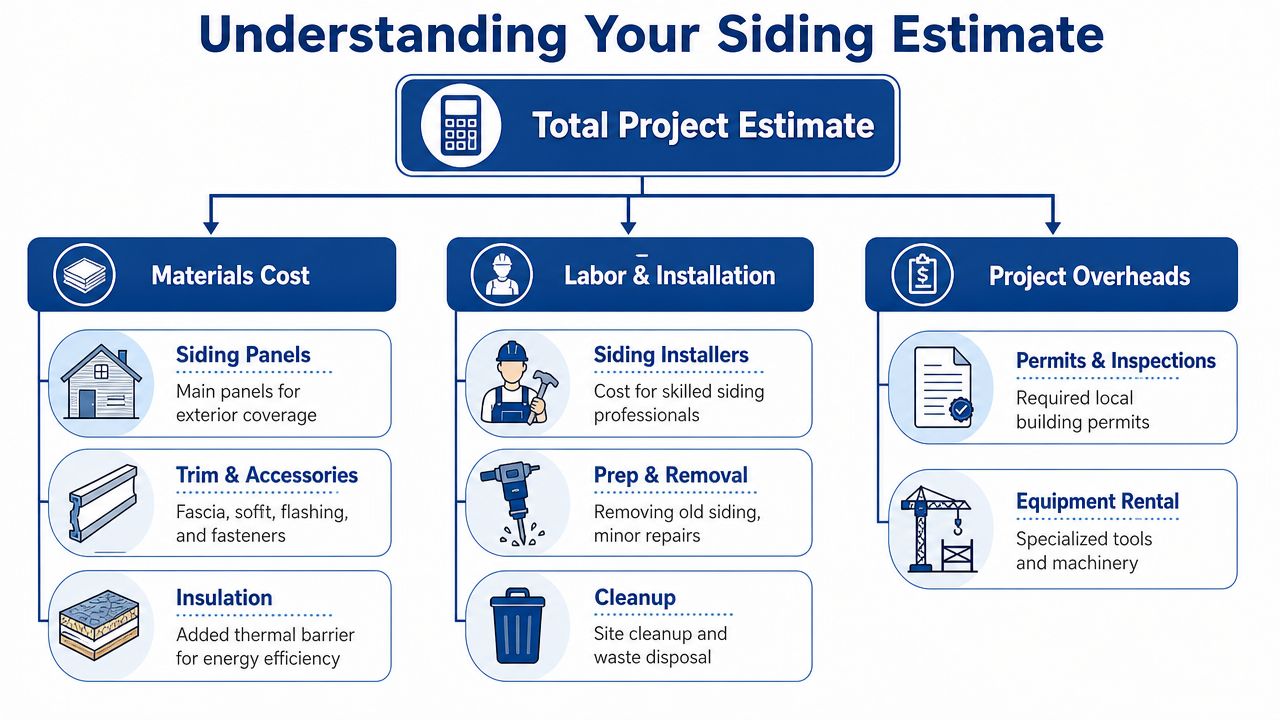
The siding panel gets most of the attention, but it's only one line in the job. A realistic quote should break the project into materials, installation labor, tear-off or prep, and the support pieces that make the siding system complete.
This cost breakdown visual helps show how those pieces fit together.
The core line items
GTO Aluminum's pricing guide puts the installed cost at $3.30 to $10.00 per square foot, with a standard market average of $6.00 to $10.00 per square foot. The same guide notes that labor alone accounts for $3.00 to $6.00 per square foot, and old siding removal adds $0.70 to $2.00 per square foot.
Those numbers matter because they explain why “material-only” conversations usually derail budgeting. A homeowner may focus on panel price, then get surprised when removal, setup, detail work, and disposal reshape the final total.
Here's how I'd read a quote:
- Panels and finish: This is the visible product. Gauge, profile, and coating quality drive much of the material difference.
- Labor: Siding labor isn't just hanging panels. It includes layout, fitting around openings, handling corners, and making the final lines look intentional.
- Removal and prep: Tear-off sounds simple until damaged substrate, old fasteners, or layered wall conditions show up.
The overlooked costs that change the total
Many homeowners are often caught by a quote that initially looks competitive until they realize it excludes key accessory work.
Watch for these items:
- Trim and accessory pieces: Fascia, soffit transitions, starter strips, J-channel, flashing, and fasteners aren't optional details. They finish the job and protect edges.
- House wrap or moisture barrier: Even in a dry climate, wind-driven rain during monsoon season can expose weak wall prep.
- Insulation upgrades: Some projects pair re-siding with added wall performance. That can improve comfort, but it changes the budget.
- Repairs discovered after tear-off: Once old siding comes off, wall sheathing or framing conditions may require attention before installation continues.
A quick visual walk-through can help you understand how contractors think about installation sequence and detail work before comparing bids.
Where premium options can be worth it
Not every upgrade is worth paying for. In Phoenix, two often are.
First, thicker or better-built panels usually handle heat movement and wind-driven debris better than bargain-grade products. Second, upgraded coatings can pay off on hard-hit elevations that get blasted by afternoon sun. Those upgrades raise the estimate, but they can reduce the chance that you'll dislike the finish years before the siding itself is worn out.
A clean quote isn't the same as a complete quote. If trim, prep, or moisture detailing is vague, ask for it in writing.
If your existing exterior has staining, algae, or organic buildup, this guide on how to remove mold from siding can help you tell the difference between a surface-cleaning issue and a true replacement problem.
How Arizona's Climate Impacts Siding Cost and Performance
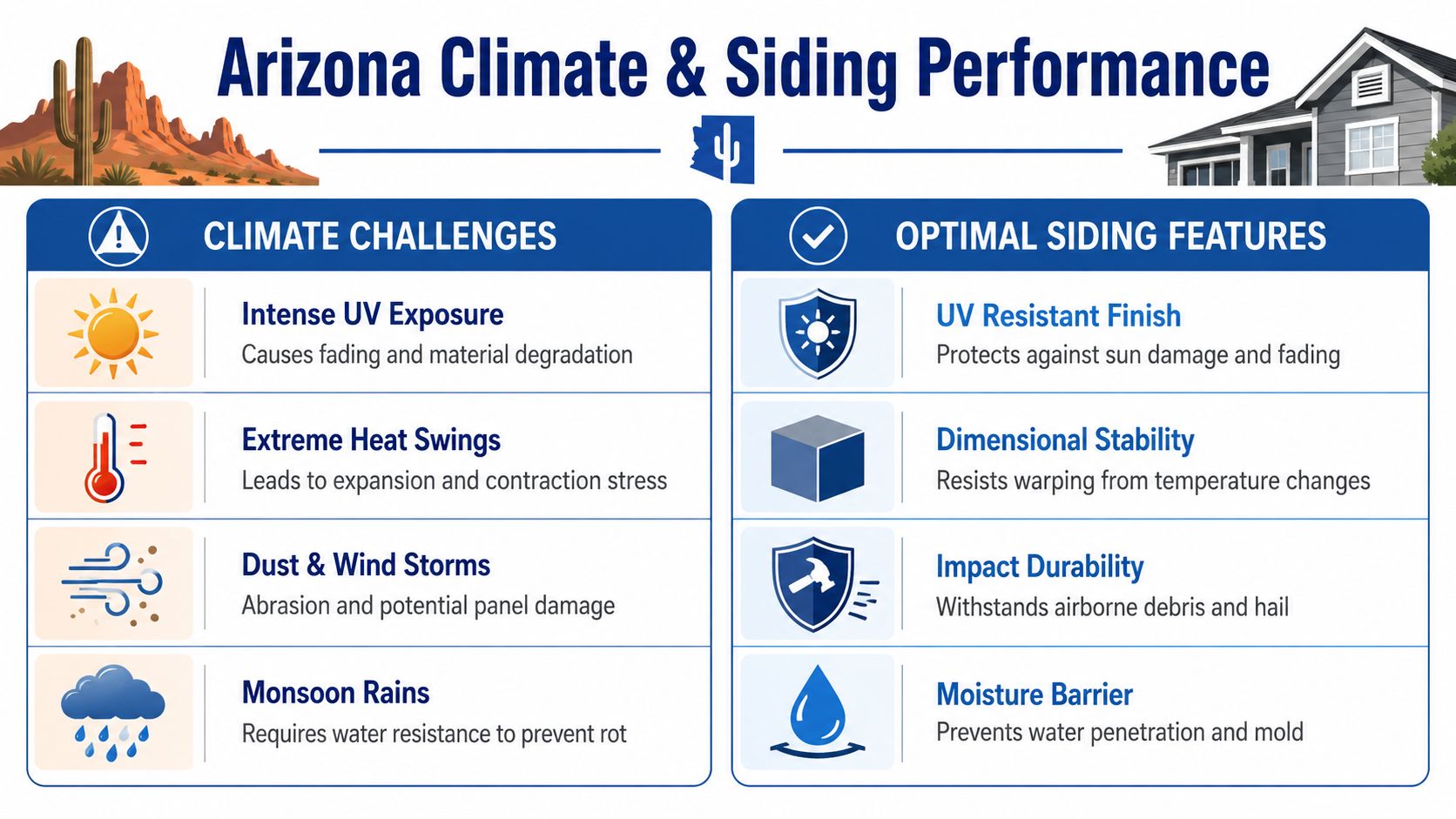
Phoenix changes the math on siding. A product that performs acceptably in a milder region may age very differently here because the stress pattern is harsher and more repetitive.
The two biggest issues are UV exposure and thermal movement. Strong sun breaks down finishes over time, and large temperature swings push materials to expand and contract. Add dust, monsoon winds, and occasional flying debris, and siding selection becomes less about style alone and more about resilience.
Why finish quality matters more in the desert
This is one area where paying more up front can make sense. TruLog Siding's aluminum siding comparison states that vinyl-coated aluminum costs 15 to 25% more upfront but offers 30 to 40% longer resistance to chalking and fading in UV-exposed regions like Arizona. The same source says coated panels retain color integrity for 35+ years versus 25 years for uncoated in desert climates.
That doesn't mean every Phoenix home needs coated aluminum. But it does mean homeowners should stop thinking of coatings as a cosmetic upgrade only. In this climate, the finish is part of the performance package.
What works and what doesn't
Some practical trade-offs are easy to miss:
- Higher-gauge or better-built panels: These usually make more sense on broad, sun-exposed walls where waviness and movement become more visible.
- Factory-applied coated finishes: Better for homes where fading would be obvious and hard to ignore.
- Cheap finish-first buying: This often disappoints in Phoenix because appearance changes arrive long before the panel itself fails.
- Ignoring orientation: West- and south-facing elevations often take the worst punishment. They deserve closer specification review than shaded walls.
In Arizona, siding should be chosen by elevation, exposure, and finish system, not just by brochure color.
Dust also matters more than many people expect. Fine desert dust doesn't usually destroy aluminum, but it can dull appearance and highlight finish wear. Homes near open lots or heavier traffic often show that sooner.
Lifespan Maintenance and Return on Investment
A Phoenix homeowner can get a low aluminum siding bid, feel good on install day, and still be disappointed ten years later if the finish has chalked, the west wall looks tired, or repainting was never part of the budget. Long-term value comes from how the siding holds up in desert sun and how much it costs to keep the house looking cared for.
What long service life actually requires
Renoworks' comparison of vinyl and aluminum siding puts aluminum siding in the 25 to 40 year lifespan range and notes periodic repainting at $2,250 to $8,500 every 10 to 15 years as part of long-term upkeep. That matters in Arizona because appearance often drives replacement decisions before the metal itself is worn out.
In real projects, aluminum usually ages in two separate ways. The panel can remain functional for years, while the finish loses some of its clean, uniform look sooner on hard-exposed elevations. Homeowners who plan for washing, touch-up work, and eventual refinishing tend to feel better about the investment than homeowners who expect the exterior to stay unchanged with no upkeep.
Where return on investment actually comes from
Aluminum siding rarely pays back through resale alone. The better return usually comes from several smaller wins that add up over time: slower cosmetic decline, less risk of neglected-looking exterior walls, and fewer reasons to do an early replacement because the house looks worn before the siding has reached the end of its service life.
That same logic shows up in this broader guide to home addition value. Exterior improvements often earn their value through daily use, preserved condition, and buyer confidence, not just a single resale percentage.
For Phoenix homes, that buyer-confidence piece is real. Clean lines, stable panels, and a finish that still looks intentional under harsh sun can help a house present better than one with faded or blotchy cladding. That does not make aluminum the automatic best choice. It does mean the cheapest install is often not the best value if the appearance drops off early.
Maintenance that protects the investment
Maintenance is straightforward, but it is not optional.
Dust, irrigation overspray, and traffic film can sit on the finish and make oxidation or paint wear easier to spot. Regular washing helps preserve appearance and gives you a chance to catch chipped paint, loose trim, failing caulk, and small impact dents before they turn into a larger repair bill.
If your home also has wood trim or you are comparing siding materials side by side, this look at cedar siding maintenance is a useful contrast. It shows how aluminum can still be the lower-upkeep option, even when it eventually needs repainting.
The strongest return usually comes from siding that still looks right after years of Phoenix sun, not from the lowest number on the original estimate.
Actionable Tips for a More Affordable Siding Project
You can manage aluminum siding cost without automatically dropping to the lowest-grade product. The key is trimming waste, not cutting the parts of the project that protect performance.
Where to save without creating future problems
- Get multiple detailed quotes: Ask each contractor to break out materials, labor, removal, and trim work. A short quote with one lump-sum number makes comparison harder and often hides scope differences.
- Standardize the scope first: Before comparing prices, make sure each bidder is pricing the same walls, the same trim areas, and the same removal assumptions.
- Choose colors and profiles carefully: Standard finishes are often easier to source and easier to match later if you need a repair. Custom-looking choices can be attractive, but they sometimes carry a higher premium without improving durability.
- Be strategic about upgrades: Spend on the elevations that take the harshest sun or strongest exposure. Not every wall needs the same level of finish investment.
Where homeowners should be cautious
Some cost-cutting ideas sound good on paper and go badly in practice.
- DIY tear-off: This can reduce labor, but it also creates disposal, safety, and hidden-damage issues. If you remove siding yourself and damage trim or expose wall problems, the savings can disappear quickly.
- Accepting vague allowances: If a contractor says they'll “deal with trim as needed,” ask for more detail. Undefined work often becomes a change order.
- Choosing the lightest or cheapest panel available: In Phoenix, that can be a false economy if appearance matters to you over time.
Timing can help
Ask contractors whether their schedule affects pricing. Some crews are more flexible when demand is lighter, and even if the per-square-foot rate doesn't shift much, you may get better scheduling, more attention to detail, or a cleaner installation window.
A more affordable project comes from planning well, not from pretending all bids describe the same work.
Questions to Ask Before Hiring a Siding Installer
A Phoenix homeowner can get two aluminum siding bids for the same house and still be comparing two very different jobs. One contractor may be pricing heavier panels, careful trim work, and proper allowance for heat movement. Another may be pricing the cheapest profile available and leaving half the details for change orders later.
That is why the hiring conversation matters as much as the number at the bottom of the proposal.
Questions that reveal real experience
Start with questions that expose whether the installer has worked through Arizona heat before, not just sold siding in general.
Ask these directly:
- What panel gauge or product tier are you recommending for this house, and why? A solid answer should mention sun exposure, visible waviness, dent resistance, and how the material will look after years of harsh light.
- How do you handle expansion and contraction on long west-facing or south-facing walls? In Phoenix, that is not a minor detail. It affects noise, fastening, fit, and long-term appearance.
- How do you finish windows, doors, corners, and roof-to-wall transitions? Experienced installers should be able to explain trim approach, flashing, and where problems usually show up first.
- What is included in this quote, and what items usually turn into change orders? Good contractors can answer that without being vague.
- Who is responsible for tear-off, disposal, and any wall repair found after removal? That affects both final cost and jobsite control.
A contractor who knows aluminum siding in desert conditions usually answers with specifics. A contractor who does not usually falls back on broad promises about quality.
Questions tied to value, not just price
Ask the installer to explain the cost difference between their bid and the next one in material and labor terms.
That conversation is more useful than asking who is cheapest.
Use follow-up questions like these:
- If your price is higher, what exactly am I getting for that difference?
- Are you pricing removal and disposal as a fixed line item or as an allowance that can grow later?
- Which parts of this job matter most for appearance five to ten years from now in direct sun?
- What warranty covers the finish, what warranty covers installation, and what is excluded?
- Have you installed aluminum siding on homes in the Valley, and what performance issues have you seen over time?
Those answers help you judge value in a Phoenix climate, where heat exposure can punish weak installation details long before the siding itself reaches the end of its service life.
Final hiring checklist
Before you sign, get the important points in writing:
- Full scope: Every wall area, trim piece, removal item, and disposal responsibility should be listed.
- Material details: The proposal should name the product line, panel thickness or grade, finish, and trim package.
- Heat-related installation method: Ask for written confirmation on fastening method, clearances, and how the system is set up for expansion and contraction.
- Repair terms: The contract should state how hidden sheathing or wall repairs are handled if damage is found after tear-off.
- Cleanup and protection: Landscaping, dust control, magnet cleanup for metal debris, and haul-away should be spelled out.
- Schedule: Get a realistic start date, job duration, and explanation of what can delay the project.
A capable installer does more than promise a clean new exterior. They should be able to explain how the siding system will hold up on a Phoenix home, where the strongest sun, the hottest walls, and the most visible elevations often decide whether the project feels worth the money.
If you're improving curb appeal in Phoenix, Scottsdale, Paradise Valley, Chandler, Tempe, or Gilbert, don't stop at siding alone. South Mountain Window Cleaning, LLC provides residential, commercial, and high rise window washing services across Arizona, along with house washing and exterior cleaning that help homes and buildings look finished, maintained, and ready to impress.