
When you see those unsightly dark streaks on your siding, it’s easy to think it’s just dirt. But more often than not, you're looking at a living organism. To successfully remove mold from siding, you have to treat it for what it is—mold, mildew, or algae that’s thriving on moisture and feasting on the dust on your home. The secret, especially for homeowners in the Phoenix area, is to use the right approach to actually kill the growth, not just give it a quick rinse.
Why Does Mold Keep Growing on My Siding?
It feels a bit strange to be talking about mold in sunny Arizona, but the climate here in places like Phoenix and Scottsdale actually creates a perfect storm for it. Those stubborn green, brown, or black stains are more than just an eyesore; they're living colonies feeding on the surface of your home. Before you can get rid of them for good, you need to understand what’s inviting them over in the first place.
It all starts with two simple ingredients: a little moisture and a food source. Our intense desert sun bakes dust, pollen, and other organic bits right onto your siding, creating a buffet. All that's missing is some water.
Where Does the Moisture Come From in Arizona?
Even in a dry climate like ours, moisture has a way of showing up. At South Mountain Window Cleaning, we see the same culprits time and again on homes across Phoenix, Tempe, and Gilbert. The main sources are usually:
- Monsoon Season: That huge spike in humidity during our summer monsoons gives mold spores all the moisture they need to come alive and spread.
- Morning Dew: Cool desert nights often lead to condensation building up on siding. It might not seem like much, but it’s often enough to sustain mold, especially on those shaded, north-facing walls that don't get much sun.
- Lawn Sprinklers: If your sprinkler heads are aimed even slightly wrong, they can soak the side of your house day after day. This creates a perpetually damp area that mold and algae absolutely love.
- AC Condensation: That drip line from your air conditioner is designed to get rid of condensation, but it often deposits it right next to your foundation, keeping the bottom of your siding constantly damp.
To get a better handle on the situation, it helps to understand what causes black mold in homes in general. The same core principles of moisture and a food source apply whether it's inside or out. Once you start spotting these problem areas around your own property, you're already on your way to a real solution.
Is that buildup on your siding just grime, or is it something more? It can be tough to tell at a glance.
Mold vs Dirt vs Algae on Your Siding
Use this quick reference table to identify what's growing on your home's exterior.
| Type of Buildup | Appearance | Common Cause | Removal Difficulty |
|---|---|---|---|
| Dirt/Grime | Brown or gray, often in a dusty or muddy layer. Can be washed away. | Dust, rain runoff, pollution. | Easy |
| Mold/Mildew | Typically black, brown, or dark green spots. Can appear fuzzy or slimy. | Moisture and organic matter. | Moderate |
| Algae | Green or sometimes blackish streaks, often found on shaded or damp sides. | High humidity and lack of sunlight. | Moderate |
Knowing what you're up against helps you choose the right cleaning method. While dirt might rinse away with a hose, mold and algae need to be killed to prevent them from growing right back.
Tackling mold isn't just about curb appeal; it's about protecting your property's value. It's a much bigger issue for homeowners than most people think.
This problem is far more common than you might realize. Some studies show that a staggering 47% of buildings in the USA have issues with mold. For homeowners across Phoenix, Scottsdale, and Chandler, the combination of our intense sun and monsoon humidity makes siding a prime target. This isn't just about looks—visible mold can have a real, negative impact when it comes time to sell your home.
Your Guide to Safely Cleaning Mold from Different Siding Types
So, you’ve figured out what’s causing those ugly dark streaks on your home's exterior. Now you’re ready to get rid of them for good. The secret to successfully removing mold from siding isn’t just about scrubbing harder; it’s about using the right approach for your specific siding material.
A method that works perfectly on tough vinyl could easily damage delicate stucco, especially under our intense Arizona sun. This is where a little know-how goes a long way.
We’ll walk you through the safest, most effective ways to clean mold from the most common siding types we see here in the Phoenix area: vinyl, wood, stucco, and brick. We'll cover everything from simple DIY solutions to when you should call in the professionals at South Mountain Window Cleaning.
First Things First: Safety Gear and Plant Protection
Before you even think about mixing cleaners, safety has to come first. When you start cleaning, mold spores can get into the air, and even mild cleaning solutions can irritate your skin and eyes.
- Personal Protective Equipment (PPE): Don't skip this. Always wear waterproof gloves, safety goggles, and a good mask (an N95 respirator is best) to protect yourself from spores and chemical splash-back.
- Protect Your Plants: Your beautiful desert landscaping in Scottsdale or Chandler is more sensitive than your siding. Before starting, give the ground a good watering and cover your plants, shrubs, and flower beds with plastic sheeting. This helps dilute and block any runoff.
Once you’re suited up and your landscaping is protected, you’re ready to pick your cleaning method.
This simple chart shows exactly how mold takes hold on your siding.
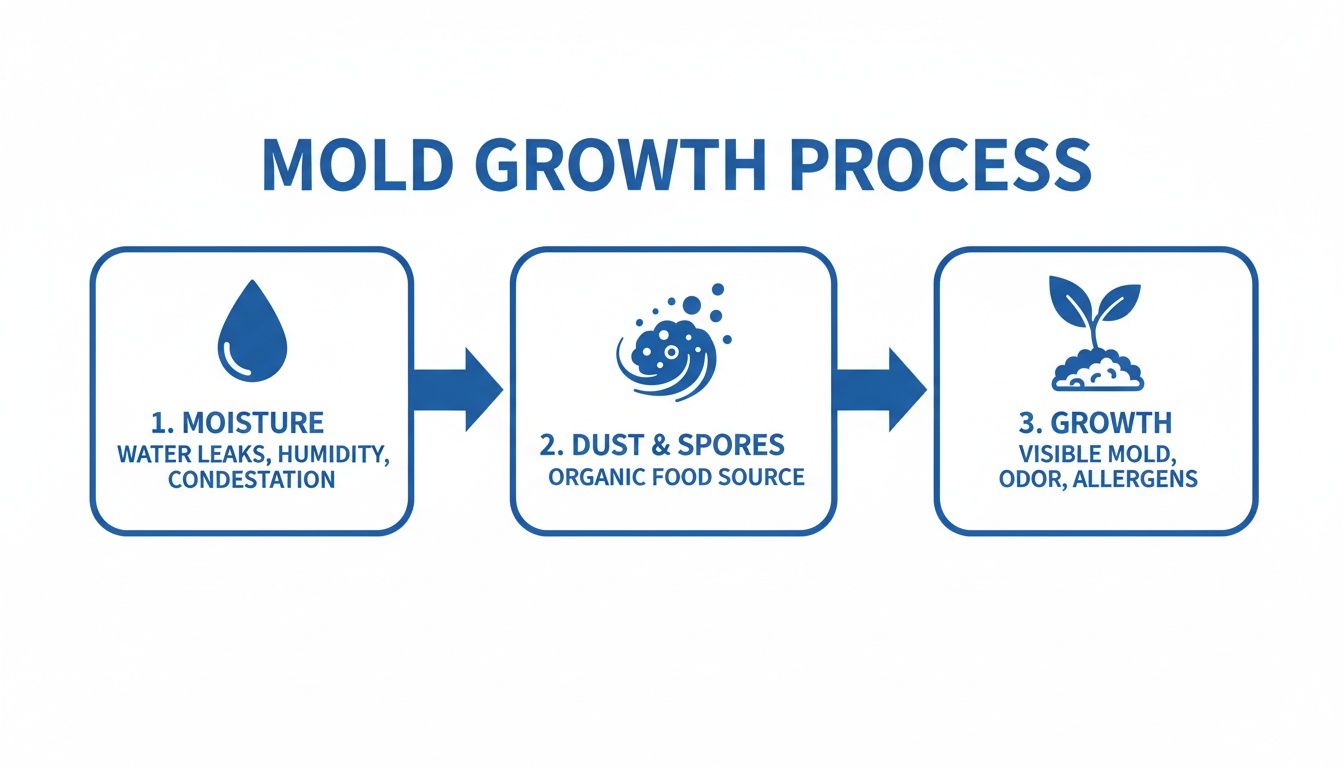
It really comes down to a simple formula: moisture plus a food source like dust is all it takes to trigger mold growth on your exterior surfaces.
Choosing Your Cleaning Solution
You’ve got two main routes for a cleaning solution: a simple homemade mix or a commercial-grade mold remover.
For smaller, isolated patches of mold, a DIY solution is often all you need. A great go-to is a straightforward mix of vinegar and water that works great in most cases.
DIY Mold Cleaning Recipe: Mix one part white vinegar with three parts water in a garden sprayer or a spray bottle. The acetic acid in vinegar is fantastic for killing mold and mildew without being too harsh.
For more stubborn or widespread growth, you’ll want to step up to a commercial cleaner formulated specifically for siding. As professionals, we are big fans of oxygen bleach-based cleaners. They are excellent at killing organic growth but are much safer for your siding’s finish and the plants below compared to traditional chlorine bleach.
Cleaning Mold from Vinyl Siding
Vinyl is one of the most forgiving materials out there, which makes it pretty easy to clean.
Start by applying your cleaning solution—either the vinegar mix or a commercial product—to the moldy spots. Let it sit for about 10-15 minutes to do its work, but be careful not to let it dry on the surface.
Then, using a soft-bristle brush on a long pole, gently scrub the siding. The key word here is gentle. You're just trying to agitate the mold and lift it off, not scratch the vinyl. Work in small sections, moving from the bottom up to keep streaks from forming. Finally, rinse the area thoroughly with a garden hose, working from the top down to wash all the grime away.
Tackling Mold on Wood Siding
Wood siding needs a gentler touch because it's a natural material that can be damaged by moisture and harsh chemicals. An oxygen bleach solution is usually the best bet here, as vinegar can sometimes be too acidic for certain wood stains and finishes.
No matter what, always test your cleaner on a small, hidden area first to make sure it doesn’t cause any discoloration.
Apply the cleaner and let it dwell for the recommended time. Unlike vinyl, you need to be very careful when scrubbing. Use an extremely soft brush and always scrub in the direction of the wood grain. If you get too aggressive, you risk stripping the finish or even gouging the wood itself. Rinsing is just as important; use a low-pressure setting on your hose and ensure you wash all the cleaner away.
Removing Mold from Stucco and Brick
Stucco and brick are both porous, which means mold can dig in deeper than it can on smooth vinyl. This makes the job a bit more of a challenge. Because stucco is so delicate, we’ve put together a specialized guide just for it. You can learn more in our article on power washing stucco.
The basic cleaning process is similar, but your tools and technique will need to change.
- For Brick: A medium-stiff nylon brush is generally safe. Apply your solution and give it a good scrub to work the cleaner into the pores and mortar lines.
- For Stucco: This finish is incredibly fragile. Never use a stiff brush, or you'll risk chipping or breaking the texture right off. A soft brush or even a heavy-duty sponge is your safest bet.
With both materials, apply the cleaner and give it plenty of time to soak in and kill the mold at its roots. When you scrub, use gentle but firm pressure. A thorough rinse afterward is essential to flush everything out of the pores.
Pro Tip: No matter the siding type, work in smaller, manageable sections of about 10×10 feet. This stops the cleaner from drying on the surface before you can scrub and rinse, which is a common cause of spots and streaks.
By tailoring your approach to your home's siding, you can safely remove mold from siding and get your home's curb appeal back. For homeowners in Phoenix, Tempe, and across the Valley, taking these steps ensures a great result without risking damage. If the job feels too big or you're worried about doing it right, the pros at South Mountain Window Cleaning are always here to help.
Using a Pressure Washer Without Damaging Your Siding
It’s tempting, isn’t it? You see that ugly green or black film of mold on your siding, and the first thing you think of is grabbing a pressure washer to blast it into oblivion. While it seems like a quick fix, using high pressure on your home's exterior is one of the fastest ways to cause expensive, permanent damage.
Here's the problem: high-pressure water is incredibly destructive. With vinyl siding, it can easily force water up and behind the panels. That trapped moisture becomes a breeding ground for even more mold and can lead to serious wood rot. On surfaces like stucco, a powerful stream can chip the finish or even carve permanent lines right into the material.
Properly using a pressure washer is less about brute force and more about technique.
Choosing the Right Pressure and Nozzle
Your success—and your siding’s safety—all comes down to the pressure setting (PSI, or pounds per square inch) and the nozzle you use. This is where most homeowners go wrong, thinking more power equals a better clean.
For almost any kind of residential siding, you should never exceed 1,300 to 1,600 PSI. But honestly, the real secret is in the nozzle tip.
- Red Tip (0-degree): Stay away from this one. It shoots a pencil-thin stream of water powerful enough to etch wood and splinter vinyl. Never use it on siding.
- Yellow Tip (15-degree): This is for stripping paint or heavy stains from concrete. It’s still far too aggressive for cleaning mold from your house.
- Green Tip (25-degree): This is a much safer starting point. The wider fan of spray is less intense, making it a decent option for sturdy materials like brick or hardy vinyl, but only when used from a safe distance.
- White Tip (40-degree): This is your best friend for rinsing. The wide spray drastically reduces the impact force, which is perfect for washing away cleaners from more delicate surfaces.
Always, always start with the widest nozzle (the white tip) and test it on a small, hidden spot first. If that’s not quite cutting it, you can move to the green tip, but keep your distance and never stop moving the wand.
A crucial tip from the pros: Always keep the wand moving in a smooth, sweeping motion. Pausing in one spot for just a few seconds can leave a permanent mark. Make sure to spray at a downward angle, which helps prevent forcing water behind the siding panels.
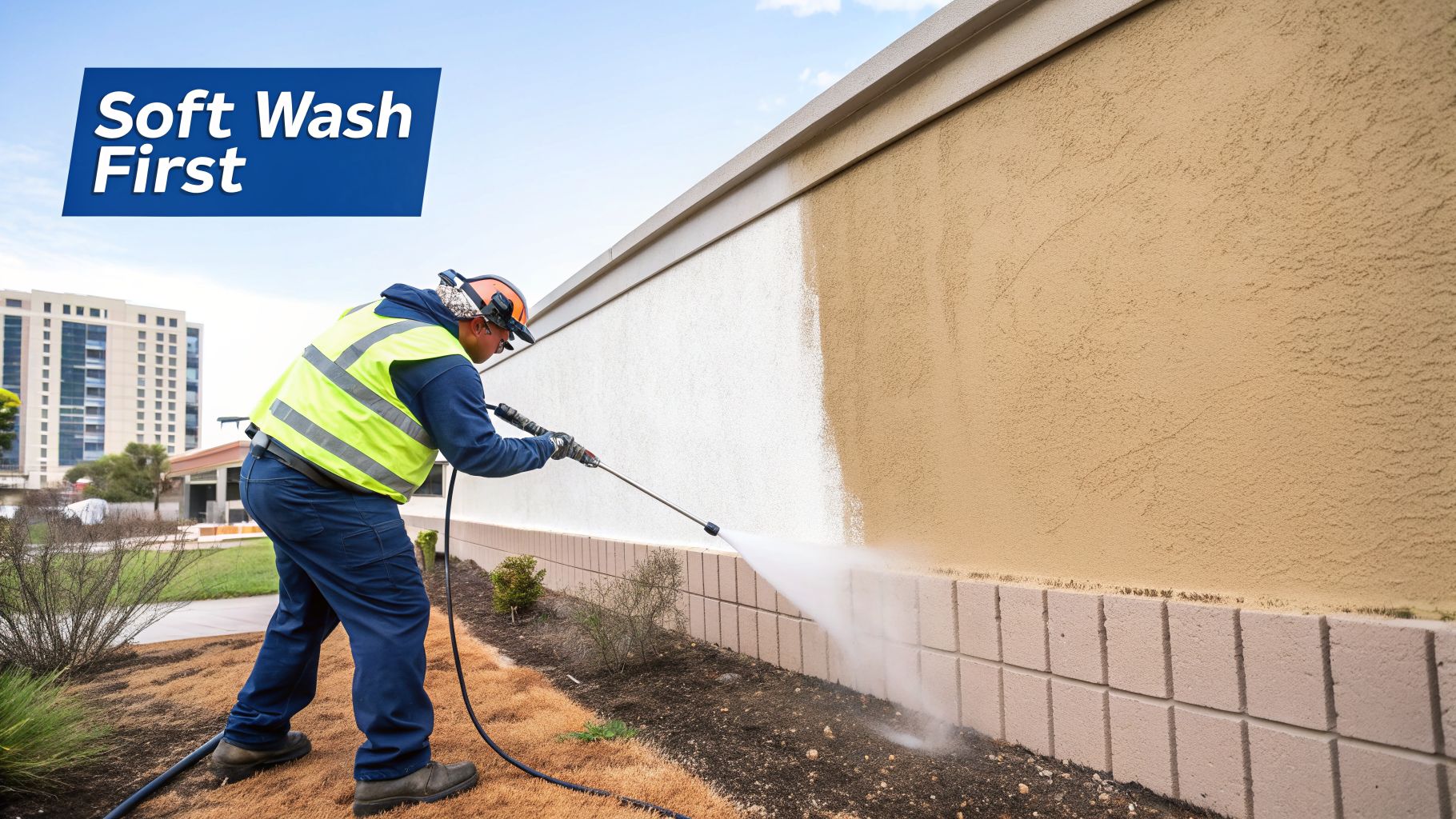
The Professional’s Secret: Soft Washing
At South Mountain Window Cleaning, we see the damage caused by high-pressure washing all the time. That’s why we almost never use it to remove mold from siding. Our method, and the industry gold standard, is called soft washing.
Soft washing completely flips the process around. Instead of relying on dangerous high pressure, we let specialized, biodegradable cleaning solutions do all the hard work. These cleaners are applied with a very low-pressure system—sometimes no more powerful than your garden hose.
The cleaners are designed to break down mold, mildew, and algae at a biological level, killing the growth at its root. After letting the solution dwell for a bit, we simply rinse it all away with clean, low-pressure water.
The result is a much deeper and longer-lasting clean that’s 100% safe for every type of siding, from the delicate stucco you see in Paradise Valley to the common vinyl siding on homes across Gilbert and Chandler. If you're curious about how we approach cleaning a whole house safely, our detailed guide on how to pressure wash a house the right way explains the entire professional process.
How to Keep Mold from Coming Back
Getting that mold off your siding feels great, but the job isn't quite finished. Now, it's all about making sure it doesn't come right back. Especially here in Arizona, you have to be proactive to keep those ugly dark streaks from returning. The secret is simple: control the moisture and keep your siding clean.
The good news is, most of this is just about making small adjustments around your property. It comes down to finding and fixing those little pockets of moisture where mold spores love to settle in. When you make your home’s exterior a less friendly place for organic growth, you're protecting its value and curb appeal for the long haul.
Control Moisture at the Source
Water is the number one thing mold needs to survive, and it’s amazing how many common household features accidentally give it a constant supply.
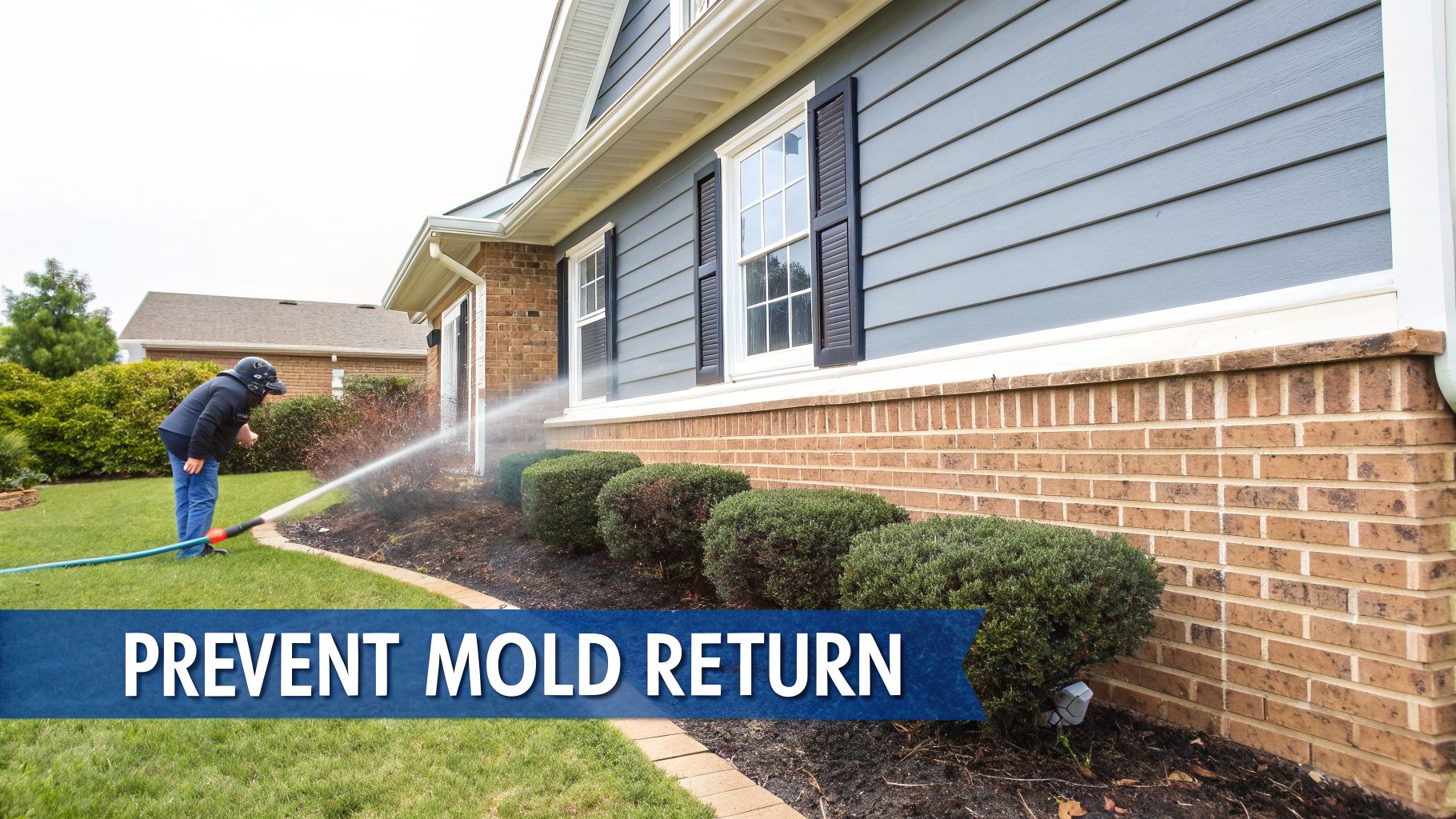
- Adjust Your Sprinklers: This is probably the easiest and most effective fix our team sees at homes across Phoenix and Scottsdale. Take five minutes to walk your property and make sure your sprinklers are hitting the lawn, not the side of your house. Constant spray keeps siding damp, creating a perfect breeding ground for mold.
- Check Your Drainage: Pay attention to where the water goes when it rains. Your yard should be graded to channel water away from the foundation. Also, look up—clogged gutters are a huge problem. When they overflow, water just pours down your siding, creating a persistently wet surface.
- Manage AC Condensation: That drip line from your air conditioner can create a permanent wet spot on your siding and foundation. A simple, cheap extender can direct that condensation away from the house and into a flowerbed or drain.
I've seen these small changes make a massive difference in preventing the need to constantly remove mold from siding.
Improve Airflow and Sunlight
Mold thrives in shady, damp spots with stagnant air. Open those areas up to a little sun and a nice breeze, and you make it much harder for mold to get a foothold.
A big part of this is just trimming back your landscaping. Any trees, bushes, or shrubs touching or hanging over your house are blocking airflow and casting shade all day long. We recommend pruning them back at least 12-18 inches from the siding. This lets sunlight and air get to the surface, helping it dry out fast after a monsoon storm or even just the morning dew.
Prevention is always more cost-effective than remediation. A little bit of yard work and a professional house wash once a year can save you from bigger headaches and expenses down the road.
Investing in prevention is just a smart financial move. The global market for mold remediation is huge—projected to hit $1,516.8 million by 2030. North America makes up 39% of that, and a whopping 58.7% of the work is for residential properties dealing with everyday moisture from things like AC units and sprinklers. It's clear that more and more homeowners are needing professional help with these persistent issues.
Taking a proactive approach doesn't just protect your investment; it protects your family's health, too. Regular exterior cleaning is a huge piece of the puzzle. For a full rundown on what that involves, you can check out our guide on how to clean a house exterior.
Scheduling a professional house wash with a trusted team like South Mountain Window Cleaning is a simple investment in your home’s health and value. It keeps your place looking great for years, whether you're in Gilbert, Paradise Valley, or anywhere in between.
DIY Or Call A Pro For Siding Mold?
So you've spotted that ugly black or green stuff growing on your siding. It's a common sight for homeowners all over Phoenix and Scottsdale, and the first question is always the same: Should I tackle this myself or call in a professional?
There's no single right answer. It really comes down to the size of the problem, how much time you have, and your comfort level with getting up on a ladder with cleaning chemicals.
The do-it-yourself route can look tempting. A quick run to the hardware store for some cleaner and a brush seems like a simple weekend fix. But our team at South Mountain Window Cleaning has seen this go wrong plenty of times. The biggest issue is that if you don't kill the mold spores at a biological level, it’s guaranteed to come right back. You’ll end up doing the same job all over again next season.
The Real Cost Of A DIY Project
Before you commit your weekend, it helps to look at the full picture. It’s more than just a bottle of cleaner.
- Tools & Gear: You’ll need a good soft-bristle brush with an extension pole, a garden sprayer for the cleaning solution, and a solid ladder. Don't forget safety gear—an N95 mask, gloves, and eye protection are non-negotiable. If you're starting from scratch, this can easily run you $100-$200.
- Cleaning Solutions: A gallon of quality, siding-safe mold cleaner costs anywhere from $20 to $50. Depending on the size of your home, you might need several.
- Your Time: This is the big one. For a single person, cleaning the siding on an average-sized home can take a full 8-12 hours. What’s your weekend worth?
- The "Oops" Factor: The hidden cost is the risk of damage. Using the wrong chemical can etch vinyl siding, and too much pressure can chip stucco or brick. A simple cleaning job can quickly turn into a costly repair.
The Peace of Mind a Professional Brings
Hiring a team like South Mountain Window Cleaning is about getting it done right the first time, safely and effectively. Yes, the upfront cost is higher than a bucket and a brush, but you’re paying for expertise and guaranteed results. We handle homes, businesses, and even high-rise buildings across the Valley, from Chandler to Paradise Valley, and we know exactly what we’re up against.
Our trained technicians understand the nuances of different siding materials. We know which solutions are safe for delicate stucco and what pressure to use on durable vinyl. Honestly, this is where most DIY attempts fall short. It's no wonder that online searches for mold removal shot up 54% between 2020 and 2022, peaking at 949,500 searches as people discovered the job was tougher than they thought. In fact, these 2024 mold statistics on MyChemicalFreeHouse.net show that two-thirds of U.S. households have had to deal with mold on their property.
We use a professional soft washing method that combines specialized, biodegradable cleaners with low-pressure water. This approach kills mold at its root without damaging your siding, keeping your home looking cleaner for much longer.
This soft washing technique is our secret weapon. It’s a world away from the high-pressure blasting that can scar your home's exterior. It’s gentle, but incredibly powerful. If you're curious about the specifics, we break it down in our guide comparing pressure washing vs. soft washing.
Decision Matrix: DIY vs. Professional Mold Removal
To make it even clearer, here’s a quick comparison of the key factors to help you decide what’s best for your home and budget.
| Factor | DIY Approach | Professional Service (South Mountain Window Cleaning) |
|---|---|---|
| Upfront Cost | $100 – $300+ for tools and supplies. | Higher initial investment, but a fixed, predictable price. |
| Time Investment | 8-12+ hours of your weekend. | Zero. We handle everything while you relax. |
| Effectiveness | Varies. Risk of incomplete removal and mold regrowth. | 100% effective. We kill mold at the source for lasting results. |
| Safety Risks | Working on ladders, exposure to chemicals, potential property damage. | Fully insured, trained technicians using professional safety gear. |
| Equipment | Consumer-grade brushes, sprayers, and ladders. | Industrial-grade soft washing equipment and specialized cleaners. |
| Guarantee | None. If mold returns, you start over. | 100% satisfaction guarantee. The job is done right, period. |
Ultimately, hiring a professional team gives you back your weekend and provides a 100% satisfaction guarantee. For busy homeowners in Gilbert, Tempe, and across the valley, knowing the job is done right by insured experts is worth every penny.
Common Questions We Hear About Siding Mold
Even after walking through the best ways to remove mold from siding, you probably have a few more questions. That’s completely normal. As a company that has helped countless homeowners across Phoenix and Scottsdale, we’ve pretty much heard them all.
Let's clear up some of those final concerns and give you the confidence to get this job done, whether you do it yourself or bring in a crew like ours.
How Often Should I Check My Siding for Mold?
We tell our customers to give their siding a good, close look at least twice a year. A perfect time is in late spring, after things have been cool and damp, and then again in late fall, right after our monsoon season wraps up.
It doesn't have to be a huge project—just a quick walk around your house. Pay special attention to the north-facing walls, any spots shaded by big trees, and the siding right by your AC drip lines or sprinklers. Finding a small patch of mold early is so much easier than dealing with a massive problem later on.
Is That Black Stuff on My Siding Actually Dangerous?
This is a question we get all the time. While a lot of the black or green gunk on siding is just simple mildew or algae, some types of black mold can definitely cause health issues. For anyone with allergies, asthma, or other respiratory sensitivities, long-term exposure to mold spores can trigger real problems.
You can't just look at a spot and know if it’s the truly nasty Stachybotrys chartarum (toxic black mold). Honestly, it doesn't matter. Any visible mold should be taken seriously and cleaned off right away. The main goal is to get rid of those spores before they affect your family’s health or find a way into your home.
Can Mold on the Outside of My House Get Inside?
Yes, it absolutely can, and it’s easier than you might think. Mold spores are tiny and can travel through small cracks around your windows and doors, slip through attic vents, or even hitch a ride on your clothes or the family dog.
If you’ve got a lot of mold growing on your siding, especially near a doorway or an air intake vent, there's a genuine risk it could start a new colony inside your walls. This is one of the biggest reasons we stress being proactive about exterior mold—it’s crucial for the health of your entire home.
"A persistent mold outbreak on your siding often points to a larger, hidden moisture problem. Simply cleaning the surface won't solve the issue if the underlying cause, like a clogged gutter or poor drainage, isn't fixed."
Will Mold Permanently Damage My Siding?
That really depends on what your siding is made of and how long you let the mold sit there.
- Vinyl and Metal Siding: On these non-porous surfaces, mold pretty much just grows on top. It looks terrible, but if you clean it off in a reasonable amount of time, it’s not likely to cause any permanent structural damage.
- Wood Siding: This is where mold gets serious. Wood is organic and porous, so mold doesn’t just sit on the surface—it digs in. This can lead to wood rot, which will destroy the siding panel itself.
- Stucco and Brick: Since these materials are porous, mold can get deep into the texture. It may not cause the siding to fail like it would with wood, but it can cause permanent stains and be incredibly stubborn to remove completely.
No matter the material, the longer mold sits, the higher the chance of staining or damage. Quick action is always your best bet. For homeowners in areas like Chandler, Gilbert, and Tempe, where you see all kinds of siding, knowing this risk is key.
When you need to be 100% sure the mold is gone for good, trust the experts. South Mountain Window Cleaning provides professional soft washing that’s tough on mold but safe for your siding. We safely eliminate mold, mildew, and algae from any surface for residential, commercial, and high-rise properties across Phoenix, Scottsdale, Paradise Valley, and the entire Valley. Contact us today for a free, no-obligation quote!