
The late-afternoon sun is still warming the patio, and a thin layer of Valley dust shows every footprint. You step across the concrete barefoot and notice the fine parallel grooves underfoot. That's a brushed concrete patio: a practical outdoor surface whose traction and appearance depend not just on how it was poured, but on how it's cured, sealed, and cleaned afterward.
South Mountain Window Cleaning serves homeowners and businesses across Phoenix, Scottsdale, Paradise Valley, Chandler, Tempe, and Gilbert. For Valley property owners considering a new patio or maintaining an existing one, the useful question isn't whether broom texture looks good. It's whether the finish fits the site and whether the people installing and cleaning it will preserve that texture.
What a Brushed Concrete Patio Is
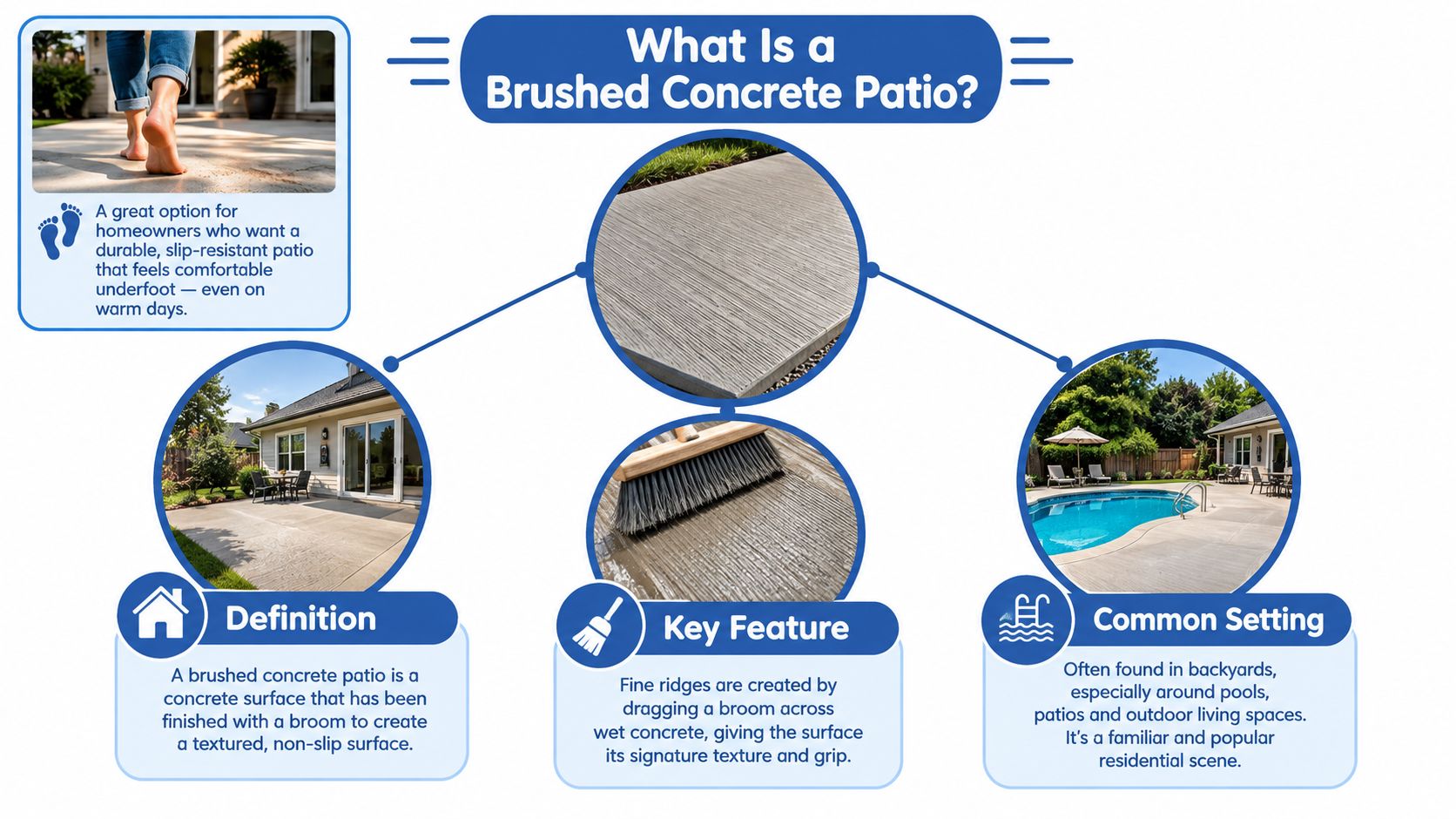
A brushed concrete patio has shallow lines formed in the slab's surface while the concrete is still workable. Also called broom-finished concrete, it gets its texture from a purpose-made brush drawn across freshly leveled concrete. The grooves are part of the concrete, not a coating added after it hardens. The Concrete Society guidance on brushed finishes describes the result as a lightly textured surface.
That texture gives an outdoor slab more grip underfoot than smooth, hard-troweled concrete, particularly when irrigation, pool splash, rain, or cleaning leaves it wet. It can help with traction, but it does not make every surface safe in every condition. Dust, algae, soap, and standing water can still reduce grip, so the patio's upkeep matters alongside its finish.
What to look for up close
Check the slab from several angles. A consistent finish has broom lines that hold their direction and depth across the patio, rather than fading, wandering, or changing noticeably in different areas. Stiffer bristles leave a coarser profile; softer bristles produce a lighter texture. The line direction and texture should suit how people use the space.
In Arizona, a broom finish can work well in a pool area, side yard, or outdoor dining space, where dust and outdoor use make ongoing care part of the surface's performance. Routine rinsing can remove loose dust. Restorative cleaning may be needed when embedded grime builds up, but aggressive pressure washing can wear down the shallow grooves over time. Use cleaning pressure suited to the slab, rather than treating a textured finish as indestructible.
The finish also depends on the concrete beneath it. Poor timing during brushing can leave uneven grooves or weak surface paste, and inadequate curing can compromise the slab even when the lines look tidy.
Before the pour: Ask what texture the contractor plans to create, which direction the broom will run, and how the slab will be protected after finishing. The visible lines are only one part of a patio that holds up.
How the Broom Texture Is Created
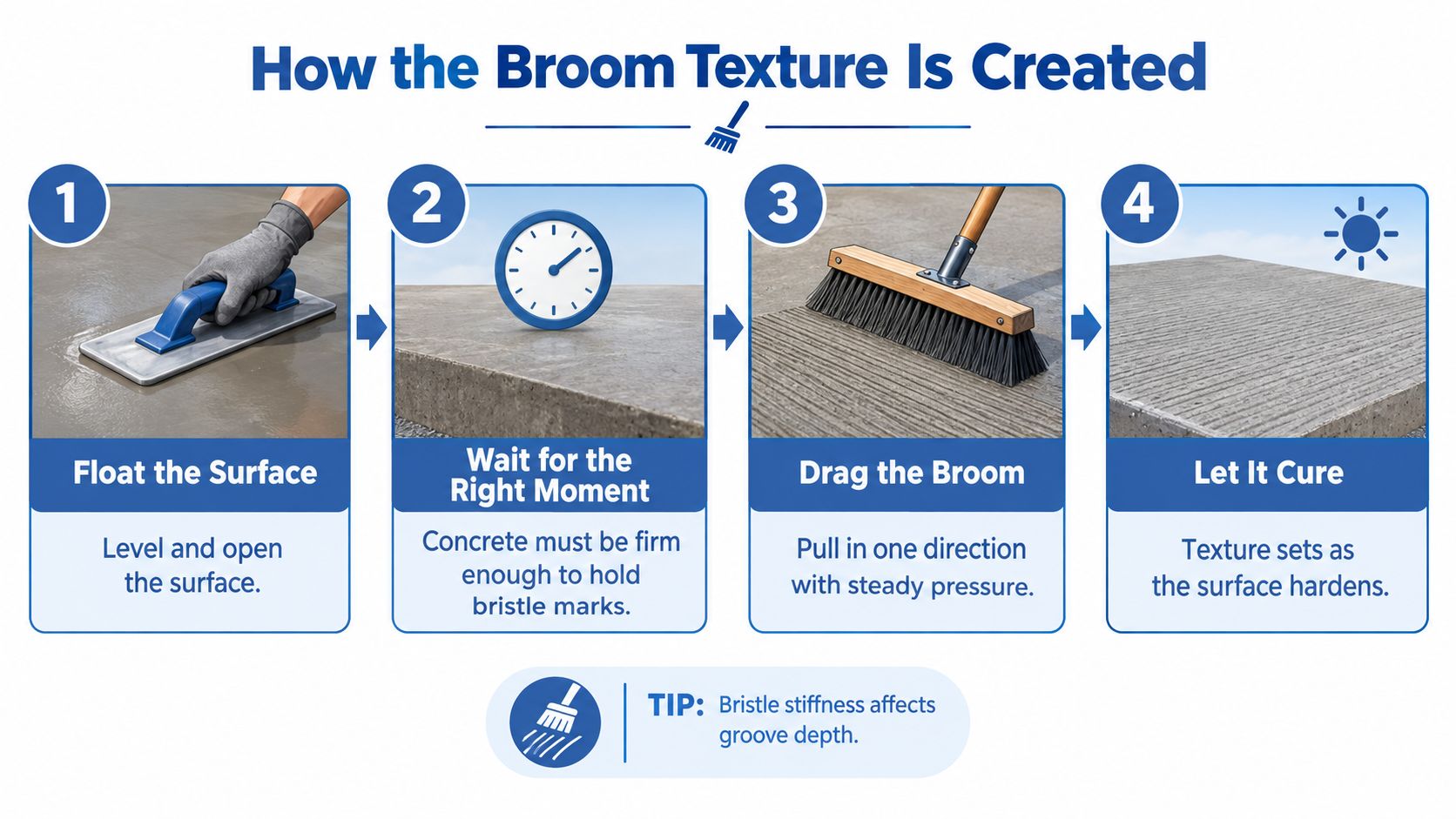
On a Phoenix pour, heat and wind can change the surface while the crew is still finishing. The contractor places and levels the concrete, then floats it before making the broom pass. The surface must be even and workable enough to accept grooves without dragging wet paste.
Timing and pressure shape the finish
The bleed-water sheen must disappear before brushing. The contractor then checks whether the concrete holds a groove. Concrete Society guidance on brushed finishes gives a workable window of approximately 20 minutes to 4 hours, depending on conditions. On site, surface readiness matters more than elapsed time because weather and the mix affect how quickly concrete stiffens.
Broom too early and the bristles drag paste or leave grooves that slump closed. Too late, and the brush skips over stiff areas, leaving incomplete lines. Pushing harder cannot reliably rescue missed timing. Controlled passes, steady pressure, and suitable bristles produce a more consistent finish.
The broom route also needs deciding before the pass. Lines across the walking direction can provide useful texture underfoot, while slope and drainage need consideration so grooves do not encourage water or debris to collect.
The finish needs protection right away
Curing should follow finishing promptly. The FHWA guidance on concrete texture and curing explains that texturing increases exposed surface area and evaporation. Aggressive brooming can increase moisture-loss risk, making protection after finishing part of the job rather than an optional follow-up.
Uneven lines, patchy areas, and incomplete grooves warrant attention before the slab hardens. They can indicate poor timing or inconsistent technique. A brush cannot recreate the finish once the concrete has hardened.
Those shallow grooves become part of the patio's maintenance system. In Phoenix, routine rinsing during dusty periods serves a different purpose from restorative cleaning for embedded grime. Repeated aggressive pressure washing can wear the texture down; more pressure does not restore a weak broom finish. The original timing and curing affect what remains available to protect through later cleaning.
Brushed Concrete Versus Smooth Trowel, Stamped, and Pavers
A brushed finish is a practical choice, but it isn't the right answer for every patio. Smooth troweled concrete offers a cleaner, more interior-style appearance; stamped concrete creates decorative patterns; pavers allow individual units to be replaced. Exposed aggregate adds visible stone and texture, but the final feel depends on the material and installation.
| Finish | Traction When Wet | Typical Installed Cost per Sq Ft | Maintenance Effort | Heat Retention |
|---|---|---|---|---|
| Brushed concrete | More texture than smooth trowel; traction still depends on site and surface condition | Varies by slab, site work, and finish | Routine cleaning; protect grooves from aggressive washing | Concrete retains heat; shade and surroundings affect comfort |
| Smooth trowel | Less surface texture | Varies by slab and finish | Generally straightforward to clean | Concrete retains heat |
| Stamped concrete | Depends on the stamped pattern and sealer | Varies with pattern and finish complexity | Patterned surface can require more attention | Concrete retains heat |
| Exposed aggregate | Textured surface; performance depends on aggregate and condition | Varies by aggregate and installation | Texture may hold dirt and need careful cleaning | Concrete retains heat |
| Pavers | Depends on material, joints, and surface condition | Varies by paver and base preparation | Joint upkeep and individual-unit repairs | Depends on material and setting |
The table isn't a price quote. Installed cost per square foot varies with the project, and no verified local pricing figures are available here for a fair, defensible comparison. For broader finish decisions, the 2026 outdoor tile buying guide offers another material category to consider when comparing the look and upkeep of outdoor surfaces.
Brushed concrete tends to suit owners who want a restrained appearance and a textured surface without the decorative detail of a stamped pattern. Stamped concrete can offer more visual variety, but the pattern and sealer need to suit outdoor use. Pavers can make spot replacement easier, while a smooth trowel finish may appeal where a sleek appearance matters more than added surface texture.
Arizona's sun and dry conditions make comfort and cleaning part of the decision. Concrete can hold heat, and surface grooves can collect dust, so finish choice alone won't keep a patio cool or maintenance-free. Owners choosing among concrete finishes can also review the South Mountain Window Cleaning concrete polishing cost guide when considering a different concrete surface treatment.
How a Brushed Patio Is Installed at a High Level
A contractor's work starts below the visible surface. The crew prepares and compacts the subgrade, sets forms, and plans how the slab will meet the house, pool deck, landscaping, and drainage. If the base or drainage plan is poor, a neat broom finish can't prevent movement, ponding, or cracking.
Before the pour, agree on the slab design, reinforcement, joint layout, broom direction, and any planned sealer. Control joints divide the slab into planned panels and help manage drying-shrinkage cracks. Concrete Decor's guidance on controlling cracks explains that joint spacing should be planned around slab thickness and aggregate, rather than improvised after cracks appear.
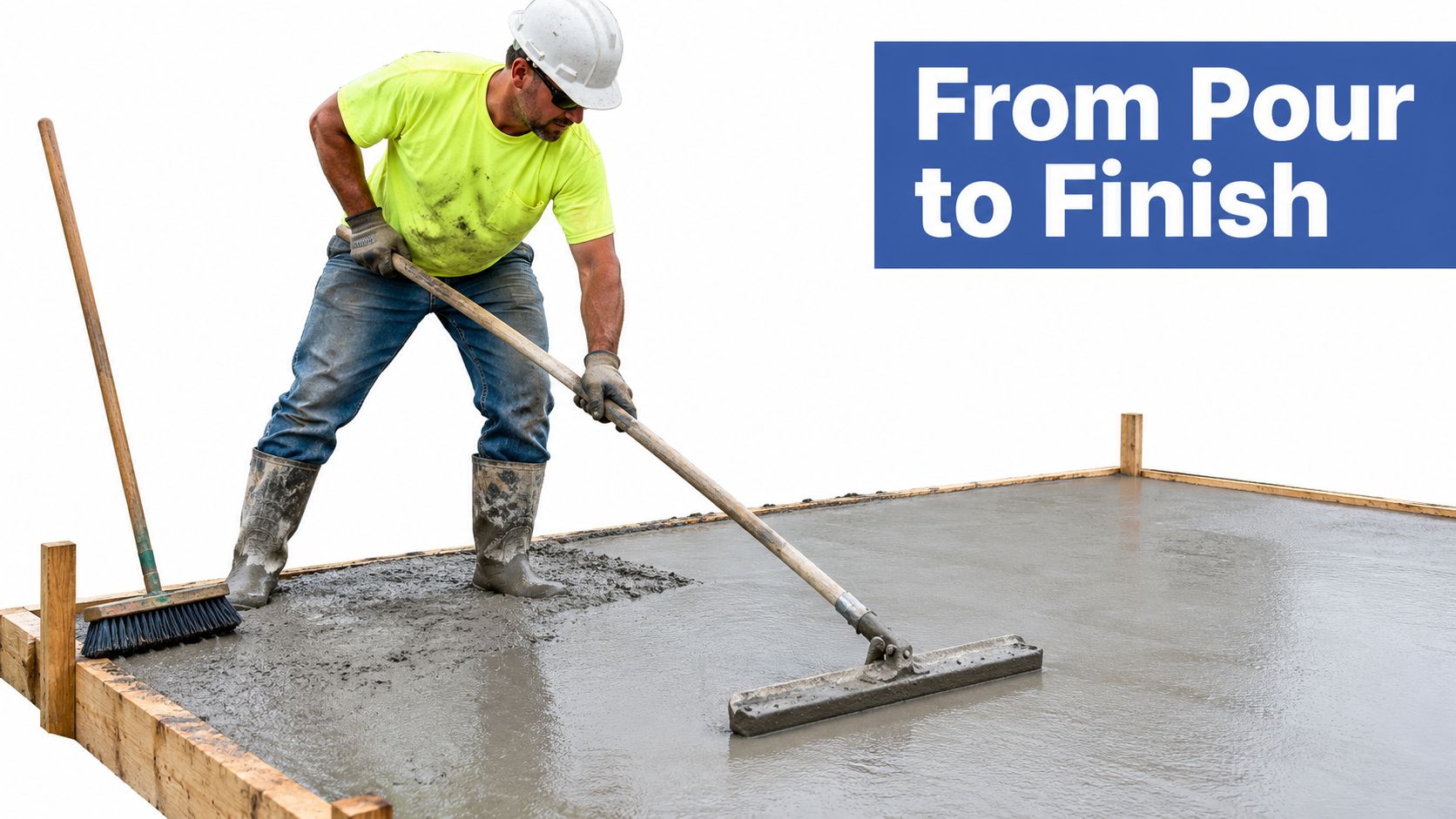
Once the concrete is placed, the crew levels, floats, edges, and textures the surface in sequence. The broom pass must happen at the right stage, followed by curing. For an installation in Arizona, a plan for protecting the surface from rapid drying matters as much as the appearance of the grooves.
Curing and joints are part of the finish
Curing isn't a cosmetic afterthought. The FHWA discussion of concrete curing and durability identifies inadequate curing as a major cause of poor durability and notes that proper curing improves abrasion resistance. A pavement specification cited in that guidance calls for curing for at least 72 hours, but a patio's requirements should follow its project specification, concrete mix, weather, and applicable code.
A competent contractor should explain how they'll keep the surface from drying too early and how they'll protect it during the specified cure. Ask how joints will be formed or cut and when the slab can safely take foot traffic, washing, or furniture. South Mountain Window Cleaning's concrete dry-time guidance can help homeowners understand why a surface that looks hard isn't necessarily ready for every use.
For ideas on how a patio can fit into the wider outdoor layout, NorCal Construction's backyard patio design ideas for CA and provides a separate design perspective. The important installation decision is to make the slab, drainage, joints, texture, and curing plan work together, rather than treating brooming as the entire job.
What a Brushed Concrete Patio Costs in 2026
There's no verified Arizona installed-price range available here, so a specific per-square-foot estimate would be misleading. Ask for a written quote tied to the actual site and scope instead. The broom finish is only one line of the job, and it's often not the biggest variable.
The quote should spell out subgrade preparation, slab thickness, reinforcement, concrete placement, control joints, finishing, and curing. It should also clarify whether the crew needs to demolish and remove an existing surface, bring equipment through a tight access route, or adjust grading to direct water away from the home or pool.
Compare scope, not just the bottom line
In the Phoenix area, scheduling around weather, coordinating with existing irrigation and pool features, and meeting community or HOA requirements can affect the work. These details should be discussed before the bid is finalized, not discovered after the crew arrives. Optional sealer and any decorative borders or finishes should appear separately so you can compare like with like.
A very low bid deserves a closer look if it doesn't describe the base, joints, or curing plan. Cutting corners on those steps can leave owners with cracking, surface dusting, weak texture, or water-management problems. Ask the contractor what's included, what assumptions the quote makes about access and demolition, and who is responsible for protecting the slab after the finish is complete.
The fairest comparison is between proposals that use the same scope and explain their assumptions. A quote that identifies how the slab will be built and cared for gives you more useful information than a single price without installation details.
Slip Safety Around Pools and Wet Areas
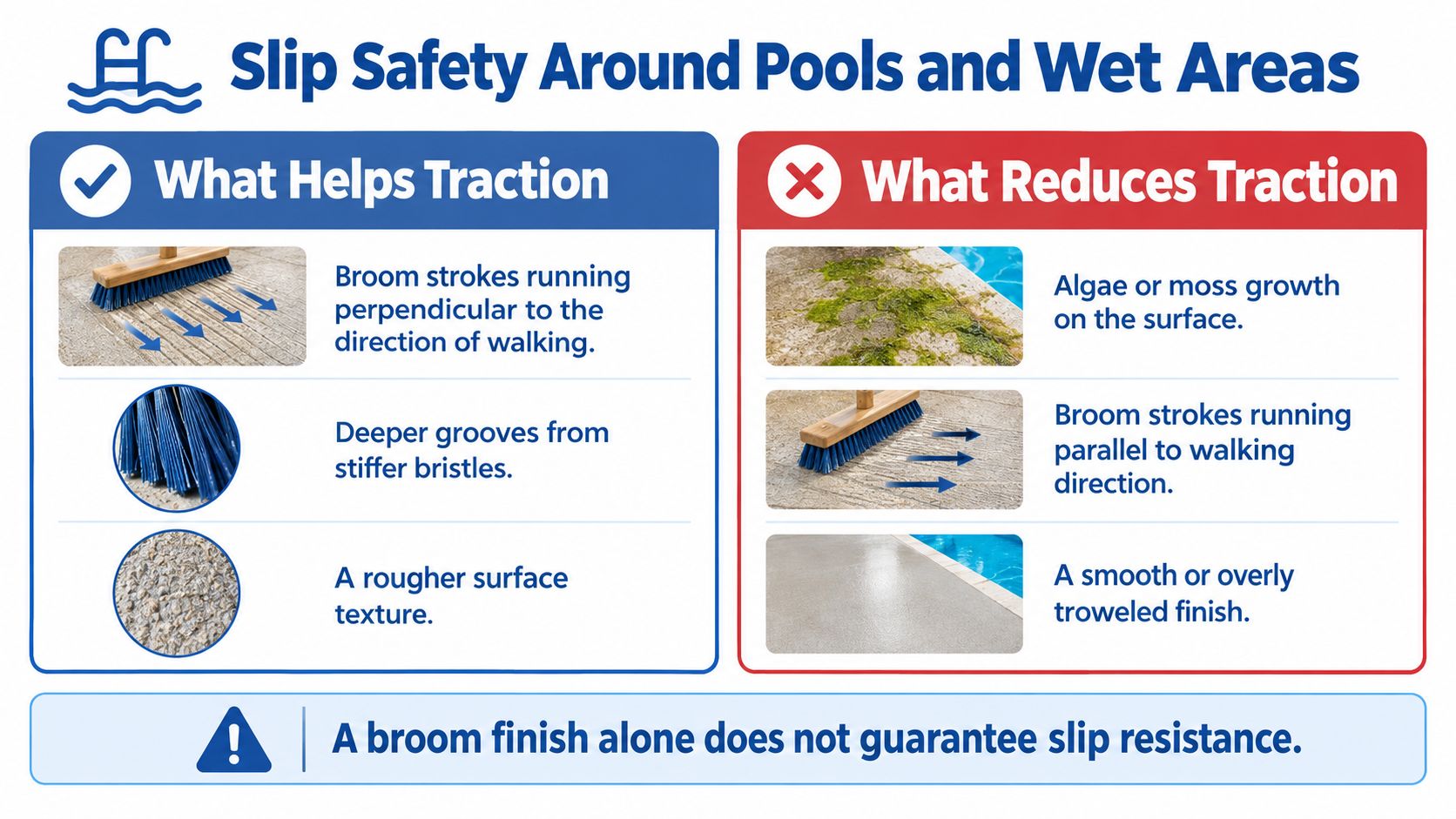
A broom finish can improve traction compared with a smooth troweled surface, but it doesn't make a patio automatically slip-safe. How the grooves sit relative to foot traffic, their depth, the slab's slope, drainage, surface contamination, footwear, and sealer all affect how the surface feels when wet.
Texture is only one part of the safety picture
Around a pool, ask for a light-to-medium broom texture and have the contractor consider cross-traffic direction. Positive drainage helps prevent standing water, but traction can still be reduced by algae, embedded dirt, or residue in the grooves. In shaded areas or where irrigation repeatedly wets the slab, inspect the surface regularly rather than assuming texture will compensate for buildup.
Sealer choice matters. A penetrating sealer is generally a better fit when preserving the look and feel of broom texture is a priority. A glossy, film-forming coating can change the surface and potentially increase slipperiness, especially when wet; don't add one without asking whether it suits the finish and whether an appropriate grit additive is needed.
A textured surface can still be slippery when it's contaminated or coated with the wrong product. Judge the patio wet, not just when it's clean and dry.
Test a representative area with water and walk across it carefully in the footwear people normally use. This is a practical check, not a certified safety measurement. If the surface feels slick, find out whether the cause is algae, residue, sealer, drainage, or the texture itself before deciding what treatment to apply.
For patios that need a targeted clean, South Mountain Window Cleaning's swimming pool deck cleaning service addresses the cleaning needs of outdoor pool surfaces. Cleaning can remove contaminants, but no finish or service eliminates slip risk, so keep the surface maintained and address drainage or persistent wet spots.
Cleaning and Maintaining a Brushed Patio in Arizona
Treat a brushed concrete patio as a surface with a maintenance routine, not a slab that needs attention only when it looks bad. In Phoenix, Scottsdale, Chandler, Gilbert, and nearby Valley communities, dust, irrigation overspray, sun, and seasonal rain affect what the surface collects and how carefully it should be cleaned.
A practical Valley care calendar
- During dusty stretches: Sweep loose grit and use a routine rinse to remove surface dust. This is basic upkeep, not a reason to pressure-wash every time the patio looks dirty.
- Before summer: Remove built-up dirt and inspect for stains, algae, or residue in the grooves. Shade and surrounding planting can improve outdoor comfort; concrete retains heat longer and dissipates it less effectively than natural materials, as described by Arizona State University's account of research on heat in Phoenix.
- After monsoon moisture or irrigation problems: Check shaded and frequently wet areas for algae or grime. Treat the cause, such as persistent overspray or poor drainage, as well as the visible growth.
- In fall and winter: Look over joints, edges, and the sealer. Sun and occasional cold-weather exposure make it sensible to spot changes before they turn into a bigger maintenance job.
A rinse handles loose dust. Restorative cleaning is for embedded dirt, organic growth, or specific stains such as rust, and needs a suitable cleaner and controlled technique. Aggressive pressure washing can erode the cement paste around broom ridges, leaving rough, patchy areas that look worse than the original soil. Use a moving nozzle and controlled pressure rather than holding a concentrated stream in one spot.
Know when to clean, reseal, or call for help
Wait roughly 28 days before sealing a new slab, and follow the sealer manufacturer's directions and the contractor's cure guidance. For an existing surface, try a water-absorption check: if water darkens the concrete quickly instead of beading, the protective treatment may need renewal. Penetrating silane or siloxane sealers can preserve a more natural appearance and texture, but the product must match the slab and its exposure.
For practical guidance on technique, South Mountain Window Cleaning's patio pressure-washing advice can help you distinguish careful cleaning from blasting away at the surface. Homeowners can sweep and rinse routinely; stubborn staining, rust removal, and broad flat-surface cleaning are better handled with equipment and products suited to the concrete. South Mountain Window Cleaning, LLC offers power washing and flat-surface cleaning for patios, walkways, and other exterior surfaces.
Putting It All Together for Your Patio
Before signing an installation quote, ask the contractor to confirm the planned broom direction, slab design, joint layout, drainage, curing method, and intended sealer. Make sure the proposal describes the site preparation and finishing sequence, not just the finished appearance.
For a patio already in place, start with a simple routine: remove loose grit, rinse when dust builds up, inspect wet and shaded spots for algae, and check whether water still beads on the surface. If cleaning requires more than a routine rinse, use a controlled method that won't strip the cement paste from the broom ridges.
The common regret is treating the broom pass as the whole product. Texture, curing, drainage, sealing, and cleaning all contribute to how the patio performs. With realistic expectations and a maintenance plan suited to Valley conditions, a brushed finish can remain a practical, clean-looking outdoor surface.
If your brushed patio needs careful pressure washing, rust removal, or flat-surface cleaning, contact South Mountain Window Cleaning, LLC. The team serves Phoenix and nearby Valley communities with exterior cleaning services, including patios and walkways, so you can request a quote for your surface and its specific cleaning needs.