
In Arizona, your pool deck isn't just some concrete slab—it's the stage for your entire summer. It's where the kids do cannonballs, where you relax after a long week, and where you host those weekend barbecues. But our intense desert sun and unique weather can be brutal on these surfaces, quickly turning your beautiful oasis into a grimy, slippery mess. At South Mountain Window Cleaning, we know that keeping your pool deck clean is about more than just looks. It's a huge part of swimming pool deck cleaning that comes down to safety for your family and protecting the investment you've made in your home.
Why Arizona Pool Decks Are A Different Beast
We all want that picture-perfect pool area, but keeping it that way in Phoenix, Scottsdale, and across the Valley takes a special kind of effort. The same sun that makes a dip in the pool so refreshing is also working overtime to bake dirt, dust, and minerals right into your deck.
It's a constant battle for homeowners from Paradise Valley to Gilbert. We’re not just talking about a little dust you can hose off. We're dealing with stubborn, caked-on grime that makes your whole backyard look tired and can become a serious hazard. Our professional team at South Mountain Window Cleaning has the expertise to tackle these unique challenges.
The Unique Challenges We Face In The Valley
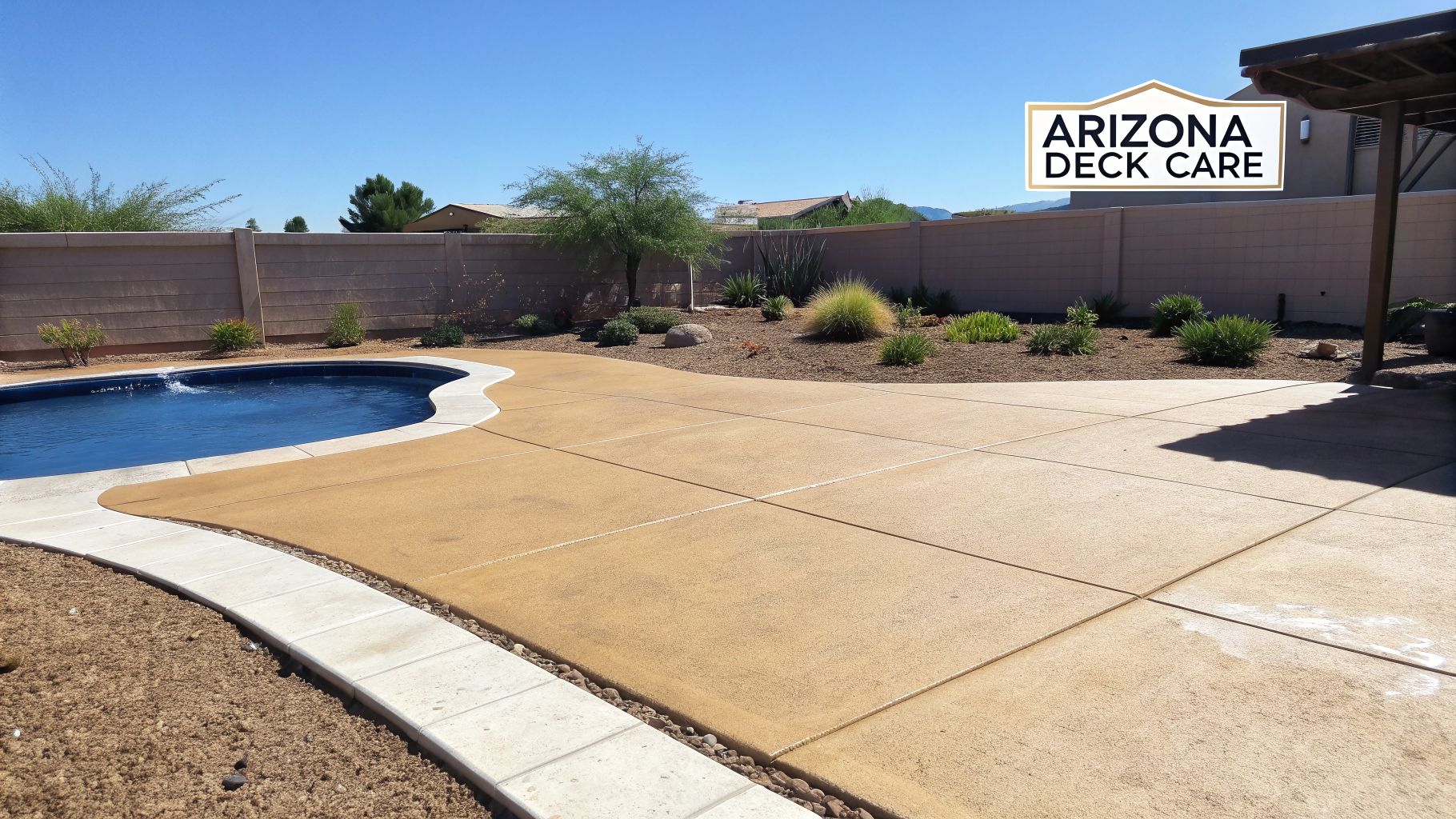
That combination of extreme heat, dry air, and our wild monsoon season creates a few key problems for pretty much every type of pool deck.
- Haboobs and Dust: Those massive monsoon dust storms, or haboobs, dump a thick layer of fine dirt on everything. Mix that with a little pool water or morning dew, and the sun bakes it into a hard film that a garden hose won't touch.
- Hard Water Stains: Arizona water is full of minerals like calcium. As water splashes out of the pool and evaporates in seconds, it leaves behind that chalky, white residue. This is called efflorescence, and it's incredibly tough to remove from pavers and concrete without the right approach.
- Slippery Algae Growth: It seems strange in a desert, but the damp, shaded spots around your pool are perfect for green and black algae. It pops up fast, especially during the humid monsoon months, creating a major slip-and-fall risk on what should be a safe surface.
To give you a better idea of what works best for your specific surface, here’s a quick-reference table.
Arizona Deck Cleaning At A Glance
| Deck Material | Best Cleaning Approach | Common Arizona Challenge |
|---|---|---|
| Concrete | Pressure washing with a surface cleaner attachment. Pre-treatment for stains. | Hard water stains (efflorescence) and baked-in dust. |
| Pavers | Soft wash or low-pressure rinse with appropriate cleaners. Careful not to dislodge joint sand. | Weed growth in joints and efflorescence. |
| Kool Deck | Gentle, low-pressure cleaning (soft wash) with a specialized cleaning solution. High pressure can damage the coating. | Surface can become slick with algae; prone to chipping. |
| Travertine | Very low pressure rinse or soft wash. Use a pH-neutral cleaner to avoid etching the stone. | Porous surface easily absorbs stains and grows algae. |
| Wood/Composite | Soft wash with a deck-specific cleaner. Gentle pressure to avoid splintering the wood or damaging the composite cap. | Sun fading (UV damage) and potential for mold/mildew. |
This table is a great starting point, but every deck is a little different depending on its age, condition, and exposure to the elements.
Protecting Your Investment
Proper cleaning is about more than just appearances—it's about protecting your property. That gritty buildup of dust and dirt acts like sandpaper under every footstep, grinding away at expensive sealants and wearing down the surface of your Kool Deck or pavers. A regular, professional cleaning schedule stops that damage before it starts.
Thinking about your whole home's exterior is smart, too. Understanding the right cleaning frequency helps put your pool deck care into perspective. For a broader look, you can check out our guide on how often you should power wash your house. At the end of the day, a clean pool deck is a safe deck, and it's a cornerstone of a well-kept Arizona home.
Gathering Your Essential Cleaning And Safety Gear
Before you even think about turning on a pressure washer, it's crucial to get your toolkit and safety gear in order. A successful swimming pool deck cleaning project starts with solid preparation. Using the right stuff not only gets you better results but is absolutely vital for keeping yourself and your property safe. This is about more than just a broom and a garden hose; it’s about having a smart, professional-grade setup.
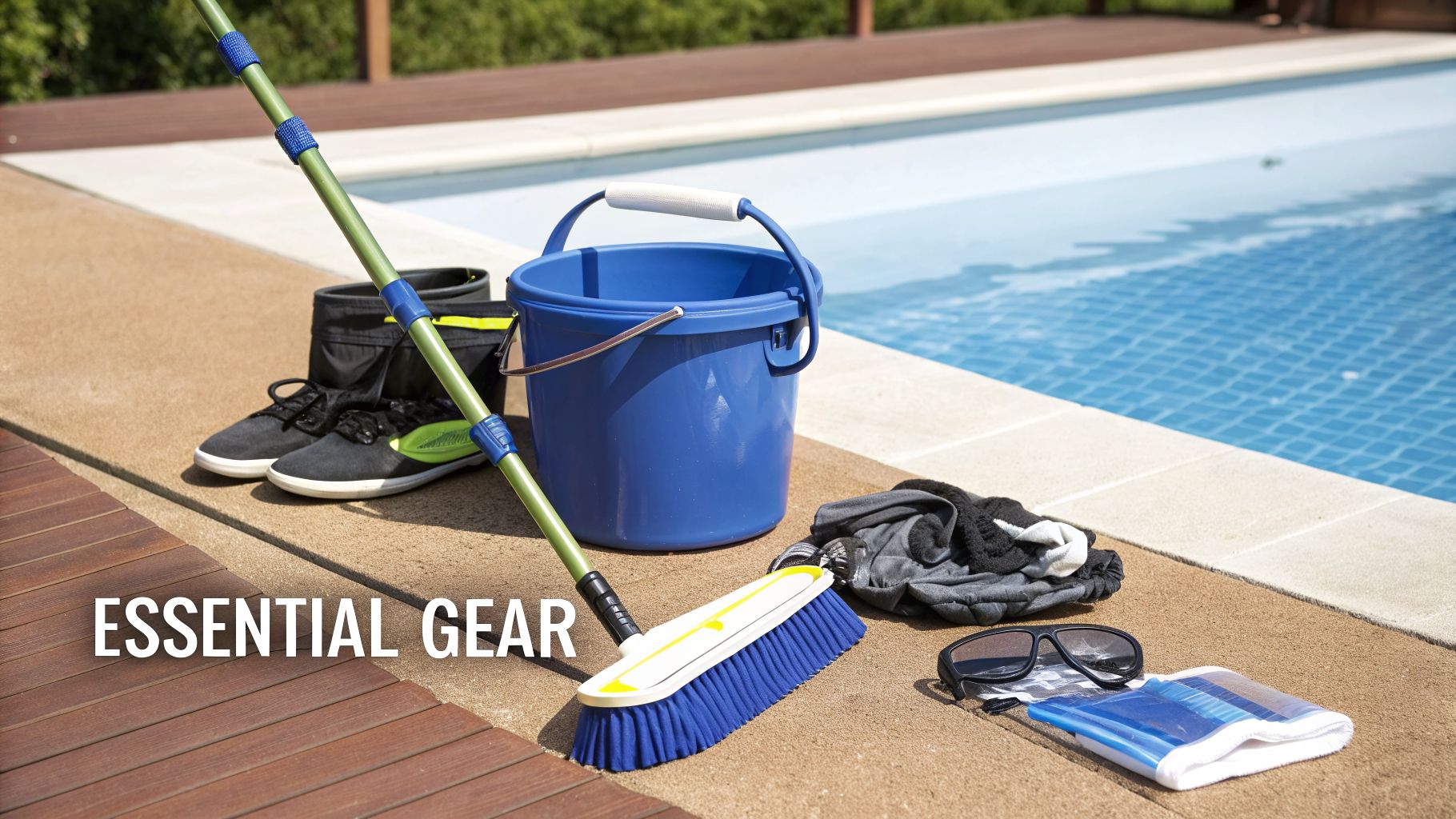
After cleaning countless decks across Phoenix and Scottsdale, our team at South Mountain Window Cleaning has learned that preparation is 90% of the battle. A little planning now can prevent some big headaches later, like accidentally etching your concrete or damaging your beautiful desert landscaping.
Your Core Cleaning Supplies
Let’s talk about the basics first. Every deck cleaning job, whether it’s a weekend DIY project or one of our professional cleanings, starts with these fundamental tools. Think of this as your must-have list.
- Stiff-Bristled Deck Brush: Don't just grab any old broom from the garage. You need a real deck brush with stiff, synthetic bristles that can scrub away that caked-on grime without scratching up your deck surface.
- Pump Sprayer: A simple 1- to 2-gallon garden pump sprayer is your best friend for applying cleaning solutions evenly. This gets you consistent coverage and lets the cleaner break down the dirt before you even start scrubbing.
- Buckets: Make sure you have at least two. You'll use one for your cleaning mix and the other for clean rinse water for your brush and tools.
- Garden Hose with a Quality Nozzle: You’ll need this for the initial rinse, washing off cleaners, and, most importantly, watering down your nearby plants.
Protecting Your Pool and Landscaping
One of the biggest worries we hear from homeowners in Chandler and Tempe is about keeping dirty runoff and chemicals out of the pool and away from their plants. This is a step that the pros at South Mountain Window Cleaning never, ever skip.
First, protect that crystal-clear pool water. While you can use big plastic sheets, we've found a better trick is to slightly overfill your pool. This creates a positive outflow that gently pushes the runoff away from the pool's edge, stopping dirty water from flowing in.
Second, you have to protect your landscaping. Before any cleaner touches the deck, give your grass, shrubs, and desert plants a good, long drink with your garden hose. Saturating them with fresh water first prevents them from soaking up any chemical runoff that might splash over.
A soaked plant is a safe plant. By watering your landscaping first, the soil and roots are already saturated with clean water, making them far less likely to absorb any cleaning agents that might splash over.
Pressure Washers: DIY vs. Professional Rigs
A pressure washer can be your deck's best friend or its worst enemy. The real difference between a standard home unit (usually around 1500-2000 PSI) and the commercial-grade rigs we use at South Mountain Window Cleaning comes down to control and power.
Home units are fine for small, light-duty tasks. But they often don't have the consistent pressure and flow rate (gallons per minute, or GPM) you need for a deep, even clean on a large deck. Our professional equipment gives us precise pressure control, which is critical for delicate surfaces like Kool Deck—we can get the dirt off without peeling the coating. You can rent a more powerful machine, but you really have to know what you’re doing to avoid causing damage. A good pressure washing can make your whole home look amazing, but it's key to use the right settings for each surface. To learn more, check out our guide on how to properly pressure wash a house.
Non-Negotiable Safety Equipment
Finally, never—and I mean never—start a swimming pool deck cleaning job without the right personal protective equipment (PPE). A wet deck is a slippery deck, plain and simple.
- Non-Slip, Closed-Toe Shoes: This is probably the single most important piece of safety gear you'll wear.
- Safety Glasses or Goggles: Protect your eyes from chemical splashes and high-pressure spray. It only takes one stray droplet.
- Gloves: A good pair of waterproof gloves will keep cleaning solutions off your skin.
Cleaning Concrete Paver And Cool Deck Surfaces
Using the wrong cleaning method on your Arizona pool deck can be a costly, irreversible mistake. We’ve seen it firsthand, after cleaning hundreds of pool decks across Phoenix. That baked-on desert grime doesn't treat every surface the same, so your cleaning approach shouldn't either.
From porous concrete to a delicate cool deck finish, each material needs a specific game plan. At South Mountain Window Cleaning, we’re going to walk you through the exact, field-tested methods we use to get professional results without causing damage—a balance that many DIY projects just don't get right.
How To Clean Concrete Pool Decks
Concrete is a workhorse, but it's also porous. It loves to soak up dirt, haboob dust, and hard water minerals, leaving it looking grimy and stained. The secret is lifting that embedded dirt without creating those ugly "wand marks" or "tiger stripes" that scream amateur pressure washer job.
Your best bet for a standard concrete pool surround is a pressure washer with a surface cleaner attachment. This thing looks a bit like a push lawnmower and uses a spinning bar with two nozzles to clean a wide, even path. It’s how the pros get that perfect, streak-free finish every time.
No surface cleaner? You'll need to be extra careful with a standard wand.
- Stick with a 25-degree nozzle (green tip). It’s the perfect middle ground for power and coverage.
- Keep a consistent distance from the surface—about 10-12 inches is the sweet spot.
- Use overlapping, sweeping motions. This helps blend each pass and prevents you from carving sharp lines into the concrete.
For tough spots, like hard water lines near a waterfall or old leaf stains, pre-treating is a must. Grab a pump sprayer and apply a concrete-safe degreaser or an oxygenated bleach solution. Let it dwell for 10-15 minutes before pressure washing. This simple step does most of the hard work, so you can use less pressure for a much better result. When thinking about concrete, understanding the work of professional local concreting services in installation and repair offers great insight into long-term care.
Cleaning Pavers Like Travertine And Brick
Pavers, especially beautiful materials like travertine, are a huge investment. The biggest mistake we see homeowners in Paradise Valley and Scottsdale make is blasting them with high pressure. This destroys the joint sand, which can destabilize the pavers and turn your deck into a wobbly mess.
The real goal here is to clean the paver surface without messing up those critical joints.
First, give the area a thorough sweep or use a leaf blower to get rid of all the loose leaves and debris.
Next, pre-treat the pavers with a pH-neutral cleaner made for natural stone. You’ll want to steer clear of ammonia-based cleaners, as they can sometimes react with pool chlorine and create nasty airborne chloramines. For any stubborn stains or algae spots, a little scrubbing with a soft-bristled brush goes a long way.
Finally, it's time to rinse, but with low pressure. Use a pressure washer on its lowest setting (well under 1600 PSI) with a wide, 40-degree nozzle. You can even just use a garden hose with a good jet nozzle. The key is to always spray at a shallow angle across the pavers, never directly down into the joints.
Pro Tip: Got weeds or moss in the joints? Spot-treat them with a vinegar solution or a commercial weed killer a few days before you clean. This kills them at the root, so they come out easily without taking all the sand with them.
After cleaning, you might need to sweep some new paver sand into the joints to make sure everything stays locked in place. Don't skip this—it's essential for the structural integrity of your deck.
The Critical Method For Cleaning Cool Decks
This is where we see the most DIY disasters. Acrylic cool decking (often sold as Kool Deck) is a thin, textured coating applied over concrete. It’s designed to be gentle on your feet in the summer, but it's also incredibly delicate. Too much pressure will peel, chip, or strip this coating right off, leading to a repair bill that’ll make your eyes water.
A cool deck should only be cleaned with a soft wash system or a pressure washer used with extreme caution. The cleaning solution should do the work, not brute force.
Here is our proven, safe method for cool deck surfaces:
- Pressure: Never go above 1500 PSI. If your machine is adjustable, start low and only increase if absolutely necessary.
- Nozzle: Only use a wide-angle 40-degree (white) or 65-degree (black) nozzle. A turbo nozzle or a narrow yellow/red tip will destroy it.
- Angle and Distance: Stay far back—at least 18-24 inches from the surface—and hold the wand at a low angle, spraying almost parallel to the deck.
To get rid of that film of dust and light algae left after monsoon season, use a gentle, deck-safe cleaner. A simple solution of mild dish soap and water often does the trick for light jobs. Apply it, let it sit for 5-10 minutes (out of direct sunlight), then rinse it off using the low-pressure technique above. If you're curious about the technicals, we break down all the details in our article on the difference between power washing and pressure washing.
By tailoring your approach to your specific deck, you’ll get it looking brand new while protecting your investment. For jobs like this, trusting the professionals at South Mountain Window Cleaning ensures it's done right.
Targeting Stubborn Stains Like Rust And Algae
A standard wash is great for getting rid of everyday dust and grime, but let's be honest, some blemishes just won't budge. After years of providing swimming pool deck cleaning all over Phoenix, the team at South Mountain Window Cleaning has pretty much seen it all. We've put together a sort of field guide for tackling the toughest stains that show up on Arizona pool decks, from those ugly rust rings to slick, dangerous algae.
This isn't just some generic advice you can find anywhere. We're sharing the actual methods we use on the job to get real results. The goal is to help you get your deck looking great again without accidentally causing new problems like etching or discoloration.
Conquering Algae And Organic Stains
When Arizona's monsoon season hits, that mix of humidity and shade becomes the perfect breeding ground for green and black algae. It’s not just an eyesore; it creates a serious slip-and-fall hazard right where you want to feel safest.
Your best weapon against this is an oxygenated bleach cleaner, which usually comes as a powder you mix with water. It works wonders on organic stains like algae, mold, and even spots from leaves or bird droppings. Best of all, it's much safer for your deck and the surrounding plants than harsh chlorine bleach.
- First, mix up the oxygenated bleach solution in a bucket, following the product's directions.
- Use a garden pump sprayer to apply it generously to the stained spots.
- You'll want to let it sit for about 10-15 minutes to do its work. Just make sure it doesn't dry out.
- Give the area a light scrub with a stiff deck brush to lift all the gunk it just dissolved.
- Finally, rinse everything away completely with your garden hose or a low-pressure wash.
This diagram gives you a good visual of the basic steps for different kinds of decks.
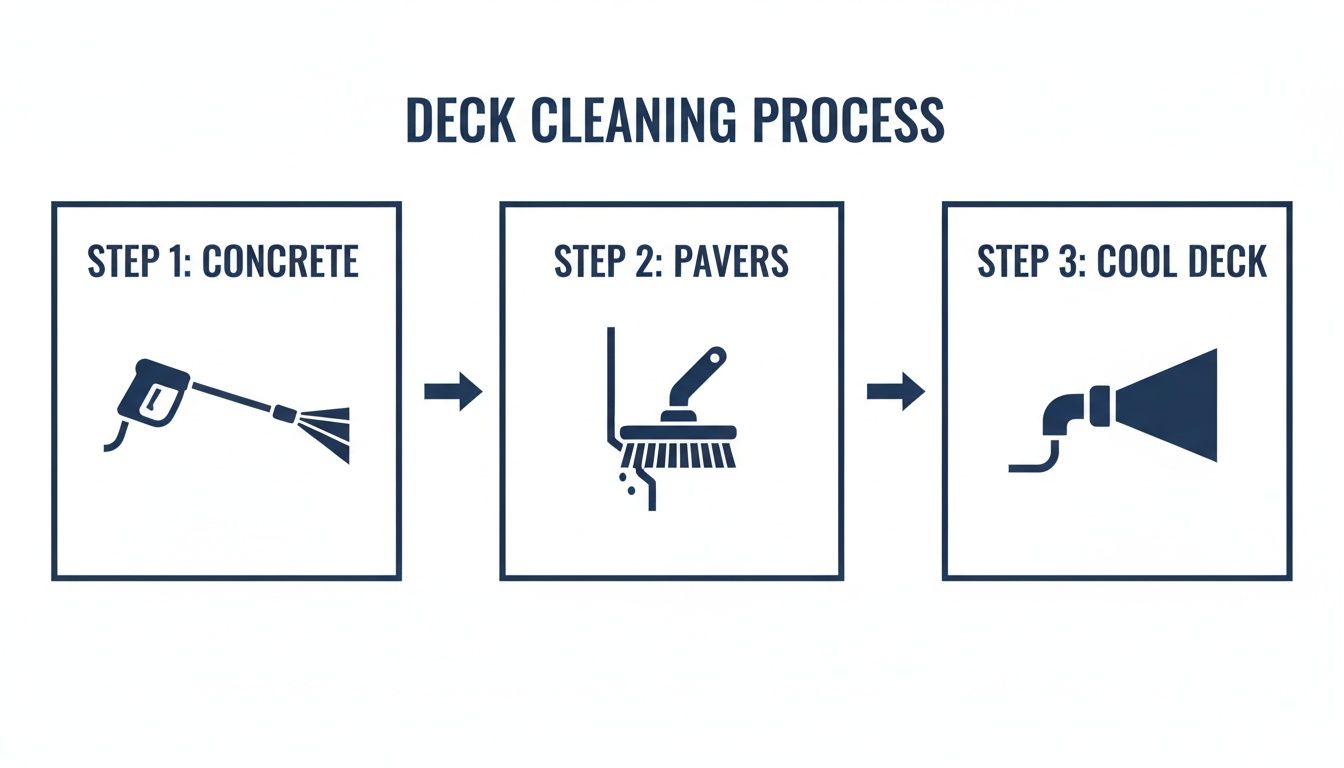
As you can see, every surface—whether it’s concrete, pavers, or cool deck—needs its own specific tool and approach to get the job done right.
Eradicating Rust Spots Without Damaging Your Deck
Those orange-brown rust stains from patio furniture legs, planters, or forgotten tools can be a real headache. They seem to fuse with concrete and pavers, and a simple scrubbing won't even make a dent.
The secret is to use an acid-based cleaner made specifically for rust. Oxalic acid is a common ingredient that works like a charm. The trick is to use it with extreme care so you don't etch the deck surface around the stain.
Always, and I mean always, test any rust remover on a small, hidden spot first. This step is non-negotiable. You have to see how the product reacts with your deck before you put it on a stain right in the middle of everything.
For a really targeted attack, try mixing the rust remover with just a bit of water to form a paste. Dab the paste directly on the rust spot, let it sit for a few minutes (whatever the label says), then gently scrub and rinse it off. If you're dealing with really tough rust, it helps to understand the full process; you can check out our detailed guide on how to remove rust stains from concrete.
Addressing Greasy Buildup From Sunscreen And Food
You'll often find a totally different kind of stain near the lounge chairs or dining area. I’m talking about the greasy buildup from sunscreen, lotions, and all the food dropped during a weekend BBQ. These oily spots are magnets for dirt, creating dark, grimy patches that regular cleaners can't touch.
For these, you need a quality alkaline degreaser. These cleaners are designed specifically to break down oils and fats.
- Apply the Degreaser: Use your pump sprayer to hit the oily spots directly.
- Let It Dwell: Give it about 5-10 minutes to soak in and start breaking down the grease.
- Agitate: Get in there with your deck brush and scrub the stain to work the degreaser in.
- Rinse Well: Wash the whole area clean with fresh water. Hot water works even better if you have access to it.
A quick word of warning: stay away from ammonia-based cleaners. Sure, they cut grease, but if any runoff gets in your pool, it can react with chlorine to form chloramines. That's what causes that harsh "pool smell" and irritates swimmers' eyes. It’s a problem we often see when people use the wrong products for their swimming pool deck cleaning. Sticking with a dedicated degreaser is a much safer way to go.
Proactive Maintenance And When To Call A Professional
Getting your pool deck deep cleaned feels fantastic, but the real trick to keeping it looking that good all year long is a little bit of regular upkeep. Smart, proactive maintenance is what stops that Arizona dust and grime from building up in the first place, making your deep clean last much longer and protecting your deck’s surface.
But being a smart homeowner also means knowing when a DIY job isn't the safest or best choice. Sometimes, you need to recognize when to put the tools down and call in a professional to avoid expensive mistakes and get that perfect, lasting finish.
Your Simple Arizona Deck Maintenance Calendar
The best way to avoid a huge cleaning job later is to do a little bit now. This is a simple, realistic schedule that works great for our desert climate and will keep that heavy grime from ever getting a foothold.
- Weekly Sweep: At least once a week, grab a leaf blower or a stiff broom and clear off all the leaves, dirt, and whatever else has blown in. This one simple step stops organic debris from sitting, staining, and becoming a food source for algae.
- Monthly Rinse: Give your deck a good, quick rinse with a standard garden hose. This is a must-do after a dust storm or during monsoon season to wash away all that fine silt before the sun has a chance to bake it on.
- Spot Treat As Needed: See a new rust ring from a patio chair or a little patch of algae in a shady spot? Take care of it right away using the spot-cleaning methods we talked about earlier. Letting a stain sit for even a few days makes it so much harder to remove.
While this guide has been all about cleaning the surface you walk on, true proactive care also means protecting the bones of your deck. To learn more about that, check out this great guide to deck joist tape for deck protection.
When To Put Down The Tools And Call A Pro
DIY cleaning is perfect for routine maintenance, but some jobs come with a high risk of damage if you don’t have professional experience. If you spot any of these issues, you should seriously consider calling a pro for your swimming pool deck cleaning.
A professional service isn't just about getting the job done; it's about getting it done safely and correctly. For homeowners in areas like Paradise Valley and Scottsdale with high-end deck materials, the risk of causing irreversible damage far outweighs the cost of hiring an insured team.
Here’s when it’s time to call South Mountain Window Cleaning:
- Widespread Efflorescence: If you're seeing a chalky, white film that keeps coming back on large sections of your pavers or concrete, that's a mineral deposit issue. It takes very specific cleaners and know-how to remove it without etching or discoloring your deck.
- Chipping or Flaking Cool Deck: Is your acrylic cool deck starting to peel, chip, or flake? Hitting it with a pressure washer, even on a low setting, can rip the surface right off and make the problem much worse. Professionals know how to gently clean these delicate surfaces without causing more damage.
- Large, Set-In Stains: That huge oil stain from a car, big rust patches, or a serious algae problem that’s taken over half the deck often require commercial-grade cleaners and equipment. These products are not only more effective, but they can be hazardous if not handled by a trained technician.
- Lack of Time or Equipment: Let's be honest, a proper deck cleaning is a tough, time-consuming job. Hiring our team means you get your weekend back and a flawless result. We show up with all the right commercial-grade gear to handle the job efficiently and correctly.
Hiring an insured and experienced team like South Mountain Window Cleaning gives you peace of mind with guaranteed, damage-free results. We serve the entire Phoenix area, from Gilbert to Tempe, bringing the expertise needed to protect your valuable property.
Common Questions About Cleaning Your Pool Deck
After years of cleaning pool decks all over Phoenix, Scottsdale, and the Valley, you get asked a lot of the same questions. It makes sense—homeowners want to protect their investment and keep their backyard looking great, but aren't always sure where to begin. The experts at South Mountain Window Cleaning have put together the most common questions we hear on the job, with some straight-shooting answers based on what we see out in the field every day.
How Often Should I Have My Pool Deck Cleaned In Arizona?
For most Arizona homes, a solid deep clean twice a year is what we recommend. The sweet spots are in the spring, right before you open the pool for the season, and again in the fall to get rid of all that summer sunscreen and grime.
But sometimes, you'll need to do it more often. You might want to consider a quarterly cleaning if you've got:
- Nearby Construction: All that dust from a new build has to go somewhere, and it usually ends up as a gritty layer on your deck.
- Messy Trees: If you have palo verdes or mesquites hanging over your deck, you know the constant battle with falling debris that can stain if left too long.
- A Full House: Lots of pool parties and family gatherings? More frequent cleanings will keep things looking fresh and prevent stains from setting in.
And of course, taking a leaf blower or a broom to it once a week is a great habit that makes a huge difference.
Can I Use Bleach on My Pavers or Cool Deck?
We get this one a lot, and our answer is always a firm "no." Please don't use straight chlorine bleach on your pool deck. It's just too harsh, and the risk of permanent damage is incredibly high. Bleach can literally burn and discolor pavers, pull the color right out of a cool deck, and destroy the protective sealer.
On top of that, if any of that bleach-heavy water runs into your pool, you'll be dealing with a whole new headache trying to rebalance your water chemistry.
A much better and safer option is an oxygenated bleach cleaner. These cleaners use oxygen to gently lift and break down organic gunk like algae without the damaging effects of chlorine. Just remember to test any cleaner on a small, out-of-the-way spot first.
What's the Right PSI to Use When Pressure Washing a Pool Deck?
This is where things can go wrong fast. Using the wrong pressure can do irreversible damage, so paying attention to the details here is crucial. The right Pounds per Square Inch (PSI) is completely dependent on your deck's material.
Here’s the cheat sheet our team at South Mountain Window Cleaning uses professionally:
- Hardy Concrete: You can go up to 2500 PSI, and using a surface cleaner attachment will give you a nice, even finish without any striping.
- Pavers (Like Brick or Travertine): You have to dial it back. Keep the pressure under 1600 PSI. Any higher, and you’ll etch the surface and, just as importantly, blast out the paver sand that keeps everything locked in place.
- Acrylic Cool Decking: This material is the most sensitive. It's critical to stay below 1500 PSI and always use a wide-angle tip, like a 40-degree (white) nozzle, to spread out the pressure.
The golden rule is to always start with less pressure than you think you need. You can always dial it up a bit if necessary. It’s a simple step that can save you from a very costly mistake.
Will Cleaning My Deck Strip Off the Sealer?
Yes, it's a real possibility. In fact, one of the quickest ways to ruin a good sealer is to hit it with too much pressure or the wrong cleaning chemicals. Once that protective layer is gone, your deck is wide open to stains, fading from our intense Arizona sun, and just wearing out much faster.
A professional cleaning service like South Mountain Window Cleaning is all about knowing how to get the dirt off without stripping away that vital sealant.
After any big cleaning, it’s smart to do a quick sealer check. Just splash a little water on a few areas of the deck. If the water beads up like on a freshly waxed car, your sealer is in good shape. If the water immediately soaks in and darkens the surface, that's your sign that it's time to reseal.
Don't let a dirty deck take away from your backyard oasis or turn into a safety hazard. If you'd rather skip the guesswork and risk, let the pros handle it. For a quick, free quote on our expert swimming pool deck cleaning and other exterior services, get in touch with South Mountain Window Cleaning today by visiting us at https://www.southmountainwindowcleaning.com.