
Your driveway already tells you what it needs. Maybe it feels too narrow when two vehicles try to pass, maybe the edge keeps turning into a tire rut, or maybe monsoon water pools where a clean extension should be. In Arizona, the right fix is rarely just the cheapest surface. It depends on heat, UV exposure, dust, drainage, curb appeal, and how much upkeep you're willing to live with after the job is done.
That's why driveway extension ideas need to be judged like exterior systems, not just materials. Concrete, asphalt, pavers, gravel, tile, and drainage-focused grids all behave differently once Phoenix sun, Scottsdale dust, and summer storms start working on them. The same goes for maintenance, because surface grime doesn't just affect the driveway, it also tracks onto walkways, walls, and nearby glass.
South Mountain Window Cleaning, LLC serves Phoenix, Scottsdale, Paradise Valley, Chandler, Tempe, Gilbert, and communities across the Valley, so this topic comes up in real curb-appeal projects all the time. Driveway dust and surface cleaning can change how the whole front of a property reads, especially when the windows are close to the parking area.
1. Concrete Driveway Extensions
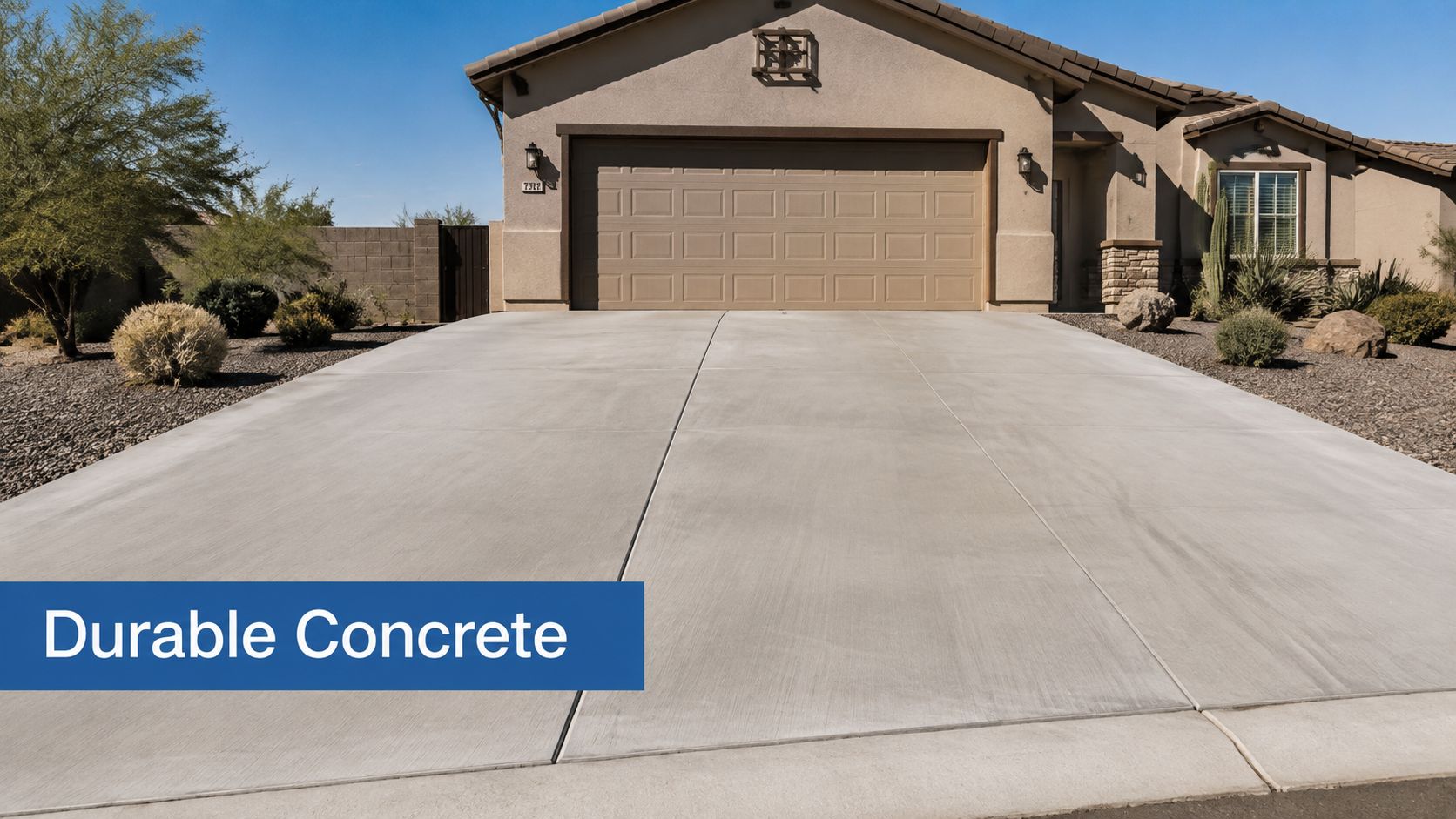
Concrete is the most straightforward choice when a driveway extension needs to look finished and stay usable in harsh weather. It gives a clean transition from the existing slab, and it fits everything from single-family homes to commercial properties that need a neat, durable parking edge. For Arizona properties, that clean look matters because sun, dust, and hard water marks show up fast on dark or irregular surfaces.
The practical appeal is durability with relatively low daily maintenance. A poured extension can be broom-finished for traction, smoothed for a more refined look, or stamped if the goal is to echo a higher-end entry. In neighborhoods where curb appeal matters, concrete usually feels like the safe, balanced decision.
Where concrete works best
Concrete is a good fit for homeowners who want the extension to feel like it was always part of the property. It's also useful for commercial office parks and retail properties where a uniform exterior matters more than decorative variation. On a practical level, it handles everyday parking, guest traffic, and repeat use without needing the constant attention that looser materials demand.
The trade-off is that concrete is less forgiving if the base or slope is wrong. The Concrete Masonry & Hardscape Association recommends 2 3/8 in. (60 mm) interlocking pavers for residential driveways, 3 1/8 in. (80 mm) units for typical vehicular traffic, and a 6–8 in. (150–200 mm) aggregate base compacted to at least 98% standard Proctor density for residential driveways and 98% modified Proctor density for heavier vehicular areas CMHA guidance. That base-first mindset matters even when you're choosing concrete, because a driveway extension usually fails below the surface long before it fails on top.
Practical rule: In Arizona, the finish matters less than the slope and base. If water doesn't move away from the house, the extension becomes a maintenance problem.
Use professional power washing once a year to keep dust from baking into the surface, and protect it with a concrete sealer on a regular cycle. If you want a practical cleaning reference from a service provider that works on these surfaces, see the company's best way to clean concrete driveway page.
2. Asphalt Driveway Extensions
Asphalt is a good answer when speed, budget control, and a smooth visual finish matter more than decorative detail. It's common on residential and commercial properties because it can be added quickly and ties into existing pavement cleanly. For property managers, that faster turnaround is often a key selling point.
In Arizona, asphalt deserves a more cautious read than it would in a cooler climate. Strong heat and UV exposure make upkeep more important, and dust buildup can make the surface look older than it is. Still, for driveways that need practical parking space without a long construction window, it's one of the most efficient options.
Why asphalt gets chosen anyway
A lot of owners choose asphalt because it feels familiar and easy to understand. It gives a professional look without the visual weight of concrete or tile, and it can be the right fit for service areas, apartment drives, and homes that need a fast widening project. If the rest of the property already uses darker hardscape tones, asphalt can look intentional rather than purely functional.
The key is maintenance discipline. Sealcoating, crack repair, and cleaning matter more in desert conditions because the surface is always under thermal stress. For a service example tied to this topic, South Mountain Window Cleaning, LLC has an Asphalt Driveway Cleaning page that fits the reality of dust, tire marks, and front-of-property cleanup.
Asphalt makes sense when the project has a deadline. It makes less sense when nobody plans for upkeep.
Avoid driving on fresh asphalt during the hottest part of summer, and pay attention to cracking when monsoon season starts shifting water across the slab edges. If the driveway sits near windows or storefront glass, the dust and residue from asphalt can affect the whole front elevation faster than many owners expect.
3. Permeable Paver Driveway Extensions
Permeable pavers suit driveway extensions where runoff is already a design concern. Their joints and open base let water move downward instead of sending it across the lot. That matters in Arizona, where monsoon storms can expose poor grading and push water toward garages, walkways, or neighboring property.
The system is established rather than experimental. An independent survey from England estimated 5.1 million m2 of permeable paving installed from 2009 to 2013, representing 8% of block paving during that period CCC survey report. The figures show that permeable paving has a defined role, although owners usually select it for drainage requirements instead of treating it as a default driveway surface.
What permeable pavers require under the surface
Permeable pavers need more than a different top layer. The installation requires a properly sized open-graded base, firm edge restraints, and accurate grading. Without that foundation, water can collect beneath the extension or escape toward areas that were never designed to receive it.
Dust is the maintenance issue Arizona owners should plan for. Fine material can fill the joints and reduce infiltration, while tire marks and tracked dirt affect curb appeal. Select a system that matches the dust, tire marks, and front-of-property cleanup that Arizona properties face.
A Paradise Valley residence or Scottsdale commercial campus can use permeable pavers to combine a finished appearance with stormwater control. They can also suit projects in Tempe and Chandler where runoff management forms part of the brief.
If water is the problem, choose a surface and base that give it somewhere to go.
Schedule professional power washing with controlled pressure. Aggressive blasting can remove joint material or disturb the drainage layer. Light-colored pavers may reflect more heat under Arizona sun, but they also show dust sooner. Cleaning the extension alongside nearby windows helps prevent dirty runoff from marking glass, walls, and entry surfaces.
4. Stamped Concrete Driveway Extensions
Stamped concrete is the right move when the goal is to make the driveway extension look deliberate, not merely useful. It gives you the strength of concrete with a decorative finish that can mimic stone, brick, or tile. For upscale Phoenix, Scottsdale, and Paradise Valley properties, that blend of durability and style is often the sweet spot.
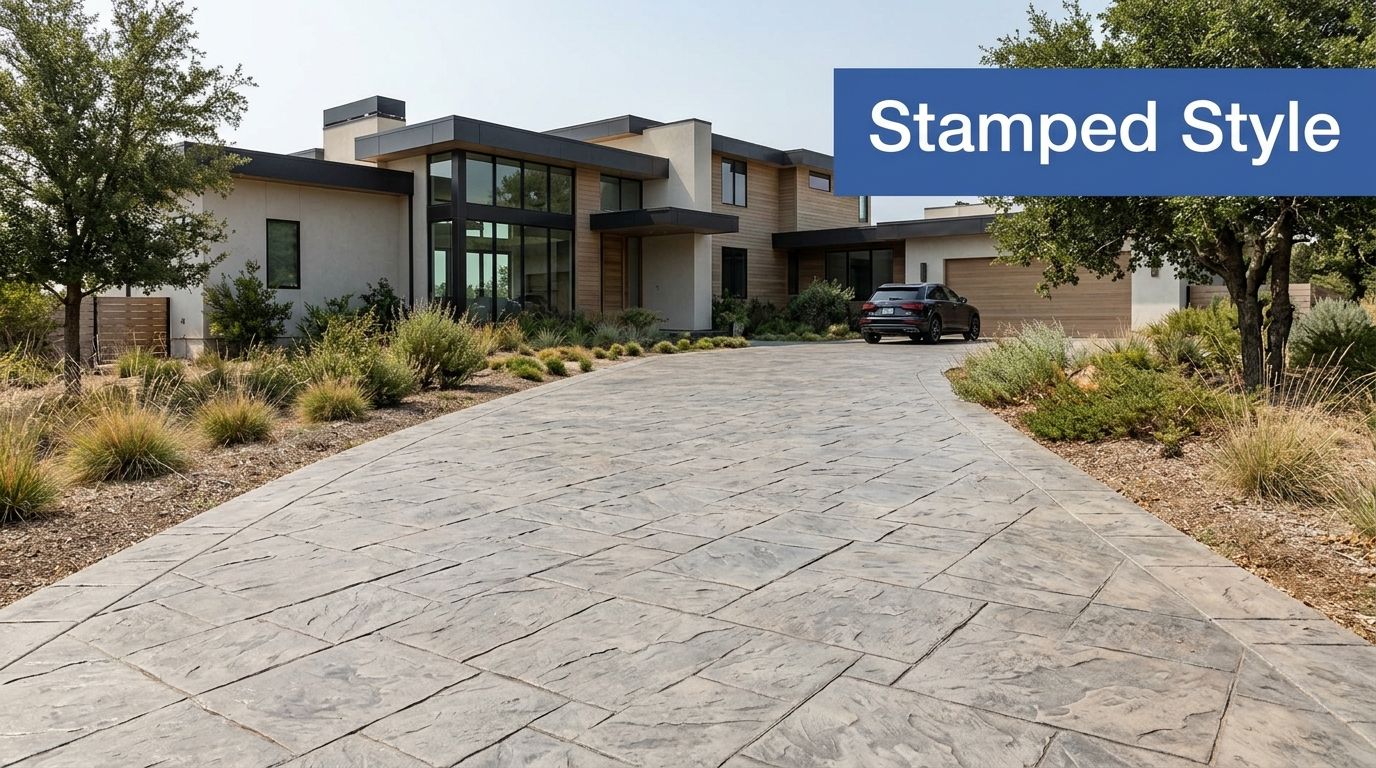
The downside is obvious once maintenance starts. Decorative texture, color, and sealers can look great, but dust and UV exposure are unforgiving. If the finish isn't protected and cleaned on schedule, the visual advantage fades quickly.
Aesthetic value with maintenance discipline
Stamped concrete is strongest when the property already leans toward high design. It works well for boutique hospitality spaces, custom homes, and golf-course communities where the driveway is part of the first impression. On those properties, the extension needs to look like architecture, not just parking.
The finish should be sealed with a UV-resistant product and cleaned carefully so the pattern doesn't get flattened by aggressive equipment. If staining becomes an issue, the internal reference on acid stain concrete cost is relevant because decorative concrete often depends on preserving the color story over time. For more context on decorative options, there's also a useful external discussion of the pros and cons of decorative concrete driveways.
A short video can help property owners visualize how stamped finishes change the whole frontage.
Choose a slip-resistant finish if the surface gets monsoon splash, and keep the cleaning routine gentle. A stamped driveway that's cleaned too aggressively loses the detail that made it worth choosing in the first place.
5. Gravel and Crushed Stone Driveway Extensions
Gravel extensions in the Valley usually fail at the edges, not the center. Without containment and proper grading, stone migrates into lawns, walkways, and tire paths, turning a simple parking area into a recurring cleanup job.
Crushed stone suits rural edges, minimalist properties, and homes where added parking matters more than a formal finish. In parts of the Phoenix metro, it can widen a driveway without the cost and permanence of a poured slab. The loose surface also handles Arizona heat without developing the reflective glare of some hard paving materials.
The appearance remains casual. That works with ranch-style homes, desert settings, and eco-focused designs. At a luxury storefront or highly finished residence, exposed stone can look unfinished unless the edging, color, and transitions are planned carefully.
Practical insight: Gravel is easy to install only when its borders are controlled.
Specifications that keep gravel in place
Choose larger crushed stone rather than fine material when dust is a concern. Fine gravel may look tidy at first, but Arizona wind moves it more readily and spreads it across nearby surfaces. Install firm edging, compact the base and stone during construction, and schedule seasonal raking before monsoon storms.
Drainage needs attention as well. Grade the extension so runoff does not collect against the garage, foundation, or pedestrian routes. A gravel surface can absorb some water, but displaced stone can block edges and create uneven channels after heavy rain.
Maintenance extends beyond the driveway. Windblown dust from loose stone often settles on lower glass and screens, so the exterior plan should include professional power washing and nearby window cleaning. South Mountain Window Cleaning, LLC's guide to how to improve curb appeal addresses that broader frontage concern.
Gravel remains a practical DIY-friendly choice for owners who can manage grading and containment. It is less suitable for polished front elevations or sites with frequent tenants, visitors, and service vehicles. In those settings, loose stone can create tire tracking, dust, and repeated cleanup that erodes the initial savings.
6. Recycled Asphalt Driveway Extensions
RAP extensions show up most often on service roads, industrial sites, and municipal lots where the budget is tight but the surface still needs to handle traffic. Compacted properly, recycled asphalt pavement gives owners a paved feel without the cost of a full new asphalt build. It also reduces waste, which suits sustainability-minded commercial and municipal projects.
The material settles and compacts over time, so installation quality matters. A well-prepared RAP extension can provide a stable parking or access surface, though it will not match the refined appearance of poured concrete or stone. In Arizona, intense heat, UV exposure, windblown dust, and monsoon runoff all affect how well that surface holds together.
When RAP is the smarter budget call
RAP makes sense for functional areas, including service lanes, overflow parking, and property-management projects. It can also blend with older asphalt when the owner wants to extend usable space without removing the existing drive. Confirm the grade first, especially near garages, foundations, and pedestrian routes, so monsoon water has a clear path instead of collecting at the transition.
Dust control and periodic re-compaction belong in the maintenance plan. If those tasks are skipped, traffic and weather can leave the surface rough, loose, and less stable than expected. Dust can also settle on building façades, lower glass, and screens, making professional power washing and nearby window cleaning part of the broader frontage plan.
RAP usually suits owners prioritizing parking capacity over a polished front elevation. A mixed-material layout can improve the result: use RAP for the functional parking strip, then define it with firm edging, clear striping, or a cleaner front walk. That approach keeps the frontage readable without forcing a luxury finish onto a budget-focused project.
Before approving the material, compare the installation savings with recurring grading, dust control, and re-compaction work. For a high-visibility entrance, the ongoing upkeep and utilitarian appearance may outweigh the lower initial cost.
7. Porcelain and Polished Stone Tile Driveway Extensions
Porcelain and polished stone tile are premium choices for owners who want the driveway extension to read as part of the architecture. These materials fit high-end homes, boutique hotels, and exclusive commercial properties where surface finish is part of the brand. They're not subtle, and that's the point.
The advantage is obvious. The appearance is refined, the details are crisp, and the surface can improve the entire entry sequence. In a place like Paradise Valley or Scottsdale, that can matter as much as function for the properties that live on presentation.
Luxury comes with upkeep
Tile and polished stone need cleaner habits than rougher surfaces. Dust shows immediately, grout lines need attention, and the cleaning process has to protect the finish instead of scouring it. That means low-pressure washing, careful chemistry, and regular sealing.
The material is also less forgiving if the installation is sloppy. Grout movement, drainage mistakes, and poor substrate work will show faster than they would on a more forgiving surface. In other words, this is not a place to cut corners.
If you want a reference point for porcelain paving techniques, the external guide on porcelain paving tips for Melbourne is useful for understanding how premium paver systems rely on precise base preparation and finishing. The same principle applies here, even if the climate and property type differ.
A polished extension can be stunning, but it needs a maintenance mindset. If the property gets heavy dust, frequent service traffic, or irregular washdowns, a less delicate material may age better. When the site is curated and maintained, though, porcelain and stone give the strongest luxury statement on the list.
8. Permeable Concrete Grid Driveway Extensions
Permeable concrete grid systems are built for owners who want structure, drainage, and a softer visual footprint at the same time. They combine the strength of a concrete framework with open cells that can hold grass, groundcover, or gravel. That makes them appealing for eco-conscious properties and for sites that need to manage stormwater without turning the front yard into a hardscape slab.
These systems fit a very specific design brief. They're useful when the homeowner wants more parking but doesn't want the lot to feel fully paved. They also work when local drainage expectations or front-yard coverage concerns push the design away from a solid impervious surface.
Why grids are more than a visual compromise
A grid extension can feel semi-finished in the best possible way. It reads cleaner than bare gravel and more environmentally responsive than a full concrete pour. For commercial campuses or residential communities that care about runoff and presentation at the same time, that balance is useful.
The vegetation component does create a maintenance commitment. Grass or groundcover in Arizona needs irrigation planning, seasonal trimming, and ongoing inspection after monsoon weather. If the base is underbuilt, the whole system can shift or settle unevenly.
Practical rule: A permeable grid is only as good as its base and drainage path. The visible top is the easy part.
Use native groundcover where possible, and don't assume the surface will stay tidy without intervention. It's better suited to properties willing to treat the driveway as part parking area, part design element. In the right setting, it can reduce runoff and soften the front elevation without losing real vehicle support.
8-Option Driveway Extension Comparison
| Option | Implementation complexity | Resource requirements | Expected outcomes | Ideal use cases | Key advantages |
|---|---|---|---|---|---|
| Concrete Driveway Extensions | Moderate, professional pour, 7-day cure | Ready-mix concrete, forms, sealing (2–3 yr) | Durable 30+ yrs, seamless finish, low routine care | Residential & commercial properties needing polished curb appeal | Cost-effective vs premium, heat-reflective, multiple finishes |
| Asphalt Driveway Extensions | Low–Moderate, fast lay, quick use (48 hrs in cool weather) | Hot-mix asphalt, sealcoating (every ~2 yrs), routine maintenance | Affordable, quick-install surface, shorter lifespan in extreme heat (15–20 yrs) | Budget projects, rapid turnarounds, temporary/seasonal expansions | Low upfront cost, fast installation, easy spot repairs |
| Permeable Paver Driveway Extensions | High, precise base and specialist install | Permeable pavers (various materials), drainage aggregate, pro installers | Improved drainage, reduced runoff, attractive customizable look | LEED/green projects, eco-conscious residential & commercial sites | Water conservation, replaceable units, lowers heat island effect |
| Stamped Concrete Driveway Extensions | High, decorative stamping requires skilled crew | Concrete, stamping tools, colorants, UV-resistant sealer (annual) | Durable 30+ yrs with decorative appearance, high curb appeal | Upscale homes, luxury commercial properties seeking designer look | High aesthetic value, cheaper than real stone, highly customizable |
| Gravel & Crushed Stone Driveway Extensions | Low, simple prep and placement | Gravel/crushed stone, edging, periodic replenishment | Permeable rustic surface, frequent maintenance, dusty in arid climates | Rural properties, desert landscaping, low-budget sites | Very low upfront cost, easy installation, flexible layout |
| Recycled Asphalt Driveway Extensions | Low–Moderate, lay and compact, annual re-compaction | Reclaimed asphalt, compaction equipment, dust control | Cost-effective, sustainable surface that compacts over time | Municipal, industrial, budget-conscious commercial applications | Eco-friendly, lower cost, good drainage characteristics |
| Porcelain & Polished Stone Tile Driveway Extensions | High, precision installation and grout work | Premium tiles/stone, experienced installers, specialty cleaning | Luxury, long-lasting (30+ yrs), high maintenance and high cost | Ultra-luxury estates, resorts, high-end commercial properties | Exceptional aesthetics, premium property value, durable when sealed |
| Permeable Concrete Grid Driveway Extensions | Moderate–High, grid layout and base prep, vegetation work | Concrete grid panels, drainage base, irrigation/groundcover | Semi-natural durable surface, supports vegetation, reduces runoff | Sustainable campuses, eco-conscious residential communities | Blends hardscape and landscape, supports plant growth, permeable surface |
Choose the Extension That Will Stay Usable and Clean
The best driveway extension ideas in Arizona are the ones that still make sense after the first summer, the first dust storm, and the first monsoon. Concrete is the cleanest all-around choice when you want a durable finish that reads as permanent. Asphalt and recycled asphalt make more sense when cost and speed matter more than decorative detail, especially on properties that need parking expanded fast. Gravel works when flexibility and desert character matter, but only if you're willing to manage migration and dust.
If drainage is the issue, permeable pavers or permeable concrete grids are the smarter answer because they turn extra parking into a stormwater solution. If curb appeal is the priority, stamped concrete or porcelain and polished stone tile can raise the look of the entire frontage, but they also demand more careful cleaning and better base work. The right call usually comes down to what the site can support, not just what looks best in a sample board.
Before any work starts, confirm local requirements, property setbacks, utility locations, surface slope, base preparation, and monsoon drainage with the right contractor or local authority. Some extensions are simple enough for a homeowner to handle, especially gravel prep or edging, but poured surfaces, tile, drainage bases, grading, and commercial work usually belong with qualified professionals. That's where details like compaction, edge restraint, and runoff direction make or break the result.
Keep the maintenance sequence simple. Remove debris, address stains early, protect sealed surfaces, and use professional power washing or flat-surface cleaning when dust, tire marks, buildup, or delicate finishes need controlled equipment. For broader exterior care, South Mountain Window Cleaning, LLC offers power washing, flat-surface cleaning, house washing, and window cleaning across Phoenix, Scottsdale, Paradise Valley, Chandler, Tempe, Gilbert, and the Valley, which is especially useful when a driveway project leaves surrounding walkways, glass, or walls needing cleanup.
For more planning context, the backyard design ai resource can help frame the driveway as part of the larger front-yard layout, not a separate afterthought. That's usually the difference between a surface that just gets poured and a front approach that works.
South Mountain Window Cleaning, LLC helps Arizona properties keep the whole exterior looking intentional, not just the glass. If you're planning a driveway extension and want the driveway, walkways, and nearby windows cleaned after the work is done, visit South Mountain Window Cleaning, LLC to schedule service or request a quote.