

You can stand beside a new pool in Phoenix, look at clear water waiting in the shell, and think the hard part is over. For homeowners on a private well, that's usually the moment where significant work begins. Filling a pool with well water in Arizona means dealing with minerals, flow limits, and recovery time, not just turning on a hose and walking away.
That difference matters because well water behaves nothing like municipal water. If the source water carries iron or copper, chlorine can trigger discoloration and staining instead of a clean finish, and the pump can get stressed long before the pool is full. The smarter approach is always test, sequester, fill, chlorinate, in that order.
The Hidden Risks of Arizona Well Water
A dry pool in Chandler or Gilbert can make the job look straightforward. Drop in a hose, let the water rise, and the backyard seems on track for summer. That is the easy version, and it is also the one that leads to expensive mistakes.
Arizona well water often carries hardness and dissolved metals, and those problems usually stay hidden until the fill is already underway. One practical guide warns that iron above 0.3 ppm can cause staining and recommends a metal sequestrant before chlorination so the water does not oxidize and discolor the pool finish (source guidance on iron staining and sequestrants). The danger lies in treating a well like a city line, as municipal-water habits do not protect a pool shell, tile line, or plumbing from mineral-heavy source water.
Why clear water can still be the wrong water
Clear well water can look fine right up until chlorine is added. After that, dissolved iron and manganese can change color quickly, and the owner is left sorting out whether the water is cloudy, dirty, or reacting chemically. That is how the stain-and-drain cycle starts.
Practical rule: if the source water has not been tested, do not assume “clear” means “safe for the pool.”
There is also a mechanical side to the risk. Many residential pools hold roughly 15,000 to 30,000 gallons, and a well fill usually runs for hours or longer instead of acting like a quick top-off (well fill timing reference). That kind of draw puts pressure on the well system, and the fill plan has to account for recovery time as much as pool size.
Arizona homeowners who already fight mineral spotting on glass and fixtures usually recognize the warning signs. The same hard-water behavior that leaves residue on windows can leave scale and staining on pool finishes, so the water deserves the same caution as the rest of the property. For a related example of how mineral-heavy water leaves marks, see this guide on mineral deposits on glass. If the current pump is already weak or inconsistent, it can also be worth comparing replacement options with a specialist, including selecting Ingersoll Rand pump models, before a long fill puts more strain on the system.
Essential Pre-Fill Checks for Your Well and Equipment
A pool fill can go wrong before the first hose is even hooked up. In Arizona, a significant risk is a well system that cannot keep up with a long draw, or water that enters the pool full of minerals and starts the stain-and-drain cycle later. The first job is to make sure the well, the pump, and the fill path are ready for steady use, not just a quick household demand.
Before starting, inspect the pump, pressure tank, and visible plumbing for leaks, short-cycling, or signs that the system is already under strain. A pool fill lasts far longer than a normal shower, laundry load, or irrigation cycle, so weak equipment shows its limits fast. If the pump is already inconsistent, it makes sense to compare replacement options with a specialist, including selecting Ingersoll Rand pump models, before a long fill puts more wear on aging parts.
The hose matters too. Old hoses can carry sediment, algae residue, or debris into the pool before chemistry ever has a chance to work, and that only makes hard-water problems harder to sort out later. A clean hose and a simple pre-filter are practical protection when the source water already carries grit, scale, or discoloration. For homeowners dealing with recurring mineral spotting on fixtures, hard water treatment options are part of the same prevention mindset.
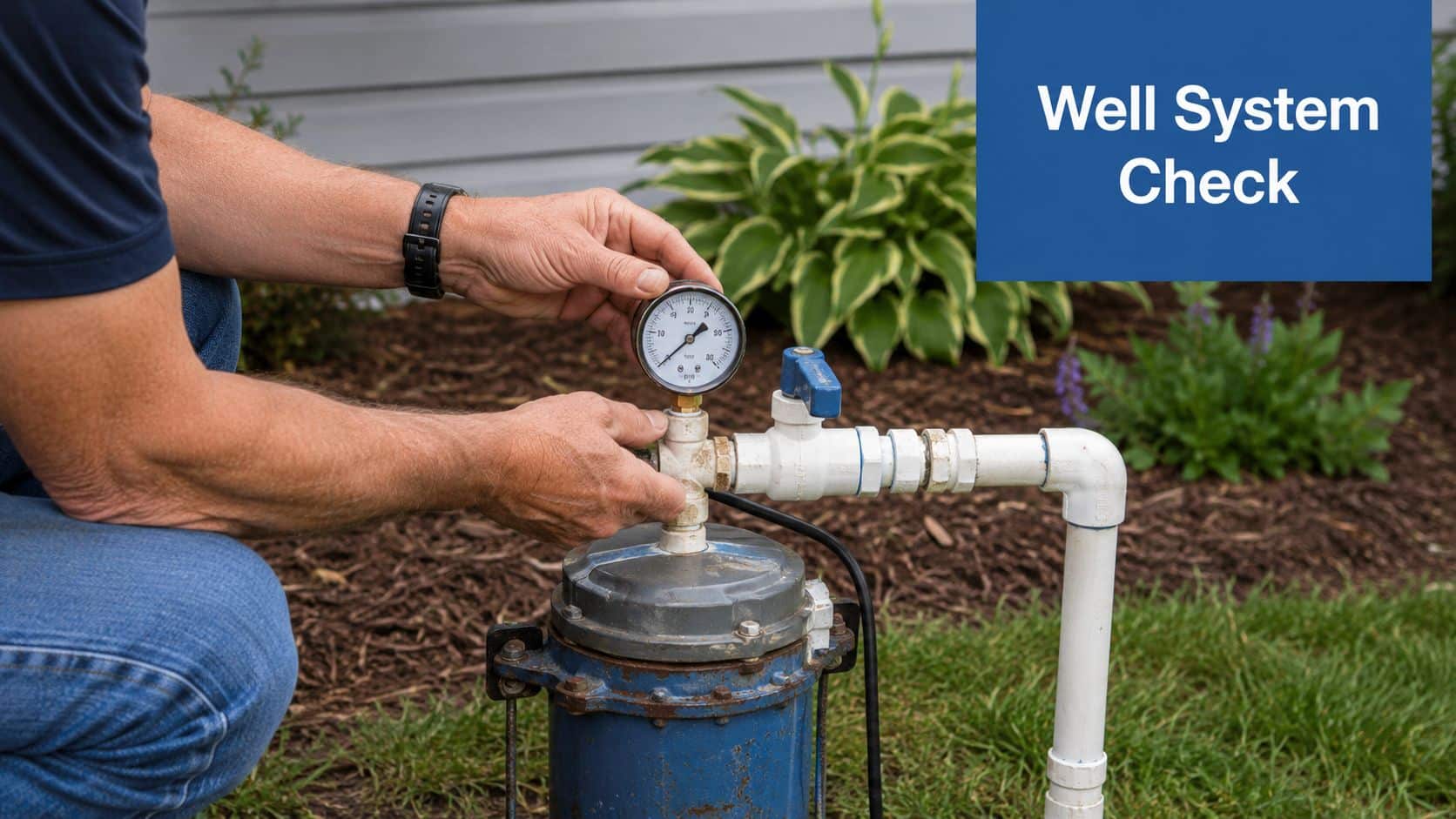
A short pre-fill checklist that saves money later
- Confirm the flow rate: Know the well's practical GPM so the fill timeline matches the system's real capacity.
- Inspect the pump and tank: Catch weak pressure, leaks, or overheated operation before a multi-hour or multi-day run pushes the system harder.
- Use a clean hose and pre-filter: Keep sediment out of the pool from the start.
- Avoid competing water use: Laundry, irrigation, and long showers all cut into recovery capacity.
- Plan the fill window: Schedule the fill around the well's behavior, not around convenience.
- Test, sequester, fill, chlorinate: That sequence helps reduce the chance that dissolved metals or hardness turn a new fill into a staining problem.
If the well has been dependable only under normal household demand, do not assume it can handle a pool on continuous runtime. The safer approach is to treat the fill as a controlled job, not a convenience task, because one mistake with hard water can leave you paying to correct stains, scale, or pump damage later.
Testing Your Well Water Before You Fill
A pool can be built the right way and still become a chemistry problem if the source water is ignored. The first decision is to test the well water itself before the fill starts. That tells you what the pool is going to face before any sanitizer goes in.
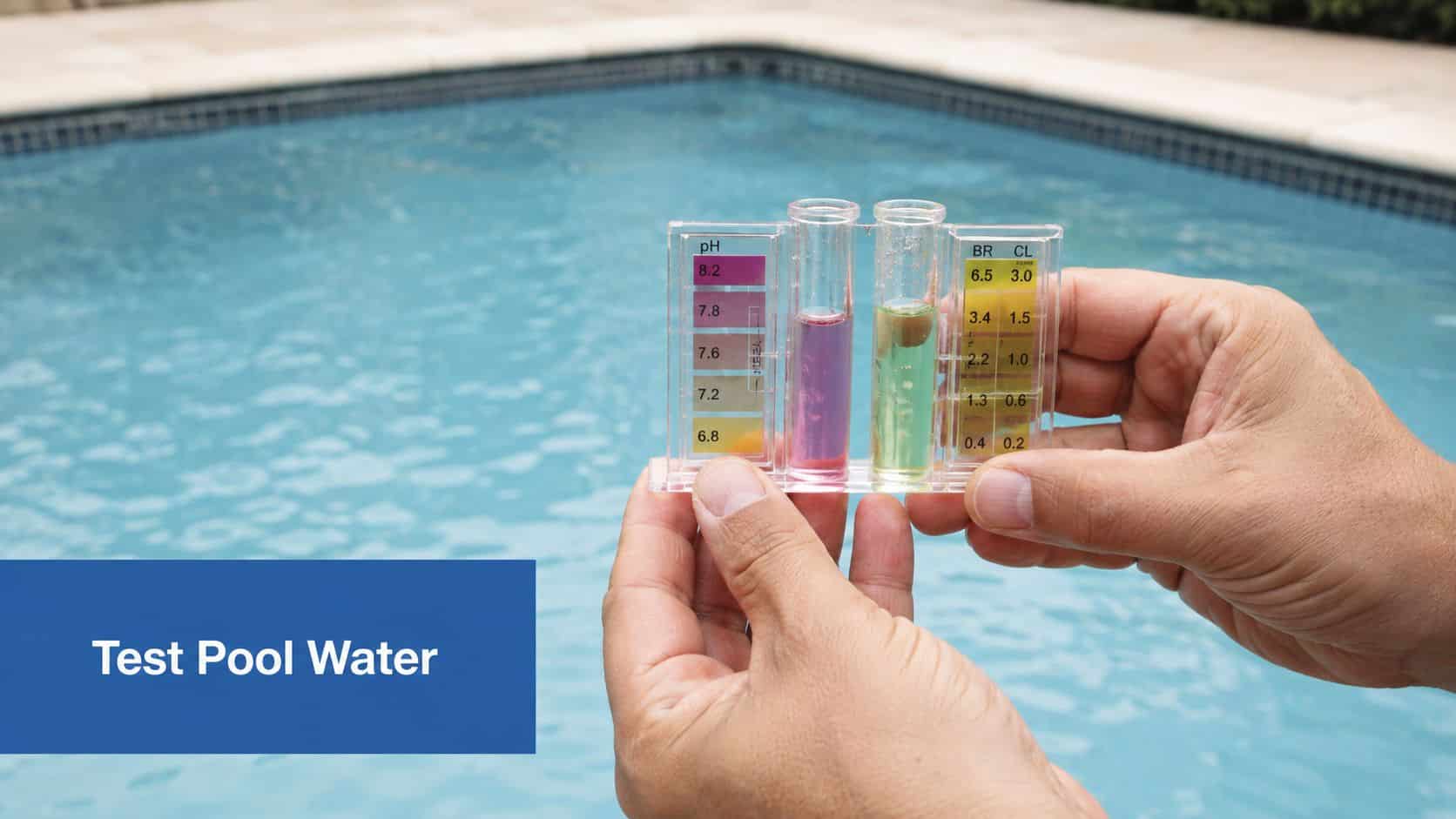
What to test and why it matters
Test iron, copper, hardness, and pH before the fill begins. Those are the numbers that drive staining, scale, and color shifts after chlorine is added, and Arizona well water often brings hard, mineral-rich conditions that make those problems more likely. If you already fight mineral spotting on glass or fixtures, the pool water deserves the same level of attention.
Iron is the one that catches homeowners off guard most often. Water can look clear at the hose and still turn brown, orange, or darker after sanitizer hits it, because chlorine oxidizes dissolved metals. That is why metal sequestrant before chlorine matters when metals are present, it gives the metals a place to stay tied up before they can plate out on the shell or fittings.
Finished water also needs a realistic hardness target after the fill. A calcium hardness target of 200 to 400 ppm after filling is a practical range to work around, because Arizona fill water often starts hard and the pool has to be balanced around that reality instead of pretending it came from softer municipal water.
Test the source water first, then decide what has to be controlled before chlorine ever touches the pool.
For homeowners who want a broader water-quality check, your guide to safe, clean water covers the same basic rule. Test first, then treat with a plan.
The mistake that creates stain problems
The mistake I see most is starting sanitization too early. Once chlorine goes in before metals are controlled, the pool can cloud, brown, or stain, and the usual response is to add more chlorine. That often makes the reaction worse, because the problem is the order of operations, not a lack of sanitizer.
A source-water test changes the rest of the job. If the water is fairly clean, the fill can proceed with fewer corrections. If it is metal-heavy or hard, the treatment plan has to start before the pool is fully built from that water, or the owner ends up paying to clean up stains and scale later.
For the mineral side of the problem, hard water solutions are a useful reminder that prevention beats cleanup every time. Pools are no different.
The Correct Process for Filling and Treating
A well-water fill goes wrong when the pool is treated like a blank container. In Arizona, hard water changes the job from the first hour. The safer sequence is to test the water, add a sequestrant if metals show up, finish the fill, then chlorinate after the water has had time to settle.
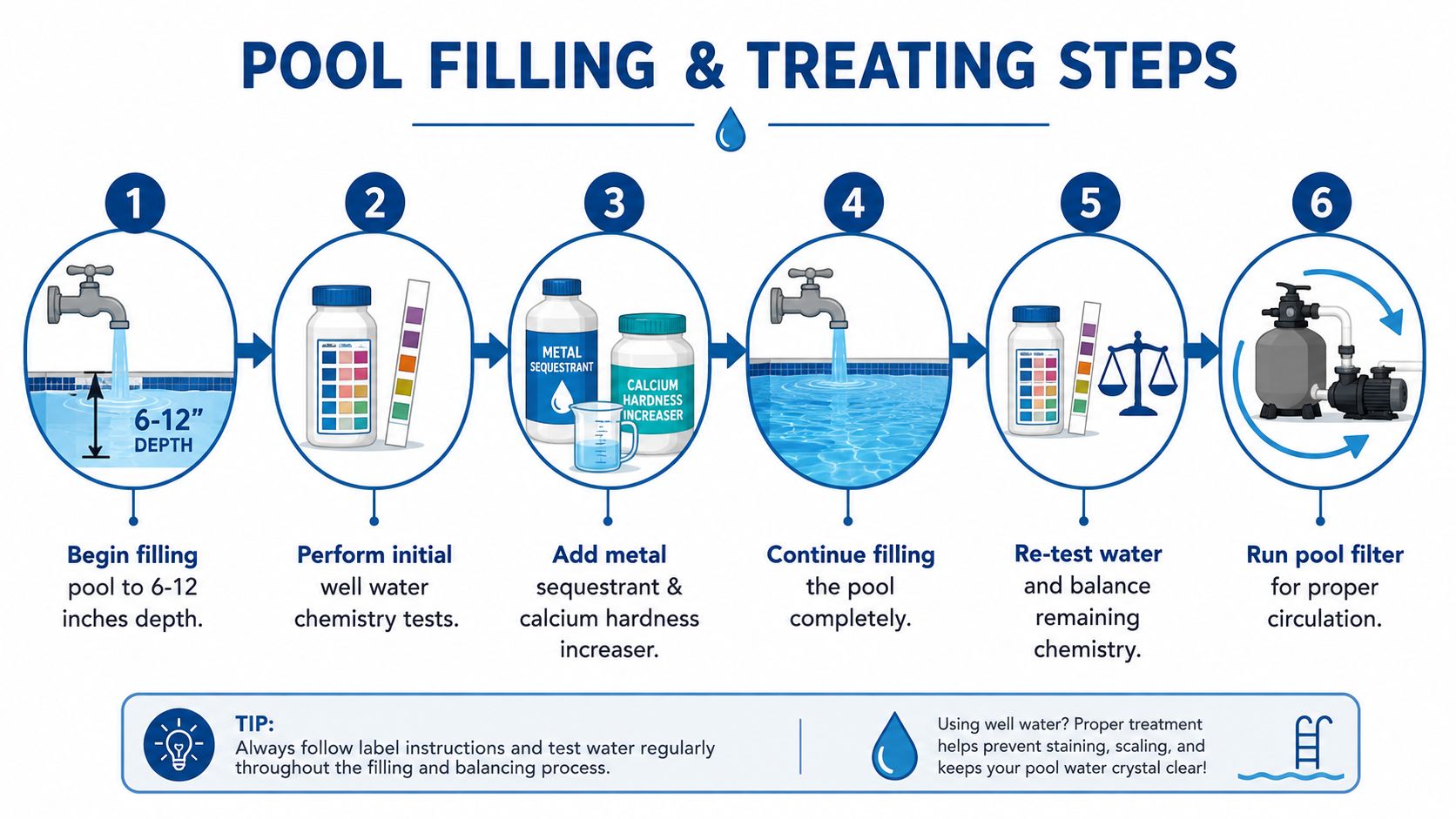
Start with water movement, not chlorine
Begin by filling the pool to a shallow working depth, then test and document the source water before you keep going. If metals are present, add a metal sequestrant before chlorine ever enters the water. That order matters because once sanitizer hits metal-heavy water, the pool can shift from clear to brown, orange, or dark in a hurry. At that point, the owner is not balancing water anymore, they are trying to undo a metal reaction.
A practical fill sequence looks like this:
- Start the fill slowly. Let water enter the pool in a controlled way.
- Test the source water. Confirm what is in it before the pool is full.
- Add sequestrant if metals are present. Let it circulate before chlorine.
- Finish the fill. Keep the water moving and do not rush the chemistry.
- Re-test and balance. Adjust the remaining chemistry after the pool is full.
- Circulate the water. Let the system work before swimming.
Give the chemicals time to work
After sequestrant goes in, the water needs time to circulate before chlorine is added. A practical wait gives the treatment time to bind metals instead of fighting them after the fact. Once the pool is full, continuous filtration helps clear out fines and keeps the new water from going stagnant while the chemistry settles.
Best practice: chlorine belongs after the sequestrant has circulated, not before, and not at the same time.
That pause is not wasted time. It helps prevent the stain-and-drain cycle that shows up when hard, mineral-rich water is shocked too soon. If you want the full fill to stay in service instead of becoming a cleanup job, it also helps to understand the likely ongoing average cost of pool maintenance so the first treatment choices line up with the long-term care plan.
A clean hose line and a basic pre-filter can also keep sand and grit out of the pool while the water is being conditioned. In Arizona, source water often already carries enough mineral load without adding extra debris from the fill equipment.
The pool is not really ready when it reaches the right level. It is ready when the water has been tested, treated in the correct order, and given time to stabilize. Skipping that window is how a clear fill turns cloudy by the next morning.
Managing Flow Rate to Protect Your Well Pump
A pool fill needs to be handled like a utility load, not a casual hose job. In Arizona, that matters because hard, mineral-rich well water can already be carrying enough sediment and dissolved minerals without adding pump stress on top of it. If the system is pushed past what it can supply, pressure drops, air can get pulled into the line, and the fill can turn from a controlled job into a repair call.
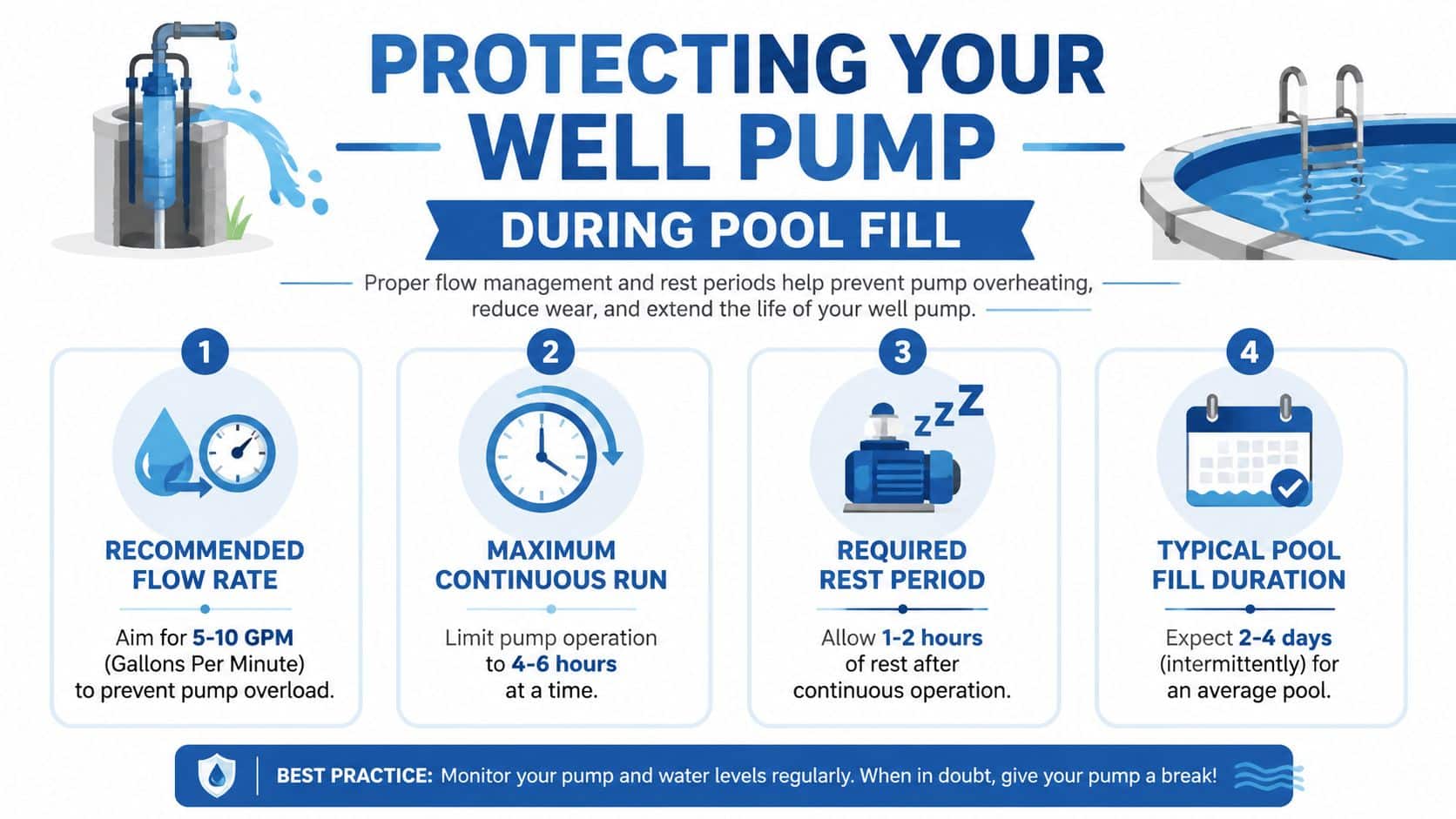
Use the well's real output, not wishful thinking
The fill plan has to match what the well can produce. If the flow rate is too high for the well's recovery, the pump starts working against a falling water supply, and that is how homeowners end up with sputtering flow, dirty water, or a well that needs time to recover before it can serve the house again. The pool size does not decide the pace, the well does.
Well-service guidance also recommends filling in blocks, with time on and time off, instead of running the line nonstop. That gives the aquifer a chance to recover and lowers the risk of dry pumping or pressure collapse. It also helps keep the water cleaner, because a stressed well can begin drawing sediment or sending uneven flow into the pool.
The best practice is simple. Watch the fill while it is running, and pay attention to changes in pressure, sound, and clarity. If the flow slows, the water starts carrying grit, or the pump sounds strained, stop the fill and let the well recover before resuming.
Practical rule: if the well starts struggling, stop the fill and let it recover instead of trying to force more water through it.
A pool also should not be the only demand on the system during the fill. If possible, keep irrigation, laundry, and heavy household use for the off periods so the well is not trying to supply everything at once. That small adjustment can make the difference between a steady fill and a problem that spreads to the rest of the plumbing.
Know when the job stops being a pool fill
Some wells can handle a pool without much trouble. Others can fill the same pool only if the process is slow, intermittent, and watched closely. The mistake is treating a well like a city water connection and assuming it will keep up no matter what.
The safer approach is to protect the well first and fill the pool second. That keeps the homeowner in control of the work instead of reacting to a stressed pump, a sagging water level, or mineral problems that show up later on the pool surface. For a harder-water cleanup example, see how to remove hard water stains from glass.
Troubleshooting Common Post-Fill Pool Problems
The first ugly reaction after a fill usually looks worse than it is. Brown water, green water, or a sudden cloudiness spike does not always mean algae. With well water, it often means chlorine has reacted with dissolved metals already in the source water.
Brown or orange water after chlorination
If the pool turns brown, orange, or blackish after chlorine goes in, stop treating it like ordinary dirt. Chlorine can oxidize dissolved iron and manganese fast, which is why a clear fill can change color almost immediately (post-chlorine metal reaction reference). More sanitizer will usually make the problem worse, not better.
Pause chlorination and let the sequestrant work if it was already added. If it was not, treat the water for metal control before you add more chlorine. Then keep the filter running so it can catch the oxidized material and help clear the reaction out of the water.
Scale and the bathtub ring
Arizona's hard water leaves a different mess, a mineral line at the waterline and scale on surfaces. That buildup shows the fill water still needs balance. It is not just a cosmetic issue, because scale makes surfaces harder to clean and can wear on equipment over time.
Correct the balance and remove the residue with the right surface-care method, not with aggressive scrubbing or random tools. For nearby exterior glass, a guide on removing hard water stains from glass is useful because the mineral behavior is the same, even though the surface is different.
When the pool just will not clear
Sometimes the fill looks normal, then stays hazy for days. That can happen when the water did not get enough circulation after sequestrant, or when the filter never got enough run time to finish the job. The pool should run continuously for 48 hours after the fill and may take 3 to 7 days to fully balance (post-fill balancing guidance).
The homeowner's job is to stop chasing the symptom and fix the sequence. If the pool is reacting to metals, chlorine alone will not solve it. If the water is scaling, more sanitizer will not fix that either.
The cleanest outcome comes from treating the fill as a chemistry project from the start. Test first, add sequestrant, fill carefully, then chlorinate. That order keeps a minor post-fill problem from turning into a drain-and-refill cycle.