
You rinse the windows, step back, and the glass still looks spotted. In Phoenix, Scottsdale, Paradise Valley, Chandler, Tempe, and Gilbert, that's one of the most common complaints I hear. Homeowners think the windows are dirty. Property managers assume the last cleaning missed something. Most of the time, the issue is mineral deposits on glass, not ordinary dust.
Arizona makes that problem worse. Hard water hits the glass from sprinklers, hose spray, rain runoff, or trapped moisture. Then the sun bakes it in fast. What starts as a faint white film can turn into stubborn spotting that won't budge with basic window soap and a towel. If you catch it early, you can often improve it yourself. If it's been sitting for a while, the wrong DIY method can leave the glass looking worse than when you started.
What Are Those White Spots on Your Arizona Windows
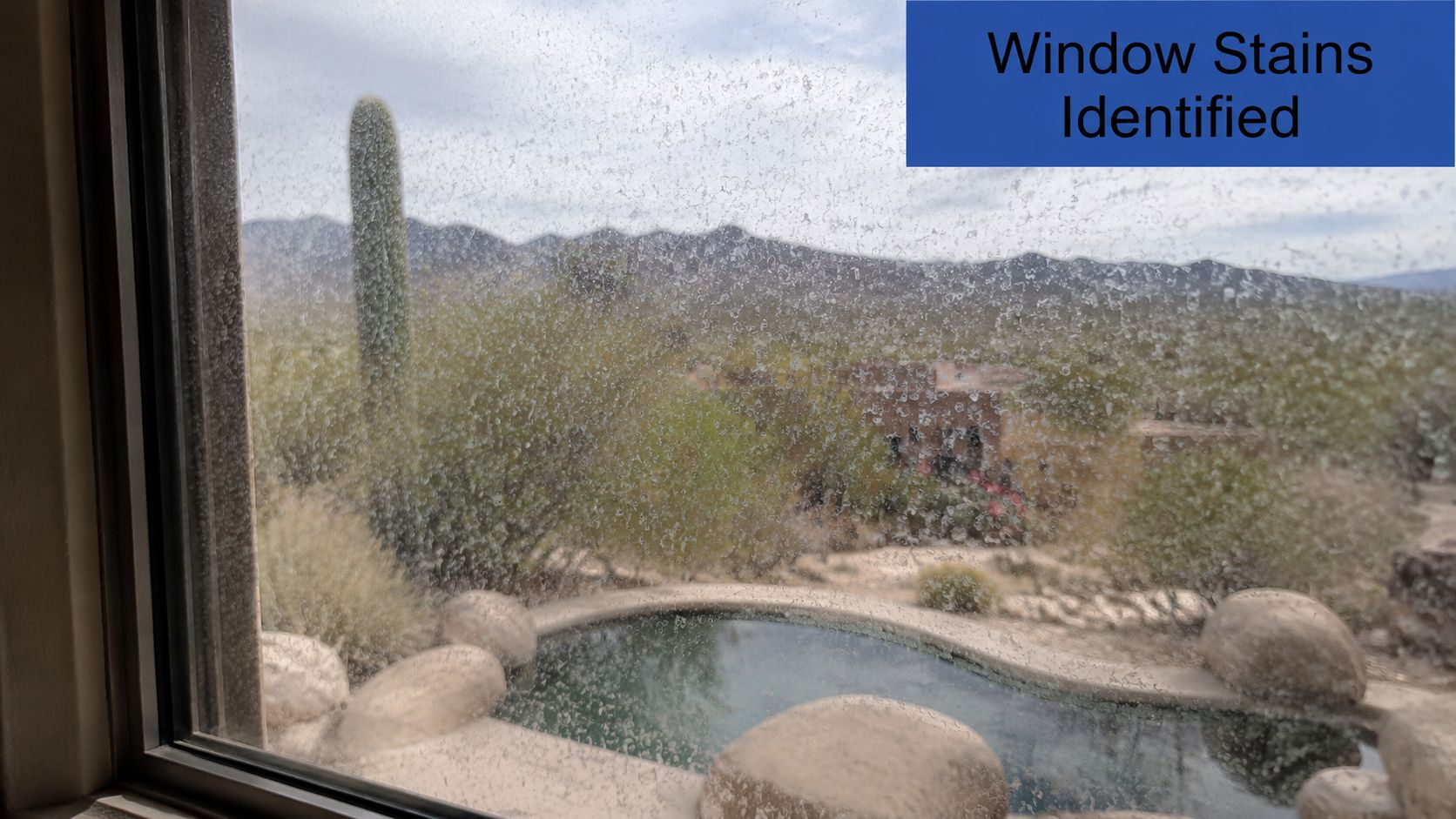
Those white spots are usually mineral residue, not surface dirt. Hard water stains on glass are mineral deposits made mainly of calcium and magnesium, and they form when water evaporates and leaves those minerals behind. They're especially common where glass gets repeated wetting from sprinklers or rain runoff, and the buildup usually happens gradually rather than all at once, as noted by Filtra Glass on hard water stains.
How to tell mineral deposits from normal grime
Normal dust and traffic film usually wash off with standard window cleaning. Mineral deposits don't. They often look chalky, cloudy, or crusty, and they tend to show up in patterns.
Look for these clues:
- Sprinkler arcs: Spots line up where irrigation hits the glass.
- Runoff trails: White streaks start near frames, ledges, or stucco lines where water drains.
- Shower-door type haze: The glass looks filmy even after you clean it.
- Stubborn rings and dots: The marks stay put after soap, water, and a microfiber wipe.
In the Valley, sprinkler overspray is a dead giveaway. On many homes, you can stand back and see the spray pattern baked into the lower panes or patio sliders.
Practical rule: If the glass feels clean but still looks spotted, you're probably dealing with bonded mineral residue, not dirt.
Why Arizona glass gets hit so hard
Phoenix-area properties deal with repeated wetting and fast drying. That combination is rough on glass. Water lands, the heat pulls the moisture off, and the minerals stay behind. Then the next round of watering adds another layer.
The important part is this. What looks minor at first can get more difficult with time. Once deposits bond more firmly to the glass, removal gets more aggressive and the risk of scratching or etching goes up. That's why quick identification matters.
A simple field check helps. Wet a small area and look at it from an angle. If the white spotting fades while wet and then comes right back as it dries, mineral buildup is likely. If it smears brown or gray, you may still be dealing with ordinary grime.
Safe DIY Methods for Removing Light Hard Water Stains
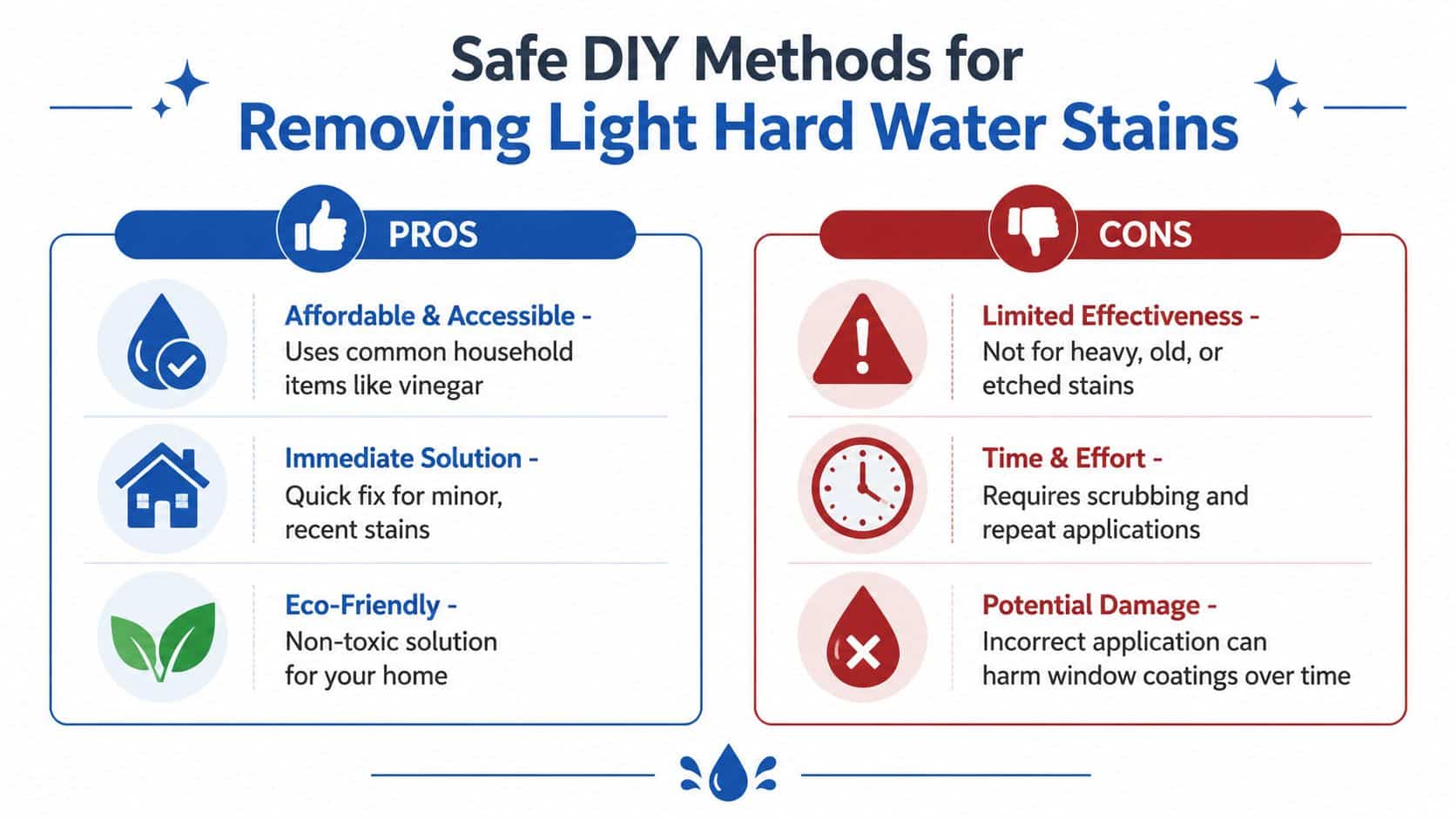
If the spotting is recent and fairly light, a careful DIY approach can help. The most widely documented method is a mild acid treatment, especially white vinegar, because its acidity dissolves calcium- and magnesium-based buildup. Practical guidance commonly recommends letting vinegar sit on the glass for about 5 to 10 minutes before wiping, according to this guide to removing and preventing hard water stains on glass.
A safe step by step approach
Use this on light spotting only, and always test a small corner first.
- Start with a cool window. Don't apply vinegar on hot glass in direct sun. In Arizona, early morning or late evening is safer.
- Remove loose dust first. Rinse or gently wipe away grit so you're not rubbing abrasive dust into the surface.
- Apply white vinegar to the stained area. Use a soft microfiber cloth or sponge. Keep the area damp rather than flooding it.
- Let it dwell. Give it about 5 to 10 minutes so the acid has time to work.
- Wipe with light pressure. Don't grind at the glass. Reapply if needed instead of scrubbing harder.
- Rinse thoroughly. You don't want residue left behind.
- Dry the glass right away. A clean microfiber or squeegee works better than letting the water air-dry.
For readers who already handle appliance scale at home, the same chemistry is why people look for natural descaling for Keurig solutions. Mineral buildup behaves differently from grease or dust. It responds to the right chemistry, not brute force.
Here's a visual walkthrough of the general process:
What not to use on window glass
It's common for many DIY jobs to go sideways. Homeowners get impatient, grab whatever feels strong, and end up creating permanent haze or scratches.
Avoid these mistakes:
- Abrasive pads: They can mark the surface, especially if there's already mineral crust on the pane.
- Razor scraping without proper assessment: On the wrong glass or at the wrong angle, this can leave visible damage.
- Heavy-duty chemicals: Stronger isn't always better. Some products create new problems.
- Dry scrubbing: Friction plus dust is a bad combination.
If you want a more detailed homeowner-level walkthrough, South Mountain's guide on how to remove hard water stains from glass lays out the basics clearly.
Light stains respond to patient chemistry. Heavy stains tempt people into aggressive scrubbing, and that's usually where the damage starts.
When DIY Fails Advanced Removal and Associated Risks
There's a point where vinegar stops being enough. The glass may still have a white cast, edge haze, or bonded spotting that barely changes after repeat cleaning. That's when the job moves from cleaning into restoration.
Professional guidance treats this as a staged process. Start with low-risk cleaners or dedicated mineral removers, then move to controlled abrasive polishing only if residue remains. The biggest mistake is jumping into aggressive abrasion too soon, because that can leave haze or surface damage that's harder to correct than the original stain, as explained in GlassRenu's hard water deposits guidance.
What changes when buildup gets severe
At this stage, the question isn't just “How do I remove it?” The question becomes “Can I remove it without damaging the glass?”
A few real trade-offs come into play:
- Commercial stain removers can help, but they still need testing and controlled use.
- Polishing compounds can improve residue, but they can also create uneven clarity if the operator isn't consistent.
- Older deposits may have already affected the surface, which means full clarity isn't always a simple wipe-away fix.
Glass restoration shops use a methodical workflow for a reason. They don't start by attacking the pane with the harshest tool available.
Hard Water Stain Removal Method Comparison
| Method | Best For | Risk Level | Typical Cost |
|---|---|---|---|
| Vinegar and microfiber | Light, recent spotting | Low | Low |
| Dedicated mineral remover | Moderate residue that survived basic DIY | Moderate | Moderate |
| Hand-applied polishing product | Stubborn staining on small areas | Moderate to high | Moderate |
| Professional machine polishing | Bonded deposits, larger panes, visible haze | High if done incorrectly, controlled in trained hands | Higher |
| Glass replacement | Severe damage or failed restoration | High project impact | Highest |
That table tells the story most homeowners learn the hard way. Every step up in removal power also increases the risk.
Field note: If your test spot looks clearer in the center but hazy around the edges, stop. That usually means the process is becoming uneven.
For a look at the kinds of tools and finishing methods professionals rely on for clean glass, this page on what professional window cleaners use for a streak-free shine is worth reviewing. The takeaway is simple. Technique matters as much as product choice.
The Proactive Approach Preventing Mineral Stains from Returning
The cheapest stain to remove is the one that never gets a chance to harden. That's especially true in Arizona, where irrigation overspray and fast evaporation can turn a small spotting issue into a recurring maintenance problem.
Prevention works because it interrupts the cycle. Water lands on the glass, evaporates, and leaves minerals. If you reduce the water contact or dry the surface before evaporation finishes the job, you cut down the residue left behind. Some guidance also recommends a water softener system to reduce future mineral deposition at the source.
A practical Arizona prevention checklist
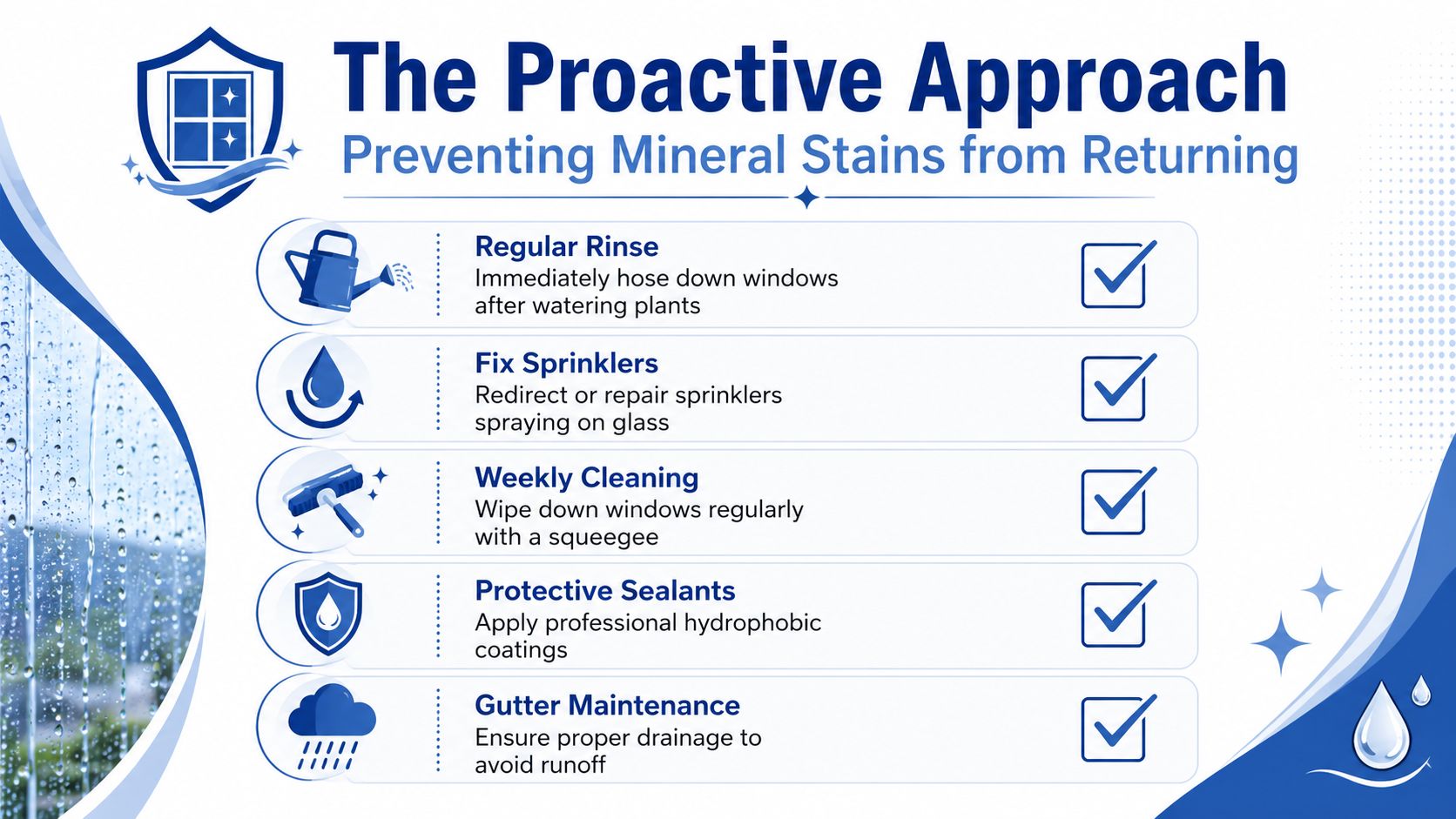
- Redirect sprinklers: If irrigation is hitting glass, fix that first. Repeated overspray is one of the most common causes of spotting on lower windows and storefront glass.
- Dry glass after wetting: A squeegee or microfiber works well on shower glass, patio doors, and accessible exterior panes.
- Watch runoff paths: Gutters, ledges, and wall surfaces can send mineral-rich water across windows.
- Stay on a maintenance rhythm: Regular cleaning prevents light spotting from turning into bonded residue.
- Consider water treatment: If mineral-heavy water shows up all over the property, source control may make sense.
If you're already addressing hard water issues inside the home, it helps to think bigger than the windows alone. Plumbing fixtures, spray patterns, and water quality all affect what ends up on the glass, which is why some homeowners also look into comprehensive bath and kitchen plumbing support when mineral buildup keeps returning.
Protective options that make maintenance easier
Some properties benefit from professional sealants or hydrophobic coatings. These don't make glass maintenance-free, but they can help water move off the surface more cleanly. That means less standing moisture and less chance for visible spotting to set up.
Purified rinse methods help too. South Mountain Window Cleaning offers pure water window cleaning systems, which use de-ionized water so the rinse can dry without leaving the usual mineral spotting behind. For many Arizona properties, that approach makes routine maintenance more practical than repeated stain correction.
Why Arizona Properties Trust South Mountain for Lasting Clarity
When mineral spotting covers a few patio panes, DIY may be worth a try. When it's spread across a custom home, a storefront, or a high-rise facade, the job changes fast. Access gets harder. Safety becomes a real factor. And every wrong move on the glass gets more expensive.
That's where a trained crew matters. South Mountain Window Cleaning, LLC is licensed, bonded, and insured, with safety-trained technicians, pure-water systems, professional squeegee methods, a 100% satisfaction guarantee, and 400+ five-star reviews, based on the company overview from South Mountain Window Cleaning. For commercial properties, the company also notes computerized scheduling and a $2 million insurance policy in its publisher information.

Why professional service changes the result
On Arizona glass, the challenge usually isn't just washing. It's diagnosing whether the issue is loose grime, bonded mineral deposits, or damage that already crossed into etching. A trained technician can sort that out before anyone starts rubbing the wrong product into the pane.
For larger homes and commercial sites, there's also the logistics side:
- Height and access: Upper-story windows and atrium glass aren't safe DIY projects.
- Consistency across the property: One clean pane next to one hazy pane looks worse than a uniformly maintained building.
- Water quality control: Purified water rinsing reduces spot formation during service.
- Routine scheduling: Regular maintenance keeps deposits from reaching the restoration stage.
The guaranteed result people want usually comes from correct diagnosis first, not stronger scrubbing.
In the Phoenix market, that matters. Glass takes abuse from dust, sun, irrigation, and runoff all year. A service plan that prevents repeat spotting is often more valuable than a one-time hard-water removal attempt.
Restore Your View and Protect Your Glass
Mineral deposits on glass don't behave like ordinary dirt. If the spotting is light and recent, a careful vinegar treatment may improve it. If the marks are older, thicker, or still visible after a proper test spot, it's smart to stop before you create haze or scratching.
This is the decision point. DIY works best on small, early-stage buildup. Professional help makes more sense when clarity matters, when the windows are hard to access, or when you want the glass assessed correctly before more damage happens.
In Arizona, prevention matters just as much as removal. Fix overspray, dry glass quickly, and keep a maintenance schedule so minerals don't keep baking onto the surface. If your windows already have stubborn white spotting, get them evaluated before the problem settles in deeper.
If your home, storefront, or commercial property has stubborn hard water spotting, South Mountain Window Cleaning, LLC can assess the glass, explain whether the issue is removable buildup or deeper surface damage, and help you choose the right next step. Request a free, no-obligation quote to restore clarity and keep Arizona mineral deposits from taking over your view.