

You can wash a patio door in the morning, then watch a circle of white spots bloom in the afternoon sun like the glass was never cleaned at all. In Arizona, that's usually not bad technique, it's hard water leaving mineral residue behind on windows, shower doors, fixtures, and solar panels. The problem shows up fast, it comes back fast, and once you've lived with it for a while, you start noticing it everywhere.
The Unseen Problem Damaging Your Arizona Home
A lot of Arizona homeowners blame dust first. Dust is real, but the sharper, chalkier marks that survive a normal wipe-down usually come from minerals in the water, not from desert grit. That's why a freshly cleaned pane can still look cloudy after the rinse dries in the sun.
For anyone trying to keep a home, apartment complex, storefront, or HOA property looking sharp, hard water becomes a recurring maintenance issue. It doesn't just affect glass. It leaves its mark on shower doors, outdoor metal, pool enclosures, and the surfaces around irrigation overspray, where one bad water pattern can become a permanent-looking stain if it sits long enough. If metal fixtures are already showing orange discoloration, a good next read is our guide to rust prevention for metal, because mineral deposits and corrosion often show up together.
Why it keeps coming back
The frustration is simple. A homeowner cleans, rinses, and dries, then the same white film returns after the next spray, splash, or monsoon-season cleaning cycle. On solar glass, that film matters because any residue between the panel surface and the sun can interfere with performance, even when the array looks fine from the ground.
Practical rule: if the spot survives normal soap and water, it's usually not surface dirt anymore. At that point, you're dealing with mineral buildup, and the fix changes.
Arizona properties also deal with a visibility problem. On windows, hard water residue is obvious from inside and outside. On solar panels, it's less visible, which is why people often notice the performance issue only after the panels start looking dull or streaked. For a practical local perspective on mineral spotting, see mineral deposits on glass, because that's the exact problem many property owners are fighting without naming it.
The rest of this guide keeps things practical. It covers what hard water is, what damage it causes, what you can remove yourself, what needs a permanent system, and when a professional cleaning crew is the better call.
What Hard Water Is and the Damage It Causes
Hard water is water with a high concentration of calcium and magnesium. The Nebraska Extension publication says those are the defining minerals, and it also notes that hardness can be checked with a home test kit or laboratory analysis, while ion exchange units can effectively reduce it through softening (University of Nebraska–Lincoln Extension). In plain terms, hard water isn't “dirty” water. It's water carrying minerals that become a problem when they dry on surfaces.
Consumer Reports uses the practical grading scale many manufacturers rely on, 0 to 3.5 GPG for soft, 3.5 to 7 GPG for moderately hard, 7 to 10.5 GPG for hard, and 10.5+ GPG for very hard, with water above 180 mg/L classified as very hard under U.S. Geological Survey conventions (Consumer Reports). That scale matters because when water gets into the harder ranges, spot control and scale prevention stop being optional maintenance details and start becoming part of normal property care.
What the minerals actually do
The chemistry is straightforward. Hard water minerals react with soaps and surfactants, which reduces cleaning efficiency and leaves visible precipitate such as bathtub ring, as described in WHO-linked guidance on water hardness and cleaning chemistry (WHO hard-water and detergent guidance). The same chemistry is why ordinary wipe-downs often fail on glass. You're not just spreading water around, you're moving dissolved minerals and the residue they leave behind.
On glass, that residue dries into spots and haze. On solar panels, it can leave a film that blocks light. On plumbing fixtures, it can build up inside aerators and around edges. Britannica describes hard water as containing salts of calcium and magnesium, principally as bicarbonates, chlorides, and sulfates, and that's the reason those deposits show up as scale when the water evaporates (Britannica).
For businesses and multi-unit properties, that matters because the problem is not isolated. If a water source is hard, the same residue hits glass, fixtures, and equipment throughout the building. That's why hard-water work usually needs a whole-building approach instead of a single spot treatment.
A simple threshold that helps with decisions
A useful way to think about treatment comes from a 2025 guide that says scale damage is generally unlikely below 200 mg/L as CaCO₃, softening or conditioning can help in the 200 to 400 mg/L range, and above 400 mg/L ion-exchange softening is the most reliable scale-prevention method (hard-water solutions guide). That isn't a substitute for testing, but it gives homeowners and property managers a realistic decision line.
The cleanest takeaway is this. Once hard water leaves visible deposits, you're no longer just cleaning dirt. You're managing a mineral problem that can keep returning unless the water itself is addressed.
For Arizona readers who want to understand the plumbing side more, understanding hard water issues is a useful companion resource because calcium buildup is the root of the visible residue you keep seeing on glass and fixtures.
Step-by-Step DIY Hard Water Stain Removal
Most Arizona homeowners can remove fresh or light mineral spots with a simple acid-based cleaner. The most common at-home option is white vinegar, and it's useful because it helps break down mineral deposits sitting on the surface. It won't reverse deep etching in glass, but it can make a big difference on recent buildup.
A science-focused review of hard-water hair care notes that citric acid crystal packets are the best-supported option for removing mineral deposits from hair, and that shower filters aren't proven to remove calcium and magnesium (CurlsBot review). That's useful here because it reinforces the bigger point. Chemistry beats marketing. If minerals are the issue, the product needs to interact with minerals.
What you'll need
- White vinegar or citric acid solution: Start with a mild, surface-safe cleaner for glass, faucets, and shower doors.
- A spray bottle: This gives you even coverage without flooding the area.
- A non-abrasive microfiber cloth: Use this instead of paper towels or rough scrub pads, which can scratch delicate glass.
- A plastic scraper or soft nylon pad: Helpful for stubborn buildup on shower doors, not for etched glass.
- Clean water for the final rinse: Rinsing matters because leftover acid can leave streaking if it dries in place.
The safest order of attack
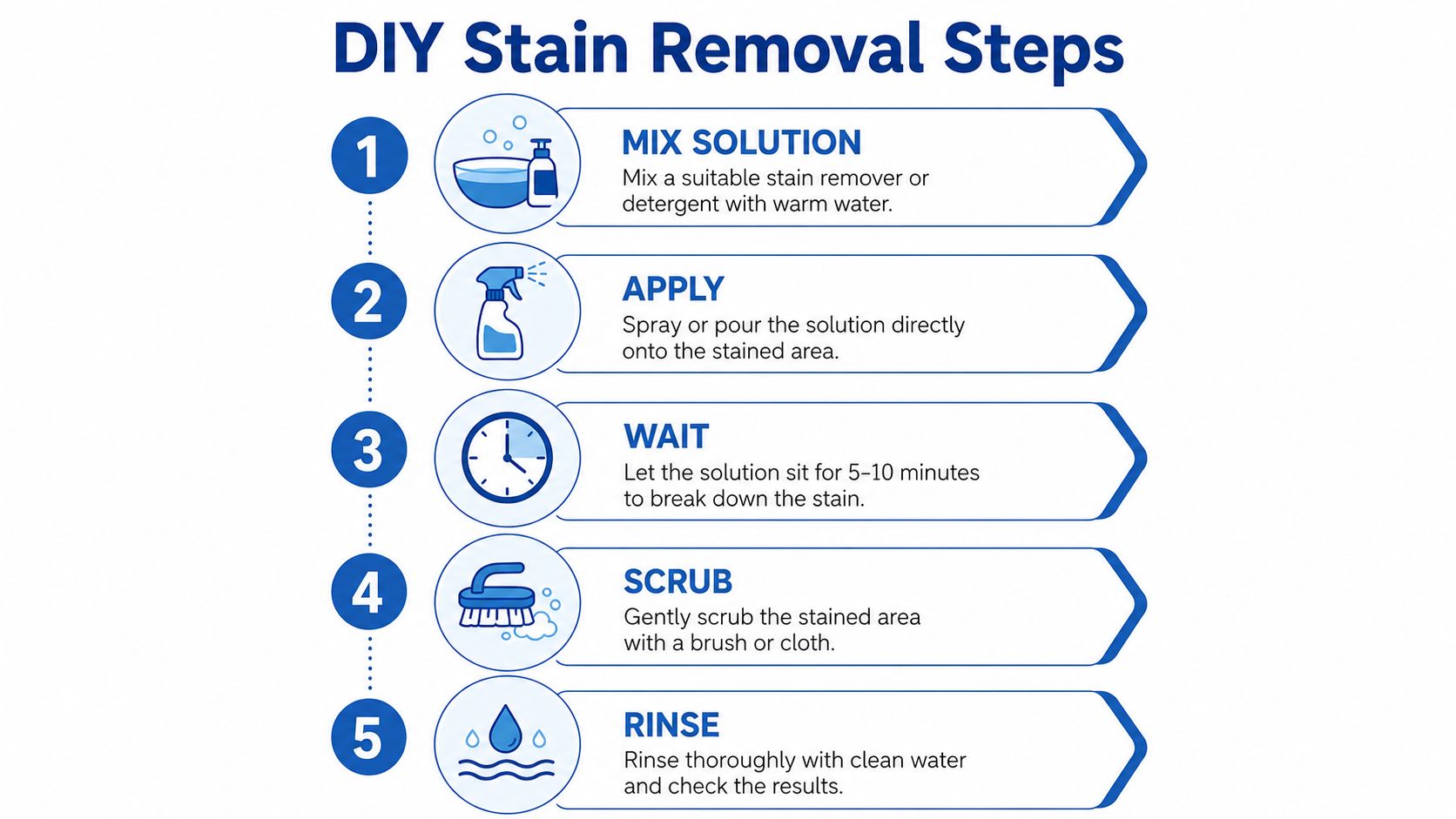
- Test a small corner first. That matters on coated glass, framed doors, and any surface you haven't cleaned this way before.
- Spray the spot and let it sit. Give the acid time to loosen the deposit instead of scrubbing immediately.
- Wipe with light pressure. Let the cloth do the work. Hard pressure is how people end up scratching glass.
- Repeat for layered buildup. One pass usually handles light film, but thicker scale may need a second round.
- Rinse and dry completely. A dry microfiber finish reduces the chance of new spotting.
If the mark looks cloudy after cleaning, it may be more than surface residue. Once mineral etching has changed the glass itself, DIY methods can't bring back the original clarity.
For appliance buildup and smaller fixtures, a practical comparison resource like DIY cleaning alternatives for Keurig can help readers think about mineral removal in small water-using systems too. The same basic idea applies. Clean the mineral source, or the residue comes back.
For window-specific cleanup, see how to remove hard water stains from windows, especially if the stains keep returning after routine washing.
Permanent Hard Water Solutions for Your Whole Home
A permanent fix starts with the right system, not just the right cleaner. The most established method is ion exchange, where calcium and magnesium are exchanged for sodium or potassium ions inside a resin tank. That's why traditional softeners are installed where water enters the building. They treat the water before it reaches the fixtures, glass, and equipment that keep getting marked up.
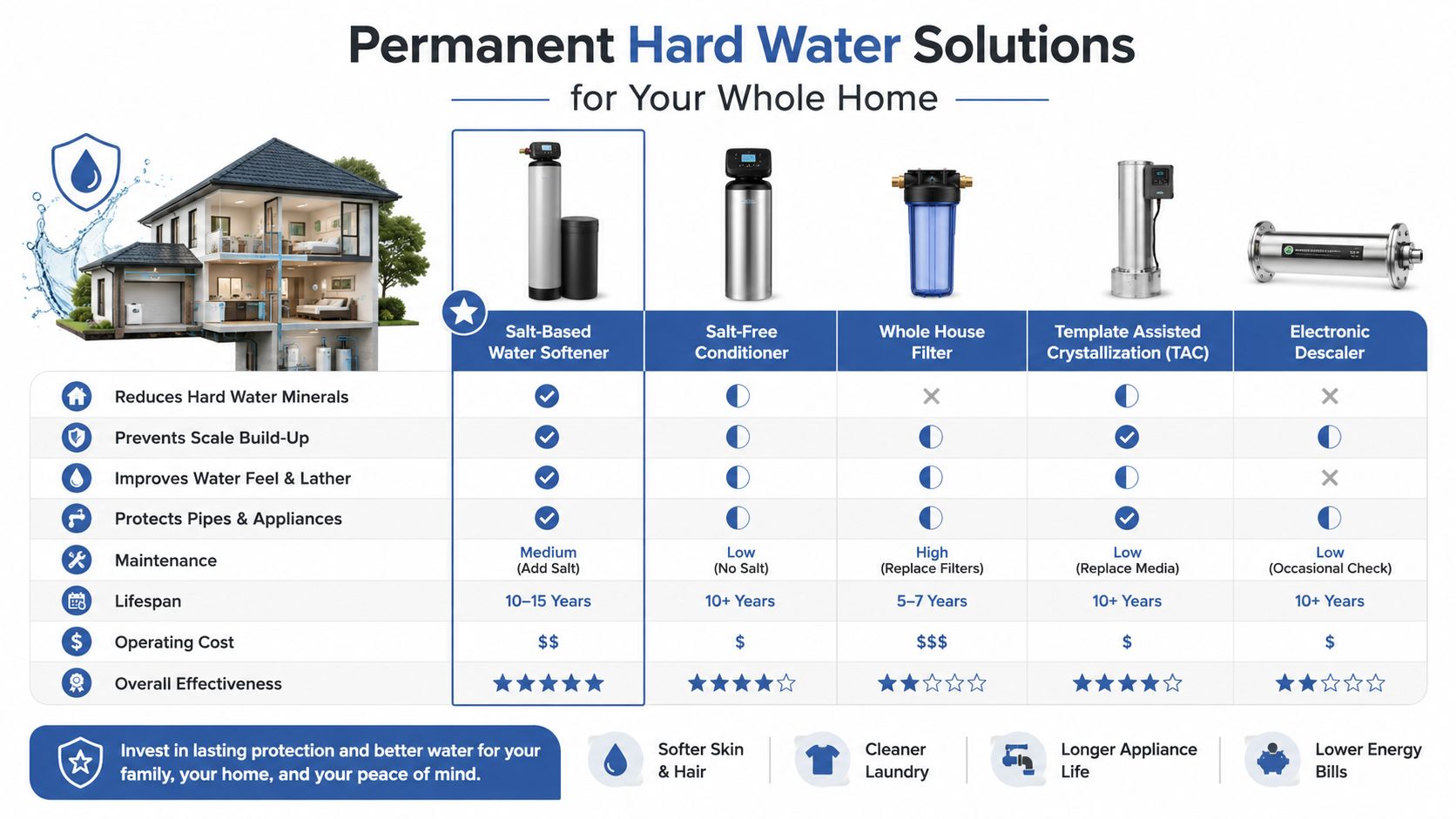
For homes and properties with very hard water, a 2025 guide recommends salt-based softeners for severe conditions and suggests salt-free TAC conditioners more often for moderately hard water or where brine discharge is a concern (2025 hard-water comparison guide). The right choice depends on water hardness, local discharge rules, maintenance tolerance, and whether the goal is true softening or scale control.
Salt-based softeners
These are the classic whole-home systems. They remove hardness minerals through ion exchange, which makes them the most direct option when scale is the main problem. They're usually the best fit when water is very hard, when appliances are already suffering, or when a property needs the broadest possible reduction in mineral residue.
The trade-off is maintenance. Salt tanks need refills, and the system creates brine discharge that some property owners and municipalities want to limit. For that reason, salt-based systems are effective, but they're not always the simplest choice for every neighborhood or every building.
Salt-free conditioners
Salt-free systems, including TAC-style conditioners, are better described as scale-control tools than true softeners. They're often chosen when brine discharge is a concern or when the water hardness is not severe enough to justify a full softener. They can make sense for owners who want less maintenance and are mainly trying to reduce new scale formation.
The trade-off is effectiveness. They don't remove hardness in the same way ion exchange does, so if a property is already dealing with heavy spotting or hard scale, they may not be enough on their own.
Choosing based on the building, not the brochure
That's where local conditions matter. A single-family home with moderate buildup and no brine concerns may be a good candidate for a conditioner. A larger property with repeated spotting, appliance wear, or stubborn scale may need a full softener.
For installation and plumbing integration, it helps to work with a contractor who understands the water side of the job. A resource on expert plumbing for soft water is useful because the system only works well if it's properly installed, sized, and maintained.
Best-fit rule: use salt-based softening when the water is truly severe and the goal is maximum mineral removal. Use salt-free conditioning when the main goal is scale reduction and the property's water and maintenance constraints point that way.
Creating a Maintenance Plan to Prevent Buildup
Even the right system still needs routine care. Arizona sun, dust, irrigation overspray, and mineral-rich rinse water can turn a small issue into a repeated nuisance if nobody stays ahead of it. A simple maintenance plan keeps windows clearer, fixtures cleaner, and solar panels from collecting a dull film that's hard to notice from the ground.
A practical checklist for homes and properties
- After shower use, squeegee the door and glass. This is the easiest way to stop fresh mineral water from drying into spots.
- During weekly cleaning, inspect windows that face sprinklers or patios. Early spotting is much easier to remove than old scale.
- Check solar panels on a regular visual schedule. Look for haze, streaking, or obvious film, especially after irrigation cycles or dusty weather.
- Wipe faucets and outdoor fixtures dry after heavy use. Standing droplets are where residue starts.
- Track recurring problem areas. If the same side of the house keeps spotting, that usually points to a water source, not a cleaning issue.
What property managers should watch
For commercial and multi-unit buildings, the same checklist should become part of routine inspections. Glass near landscaping and irrigation zones often needs the most attention. Solar arrays, entry glass, and pool-area surfaces deserve the same kind of review because they show the impact first.
The NIH-hosted review notes that hard water has no known adverse health effect and that the main concern is the dissolved calcium and magnesium themselves (NIH review on hard water and health). That makes the maintenance conversation simpler. You're not fighting a health hazard, you're protecting surfaces, equipment, and appearance.
Simple maintenance mindset: don't wait for a full scale layer to form. Once spots become visible from a normal standing distance, the cleaning job gets harder and more expensive.
If a building already has a permanent softening system, routine inspection still matters because leaks, irrigation overspray, and old mineral deposits don't disappear on their own. If there's no system yet, the maintenance log is what helps justify one.
When to Trust the Experts for Hard Water Problems
DIY works best on fresh spots, light film, and simple access. It stops being the right tool when the job shifts to etched glass, multi-story windows, oversized solar arrays, or repeat buildup that returns right after cleaning. At that point, the job becomes less about scrubbing and more about using the right water, the right equipment, and the right safety setup.
The biggest clue is permanence. If the spot survives vinegar, careful wiping, and a final rinse, you may be looking at mineral etching rather than removable residue. Once that happens, the glass itself has changed. Professional cleaning can still improve clarity and appearance, but the goal is restoration and prevention, not just a one-time wipe.
For hard-to-reach glass and building exteriors, specialized equipment matters as much as chemistry. Pure-water systems are designed to rinse without leaving the mineral load that tap water can leave behind, which is why they're so useful on windows and solar panels where a spot-free finish matters. If you want to understand what that equipment typically includes, what professional window cleaners use is a good reference point.
When a pro is the smarter call
- Deep mineral etching: If the mark won't lift with normal hard-water removal, you're probably beyond a DIY fix.
- High-access windows: Ladders and awkward rooflines raise the safety risk quickly.
- Solar panel arrays: Cleaning has to protect both the surface and the panel output, so technique matters.
- Commercial glass schedules: Regular service keeps recurring buildup from becoming part of the property's image.
The other advantage of hiring a professional is consistency. A property manager doesn't just need one clean window. They need repeatable results across a whole building, with less disruption and fewer callbacks. That's where experience with Arizona conditions pays off, because the same hard-water residue shows up differently on glass, frames, and solar equipment depending on exposure and access.
If you're tired of chasing the same spots on your windows, shower doors, or panels, South Mountain Window Cleaning, LLC can help with residential, commercial, and high-rise service across Phoenix, Scottsdale, Paradise Valley, Chandler, Tempe, and Gilbert. Visit South Mountain Window Cleaning, LLC to request a quote and get a spot-free plan for the glass, solar, and exterior surfaces that hard water keeps hitting.