
You're probably standing at the back of the house, looking at a patio wall and thinking about what it would feel like to replace a basic opening with glass that changes the whole room. In Arizona, that vision makes sense. A wide slider can pull in mountain views, pool light, and the kind of indoor outdoor flow that makes a Phoenix, Scottsdale, Paradise Valley, Chandler, Tempe, or Gilbert home feel built for the climate instead of shut off from it.
But a 12 foot opening isn't just a bigger patio door. It changes framing, glass requirements, installation logistics, cleaning demands, and the way dust, heat, and hard water show up in daily ownership. That's where many buyers get surprised. They shop the door like a design feature, then discover later that tracks grind with desert grit, seals take a beating in the sun, and a poor install shows up every monsoon season.
The same practical thinking matters on the commercial side too. Large sliding systems in offices, retail properties, and upscale mixed use buildings need to look clean and operate smoothly year round. In the Valley, appearance and upkeep matter on everything from a custom residence to a storefront or high rise property. South Mountain Window Cleaning provides residential, commercial, and high rise window washing services in Phoenix, Scottsdale, Paradise Valley, Chandler, Tempe, Gilbert, Arizona, so the long-term care side of oversized glass is impossible to ignore.
The Allure of the 12-Foot View
A 12 foot sliding glass door changes how a room works before anyone says a word about finishes. Furniture gets arranged around the opening. Morning light reaches deeper into the house. Evening traffic shifts naturally toward the patio, especially when the weather gives you those Arizona days that make the whole yard feel like another living space.
That's why these doors get so much attention in remodel conversations. Homeowners want the wall to disappear, or at least feel like it has. Designers push for cleaner sightlines. Builders like how a large slider can make a standard family room feel custom. If you've been looking at open concept remodels, some of the best Task Masters Inc. remodeling insights show exactly why indoor outdoor transitions have become such a strong design priority.
The appeal is obvious. The trade-offs are less obvious.
A standard patio slider is familiar territory. A 12 foot unit is closer to a building component than a simple replacement door. It affects the wall structure, the glass package, the frame material, and what kind of maintenance routine you'll need once the door is in service through Phoenix dust, blazing sun, and mineral-heavy water.
A large glass opening always looks easiest on the day it's installed. The real test starts after the first year of sun, dust, roller traffic, and hose spray.
There's also the curb appeal side. Big glass can enhance the entire rear elevation of a home, and if you're thinking about the project as part of an overall exterior upgrade, it helps to see how the opening fits into the full property presentation. A practical place to start is this guide on improving curb appeal, because a 12 foot door works best when the surrounding patio, hardscape, and exterior glass all support the same look.
Planning Your View Structural and Safety Essentials
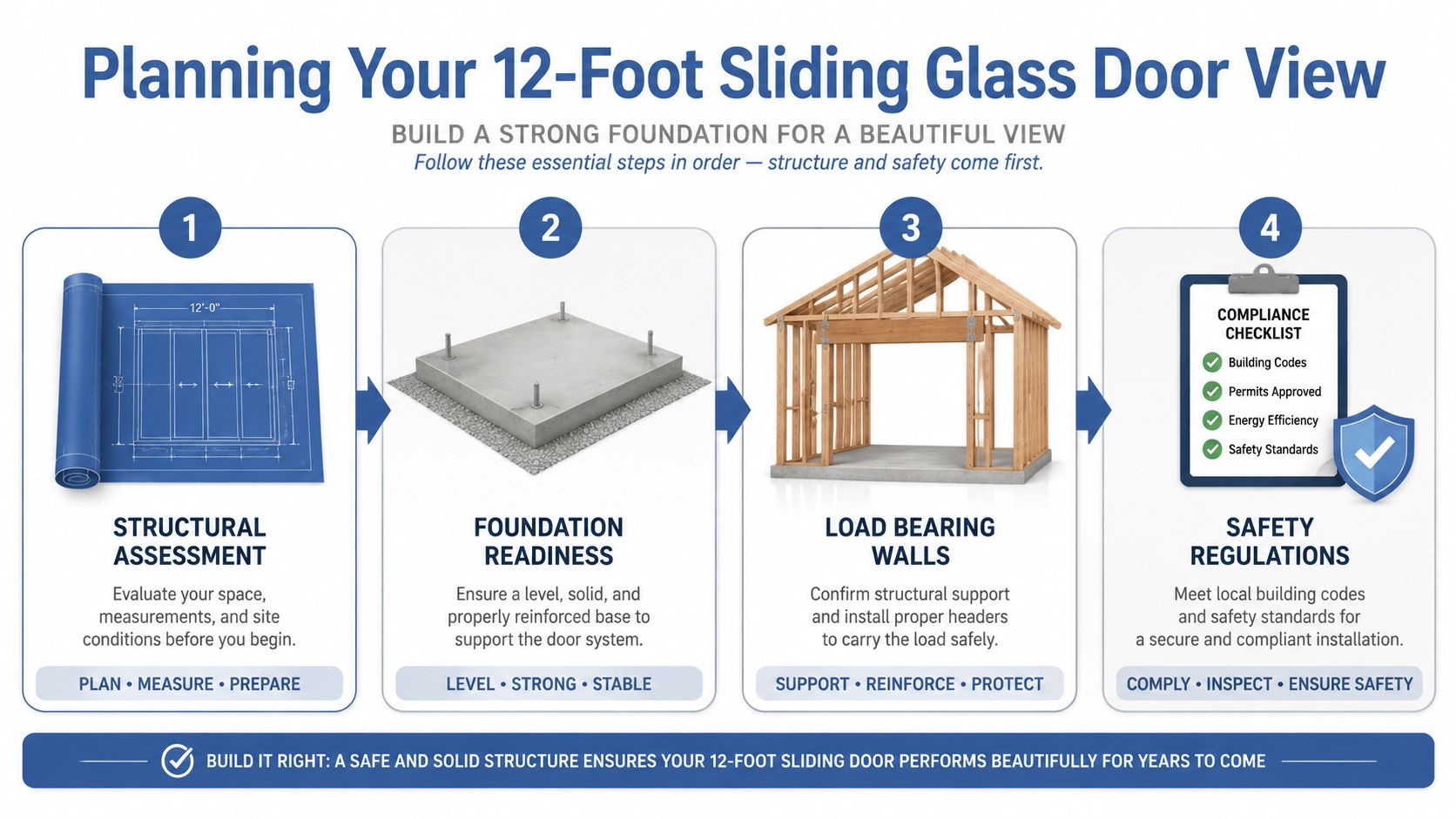
The first question isn't which frame color you like. It's whether the wall can safely hold the opening.
A header is the structural beam above the door opening. Think of it as the bridge carrying the weight that used to rest on the wall below. On a standard door, that load is manageable with common framing solutions. On a 12 foot opening, the header has to do much more work, because it's spanning a wider gap while supporting roof and wall loads above it.
Start with the wall, not the catalog
Before ordering anything, get clarity on these points:
- Load path: Ask whether the wall is load bearing and what sits above it. Roof load, second-story load, and beam transfers all matter.
- Foundation support: A large opening puts pressure on the framing and the slab below. If the slab is uneven or the support conditions are weak, the door may never operate correctly.
- Rough opening accuracy: With a door this size, small framing errors create big problems later. Panels bind, locks miss, and weatherstripping won't seat evenly.
If the home is being remodeled, site prep is often underestimated. Debris, uneven flooring, access constraints, and poor staging can slow the job or damage the unit before it's even installed. That's why it helps to think through construction site preparation before delivery day instead of after the crew arrives.
The glass requirement many buyers miss
The biggest safety issue with oversized sliders is often buried in product talk that sounds technical until something goes wrong. A 12-foot multi-panel system significantly exceeds the 3-meter width threshold where standard glass becomes unsafe. Regulations require 6mm thick, fully toughened (tempered) glass on both sides of the unit for systems of this size to prevent catastrophic failure, as noted by MI Windows.
That matters because buyers sometimes compare a 12 foot unit to a common 5 to 6 foot slider and assume the same glazing approach will scale up. It won't.
Practical rule: If a contractor talks about a 12 foot slider without clearly addressing glass thickness, full tempering, and structural support, stop the conversation and get a better bid.
Ask better questions before signing
A serious estimate should address more than aesthetics. Ask these questions in plain language:
- Who is verifying the header size? If the answer is vague, bring in a structural engineer.
- What glass package is specified for this width? You want a direct explanation, not a hand wave.
- How will the unit be delivered and lifted into place? Oversized systems push the limits of normal site handling.
- What's the plan for keeping the opening level and square after framing changes? Precision matters more than speed.
A beautiful 12 foot slider starts with good design, but it survives on sound engineering.
Frame Materials and Energy Efficiency in the Desert
Arizona punishes weak material choices. What works in a mild climate can turn into a callback machine here, especially across a 12 foot span where heat movement shows up faster and more aggressively.
The four frame materials most buyers compare are vinyl, aluminum, wood, and fiberglass. Each can work in the right setting. They do not perform the same way in desert heat.
How the common options compare
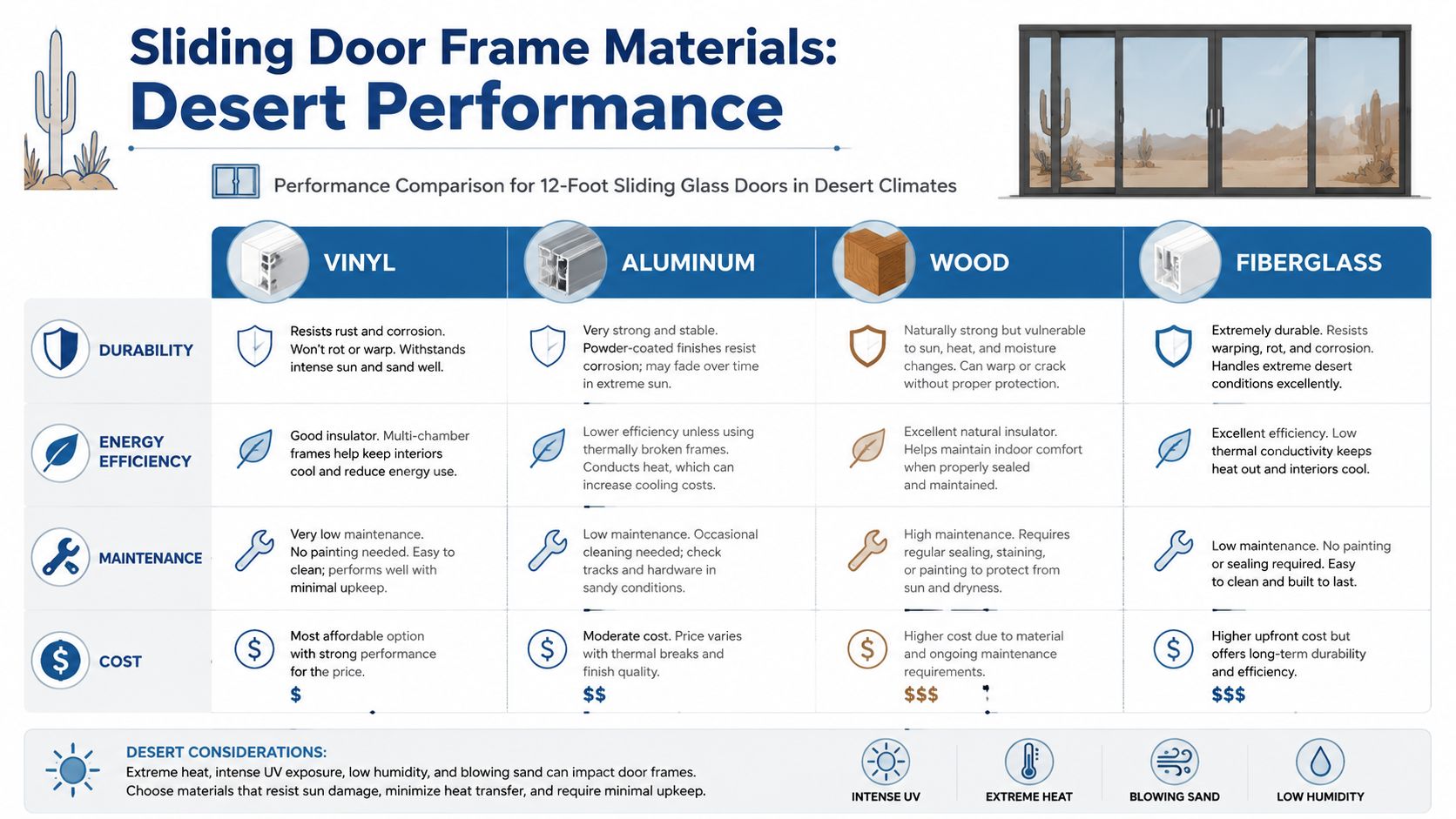
| Material | Where it works | Where it struggles |
|---|---|---|
| Vinyl | Budget-minded projects, simpler openings | Large spans with heavy thermal movement |
| Aluminum | Slim sightlines, contemporary design | Heat transfer unless the system is well designed |
| Wood | High-end interiors, warm appearance | Ongoing maintenance and sensitivity to sun and moisture |
| Fiberglass | Large openings, strong thermal stability | Higher upfront cost |
Vinyl gets attention because it's usually the easier number to accept at quote time. On smaller units, that can be fine. On a 12 foot system, the margin for movement is tighter. In large 12-foot spans where thermal movement is magnified, vinyl's high expansion rate can lead to seal failure within 10-15 years. In contrast, fiberglass, with a much lower expansion rate, offers a 20-25 year lifespan, justifying its higher initial cost by preventing energy loss and costly repairs, based on the source provided in this video reference.
That doesn't mean every vinyl door fails early or every fiberglass door is perfect. It means material movement over a wide opening isn't academic. It affects seals, panel alignment, and air leakage.
What I'd look at in Arizona first
If your priority is long-term performance, start by narrowing the list this way:
- Fiberglass for stability: It handles the width better and resists the expansion issues that show up over time in large spans.
- Aluminum for looks, with caution: It can deliver a clean modern profile, but buyers need to pay attention to thermal performance and overall system quality.
- Wood only if you accept the upkeep: It looks excellent inside the home, but sun exposure and maintenance discipline matter.
- Vinyl only after honest risk review: It can fit the budget, but on a large opening you should understand exactly what you're trading away.
Energy efficiency isn't a side issue
A 12 foot sliding door is one of the largest glazed openings in the house. If the frame and glazing package aren't selected carefully, the opening can become a weak point for comfort. Rooms near the door feel hotter, the HVAC works harder, and the “wall of glass” starts feeling less luxurious in peak summer.
That's why buyers should connect door selection to the broader cost of cooling a home in this climate. This overview of the average electric bill in Arizona is useful context, because large glass openings don't live in isolation. They affect how the whole house performs.
Material choice is about more than warranty language. It shows up in how the door slides in August, how the seals hold in year ten, and whether the room beside the glass stays comfortable.
A simple decision framework
If you want the shortest path to a sound decision, use this order:
- Choose the frame material based on climate performance first.
- Match the glass package to orientation and sun exposure.
- Look at hardware quality after that.
- Treat low price as a data point, not the deciding factor.
The biggest mistake I see is buyers picking the most attractive quote and assuming all 12 foot sliding glass doors are basically interchangeable. They aren't.
The Installation Question DIY vs Professional
A 12 foot sliding glass door is not a weekend project. It's not a “couple of friends and a rental truck” project either.
The unit is large, heavy, fragile at the wrong moment, and unforgiving if the opening is out of square. That combination creates a short list of installation jobs where confidence is usually the first thing that goes wrong. If you've ever read a guide to careful DIY remodeling from Pinnacle Property Media, the same caution applies here, only with much higher stakes.
Why installation quality matters so much
A poorly installed oversized slider usually announces itself in a few predictable ways:
- Rough operation: The panel drags, sticks, or needs force to close.
- Locking problems: Misalignment keeps the latch from engaging cleanly.
- Air and dust infiltration: Fine desert dust finds every weak weatherstrip and gap.
- Water intrusion: Wind-driven rain reaches places it should never reach.
Arizona makes those flaws show up faster. Monsoon weather tests waterproofing. Dust tests every track. Sun tests seals and framing movement.
The opening has to be level, plumb, and square. The sill has to be properly supported. Flashing and waterproofing have to be handled with discipline, not guesswork. On a large slider, small mistakes don't stay small.
Logistics are part of the install
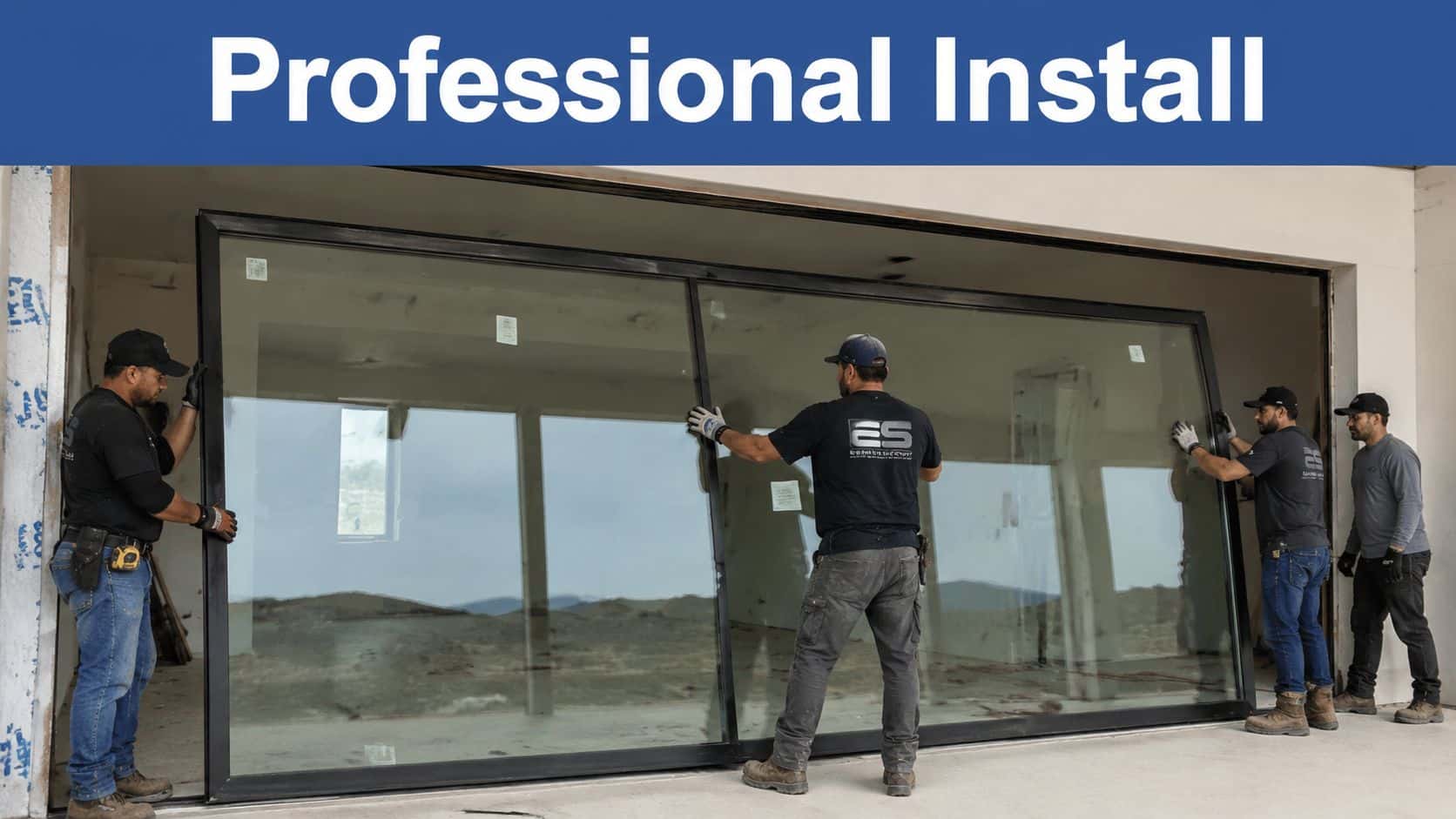
Even if the framing is correct, oversized systems can be difficult to get from truck to opening. Limited site access, tight side yards, and delivery restrictions complicate the job. Some large systems are close to the edge of what a residential site can practically handle, and installers may need specialized lifting equipment that standard door replacement crews don't carry.
A door can be well made and still fail in the field if the crew mishandles the lift, rushes the shimming, or treats waterproofing like an accessory.
A good visual on the process helps. This installation video shows why oversized door placement depends on planning, crew coordination, and exact handling rather than brute force alone.
What professional installers do that DIY often misses
They stage the opening. They verify floor conditions. They check reveal margins, roller adjustment, hardware alignment, and seal compression. Then they test operation repeatedly before they call the job finished.
That's what protects the investment. Not the idea of professional installation. The actual execution.
Budgeting for Your Expansive View
A 12 foot slider can look like a simple line item on a quote. It rarely stays that way once the project reaches the jobsite in Phoenix.
The door itself is only part of the spend. The budget has to account for the unit, the opening conditions, the install, and the upkeep that follows. That last piece gets missed all the time, and it matters more in Arizona than many homeowners expect. Dust, hard water, and intense sun will test the rollers, seals, and glass from the first season on.
Reliable price ranges vary widely because product quality varies widely. National retailer pricing for sliding patio doors shows how quickly cost changes based on size, material, and configuration, as seen in Home Depot's sliding patio door product listings. For a true 12 foot system, the final number often climbs well beyond the price of a standard replacement door once glass upgrades, heavier hardware, delivery, and labor are added.
What changes the number
| Budget driver | Lower end tends to mean | Higher end tends to mean |
|---|---|---|
| Frame | Standard material, fewer finish options | Better stability, stronger finish, longer service life |
| Glass package | Basic insulated glass | Low-E coatings, tint options, better solar control |
| Hardware | Standard rollers and locks | Heavier-duty rollers, better handles, improved multi-point locking |
| Configuration | Simple two-panel layout | Larger panels, multiple tracks, custom sizing, pocket or stacking designs |
| Installation | Straight swap with easy access | Structural changes, difficult access, equipment rental, finish carpentry |
Material and glass choices usually get the attention first. In Arizona, they should. A big door facing west can turn into a heat load problem if the glazing package is too basic, and a bargain frame can show its limits faster on a wide opening that gets daily use.
Labor can swing harder than homeowners expect.
If the crew has clear access, a level slab, and an opening that needs little correction, costs stay more predictable. If the home has tight side yards, tile that must be protected, stucco repair, floor transitions, or header work, the budget moves fast. Those are real costs, not contractor padding.
Where cheap quotes get expensive later
I see this on the maintenance side. Homeowners focus on purchase price, then call after a year or two because the panel drags, the track is packed with grit, or hard water spotting has set up across a huge piece of glass. A lower-grade system can still work, but it usually needs more attention to stay operating well in desert conditions.
That is why value is not just about the invoice total. It is about how the door holds alignment, how the hardware feels after repeated use, how easy the track is to clean, and whether the finish can handle sun without looking tired early.
If you want the visual payoff without creating a maintenance headache, spend carefully in a few places first:
- Glass that fits the exposure
- Hardware rated for large, heavy panels
- A frame finish that handles UV well
- An installation crew that protects drainage and alignment
- Access for cleaning the full glass surface and tracks
That last point belongs in the budget discussion. Large glass looks best when it is maintainable. If the layout leaves no practical way to clean screens and track areas, routine care gets skipped. Homeowners who already maintain adjacent openings should keep a simple window screen cleaning method for dusty Arizona homes in the same routine, because dirty screens, sills, and slider tracks usually build up together.
For broader design context, these benefits of glass doors can help at the idea stage. Then bring the decision back to ownership. A 12 foot slider should fit the house, the climate, and the maintenance reality, not just the rendering.
A Clear View Year-Round The Arizona Maintenance Guide
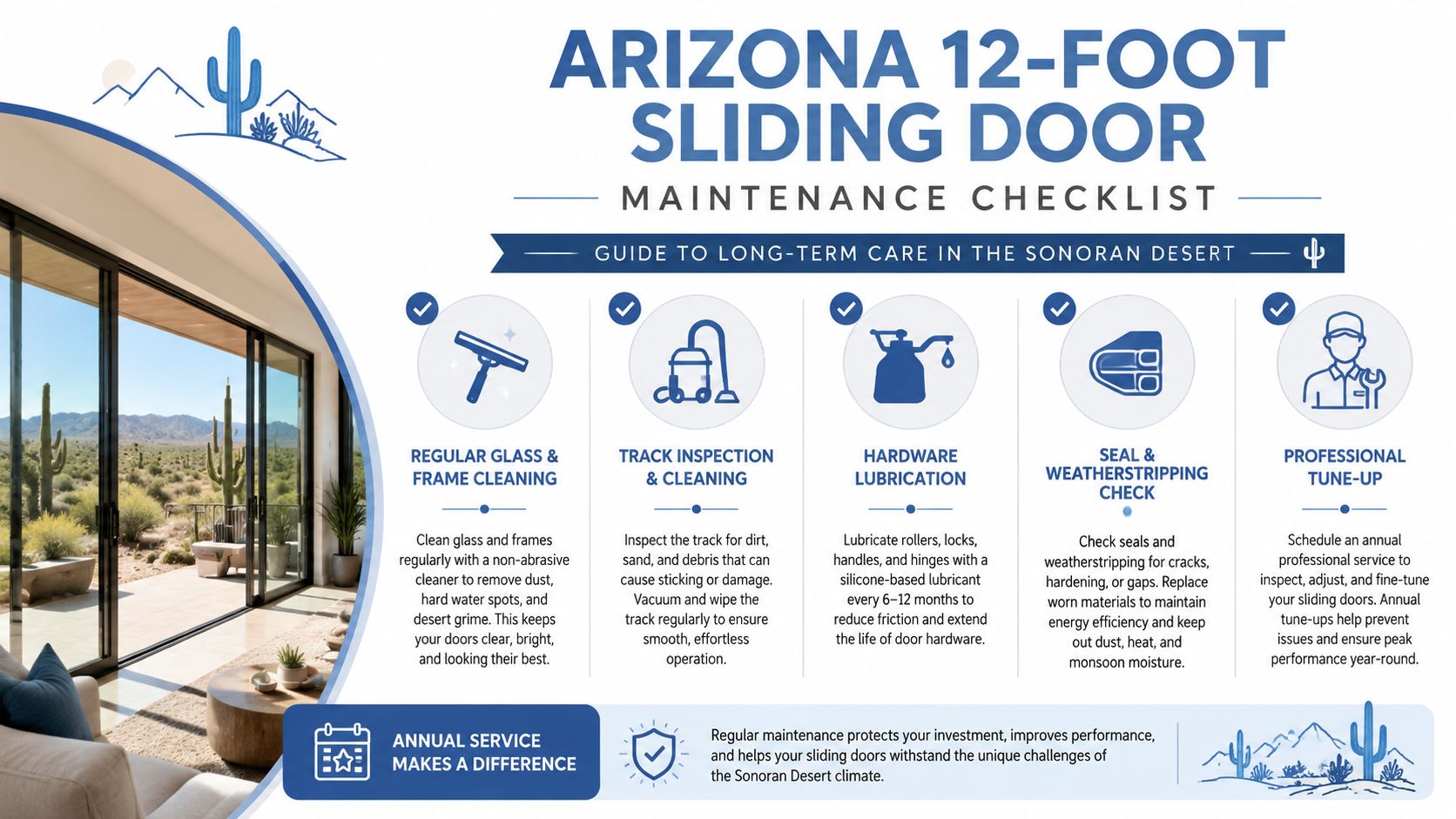
A year after installation, a 12 foot slider in Phoenix can still look great from across the room and already be picking up wear where you do not see it first. Dust packs into the track corners. Hard water starts etching the lower glass. Heat bakes the seals and dries residue onto the frame.
That is why I always tie maintenance back to the purchase decision. In Arizona, the right door is not just the one that looks best on day one. It is the one you can keep operating, cleaning, and protecting without a constant fight.
The parts that wear out first
On oversized sliders, the trouble usually starts below eye level. Homeowners focus on fingerprints and glass clarity, but the mechanical parts take the brunt of the punishment.
- Tracks collect abrasive grit: Every opening and closing cycle drags rollers across dust, sand, and small debris.
- Rollers lose their smooth action: A heavy panel does not tolerate a dirty track for long. What starts as drag can turn into roller wear and alignment problems.
- Seals dry and stiffen: Constant UV exposure hardens weatherstripping, which reduces its ability to block dust and water.
- Glass shows mineral spotting fast: Sprinkler overspray and hose splash leave obvious marks on a pane this large.
If you already maintain nearby windows and patio openings, it helps to keep screens in the same schedule. This practical guide on how to clean window screens in dusty Arizona homes pairs well with slider upkeep because dirty screens, sills, and tracks usually build up at the same time.
A workable routine for Arizona homes
A 12 foot door does not need complicated care. It needs consistent care.
For most homes in the Valley, tracks should be brushed out or vacuumed before grit gets compacted into the corners. Frames and seals should be wiped down with a gentle cleaner that will not dry out the material. Glass should be cleaned with tools and towels that are free of dust. On big panes, one dirty rag can leave fine scratches that are hard to ignore once the sun hits the glass in the afternoon.
Check the way the panel moves, too. If the lock stops lining up cleanly, the handle feels different, or the panel starts dragging, do not wait for it to get worse. On a large slider, small operating issues tend to turn into hardware wear faster than owners expect.
What Arizona owners often miss
The door can look acceptable and still be wearing down.
I see this all the time on high-use patio sliders. The glass gets cleaned just enough to stay presentable, but the lower track stays loaded with dust, pet hair, and yard debris. Then the panel gets harder to move, the rollers take the abuse, and the owner assumes the hardware was weak from the start. In many cases, the underlying problem was maintenance that came too late.
That is the piece many buying guides skip. A 12 foot slider is a design feature, but it is also a long-term service item. In Arizona, cleaning is part of protecting the investment, not a finishing touch after the fact.
When professional maintenance makes sense
There is a point where household cleaning stops being the best option. Large panes show streaks easily, lower tracks trap compacted debris, and mineral buildup on sun-exposed glass can need more than off-the-shelf spray and paper towels.
Professional service is worth considering when the opening is hard to reach, the panels are too heavy to work around safely, or hard water spotting keeps returning. A good crew cleans the full assembly, not just the visible glass. That includes the track edges, corners, frame contact points, and the residue that shortens the life of moving parts if it stays in place.
The same ownership mindset often applies to other exterior surfaces. Homeowners who invest in large glass usually care about solar production too, and the National Renewable Energy Laboratory publishes research on how soiling affects solar performance. The takeaway is straightforward. In the desert, dust costs you clarity, smooth operation, and efficiency unless you stay ahead of it.
When to Call the Professionals for a Perfect Finish
A 12 foot slider can still look acceptable from across the room while the glass is building hard water haze, the track is holding compacted grit, and the frame edges are collecting residue that slowly affects operation. That is usually the right time to bring in a professional. Waiting until the door looks neglected often means tougher stain removal, more friction at the rollers, and more risk of scratching the glass during cleanup.
The need goes up fast on second-story openings, tall entry walls, custom homes with oversized panels, and commercial properties. On work at height, fall protection is not a casual detail. OSHA sets the criteria for fall protection systems in 29 CFR 1926.502, and any contractor working at height should be able to explain how the crew will meet those requirements on your property.
What professionals do better on oversized glass
Good service covers more than the visible pane.
- They remove dust and grit before it can drag across the glass during washing.
- They clean tracks, corners, and frame contact points where Arizona debris packs in tight.
- They catch early signs of trouble, including roller drag, worn weatherstripping, and repeat hard water exposure near sprinklers or pool areas.
- They finish wide glass evenly, without the streaks and missed edges that stand out on a panel this size.
On large doors, technique matters. A missed strip or a dirty edge that would disappear on a smaller window stays visible every afternoon when the sun hits a 12 foot panel. I see that a lot in Phoenix homes with western exposure. Owners assume the glass is permanently dull, when the issue is mineral film or cleanup done with the wrong tools.
Professional maintenance also protects the buying decision you made at the start. Large glass is expensive to purchase, expensive to install, and expensive to replace. Cleaning it properly is part of ownership in Arizona, especially if the door faces dust, irrigation overspray, pool water, or heavy summer monsoon residue.
The best outcome is straightforward. Clear glass, smoother operation, cleaner tracks, and no ladder work that puts the homeowner at risk.
If you want expert help protecting large glass doors, upper-story windows, storefront glass, solar panels, or high-rise exterior glass, South Mountain Window Cleaning, LLC serves Phoenix, Scottsdale, Paradise Valley, Chandler, Tempe, and Gilbert with residential, commercial, and high rise window washing services. Reach out for a free quote and get professional care that keeps your investment clean, safe, and looking right in Arizona's harsh climate.