
The patio door has been fighting you since the last Phoenix dust storm. You pull harder, the rollers complain, and the sash finally jumps forward with a gritty scrape. Then the next monsoon shower leaves a damp mark near the sill, even though the glass is still intact.
That combination points to more than dirt. Window track repair starts as a water-management inspection and ends as a sliding-function repair. In Arizona, fine dust, mineral residue, wind-driven rain, intense sun, and repeated expansion can affect the rollers, seals, sill, weep holes, and frame-to-wall joint as one connected assembly.
Why a Stuck Window Track Is Rarely Just a Stuck Window
A sliding track carries the rollers and manages water. Its sill collects runoff, then sends it outside through designed drainage openings. Dust around the rollers can make the sash bind, but blocked weep holes create the more serious risk: water can move toward the interior.
A Canadian government study reviewed generic window types by frame material and moisture-management strategy. It found a high risk of water penetration at the window-to-wall interface across the types examined. That finding makes the sill, weep holes, frame joint, and nearby finishes part of a proper track inspection, not just the visible runway. The study also identified sub-sill drainage as an important performance factor because water must be collected and directed away from the assembly. Canadian government research on window water penetration

Dust can hide a drainage failure
After a haboob, fine dust can combine with condensation, hard-water residue, and old lubricant. The resulting paste narrows the channel and covers small drain openings. WD-40 may make the sash move briefly, but its oily film catches more dust and can become gummy inside the track.
Practical rule: If a window sticks, inspect where water should go before adding lubricant.
The same drainage-first logic applies to roofs; browse our roofing articles to see how small drainage details turn into larger building problems. Treat the track, sill, weep holes, and wall joint as one connected system. A smoother slide is useful, but keeping water outside is the repair's real test.
Tools, Supplies, and a Quick Safety Check Before You Start
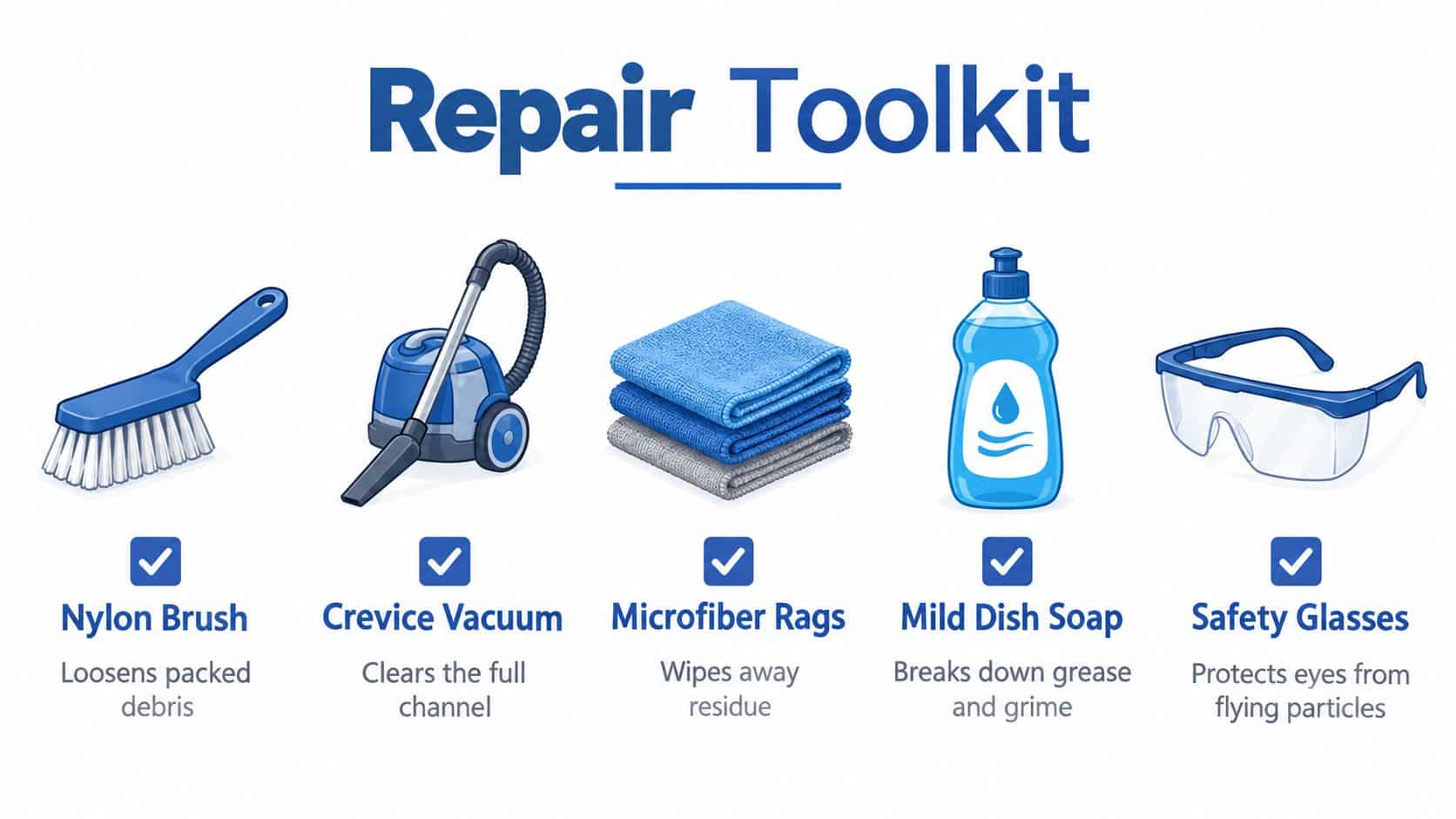
Lay the tools on a towel before touching the sash. You'll want a vacuum with a crevice tool, a stiff nylon brush, microfiber rags, mild dish soap, a dry PTFE or silicone lubricant, a non-marring probe for weep holes, gloves, and eye protection. If the inspection points to a component replacement, have the window brand, model information, and the old roller or weatherstrip available before ordering a part.
A plastic pick, nylon cable tie, or other soft probe can clear a drain opening without gouging the frame. Don't use a metal drill bit, and don't enlarge a factory weep hole. The opening was designed as part of the drainage path, and an improvised modification can redirect water into the wall or interfere with the manufacturer's design.
Protect yourself and the window
Wear eye protection while brushing compacted grit because dry debris can flick upward. Use gloves when handling aluminum edges, broken glass, or corroded hardware. If the sash tilts or lifts out, remove it only when the manufacturer's design allows that access, and place it on a padded, stable surface.
A tall patio slider may require a ladder just to reach the upper frame or exterior weep outlets. Follow a dedicated ladder safety and equipment guide before working at height, and don't balance on furniture or lean sideways from a ladder.
Lead-paint warning: In a pre-1978 home or a building with uncertain paint history, don't use a dust-producing repair method until lead-safe requirements have been addressed. Window replacement and demolition aren't covered by the minor-repair exemption, and regulated work may require trained personnel. EPA lead-safe renovation guidance
Air leakage can also come from weatherstripping and frame construction, not only from the glass. National Research Council of Canada testing found frame leakage ranging from 3% in one tested window to 81% in another, while sill-track contribution ranged from 0% to 16%, showing how much construction, weatherstripping, and track design can matter. NRC sliding-window testing
How to Diagnose What's Really Wrong With Your Track
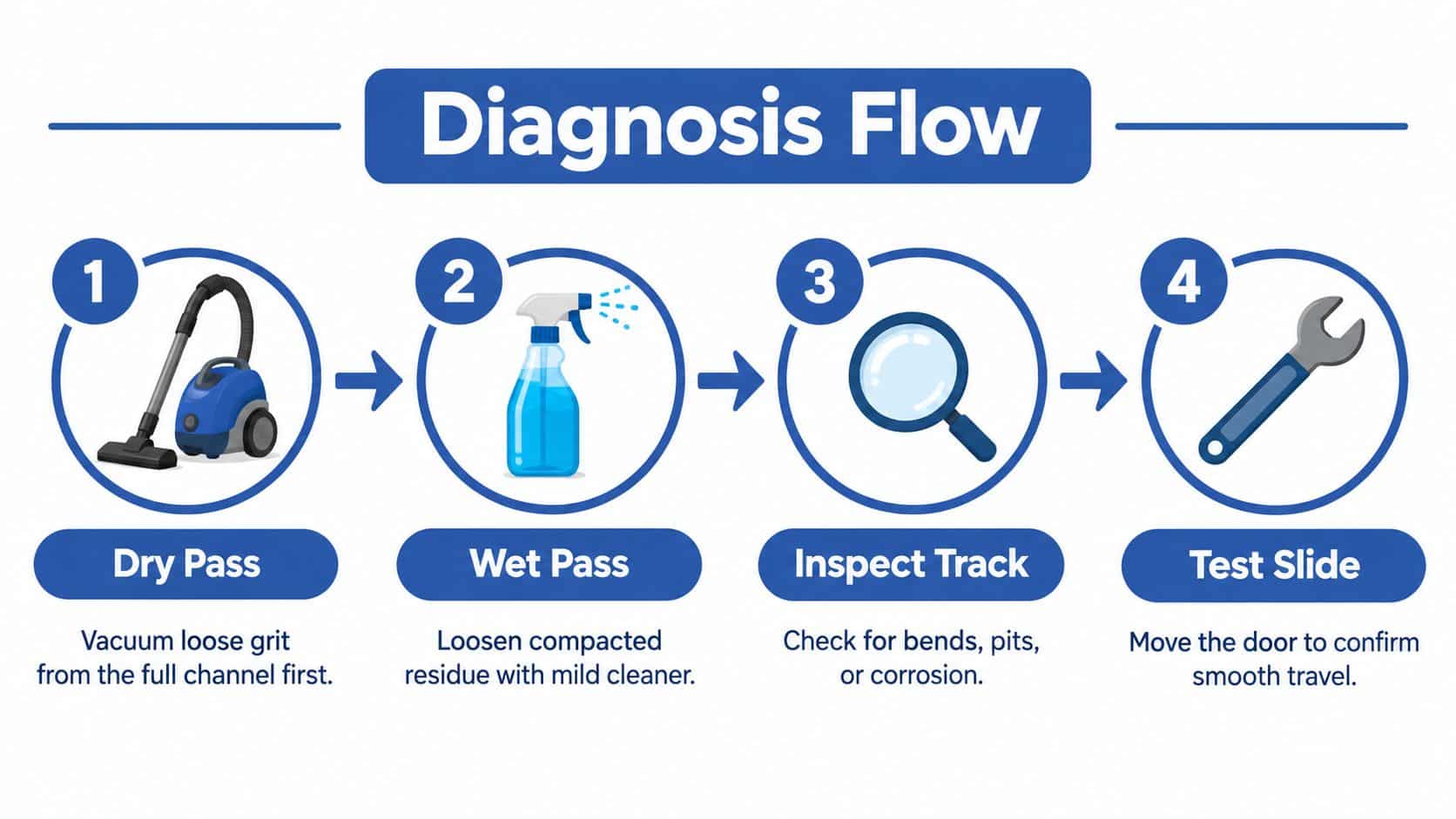
Start dry. Remove loose grit from the entire channel, including corners, roller housings, and the area around the weep holes. Vacuuming first keeps wet cleaner from turning loose desert dust into a paste that spreads deeper into the assembly.
Use a stiff nylon brush to loosen compacted deposits. Work in short overlapping strokes, then vacuum again. Wipe the channel with mild dish soap diluted in water, using a damp microfiber rag rather than flooding the sill, and dry every surface completely before inspecting it.
Read the evidence left by the sash
With the track dry, look for a raised section, crack, pit, bent edge, worn roller, loose weatherstripping, or a sash that sits higher on one side. A roller can wear unevenly when the frame is out of square, and a damaged seal can create air movement even when the sash appears to close.
A sound dry-to-wet sequence calls for vacuuming the full channel and weep-hole area, mechanically loosening deposits, wiping with mild detergent, drying, and then inspecting for cracks, deformation, roller wear, and blocked drainage before lubrication. Track maintenance sequence
Test drainage only after the dry inspection. Add a small amount of water to the lower track and watch the exterior side. Water should exit outward through the intended openings, not remain pooled or move toward the room. If the flow backs up, stop treating the problem as a roller issue.
Separate contamination from damage
A sash that improves after cleaning likely had a contamination problem. One that still binds may have worn rollers, distorted geometry, failed weatherstripping, or a damaged frame. If the lock won't engage fully after the track is clean and the sash is cycled, the adjustment or frame may need professional attention.
For additional guidance on related film and frame work, expert advice from Quote My Wall can help you think about the surrounding window assembly without confusing a surface treatment with a mechanical repair.
Cleaning, Lubricating, and Replacing Track Components
With the channel already clean and dry from the diagnosis pass, focus on product choice and component replacement. In Arizona, a thin, compatible lubricant works better than a heavy coating that turns airborne dust into abrasive paste. Apply silicone-based or dry-film PTFE lubricant only to the roller and contact surfaces approved for the window. Cycle the sash several times to distribute it evenly. Avoid oil-based sprays such as WD-40 because they collect grit and can become sticky.
The drainage openings still matter during reassembly. Keep weep holes free of caulk, debris, and oversized probes. They route water from the frame or track to the exterior, protecting the sill and nearby wall materials. Government-backed guidance on cleaning window weep holes explains why these small openings should remain clear.
| Symptom | Right Product | What to Avoid |
|---|---|---|
| Loose grit in the channel | Crevice vacuum and stiff nylon brush | Blowing dust deeper into the frame |
| Greasy or mineral residue | Mild dish soap and microfiber rag | Flooding the sill pan |
| Dry roller contact | Thin silicone or dry-film PTFE lubricant | Heavy oil-based spray |
| Blocked weep opening | Soft nylon probe and controlled water test | Drilling, enlarging, or caulking the hole |
| Torn weatherstrip | Correct replacement profile | Stretching a seal to force a fit |
Match a replacement roller by manufacturer, housing shape, mounting position, and wheel diameter. Compare the old part with the new one before removing the sash. Two rollers can look similar while placing the wheel at a different height, leaving the sash tilted or the lock out of alignment. Do not force a lift-out or tilt-out design when the frame does not provide that access.
Weatherstripping needs the same care. Seat the replacement in its channel without stretching it, and press the corners fully into place. A stretched seal can shrink back, buckle, leak, or keep the lock from engaging. Check that the pile or bulb faces the correct direction and that the sash closes without folding the seal under itself.
For a visual routine covering track care, see how to clean window tracks. Homeowners comparing comfort and energy behavior can also review the thermal performance of sliding doors. That information cannot correct a distorted frame or failed glazing, so keep the mechanical diagnosis separate.
Cycle the sash through its full travel after installation. Confirm smooth movement, complete lock engagement, properly seated weather seals, and clear drainage. If it still catches in the same place, stop adding lubricant. The remaining problem is likely a worn component, frame distortion, or another building-related fault.
When Cleaning Is Not Enough and Replacement Becomes the Right Fix
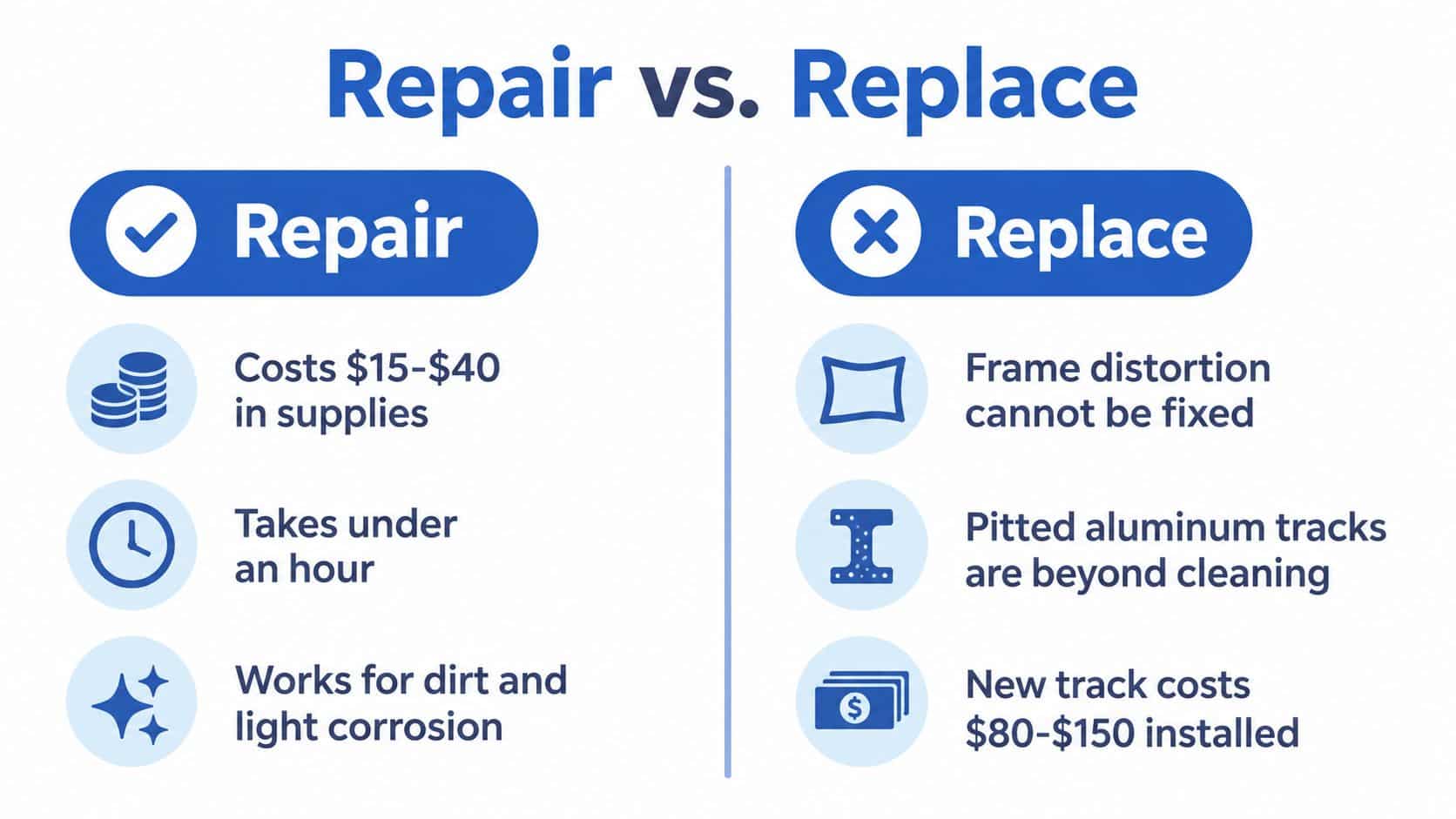
A clean track can still hide a failed window system. Cleaning removes dust and grit, but it cannot straighten a twisted frame, rebuild a pitted aluminum channel, restore a failed sill pan, or correct a jamb installed out of square. In Arizona, repeated dust buildup can expose a drainage or alignment problem rather than cause it. If the sash binds at the same point after cleaning, inspect the geometry instead of repeating the maintenance cycle.
Persistent interior staining needs a water-focused inspection. A clear track may still leak when sill drainage is damaged, the frame-to-wall joint has failed, or water is entering behind the cladding. Test the weep path and watch where water moves before deciding that a track part is the whole problem. For a full frame-and-sash restoration workflow, see this guide on how to restore a window. Window moisture assessment guidance also supports treating staining as a possible moisture issue, not only a cosmetic one.
Use the failure pattern to choose the remedy
| Warning sign | Likely direction | Appropriate response |
|---|---|---|
| Dust, grit, or light surface residue | Contamination | Clean, dry, lubricate lightly, and retest |
| Worn roller with sound frame geometry | Component wear | Replace the correctly matched roller or insert |
| Torn weatherstrip with no frame damage | Seal failure | Replace the weatherstripping profile |
| Raised, cracked, or badly pitted track | Track damage | Evaluate a track component or complete unit replacement |
| Sash remains out of square | Frame or installation defect | Obtain a professional assessment |
| Interior leak after the weep test | Drainage or wall-interface failure | Investigate the sill, joint, and surrounding finishes |
A flat-spotted roller may be replaceable, but the new roller will not correct the crooked sash that damaged it. Likewise, sealing the visible interior edge can hide water briefly while sending the next monsoon storm into an unseen cavity. Replacement becomes the right fix when the frame, drainage path, or wall interface cannot support a reliable component repair.
Common mistake: Never drill or seal factory weep holes to stop a draft. The opening belongs to the drainage design, not an accidental gap.
Older homes require another check. If paint may contain lead, scraping, demolition, or full-unit replacement can create unsafe dust. A distorted frame, recurring leak, failed drainage path, and lead-risk controls may favor replacing the opening over repeated cosmetic repairs. A qualified professional should assess the complete assembly before that decision is made.
Knowing When to Call a Pro and What to Look For
A track repair has reached its sensible DIY limit when the work involves a second-story exterior, high-rise access, a distorted frame, recurring interior leaks, unknown paint history in a pre-1978 building, or a repair that has failed twice in one season. Those conditions point beyond routine cleaning or roller replacement.
Commercial and high-rise work adds a separate safety burden. OSHA directs employers to applicable requirements for two-point suspension scaffolds under 29 CFR 1910.28 and powered platforms under 29 CFR 1910.66. Equipment inspection, worker training, and fall protection belong in the service plan. OSHA interpretation for suspended window-washing equipment
What a qualified provider should verify
Ask whether the provider will inspect drainage rather than wipe only the visible channel. The technician should explain how the glass and sash will be protected, how the sash will be removed or secured, how roller and seal failures will be identified, and how water flow will be documented after service.
For high-rise work, the building's anchors and access system require their own inspection. OSHA states that roof anchors for portable suspension equipment must be permanent, structurally sound, rigid, and able to support the maximum intended load without displacement or deformation. Suspension-equipment anchors and lifeline anchors must remain separate. OSHA roof-anchor requirements
A provider should also separate track cleaning from frame repair. South Mountain Window Cleaning serves Phoenix, Scottsdale, Paradise Valley, Chandler, Tempe, and Gilbert with residential, commercial, and high-rise window washing. Its track and screen service can fit into a routine window visit, while frame distortion, failed drainage, or wall-joint damage may require another trade.
The interface between the track, sill drainage, weep openings, and wall joint is where professional diagnostics earn their fee. Ask the provider to document water flow after service and identify where the water exits. You can request a window track cleaning service during a routine visit, before a stuck door or interior wall damage forces a larger repair.
A Simple Maintenance Rhythm to Keep Tracks Working Year-Round
Arizona tracks need attention after dust storms, before monsoon weather, and whenever a slider starts sounding gritty. A quick visual check during ordinary window cleaning can catch packed debris, standing water, displaced weatherstripping, or a roller that no longer sits level.
Keep the routine simple:
- After heavy dust: Vacuum the full channel and corners before residue hardens.
- Before monsoon rain: Inspect weep openings and perform a controlled water-flow test.
- During cooler maintenance periods: Clean, dry, lightly lubricate, and cycle high-traffic sliders.
- On a recurring service rhythm: Schedule professional track attention every one to two years for heavily used patio doors and sliders.
Don't wait for a lock that won't engage or a damp interior sill to force the schedule. A track that moves smoothly and drains correctly is easier to maintain than one already carrying compacted dust, damaged seals, and hidden moisture.
South Mountain Window Cleaning, LLC offers residential, commercial, and high-rise window washing with track and screen care for properties across Phoenix, Scottsdale, Paradise Valley, Chandler, Tempe, and Gilbert. Visit South Mountain Window Cleaning, LLC to request a fast quote and schedule a track-and-weep-hole inspection before the next dust storm or monsoon rain.