

You're halfway through a Phoenix window-cleaning job when the sun moves across the glass and exposes every streak you thought you'd removed. The pad feels dry, the water is disappearing almost as soon as it hits the window, and fine desert dust has worked its way into the fibers. A quick rinse may make the tool look cleaner, but it won't necessarily make it safe for the next pane.
That's why window cleaning pads deserve more attention than they usually get. The right pad controls agitation, water pickup, dirt capture, and the amount of finishing work required. In Arizona, where heat, dust, pollen, irrigation overspray, and mineral residue can challenge both residential and commercial glass, pad selection affects the finish and the pace of the job.
Why Your Window Cleaning Pads Matter
A homeowner in Scottsdale may only notice the problem after the windows dry. The glass looked clear while it was wet, but once the afternoon light hit, faint trails appeared around the edges and a dull film remained near the sill. In many cases, the issue isn't the squeegee alone. The pad may have carried grit from a previous surface, released too much water, or failed to loosen the soil evenly.
Phoenix conditions make those mistakes more noticeable. Exterior glass collects airborne dust, pollen, exhaust residue, and mineral deposits from sprinklers and evaporative cooling systems. Intense heat also shortens your working window. A pad that leaves excess moisture behind can create rework before you've even moved to the next section of glass.
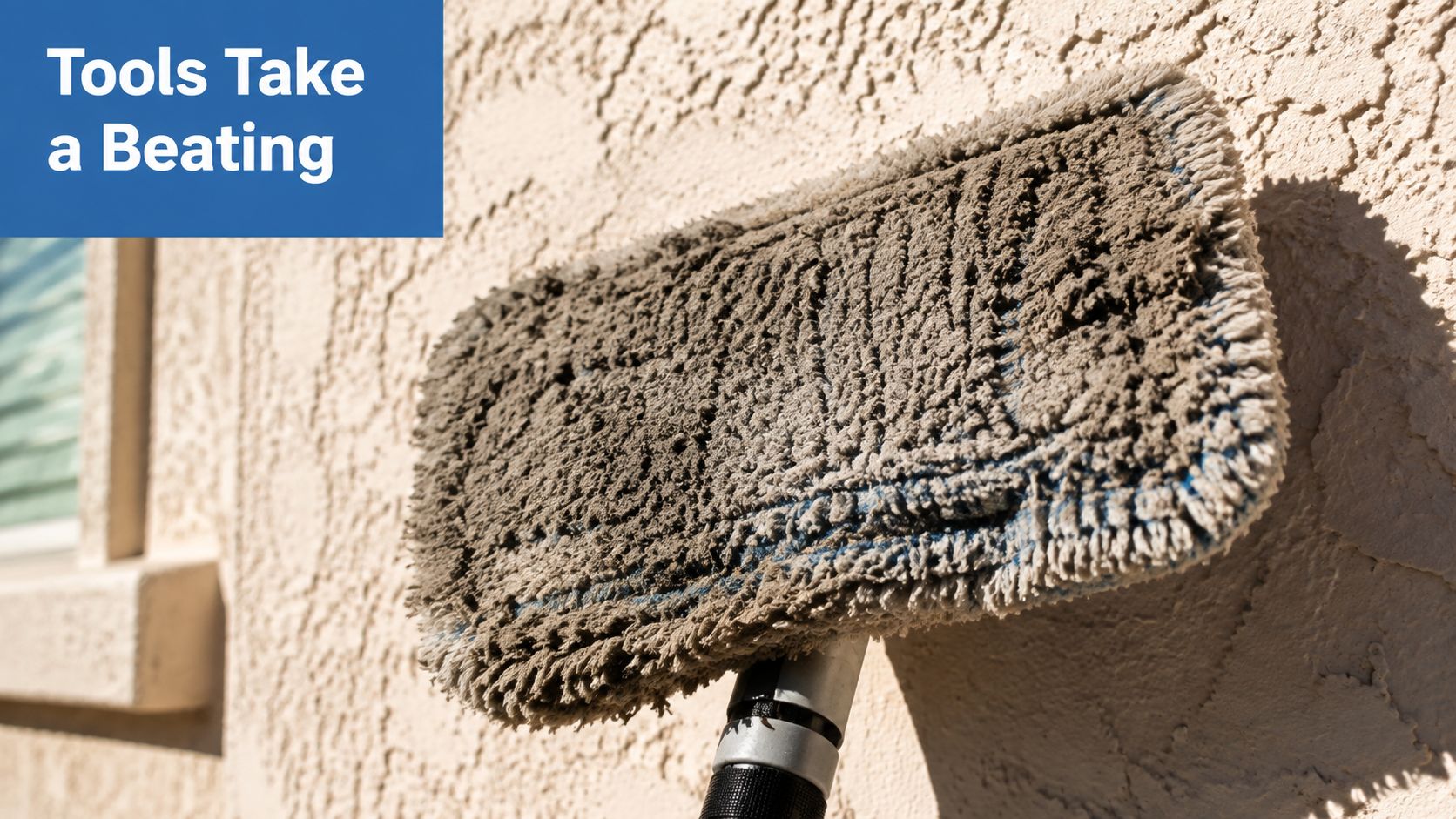
The pad is part of the cleaning system
A pad does more than wipe water across a pane. Its fibers or surface material break the bond between grime and glass, hold suspended soil, and distribute cleaning solution across the surface. If the pad is overloaded, it can redeposit dirt. If it's too abrasive, it can damage a delicate surface. If it's too wet, it can leave marks, increase runoff, and make the final pass harder.
Professional cleaners often carry several pad types because one tool rarely handles every condition. A soft microfiber sleeve may be appropriate for lightly soiled interior glass, while a more structured scrubber may be needed for exterior buildup. The decision depends on the surface, the soil, the amount of water available, and how quickly the glass is drying.
Practical rule: A pad should leave the glass cleaner after every pass, not simply wetter.
Why cheap replacements can cost more
The purchase price is only one part of pad cost. A low-cost pad that sheds lint, loses its shape, or holds grit can increase detailing time and create callbacks. A durable pad with predictable water control may cost more initially but reduce wasted solution, repeated passes, and premature replacement.
Window cleaning pads also have a long development history. The U.S. Patent Office recorded J. Kirkman's “Window Gleamer” in 1883, using arms that held a sleeve designed to receive a cleansing pad. A later U.S. patent issued on April 3, 1973, formalizing a combined squeegee and scouring-pad implement, and it cited an earlier Canadian patent from October 6, 1959, showing continued development of pad-based glass tools over time. The patent record for the combined window-cleaning implement documents that this category has evolved through repeated practical experimentation, not a passing supply trend.
Common Materials Used in Window Cleaning Pads
Material determines how a pad behaves, but construction matters just as much. Nylon, cotton, and microfiber each have a place in the equipment kit. The mistake is treating them as interchangeable.
Nylon
Nylon pads are valued for durability and agitation. Their stronger synthetic fibers can handle rougher work, including stubborn exterior soil and surfaces where a soft cloth would glide over the contamination. That strength becomes a liability on delicate glass, coated surfaces, acrylic, or panes with existing scratches. Nylon can be too aggressive if the operator applies heavy pressure or uses it with trapped grit.
Use nylon selectively. It's more suited to controlled scrubbing than routine polishing, and it should never be assumed safe for every transparent surface.
Cotton
Cotton offers softness and absorbency. It feels familiar in the hand and can work well for general wiping, detailing, and applications where gentle contact matters more than maximum dirt capture. Cotton can also retain a substantial amount of moisture, which may be inconvenient on hot exterior glass. Excess water increases drying pressure, especially when the sun is already pulling moisture off the pane.
Cotton also needs careful laundering. Residual chemicals, oils, or mineral-laden water can affect how it absorbs and releases moisture on later jobs.
Microfiber
Microfiber is common in professional glass tools because it combines fine dirt capture with a relatively gentle contact surface. Professional window pads are commonly made from polyester and polyamide blends, with examples ranging from 70% polyester and 30% polyamide to 80% polyester and 20% polyamide. The polyester contributes durability, while the polyamide supports liquid uptake and dirt capture, as shown in Kärcher's microfiber pad product documentation.
Pad weight and dimensions also affect handling. Compact, lightweight pads create less drag during repeated passes on handheld tools and extension poles. That matters on large panes, where a small difference in resistance becomes noticeable over a full route.
Surface design changes the result
Fiber chemistry isn't the whole story. Manufacturers describe high-quality microfiber pads as combining abrasive fibers for loosening soil with softer fibers that absorb the released material. A delicate-surface pad bulletin reports 0.0 g removed in a Schiefer abrasion test on acrylic after 5,000 revolutions, an example of low-abrasion construction rather than a guarantee for every product or surface. The Kärcher microfiber pad information helps illustrate why surface design should be checked before use.
For mineral deposits and etched-looking residue, pad choice alone may not solve the problem. Review the guidance on mineral deposits on glass before increasing pressure or switching to a harsher pad.
Residential Versus Commercial and High Rise Needs
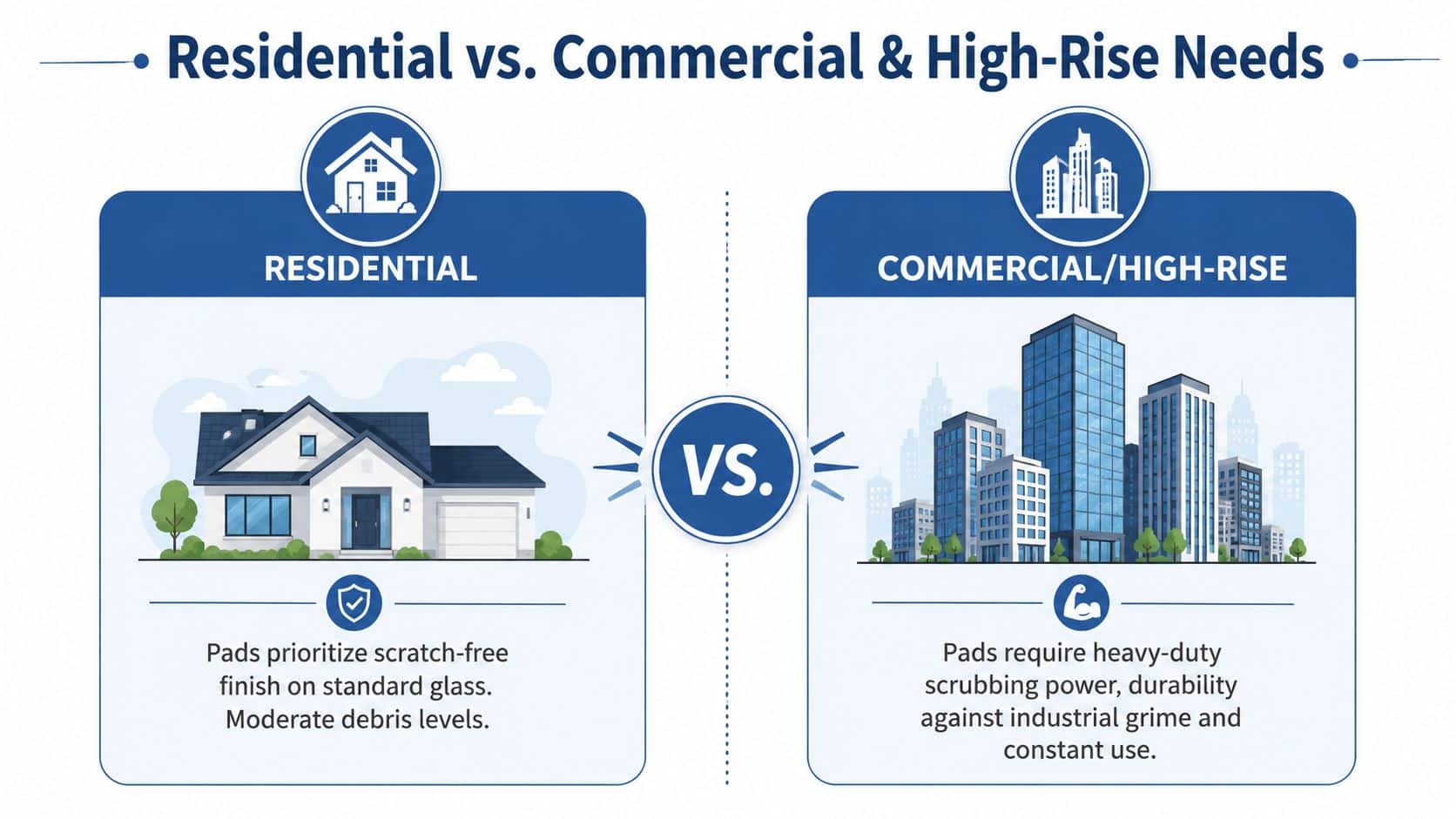
A pad that performs well on a Paradise Valley residence may not survive a commercial route. Residential work usually involves varied glass sizes, screens, tracks, frames, and interior surfaces. The operator can change pads frequently and inspect each pane closely. A soft, low-lint microfiber pad often makes sense for interior glass, while exterior work may call for more agitation when dust or irrigation residue has accumulated.
Commercial work changes the calculation. Storefronts, restaurants, offices, and healthcare properties generate repeated touch marks, airborne grime, and scheduled cleaning demands. The pad must tolerate frequent use, maintain its shape, and handle a route where consistency matters as much as the finish on one individual window.
A practical comparison
| Work setting | Main pad priority | Common failure |
|---|---|---|
| Residential interior | Soft contact, low lint, controlled moisture | Using an exterior pad that carries grit indoors |
| Residential exterior | Dust release, moderate scrubbing, quick rinsing | Letting the pad dry on hot glass |
| Commercial storefront | Repeatable cleaning and wear resistance | Keeping one overloaded pad in service too long |
| Industrial property | Soil removal and durability | Applying aggressive fibers without checking the surface |
| High-rise glass | Low weight, secure attachment, predictable handling | Choosing a pad without considering wind, access, or tool control |
High-rise work adds another layer. A pad is only one component of a suspended or elevated cleaning system, and it must never distract from access planning, inspection, training, or rescue procedures. OSHA-related high-rise guidance calls for written safety programs, hazard identification, training documentation, equipment inspections, and rescue planning. It also limits rope-descent systems to 300 feet above grade unless the employer demonstrates that other access methods aren't feasible or would create a greater hazard. This overview of equipment for high-rise window cleaners provides useful context for matching tools to the access method.
For a high-rise operator, a pad should be compact, secure, and easy to control with gloved hands. Excess water, loose attachments, or a pad that catches wind can create handling problems. The safest pad is the one that supports controlled work within an already compliant system.
How to Clean and Maintain Your Pads
A dirty pad can be worse than no pad. Fine sand and mineral particles remain inside the pile, then drag across the next pane. Oils and cleaning residues can also reduce absorbency, causing the pad to push liquid instead of picking it up.
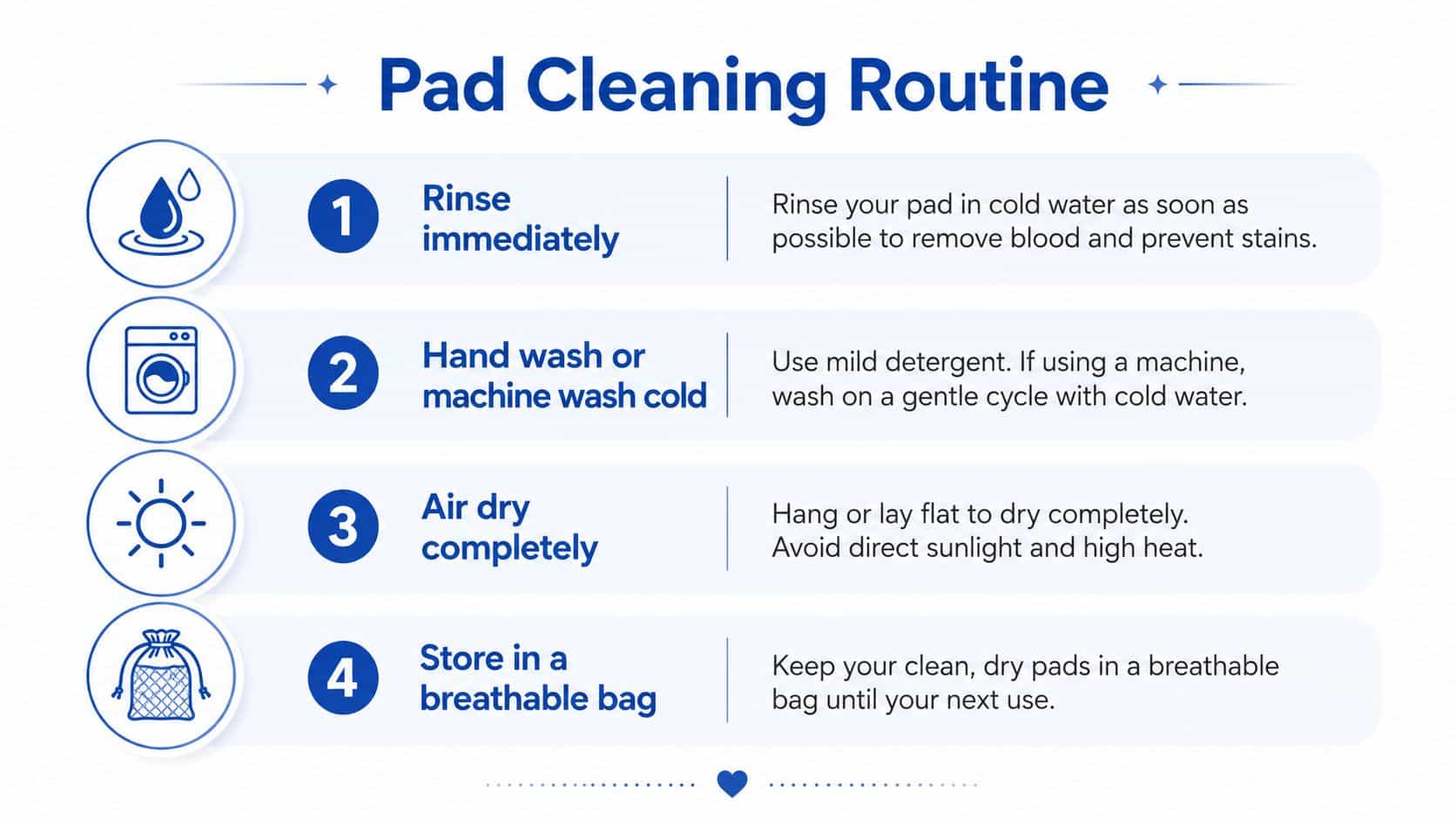
Begin maintenance at the job site. Don't let a heavily soiled pad sit in a bucket until the end of the route. Rinse it as soon as practical with clean water, working from the backing side toward the face when the construction allows. The aim is to flush out grit rather than drive it deeper into the fibers.
A reliable cleaning routine
- Rinse immediately. Remove loose dust, grit, and suspended soil before it dries into the pad. In Arizona, this first rinse is especially important after exterior work.
- Wash with compatible products. Hand wash or machine wash according to the manufacturer's care instructions. Use cold water when the pad guidance calls for it, and avoid fabric softener because it can coat fibers and reduce their ability to absorb.
- Inspect the texture. Check the pad for embedded particles, matted fibers, damaged stitching, and a backing that no longer holds securely. A pad can look clean while still being unsuitable for glass.
- Air dry completely. Store only after the pad is fully dry. Damp storage encourages odor and can leave the next job with a contaminated tool.
- Separate by use. Keep pads used on frames, tracks, greasy commercial areas, and glass in separate groups. Cross-contamination is easier to prevent than to correct.
Maintenance note: Never return a wet, gritty pad to a closed bucket or sealed bag overnight.
Pad care affects total cost of ownership. A reusable pad that keeps its pile, backing, and absorbency can support repeated work. A pad that loses its texture or begins shedding lint should be removed from finish work, even if it can still serve for rougher non-glass cleaning.
For broader technique guidance, pair pad maintenance with the methods in how to clean windows like a pro. The pad, solution, agitation, rinse, and final detailing pass all need to work together.
Selection Tips for Professional Cleaners
Buy pads by job condition, not by color or package count. A practical inventory usually includes a gentle pad for clean interior glass, a durable microfiber option for routine exterior work, and a more assertive scrubber for controlled treatment of heavier soil. Keep specialty pads separate so a rougher tool doesn't accidentally reach delicate glass.
Build a selection around the surface
Start with the glass. Confirm whether the pane has a coating, film, acrylic component, or a history of scratching. Test an unfamiliar pad in an inconspicuous area with light pressure. If the surface changes, stop. A pad that removes soil quickly isn't a good choice if it also creates visible damage.
Then assess the soil. Phoenix dust is often loose, but it can combine with irrigation minerals, pollen, exhaust, and oily residue. Loose dust calls for rinsing and controlled agitation. Mineral buildup may require a separate treatment process. A heavily loaded pad won't improve because the operator presses harder.
Moisture control affects labor
Pad wetness deserves as much attention as fiber type. Product guidance for robot window cleaners warns that pads that are too wet can leave water marks and may contribute to slipping. This guidance on correct pad moisture reinforces a point that experienced cleaners learn quickly: more water doesn't automatically mean better cleaning.
Use enough solution to suspend and move the soil, then manage the pad before it becomes saturated. On hot exterior glass, work in manageable areas and watch the drying edge. On interior glass, control runoff around frames, floors, furnishings, and finished surfaces.
Price against replacement and downtime
A cheap pad may be sensible for a low-frequency homeowner job. A commercial route requires a different calculation. Consider:
- Durability: Does the pad keep its shape and attachment strength after repeated washing?
- Lint behavior: Does it leave fibers under strong sunlight or angled interior lighting?
- Drying time: Can the team clean, rinse, and store it without creating a damp-equipment problem?
- Compatibility: Does it fit the existing scrubber, pole, water-fed tool, or window vacuum?
- Separation: Can you identify clean-glass pads quickly instead of mixing them with rough-surface tools?
For exterior glass, pure-water systems can reduce mineral residue when the water quality and equipment are appropriate. Pure-water window cleaning systems should be evaluated as part of the full method, not as a substitute for choosing the right pad.
Safety comes before pad performance
High-rise buyers must treat the pad as a small component inside a regulated access operation. OSHA guidance states that roof anchorage for window-washing equipment must be a permanent part of the structure and capable of supporting the maximum intended load without displacement or deformation. Newer compliance summaries describe a 5,000-pound-per-worker anchorage expectation for suspended systems. OSHA's anchorage interpretation should be reviewed alongside the applicable standards and the building's written safety program.
A pad can't compensate for poor anchorage, missing inspections, inadequate training, or an incomplete rescue plan. For demanding commercial routes, South Mountain Window Cleaning, LLC offers window cleaning for residential, commercial, and high-rise properties, using professional tools and pure-water systems as part of its service approach.
Finally, schedule work according to the property rather than forcing every building into the same routine. Commercial guidance recommends auditing each glass surface, separating interior and exterior schedules, and adjusting service for construction, irrigation overspray, HVAC exhaust, and storms. This commercial window-cleaning maintenance guidance supports a soil-rate approach, which also helps you estimate pad wear and replacement needs more realistically.
Frequently Asked Questions
How often should window cleaning pads be replaced?
There isn't one responsible replacement interval for every pad. Replace a pad when its fibers mat, its backing weakens, it sheds lint, it holds grit after washing, or it no longer controls water consistently. A frequently used commercial pad may reach that point sooner than a lightly used residential pad, so inspect condition rather than relying only on age.
Can one pad be used for interior and exterior glass?
Sometimes, but separation is safer. Exterior pads encounter more dust, grit, minerals, and oily residue, while interior pads usually need tighter moisture and lint control. Use dedicated pads whenever possible, especially on finished interior surfaces and delicate glass.
Why is the glass streaking even with a good pad?
Check the pad's wetness first. A pad that's too wet can leave water marks, while a pad that's too dry may drag soil across the pane. Also check whether the opposite side of the glass remains dirty, whether the pad is contaminated, whether the solution leaves residue, and whether direct Arizona sun is drying the working area too quickly.
Are microfiber pads always the best choice?
Microfiber is a strong general-purpose option, but it isn't automatically right for every surface or soil condition. Fiber blend, pile, backing, moisture level, and abrasion all matter. Choose the least aggressive pad that can remove the actual soil, then use a clean squeegee or finishing tool to control the final appearance.
Do greener pads always cost less over time?
Not necessarily. A pad made with recycled or lower-impact materials may still create more waste if it loses performance quickly, sheds lint, or requires frequent replacement. Evaluate wash life, drying behavior, dirt release, and replacement cadence before judging sustainability by the material label alone. Market projections place the global window cleaning cloths market at USD 1.56 billion in 2026 and USD 2.18 billion by 2034, while another forecast reaches USD 2.50 billion by 2034, with sustainability and microfiber adoption identified as influences in the market discussion. The window cleaning cloths market analysis offers that projected context, but your own replacement records remain the most useful buying evidence.
For professional help with dust-heavy residential glass, scheduled commercial routes, or high-rise access requirements, visit South Mountain Window Cleaning, LLC. The company serves Phoenix, Scottsdale, Paradise Valley, Chandler, Tempe, and Gilbert with residential, commercial, and high-rise window washing, and you can request a fast, free quote online.