
You can usually see the problem before a tenant reports it. Stand in the lobby, look up at the glass, and dust, water spotting, or streaks from an earlier rinse are already changing the impression of the property. The difficult question isn't whether the windows need attention. It's how a crew will reach them without disrupting occupants, damaging the façade, or creating an unacceptable risk over a public walkway.
Window cleaning for high rise buildings is a property-management decision, not an oversized version of residential glass cleaning. The plan has to account for façade geometry, roof anchors, access equipment, trained labor, Arizona dust, weather, insurance, public protection, and the condition of frames and screens.
Why High-Rise Window Cleaning Requires a Different Approach
A building owner may receive three bids that appear to cover the same work. One contractor proposes a lift, another suggests a bosun's chair, and a third says a small rope-access crew can handle the entire façade. The prices may differ, but the actual comparison is whether each method fits the building, the roof, the glass, and the safety documentation.
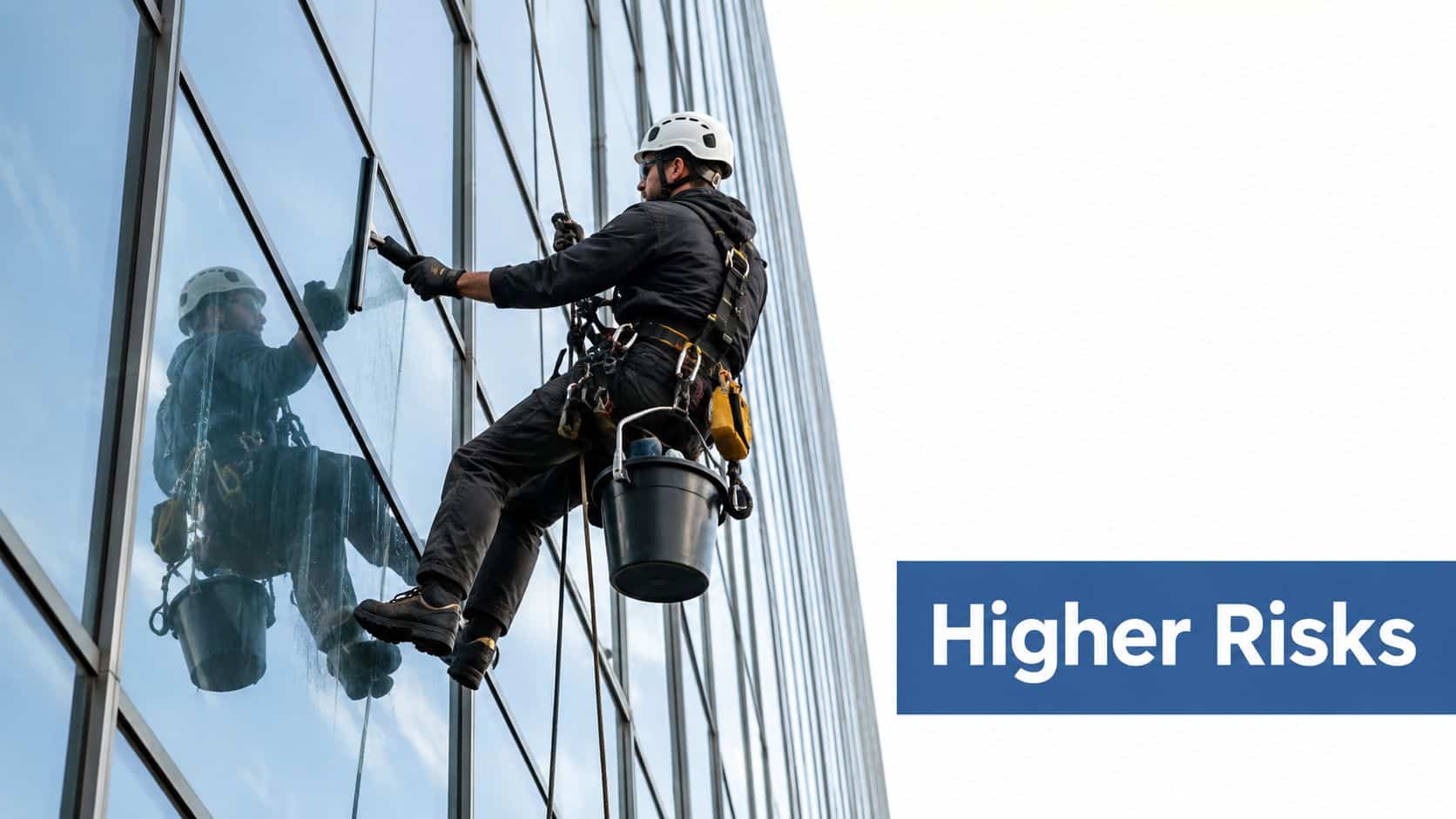
High-rise work changes the risk profile immediately. A technician can't just move a ladder or reach around an obstruction. The crew may be working above occupied entrances, coordinating roof access with security, protecting pedestrians below, and relying on engineered anchorage rather than improvised positioning. A vendor that cleans homes effectively may still lack the equipment, rescue planning, and experience required for a tall commercial façade.
Height changed the trade
High-rise window cleaning became a distinct profession in late 19th-century New York City as skyscrapers rose. Early workers stood on narrow ledges and held window frames by hand. By the 1930s, sources describing the era reported an average of about one death per 200 window cleaners per year in New York, a stark illustration of how safety technology lagged behind building height growth, as documented by Bloomberg's history of skyscraper window cleaning.
The industry has moved far beyond that improvised approach, but the underlying lesson still matters. Building height doesn't just increase cleaning time. It increases the consequences of poor planning, unclear load paths, weak communication, and unsuitable equipment.
Practical rule: Treat access planning as part of the cleaning scope. If the contractor can't explain how each elevation will be reached and protected, the bid isn't complete.
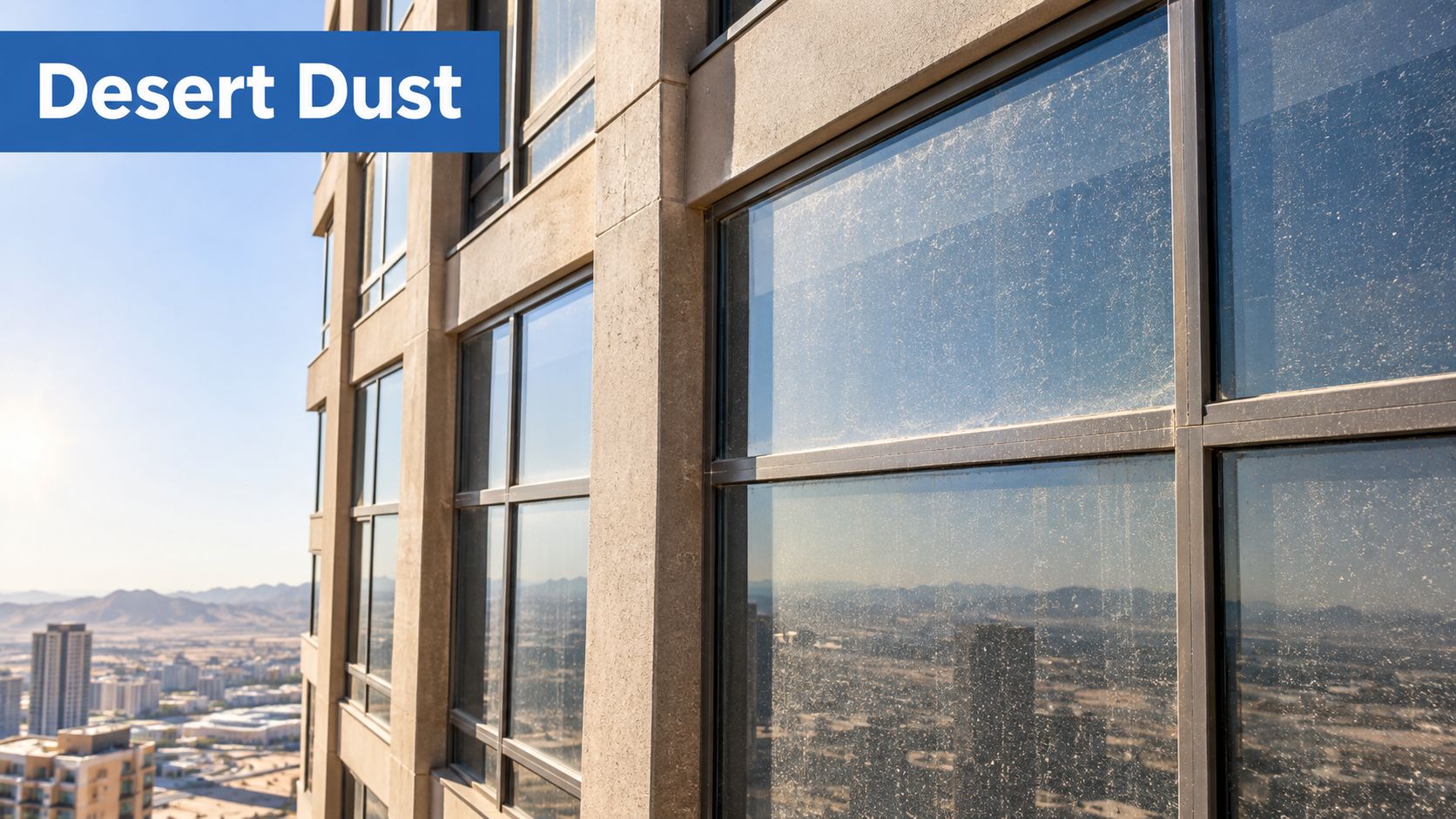
Arizona owners also face a local operational complication. Fine dust can settle on glass, frames, ledges, and equipment staging areas, while intense sun makes visible streaks and mineral deposits especially noticeable. A safe, repeatable maintenance program has to address both the work at height and the environmental conditions that make postponement expensive.
Access Methods and Equipment for High-Rise Facades
The correct access method depends on more than building height. Roof geometry, parapets, permanent façade systems, setbacks, courtyards, overhead obstructions, ground conditions, and pedestrian routes all affect the decision.
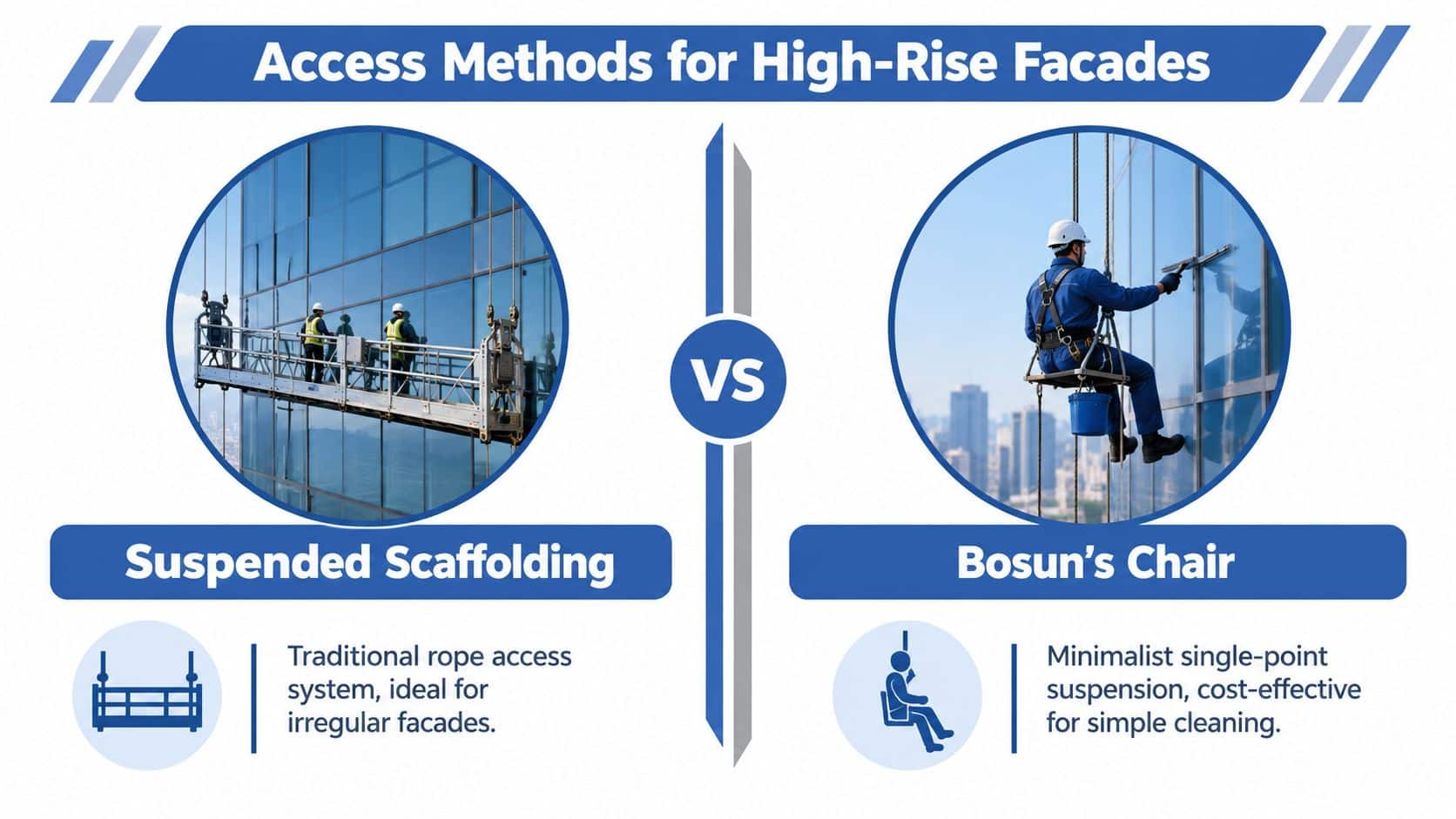
Rope descent systems are useful where lifts can't reach and the façade has suitable, documented anchors. A technician works from a suspended seat or harness arrangement, using a working line and independent backup protection. The setup has a small ground footprint, which can reduce disruption at entrances, but it demands careful roof preparation, rescue planning, weather monitoring, and qualified personnel.
Suspended scaffolds, often called swing stages, provide a broader platform for longer, regular elevations. They can carry more equipment and support more than one worker, but rigging and public-exclusion requirements may make them slower to mobilize. Aerial work platforms can be practical for lower or middle sections when the property has firm, level staging space and a clear route for the machine.
Match the method to the façade
| Method | Typical Height Range | Key Requirements | Best For |
|---|---|---|---|
| Rope descent system | Tall façades, subject to applicable limits | Certified anchors, working and backup lines, rescue plan, trained technicians | Irregular elevations, setbacks, corners, and areas inaccessible to lifts |
| Suspended scaffold | Tall façades, subject to system design | Roof rigging, engineered support, platform inspections, exclusion zones | Long, regular elevations and broader work areas |
| Aerial work platform | Equipment-dependent | Firm staging area, suitable reach, traffic and pedestrian controls | Lower and middle sections with accessible ground space |
| Bosun's chair | Building-specific | Suitable suspension point, backup protection, trained operator | Simple vertical cleaning where a single technician can work efficiently |
The industry's modernization accelerated in the 1950s with curtain-wall construction. Windows stopped opening from inside, so façades had to be reached externally. That shift encouraged mobile platforms, bosun chairs, and fall-protection systems, followed by OSHA-era standards for building maintenance platforms and suspended scaffolds, as described in the history of window-cleaning access systems.
For a closer look at the equipment itself, property managers can review equipment for high-rise window cleaners.
No single system wins every building. A hybrid plan often works better, with water-fed tools or a lift on accessible elevations and rope or suspended access above them. Automation may also suit repetitive, compatible façades, but machines still need a plan for corners, frames, ledges, damaged panels, and areas they can't contact.
Safety Standards and Insurance Requirements
Safety documentation should be reviewed before a crew arrives on the roof. U.S. high-rise window cleaning operates under a layered framework that combines OSHA requirements, ANSI/IWCA consensus standards, and building-code rules for anchors and façade access systems.
For rope descent systems, OSHA 29 CFR 1910.27 requires each anchor to sustain at least 5,000 pounds per attached employee, according to industry guidance on OSHA window-cleaning anchor requirements. That capacity isn't a box to check after the bid is accepted. It determines whether the proposed system can safely transfer forces through the anchor and roof structure.
Verify the anchor path
Ask the owner or contractor for records showing that each anchorage has been identified, tested, certified, and maintained. If certification is missing or the load path is uncertain, the work should be redesigned or stopped. A fall-arrest system can't be assumed reliable when the structure supporting it hasn't been verified.
Common technical packages use 11 to 13 mm static kernmantle lines with breaking strengths above 22 kN, supporting controlled rope movement and low elongation for precise façade work. Those specifications don't replace a site-specific plan, equipment inspection, or rescue procedure.
A practical pre-job file should include:
- Method statement: Identify the access system, elevations, rigging points, work sequence, and public-protection controls.
- Anchor records: Provide engineering or inspection documentation, dates, locations, and capacity information.
- Equipment checks: Record inspections for ropes, harnesses, lanyards, descenders, platforms, and backup systems.
- Rescue plan: Explain how the crew will recover a suspended or injured worker.
- Worker competence: Confirm training and experience appropriate to the equipment and façade.
- Insurance certificates: Verify general liability, workers' compensation, and any additional coverage required by the property owner.
High-rise work also requires fall protection whenever the task exposes workers to a fall hazard. Guidance from the UK Health and Safety Executive on window cleaning at height emphasizes proper planning, supervision, competent personnel, and equipment such as a safety harness, energy-absorbing lanyard, and suitable anchor point.
Read the insurance certificate carefully
Insurance isn't a substitute for safe work, but it protects the owner when something goes wrong. Check that the certificate names the correct contractor, policy dates are current, limits satisfy the building's requirements, and exclusions don't undermine the proposed operation. The contractor should also explain whether the owner must be named as an additional insured.
South Mountain Window Cleaning's window cleaning insurance information is one example of the type of coverage information a property manager can review when comparing vendors. The important point is consistency. Every bidder should provide documentation against the same requirements before price becomes the deciding factor.
Arizona Environmental Factors and Cleaning Frequency
Arizona's conditions can make a clean façade look neglected sooner than a property manager expects. Windblown dust settles on exposed elevations, irrigation can leave mineral residue, and monsoon activity can create fresh spotting and runoff. West- and south-facing glass may show contamination quickly, while entrances and lower elevations collect additional traffic dust, fingerprints, and overspray.
The cleaning schedule should follow exposure rather than a generic calendar. A hotel entrance, medical facility, condominium tower, and office building may need different service intervals because traffic, visibility, tenant expectations, and façade orientation aren't the same.
Build the schedule around contamination
Quarterly service may make sense for highly visible commercial properties exposed to dust and frequent activity. Other buildings may manage with less frequent full-facade cleaning combined with targeted work at entrances, amenity areas, and the most exposed elevations. The right answer comes from inspection and appearance standards, not from a universal promise.
A useful schedule considers:
- Exposure: Note prevailing wind, orientation, nearby construction, road dust, and irrigation spray.
- Occupancy: Prioritize entrances, balconies, shared amenities, retail frontage, and guest-facing glass.
- Seasonal events: Recheck the façade after dust events, monsoon activity, or ash deposition.
- Surface condition: Remove deposits before they harden and require restoration rather than routine cleaning.
- Access efficiency: Combine compatible tasks, such as glass, screens, frames, and ledges, during one mobilization.
Fall protection remains necessary even when the job appears routine. A university window-washing program requires a harness for cleaning work, with an exception only when a worker is on a sill or ledge no more than 4 feet above the ground or an equivalent surface. It also requires both harness terminals to be attached before work begins when cleaning from an interior sill 4 feet or more high.
Property managers can use guidance on how often to clean windows as a starting point, then adjust the program after observing dust accumulation, tenant feedback, and the condition of frames and tracks. Arizona's climate rewards shorter, predictable maintenance cycles more than occasional emergency cleaning.
How to Select a Qualified High-Rise Window Cleaning Vendor
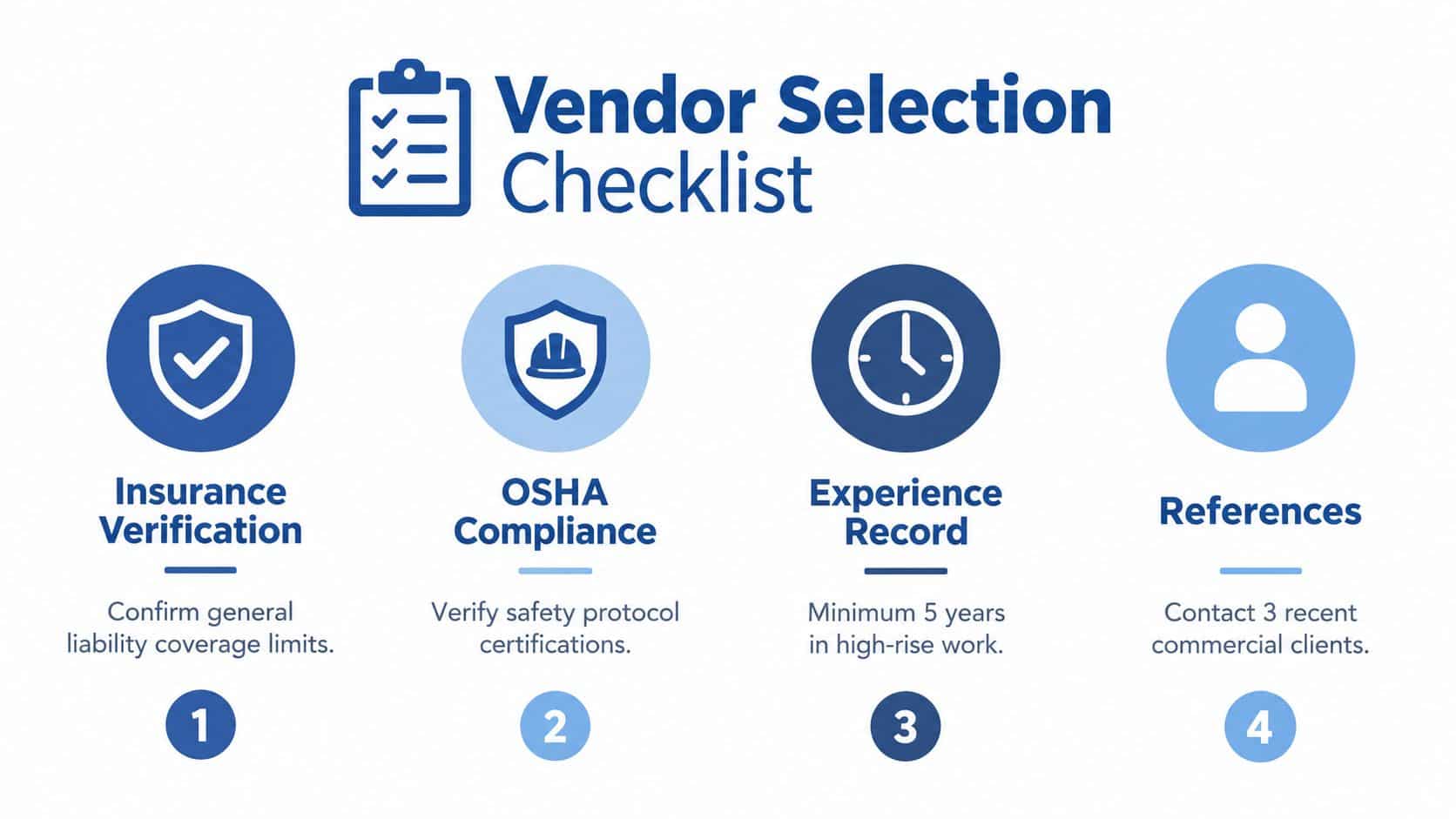
Price is only one line in a high-rise bid. The safer comparison asks whether the vendor can prove that its people, equipment, insurance, and access plan match the building.
A contractor should be able to describe the proposed method for each elevation without relying on vague phrases such as “standard rope access.” Ask where the lines will be rigged, how the public will be protected, how equipment will be inspected, and what happens if a worker needs rescue.
Compare the evidence, not the sales pitch
The labor market adds pressure to the decision. Industry material reports that certified rope-access technicians are increasingly difficult to find, and hourly rates of $40 to $60 are now common, as discussed in workforce and automation coverage for window cleaning. The same material identifies fall exposure as a major liability concern because falls from elevation are among the leading causes of workplace death in the United States.
That shortage can affect availability, lead times, and the temptation to substitute less-qualified labor. A low bid that depends on unavailable specialists may become a delayed project or a rushed mobilization.
| Requirement | Why It Matters | What to Request |
|---|---|---|
| Insurance verification | Protects the owner from avoidable coverage gaps | Current certificates, policy limits, workers' compensation confirmation |
| High-rise experience | Shows the crew understands access, public protection, and building operations | Comparable commercial references and completed scopes |
| Anchor documentation | Confirms that rope or suspended access has structural support | Certification, inspection records, locations, and capacity information |
| Worker qualifications | Connects the equipment plan to actual competence | Training records and rope-access credentials where applicable |
| Equipment maintenance | Reduces failures from neglected gear | Inspection logs for ropes, harnesses, platforms, lifts, and connectors |
| Rescue planning | Turns an emergency response into a practiced procedure | Written rescue plan and crew briefing process |
Watch for warning signs
The most serious red flags are missing site-specific documents, vague answers about anchors, unclear insurance exclusions, crews that can't explain their rescue procedure, and bids that omit frames, screens, public protection, or cleanup. A contractor shouldn't pressure the property manager to approve roof access before the building's anchor records and work plan have been reviewed.
When a local owner needs a broader commercial scope, South Mountain Window Cleaning, LLC provides window cleaning and exterior cleaning services for properties in Phoenix and nearby Arizona communities. The same evaluation still applies. Verify the proposed access method, documentation, insurance, and scope before work begins.
Preparation and Post-Service Expectations
Good preparation prevents avoidable delays. Before the crew arrives, the property manager should confirm roof and mechanical-room access, notify security, reserve staging areas, and identify entrances or walkways that need temporary protection. Loose exterior items, patio furniture, signage, and tenant belongings near the work zone should be secured or relocated.
The contractor should receive current information about tenant schedules, deliveries, parking controls, restricted areas, fire-lane requirements, and any façade elements that can't be contacted with water or equipment. A short pre-job meeting can resolve questions about elevators, keys, roof routes, alarms, and communication with the building engineer.
What the crew should control
- Roof access: Keep rigging areas clear and prevent unauthorized entry.
- Ground protection: Establish exclusion zones beneath suspended work and control pedestrian movement.
- Water management: Protect flooring, entries, landscaping, and sensitive equipment from runoff.
- Tenant communication: Provide timing updates when work affects balconies, offices, or shared spaces.
- Surface care: Use compatible tools and solutions for glass, frames, screens, and coatings.
After service, inspect representative elevations rather than only the lobby glass. Look for missed edges, remaining mineral spotting, runoff marks, damaged screens, disturbed sealant, and debris in tracks or ledges. Record pre-existing damage separately so the completion report doesn't confuse cleaning defects with façade repairs.
A useful closeout package includes completed areas, weather interruptions, access limitations, damage notes, photographs where appropriate, and recommendations for the next service. If the building is likely to need recurring care, agree on a service window and a response procedure for dust events or visible spotting rather than waiting until tenant complaints determine the schedule.
Frequently Asked Questions About High-Rise Window Cleaning
How much does high-rise window cleaning cost?
There isn't a responsible universal price for a tall building. The quote depends on façade area, glass condition, access method, roof anchors, rigging, insurance requirements, labor, screens and frames, public protection, tenant coordination, and weather limitations.
Compare bids only after each contractor prices the same elevations and finish standard. A cheaper proposal may exclude upper sections, screen work, anchor verification, cleanup, or return visits caused by weather. Ask for separate pricing for routine maintenance, restoration, and optional detail work so the owner can see what drives the total.
How often should an Arizona high-rise be cleaned?
Use the building's exposure and appearance standard as the starting point. Properties near active roads, construction, dust-prone areas, irrigation spray, busy entrances, or highly visible hospitality spaces generally need closer monitoring than sheltered façades.
A practical program may combine scheduled full-facade service with targeted cleaning at entrances and lower elevations. Reinspect after dust storms, monsoon activity, or ash deposition. The goal isn't to follow a calendar blindly. It's to prevent contamination from hardening and to maintain a consistent appearance for occupants and visitors.
What happens when weather delays the work?
A professional contractor should stop or reschedule when wind, storms, lightning, extreme heat, poor visibility, or surface conditions make the method unsafe. The contract should define how the vendor communicates delays, protects partially completed areas, secures equipment, and returns to finish the scope.
Weather flexibility matters more for suspended and rope-access work than for sheltered interior cleaning. Don't ask a crew to “push through” conditions that affect line control, worker stability, glass handling, or public safety.
How long does a high-rise cleaning project take?
Project duration varies with the building's elevations, access changes, soil load, crew size, tenant restrictions, weather, and the amount of work included beyond the glass. A regular façade with permanent access equipment may move efficiently, while a complex building with setbacks, courtyards, and limited roof access requires more setup.
Request a written production plan that identifies mobilization, daily work areas, inspection points, and contingencies. That gives the property team a useful way to coordinate occupants without treating an estimate as a guarantee.
How can owners extend the time between cleanings?
Reduce preventable contamination where possible. Repair irrigation overspray, keep nearby construction controls in place, address leaking drainage paths, and respond promptly after dust or ash events. Include frames, tracks, ledges, and screens in the maintenance plan because cleaning only the center of the glass leaves surrounding soil to migrate back onto the façade.
Above all, don't choose a method solely because it has the lowest initial price. A compatible access system, trained crew, verified anchors, clear closeout records, and a schedule adapted to Arizona conditions will help the building avoid emergency mobilization and premature restoration.
South Mountain Window Cleaning, LLC provides residential, commercial, and high-rise window washing in Phoenix, Scottsdale, Paradise Valley, Chandler, Tempe, Gilbert, and surrounding Arizona communities, with screen and track care, exterior cleaning, and safety-focused service planning. Visit South Mountain Window Cleaning, LLC to request a fast, free quote for a building-specific glass maintenance plan.