

Fixed, venting, tubular, and custom skylights are the four main types, but the best choice for Arizona depends on balancing daylight with cooling efficiency and maintenance access. Research found that adding skylights generally reduced annual heating and cooling energy use and costs in 106 of 108 building models, while also showing that skylight area can raise solar heat gain and conductive heat transfer. Government-hosted daylighting analysis
You notice the problem on an ordinary Phoenix afternoon. The living room looked bright when the skylight was installed, but now the floor is washed with glare, the sofa area feels hotter, and dust has dulled the glass. A faint stain near the ceiling raises the harder question: is the skylight dirty, poorly sealed, or just the wrong type for a desert roof?
Why Understanding Every Type of Skylight Matters in Arizona
A homeowner in South Mountain once chose a large, clear, fixed skylight for a south-facing roof because it delivered the dramatic daylight seen in the showroom. The room looked impressive at first. Once summer arrived, though, direct sun hit the same seating area for hours, blinds stayed closed, and the skylight became a difficult roof-access point instead of a useful source of light.
That result isn't unusual. A skylight isn't just a pane installed above a room. It is a complete fenestration assembly that includes glazing, frame, spacers, flashing, curb, drainage details, and sometimes a light well or diffuser. Its shape, orientation, glazing, and access requirements all affect comfort and maintenance. The architectural history of skylights shows why the category is so broad. The Pantheon's oculus supplied daylight and ventilation to its domed interior around 127 A.D., while later glass-and-iron systems brought top lighting to markets, galleries, arcades, and conservatories. Modern systems now include flat, pitched, domed, pyramid, tubular, operable, and roof-window designs. A historical overview of skylight development and classifications
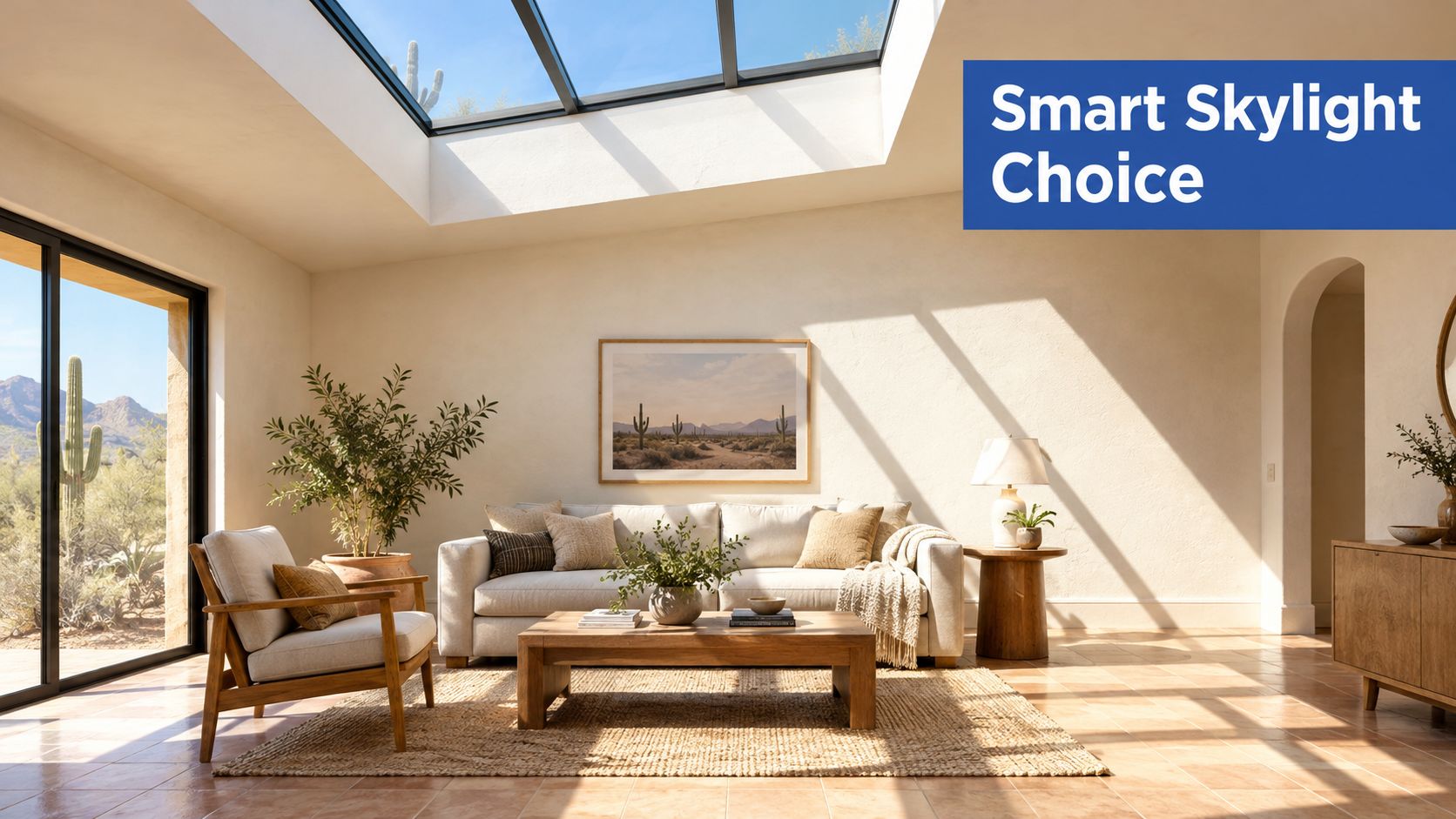
The showroom effect can hide desert problems
A clear acrylic dome can look bright and inexpensive, but direct light isn't always comfortable light. A pyramid skylight may spread illumination more evenly, while a tubular device can brighten a hallway without creating the same broad opening in the roof. A venting unit adds airflow, but it also introduces moving parts, controls, seals, and another area that needs inspection.
Phoenix property owners should also evaluate the effect on household operating costs. Skylights can support lower reliance on electric lighting, but a poorly selected unit may increase glare and cooling demand. Before approving a large opening, compare the design with the property's average electric bill in Arizona and ask whether the room needs more light, more ventilation, or both.
Practical rule: In Arizona, the brightest skylight isn't automatically the most efficient skylight.
A good selection accounts for the roof slope, room use, sun exposure, glazing performance, shading, cleaning access, and the condition of the surrounding roof. That approach prevents a common mistake, choosing by appearance first and dealing with heat, dust, glare, and leaks later.
Comparing the Main Type of Skylight Options
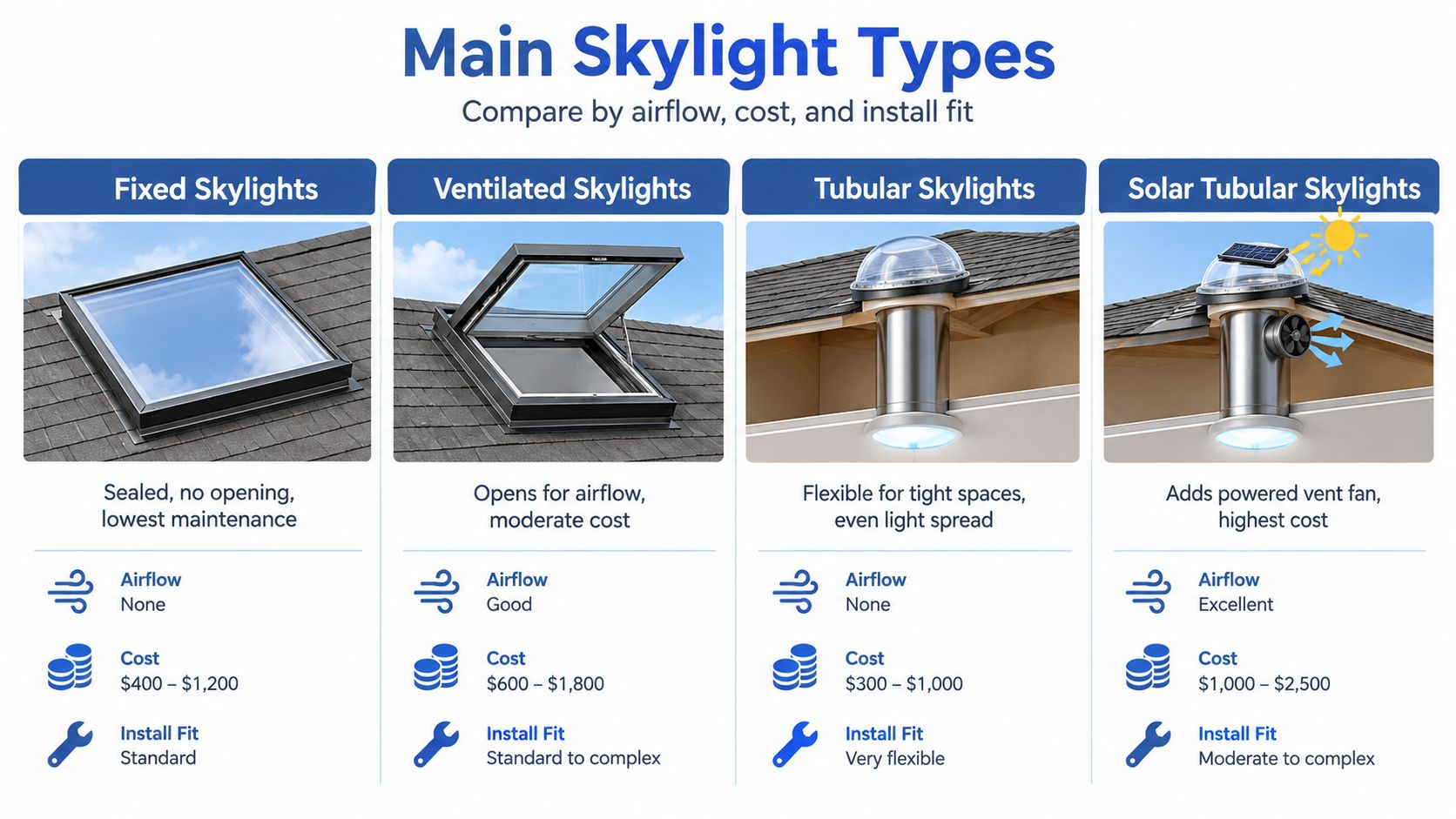
The four main categories solve different problems. Fixed units prioritize sealed daylight, venting models add airflow, tubular systems fit where a traditional opening won't, and custom designs address unusual roof or interior conditions. Shape and glazing still matter within each category, so the label alone isn't enough.
Fixed skylights
A fixed skylight stays closed and brings daylight into a room without intentional ventilation. It has fewer operating components than a venting unit, which can simplify long-term care. In a dry, dusty climate, that sealed design can be an advantage, especially over a stairwell, hallway, living room, or commercial area that doesn't need outdoor airflow.
The weakness is exposure. A fixed unit still collects dust, mineral residue, and bird deposits, and it may be difficult to reach safely from the roof. A large clear unit can also concentrate sunlight and heat in one part of a room. Low-emissivity glazing, diffusing material, interior shades, or exterior shading can make a fixed skylight more comfortable than an oversized clear dome.
Venting skylights
A venting skylight opens manually, electrically, or through a control system. It can release warm air from high in a room and provide useful airflow when outdoor conditions are suitable. Kitchens, bathrooms, lofts, and rooms with stale air may benefit from that function.
The trade-off is complexity. Hinges, operators, screens, seals, sensors, and electrical components all need attention. Opening a venting skylight during a dust event can also bring unwanted particulate matter indoors. The unit should be operated as part of a ventilation plan, not treated as a substitute for air conditioning or a reason to ignore roof maintenance.
Tubular daylight devices
A tubular skylight, also called a solar tube or light tube, uses a small rooftop collector and a reflective tube to deliver daylight to an interior diffuser. It works well in bathrooms, closets, corridors, pantries, and other spaces where a broad roof window would require more structural and ceiling work.
The smaller opening can reduce the visual impact and simplify placement around roof framing. It won't provide the same view or direct ventilation as a traditional skylight, and its brightness depends on the collector, tube path, diffuser, and roof exposure. For tight spaces, that compromise often works better than cutting in a large clear unit.
Custom skylights and architectural forms
Custom skylights include unusual sizes, pyramid forms, glazed roof systems, large commercial assemblies, and designs built around a specific light well or roof structure. Pyramid geometry can produce more homogeneous, diffused illumination than flat glazing, which can help in commercial or institutional interiors. Custom work can also coordinate with historic architecture or a complex roof plan.
The risk is that every custom detail becomes part of the maintenance plan. Curb depth, flashing, diffuser coverage, shaft geometry, and interior wall reflectance affect the amount of daylight and heat that reaches the occupied space. A design that looks excellent from the ground may still be difficult to clean, inspect, or repair years later.
How Skylight Type and Glazing Affect Energy Performance
A skylight can brighten a Phoenix room and still increase its cooling demand. The material name alone, whether double-pane, glass, acrylic, or dome, does not describe the assembly's full performance. Request an NFRC-certified label and compare the glazing, frame, spacers, and curb where applicable. NFRC U-factor covers these components, and lower values limit conductive heat transfer. Published fenestration U-factor values range approximately from 0.25 to 1.25, while visible transmittance, or VT, commonly ranges from 0.20 to 0.80. Energy Star's explanation of independently tested fenestration performance
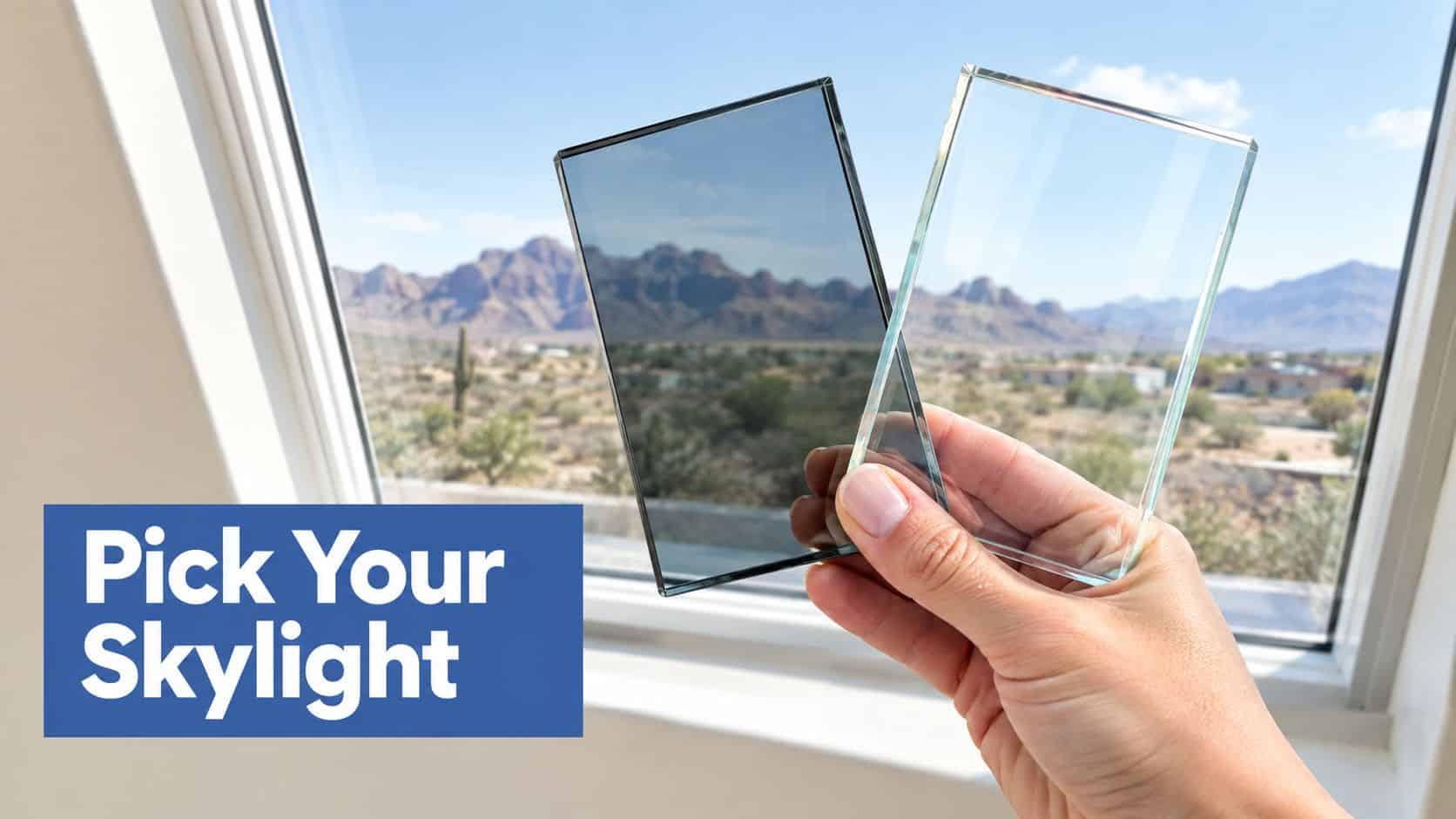
VT measures the share of visible light entering the room. High VT can reduce daytime electric lighting, but clear glazing may also admit more solar heat. For a south-facing fixed skylight in Phoenix, a unit with moderate VT and a controlled solar heat gain coefficient, or SHGC, may keep the room more comfortable than the clearest available option. Compare U-factor, solar heat gain coefficient, or SHGC, and VT together. U-factor addresses conductive heat flow, SHGC addresses solar gain, and VT addresses useful daylight.
A residential daylighting and energy analysis evaluated 108 building models. Skylights generally reduced annual heating and cooling energy use and costs, except in two models. The analysis also found that strategically placed skylights could reduce total fenestration, windows plus skylights, from a maximum of 20% of floor area to as low as 12% while maintaining a baseline average daylight factor of 5%. The residential daylighting and energy analysis
More area creates more than more light
Increasing skylight area raises daylight, but it can also raise solar heat gain and conductive transfer. A smaller, well-oriented unit with low-emissivity glazing, controlled VT, and shading may therefore outperform a larger transparent unit in a desert property. Double low-emissivity glazing and interior shading help, but roof pitch, curb design, shaft depth, diffuser, and interior surface reflectance also shape the result. For a plain-language comparison of coated and clear glazing, see Breaking Glass Co. on low-e glass.
Clean glazing preserves the daylight benefit. Dust and mineral deposits reduce optical transmission, so an intact skylight may deliver less usable light and leave occupants relying more on electric lighting. The same maintenance principle applies to photovoltaic equipment, making solar panel efficiency and cleaning considerations relevant when a property has both skylights and solar panels.
Safety Considerations When Inspecting and Maintaining Skylights
A skylight's label doesn't determine whether it is safe to walk near. A fixed unit may still be fragile, and an older plastic dome or translucent roof panel can be hard to identify from below. Occupational-safety guidance warns that unprotected skylights can create fall hazards. Where someone could fall through an opening, employers may need guardrails, covers, screens, or an appropriate fall-protection system. A skylight that can't sustain a 200-pound person with a safety factor of four requires protective measures rather than being treated as a walking surface. Workplace guidance on skylight fall hazards
Start from the interior
A cautious inspection begins indoors. Look for fogging between panes, cracked or crazed glazing, yellowed plastic, water stains, bubbling paint, damaged trim, condensation, and a diffuser that has become visibly dark or dusty. Operate a venting skylight only if the controls and surrounding ceiling appear sound. Don't climb onto a roof to investigate a stain just because the unit looks small.
For roof-level work, access depends on roof pitch, surrounding guardrails, the strength of the glazing, ladder placement, weather, and the available fall-protection system. A professional roof assessment can help separate a skylight problem from a flashing or roof problem. For that broader evaluation, roof inspection in Arizona provides useful context on qualified inspection practices.
Commercial access requires documentation
High-rise and commercial window work involves equipment and procedures designed around fall protection. OSHA recognizes ANSI/IWCA 1-14.1 as a window-cleaning safety guide, while powered-platform guidance requires fall-arrest protection for platform workers and stabilization systems with maximum anchor intervals of three floors or 50 feet, whichever is less. OSHA fall-protection standards
Suspended platforms also require a written emergency plan covering power failures, equipment failures, and other emergencies. Operators need training to identify hazards, use personal fall-arrest systems, and follow safe operation, inspection, and maintenance procedures. OSHA doesn't prohibit boatswain's chairs, but recommends using them only when other methods can't clean windows safely and practically, with applicable requirements under 29 CFR 1910.28(j). OSHA guidance on powered platforms and boatswain's chairs
Never step on skylight glass. If you need roof-level cleaning or inspection, use a provider with documented access procedures, proper equipment, insurance, and safety training. The ladder safety equipment guidance from South Mountain Window Cleaning offers a practical starting point for lower-risk access decisions.
Why Regular Skylight and Window Cleaning Is Essential in Arizona
Phoenix doesn't have a clean-glass climate. The city identifies particulate matter as a central air-quality concern, defines PM10 as airborne particles measuring 10 micrometers or less, and lists dust and smoke among the area's primary pollution issues. The City of Phoenix overview of dust and PM10
That material settles on exterior glass, frames, screens, tracks, diffusers, and roof-level surfaces. On a skylight, the buildup can be hard to see from the ground, but bright Arizona sun exposes every mineral mark and dried rinse spot. A dirty diffuser or light well can make a room feel dimmer, leading occupants to switch on electric lights even though the skylight itself hasn't failed.
Cleaning protects more than appearance
Regular service helps technicians spot deteriorated seals, cracked glazing, loose screens, blocked drainage paths, damaged flashing, and staining around the curb. Cleaning won't repair a failed seal or correct poor installation, but it makes changes easier to identify before they become hidden behind accumulated dust.
The same reasoning applies to ordinary windows. Storefronts, restaurants, office buildings, homes, and high-rise properties all collect different layers of dust, smoke residue, hard-water deposits, and fingerprints. A written schedule is more reliable than waiting until the glass looks unacceptable. Property owners can use this guide to evaluate how often to clean windows according to exposure, building use, and access conditions.
Match the method to the assembly
Pure-water systems can reduce spotting on accessible exterior glass, while professional squeegees and controlled agitation help remove residue without spreading it across the frame. Skylights need extra care around seals, domes, diffusers, screens, and light wells. A worker should never treat a roof skylight like a standard vertical window.
For properties in Phoenix, Scottsdale, Paradise Valley, Chandler, Tempe, and Gilbert, scheduled exterior-glass, frame, screen, and track cleaning belongs in the building-maintenance plan. South Mountain Window Cleaning, LLC offers residential and commercial window washing, including skylight cleaning, with access decisions based on the property and the installation.
Choosing the Right Skylight for Your Property and Climate
Choose the type of skylight by answering four practical questions in order:
- What does the room need? If it needs daylight but not airflow, a fixed unit may be sufficient. If it needs controlled air release, consider venting. If the ceiling is far from a practical roof opening, a tubular device may fit better.
- How will the glass control heat and glare? Compare U-factor, SHGC, and VT as a complete package. Don't select clear glazing solely because it produces the brightest showroom effect.
- How will someone maintain it? Confirm roof access, curb condition, drainage, interior diffuser access, and safe cleaning procedures before installation.
- What happens during Arizona's dusty season? Include screens, tracks, frames, light wells, and exterior glazing in the maintenance plan, not just the visible ceiling surface.
A dark hallway, closet, or bathroom often favors a tubular system because it delivers daylight through a compact path. A living room with a clear roof view may justify a traditional fixed or venting unit, but only after shading and solar control are addressed. A restaurant, warehouse, school, or office may need a custom or pyramid design that spreads light across a larger floor area while preserving safe service access.
The strongest design isn't the largest opening. It is the one that gives the room useful daylight without creating a recurring glare, cooling, leak, or cleaning problem.
For commercial projects, model the whole assembly and light well rather than relying on a glazing sample. ASHRAE identifies transmittance, absorptance, solar flux at the opening, diffuser coverage, radiation on light-well walls, and wall reflectance as interacting variables. ASHRAE's guidance on skylight solar performance
Frequently Asked Questions About Skylight Types and Maintenance
Are tubular skylights worthwhile for small rooms?
They can be. A tubular unit suits a hallway, bathroom, closet, pantry, or other compact space where a traditional skylight would add unnecessary roof and ceiling work. The compromise is that it won't provide a view, broad ventilation, or the same architectural presence as a roof window.
How can I tell whether an old skylight needs repair or replacement?
Look for cracked or yellowed glazing, persistent fogging between panes, failed opening hardware, recurring stains, damaged flashing, and deteriorated seals. A dirty surface usually calls for cleaning, while structural damage, repeated leaks, or degraded components calls for a professional assessment. Don't decide from the interior stain alone, because roof and flashing conditions can create similar symptoms.
Can someone safely clean the glass from the roof?
Not automatically. Safety depends on roof pitch, guardrails, access conditions, glazing strength, surrounding walking surfaces, and the applicable workplace rules. Treat an unprotected skylight as a fall hazard and arrange qualified service rather than stepping on or leaning against the glass.
What should I ask a cleaning provider?
Ask how the team will access the skylight, protect the roof, avoid pressure on glazing, manage runoff, document defects, and handle high or suspended work. Commercial and high-rise owners should also verify insurance, training, equipment inspection, emergency procedures, and building-specific access planning.
South Mountain Window Cleaning, LLC provides residential, commercial, and high-rise window washing for properties in Phoenix, Scottsdale, Paradise Valley, Chandler, Tempe, and Gilbert, including skylight, screen, track, and exterior-glass care. Visit South Mountain Window Cleaning, LLC to request a fast, free quote and plan safe maintenance for your Arizona skylights.