

You check the monitoring app before breakfast and notice that your Phoenix array is producing less energy than the installer's estimate. The sky is clear, the sun is intense, and nothing looks obviously broken. Yet a film of desert dust, high module temperatures, wiring losses, shading, and normal system aging can all separate the panel's advertised rating from the electricity your property receives.
That difference matters for homeowners and facility managers across Phoenix, Scottsdale, Paradise Valley, Chandler, Tempe, and Gilbert. Solar panel efficiency is measured under controlled conditions, while rooftop production changes with heat, tilt, soiling, weather, and maintenance. A panel can have a strong nameplate rating and still underperform when dust settles into its surface and summer heat raises its operating temperature.
How Dust and Heat Cut Your Solar Output in Arizona
A Phoenix homeowner notices the change gradually. The monitoring app shows lower daily production, although no major storm or equipment failure has occurred. After a dry spell, the panels carry a dull coating, with darker deposits along the lower edges where windblown dust has settled. The array still operates, but its output no longer matches the clean-system assumptions in the original proposal.
That pattern is familiar in desert service work. Dust blocks and scatters light before it reaches the cells, while heat changes the module's electrical behavior. Monsoon outflows can spread fine debris across a roof, and light rain may create a paste of dust instead of rinsing the glass. Road traffic, nearby construction, and exposed soil can make deposits return soon after cleaning.
Research indicates that uncleaned modules in dusty environments can lose between 0.4% and 0.8% of power output per day, potentially producing a 12% to 24% decline in production over one month without maintenance, according to a peer-reviewed analysis of photovoltaic soiling. These figures describe the study conditions, not a guaranteed result for every Phoenix roof. They do show why a thin-looking coating can affect energy production before the panels appear heavily soiled.
What the monitoring app can and cannot tell you
A production graph confirms that output changed, but it cannot identify the cause by itself. A technician or solar contractor should compare production with sunlight levels, operating temperature, inverter status, panel age, and the timing of local weather events.
Start with these checks:
- Compare similar days: Look for a continuing decline under comparable sunlight instead of judging performance from one cloudy or unusually hot day.
- Inspect from the ground: Look for visible dust, bird residue, construction debris, and buildup along the lower panel edge.
- Review recent weather: A dust storm, light rain, or nearby road work may explain a sudden change.
- Avoid assumptions: Cleaning may help, but shading, inverter faults, wiring problems, and panel degradation can create similar symptoms.
For a practical explanation of how environmental buildup affects production, see this guide to solar panel efficiency loss. Advertised efficiency is a starting specification, not a promise of constant rooftop output. In Arizona, dust exposure and heat make maintenance timing part of the gap between a panel's rating and the electricity it delivers.
Key Factors Reducing Solar Efficiency in Arizona
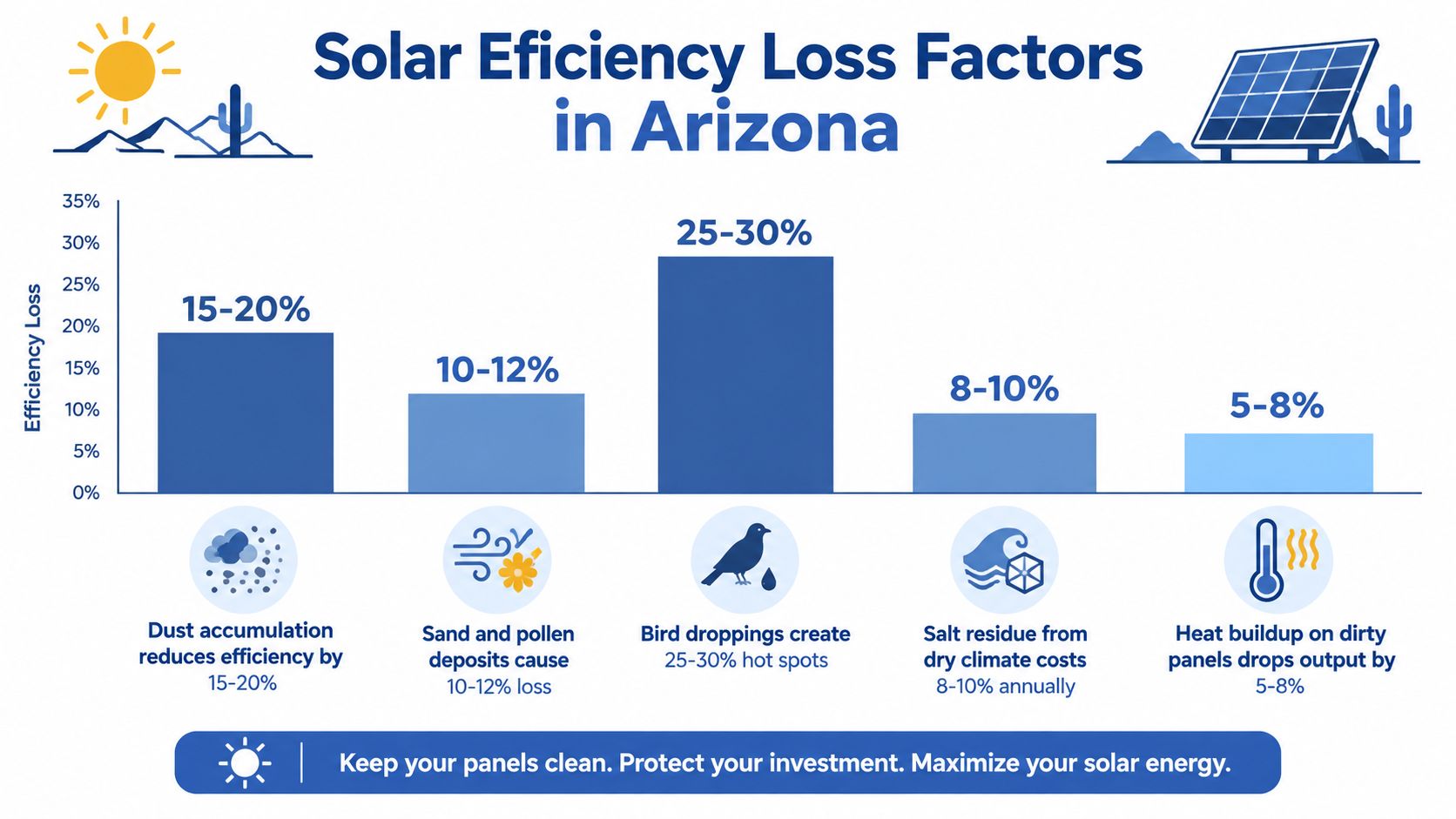
On an Arizona rooftop, a panel can look reasonably clean while producing less than its label suggests. Road dust, dry deposits, roof geometry, and high cell temperatures affect the electricity delivered from the same advertised rating. Soiling reduces the light entering the module, while heat reduces the power produced by the cells at a given light level. Both effects may occur together when dust covers the glass and the module runs hot.
Dust accumulation and panel geometry
Dust does not need to form a thick visible layer before it affects output. Fine particles scatter sunlight, while uneven deposits can create mismatch losses across electrically connected cells and modules. Horizontal or shallow arrays also shed less material because gravity and rain provide less cleaning assistance.
A peer-reviewed review reports that an Arizona study measured average soiling losses of approximately 2.02% for horizontal modules and 0.69% for modules tilted at 40 degrees. The comparison shows why flatter arrays generally retain more performance loss, as documented in this review of photovoltaic soiling effects. Roof pitch, wind exposure, nearby roads, construction, landscaping, and panel frames all influence where deposits collect.
Bird residue needs separate attention. A small opaque patch can shade part of a cell string and create uneven electrical behavior. Dry deposits can also become harder to remove, because overnight cooling and morning moisture bind particles to the glass.
Heat and the temperature coefficient
Manufacturers specify efficiency under Standard Test Conditions, using 1,000 W/m² irradiance and a 25°C cell temperature. Rooftop cells in an Arizona summer often run above that reference, even when the surrounding air feels less extreme. The relevant specification is the module's power-temperature coefficient, not ambient temperature alone.
NREL models typical crystalline-silicon modules at approximately 14% to 17% efficiency and premium monocrystalline modules at approximately 18% to 20%. Its modeled power-temperature coefficients are near −0.47% per °C for standard modules and −0.35% per °C for premium modules. If cell temperature rises 30°C above the 25°C rating point, modeled power can decline by roughly 10.5% to 14.1%, assuming linear behavior, according to NREL's PVWatts documentation.
Practical rule: Compare temperature coefficients, roof ventilation, shading, and monitoring data, not just the efficiency number printed on the panel label.
How Soiling and Temperature Change Your Output
On a hot, dusty afternoon, a panel can show a normal nameplate rating while the array delivers less energy than expected. Nameplate efficiency describes conversion under standardized conditions. Instantaneous power shows what the system produces at a specific moment. Annual energy yield reflects the combined effect of weather, heat, soiling, shading, inverter behavior, and system availability.
A useful diagnosis separates those measures and follows the evidence.
Step one, establish a clean baseline
Use the monitoring platform to find when production changed. Compare the trend with irradiance and operating temperature when those readings are available. A decline limited to the hottest part of the day points toward heat. A drop that continues through cooler mornings calls for checks of soiling, shading, and equipment.
Step two, assess the deposit
Inspect panel tilt and identify what has settled on the glass. Loose dust, soot, pollen, bird residue, and deposits left by light rain behave differently. An Arizona-focused study found that humidity and wind affect soiling. Heavy rain generally acted as a cleaning event, while light rain could remove contaminants or add to them. Researchers tested Arizona road dust, soot, and sea salt on 20-degree tilted modules at Arizona State University's Photovoltaic Reliability Laboratory, as reported in this study of soiling behavior in Arizona conditions.
Step three, account for regional exposure
Annual soiling losses can reach about 7% in parts of the United States and approach 50% in some Middle Eastern locations, according to NREL's discussion of soiling research. Phoenix will not automatically match either figure. Road dust, array position, rainfall, wind, and the time since the last wash determine the local effect.
Step four, clean and verify
After service, compare normalized production instead of judging the result by glass appearance alone. Check yield under similar irradiance and temperature. If the graph does not improve after cleaning, the loss was never on the glass, so the system may need electrical or mechanical inspection.
For practical maintenance ideas, see this guide to how to increase solar panel efficiency. Use the monitoring result to set the next service interval, rather than cleaning on appearance alone.
Why Professional Solar Panel Cleaning Matters
Roof access changes the job. A panel array may sit beside fragile roofing, electrical equipment, steep edges, and hot glass. A homeowner using a ladder, hose, or abrasive brush can create a fall risk, force water toward sensitive components, or leave mineral spotting that makes future cleaning more difficult.

Professional work also gives the technician better control over the cleaning method. Pure-water or reverse-osmosis systems reduce mineral residue, while soft brushes and appropriate agitation remove deposits without treating the glass like a concrete surface. Scratches, damaged coatings, and disturbed seals can cost more than the original cleaning job.
A published photovoltaic maintenance analysis identifies that a dust density of just 10 grams per square meter can reduce maximum power by approximately 34%, emphasizing how a thin layer can have a substantial effect, according to this analysis of dust impacts on photovoltaic performance. The same analysis identifies reduced optical transmission, increased module temperature, and accelerated corrosion as separate consequences of dust deposition.
What a careful service includes
A competent technician should inspect before applying water. That means checking the surface, frame, visible wiring, access conditions, and the type of deposit. The cleaning method should match the panels and roof rather than follow a one-size-fits-all routine.
A sound service generally involves:
- Safe access: Use appropriate fall protection and avoid walking on modules.
- Cool working conditions: Clean when panels aren't dangerously hot, reducing thermal shock and rapid drying.
- Non-abrasive tools: Use equipment designed for glass and photovoltaic surfaces.
- Pure-water rinsing: Limit mineral spotting, especially where local water leaves deposits.
- Visual reporting: Note heavy buildup, cracks, bird residue, shading, or conditions that require a solar contractor.
The difference between window care and rooftop panel care is worth understanding. Estimatty's window cleaning guide offers useful background on professional glass-cleaning technique, while solar work adds roof access, electrical awareness, and panel-specific handling.
Here is a short visual reference for the cleaning process and safety considerations:
South Mountain Window Cleaning, LLC provides solar panel cleaning alongside residential and commercial exterior cleaning, using pure-water systems and safety-trained technicians for properties across the Valley. For local service details, review solar panel cleaning in Phoenix. Cleaning won't repair a failed inverter or eliminate heat derating, but it can remove one preventable source of lost light and uneven surface buildup.
Maintenance Schedules for Arizona Conditions
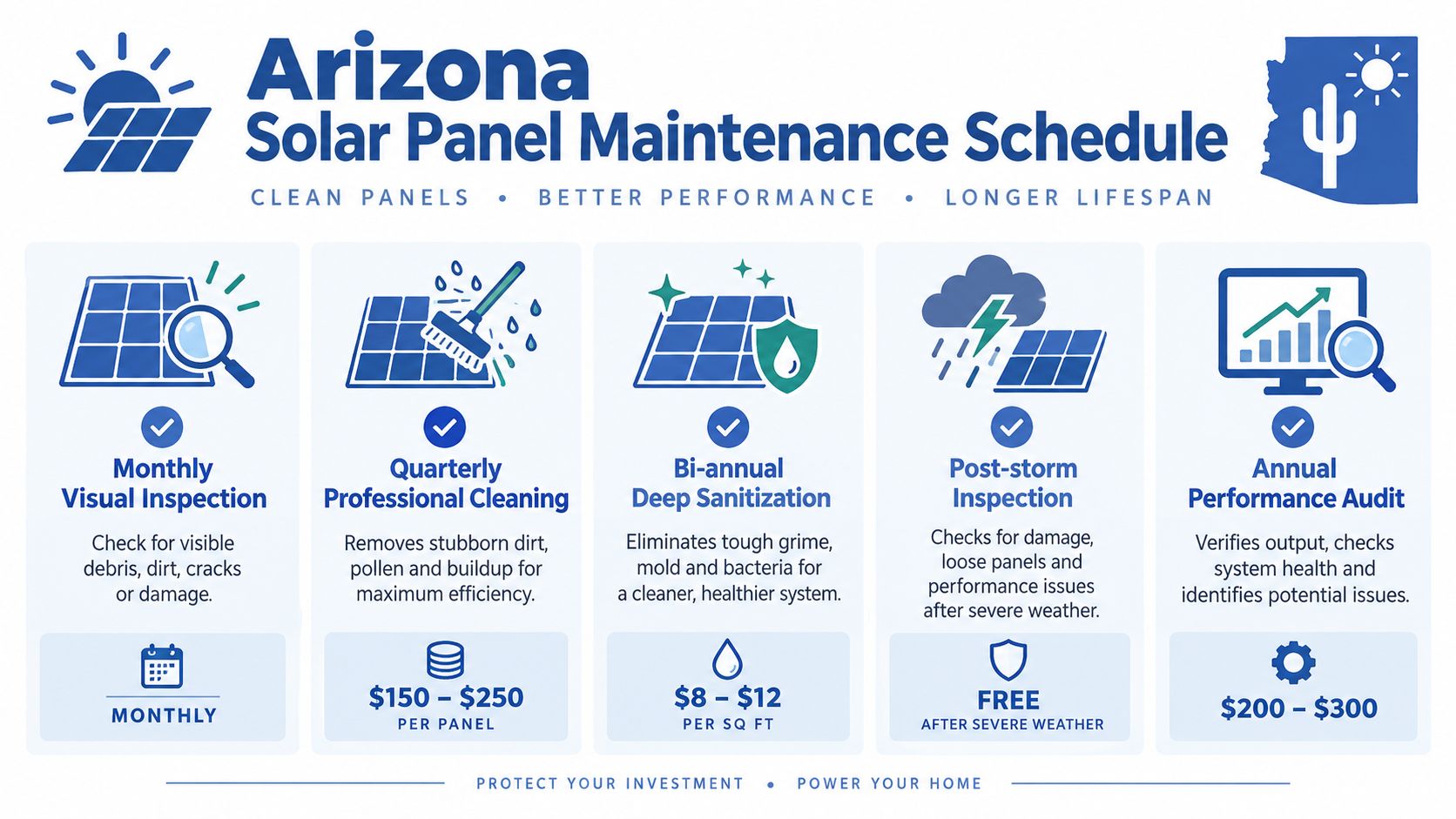
A useful maintenance schedule follows exposure, not a rigid calendar. A home beside a dusty road, a commercial roof near construction, and a shaded residential array may need different attention. The right trigger is a combination of visible buildup, monitoring data, roof position, weather, and the value of the energy being lost.
A practical seasonal rhythm
During dry periods, check the monitoring dashboard and inspect from the ground for dull glass, edge deposits, bird residue, and debris. Don't use a visual inspection as the only performance test, but don't ignore a clear change in surface condition either.
After monsoon activity, look for dust tracks, dried mud, and debris lodged around frames. A heavy rain can clean, while a light shower can leave contaminants behind. Schedule an inspection after severe weather if you see new deposits or if production changes.
Before the hottest stretch, confirm that vents and accessible equipment aren't obstructed and review the module temperature coefficient with your installer or service provider. Cleaning a heavily soiled array before extreme heat may address the combined effect of blocked light and extra surface heat.
For commercial properties, record service dates, before-and-after production observations, roof access notes, and any defects needing an electrician or solar contractor. This creates a maintenance record instead of treating each lower production alert as an isolated event.
When the schedule should change
Increase inspection frequency when a property sits near active construction, unpaved shoulders, industrial activity, or heavy landscaping. Flat and shallow arrays also deserve closer attention because deposits can remain in place longer. If output remains below its normal pattern after cleaning, stop adding cleaning visits and investigate the inverter, shading, wiring, module condition, and system age.
For broader planning ideas from another hot, high-sun market, see this solar panel maintenance Brisbane guide. The climate isn't identical to Arizona, but the scheduling principle transfers well: combine environmental exposure with measured system performance.
A local guide to how often to clean solar panels can help owners turn those observations into a recurring service plan.
Maximizing Your Solar Investment Through Regular Care
Solar panel efficiency isn't protected by a single product choice. A high-rated module can still lose useful production when dust blocks light, heat raises cell temperature, or a deposit creates uneven shading. Conversely, frequent cleaning isn't automatically worthwhile if the array stays clean, produces normally, and sits in a low-exposure location.
The practical comparison is straightforward:
- Reactive maintenance: Wait for a major production decline, then search for the cause. This can leave avoidable losses in place and may delay diagnosis.
- Routine observation: Track output, inspect after dust events, and clean when evidence supports it. This keeps maintenance tied to actual conditions.
- Broader system care: Pair cleaning with inverter checks, shade review, roof inspections, and accurate production records.
Owners planning electrical changes should also confirm that the property's service capacity matches the intended equipment. A discussion of a 100 amp to 200 amp upgrade may be useful when solar, storage, or other electrical loads are being considered, but that work belongs with a qualified electrician.
Regular care won't stop Arizona heat or prevent every system fault. It does give property owners a practical way to control surface soiling, identify changes earlier, and protect the difference between a panel's laboratory rating and its real rooftop output.
South Mountain Window Cleaning, LLC offers residential, commercial, and high-rise window washing, solar panel cleaning, and exterior cleaning across Phoenix, Scottsdale, Paradise Valley, Chandler, Tempe, and Gilbert. Visit South Mountain Window Cleaning, LLC to request a fast, free quote and arrange professional service for dusty glass, rooftop panels, and other exterior surfaces.