
You've probably seen it happen after a Phoenix-area house wash. The panels look dusty, so someone reaches for a pressure washer, turns up the machine, and expects bright, clean siding. Instead, the paint shows pale streaks, the lower courses look uneven, or a soft panel comes away with a new dent.
Power washing aluminum siding can work, but aluminum doesn't tolerate the same treatment as concrete, brick, or some newer composite materials. It's a soft, coated metal that can bend, chalk, oxidize, and lose its finish when the operator relies on impact instead of controlled cleaning. The right method depends less on the machine's maximum capability and more on the condition of the siding in front of the wand.
That distinction matters throughout the Valley. Aluminum siding became a practical residential exterior material in the late 1930s, expanded in the Northeast after World War II, and appeared in an entirely aluminum-sided Pennsylvania subdivision by 1947, according to this history of aluminum siding and safe cleaning practices. Many older homes still have painted or oxidized panels, while newer properties may have sound coated surfaces. Each one needs a different plan.
Why Aluminum Siding Needs a Different Approach
A Sun City homeowner may expect a pressure wash to make older aluminum siding look factory-new. The first aggressive pass often teaches the opposite lesson. A narrow stream can leave a bright stripe through chalky paint, and a rushed operator may dent a panel before the dirt has had time to loosen.
Aluminum siding behaves differently from vinyl and masonry because the surface itself is relatively soft and the coating may already be weathered. Vinyl can flex, brick can absorb substantial impact, and aluminum can show damage quickly when pressure is concentrated. Consumer Reports specifically warns that aluminum can dent and recommends starting with the lowest pressure and a broad nozzle. Its pressure-washer surface guidance supports the conservative approach experienced cleaners use in the field.
Field rule: The objective isn't to blast contamination off the wall. It's to loosen the contamination with detergent, then carry it away with a controlled rinse.
The coating is part of the cleaning problem
A newer factory-coated panel may respond well to a gentle wash. Older painted aluminum can have a powdery surface that transfers to your hand. Oxidized siding may look cleaner while wet, then dry with pale trails, uneven color, or visible chalking. Pressure doesn't reverse that deterioration.
That's why a single PSI recommendation is incomplete. Independent guidance commonly places aluminum siding in a low-pressure range around 1,200 to 1,500 PSI, with some guides allowing roughly 1,300 to 1,600 PSI on sound surfaces, but safe siding-washing guidance also stresses nozzle choice and distance. The same machine setting can be reasonable on intact coating and too harsh for weathered paint.
Treat condition, not material alone
The costly mistake is treating every aluminum wall like a slab. Start by identifying whether the finish is coated, painted, or visibly oxidized. Then select the detergent strength, fan width, pressure, and distance that match that condition.
For homeowners comparing service pricing, the finish condition also affects the expected result. A practical guide to aluminum siding cost can help set expectations, but no cleaning quote should promise that oxidation will disappear when the coating itself has deteriorated. Cleaning removes surface contamination. It doesn't restore failed paint.
Inspecting and Prepping the Home
A professional doesn't begin with the trigger. The inspection determines whether machine washing is appropriate at all.
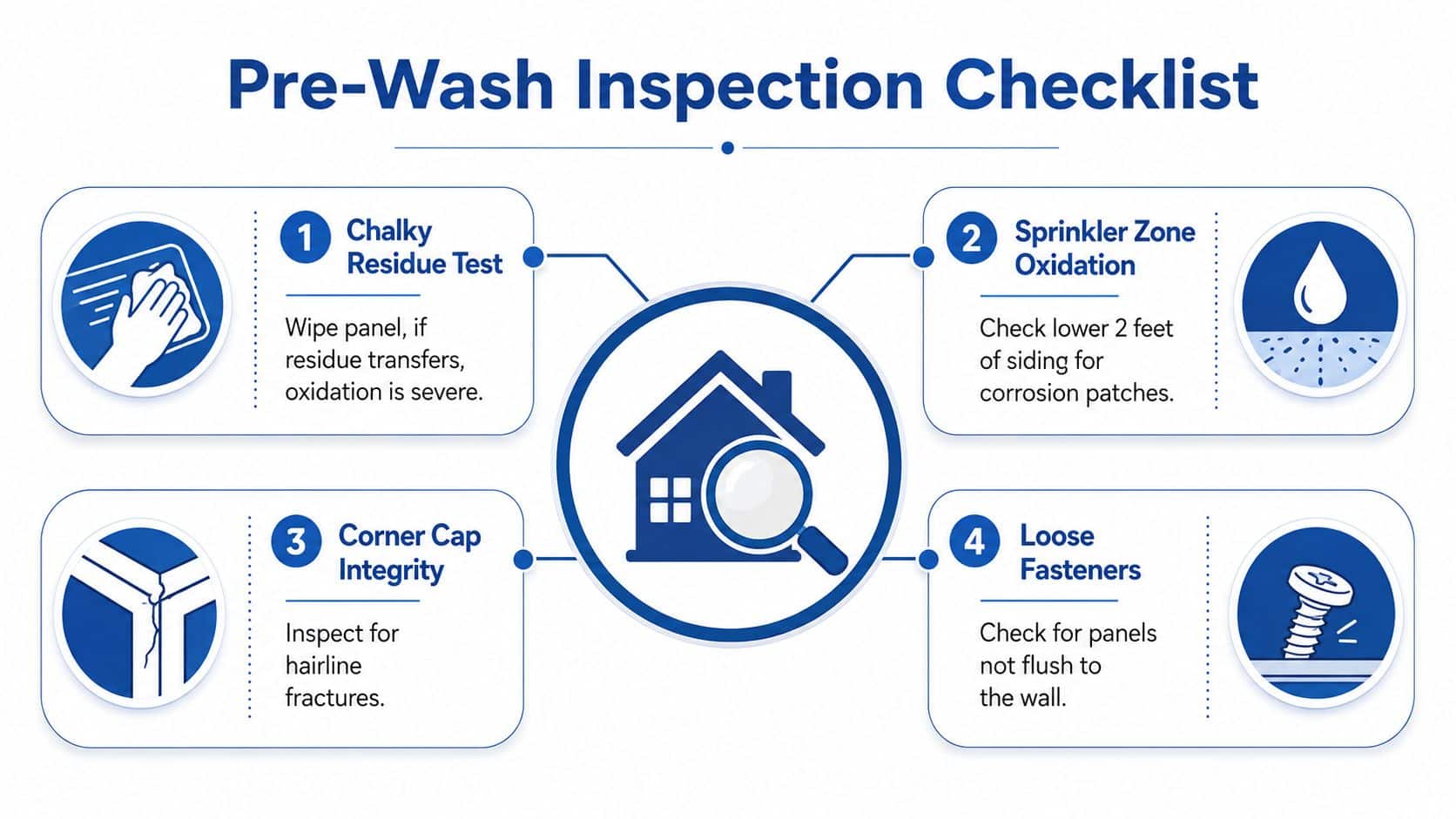
Run a clean, dry hand over an inconspicuous panel. A chalky white or gray residue means the paint is releasing oxidation. Check the lower siding near sprinkler heads, where repeated wetting can leave corrosion patches. Look closely at corner caps for hairline cracks, and press your eyes along the wall for panels that sit loose or no longer lie flush against the sheathing.
Protect the details before wet work
Close every window and verify that doors latch. Cover exterior outlets and light fixtures with plastic and tape, but don't assume a cover makes damaged electrical equipment safe. Identify doorbell cameras, weather sensors, decorative fixtures, and delicate screens before setting up the hose.
Wet nearby plants thoroughly so they're less likely to absorb cleaning solution, then move outdoor furniture and anything that could block a steady spray path. Look for oxidized steel fasteners, hose bibs, brackets, or other metal items that may create rust streaks during the wash. Those stains can run across clean siding and become a separate restoration problem.
Keep the wash path deliberate
Pre-wet the wall, then apply siding-safe detergent in manageable sections from the bottom upward. Working upward with the cleaning solution keeps the lower area wet and prevents dirty chemistry from drying in irregular trails. The dwell should be brief and controlled, never long enough for the product to dry.
Rinse from the top down with a wide fan pattern. Keep the wand angled downward and maintain a consistent distance as you move around the home. A logical path matters because random backtracking sends dirty runoff across panels that were already rinsed. The house exterior cleaning guide provides additional preparation context, but the siding condition still controls the pressure decision.
Pressure, Nozzle, and Distance Settings
Pressure is only one part of the impact reaching aluminum. A narrow nozzle concentrates the stream, a shorter distance increases force, and an upward angle can send water behind the laps. A wide fan, moderate pressure, and steady movement give the operator more control.
Independent technical guidance commonly places aluminum siding around 1,200 to 1,500 PSI, with some recommendations extending to approximately 1,600 PSI on sound painted surfaces. Other guidance allows a broader upper range up to about 2,000 PSI, but that doesn't make maximum pressure a good starting point. The aluminum siding pressure-washing guide emphasizes testing an inconspicuous area and adjusting distance and angle before increasing force.
Fan width changes the risk
A 25-degree or 40-degree tip spreads the impact across more surface area. A wider 40-degree fan is generally more forgiving, while a 25-degree tip may help with stubborn grime when the panel is sound and the operator maintains a safe standoff. A concentrated 0-degree or 15-degree stream has no place against aluminum siding.
Color coding varies by pressure-washer manufacturer, but the usual pattern is consistent: a red tip produces a very narrow 0-degree stream, a yellow tip commonly produces a 15-degree pattern, a green tip commonly produces a 25-degree pattern, and a white tip commonly produces a 40-degree pattern. Always verify the marking on the nozzle set rather than trusting color alone.
Distance is your adjustment dial
Technical cleaning guidance commonly recommends keeping the nozzle approximately 12 to 18 inches from the surface, while practical product guidance recommends at least 18 inches. For residential aluminum, maintaining roughly 18 to 24 inches gives more room to observe the finish and reduce impact, especially with a gas machine.
| Siding Condition | PSI Range | Nozzle Degree | Standoff Distance |
|---|---|---|---|
| Sound coated panel | 1,300 to 1,600 PSI | 40° | 18 to 24 inches |
| Painted, lightly weathered panel | 1,200 to 1,500 PSI | 25° to 40° | 18 to 24 inches |
| Oxidized or loose panel | Under 1,200 PSI | 40° or wider | At least 18 inches |
Electric units often operate in a more manageable range, while gas machines may produce substantially more pressure than aluminum needs. The house pressure-washing service information is useful for comparing broader exterior applications, but aluminum should remain a low-pressure job.
For a south-facing wall that bakes in Phoenix sun, use a wider fan, shorter sections, and more frequent re-wetting. A shaded north elevation may hold moisture and biological growth, but that still calls for detergent dwell, not a tighter jet.
Matching the Wash to Your Siding Condition
The safest setting is the one that cleans without changing the finish. Divide the home into three practical categories before choosing the method.
Newer coated aluminum usually offers the most predictable response. On sound factory-baked enamel or a stable repaint, a 40-degree nozzle around 1,500 PSI can be appropriate, with the wand angled slightly downward and held approximately 18 to 24 inches away. Keep the passes moving and test a hidden section first.
Older painted aluminum requires more restraint. If a dry wipe leaves faint powder on your hand, use a wider fan, soften the pressure toward 1,200 to 1,400 PSI, and allow detergent to do more of the work. A low-pressure rinse after adequate dwell is safer than trying to scour chalk from the coating.
Visibly oxidized aluminum has crossed into restoration territory. Dull white color, pitting, or streaks that bleed when wet indicate that the surface itself has changed. Stay below 1,200 PSI, use a surfactant-rich cleaner, and avoid aggressive brushing. The chalk may lift unevenly, but pressure alone can't restore the original finish.
| Siding Condition | PSI Range | Nozzle | Distance | Detergent Strategy |
|---|---|---|---|---|
| Newer coated | Around 1,500 PSI | 40° | 18 to 24 inches | Mild siding-safe wash |
| Older painted | 1,200 to 1,400 PSI | Wide fan | 18 to 24 inches | Longer controlled dwell |
| Visibly oxidized | Under 1,200 PSI | 40° or wider | At least 18 inches | Surfactant-rich cleaner, no aggressive scrubbing |
Use a small test before committing
Choose a shaded corner behind a gate or near a less visible elevation. Apply the planned detergent, rinse with the selected nozzle, and let the area dry. Check for color transfer, bright spray lines, roughened coating, or a contrast between the test area and the surrounding panel.
Climate preparation also matters beyond the wash itself. Homeowners managing exterior materials in a different environment can review this resource on how to prepare your home for Utah climate for broader maintenance planning. For Valley properties, the same principle applies: match the routine to exposure, finish age, irrigation, and dust.
If mold or organic staining is part of the problem, don't automatically increase pressure. A targeted approach to removing mold from siding is usually more controlled than forcing the stain off with impact.
Common Mistakes That Damage Siding
Most aluminum failures aren't mysterious. They come from predictable choices that concentrate force, trap water, or let chemistry dry on the wall.
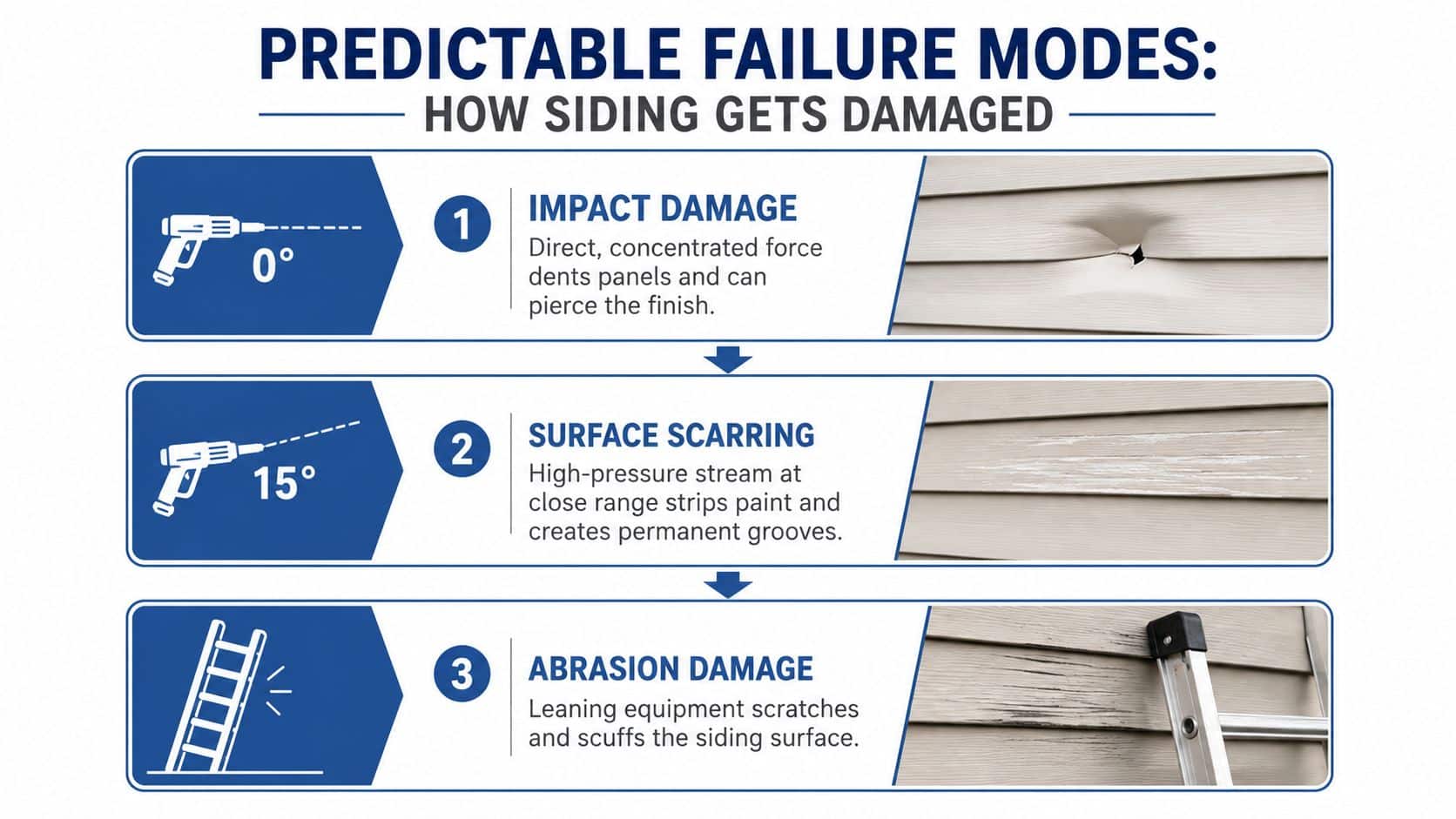
A 0-degree tip can etch the finish in a single pass. A 15-degree tip held close can create a permanent groove or a bright scar that no amount of ordinary rinsing will hide. The operator may remove the stain, but the panel will still show where the stream traveled.
Water intrusion starts at the angle
Spraying upward under panel laps, corner joints, windows, or doors can force water behind the cladding. The wall may look dry from the outside while moisture remains behind the siding. Keep the spray moving downward and never use a tight stream to probe a seam.
Leaving detergent on the wall creates a different problem. On a hot Phoenix afternoon, residue can dry quickly and leave ghost lines along every lap. Minerals and soap become harder to remove after they bake onto the surface, so rinse systematically before moving to another elevation.
Chemistry can be too aggressive
Straight chlorine bleach or highly concentrated cleaning chemistry can strip oxidation unevenly and leave aluminum duller. Strong products don't compensate for poor technique. An aluminum-safe surfactant and controlled dwell usually provide a more even result with less disruption to the coating.
A spray cone that pauses in one place can dent a soft panel, especially if the course is already loose. Pressure washing a sun-baked wall can also flash-dry detergent and produce water marks before the operator notices. Work in shade where possible, shorten the section size, and re-wet any area that starts drying.
Damage often appears after the wall dries. A surface that looks acceptable under wet sheen can reveal streaks, chalk transfer, or lap residue later.
Never lean ladders, hoses, or equipment directly against the siding. Scratches and scuffs are abrasion damage, not cleaning results. Use safe access equipment and keep the wand positioned from stable ground whenever possible.
Detergents, Dwell Time, and Rinsing Best Practices
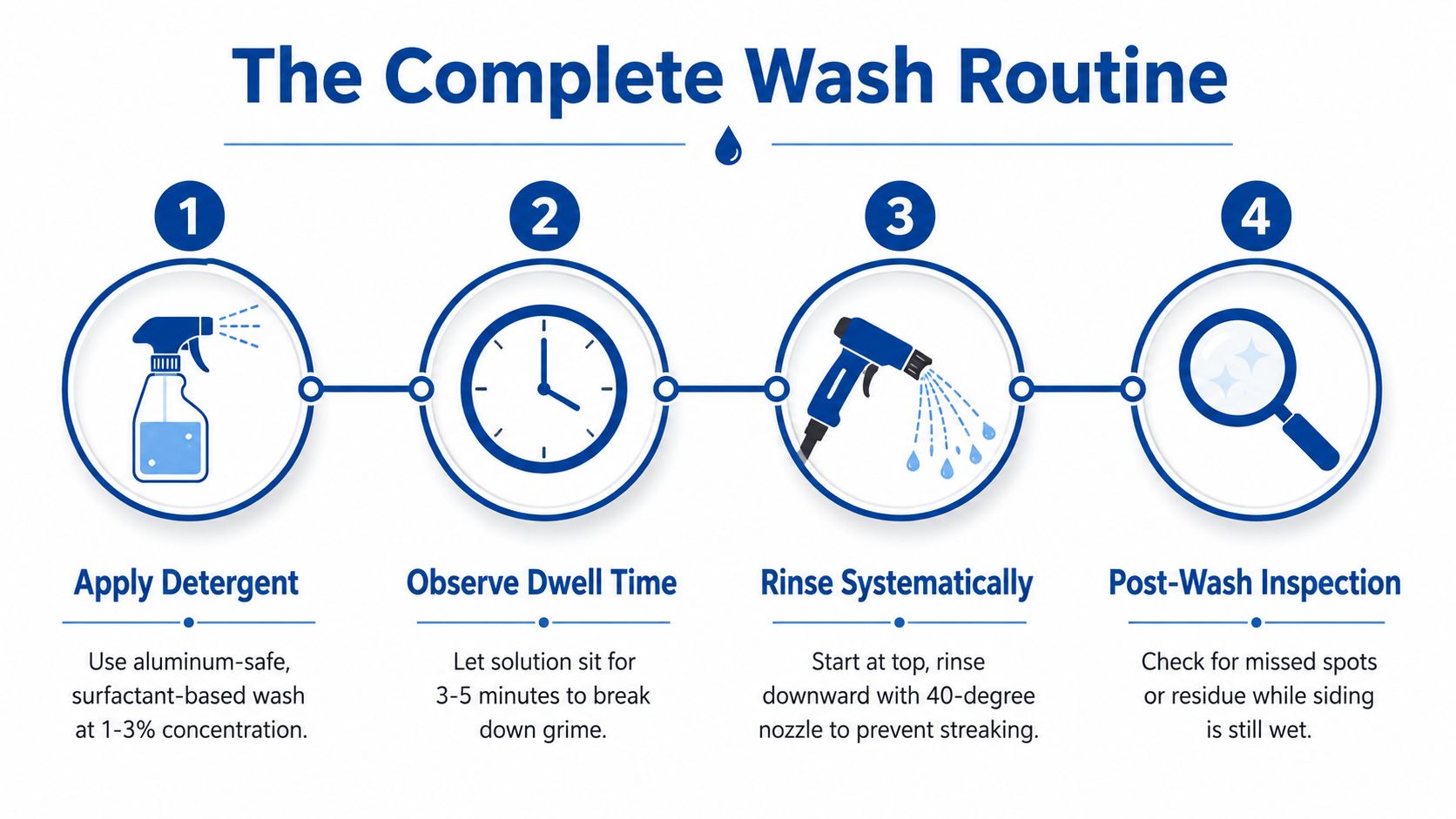
A good aluminum wash uses chemistry to loosen soil, not pressure to pulverize it. Choose an aluminum-safe, surfactant-based cleaner and follow the product label. A mild 1 to 3 percent mix is a practical benchmark for controlled house washing, while straight bleach and sodium hydroxide can pit or discolor aluminum. This illustrated aluminum siding cleaning guide also supports pre-wetting, section work, and careful rinsing.
Apply the solution from the bottom upward. That keeps the lower area wet and helps prevent uneven dry lines as the cleaner travels across the wall. Work in small sections, especially on sun-exposed elevations.
Give the chemistry time, not extra force
Allow approximately 5 to 10 minutes of dwell when conditions permit, but don't let the solution dry. Some product guidance presents a shorter 3 to 5 minute dwell for routine grime, so the label and surface response should control. Re-wet panels that begin to dry in direct sun.
Use a soft brush for isolated heavy soil. Don't use wire brushes, abrasive pads, or extra pressure to attack oxidation. Those approaches can scratch the coating and spread chalk unevenly.
Rinse from the top downward with the wand angled approximately 30 to 45 degrees downward. A 40-degree fan is a practical choice for broad rinsing, and narrow vertical passes help prevent soap from drying along a lap. Keep the spray directed away from seams rather than underneath them.
A clear-water rinse should also reach windows, light fixtures, screens, and landscaping edges. Walk the perimeter while the siding is still damp. That's when missed oxidation lines, drip marks, residue, and lifted caulk are easiest to identify.
The complete sequence is easier to visualize in this short demonstration:
When to Call a Professional Power Washing Service
Step away from the wand when a dry hand test leaves heavy chalk, panels are visibly dented or loose, or paint is peeling in sheets. Two-story homes also add risk because the operator has less control over distance and angle from a ladder or extension wand. Dense landscaping, screens, outdoor furniture, and delicate fixtures can make a seemingly simple wall difficult to reach safely.
A professional crew can use a soft-wash system or downstream injector to apply detergent at low pressure, then rinse without relying on a harsh stream. That's especially useful when the siding's finish is already compromised. Liability coverage also matters when water reaches windows, electrical fixtures, neighboring property, or client belongings.
Ask for a method, not just a price
Before work begins, request a written scope that identifies:
- Cleaning chemistry: Ask what detergent will touch the aluminum and whether it's suitable for painted or oxidized panels.
- Wash method: Confirm whether the crew plans a soft wash, low-pressure rinse, or a higher-pressure approach.
- Protection plan: Make sure windows, fixtures, plants, screens, and outdoor furniture are included.
- Condition expectations: Ask whether oxidation, chalking, dents, and peeling paint will limit the final appearance.
South Mountain Window Cleaning provides residential, commercial, and high-rise window washing in Phoenix, Scottsdale, Paradise Valley, Chandler, Tempe, Gilbert, and throughout the Valley. Its service area also includes Mesa, Glendale, Peoria, Goodyear, Buckeye, Sun City, Queen Creek, Apache Junction, Laveen, Ahwatukee, and Surprise. The company uses uniformed, insured technicians and backs aluminum siding washing with a streak-free guarantee.
A reliable crew should also recognize when power washing isn't the right answer. If oxidation is severe, gentle detergent application and a low-pressure rinse may preserve more of the remaining finish than a forceful cleaning attempt. A quick inspection call can save panels, paint, and a Saturday.
South Mountain Window Cleaning, LLC offers residential and commercial exterior cleaning, including low-pressure house washing, power washing, and window care for Valley properties with delicate aluminum siding. Visit South Mountain Window Cleaning, LLC to request a written scope and a fast quote for a condition-appropriate wash.