
Your project is almost done. The painter has left, the flooring crew is finished, and the punch list is getting shorter. Then the sunlight hits the glass and every window shows the same problem: dust baked onto the surface, label adhesive, silicone smears, paint specks, and streaks that make a new property look unfinished.
That's the point where standard window washing stops being enough. Post construction window cleaning is its own trade task. It protects the glass, improves final presentation, and helps you avoid damage that often happens when someone tries to “just wipe it down” with the wrong tools.
For property managers and building owners in Phoenix, Scottsdale, Paradise Valley, Chandler, Tempe, and Gilbert, Arizona, the stakes are even higher. Sun exposure hardens residue fast. Dust gets everywhere. Hard water leaves its own calling card if the cleaning crew uses poor technique. A building can be brand new and still look neglected if the glass isn't handled correctly.
The Final Hurdle to a Flawless Finish
A finished building doesn't feel finished until the glass is clean. You can have fresh paint, polished floors, and perfect landscaping, but if the windows still carry jobsite residue, the entire property looks unfinished. That last layer of grime changes how tenants, buyers, inspectors, and owners see the work.
Post construction window cleaning is different from routine maintenance because the contamination is different. Routine cleaning removes everyday soil, fingerprints, and weather film. Construction cleanup deals with paint overspray, silicone, adhesive residue, drywall dust, masonry debris, and sticker remnants that can damage glass if they're handled carelessly.
That matters because new windows are vulnerable at handoff. Fine grit sits on the surface and inside frame edges. If someone scrubs before removing that dry debris, they can drag abrasive particles across the glass. A window that looked salvageable before cleaning can come out scratched after a rushed attempt.
A proper final clean also affects turnover. If you're preparing a retail center, office suite, condo tower, or remodeled home for occupancy, the windows are part of the first impression. Clean glass makes the space look brighter, sharper, and ready. Dirty glass makes the whole job feel incomplete.
Practical rule: If construction residue is still visible, the jobsite isn't finished from the customer's point of view.
The other mistake is treating this as an optional add-on. It isn't. It's part of protecting the window package you already paid for. If you want a deeper look at how this specialty service works in the field, this overview of cleaning after construction lays out why the final glass cleanup needs its own process.
In Arizona, where direct sun exposes every flaw and airborne dust settles fast, cutting corners on this final phase usually shows immediately.
The Anatomy of Post Construction Grime
Not all residue comes off the same way. That's why post construction window cleaning starts with identifying what's on the glass, not grabbing a towel and a spray bottle.
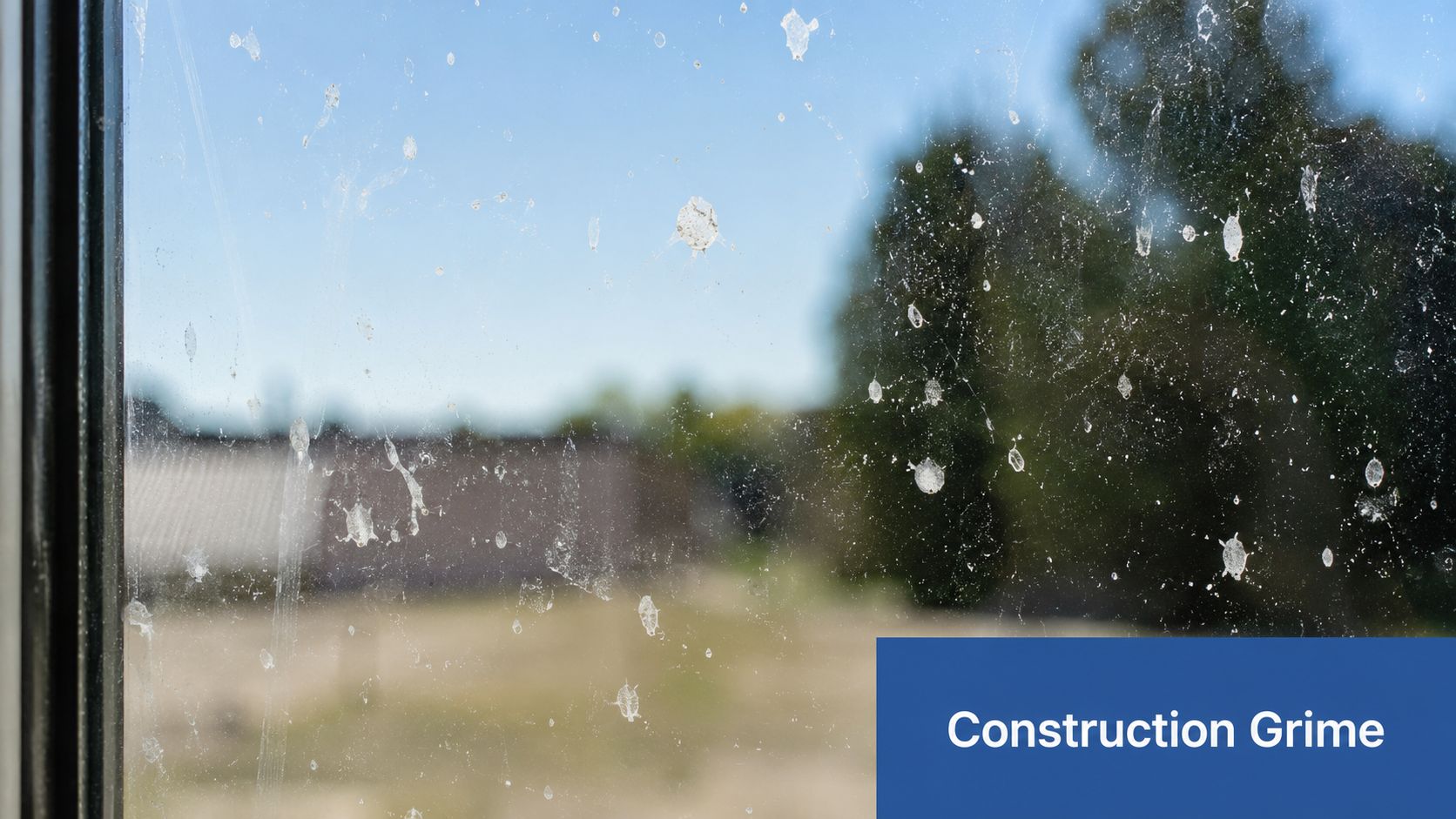
What's actually stuck to the glass
The common offenders are easy to recognize once you know what to look for:
- Paint overspray often appears as tiny dots or a rough haze across the pane.
- Silicone residue leaves slick smears or cured beads near edges where installers sealed frames.
- Drywall dust creates a fine abrasive film that settles on glass, tracks, and gaskets.
- Adhesive film from stickers and labels turns gummy, then hardens in the sun.
These materials behave differently under a blade, a scrubber, or a solvent. Paint may shear off cleanly if softened properly. Silicone often resists scraping and can smear before it releases. Adhesive can look removed until heat brings the ghost image back.
Why Arizona makes it harder
Arizona's climate changes the job. Strong sun bakes residue onto the surface. Dust keeps landing while other trades are still working. Hard water can add mineral spotting if anyone rinses carelessly during cleanup. What might be a moderate cleaning problem in a mild climate becomes a delicate removal job here.
One problem property managers often miss is timing. According to this industry discussion of post-construction contaminants and glass damage risk, post-construction window cleaning requires removal of contaminants such as silicone residue, paint overspray, drywall dust, and adhesive film that can etch glass if left untreated beyond 72 hours. The same source notes that industry standards call for mechanical scraping followed by neutral pH cleaning to help prevent permanent damage, and that on high-rise surfaces, dust accumulation can be 3 to 5 times higher than ground level because of wind dynamics.
That's one reason delays cost more than appearance. Residue gets harder to remove, and the cleaning becomes less forgiving.
Silicone and adhesive are where rushed crews usually get into trouble. They either leave residue behind, or they get aggressive and mark the glass.
Residue that isn't obvious at first glance
The toughest post construction jobs often have a second layer of contamination that only shows in angled light. You remove the visible debris, then mineral film, adhesive shadowing, or sealant haze appears. This is especially common around edges, lower panes, and any area exposed to sprinkler mist or hard-water runoff.
If your property already shows spotting or hazing beyond obvious construction debris, it helps to understand how mineral deposits on glass complicate the finish. A pane can look “mostly clean” until afternoon sun reveals what a basic wash missed.
A Professional Step by Step Cleaning Process
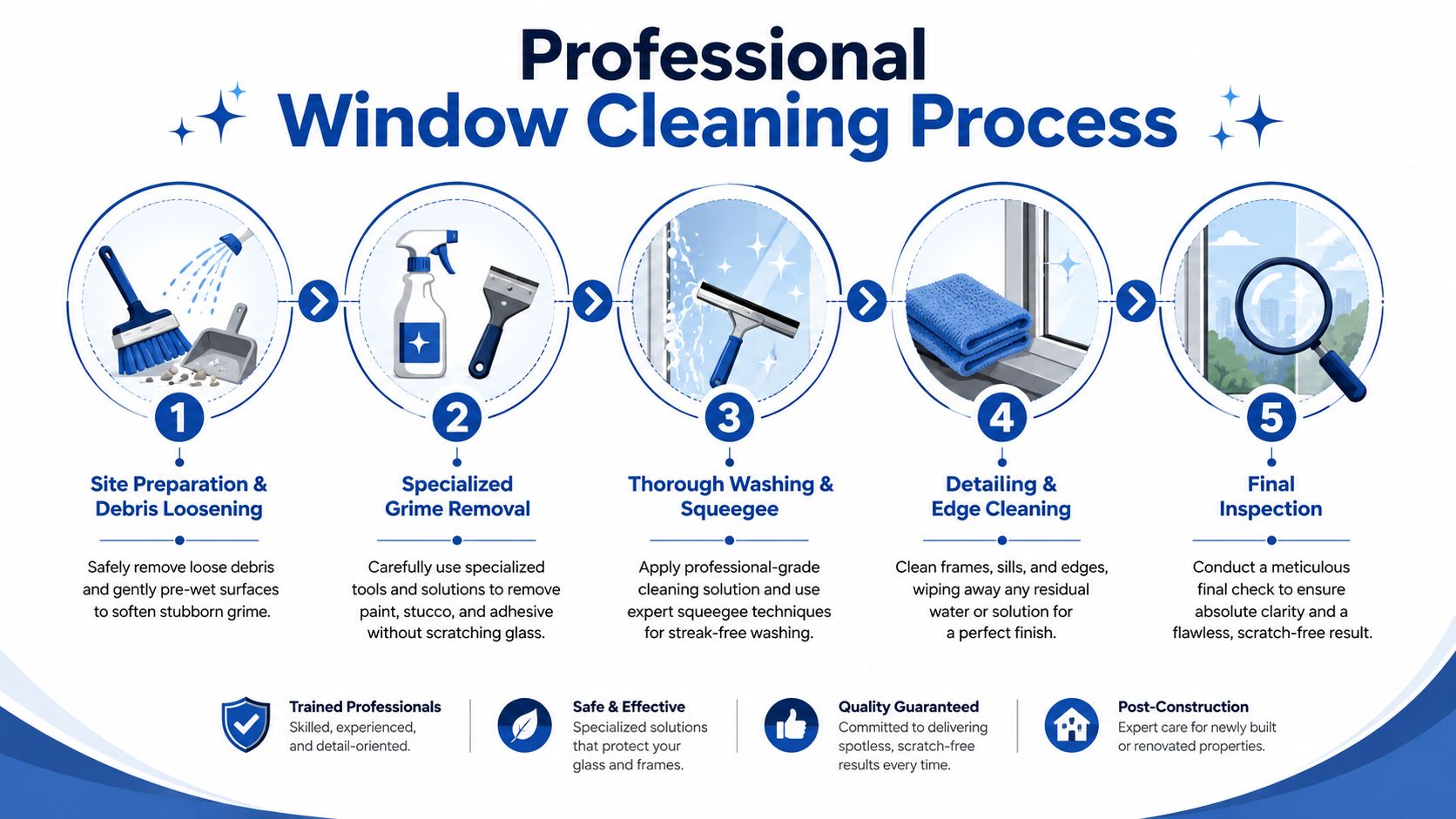
A good result comes from sequence, not effort. On post construction work, the order matters as much as the tools.
Inspection before any glass is touched
The first task is inspection. The crew checks the glass condition, frame condition, access points, and residue type. During this inspection, an experienced technician looks for signs that change the method, such as tempered glass concerns, fabrication debris, damaged seals, or residue that shouldn't be attacked with a razor.
This stage also decides whether the pane needs scraping, solvent work, polishing, or a combination. Skipping inspection is how inexperienced cleaners turn a cleanup job into a replacement claim.
A quick walk-through with the property manager helps here. It sets expectations and identifies priority elevations, storefronts, lobby glass, model units, or final-walkthrough areas.
Dry removal of loose particulates
Before any wet contact cleaning starts, dry debris has to come off. That means vacuuming tracks and sills, brushing frame edges, and removing loose drywall dust, sand, and paint particles from the glass surface.
This isn't a cosmetic step. It's the foundation of a scratch-free result. According to this breakdown of the three-phase post-construction cleaning methodology, the correct sequence is dry removal of loose particulates, chemical softening of bonded residues followed by gentle scraping, and repeated wash-and-squeegee cycles with edge detailing. The same source states that skipping dry particulate removal accounts for up to 68% of post-construction scratches due to abrasive drag.
That tracks with what technicians see in the field. Grit is what does the hidden damage.
Field note: If dust is still sitting in the corners and gaskets, the window isn't ready for a scrubber yet.
Controlled softening and residue removal
Once the loose contamination is gone, the bonded material gets treated. During this process, professionals separate residue types instead of using brute force.
Paint specks and cured adhesive often need dwell time with the right glass-safe cleaner or approved solvent before removal. Silicone can require more patience and a different approach altogether. The blade angle matters. Lubrication matters. Pressure matters. The scraper should move parallel to the surface, not dig into it.
For some residues, scraping isn't the best answer. Training material on post-construction polishing methods and hidden residue removal points out an overlooked problem: improper polishing with dry or wet wool can still scratch glass if the technician uses aggressive pressure. The same material notes that glazing compounds, silicone, and paint glue may require a polisher rather than a scraper, especially when fabrication debris makes razor work risky.
That's the trade-off. A scraper is fast when conditions are right. A polishing approach is slower but sometimes safer and more complete.
To see what a professional workflow looks like in motion, this short training-style video is useful:
Repeated washing and edge detailing
After the bonded residue is removed, the glass still isn't done. The pane gets washed, squeegeed, and checked repeatedly. Then the crew details the edges, corners, seals, and surrounding frames where debris likes to hide.
That edge work is where many average cleanings fall apart. Dust trapped in gaskets reappears on the next pass. Water from frames drips back onto the glass. A pane looks clean for five minutes, then dries with lines and specks.
A proper finish usually includes attention to:
- Frame edges and corners where dust packs tight
- Tracks and sills that release debris during later passes
- Sticker zones that hold adhesive shadowing
- Sunlit inspection angles that reveal haze and drag marks
Final quality check
The last pass is an inspection, not a formality. The crew checks for missed residue, blade chatter, smears, runoff, and reflective haze. Different light angles matter, especially in Arizona. Morning light and late afternoon light can expose completely different defects.
A professional result doesn't just mean the glass looks cleaner. It means the pane is cleared without adding damage, the edges are finished, and the property is ready to show.
Essential Tools and Critical Safety Protocols
The wrong tool can ruin a pane fast. The wrong access method can hurt someone even faster. That's why post construction window cleaning belongs with trained technicians, especially on commercial properties and anything high up.
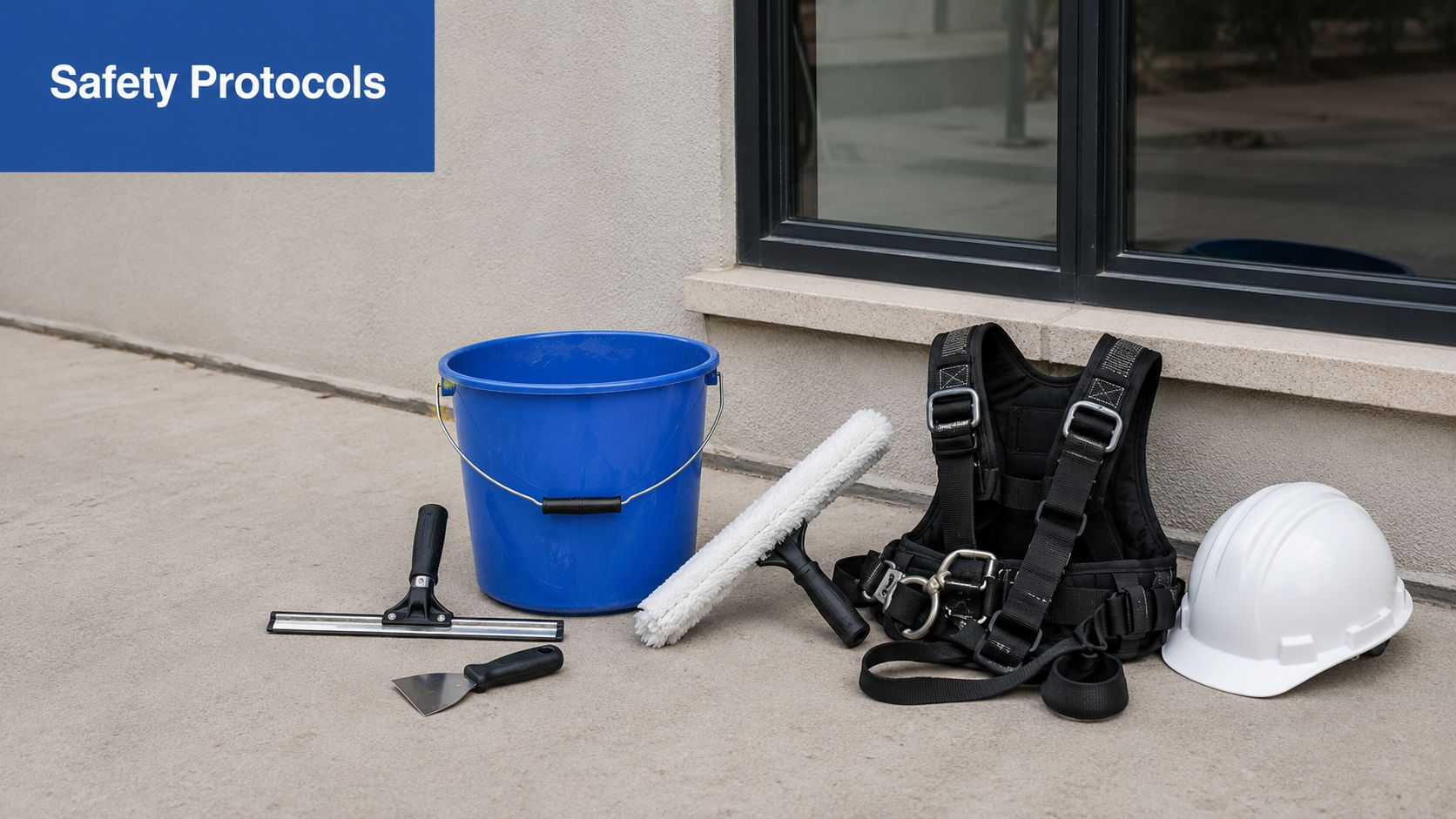
Tools that actually belong on the job
Professional crews don't show up with paper towels and household glass spray. They bring tools matched to the contamination and the access conditions.
A typical post construction setup may include:
- Precision scrapers and replacement blades for bonded paint and adhesive, used only when the surface condition allows it
- Non-abrasive scrub pads and white pads for controlled agitation
- Wet-dry vacuums to remove loose grit before contact cleaning
- Professional squeegees and detailing towels for clean finish work
- Glass-safe solvents and neutral cleaners for silicone, label residue, and construction film
- Pure-water systems where spot-free rinsing helps avoid mineral residue in Arizona's hard-water environment
Even ladders deserve more thought than most crews give them. If your maintenance team is reviewing basic access equipment for low-level work, this guide to buying a 20 ft ladder is a practical reference on selection and setup considerations. It doesn't replace jobsite training, but it helps explain why proper equipment choice matters.
Safety isn't a side issue
For upper-level and high-rise work, access and fall protection drive the plan. According to this summary of high-rise post-construction window washing safety protocols, certified technicians should use OSHA-compliant fall protection systems, including dual-point anchorage ropes and harnesses rated for 5,000 lbs, because injury rates in window cleaning exceed 12 per 100,000 workers annually, and falls account for 68% of fatal incidents in the industry.
That's why a property manager shouldn't accept vague answers about safety. “We've done this before” isn't a safety plan.
On elevated glass, the question isn't whether a crew can reach it. The question is whether they can reach it legally, safely, and without exposing the property owner to avoidable liability.
What experienced crews plan before they start
On a serious project, safety planning includes more than harnesses. It includes site review, tie-off strategy, access points, glass sequence, pedestrian control, weather awareness, and communication with building management.
If your property includes upper floors, suspended access, or specialty facades, this overview of equipment for high-rise window cleaners gives a useful look at the gear and methods involved. The big takeaway is simple: access equipment is part of the service, not an afterthought.
Budgeting and Timelines for Your Project
Property managers usually ask two questions first. What's this going to cost, and when can it be done?
The short answer is that post construction window cleaning costs more than maintenance cleaning because it takes longer, requires more skill, and carries more risk. You're not paying for soap and a squeegee. You're paying for inspection, debris removal, residue treatment, careful detailing, and a method that reduces the chance of scratching brand-new glass.
Why pricing is higher than a standard clean
The most useful benchmark is this: post-construction window cleaning typically costs 2 to 3 times more than standard window cleaning, with many jobs averaging between $12 and $20 per window in 2026, according to this breakdown of post-construction window cleaning prices. The same source ties that pricing to intensive labor and specialized tools required to remove debris such as paint overspray and adhesive residue.
That range makes sense when you consider what affects the quote.
| Project factor | Why it changes price |
|---|---|
| Window count | More panes mean more labor and more detailing time |
| Access difficulty | Upper floors, tight courtyards, and lift needs increase complexity |
| Debris severity | Heavy paint, silicone, or hardened adhesive slows removal |
| Frame and track condition | Dirty tracks and corners add labor beyond the glass itself |
| Scheduling pressure | Tight handoff deadlines may require larger crews or phased work |
Timing matters as much as budget
The cheapest cleaning is often the one scheduled at the right point in the project. If you clean too early, other trades re-contaminate the glass. If you wait too long, residue hardens and becomes harder to remove.
The practical window is after the dusty trades are done and before final walkthroughs, tenant move-in, or marketing photography. For phased commercial projects, that may mean cleaning the lobby and storefront first, then finishing upper floors or side elevations once other work clears.
A few planning habits help avoid rework:
- Coordinate with the GC or site lead so glass isn't cleaned before sanding, cutting, or paint touchups are finished.
- Flag irrigation and hard-water exposure if exterior windows sit near active sprinklers.
- Identify priority areas early such as leasing offices, showroom glass, and entry doors.
- Request a written scope so everyone agrees on what's included.
If you're comparing this specialty service against routine cleaning costs, this guide on the average cost of window cleaning helps clarify why post-construction work sits in a different category.
The main budgeting mistake is assuming every pane takes the same amount of effort. On post-construction work, one adhesive-coated storefront door can take more time than several clean maintenance windows.
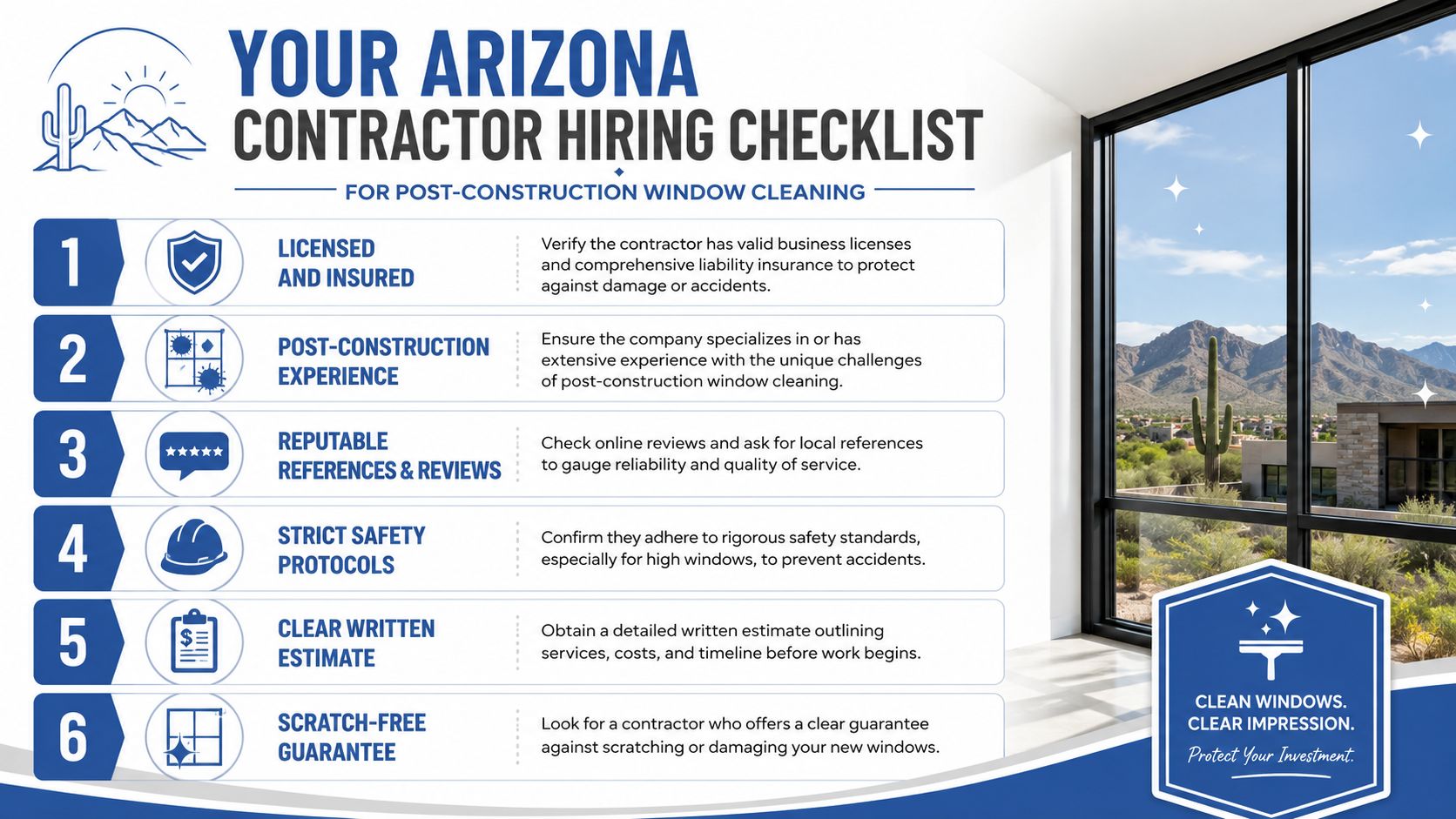
Your Arizona Contractor Hiring Checklist
The biggest risk in post construction window cleaning isn't usually the dirt. It's hiring the wrong crew to remove it. A low bid looks attractive until someone scratches glass, ignores safety requirements, or leaves behind residue that shows up the moment the afternoon sun hits the building.
What to verify before you approve the job
Use a checklist, not gut feel. Facility teams already apply structured vetting to janitorial, maintenance, and specialty vendors. This article on vetting facility service providers is a good reminder that documentation, insurance, and scope clarity matter as much as the sales pitch.
For Arizona post-construction glass, the most important checks are straightforward:
- Confirm licensing, bonding, and insurance. Ask for proof, not a verbal assurance. For commercial and high-risk work, substantial liability coverage matters. A company carrying a $2 million insurance policy gives a property manager a stronger layer of protection if something goes wrong.
- Ask specifically about post-construction experience. Routine storefront work doesn't automatically translate to paint overspray, cured silicone, or debris trapped in new frames.
- Review the safety plan for work at height. If the property includes upper levels or difficult access, the contractor should explain how they'll work safely and what equipment they'll use.
- Request a written scope and exclusions. You want clarity on glass, frames, tracks, screens, access limitations, and any stain-removal boundaries before the work starts.
- Look for a satisfaction guarantee. A contractor who stands behind the finished result is easier to work with if punch-list issues appear after inspection.
Questions that reveal whether the company knows the trade
A few direct questions sort experienced contractors from general cleaners fast.
Ask things like:
- How do you remove loose construction dust before touching the glass?
- How do you decide when a scraper is safe and when polishing is better?
- What do you do with silicone residue and adhesive shadowing in direct sun?
- How do you protect surrounding finishes, frames, and pedestrian areas?
- What happens if we find issues during the final walkthrough?
The answers should sound procedural, not improvised. You want specifics on inspection, debris removal, residue treatment, detailing, and quality control.
Hiring standard: If a contractor talks only about “making the windows sparkle,” they may be a maintenance cleaner. If they talk about residue type, blade safety, access planning, and liability protection, they understand post-construction work.
Why local Arizona experience matters
Arizona adds pressure to every phase of this job. Sun speeds up adhesion. Dust doesn't stay put. Hard water can create a second cleanup issue if rinse methods are sloppy. A contractor who understands local conditions is less likely to treat this like a generic cleaning appointment.
For managers in Phoenix, Scottsdale, Paradise Valley, Chandler, Tempe, and Gilbert, Arizona, it also helps to work with a company that can handle residential, commercial, and high rise window washing under one roof. That consistency matters when your portfolio includes multiple property types and different access challenges.
The safest hire is usually the company that makes the process look methodical, documents its protections, and backs the work with a clear guarantee.
If you need an experienced team for residential, commercial, or high rise window washing in Phoenix, Scottsdale, Paradise Valley, Chandler, Tempe, or Gilbert, South Mountain Window Cleaning, LLC is licensed, bonded, insured, backed by a $2 million insurance policy, and committed to a 100% satisfaction guarantee. Reach out for a fast, free quote and get your post-construction glass cleaned the right way in Arizona's dust, sun, and hard-water conditions.