
You've wiped the bathroom mirror, put the cleaner away, and turned on the vanity lights. The middle looks clear, but there's still a cloudy strip beside the frame. Before spraying it again, check whether you're looking at surface film or damage behind the glass.
A small, modern mirror within safe reach is a reasonable DIY job. Large panels, difficult access, and darkening edges deserve a professional assessment. For scheduling, start with how the room gets used, not a calendar alone. A guest bathroom and a busy fitness room don't need the same mirror cleaning services.
What Mirror Cleaning Services Actually Cover
A bathroom mirror can look clean straight on and still show toothpaste mist, makeup film, and drag marks when the light hits its edge. A useful professional visit addresses those details without treating the mirror like an exterior window that can be freely wetted.
At home, the scope can include vanity mirrors, wardrobe doors, home-gym walls, and decorative pieces. In commercial buildings, it may include restroom banks, lobby feature walls, elevator cabins, fitness rooms, salon stations, and hotel suites. Name each surface when booking, because an exterior-window appointment doesn't automatically describe the indoor work.
Match the service to the room
South Mountain Window Cleaning, LLC includes mirror cleaning among its residential services, alongside inside-and-out window cleaning, screen cleaning, screen repair, track cleaning, window tinting, ceiling fan cleaning, and coach light cleaning. Our explanation of what professional window cleaning includes helps homeowners separate the tasks they want included in a visit.
The following intervals are suggested starting points, not fixed requirements. Shorten or lengthen the interval after checking how the glass looks between visits.
Mirror settings, soil, and how often to book
| Setting | Main soil | Suggested cadence | What moves the quote |
|---|---|---|---|
| Home bathrooms | Steam, toothpaste, makeup | Every 2 to 4 weeks | Mirror count and hard water |
| Wardrobes and home gyms | Dust, sweat film, fingerprints | Monthly to quarterly | Panel size and reach |
| Office and lobby walls | Hand oil and settled dust | Monthly or quarterly | Height and after-hours access |
| Commercial restrooms and gyms | Soap film and constant touch | Weekly or every two weeks | Fixture count and open hours |
| Hotels and salons | Product overspray | Weekly to monthly | Room count and coating limits |
| One-time detail | Construction dust or a grand opening | Single visit | Soil load and deadline |
Get a scope before a price
There's no honest flat rate for every mirror. Panel area, ladder or lift access, mineral crust, product buildup, and combining mirrors with window cleaning all affect the work. A useful written quote identifies the surfaces, proposed cleaning method, access arrangements, and return interval.
Glass maintenance serves homes and businesses alike. Dataintelo's glass-cleaning services report valued the global market at $4.78 billion in 2025, with commercial services representing $2.51 billion, or 52.3% of revenue.
Our window-cleaning work spans a 1-bedroom condo to a 100,000-square-foot commercial property. Commercial window maintenance is available weekly, monthly, quarterly, or as a one-time service. Use the setting that matches your property to describe the mirror work, then confirm its own cadence in writing.
Protecting the Silvered Backing in Every Mirror Clean
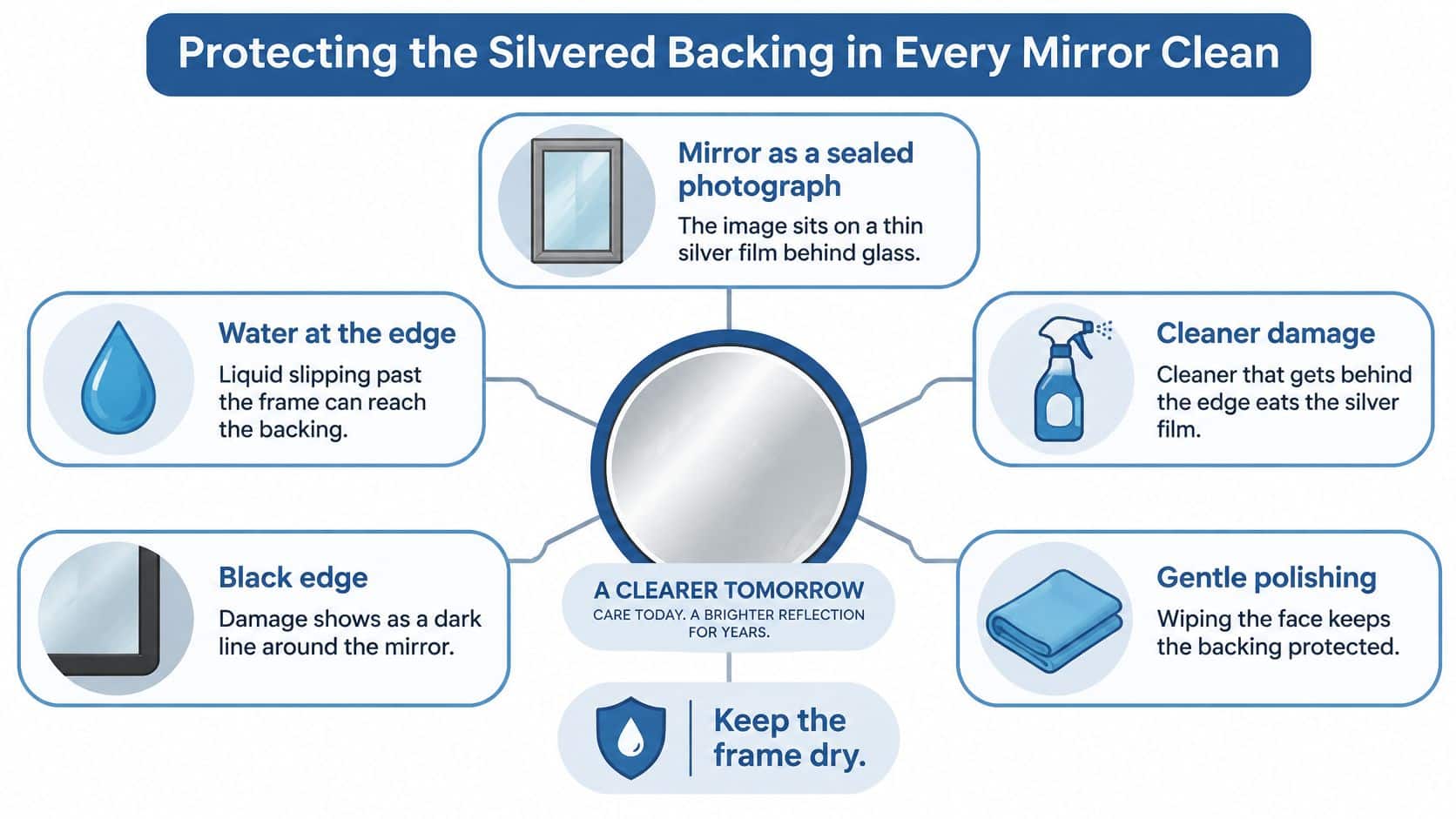
Think of a mirror as a photograph sealed behind glass. You clean the clear face, but the image depends on a thin reflective film behind it. That analogy matters most around the perimeter, where liquid can reach materials you can't wipe dry from the front.
Moisture or incompatible cleaner that migrates behind the edge can damage the reflective backing. The resulting dark border is often called black edge. Polishing the face won't replace missing silver, so a shiny center isn't proof of a successful clean.
Choose chemistry for the backing
Euroglas's mirrored-glass cleaning guidance recommends clean, warm water or a neutral, nonabrasive cleaner on a soft, lint-free cloth and warns that cleaners with pH below 2 or above 12 can corrode the backing if they reach it. That threshold is a rejection screen, not permission to use every cleaner between those values.
Avoid acids, strong alkalis, aggressive solvents, abrasive powders, steel wool, razor blades, and hard rubbing. A bottle labeled for glass may suit another glass application without being appropriate for a particular mirror. The mirror manufacturer's restrictions come first.
Practical rule: Put the cleaning solution on the cloth, not into the frame.
The diagram shows why the edge deserves as much attention as the reflective face.
Follow a controlled cleaning sequence
AGC's decorative-glass cleaning guide supports prompt liquid removal, clean tools and rinse water, and localized treatment of organic spots with an approved solvent kept away from backs and edges. Those principles translate into a practical sequence for a bathroom vanity or a long commercial mirror wall.
Identify the mirror before opening a chemical. Check for manufacturer instructions, surface treatments, existing edge deterioration, and any unfamiliar coating. A framed decorative mirror shouldn't automatically receive the same treatment as a modern gym panel. If its construction is unknown, pause rather than experiment with stronger products.
Lift loose grit without grinding it in. Use a clean, dry or barely damp, soft cloth with light contact. Don't push a visible particle across the entire face. Construction dust deserves particular caution because a mirror can look merely dusty while carrying particles that scratch under pressure.
Prepare a nearly dry cleaning cloth. Apply clean, warm water or an approved neutral cleaner to the cloth, then wring it out thoroughly. It should feel damp without releasing drops when you press it against the glass. Direct spraying gives you less control over where the liquid runs, especially above a lower frame channel.
Wipe lightly and manage any rinse. Work in manageable areas rather than soaking the whole wall at once. On large panes, use clean rinse water where the approved method calls for it, controlling the amount so it doesn't collect at the perimeter. More pressure isn't a substitute for identifying the residue.
Remove liquid promptly and finish the perimeter. Use a clean rubber squeegee where suitable or a separate dry, lint-free cloth. Finish the bottom edge, corners, and frame junctions rather than stopping when the center looks good. A bead left against the frame can remain after the visible face has dried.
Replace dirty cloths and rinse water. A cloth holding grit is no longer a finishing tool. Reused water can put minerals and cleaner residue back onto the surface, creating haze that encourages unnecessary extra wiping. Keep the soil-removal cloth separate from the dry finishing cloth.
Treat stubborn organic spots locally. Hairspray or another organic deposit may need a manufacturer-approved solvent, but that doesn't justify wiping the entire panel with it. Confine the treatment to the glass, avoid painted or silvered backs and edges, and follow with the approved detergent cleaning and clear-water rinse. If approval is unavailable, leave the spot for assessment.
Inspect after drying under angled light. Look along the face from the side, not only straight into your reflection. This reveals haze, squeegee drag, and missed residue. If a mark remains, identify whether it's on the face, within the glass, or behind it before another cleaning pass.
Know when another pass won't help
Say a vanity mirror has a pale smear across its center and a dark line under the bottom frame. The smear may respond to controlled cleaning. The dark line may be backing deterioration, which requires a different conversation about repair or replacement.
Trying to make both disappear with the same product is where avoidable damage begins. A stronger chemical might attack the backing without improving the dark area. Aggressive rubbing can also turn a removable surface problem into a scratched one.
A spray-and-walk-away routine is particularly poor practice around framed mirrors. It leaves the cleaner's path uncontrolled and may allow liquid to sit where the face meets the frame. The right finish is a clean surface, a dry perimeter, and a clear record of anything that cleaning cannot correct.
For recurring commercial work, keep the mirror type and care restrictions with the service scope. That prevents a substitute cleaner or a new staff member from treating an unfamiliar panel as ordinary window glass.
Bathrooms Gyms and Lobbies That Fail First
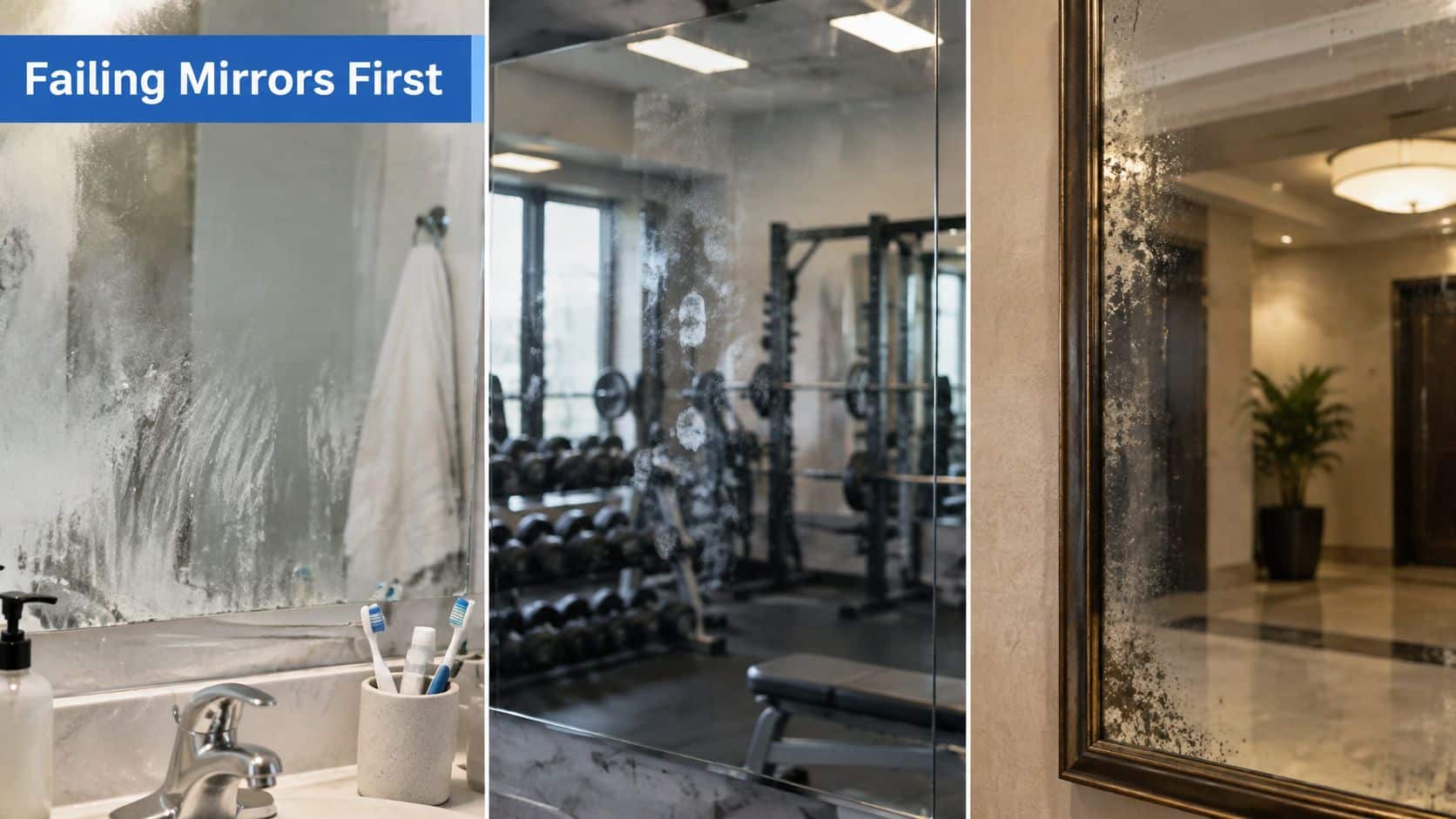
Walk through a building and the mirrors tell different stories. The restroom panel has dried droplets; the fitness-room wall has handprints; the lobby feature looks clear until you stand beside it. The room helps identify the likely soil, but it doesn't justify using the same treatment everywhere.
These examples show why a dirty face and damaged backing need different responses.
Follow the marks around the room
In a bathroom, steam mixes with toothpaste splashes, makeup, and water droplets. Once the glass is dry, inspect individual spots rather than assuming every pale mark is soap. A stubborn mineral deposit calls for an assessment of mirror compatibility, not an acid descaler borrowed from the shower-cleaning kit.
Move to the gym and the deposits change. Sweat, lotion, fingerprints, and loose chalk can collect at hand height, while the upper panels remain comparatively untouched. Maid's overview of cleaning services for fitness facilities provides useful context for coordinating mirror work with the wider room-cleaning routine.
In a lobby or elevator, a quick wipe through the center can leave a visible halo around the cleaned patch. Plan access around doors, pedestrians, and adjacent finishes, not just the mirror dimensions. Our commercial window-cleaning service overview is a starting point for arranging glass work alongside building operations.
The video offers an additional visual reference while you assess the marks in your own rooms.
Describe the soil before the visit
Salon stations and hotel vanity mirrors may carry hairspray or cosmetic overspray rather than ordinary dust. Tell the crew what products are used nearby, so they can distinguish a localized deposit from general haze. Wardrobe doors in Valley homes often require careful dust removal even when nobody has touched them.
Antique and thinly backed decorative mirrors need a more conservative assessment. Don't scrape them, reach for acidic products, or test an unfamiliar cleaner in a visible corner.
Photograph the edges before a new service begins. Existing corrosion should be documented, not mistaken for a mark left by the first visit.
Include an overall room photo as well as close-ups. That gives the crew useful information about access, nearby fixtures, and the difference between surface soil and pre-existing damage.
Insured Pros Versus a Careful DIY Clean
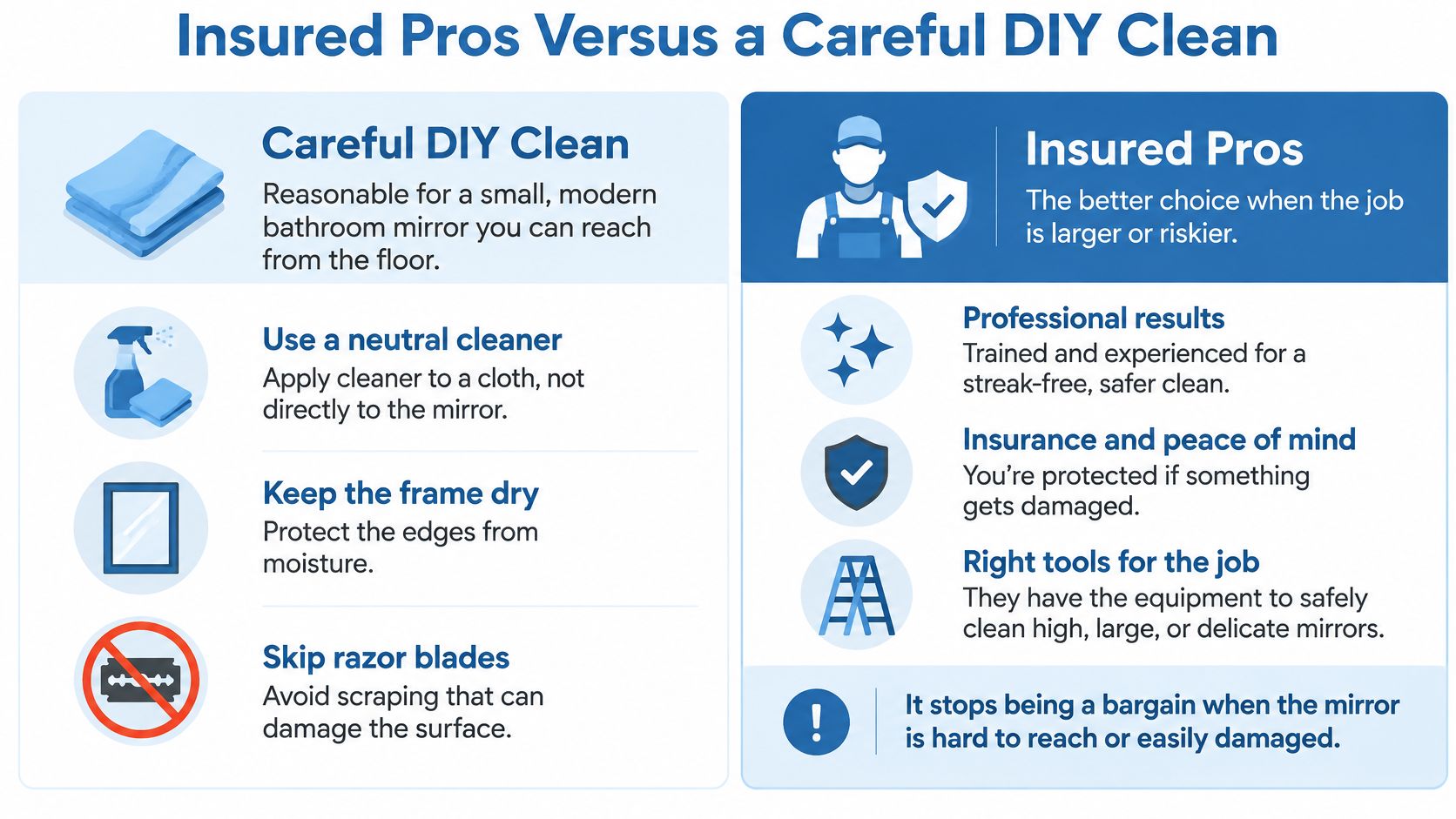
DIY deserves a fair win on a small, modern bathroom mirror you can reach while standing securely on the floor. With compatible chemistry and clean cloths, you can handle routine fingerprints without booking a separate visit. The calculation changes when the task involves access equipment, uncertain coatings, valuable glass, or a public room.
Insurance and a satisfaction guarantee do different jobs. Insurance concerns covered losses under a policy; a service guarantee concerns the promised cleaning result. Neither means every scratch, antique mirror, or pre-existing defect is automatically covered.
Compare the practical risks
DIY mirror care versus an insured crew
| Decision | Careful DIY | Insured crew |
|---|---|---|
| Best fit | One small mirror at floor level | Banks of mirrors, tall walls, public rooms |
| Chemistry | Neutral cloth only; many sprays are too harsh | Screened neutral cleaner, edges kept dry |
| Access | Step stool risk on wet tile | Safety-trained crew and proper access gear |
| Damage if it goes wrong | Owner pays for the glass | Insured work and a residential satisfaction guarantee |
| Sensitive occupants | Fragrance can linger in a closed bath | Product disclosure and lower-odor options |
| Proof of the visit | None unless you record it | Named surfaces, date, and products used in the agreed record |
Treat the professional column as a scope to confirm, especially for product options and visit documentation. A trained cleaner still needs to know about a fragile frame, loose mounting, or an occupant's sensitivity before arriving.
The comparison below highlights when the job stops being a simple household wipe.
Check protection before access becomes complicated
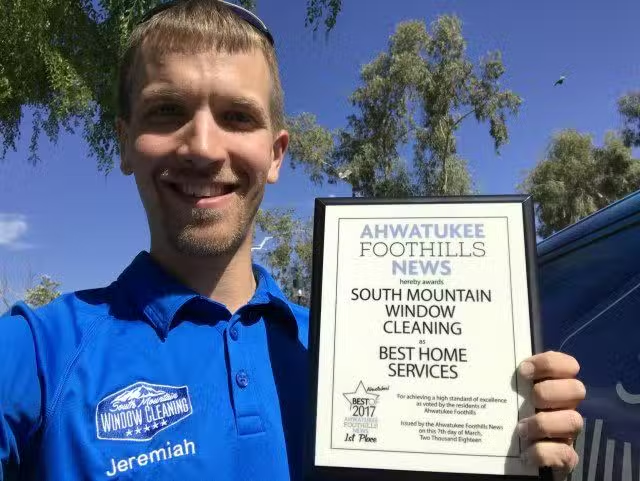
Our team members undergo extensive window-cleaning safety training. We're licensed, bonded, and insured, offer a 100% satisfaction guarantee on residential window cleaning, and have over 400 customer reviews. When mirrors are part of your residential visit, make sure they appear in the agreed scope.
Review our window-cleaning insurance information when evaluating property protection. For useful questions about coverage and exclusions, Top Cleaners' cleaning insurance phone script offers a practical conversation checklist.
Hiring threshold: If you need to lean over a sink, work above shoulder height, or balance near wet tile, hire the access problem out.
Don't assume high-rise window-washing equipment is automatically the right setup for an interior mirror. The crew should assess the actual location, supporting surface, surrounding fixtures, and pedestrian route. For building managers, reliable scheduled service also removes the need to wait until someone complains about streaks.
Low-Odor Cleaning for Sensitive Occupants
A restroom can look ready and still be unusable for someone who reacts to the cleaner's fragrance. For that occupant, a polished mirror isn't the whole result. Air planning belongs in the cleaning scope, alongside surface care.
The U.S. Access Board's operations and maintenance guidance identifies cleaning products, fragrances, disinfectants, and inadequate ventilation as potential accessibility barriers for people with asthma and multiple chemical sensitivities. It also cautions that citrus- and pine-based products can react with ozone to form hazardous byproducts. A green label therefore isn't a promise that a product will be non-irritating.
Specify the exposure plan
A useful low-exposure plan turns a general request for less smell into clear arrangements:
- Disclose products beforehand. Give the building contact product names and relevant safety information before work begins.
- Discuss alternatives. Consider fragrance-free or lower-emission options that also meet the mirror manufacturer's restrictions.
- Choose the work window. Schedule during lower occupancy and keep people away from the immediate work area.
- Plan ventilation and re-entry. Agree on safe ventilation and an appropriate return time based on the product and room conditions.
There isn't a universal re-entry time for every mirror cleaner and restroom. Don't invent one from how quickly the scent fades. Coordinate with the occupant or facilities contact and use product-specific information.
Gmaids' explanation of fragrance-free cleaning for Dallas homes is a useful homeowner resource for framing fragrance concerns. It shouldn't replace a discussion about the actual products proposed for your property.
Separate water quality from the whole process
Our explanation of window cleaning with pure water provides context for water quality in glass work. It doesn't mean an interior mirror should receive an exterior-style rinse, or that water alone resolves every exposure concern.
For operational accountability, record mirror count, service dates, products, rinse method, callbacks, and any occupant complaint. Product certification and actual water or chemical consumption are different measures, a distinction relevant to the documentation approach in the LEED operations and maintenance framework.
A clean accepted on the first inspection is more useful than a scented finish that requires another visit. Offices, hotels, senior housing, and high-rise common areas should settle these arrangements before recurring work begins.
Book a Valley Crew When the Edge Is at Risk
Book a professional when mirrors are large, hard to reach, already darkening at the frame, or handled throughout the day by guests and staff. Keep DIY for a small, sound, modern mirror you can reach safely from the floor.
South Mountain Window Cleaning, LLC provides full-service residential, commercial, and high-rise window washing across Phoenix, Scottsdale, Paradise Valley, Chandler, Tempe, and Gilbert, Arizona, with service valley-wide. Include mirror cleaning in the conversation before the visit rather than adding it after the crew has planned the work.
Make the quote useful on arrival
A booking request should give the crew enough information to identify the job:
- List the mirror locations. Name each vanity, wall, elevator cabin, or restroom bank.
- Show existing damage. Send close-up photographs of dark borders, chips, and questionable backing.
- Set the care requirements. Request compatible neutral chemistry, controlled moisture, and dry edges.
- Identify occupancy limits. Note fragrance concerns, public access, and any after-hours work window.
We provide a fast, free quote for cleaning needs. Commercial window routes use computerized scheduling so the crew arrives at the scheduled time; make sure the mirror work and building-access arrangements are included in that appointment.
Phoenix and Scottsdale customers can call (480) 519-9327. Customers in Chandler, Tempe, Gilbert, and Paradise Valley can also request a quote through our website.
Send the damage photos before agreeing to the scope. The quote should cover cleaning the glass, not an unsupported promise to restore silver that's already gone. If the backing is sound and the problem is ordinary haze or fingerprints, a clearly defined visit and a suitable maintenance interval keep the decision straightforward.
South Mountain Window Cleaning, LLC offers residential, commercial, and high-rise window washing, with mirror cleaning available as part of residential service. Visit South Mountain Window Cleaning, LLC to request a fast, free quote, and include your mirror locations, edge photos, and any fragrance or access restrictions so the work can be scoped before booking.