
Knowing how to clean hard to reach windows starts with choosing the lowest-risk access method that lets you finish the pane.
Dirty glass above your head is an access problem before it is a cleaning problem. I rank every option by how stable your footing is, then take the lowest-risk method that still covers the whole pane. A stain you cannot reach safely is not a technique problem.
A longer pole can help. It will not correct unstable footing, failing window hardware, or an unsafe roof edge. If the only way up is a shaky stance, stop and change the access plan rather than stretching farther.
Matching Your Window to the Right Cleaning Method
Can you reach the entire pane from firm ground while keeping the pole comfortably within your arm's working range? If reaching the corners requires tiptoes, stretched arms, or stepping into a planting bed, the answer is no.
Start with the least complicated access. Clear ground-level glass usually suits a water-fed brush. Behind shrubs, create a working space before extending the pole. Trim vegetation where appropriate or move portable planters, but don't move an air-conditioning unit or stand on its housing.
Cleaning method by window location and access
| Window situation | Best method | Who should do it |
|---|---|---|
| Ground-level, clear access | Water-fed pole with brush and rinse | Homeowner |
| Ground-floor, behind shrubs or AC unit | Trim or move obstacles, then pole from firm ground | Homeowner |
| Second story, ladder only | Stop; use a rated lift or professional access | Professional |
| Inward-opening sash | Tilt sash, clean inside face with squeegee and pole | Homeowner |
| Skylight or roof-line glass | Engineered access with fall protection | Professional |
| High-rise or multistory glass | Suspended platform or rope access run by trained crew | Professional |
The table assumes sound glass, secure frames, and suitable weather. The same window becomes a different job when rain softens the ground, wind catches the brush, or a slope prevents a balanced stance.
Access rule: A tool is suitable only if you can control it throughout the wash, rinse, and inspection, not merely touch the glass.
An inward-opening sash can offer a safer alternative to exterior access, provided its hardware supports the cleaning position. Windows in the final rows, including skylights and high-rise glass, require an access plan rather than a shopping list of longer tools.
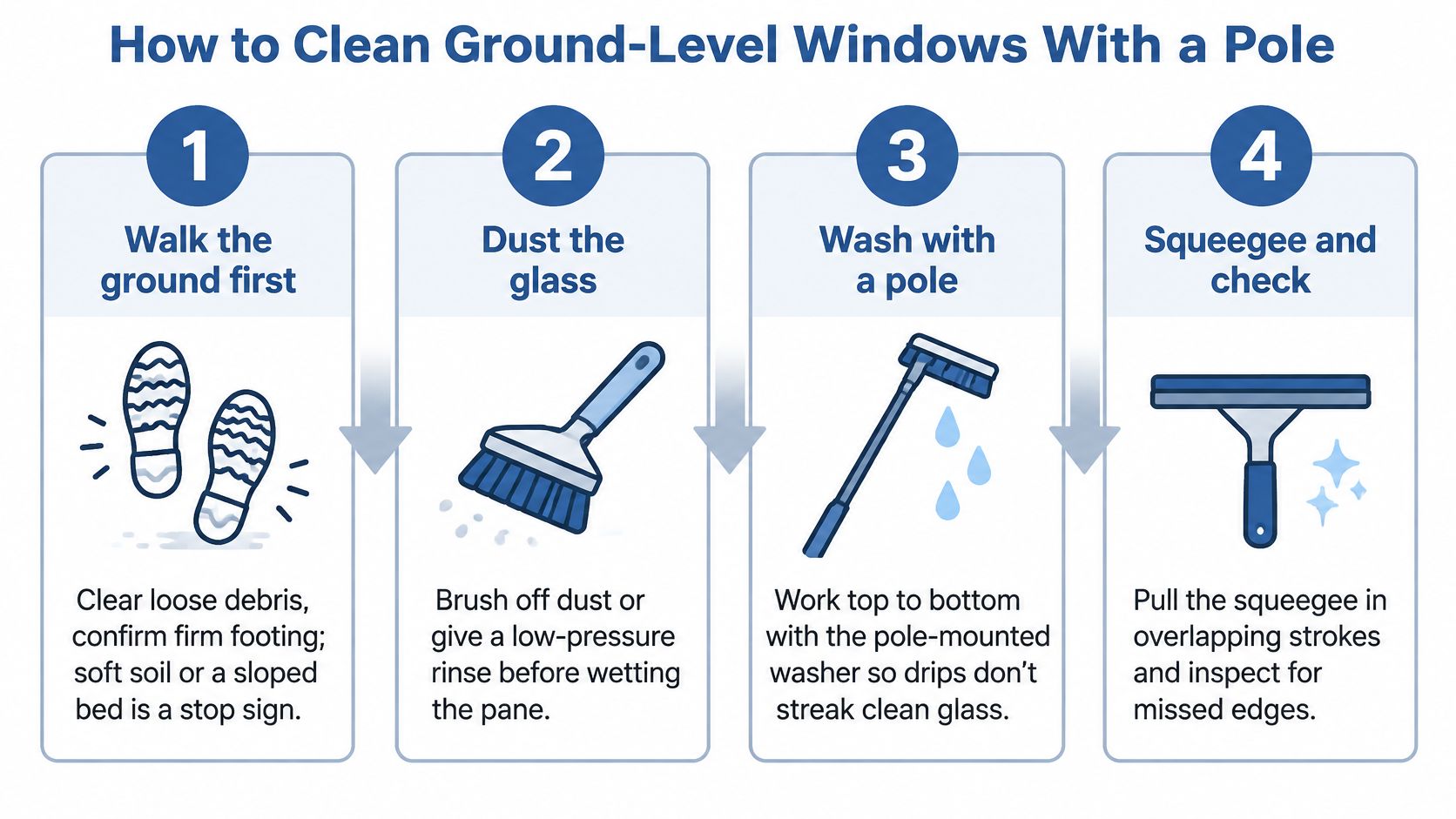
How to Clean Ground-Level Windows With a Pole
Use a locking extension pole, a soft window brush or washer sleeve, secure fittings, and a compatible squeegee attachment. A pure-water system and a detergent-and-squeegee setup finish differently: purified rinse water can dry on suitable glass, while ordinary wash water needs removal.
The basic workflow keeps your feet planted and your tools under control.
Prepare the working area
Walk the ground before unpacking. Remove loose debris and route the hose away from your feet so you won't trip while looking upward. Soft soil, a sloped bed, or footing that shifts under pressure means choosing another working position or stopping.
Check overhead clearance before extending the pole. Keep the pole and water stream well clear of power lines because carbon fiber and wet poles can conduct electricity. Secure the brush, hose connections, and extension locks, and keep people out of the area below your work.
Remove loose dust gently. Use a clean, soft brush without grinding against the pane, or give gritty glass a low-pressure rinse before contact. The common mistake is loading a wet brush with sandy debris and repeatedly dragging it across the surface.
Wash, rinse, and inspect
Choose the cleaning solution. Mix a mild, glass-compatible detergent in clean water according to its label, or use purified water through a suitable water-fed system. Load the washer rather than flooding the assembly, since excess liquid can run into frame joints and concealed gaps.
Work the perimeter, sill, and corners before finishing the center. Use short strokes at steady pressure so the brush doesn't bounce against seals or carry dirty frame runoff across finished glass. Move your feet to a safe new position instead of forcing the pole sideways, which can damage seals and wear out your shoulders.
Rinse downward and finish for the system you're using. Rinse from the top so dirty runoff doesn't cross an already finished section; with detergent and ordinary water, follow with overlapping squeegee passes and wipe the blade after each stroke. With purified water, complete a thorough final rinse and avoid touching the clean pane with a dirty blade.
Inspect straight on and from a low side angle. Look for missed edges, brush tracks, and lingering deposits, then note any area needing another controlled pass. Don't chase a top corner by stretching farther than your balanced stance allows.
These stop-and-inspect habits fit OSHA's ladder-safety guidance, which treats safe access as a prerequisite to work at height. Stop if wind pushes the pole or rain has left the glass and frame wet enough to obscure your inspection.
Cold water can slow drying, but dissolved minerals and residue, not cold water alone, cause spotting. Properly finished glass dries without cloudy trails or edge drips. In Arizona, cooler morning hours give you more working time before hot glass dries the solution; the hard-to-reach window cleaning guide provides additional context for awkward access.
Cleaning Windows You Can Only Reach From Inside
Tilt-in sashes and inward-opening casements may let you reach exterior glass without working outside. Check the actual opening mechanism first: not every casement opens inward, and not every sash is designed to tilt for cleaning.
Clear furniture and lay an absorbent cloth over the sill. Remove the screen only if you can release it from inside without stretching through the opening, then place it somewhere it won't fall or bend.
Secure the sash before cleaning
Follow the window manufacturer's cleaning-position instructions. Engage its tilt stops, stays, or other retaining hardware, and confirm that the hinges and supports hold before bringing tools to the glass. Don't assume an ordinary ventilation latch can support a tilted sash.
Keep your torso inside the room. An open window isn't a safe working platform, and a screen isn't fall protection.
Dust the frame and accessible corners with a soft brush or vacuum attachment. Apply cleaner to a washer or cloth rather than spraying toward hardware, wall finishes, or the open window.
Use a short-handled squeegee on the room-facing pane, wiping the blade and collecting sill runoff after each pass. For the exterior face of a tilted sash, test the reach with an unloaded tool first. A short pole helps only when you can guide it without leaning out or pushing the sash against its stops.
Handle tracks and fixed panes differently
- Sliding windows: Lay a damp cloth over loose track grit to contain it, then lift out debris and vacuum the accessible channel. Don't slide the sash repeatedly through trapped dirt, which can abrade surfaces and jam the rollers.
- Awkward corners: Change the tool angle or clean smaller areas. Don't release retaining hardware just to gain another inch of reach.
- Fixed glass: Use the appropriate exterior access method. A neighboring opening doesn't make it safe to lean around a fixed pane.
The inside-window cleaning guide can help organize the room-side cleaning sequence.
Before starting, check whether you can reach the full surface with the sash secured in its manufacturer-approved position. If access requires forcing it to a steep angle, defeating a stop, or extending your body past the sill, leave that face for ground-based tools or a professional.
Why Ladders Make Upper-Floor Windows Risky
A ladder shouldn't be the automatic answer to an upper-floor window. OSHA's stairway, ladder, and scaffold rulemaking estimated 24,882 injuries and 36 fatalities annually from construction falls involving stairways and ladders, and reports that ladder falls account for 20% of fatal and lost-workday injuries in general industry.
Check the footing and working position before treating a ladder as usable access.

That same OSHA document identifies 88 window-cleaning accidents over a 15-year period, including 62 fatalities. It's a compilation of reported accidents, not the likelihood that any particular cleaning job will end in injury, but it illustrates the consequences of failed access.
Cleaning adds movement to an already high position. The worker carries wet tools, changes hand positions, and tries to cover a wide pane from a narrow support. Repositioning takes time, which makes leaning toward the far edge a tempting shortcut.
Recognize the stop signs
- Unsuitable footing: The ladder would stand on soft soil, a slope, loose gravel, or an improvised leveling arrangement.
- Sideways reaching: You can't reach the far edge without moving your body outside a balanced working position.
- Poor conditions: Wind moves equipment, or wet glass and surrounding surfaces make control and inspection unreliable.
For related exterior-maintenance hazards, Superior Home Improvement's fall prevention guide for Utah homeowners offers useful context for gutter work. It isn't a substitute for a window-specific access assessment.
Keep the emphasis on the working position when reviewing safety demonstrations.
Long-reach tools, water-fed systems, rated lifts, and suspended platforms can reduce overreaching, but none removes the need for inspection and site-specific planning. Decide where the worker will stand, what's below the work, and how help will reach them before choosing equipment.
Fixing Streaks, Spots and Stubborn Grime
Streaks that appear as the pane dries usually mean something remained on the glass. More pressure rarely fixes them. Identify whether you're seeing dirty water, cleaner residue, mineral deposits, or an uneven blade finish.
Match the symptom to the fix
- Repeated narrow lines: Check the squeegee rubber for dirt, hardened edges, or nicks. Clean it first; replace it if the same line returns on the next pass.
- Broad greasy smears: Too much detergent or a contaminated washer can leave a film. Change the solution, rinse the washer thoroughly, and use less product.
- Fuzz visible in side light: Switch to a clean, lint-free detailing cloth. A household towel that sheds fibers creates another cleanup job.
- Patchy marks in direct sun: The solution is drying before you remove it. Work on shaded glass or return when the surface is cooler.
- Chalky rings or dots: Use a purified-water rinse to prevent fresh mineral residue. Existing bonded deposits may need a glass-compatible mineral remover, not harder scrubbing.
For persistent deposits, the guide to water marks on windows helps distinguish routine cleaning from targeted treatment. Test any mineral cleaner discreetly and confirm compatibility with coatings, tint, seals, and adjacent finishes.
Protect frames and control residue
Sun-baked Arizona dust can leave an exterior film that needs another wash with fresh solution. Don't keep spreading dirty bucket water over the pane or attack stubborn marks with an unapproved abrasive pad.
Keep glass-treatment chemicals off painted and metal frames, and rinse accidental splashes before they dry. Never mix bleach with ammonia or other cleaners: the CDC's ammonia safety guidance warns about hazardous chemical exposure. Routine window washing doesn't call for a bleach-disinfection mixture.
Useful maintenance habits are straightforward:
- Check blades regularly: Consider replacement every few months with regular use, but replace damaged rubber sooner.
- Separate towels: Keep one for wet sill cleanup and another clean, dry cloth for glass edges.
- Refresh dirty tools: Rinse brush bristles and washer sleeves before another pane.
For timing, the EPA's commercial water-conservation guide recommends cleaning windows when they're dirty rather than on a fixed schedule. Inspect for buildup that affects appearance or daylight. Give exposed elevations attention when needed, and let sheltered, visibly clean glass wait.
Deciding Whether to Call a Professional Crew
A professional crew becomes the sensible choice when the access requires more planning than the cleaning itself. Roof-line glass, skylights, damaged frames, and exterior upper-floor panes deserve an assessment before anyone brings out equipment.
Building-scale access also carries formal requirements. OSHA's two-point suspension scaffold guidance requires employees on these scaffolds more than 10 feet above a lower level to use both a guardrail system and a personal fall-arrest system; when stabilization is necessary, window-cleaner anchors cannot be used to restrain scaffold sway.
Use the checklist as a screening tool, not permission to improvise if every answer seems favorable.

Check the people and the access plan
At South Mountain Window Cleaning, LLC, our cleaning team members undergo extensive window cleaning safety training. For a proposed job, discuss the equipment, inspection routine, insurance documentation, who'll be onsite, and how workers will protect occupants and pedestrians below.
For broader hiring checks, the Sweet Home Cleaning Service vetting guide provides a useful starting point. Window work at height needs additional discussion about access, emergency arrangements, and building-specific hazards.
We offer full-service commercial and residential window cleaning valley-wide, including residential window cleaning, alongside high-rise window washing. Our service area includes Phoenix, Scottsdale, Paradise Valley, Chandler, Tempe, and Gilbert, Arizona.
Answer these questions from the sidewalk
- Is exterior glass above a single story, along a roof line, or in a skylight? Arrange professional assessment with appropriate fall protection rather than treating height as a longer-pole problem.
- Does the proposed access require a ladder, or a lift positioned on soft or sloping ground? Price professional access before buying equipment. A lift isn't a workaround for unsuitable ground.
- Is wind strong, or is the glass rain-wet or hot? Reschedule for conditions that allow controlled work and a reliable finish.
Photograph each window group and note approximate heights, access points, locked gates, and what sits below. Request a written quote identifying the proposed access method so you can compare the actual work, not just the price. Customers in Phoenix and Scottsdale can call us at (480) 519-9327.
South Mountain Window Cleaning, LLC offers residential, commercial, and high-rise window washing for Arizona properties where safe access matters as much as clean glass. Visit South Mountain Window Cleaning, LLC to request a free quote, and share photos of your difficult windows so the conversation starts with the right access plan.