

At 6 a.m. in the Phoenix Valley, the sprinklers may still be hissing while the first sunlight exposes a milky film across the east-facing windows. You see faint drips on the lower sash, curved splash marks near the sill, and cloudy patches where irrigation has struck the glass. The pane looked clean yesterday. This morning, it looks permanently dirty.
Those water marks on windows are often clues. Their position, shape, and timing can point to a misdirected rotor, roof runoff, failed caulk, or an indoor moisture problem. Cleaning the glass matters, but finding the water's source is what keeps the marks from returning.
Why Your Windows Look Cloudy Every Morning
A Phoenix homeowner may blame dust first. Dust can dull glass, but it usually leaves a loose, uneven layer that changes when you wipe the pane. A pale film that follows sprinkler arcs or sits in repeated drip lines tells a different story.
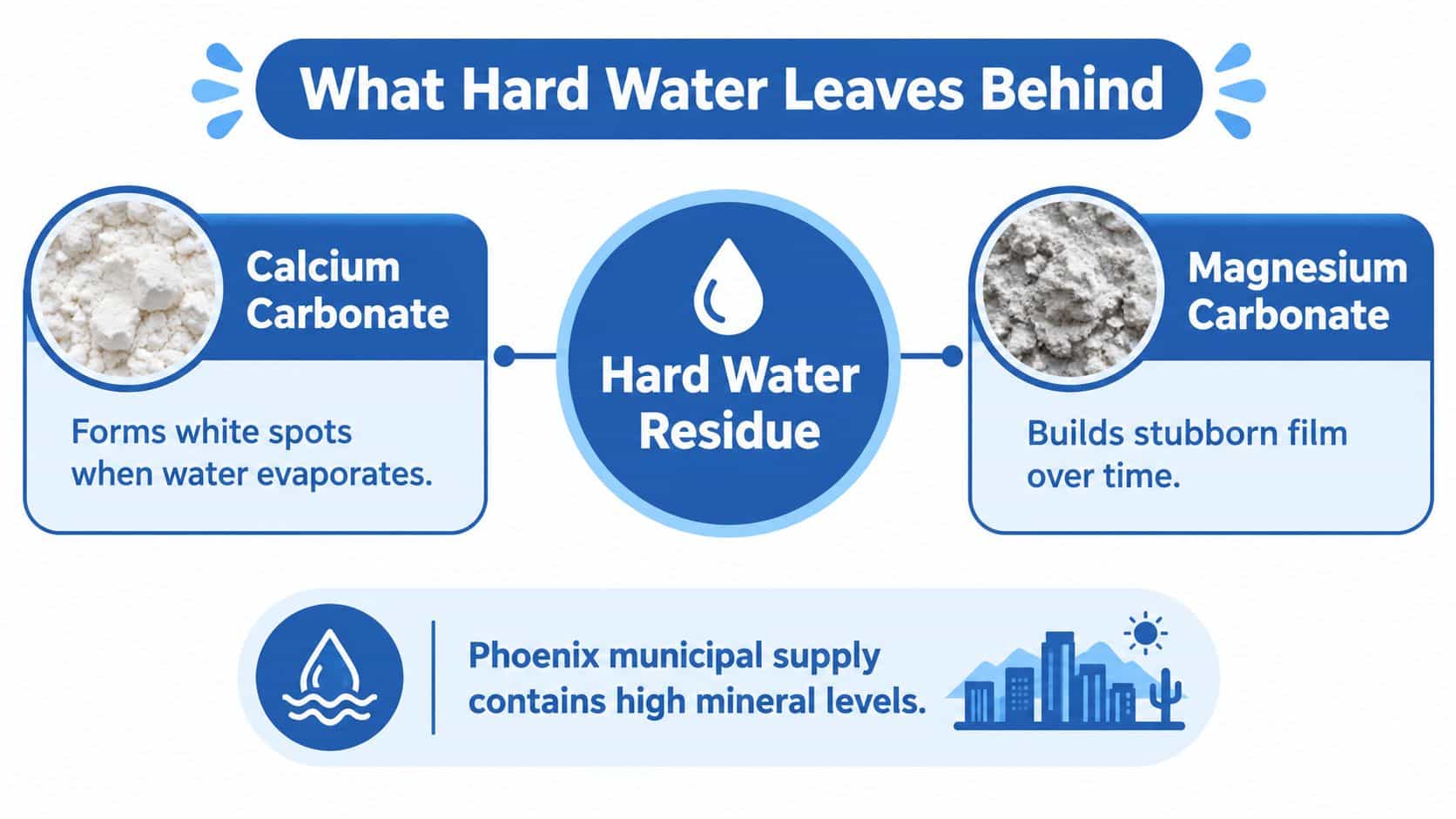
Water marks typically form when water evaporates and leaves mineral deposits behind. Calcium and magnesium compounds are the most common residue, often joined by silica and trace iron, which is why the finished mark looks white, cloudy, or chalky instead of wet. Repeated wet-dry cycles build one layer over another, turning a few droplets into a visible film. Hard-water deposits on windows explains the mineral process and why repeated exposure changes a small spot into a larger stain.

Read the pattern before reaching for cleaner
Look closely at where the marks sit.
- Curved arcs across the lower glass usually point toward a sprinkler rotor or oscillating head aimed too high.
- Vertical streaks below the roofline can indicate a downspout, gutter overflow, or runoff crossing the wall.
- Spots concentrated around a sill may come from irrigation, splashback, or drainage that keeps the lower frame wet.
- Moisture on interior glass near a bathroom can be condensation or steam, not exterior hard water.
- Marks that appear after storms and return in the same location may signal cracked caulk, failed flashing, blocked weep holes, or a leak above the opening.
The climate accelerates the problem. High heat, dry air, and mineral-rich water leave less time for droplets to run off before evaporation concentrates the residue. Direct sun can bake the remaining film onto the pane, especially where irrigation repeatedly hits the same area.
If you're unsure whether your windows need seasonal service or a source inspection, use this guide to choose how often windows should be cleaned. The right schedule depends on exposure, not just the calendar.
What Hard Water Actually Leaves Behind on Glass
Once a droplet dries, the water disappears but its dissolved material stays behind. The main compounds are calcium carbonate and magnesium carbonate, with silica and trace iron also appearing in many hard-water deposits. Those minerals create the familiar white rings, cloudy patches, and chalk-like streaks described in technical guidance on hard-water stains.
Phoenix-area glass sees this chemistry under demanding conditions. One recent Las Vegas industry analysis reported average water hardness of around 380 ppm, hard-water stains on 73% of residential glass surfaces, and visible deposits developing in 7 to 14 days under direct spray or irrigation runoff. The same analysis reported that commercial properties can accumulate stains 2 to 3 times faster than homes, with maintenance intervals of 6 to 12 months often needed in similar climates. These figures come from the Las Vegas hard-water stain analysis, but the mechanism applies across hot, dry desert communities.
Surface deposit or etched glass
Not every mark has permanently damaged the pane.
A surface deposit sits on top of the glass. Acidic cleaners can soften or dissolve it, and careful rinsing can remove the loosened residue. Early treatment usually has a better chance because the stain hasn't had as many wet-dry cycles to harden.
Etching is different. Minerals can bond with the glass surface and leave a rough, altered area. When that happens, wiping removes dirt around the mark but doesn't restore the original clarity. Controlled polishing may be necessary, and aggressive scrubbing can create additional damage.
Identify the residue before choosing the remedy
Hard-water marks usually appear as pale rings, spots, or a mineral film. Soap residue tends to look smeary and may collect around bathroom glass or tracks, while construction runoff can carry cement, grout, paint, or other materials that require a different approach. A razor or acid that works on one contaminant may scratch, haze, or spread another.
For readers managing mineral-heavy household water, a resource on hard water solutions Melbourne offers useful background on reducing mineral exposure at the supply level. On the glass itself, the practical question remains the same: is the residue sitting on the pane, or has it changed the surface?
You can find more detail on recognizing and addressing mineral deposits on glass before committing to a stronger treatment.
A Practical Method to Remove Water Marks at Home
Start with the glass dry. Brush away dust, grit, and loose desert debris before applying liquid. If you skip this preparation, the grit can mix with the cleaner and turn your microfiber into a mild scouring pad.
For a first treatment, combine white vinegar and distilled water in a 50:50 mixture. The mild acid helps dissolve mineral deposits, and this vinegar-based removal method recommends leaving the solution in contact with the mark for about 5 to 10 minutes. Distilled water matters because mineral-rich rinse water can leave another layer behind as it dries.
Apply the solution with a soft microfiber cloth, keeping the stained area wet while the acid works. For an older ring, lay a soaked paper towel or thin rag directly over the spot for the dwell period. Don't let the acidic cleaner dry on the glass. Dried solution can redeposit dissolved minerals as a fresh haze, a problem also noted in professional hard-water stain guidance.
Agitate gently, then rinse completely
Use straight, overlapping strokes rather than tight circles. Straight passes make it easier to see whether the film is lifting, while excessive pressure can spread residue across a larger area. A soft microfiber is appropriate for ordinary mineral film. Avoid abrasive pads unless you understand the glass and coating involved.
Citric acid can be useful for tougher spots, but use a modest amount in warm distilled water and test a small area first. Never combine acidic products with bleach or other household chemicals. Keep the solution away from natural stone, metal finishes, and surrounding surfaces that may react to acids.
Once the deposit loosens, rinse the pane thoroughly with low-mineral water. On an interior window, a spray bottle of distilled water is practical. On exterior glass, work in manageable areas so the rinse doesn't dry before you remove it.
The mistake that ruins most DIY attempts: letting rinse water evaporate on the pane. The water dries, the minerals remain, and you've created a new spot layer over the old one.
Dry immediately with a clean, lint-free microfiber. Check the pane from two angles, preferably with light crossing the glass rather than shining directly at it. If the haze remains but the surface feels smooth, repeat the treatment carefully. If the glass feels rough or the mark doesn't change after a reasonable cleaning attempt, stop scrubbing and review the professional approach to hard-water stain removal.
DIY Methods vs Professional Restoration
Use the table below as a triage tool, not a promise that every stain responds to the same product. Coated, tempered, low-E, and filmed glass can react differently from ordinary uncoated glass, so the safest method depends on the pane as well as the stain.
| Stain Severity | DIY Method | Time & Cost | Expected Result | Professional Method | Best For |
|---|---|---|---|---|---|
| Light haze | Vinegar soak, soft microfiber, distilled-water rinse | Modest product use and a short cleaning session | Often improves when the residue is only on the surface | Purified-water cleaning and glass-safe treatment if needed | Fresh mineral film on accessible panes |
| Moderate spotting with calcium rings | Vinegar or citric-acid dwell, gentle agitation, careful rinse | More hands-on time and repeated inspection | May remove deposits, but rings can remain if buildup is aged | Glass-safe mineral treatment, controlled polishing, and a purified rinse | Older sprinkler spotting that still feels smooth |
| Heavy buildup | Mild acid cleaner, cautious spot testing, no aggressive pressure | Product and labor increase as deposits harden | Surface residue may lift, while etched areas remain hazy | Resin polishing or cerium oxide compounds, followed by controlled rinsing and deionized water finishing | Stubborn exterior glass and commercial maintenance |
| Long-term mineral etching on tempered or low-E panes | Avoid improvised razor work and abrasive scrubbing | The risk is damage rather than cleaner expense | DIY may fail to restore clarity and can harm a coating | Controlled restoration after identifying the glass type and condition | Glass where replacement or permanent damage is a concern |
Razor blades deserve special caution. A professional may use a scraper in the right situation, but a blade can catch debris, damage a coating, or leave fine scratches when the angle, pressure, or glass condition is wrong. A paste that feels stronger isn't automatically more effective.
Professional restoration can involve resin polishing, cerium oxide compounds, and machine-controlled passes that keep pressure and coverage consistent. It also includes the judgment to distinguish a removable deposit from actual etching. For a broader look at equipment and product choices, see what professional window cleaners use.
Stopping New Water Marks Before They Form
A better spray bottle won't outperform a corrected sprinkler head. Prevention starts outside the window, with the water source and the timing of the rinse.
In the Phoenix Valley, irrigation is one of the first things to inspect. Reposition rotor heads and spray nozzles so they don't cross the glass. Check landscaping that throws water toward the pane, especially dense plants near lower sashes. Look at downspouts and roof runoff too. A clean window can spot again quickly if runoff repeatedly travels over the same frame.
Change the rinse routine
Schedule window washing before an irrigation cycle, not immediately afterward. If watering has already occurred, rinse the glass while the deposits are still loose, then squeegee or towel-dry before evaporation finishes. The goal isn't to leave the pane wet and hope the sun handles it. The goal is to remove the mineral-heavy water before it dries.
Low-mineral water helps prevent redeposition. Guidance on preventing water marks recommends using low-mineral rinse water and drying the glass before evaporation leaves calcium, magnesium, and silica behind. A hose-end filter may help with some exposure, while a water-softening system or filtration setup can address the supply more broadly. Those options involve equipment and upkeep, so correct irrigation remains the simplest first move.
A rinse-and-dry habit also matters for property managers. Storefronts, restaurants, and office buildings often receive repeated exposure from landscaping, cleaning crews, and runoff. A written routine that identifies spray zones and requires drying after wet work can prevent a clean pane from becoming a maintenance complaint.
A field checklist for this week
- Adjust irrigation: Reposition sprinklers that wet windows, frames, or nearby walls.
- Inspect runoff: Watch downspouts, gutters, and sloped surfaces during or after watering.
- Rinse early: Clean mineral-heavy water from glass before it dries.
- Use low-mineral water: Choose distilled, filtered, or purified water when practical.
- Dry every wet pane: Finish with a squeegee or clean microfiber instead of leaving droplets to evaporate.
This short video provides a visual look at the issue and the prevention mindset:
When to Call a Professional Window Cleaner
The decision isn't only about price. It's about whether another cleaning attempt is likely to remove a surface deposit or whether the next round of scrubbing could damage the glass.
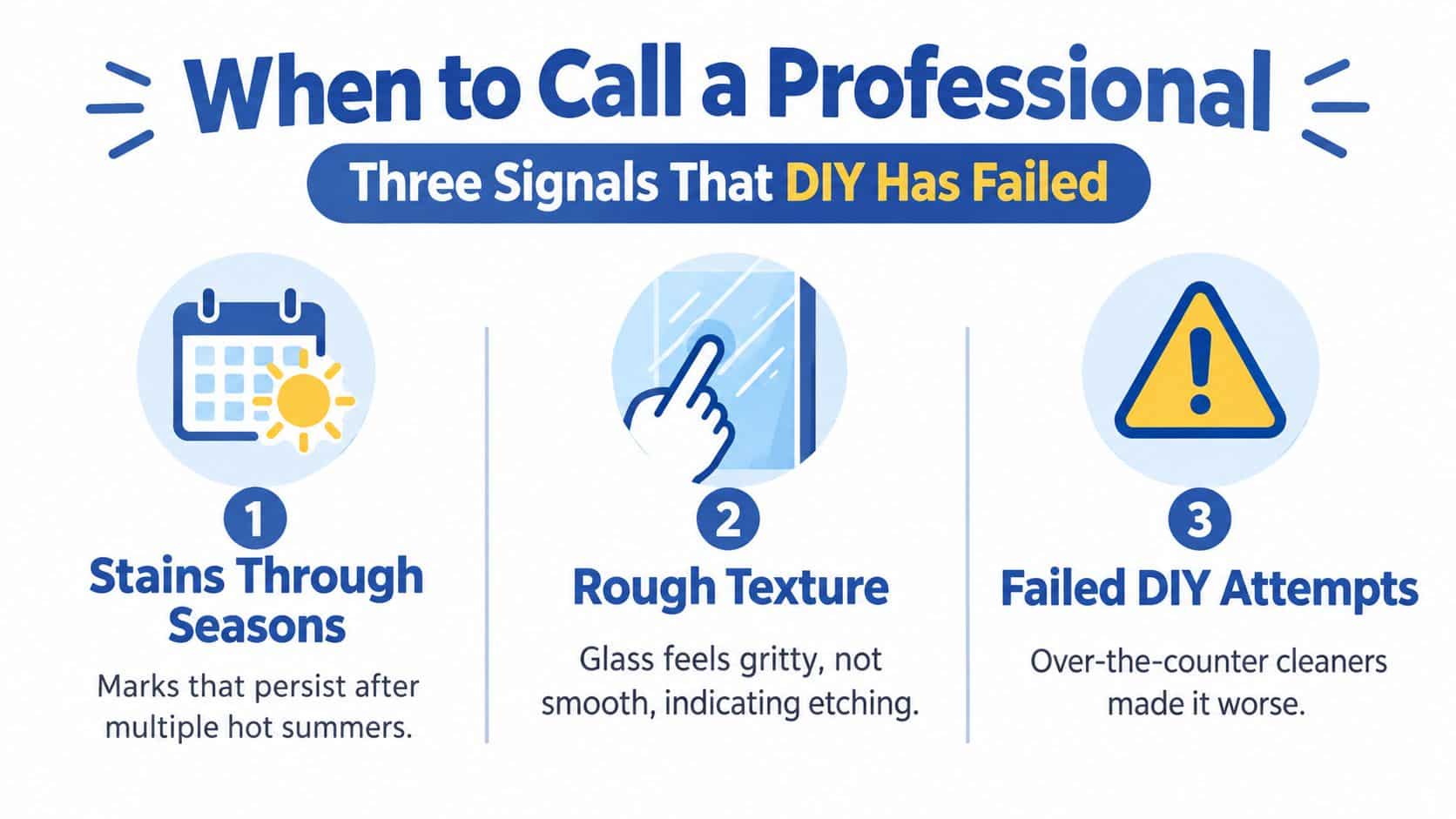
Three signals usually mean DIY has reached its limit. First, the marks have remained through multiple hot seasons. Second, the glass feels rough, gritty, or catches a fingernail when you drag it lightly across the affected area. Third, the pane has a low-E coating, tempered safety glazing, or factory-applied film and you aren't certain which cleaners or tools are safe.
What the right equipment changes
A trained technician can use purified water through a water-fed pole for exterior cleaning without leaving the same mineral load behind. For light etching, cerium oxide polishing may improve clarity, while heavier restoration requires controlled technique rather than more force. A professional also evaluates the surrounding conditions, including sprinkler overspray, failed caulk, blocked drainage, and water entering above the opening.
That diagnosis matters because cleaning the pane alone won't solve a recurring leak. Water stains beneath a window after rain may come from failed flashing, cracked caulk, clogged weep holes, or a wall leak above the unit. Those conditions call for building-envelope attention, not repeated glass polishing.
If the pane feels smooth and the stain is recent, another careful cleaning may be reasonable. If it feels rough or carries a coating, treat the job as restoration, not routine washing.
The risk grows with height. Ladder work beside a pool, sloped roof, fragile landscaping, or a multi-story façade can turn a simple Saturday task into an avoidable safety problem. Commercial and high-rise properties also need insured access planning, consistent scheduling, and a finish that won't leave mineral-heavy rinse water on the glass.
South Mountain Window Cleaning, LLC offers residential, commercial, and high-rise window washing in Phoenix, Scottsdale, Paradise Valley, Chandler, Tempe, Gilbert, and nearby Arizona communities, including hard-water stain removal and pure-water cleaning. Visit South Mountain Window Cleaning, LLC to request a quote and have the glass, exposure pattern, and likely water source evaluated before the marks become permanent.