
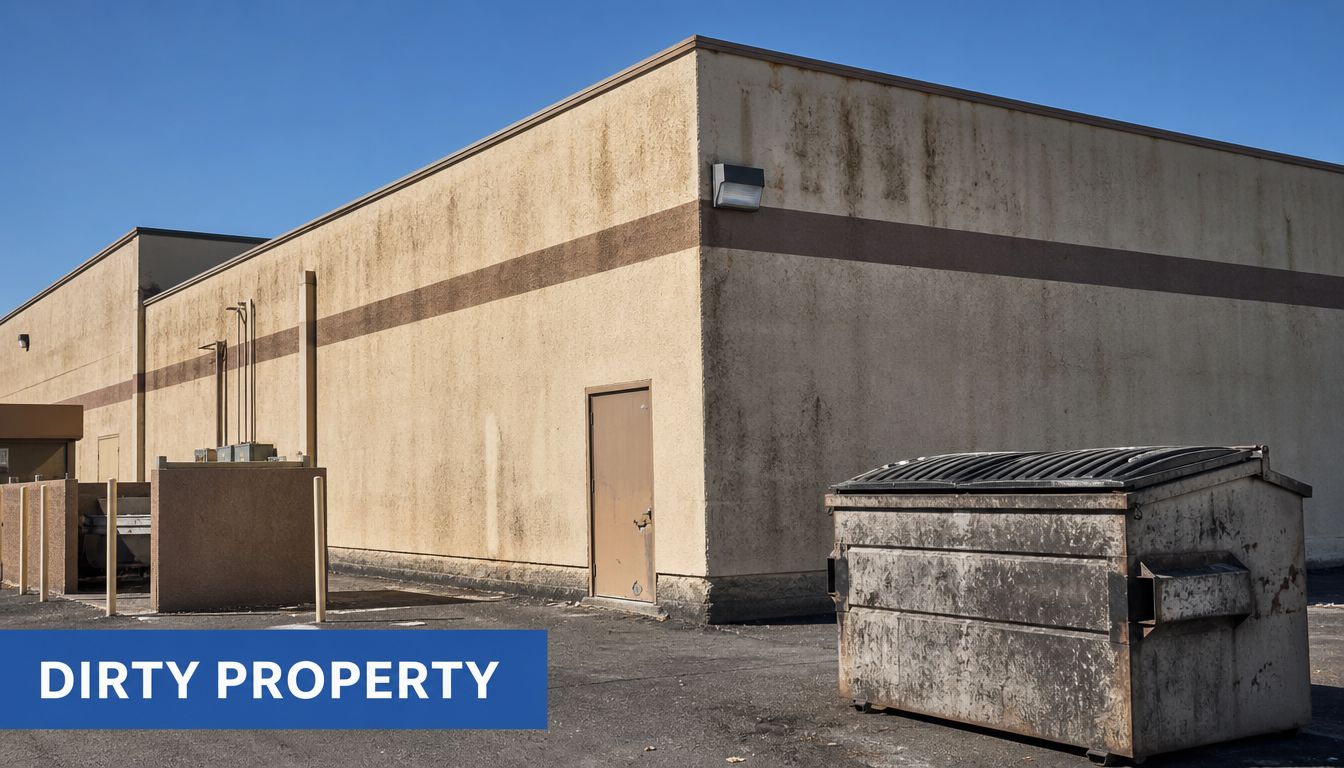
If you're responsible for a retail center, restaurant, office park, or multi-tenant building in the Phoenix area, you've probably run into the same problem. The glass may be scheduled, the landscaping may be handled, but the concrete, loading zones, dumpster area, and exterior walls still make the property look tired. Arizona dust settles everywhere, and once that grime bakes into stucco, painted masonry, and hardscape, a rinse won't touch it.
That's where people often underestimate the tool doing the work. They focus on the machine, the hose, or the nozzle color. In real commercial washing, the commercial pressure washer lance is the part that gives the operator control over distance, angle, and impact. That control is what decides whether a job comes out clean and even, or scarred, streaked, and expensive to fix.
For property owners and managers in Phoenix, Scottsdale, Paradise Valley, Chandler, Tempe, and Gilbert, that difference matters. South Mountain Window Cleaning provides residential, commercial, and high rise window washing services in Phoenix, Scottsdale, Paradise Valley, Chandler, Tempe, Gilbert, Arizona. On power washing work, the same principle applies. The right lance turns pressure into precision.
Your Most Important Power Washing Tool
A common Arizona service call goes like this. The storefront entry has dark traffic lanes, the dumpster pad has grease and embedded waste staining, and the back wall has a layer of dust that turned into a film after irrigation overspray and heat. The machine might have plenty of power, but if the operator is using the wrong lance, the work slows down immediately.
A lance isn't just a metal tube between the trigger gun and the nozzle. It is the precision tool that lets a tech hold the correct working distance, keep a stable spray angle, and move across the surface without fighting the machine. On commercial work, that means better finish quality on concrete, machinery, painted block, and building exteriors.
The industry has moved in that direction for a reason. The global pressure washer market was valued at USD 2.10 billion in 2024 and is projected to reach USD 3 billion by 2034, with the U.S. market estimated at USD 584.0 million in 2024 and projected to reach USD 750.5 million by 2030 at a 4.4% CAGR from 2025 to 2030. That growth reflects demand for professional-grade components, including lances that must match machine specs and directly affect safety and finish quality, as noted in this pressure washer lance guide from Contractor's Maintenance Service.
Why clients notice the result
When a lance fits the job, the operator can stay consistent. The wash pattern stays where it should. The tech doesn't have to crowd the wall, bend too low over flatwork, or force the spray into awkward positions just to reach the target.
That becomes even more important on larger commercial setups, especially when crews are working from dedicated rigs like a commercial power washer trailer setup. Bigger equipment gives you more capability, but the lance still decides how that power is delivered to the surface.
Practical rule: If the operator can't comfortably hold the right distance and angle, the setup isn't correct yet.
What goes wrong when the lance is an afterthought
Wrong lance selection usually shows up in three places first:
- Uneven cleaning: One section comes out bright, another stays shadowed because the spray angle keeps changing.
- Operator fatigue: The tech fights the wand all day, which leads to rushed passes and missed spots.
- Surface damage: Too much impact in one area can stripe coatings, chew soft material, or force water where it doesn't belong.
A good commercial pressure washer lance doesn't just help the job get done. It helps the job get done safely, evenly, and without turning a maintenance issue into a repair issue.
What Defines a Commercial Grade Lance
Consumer gear can wash a patio at home. Commercial gear has to survive regular use on drive lanes, kitchen pad concrete, block walls, breezeways, equipment yards, and hot water systems. That's the difference.
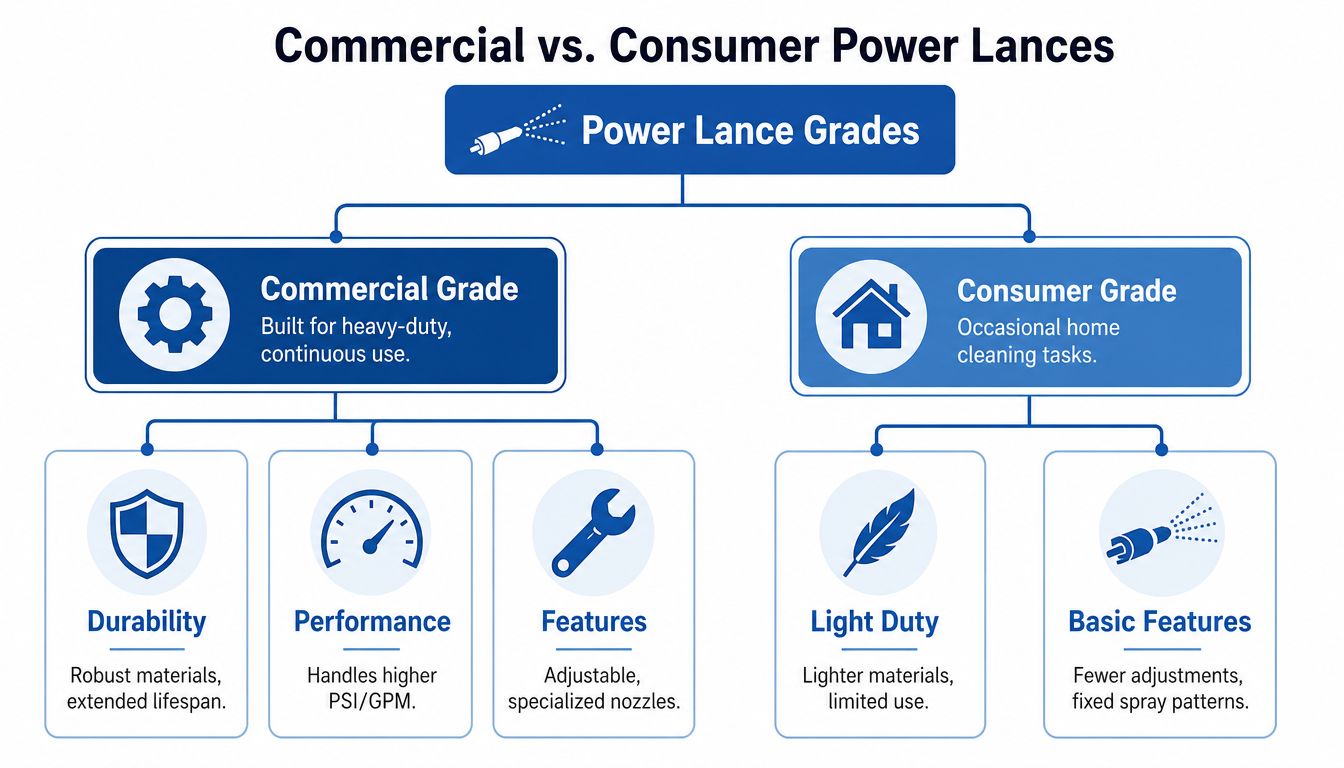
A commercial pressure washer lance is built as a working component, not a convenience accessory. It connects to the trigger gun, carries the full load of the machine's output, and positions the nozzle where the operator needs it. On a serious washing crew, the lance takes daily abuse from heat, pressure, handling, transport, and chemical exposure.
The basic anatomy matters
At minimum, a commercial lance needs a secure trigger gun connection, a rigid tube that won't flex under use, and a reliable end connection for nozzles or accessories. Most commercial lances are detachable, and they almost universally use a standard ¼-inch male thread at the input for broad trigger gun compatibility. Standard lengths are typically 36 to 45 inches, which helps the operator work without getting too close to the spray or bending over on every pass, according to this commercial lance buying guide from Pressure Washer Supply.
That same guide notes a key dividing line on heat. Residential models may only handle 140°F, while commercial hot water applications require lances that can withstand at least 300°F (150°C).
Materials and grip design
The material choice isn't cosmetic. Chrome and stainless components hold up better in hard use, especially when a crew is moving equipment in and out of trucks, trailers, and job sites all week. A vented or insulated grip also matters more than many people think. On long shifts, a proper grip helps with comfort, hand placement, and control when the lance is carrying hot water output.
Consider hand tools. A bargain wrench might turn one bolt in your garage. A mechanic's wrench gets used every day and has to hold tolerances, survive abuse, and stay predictable in the hand. Lances are the same way.
Commercial grade means predictable under load. If a tool only works when conditions are easy, it isn't commercial grade.
Signs you're looking at real commercial equipment
A commercial lance usually checks these boxes:
- Rated for hot water use: If you're using hot water equipment, the lance has to be built for that environment.
- Detachable construction: This makes replacement and task-specific swapping practical in the field.
- Standard connection format: The common ¼-inch male thread keeps compatibility simple.
- Working length built for safety: The usual 36 to 45 inch range gives better body position and standoff distance.
What doesn't work is treating a homeowner lance like a substitute. It may fit. It may spray. That doesn't mean it belongs on a commercial machine.
A Lance for Every Commercial Cleaning Task
No single lance handles every property condition well. The right setup for a dumpster pad isn't the right setup for painted fascia, storefront approach concrete, or upper wall detailing around signage. That's why experienced crews switch lances based on the surface, not just the machine.
Fixed lances
A fixed lance is the everyday workhorse. It's simple, rigid, and dependable. For flatwork, block walls, service corridors, and many exterior cleaning tasks, this is often the most controlled option because there are fewer moving parts and less flex in the line of spray.
Its biggest advantage is consistency. Once the nozzle and pressure setup are correct, the operator can repeat the same pass pattern across the job.
Adjustable lances
Adjustable lances have their place, especially when one area shifts between broader rinsing and tighter impact. They can help on mixed-use properties where a tech moves from wall washdown to spot treatment.
The trade-off is that convenience can tempt people to do too much with one tool. Adjustable gear is useful, but it shouldn't replace judgment. If the surface changes significantly, changing the nozzle or the entire setup is often the better call.
Telescoping and extension lances
These are useful when the target is high and access is limited. Think entry canopies, second-story buildup over walkways, or dust accumulation above signage. In Arizona, upper exterior surfaces collect fine dust fast, and crews often need reach without repositioning lifts or overextending from a ladder.
The caution is control. The longer the lance, the stronger the counter-force the water stream applies to the operator. That makes technique and body position more important.
Turbo or rotary lances
A turbo setup can be excellent on durable hard surfaces with stubborn buildup. It concentrates impact in a rotating pattern, which helps break apart grime that sits deep in textured concrete or neglected service areas.
Used carelessly, it can also create damage quickly. On delicate siding, EIFS, painted trim, vehicles, some coatings, and sensitive architectural finishes, this kind of impact is the wrong choice.
Use the most aggressive tool that the surface can safely handle. Not the most aggressive tool you own.
Commercial Lance Type Comparison
| Lance Type | Best For | Pros | Cautions |
|---|---|---|---|
| Fixed | Flatwork, walls, routine commercial cleaning | Stable, durable, predictable spray control | Less flexible if the task changes often |
| Adjustable | Mixed cleaning zones and varied rinse needs | Convenient for shifting spray patterns | Can encourage overuse on surfaces that need a different setup |
| Telescoping | High walls, canopies, signage areas | Better reach without forcing close access | Heavier in use, harder to control over time |
| Extension | Added standoff distance or access to awkward areas | Helps reach above or behind obstacles | More leverage on the operator, greater fatigue |
| Turbo or rotary | Durable concrete and stubborn grime | Strong impact for embedded buildup | Too aggressive for delicate finishes and sensitive surfaces |
What works best in the field
On many commercial properties, the most effective setup is still a standard fixed lance with the right nozzle and disciplined technique. Specialty lances solve specific access or soil problems. They don't replace good judgment.
If a crew reaches for the same lance on every task, that usually means one of two things. They're either working too fast, or they don't fully understand the surface they're cleaning.
Matching Power PSI GPM and Nozzles
The machine creates pressure and flow. The lance has to survive that output and deliver it correctly. If those specs don't match, performance drops and risk goes up.
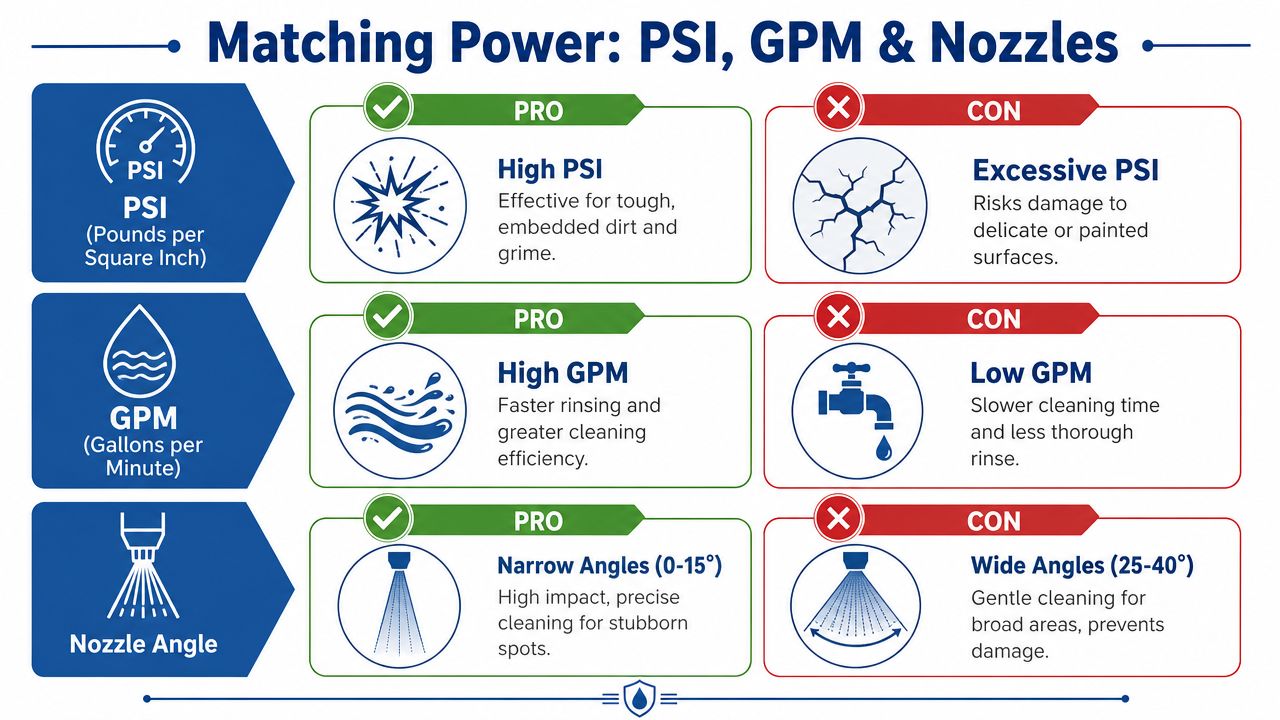
Think of PSI as impact and GPM as rinse power
PSI is the cutting force. It helps break loose stuck-on contamination. GPM is what carries that contamination away and speeds up rinsing. You need both working together.
A weak rinse with decent pressure often leaves the job looking half-finished. Strong flow with poor control wastes water and can still miss the soil layer that needs to be removed.
The lance has to be rated for the machine's real output, not the number someone assumes is close enough. A professional-grade commercial lance must be rated to handle 344 bar (5,000 PSI), 45 L/min (12 GPM), and 150°C (300°F) for compatibility with heavy-duty systems. If those ratings don't match the pump's actual output, fast trigger cycling, hose bore restrictions, and nozzle mismatch can lead to equipment failure and safety problems, as explained in this industrial jet wash lance specification guide.
Match versus mismatch
Here's the cleanest way to think about it.
- Matched setup: The lance, trigger gun, hose, and nozzle are all rated for the machine. The spray pattern stays stable, cleaning is efficient, and the tech can work with confidence.
- Mismatched setup: One component becomes the weak link. That can show up as poor cleaning, shock load stress, heat problems, premature wear, or outright failure.
For crews evaluating gear, it helps to start with professional commercial power washing supplies that are clearly rated for the system being used. Guessing based on appearance is how bad combinations end up in the field.
This video gives a useful visual on pressure washing technique and control:
Nozzles finish the system
The nozzle turns raw output into a usable spray shape. A narrow pattern increases impact in a small area. A wider fan spreads force and reduces the chance of etching or cutting the surface.
In practical terms:
- Narrow-angle nozzles: Better for concentrated problem spots on durable materials.
- Wider-angle nozzles: Better for rinsing and for surfaces that need a gentler touch.
- Soap or chemical nozzles: Useful when dwell time and chemistry should do more of the work than brute force.
If the nozzle is wrong, the lance can't save the result.
A lot of avoidable surface damage comes from treating the pressure washer like the machine does all the thinking. It doesn't. The machine supplies force. The lance and nozzle decide how wisely that force gets used.
Choosing the Right Lance for Arizona Cleaning Jobs
A crew pulls up to a Phoenix retail center at 2 p.m. The walls are hot, the dust is packed into every ledge, and the dumpster pad has grease baked into the concrete. If the lance is chosen like an afterthought, the job slows down fast, surfaces streak, and damage becomes a real risk.
In Arizona, the lance is the precision tool that decides how that cleaning force gets applied. The machine provides output. The lance determines reach, control, operator fatigue, and whether that pressure lands where it should on sun-baked block, painted stucco, or delicate solar glass.
Building exteriors and sun-baked walls
Tall facades, overhangs, and storefront sign bands usually call for more reach, but longer is not always better. An extension or telescoping lance helps the tech work from a safer position, yet extra length also puts more force on the operator, causing greater fatigue and making fine control harder.
That matters on painted block, EIFS, stucco, and coated surfaces across Phoenix and Scottsdale. Arizona heat dries residue onto the wall, so crews are often tempted to get closer and hit harder. That is how cleaning lines, lap marks, and surface wear show up. On these jobs, the better method is controlled distance, the right fan pattern, and enough dwell time for the chemistry to loosen the soil before rinsing.
Dumpster pads and drive-thrus
Dumpster enclosures, service alleys, and drive-thrus are different. Here the lance needs to stand up to grease, food waste, tire marks, and compacted grime without flexing or losing control under load.
A flimsy lance wastes time on this kind of work. The operator fights the tool, the spray pattern wanders, and dirty areas get reworked instead of cleaned properly on the first pass. Crews need a commercial setup rated for serious hard-surface work, with a lance that stays predictable when paired with the machine's actual output.
Pressure still needs judgment. Hot, dirty concrete can take more aggression than painted walls, but even on a dumpster pad, the goal is targeted cleaning, not blasting every square inch at maximum force.
Solar panels, glass, and delicate surfaces
Solar panels are where poor lance selection gets expensive. Dust buildup in Chandler, Gilbert, and Tempe may look harmless, but the wrong pressure, wrong nozzle, or wrong working angle can damage seals, coatings, frames, and surrounding components.
For solar and glass, control beats force every time.
A standard high-pressure lance is often the wrong tool for the job. Low-pressure methods, soft wash setups, or specialized panel-cleaning equipment protect the surface and still remove Arizona dust effectively. The same rule applies around window frames, glazing, and finish-sensitive trim. If a tech reaches for a turbo nozzle on dusty solar glass, training needs work.
A practical selection checklist
Before choosing a lance for any Phoenix-area commercial property, check the job in this order:
- Surface type: Concrete, painted block, stucco, metal panels, glass, and solar glass all have different limits.
- Soil type: Dry dust, grease, oxidation, gum, food residue, and mineral staining do not release the same way.
- Work distance: Awnings, landscaping, traffic lanes, and narrow alleys change how much reach and control the operator needs.
- Heat and exposure: Sun-baked surfaces often need more patience and better chemistry, not a more aggressive spray.
- Equipment fit: Some properties are better handled by a crew with dedicated commercial pressure washing services instead of trying to force one generic lance setup onto every task.
Match the lance to the surface first, then to the soil. That is how commercial crews get faster results, protect the property, and avoid turning a cleaning job into a repair bill.
Essential Safety and Maintenance Checks
Commercial pressure washing hurts people when crews get casual. The water stream doesn't care whether the mistake came from rushing, poor training, or worn-out gear. Safety has to be routine.
PPE is not optional
At a minimum, operators should wear the right eye protection, gloves, and work boots suited to wet, hard-surface conditions. On busy commercial properties, crews also need to think about overspray, ricochet off concrete, slip zones, and how close the public may be to the work area.
The lance itself deserves the same seriousness. A cracked tube, damaged fitting, or worn seal can turn a normal job into a dangerous one in a moment.
High-pressure injection injuries can start as small-looking wounds. They are not minor.
Pre-use checks that actually matter
Before the first trigger pull, inspect the lance and its related connections.
- Tube condition: Look for dents, cracks, corrosion, or any sign that the lance has been stressed.
- Quick-connect security: Make sure fittings lock fully and don't wiggle under hand pressure.
- Grip condition: A damaged or loose grip reduces control, especially on hot water setups.
- O-rings and seals: Replace worn O-rings before they become leak points.
- Nozzle seating: Confirm the nozzle is the intended one for the task and is fully secured.
Maintenance habits that extend service life
Crews that stay disciplined usually do a few simple things well:
- Rinse after chemical exposure: Leaving residue on fittings and metal shortens service life.
- Store lances where they won't get crushed: A bent lance may still spray, but it won't handle the same.
- Retire questionable equipment early: If a lance gives you doubt, it doesn't belong on a live job.
Professional-grade tools demand professional-grade habits. That's true whether the crew is washing a breezeway, a loading dock, or a restaurant pad after hours.
When to Hire a Professional Cleaning Service
At some point, most property managers run into the same decision. Buy equipment, train staff, store it, maintain it, and accept the risk. Or bring in a crew that already has the right setup for each surface.
A commercial pressure washer lance seems simple until the details stack up. Fixed or telescoping. Hot water rated or not. Enough pressure for hard-surface soil, but not too much for delicate finishes. Correct nozzle, secure fittings, proper operator technique, and the discipline to inspect everything before work starts.
For a facility team, that's a lot to own for occasional use. And if the property includes windows, storefront glass, upper facade buildup, walkways, dumpster areas, solar panels, or customer-facing entries, one wrong setup can create visible damage fast.
A professional service already solves those problems before the truck arrives. The crew shows up with the correct gear, maintained components, surface-specific methods, and the experience to know when pressure should do the work and when pressure should step back. For many building owners, that's the more efficient path than trying to build an in-house setup and estimate costs along the way with rough assumptions about commercial pressure washing pricing.
If the job is routine, low-risk, and fully understood, in-house cleaning can make sense. If the property is visible, busy, delicate, or expensive to get wrong, professional service usually costs less than one mistake.
South Mountain Window Cleaning, LLC helps commercial and residential properties stay sharp in Arizona's harsh climate with professional exterior cleaning, including window washing, power washing, flat-surface cleaning, dumpster pad sanitation, and solar panel cleaning. If you need a team that understands how to match tools, surfaces, and safety standards on real Phoenix-area properties, get a quote from South Mountain Window Cleaning, LLC.