
If you manage commercial property in Phoenix, you already know how fast a clean building can stop looking clean. Fine dust settles on ledges and storefront frames. Monsoon runoff leaves streaks down stucco and block. Oil spots darken entries and loading areas. By the time tenants start mentioning it, the problem usually isn't just appearance anymore.
A neglected exterior changes how people use a property. Customers notice dirty walkways. Employees track grime through entry points. Tenants wonder what else is being deferred. In Phoenix, commercial pressure washing services aren't a vanity add-on. They're part of basic property protection.
Beyond Curb Appeal Why Pressure Washing Matters in Phoenix
Phoenix properties take a beating from three directions at once. Sun, dust, and storm runoff all work on exterior surfaces differently, but they create the same outcome. Buildings look older faster than they should.
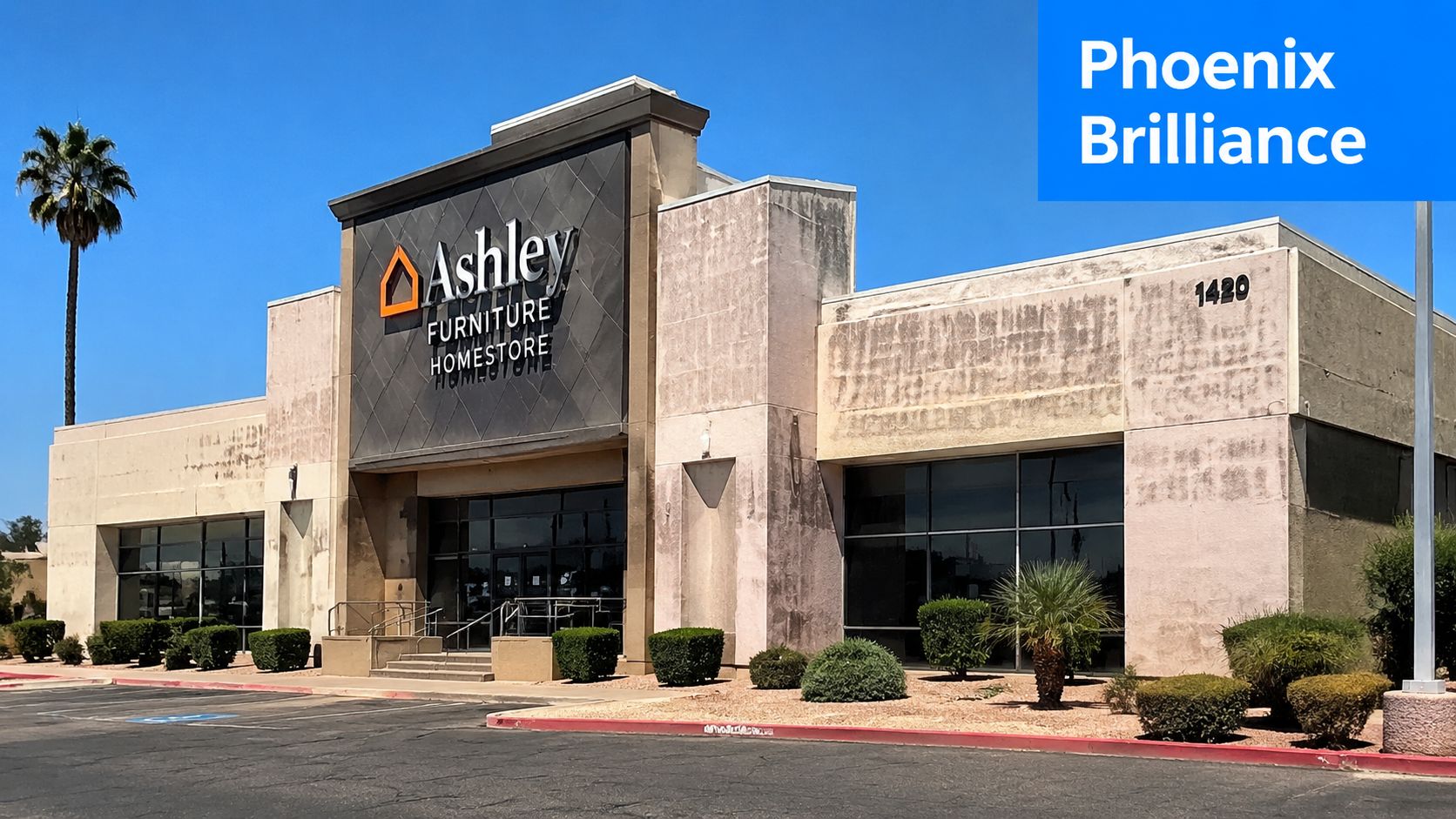
The sun bakes contaminants into paint, stucco, and concrete. Dust doesn't just sit on the surface. It packs into texture, especially on EIFS, split-face block, and rough-finish coatings. Then monsoon season hits and turns loose dirt into visible staining lines below scuppers, windows, parapets, and roof edges. A property can go from “a little dusty” to “looks poorly managed” in one season.
That's why experienced managers don't treat washing as a once-in-a-while reset. They build it into routine maintenance, the same way they think about lighting, landscaping, and glass. A clean exterior protects finishes, supports safer walking surfaces, and helps tenants feel like the site is being cared for properly. For a practical look at those day-to-day advantages, South Mountain's page on the benefits of power washing is a useful reference.
Phoenix conditions create specific maintenance risks
What fails in Phoenix usually starts small. Dust accumulation around storefronts traps moisture from irrigation overspray. Beverage spills at retail pads darken concrete and attract more dirt. Dumpster areas build residue that doesn't rinse away with a hose. Once soils bond to a hot surface, basic janitorial cleanup won't touch them.
Practical rule: If dirt is changing traction, trapping odor, or staining a finish, it's a maintenance issue, not just a cosmetic one.
Commercial owners aren't guessing about whether this is a real category of maintenance. The industry is large and established. IBISWorld reports 32,193 pressure-washing businesses in the United States in 2024, with industry revenue expected to reach $1.2 billion in its pressure washing services industry report. That tells you two things. First, this is a professional service market, not a side hustle category. Second, commercial properties across the country already budget for it as routine upkeep.
Clean exteriors support operations
A Phoenix shopping center, medical office, industrial site, or HOA common area doesn't need to look polished for vanity's sake. It needs to stay usable, defensible, and presentable under harsh conditions.
That's the core reason pressure washing matters here. It preserves the surfaces people interact with every day.
What Commercial Pressure Washing Services Actually Include
A lot of service pages make commercial pressure washing services sound like one thing. In practice, it's a collection of different cleaning methods for different surfaces, traffic patterns, and contamination types.
If a vendor talks only about “high pressure,” that's a warning sign. The essential work is in matching the method to the surface.
The main service categories
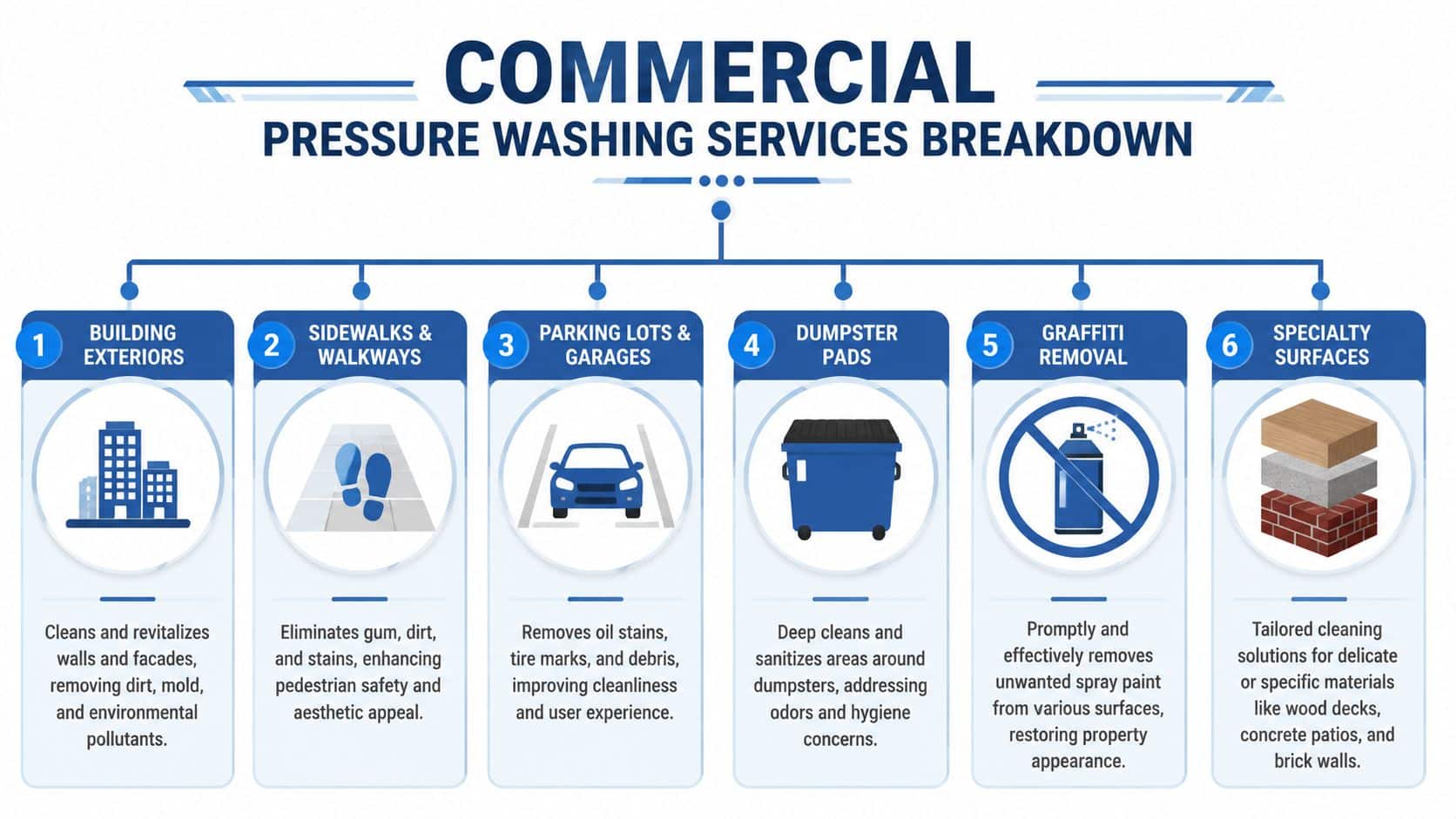
Most commercial jobs fall into a few core buckets:
- Building exterior washing cleans stucco, painted block, CMU, tilt-up panels, masonry, and exterior trim. This removes airborne dust, runoff staining, cobwebs, and general buildup without forcing water behind fragile finishes.
- Sidewalk and entry cleaning targets high-visibility pedestrian zones. That includes gum shadows, food spills, black traffic lanes, and grime around benches, curbs, and storefront thresholds.
- Parking lot and garage cleaning focuses on oil drips, tire residue, dirt migration, and neglected corners near drains or wheel stops. For many retail and mixed-use properties, deferred maintenance first becomes obvious in these areas. If that's your priority area, this overview of parking lot pressure washing explains what a proper service should address.
- Dumpster pad cleaning is partly appearance, mostly sanitation. These areas collect grease, leaked liquids, food waste residue, and odor-causing buildup.
- Stain treatment and specialty removal covers rust stains from irrigation, grease near restaurant pads, graffiti, and other contamination that won't come off with water alone.
Pressure washing isn't one setting
The biggest misunderstanding in this industry is the idea that more PSI means better cleaning. It doesn't.
Effective commercial cleaning depends on the combination of pressure and flow. Guidance for commercial work notes that units commonly operate around 3,000 to 4,000 PSI with 5 to 12 GPM, and some commercial machines are rated much higher, but the key is matching output to the substrate, as explained in this commercial building pressure washing guide. Too much pressure can damage stucco, strip paint, or etch concrete.
A good technician asks what the surface is made of before deciding how to clean it.
The methods that actually get used
Here's how the work usually breaks down on a commercial site:
| Method | Best use | What can go wrong |
|---|---|---|
| Soft washing | Stucco, painted surfaces, delicate finishes, some signage areas | Too weak for heavy grease or deeply embedded concrete staining |
| Surface cleaning with pressure | Sidewalks, pads, walkways, some concrete aprons | Wrong setup can leave striping or etching |
| Hot water cleaning | Grease, dumpster pads, restaurant back-of-house exterior zones | Overuse on the wrong surface can affect coatings or sealants |
| Chemical treatment plus rinse | Rust, oil, organic staining, graffiti, oxidation-related residue | Wrong chemistry can discolor surfaces or landscaping |
What works and what doesn't
What works is targeted cleaning with the right machine, nozzle, dwell time, and rinse volume. What doesn't is blasting every surface with the same wand and hoping the dirt disappears.
That's especially true in Phoenix. Heat hardens residue. Dust gets into texture. Coatings dry out. The method matters as much as the machine.
The Tangible Business Benefits of a Clean Exterior
Property managers usually get asked about budgets before they get credit for prevention. That's why exterior cleaning has to be viewed in business terms, not janitorial terms.
A clean site supports leasing, tenant retention, and daily operations. A dirty one creates friction. People may not describe it that way, but they feel it immediately when they arrive.
Cleaner properties reduce avoidable risk
Walkways aren't judged only by how they look. They're judged by how they perform under foot traffic. Grease near restaurant entries, sludge near dumpster corrals, and runoff residue on sloped concrete can all create slip hazards. When you remove buildup early, you reduce the chance that a minor maintenance issue becomes an incident report.
Health-sensitive areas matter too. Service alleys, loading zones, and trash enclosures can produce odor and visual complaints long before they trigger a bigger operational problem.
The cheapest wash is usually the one done before the stain sets, the odor spreads, or the surface gets slick.
Exterior cleaning protects perceived value
Tenants don't separate landscaping, lighting, signage, windows, and concrete into different maintenance categories. They read the whole property at once. If the entries are darkened with grime and the walls are streaked from runoff, the site feels neglected even if the interior spaces are in good shape.
That affects more than appearances. It affects renewals, leasing tours, and how confidently a business invites customers onto the property. Medical offices, retail centers, restaurants, and professional buildings all rely on that first visual signal.
The return is operational, not just visual
Pressure washing can't fix bad design, deferred repairs, or worn-out finishes. It can stop dirt and residue from making those issues look worse than they are.
A good cleaning program helps you:
- Protect finishes by removing material that sits on coatings and porous surfaces
- Support safety by improving traction in high-use zones
- Control complaints before tenants start emailing photos of the problem
- Maintain image so the property reflects active management
- Extend intervals between bigger corrective work because surfaces stay in better condition
That's the practical ROI. Not magic. Not a makeover. Just fewer preventable problems and a property that presents the way it should.
Understanding Equipment Safety and Insurance
The difference between amateur work and professional work usually shows up before the first trigger pull. It's in the equipment on site, the setup around the work area, and the paperwork behind the crew.
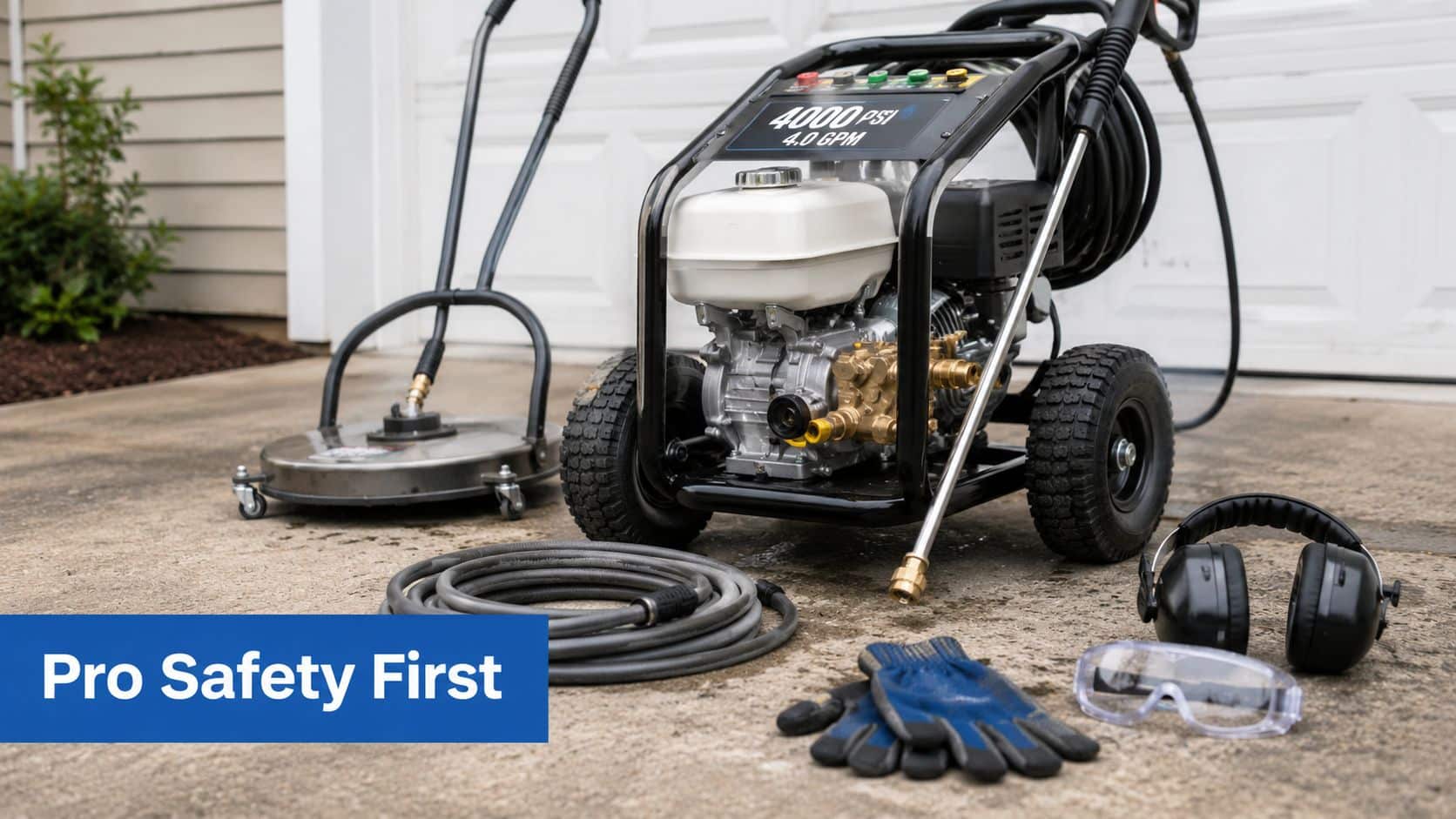
A hardware store pressure washer can clean patio furniture and maybe a small residential slab. Commercial properties are different. Large flatwork, restaurant grease zones, tall facades, dumpster pads, and traffic-sensitive entries require professional pumps, proper hose management, surface cleaners, chemical application systems, and sometimes hot-water capability. The goal isn't brute force. It's consistent cleaning speed without damaging the property.
Equipment should fit the site
On a real commercial job, the machine is only part of the system. The crew also needs the right nozzles, downstream injectors or soft-wash application tools, hose runs that won't create trip hazards, and protection for nearby glass, doors, signage, and plant beds.
What works on Phoenix commercial sites is controlled output. You need enough force to cut through bonded grime on concrete, but enough restraint to avoid chewing up painted stucco or driving water where it shouldn't go.
A capable vendor should be able to explain:
- Why they're using that method on your specific surface
- How they'll control runoff around entries, curbs, and drains
- What they'll protect first such as windows, electrical fixtures, or landscaping
- When hot water or chemistry is needed instead of more pressure
Safety on site should be visible
Professional safety isn't a paragraph on a proposal. It should be obvious when the crew arrives. Cones go out. Hoses are routed with pedestrian traffic in mind. Access points stay controlled. Sensitive areas get pre-checked. Work happens in an order that limits disruption.
That matters for more than liability. It matters because commercial sites are active. Employees come and go. Customers cut across walkways. Delivery drivers don't wait. A careless setup can create the very risk the cleaning was supposed to reduce.
For owners who want a broader view of how coverage fits into property risk, this guide to protecting your business investment in Los Angeles gives helpful context on why insurance review belongs in routine vendor screening.
Insurance isn't optional
If a contractor can't provide proof of liability coverage and workers' compensation where applicable, don't hire them. If they hesitate, move on.
One local option property managers can review is South Mountain Window Cleaning's explanation of bonded vs insured, which outlines the difference in plain language. According to the company information provided by the publisher, it carries a $2 million insurance policy. That matters because claims don't stay small for long when windows, vehicles, signage, landscaping, or pedestrian injuries are involved.
A short video can also help you assess whether a company's workflow looks organized and professional in the field.
If a vendor talks a lot about results but very little about site control and insurance, you're hearing a sales pitch, not an operating standard.
Costs Frequency and Environmental Considerations
Commercial pressure washing services don't have a one-price-fits-all model because commercial sites don't have one condition profile. Two properties with the same square footage can require very different scopes of work.
A clean office walkway with easy hose access is one kind of job. A greasy drive-thru lane, a stained dumpster enclosure, or a retail center with layered gum and runoff streaking is another. Pricing changes with labor time, water recovery needs, surface sensitivity, and how much prep the site requires before the actual washing starts.
What drives the cost
When you review a quote, look at the work factors behind it:
- Surface type matters because stucco, painted masonry, sealed concrete, and bare concrete all require different methods.
- Soil load changes production time. Light dust comes off quickly. Oil, rust, gum, and food residue don't.
- Access and operating hours affect labor. Night work, tenant coordination, restricted service windows, and long hose runs all complicate the job.
- Water management requirements can add time and equipment needs, especially where runoff control is strict.
- Frequency of service changes the condition baseline. Sites cleaned on schedule are easier to maintain than sites being restored after long neglect.
If you want a clearer sense of how contractors usually structure estimates, this page on commercial pressure washing cost gives a practical breakdown.
How often should a property be washed
The right schedule depends less on building age and more on use.
A restaurant with grease exposure, drink spills, and a drive-thru lane may need recurring service. A medical office with lighter exterior traffic may need focused sidewalk cleaning more than full facade washing. Industrial sites often need attention where dust, loading activity, and vehicle traffic concentrate grime in specific zones.
A workable rule is to separate the property into maintenance bands:
- High-touch, high-traffic areas such as entries, sidewalks, and drive-thrus need the most frequent attention.
- Functional back-of-house areas like dumpster pads and service corridors should be cleaned on a schedule that prevents odor, staining, and slick residue from building up.
- Full exterior washes are usually less frequent and should be timed around visible dust accumulation, runoff staining, and tenant-facing appearance standards.
Environmental handling matters
Professional washing should also account for water use and runoff. That includes using only the amount of water needed, applying detergents carefully, and planning recovery or containment where conditions require it.
Phoenix managers are paying closer attention to this now, and they should. Good vendors don't just talk about “eco-friendly” cleaning in generic terms. They explain what they're using, where the wash water is going, and how they'll protect nearby landscaping and drains.
How to Choose Your Phoenix Pressure Washing Partner
Most problems with commercial pressure washing services start before the work begins. A manager hires based on price alone, assumes every contractor cleans the same way, and finds out later that the crew wasn't equipped for the building, the site, or the liability.
The better approach is to vet vendors the way you'd vet any trade working around tenants, customers, and visible assets. Don't ask whether they can wash. Ask how they operate.
The questions worth asking
Some answers should be immediate. Others should come with documentation.
- What surfaces do you clean regularly? You want experience with the actual mix on your site, whether that's stucco, painted block, storefront concrete, loading areas, or restaurant pads.
- What cleaning method would you use on each area? A real contractor will distinguish between soft washing, flat-surface cleaning, hot water cleaning, and stain treatment.
- How do you handle runoff and pedestrian safety? This tells you whether they think like operators or just cleaners.
- Can you provide proof of insurance? That should never be a difficult question.
- Do you schedule around business operations? Commercial work often succeeds or fails on timing more than technique.
Vendor Vetting Checklist
| Question | Why It Matters | The South Mountain Answer |
|---|---|---|
| Are you insured and prepared to provide documentation? | Protects the property owner if something goes wrong on site | Publisher information states the company is licensed, bonded, and insured, with a $2 million insurance policy |
| Do you clean commercial surfaces beyond basic building walls? | Many properties need sidewalks, dumpster pads, drive-thrus, and flatwork cleaned on different schedules | Publisher information lists power washing of drive-thrus, walkways, building exteriors, rust removal, flat-surface cleaning, and dumpster pad sanitation |
| Can you work around active businesses? | Retail, office, and mixed-use sites need low-disruption scheduling | Publisher information states businesses benefit from computerized scheduling |
| Are your technicians trained for professional field work? | Reduces damage risk and improves jobsite conduct | Publisher information describes clean-cut, safety-trained professionals |
| Do you handle related exterior cleaning needs too? | Fewer vendors can simplify site coordination | Publisher information notes commercial and high-rise window cleaning, power washing, and other exterior cleaning services |
What separates a good fit from a risky one
A good vendor sounds specific. They ask about traffic flow, surface type, stains, drainage, and service timing. A risky vendor jumps straight to price and promises to “blast it clean.”
That difference matters in Phoenix because surfaces here fool inexperienced operators. Dry, sun-baked grime can look like it just needs more pressure. Often it needs the opposite. More dwell time, better chemistry, more rinse volume, less force.
Ask a contractor what they would do on painted stucco versus greasy concrete. If the answer sounds the same for both, keep looking.
The right partner should make your job easier. Clear scope. Clear scheduling. Clear proof of coverage. No guesswork.
Your Partner in Phoenix Property Maintenance
Commercial properties in the Valley don't stay clean on their own, and they don't get a pass because the dust is “normal for Arizona.” Normal conditions still create real maintenance issues. Walkways lose traction. Building facades pick up runoff streaking. Dumpster areas start affecting the rest of the site. The longer those issues sit, the more expensive and disruptive they become.
That's why regular exterior cleaning belongs in the maintenance plan, not on a someday list. Good commercial pressure washing services protect finishes, reduce avoidable risk, and help a property look actively managed in a market where appearance shapes tenant and customer perception fast.
For Phoenix-area managers, that usually means building a site-specific plan. High-traffic concrete may need recurring service. Full facade washing may be seasonal or event-driven. Sensitive surfaces need lower-pressure methods. Back-of-house sanitation needs its own schedule.
The important part is treating the work like asset protection, because that's what it is.
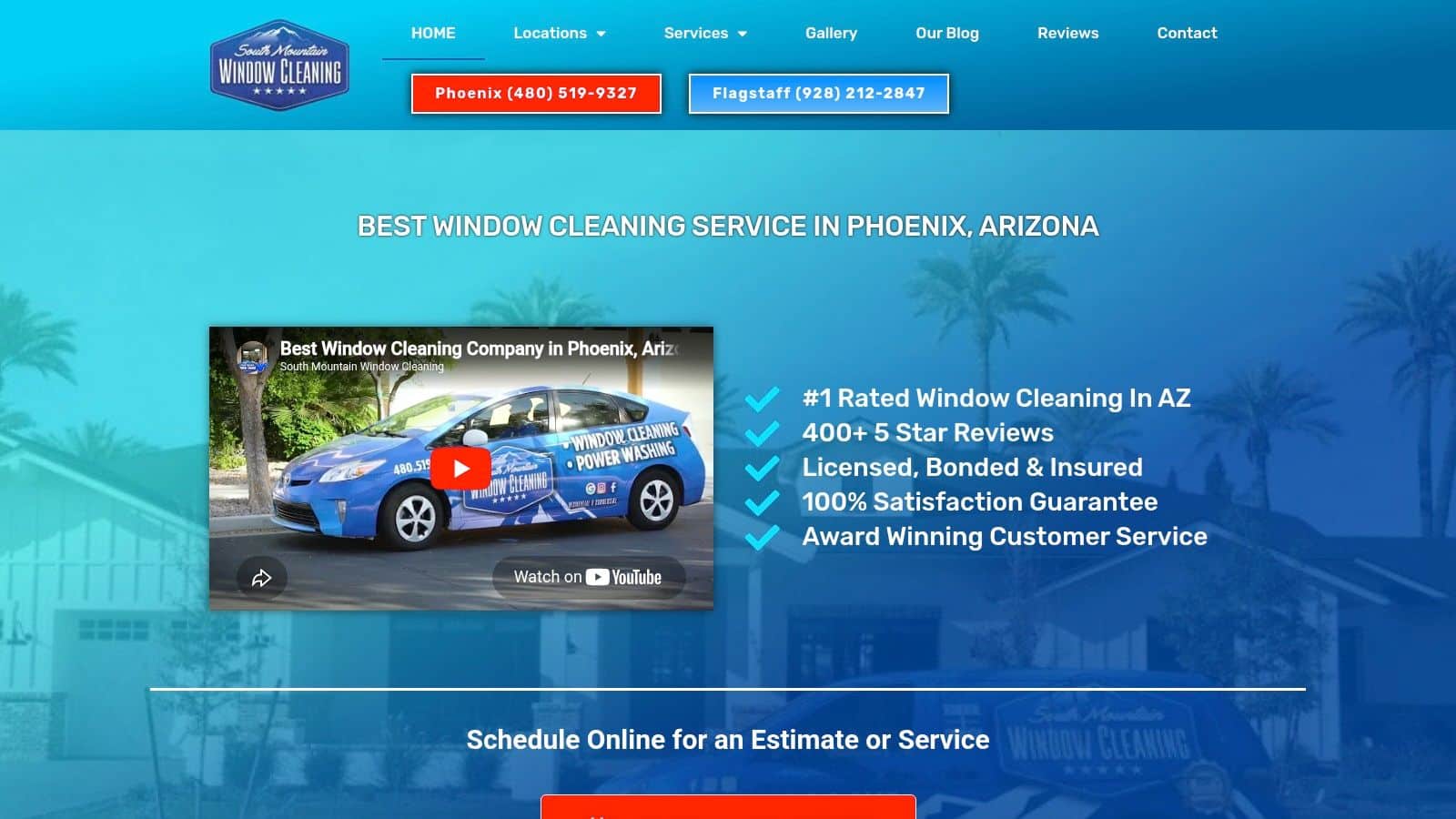
If you need a practical scope for your site, South Mountain Window Cleaning, LLC can provide a fast quote for commercial pressure washing, exterior cleaning, and related property maintenance across Phoenix, Scottsdale, Paradise Valley, Chandler, Tempe, and Gilbert.