
You've changed the sticky strips, wiped down the kitchen, and swatted the fly circling the patio door. By afternoon, another one is walking across the glass. In a Phoenix Valley home or storefront, that's frustrating enough to send you shopping for a stronger trap, but the better next move is to find out where those flies are coming from.
Catching house flies works best when the catches tell you what to fix. A trap can remove adults and help locate activity. It can't close a service door, repair a screen, or clean the residue beneath a dumpster.
Why Flies Keep Showing Up Indoors
Consider a Phoenix restaurant with sticky strips in the back room and a service door propped open during deliveries. The strips fill up, employees replace them, and customers still notice flies at the front windows. That's a useful diagnostic scenario, not proof that the restaurant needs another brand of fly paper.
The captures tell the manager that flies are present. They don't establish whether the insects entered during deliveries, followed waste odors toward the building, or developed in neglected organic material nearby. Kitchens and dumpster areas deserve attention because of food and waste, while flies gathered against sunlit glass warrant an inspection of the nearby entry route.
A full trap isn't a complete diagnosis
Equipment also changes what you see. A Florida dairy-farm comparison of commercial house-fly traps found approximately 13,323 house flies per trap in the best-performing system, while several alternatives captured fewer than 300. That result demonstrates trap-and-lure compatibility, not a capture target for a Scottsdale kitchen.
A high catch can mean an effective trap, heavy fly activity, or both. A low catch can mean fewer flies, poor placement, or an unsuitable lure. Neither number means much without context.
Practical rule: Judge a trap by what it helps you learn, not just how impressive it looks when full.
Before buying replacements, record where you see flies, when doors stay open, and whether waste collection changes the activity. MODERN LYFE's practical guide to indoor fly control is a useful companion resource for organizing that indoor check.
The important distinction is between an entry problem and a nearby source problem. Both can produce flies on the same window, but they call for different maintenance work. Treat the window as a place to investigate, not automatic evidence that the glass itself is causing the infestation.
Sanitation and Exclusion Come First
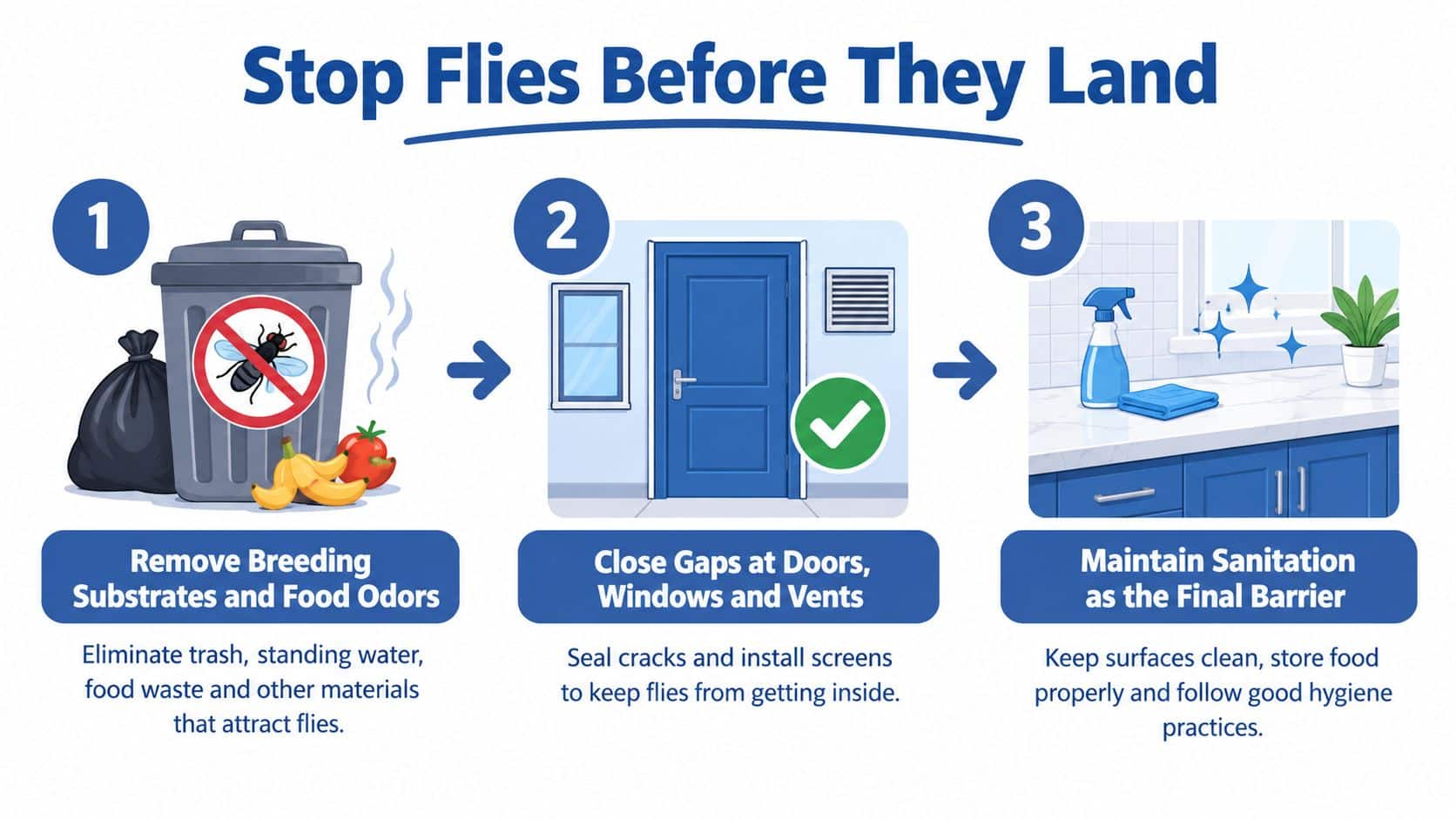
Remove accessible waste before setting bait. Close garbage lids, bag food scraps securely, and clean the residue beneath liners rather than replacing the bag and leaving the container dirty. Check pet waste, spilled animal feed, and damp organic material around outdoor storage areas.
Cleaning should reach the material flies can use, not merely improve the smell. Scrub accessible organic residue around drains and waste containers, correct leaks, and manage wet compost so it doesn't remain an exposed accumulation beside the building. Drain activity also deserves insect identification rather than assuming every small fly is a house fly.
Clean the source, then close the route
For restaurants, the weak point may be the handoff between kitchen cleaning and outdoor waste handling. Arelli Cleaning's restaurant cleaning for businesses provides a relevant service reference when reviewing that broader cleaning scope. Ask who owns the bin interiors, loading area, and residue under movable containers, not just the visible kitchen floor.
Outdoor cleanup needs the same specificity. A commercial dumpster cleaning service addresses a different job from routine trash collection: removing material left on the container and surrounding surfaces.
- Waste containment: Check that lids close and collection practices don't leave loose food or leaking bags behind.
- Door discipline: Keep service doors closed between deliveries rather than treating an open doorway as ventilation.
- Exclusion: Inspect screen fit, door weather stripping, and gaps around utility penetrations. Don't obstruct required ventilation.
- Moisture control: Repair the leak instead of repeatedly drying the same wet area.
The sanitation sequence is the foundation; traps remain supplementary. A 2025 waste-facility study reported sticky traps capturing 49% of monitored flies, compared with 4% for pheromone traps, while favoring sanitation plus targeted physical measures as the overall strategy, as summarized in the public-health guidance on fly management. Those findings shouldn't be treated as a universal ranking for household products.
Use this prevention sequence as a maintenance reminder.
Choosing the Right Trap for the Job
The best trap isn't necessarily the neatest package on the shelf. Choose equipment for the insect, the location, and the amount of attention someone can realistically give it. A discreet indoor unit and an outdoor odor-baited bag solve different operational problems.
Sticky strips make catches visible and easy to inspect, but exposed insects aren't an appealing feature in a dining room. Jug and bag traps are candidates for outdoor service areas where their bait and appearance won't interfere with customers. Neither belongs beside an open entrance just because that's a convenient hook.
Trap Types at a Glance
| Trap type | Attractant | Best location | Replace or refresh |
|---|---|---|---|
| Sticky strips | Landing or resting opportunities; some products add a lure | Out-of-the-way indoor monitoring points | When adhesive is covered, dirty, or no longer usable |
| Hanging jug traps | Manufacturer-specified bait | Outdoor waste or service areas, where permitted by the label | Inspect bait condition and follow refresh directions |
| Bag traps | Product-specific food or odor lure | Outdoor locations away from occupied seating | Replace at capacity or according to the label |
| Bait stations | Formulated food bait, sometimes containing insecticide | Label-approved, controlled-access locations | Service according to the product label |
| UV light traps | Light attraction, with the capture mechanism varying by model | Suitable indoor service spaces with appropriate mounting | Maintain capture boards and lamps as directed |
Match maintenance to the equipment
Bait condition matters as much as trap shape. USDA field research on house-fly trapping methods found baited jug traps performed best during their first two days, with performance declining after four days as bait attractiveness deteriorated; hot weather also reduced effectiveness. That's a reason to inspect bait closely, not a universal replacement schedule for every product.
For a back patio, weigh odor and visibility before choosing a hanging bag. At a restaurant dumpster pad, serviceability matters more than decorative appearance. At a high-rise service entrance, consider an appropriately installed indoor light trap without treating it as a replacement for door management.
Don't confuse house-fly trapping with a countertop fruit-fly remedy. Pestless Inc.’s DIY fruit fly trap ideas are a separate resource for that problem, not evidence that the same homemade lure will perform equally well against house flies.
Reading Trap Counts as a Diagnostic Signal
A useful trap log records more than a total. Note the location, trap type, lure, installation date, condition, and relevant activity nearby. Include deliveries, cleaning work, open doors, and waste collection so the next person inspecting the property has something concrete to compare.
Compare like with like. Keep the trap and lure consistent when comparing locations or successive monitoring periods. A new bag trap beside a dumpster and an aging sticky strip beside a window aren't equivalent measuring devices.
Interpret patterns without jumping to conclusions
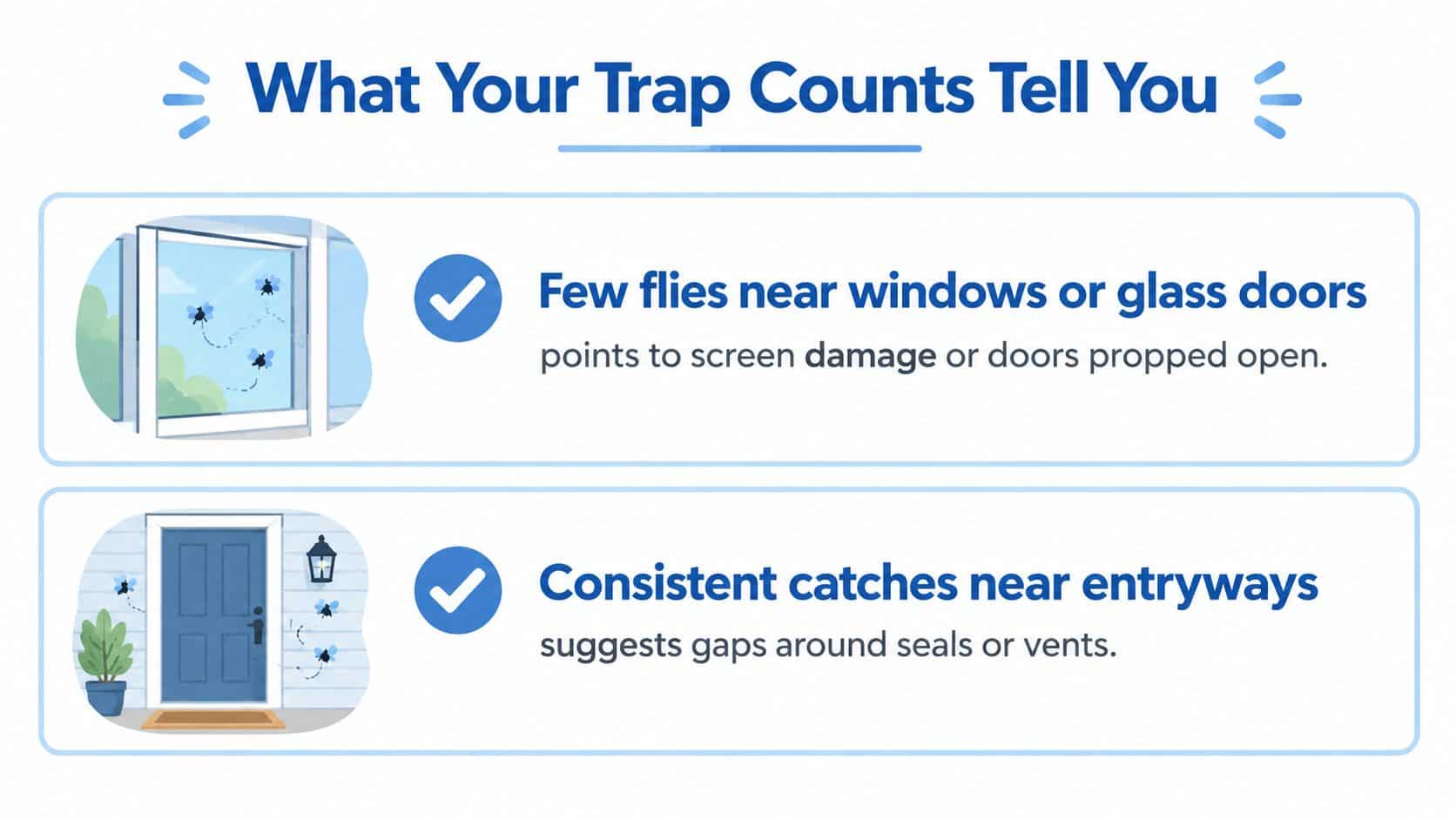
Use the location of catches to set an inspection priority, not to declare a cause.
- Window-side activity: Check screen damage and door habits before assuming there's an indoor breeding source.
- Kitchen or waste-area captures: Inspect food residue, moisture, container condition, and the cleaning boundary behind equipment.
- Entryway concentration: Examine seals, nearby openings, and how the doorway operates during busy periods.
- Increasing catches: Revisit the source investigation and verify trap condition before just adding more equipment.
This location checklist helps turn observations into a maintenance inspection.
Check the explanation against the property
Suppose captures remain concentrated near a loading door after the surrounding area has been cleaned. Watch the delivery process before ordering stronger bait. If staff routinely leave the door open while unpacking, the operational change may matter more than replacing the trap.
Conversely, persistent activity around a closed waste room warrants a closer inspection of the room and its containers. Don't assume a clean-looking floor means the underside of a bin or the space behind it is clean.
A declining count is encouraging only when the trap is still capable of catching flies.
Dust-covered adhesive, exhausted bait, or a full capture surface can make the record misleading. Note those conditions separately, and avoid calling the problem resolved until ordinary use of the building supports that conclusion.
Placement, Rotation, and Heat Adjustments
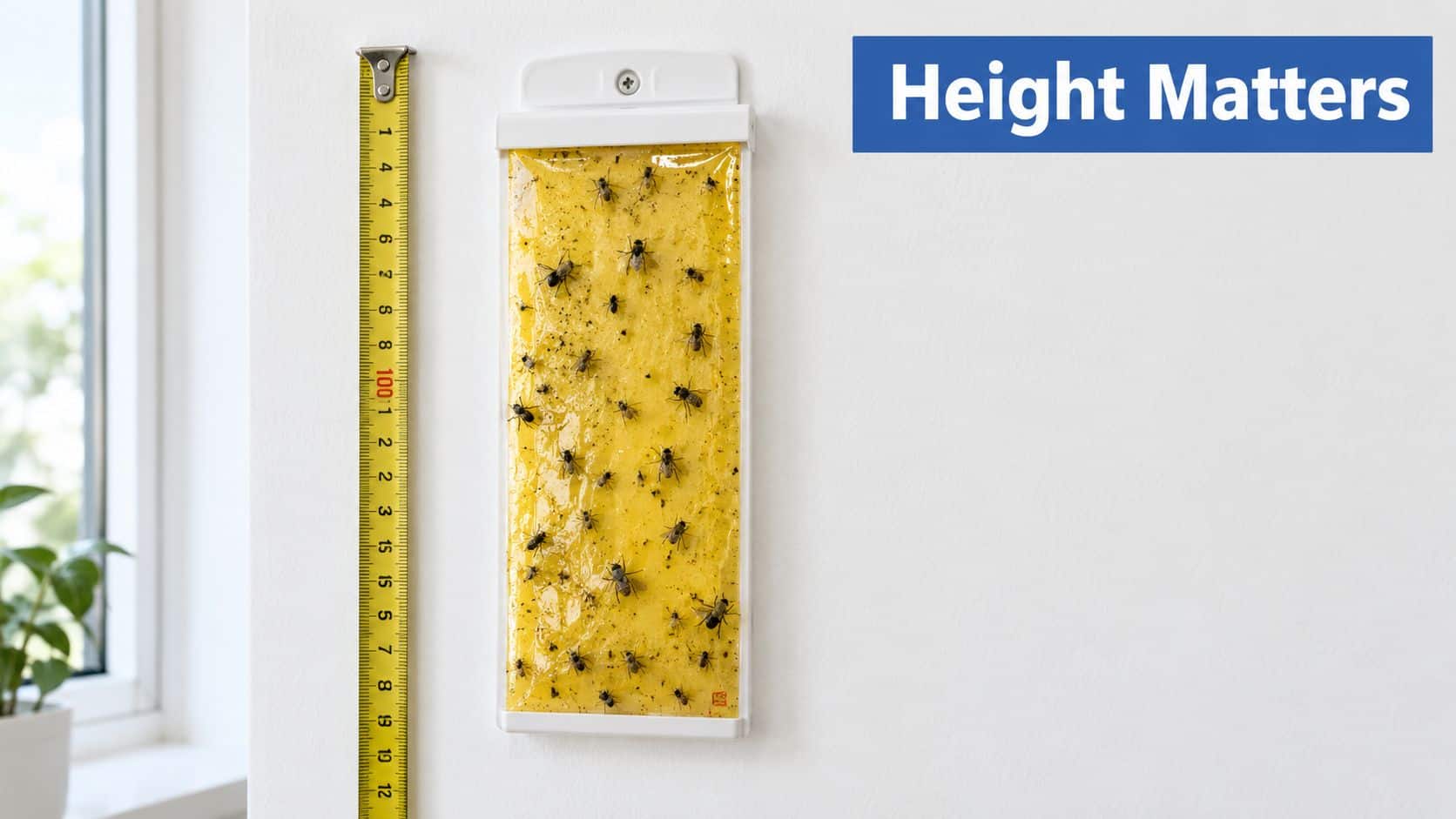
Put the trap where you've observed activity and where its label allows installation. Don't cluster equipment in the most convenient corner and assume it represents the whole property. For baited monitoring, use a consistent mounting height and keep traps separated so comparisons remain useful.
Check placement deliberately rather than hanging a strip wherever a hook already exists.
Keep placement and servicing consistent
When comparing positions, rotate identical equipment at the end of a monitoring period and record the move. Changing the lure, location, and trap design together prevents you from knowing which adjustment helped. Keep odor-baited outdoor traps away from open doorways, following label directions rather than inventing a universal setback.
For Phoenix heat, inspect rather than rely on the calendar. The USDA findings discussed earlier justify watching bait condition closely during hot weather. Where permitted, choose sheltered placement instead of exposing equipment to direct afternoon sun, and replace sticky material when insects or dust leave little usable adhesive.
A torn screen beside the trap is still an unresolved entry route. Arrange screen repair service rather than asking indoor trapping to compensate for it.
For an additional visual reference, this video can accompany your placement check.
Maintenance checkpoint: An unchanged trap isn't necessarily a working trap.
Finally, don't escalate spraying just because catches continue. Repeated pyrethroid use isn't a guaranteed solution, and pesticide selection belongs within a label-compliant control plan. If chemistry is needed, have a licensed pest-control professional evaluate the insects and the existing treatment history.
Entry Points That Need More Than a Trap
A trap hanging beside a torn screen addresses the flies after entry. Screen repair addresses the opening. That distinction is especially important on upper floors, where residents shouldn't improvise access to exterior windows or damaged screening.
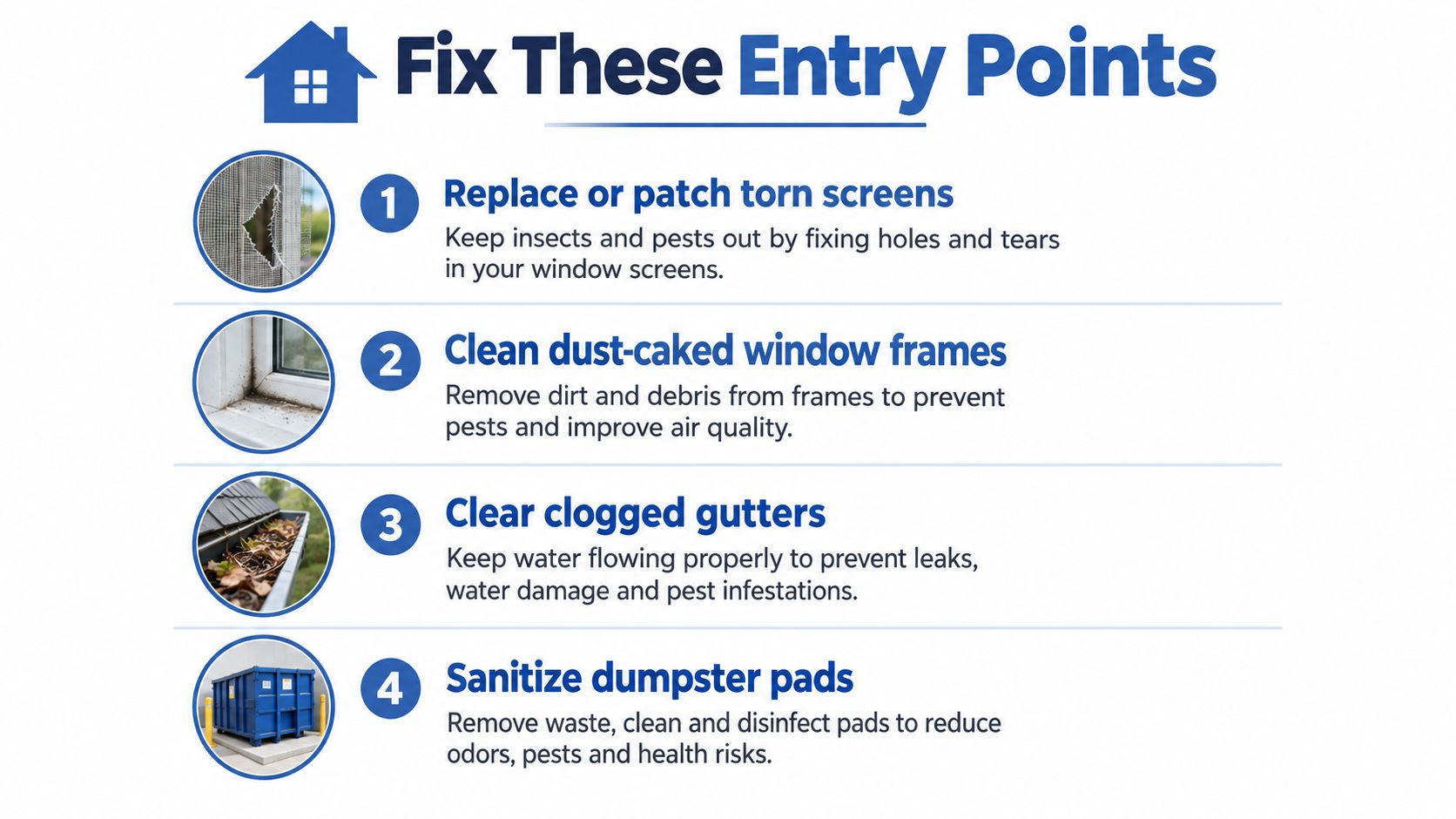
Window maintenance should include the screen fit, frame condition, and track, not just the glass. Remove accumulated debris so the closing surfaces can be inspected, and distinguish ordinary dust from food or organic residue. Dusty glass alone isn't proof of a house-fly breeding site.
Separate cleaning needs from pest sources
Gutters and exterior surfaces also require judgment. Inspect clogged gutters for retained organic debris and moisture rather than labeling every blockage a fly infestation. House washing can remove surface buildup, but it won't correct an open doorway or replace damaged screening.
For a frequently used patio entrance, review the condition and fit of the screen door. At a commercial waste area, look beneath containers and along edges where routine sweeping may miss residue. These are different maintenance tasks, and a useful work order identifies the actual defect.
Use this checklist to keep exterior inspections focused.
Verify water requirements before washing
Phoenix-area drought-response restrictions can prohibit potable-water washing of driveways, sidewalks, patios, and exterior walls except for health, safety, or code-related reasons, so verify current city or utility requirements before scheduling work, as outlined in the Arizona water-restriction overview. Don't assume restrictions are identical across Valley communities or that a sanitation concern automatically qualifies for an exception.
Ask the contractor how the cleaning method fits the applicable rules and how removed residue will be handled. The objective is to remove the material responsibly, not relocate it to another part of the property. Targeted maintenance is more useful than indiscriminate washing when the defect is a damaged seal, a dirty container, or an inaccessible debris pocket.
Putting It Together and Knowing When to Call a Pro
Catching house flies is a maintenance system, not a single purchase. The trap supplies observations; someone still needs to turn those observations into completed work. Assign ownership so a reported screen defect or dirty waste area doesn't sit unresolved between vendors.
A utility-closet checklist
- Inspect first: Identify the flies and record where activity occurs.
- Assign the correction: Name who will handle cleaning, repairs, or changes to door use.
- Monitor consistently: Keep equipment and records comparable.
- Service the trap: Check bait, adhesive, capacity, and mounting condition.
- Verify the outcome: Reinspect after the correction instead of assuming the work order solved the problem.
Call a cleaning professional when residue requires equipment, access, or handling beyond routine housekeeping. Bring in licensed pest control when the insect identification is uncertain or activity persists despite completed sanitation and exclusion work. Recurring catches around drains or dumpsters deserve investigation, not an indefinite cycle of replacement strips.
For upper-floor screens and exterior work, use qualified providers rather than leaning out of windows or improvising access. Give them the trap log and photos of the suspected defect so the visit addresses a defined problem.
The strongest result isn't the fullest trap. It's a property with fewer unresolved sources, sound entry barriers, and monitoring that confirms the maintenance is working.
South Mountain Window Cleaning, LLC offers residential, commercial, and high-rise window washing, along with screen and track care and exterior cleaning, in Phoenix, Scottsdale, Paradise Valley, Chandler, Tempe, and Gilbert, Arizona. If fly activity has exposed neglected screens, dirty window tracks, or waste-area residue, visit South Mountain Window Cleaning, LLC to request a free quote for the cleaning and maintenance your property needs.