
A restaurant manager in Phoenix notices the complaint before the lunch rush: the dumpster area smells sour, flies gather around the enclosure, and dusty footprints lead customers past the loading zone. The property team may have pressure-washed the concrete before, but a quick rinse didn't remove the grease and leachate trapped below the surface. In Arizona's heat, that difference becomes obvious quickly.
Commercial dumpster cleaning is more than odor control. It combines contaminant removal, sanitation, drain protection, and wastewater management. For restaurants, retail centers, office properties, and mixed-use buildings across Phoenix, Scottsdale, Paradise Valley, Chandler, Tempe, and Gilbert, the right service plan protects the customer experience while helping the property follow local discharge requirements.
Introduction to Commercial Dumpster Cleaning for Busy Properties
A dumpster enclosure sits at the intersection of several daily pressures. Food waste arrives continuously, tenants may overfill containers, desert dust settles on the pad, and intense sunlight accelerates the drying of organic residue. When a property manager receives pest complaints or notices a dark, sticky area beneath the dumpster, the visible mess is often only part of the problem.
The concrete pad can hold grease, food particles, and liquid waste in its pores. A surface that looks cleaner after cold-water rinsing may still release odor when the temperature rises. That's why a professional service should treat the pad as a sanitation and wastewater-control project, not as an ordinary exterior wash.
This guide is for commercial property managers, building owners, restaurant operators, retail teams, and facilities personnel who need a practical way to evaluate service. It explains what the work includes, how property type affects scheduling, what a compliant workflow looks like, and which questions to ask a provider before signing a recurring agreement.
Phoenix conditions make planning especially important. Dust can create a gritty film, hard water can leave mineral deposits, and heat can make residue smell stronger between visits. A provider must also understand that wash water containing grease, detergent, solids, or food waste can't be allowed to enter storm drains. San Diego's pressure-washing guidance describes the same central stormwater principle used in many municipal programs: polluted wash water needs capture and an approved disposal route.
By the end, you should be able to distinguish a cosmetic rinse from compliance-aware commercial dumpster cleaning, choose a realistic service cadence, and request a quote based on the conditions that affect the work.
What Commercial Dumpster Cleaning Really Involves
Commercial dumpster cleaning has two connected jobs. The first is removing grease, food residue, biofilm, and leachate from the dumpster and surrounding pad. The second is controlling the wastewater created during that process.
Think of porous concrete as a sponge. A sponge doesn't become clean because water passes over its surface, and neither does a stained dumpster pad. Grease can cling inside small surface pores, while organic residue supports odor and bacterial growth. A professional workflow therefore uses a commercial degreaser, allows it time to work, applies hot-water pressure with agitation, sanitizes the surface, and recovers the wastewater.
The water temperature matters because cold rinsing often moves grease without breaking it down. The practical benchmark described in commercial pad-cleaning guidance is hot water at about 180°F or higher, combined with agitation and recovery. Commercial dumpster-pad cleaning guidance explains why degreaser dwell time, hot-water pressure washing, and sanitizer belong in the same process.
The cleaning sequence
A sound service generally follows this order:
- Inspect the area. The technician identifies the pad layout, nearby drains, access restrictions, heavy buildup, and any standing liquid.
- Protect the drainage system. Drain covers, berms, or other isolation methods prevent wash water from traveling into stormwater inlets.
- Apply degreaser. The chemical needs contact time, called dwell time, so it can emulsify grease rather than spread it.
- Agitate and wash. Hot-water pressure and mechanical action lift embedded residue from the slab and container surfaces.
- Sanitize. A suitable sanitizer addresses remaining organic contamination and odor sources.
- Recover the wastewater. A vacuum or recovery system collects the polluted water for discharge through an approved route.
The regulatory reason is straightforward. A U.S. municipal code example allows outdoor container washing only when the wash area has prior approval, drainage sends wastewater to the sanitary sewer, and procedures prevent ponding or discharge to storm drains. The same code requires containers to remain sufficiently clean to avoid attracting insects and rodents and to minimize foul odors. The municipal code example illustrates why dumpster washing belongs in an environmental-control program.
A rinse can improve appearance. Compliant sanitation removes contamination while controlling where the water goes.
Why Clean Dumpsters Matter for Health Safety and Compliance
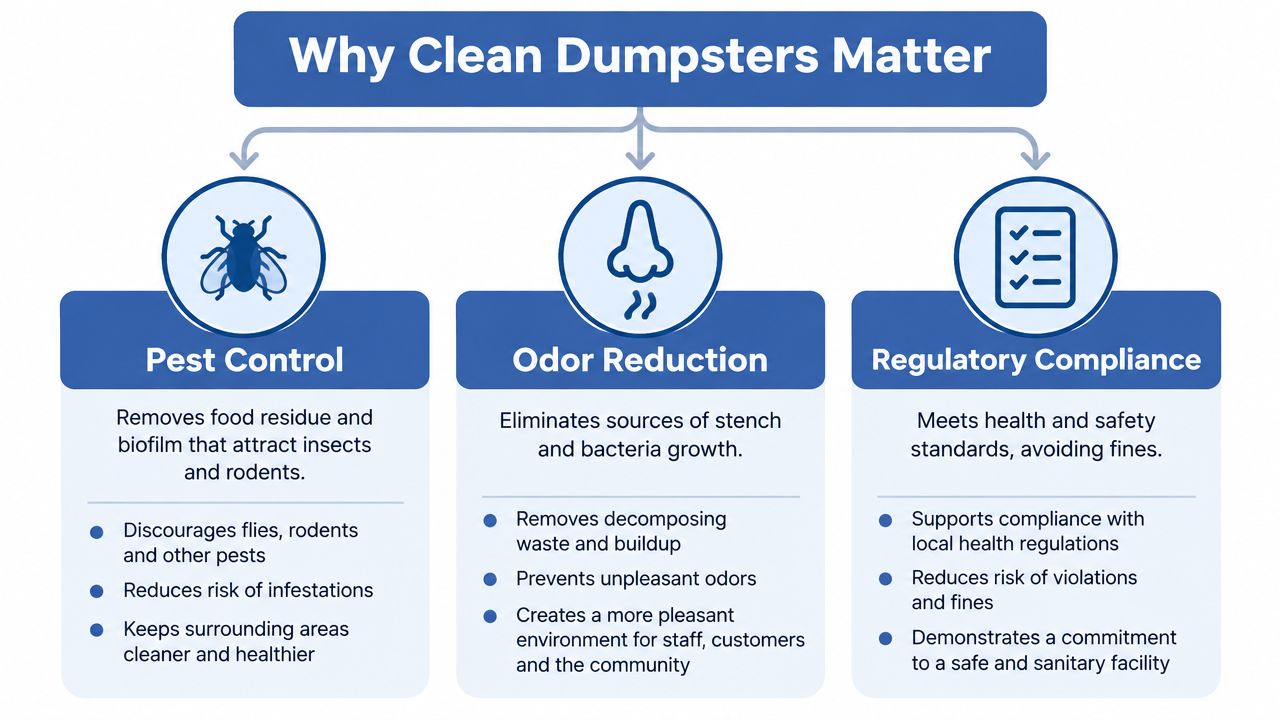
The benefits follow a practical chain. Food residue and biofilm provide material that attracts insects and rodents. Those pests and decomposing organic matter contribute to odor. If a technician then washes the area without capturing the runoff, the cleaning activity can create a stormwater problem.
Pest pressure starts with residue
Restaurants and food retailers usually place the greatest demand on a dumpster enclosure because discarded food, oils, and liquid waste arrive regularly. A clean-looking lid won't solve residue on the pad, around the wheels, or beneath the container. Removing that buildup reduces the material available to pests.
Container maintenance also matters between professional visits. Property teams can review these hygiene tips for bin covers as part of a broader enclosure-care routine, especially when lids collect sticky residue or dust.
Heat makes odor harder to ignore
Phoenix summer conditions can turn a minor spill into a major customer-experience issue. Sunlight warms the pad and container, while dry desert air leaves concentrated residue behind. A restaurant may notice the smell near an entrance, a retail plaza may receive complaints from neighboring tenants, and an office property may find that the dumpster enclosure undermines otherwise clean grounds.
The appropriate response isn't to mask the odor. Degreasing, hot-water agitation, and sanitizing address the organic material producing it. Broader exterior maintenance can support the same standard of presentation, including pressure washing for commercial buildings.
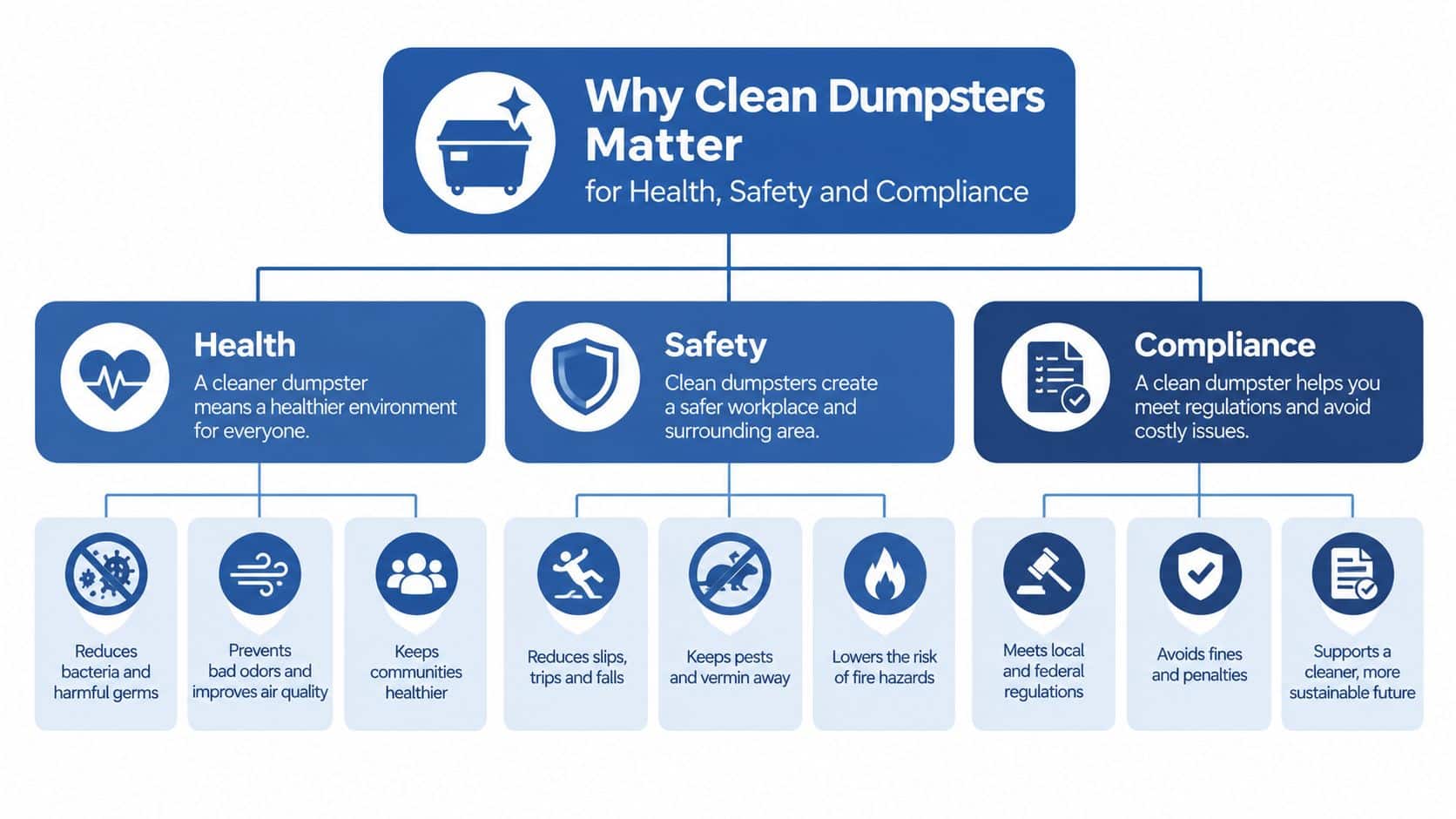
Compliance principle: Wash water containing soap, grease, solids, or food waste must be captured and sent to a sanitary sewer, holding tank, or another approved treatment route, not a storm drain.
That principle applies across property types. A grocery center may deal with recurring food residue, a multi-tenant plaza may need coordinated access around several businesses, and an office site may have lower soil intensity but still need the enclosure maintained for tenants and visitors. Clean concrete matters, but cleaning without wastewater control is incomplete.
How Often to Schedule Service and What Drives Cost
A useful schedule starts with waste intensity rather than a universal calendar. A high-volume restaurant with fryer use creates a different cleaning burden from a quiet office property. Industry guidance recommends monthly sanitation for high-volume restaurants, every one to three months for standard restaurants and cafés, quarterly service for grocery or food retail, quarterly service for multi-tenant plazas, and twice-yearly service for non-food retail or office sites. These intervals are summarized in commercial waste-handling standards.
| Property Type | Typical Frequency | Key Cost Drivers |
|---|---|---|
| High-volume restaurant with heavy fryer use | Monthly | Grease load, soil severity, access, wastewater recovery |
| Standard restaurant or café | Every one to three months | Food residue, pad size, container movement, recovery requirements |
| Grocery or food retail | Quarterly | Leachate, enclosure layout, traffic coordination, buildup level |
| Multi-tenant plaza | Quarterly | Number of tenants, scheduling access, pad dimensions, soil intensity |
| Non-food retail or office site | Twice yearly | Lower waste intensity, mineral buildup, access, recovery setup |
Frequency isn't the same as price. A compact pad with light residue may require less labor than a larger enclosure where the technician must work around several containers, protect nearby drains, and recover a substantial amount of wastewater. A quote should reflect the actual site, not just the number of dumpsters.
What changes the price
- Pad size and layout: Larger surfaces require more chemical, water, labor, and recovery time.
- Soil level: Fresh residue is different from hardened grease, heavy staining, or long-neglected buildup.
- Access conditions: Locked gates, tight drive lanes, delivery schedules, and containers that can't be moved can slow preparation.
- Drainage controls: Drain isolation, berming, vacuum recovery, and approved disposal add important compliance work.
- Service scope: Cleaning the pad alone differs from washing container exteriors, walls, curbs, or nearby concrete.
- Scheduling requirements: Recurring service coordinated around restaurant deliveries or tenant operations may affect labor planning.
Phoenix property managers should also account for dust and hard-water deposits. These may not create the same odor pressure as food waste, but they can make the enclosure look neglected and increase the effort required for a uniform finish. For adjacent concrete and other flat areas, flat-surface cleaning services can be considered separately from the dumpster-pad scope.
The most reliable budget approach is to request a site walkthrough, identify the desired cadence, and ask the provider to state what recovery and disposal methods are included.
Inside a Professional Service Workflow From Prep to Recovery
A professional workflow begins before the pressure washer turns on. The technician first checks the pad, identifies every nearby drain, confirms access, and determines whether containers can be moved. This inspection prevents a common mistake: treating the visible stain as the entire job while overlooking the route wastewater could take.
Preparation controls the site
The technician isolates drains with suitable covers, berms, or barriers. Containers, walls, curbs, and nearby equipment receive protection where necessary. If the enclosure is active, the crew coordinates movement and timing so cleaning doesn't interfere with waste collection or customer traffic.
The next step is chemical preparation. A commercial degreaser is applied to greasy areas and left for an appropriate dwell period. That contact time gives the product an opportunity to loosen oils and organic residue before agitation begins.
Heat and agitation remove embedded material
Cold water may rinse loose dust, but it tends to spread greasy residue across porous concrete. Commercial pad-cleaning guidance identifies hot water at about 180°F or higher as a practical benchmark when paired with agitation. The technician works methodically across the slab, container surfaces, edges, and difficult areas beneath or around the dumpster.
Sanitizing follows the main wash. It addresses the remaining organic film after the heavier soil has been removed, rather than trying to substitute for degreasing.
Recovery completes the process
The crew then collects the wastewater with a vacuum recovery system or comparable equipment. The recovered water must go to the sanitary sewer, a holding tank, or another route approved by applicable local requirements. It must not flow into a storm drain or the municipal separate storm sewer system.
Use this checklist when evaluating a provider:
- Drain isolation: Ask how nearby storm drains are protected.
- Degreaser dwell time: Confirm the crew doesn't rely on an immediate rinse.
- Hot-water capability: Ask whether the equipment supports the required heat for grease removal.
- Vacuum recovery: Verify that wash water is collected rather than pushed toward a drain.
- Disposal documentation: Request an explanation of the approved wastewater route.
- Site restoration: Confirm that containers are returned and access areas are left orderly.
For a provider that combines this service with broader exterior maintenance, review the details of dumpster pad cleaning service and compare the described workflow with your property's needs.
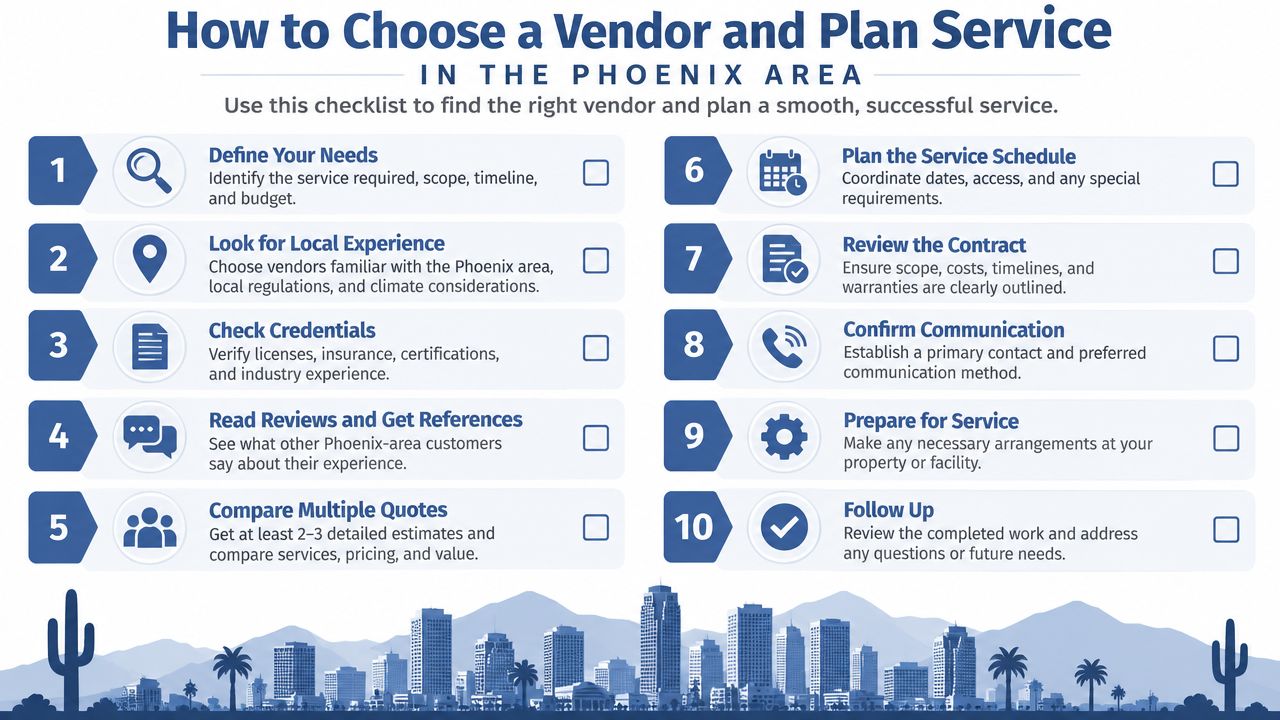
How to Choose a Vendor and Plan Service in the Phoenix Area
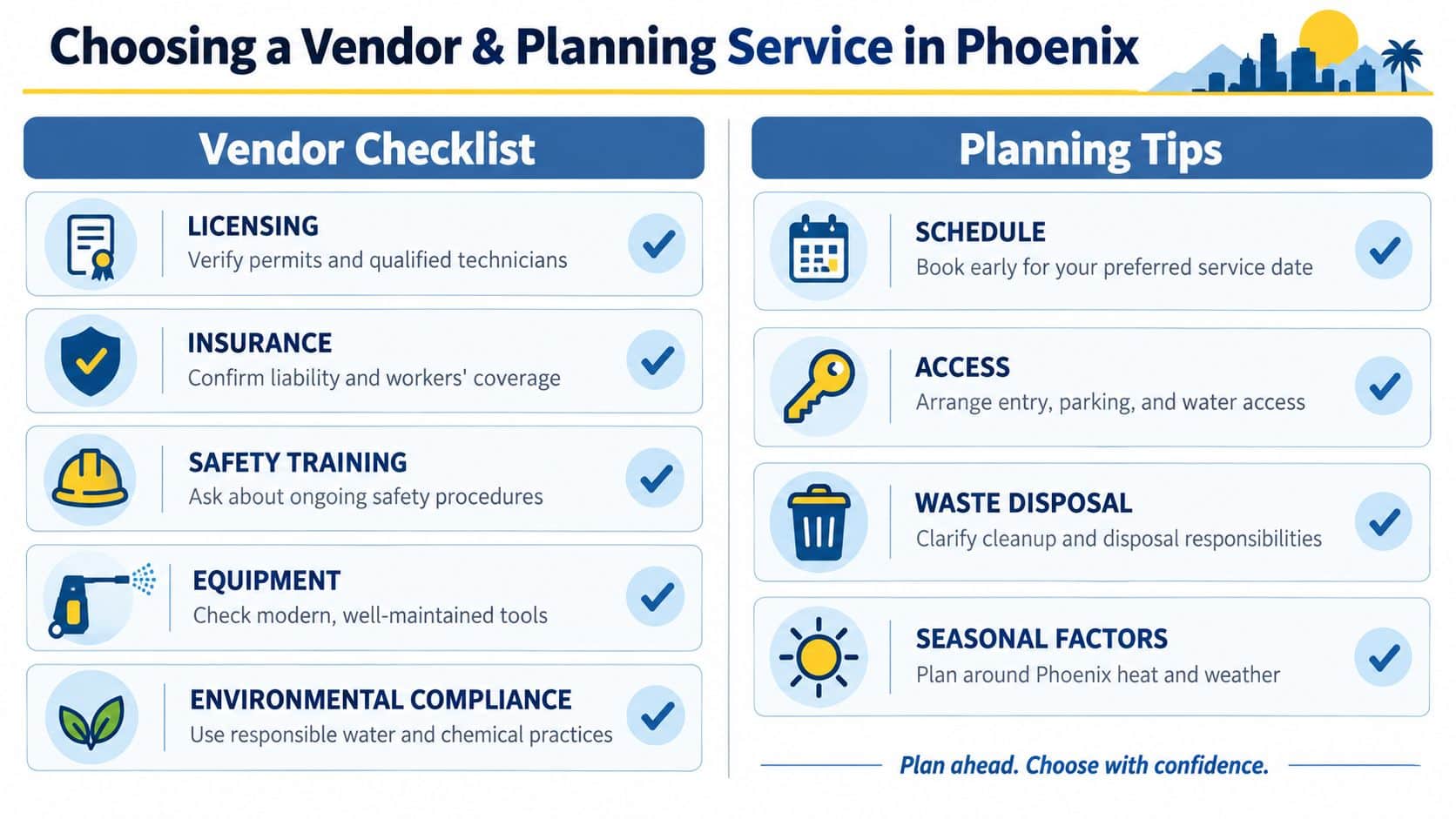
Vendor selection should combine technical competence with operational reliability. A company may offer pressure washing, but that doesn't automatically mean its crew knows how to isolate drains, recover wastewater, or document a safe process. Ask for clear answers before comparing prices.
A practical vendor screen
Look for evidence of:
- Licensing and insurance: Confirm the business carries appropriate credentials and commercial protection.
- Safety training: Ask how technicians are trained to work around chemicals, hot water, vehicles, tenants, and active service areas.
- Recovery equipment: Verify that the provider brings drain-isolation materials, vacuum recovery equipment, and a defined disposal plan.
- Equipment suitability: Confirm access to hot-water pressure systems, degreaser application tools, and sanitizing products.
- Scheduling systems: Computerized scheduling can help coordinate recurring visits across multiple properties and avoid missed service windows.
A contract should state the agreed frequency, included surfaces, access responsibilities, response expectations, and what happens if the result doesn't meet the documented scope. Property managers should also ask whether the provider offers a satisfaction guarantee and how quickly the company responds to an urgent odor, spill, or pest-related complaint.
Phoenix conditions require local planning
Extreme heat can intensify odor between service visits, while dust settles on exposed concrete and equipment. Hard-water deposits may also affect the appearance of the enclosure and surrounding flatwork. These conditions don't replace the need for wastewater controls, but they do influence how often the property may need attention and how much preparation the job requires.
Stormwater rules remain central. A provider should explain how it prevents contaminated water from reaching drains and where the recovered water goes. That answer matters more than a promise that the pad will “look clean.”
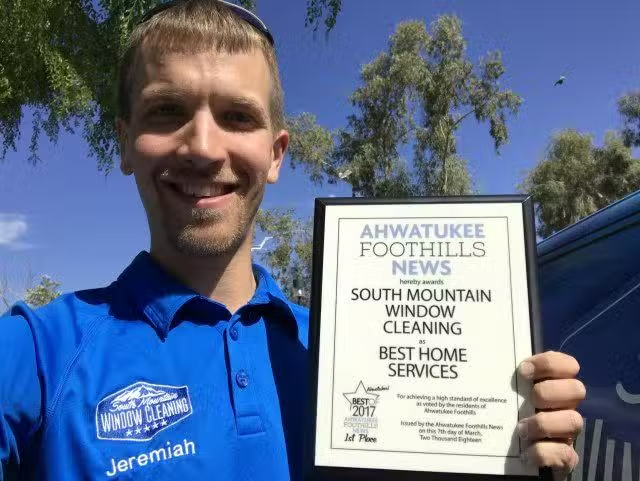
South Mountain Window Cleaning, LLC is one Valley provider that lists dumpster pad sanitation alongside exterior cleaning services. The company describes itself as licensed, bonded, and insured, with commercial window washing, power washing, pure-water systems, safety-trained technicians, computerized scheduling, and a $2 million insurance policy. Property managers can also review its broader commercial property maintenance services when coordinating several exterior-care tasks.
Keeping Your Property Fresh Compliant and Ready for Customers
A clean dumpster area begins with the correct diagnosis. If the property has persistent food residue, grease, odor, or pest complaints, schedule a sanitation service that includes wastewater recovery rather than requesting a quick rinse. If the site has lighter waste activity, establish a recurring interval appropriate to the property and adjust it when heat, tenant use, or visible buildup changes.
Property managers can use a simple action list:
- Inspect the enclosure, pad edges, containers, and nearby drains.
- Record access restrictions and the busiest delivery periods.
- Ask providers how they isolate drains and dispose of recovered water.
- Match the service cadence to waste intensity.
- Put the agreed scope and response expectations in writing.
- Schedule a walkthrough before the hottest part of the season.
Odor-neutralizing ideas, such as these DIY recipes for fresh air, may help with general indoor or ambient freshness, but they shouldn't replace removing contaminated residue from the dumpster pad or controlling wash water.
A compliance-first program supports more than appearance. It helps keep customer paths more inviting, reduces avoidable sanitation concerns, and gives facilities teams a predictable way to manage an unpleasant but necessary part of property ownership in Arizona.
South Mountain Window Cleaning, LLC offers commercial dumpster pad sanitation, pressure washing, and scheduled exterior cleaning for properties across Phoenix, Scottsdale, Paradise Valley, Chandler, Tempe, and Gilbert. Visit South Mountain Window Cleaning, LLC to request a fast, free quote and arrange a service walkthrough focused on safe cleaning and wastewater recovery.