
A summer storm rolls over South Mountain, the wind kicks up dust, and the timing couldn't be worse. You planned to clean the patio, the driveway, the stucco wall by the side yard, or maybe you manage a retail center and already had a wash scheduled before the clouds built over Phoenix. Then the rain starts and the question gets immediate: can you pressure wash in the rain, or is that asking for trouble?
In Arizona, that's not a theoretical question. Monsoon weather doesn't always give you a clean yes-or-no decision. A quick shower might pass in minutes. A heavier cell can leave runoff, grit, slick concrete, and water pooling near outlets. If you're trying to keep a home, storefront, HOA walkway, drive-thru, or office entrance looking presentable, weather can throw a wrench into the plan fast.
That's also why storm prep matters beyond cleaning. If rain is hitting harder than expected, homeowners should think about drainage, runoff, and entry points around the property. A practical companion read is AMPM Restoration Services' guide to essential tips for home flood protection, especially during Arizona storm season.
For property appearance, the answer is more nuanced than many homeowners expect. Sometimes work can continue. Sometimes it absolutely shouldn't. If your bigger concern is visibility and maintenance through storm season, this guide on cleaning windows during monsoon season in Phoenix is also worth reviewing before you schedule exterior service.
An Arizona Rainstorm and Your Cleaning Plans
A homeowner in Gilbert sees light rain and thinks the driveway is already wet, so maybe it makes sense to keep going. A restaurant manager in Tempe looks at an entry walkway and wants it cleaned before the lunch rush. A condo manager in Scottsdale wants the exterior freshened up because dust from the first monsoon winds has already glued itself to the building.
All three are asking the same thing. Can you pressure wash in the rain and still get safe, clean results?
Sometimes yes. Often no. Your answer depends on the kind of rain, the machine you're using, the surface under your feet, and what result you expect at the end.
The mistake people make is treating all rain the same. A light drizzle over a flat concrete surface is one situation. A storm with wind, reduced visibility, slick stairs, active runoff, and an electric washer plugged into an outdoor outlet is a completely different one.
Rain doesn't just make a job wet. It changes footing, visibility, runoff control, equipment risk, and how well your detergents perform.
In Arizona, the weather adds another twist. Monsoon storms often arrive fast, dump hard, and leave behind a mix of moisture and desert grime. That means the best choice may not be “wash now” or “cancel entirely.” It may be “wait for the right window after the rain.”
The Short Answer and the Crucial Caveats
Yes, you can pressure wash in the rain under limited conditions. But that doesn't mean it's smart for every job, every machine, or every person holding the wand.
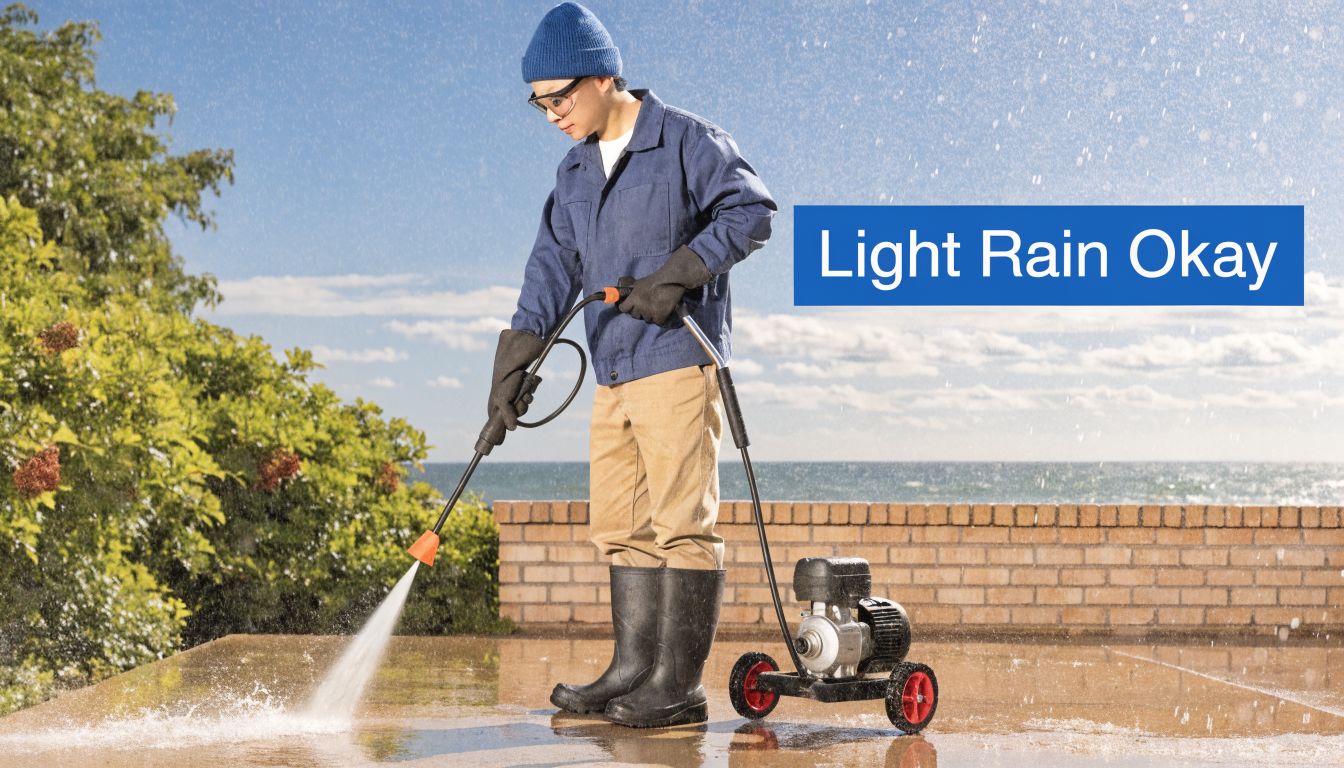
The workable version of rainy-day washing is narrow. Think light rain, stable footing, outdoor gas equipment, clear visibility, and no lightning or storm escalation. Under those conditions, a trained crew may decide the job is still manageable.
The unworkable version is easy to spot too. Heavy rain, storm runoff, wind-driven spray, roofs, steep walkways, ladders, electrical exposure, or any job where detergent needs to sit and work without getting washed away. In those cases, continuing usually means higher risk and worse results.
What makes the answer a yes
A light mist or passing drizzle can sometimes help keep a surface from drying too quickly. In Arizona, that matters because hot, direct sun can make detergents flash off before they've had enough contact time. If the surface stays evenly damp and the operator has control over runoff, the cleaning process can remain effective.
Some professionals also prefer a slightly overcast sky because it reduces rapid evaporation on masonry, stucco, and flatwork. That can make rinsing more manageable and reduce streaking on some surfaces.
What turns it into a no
Rain becomes a problem when it starts changing the job faster than the operator can control it.
That includes:
- Electrical exposure: Any setup involving electric pressure washers in active rain is a bad idea.
- Footing loss: Wet concrete, sealed pavers, painted decks, and algae-covered surfaces get dangerous quickly.
- Chemical dilution: If detergents can't stay where they're applied, cleaning quality drops.
- Visibility issues: If you can't clearly see residue, runoff, and missed spots, you can't verify the job.
Bottom line: Light rain doesn't automatically stop a professional job. It does rule out casual DIY decision-making.
Safety First Your Top Priority in Wet Conditions
Safety decides this question before cleaning quality does.
When people ask if they can pressure wash in the rain, they usually picture whether the machine will still spray. The more important question is whether the operator can stay upright, avoid a shock hazard, and control the work area from start to finish.
Why wet surfaces get dangerous fast
Rain and pressure washing don't just add water. They change how the surface behaves underfoot. According to Professional Window Cleaning's discussion of rainy-condition washing, power washing in rainy conditions can reduce surface friction coefficients by up to 300% on inclined surfaces. The same source notes that residential fall incidents increase by 40% in wet conditions alone, and that the combined effect can create a slippery film with shear strength dropping below 0.2, compared with 0.6 to 0.8 on dry concrete.
That tracks with what crews see in the field. A walkway that feels manageable when damp can become slick once you add a pressure stream, loosened grime, and a film of dirty rinse water.
Surfaces that deserve extra caution
- Painted or sealed concrete: Water sits on top longer and traction drops fast.
- Algae-stained patios and pool decks: The surface may already be slick before cleaning begins.
- Stairs, ramps, and sloped drives: Water moves downhill and leaves a skim layer where boots need grip most.
- Tile and stone near entries: These often look safer than they are.
For anyone planning work around a home or building exterior, a basic risk assessment approach from Safety Space risk management is useful. The method is simple. Identify hazards, judge who's exposed, decide on controls, and stop the job if the conditions keep changing faster than you can manage them.
Electricity is not the place to gamble
A GFCI is a safety layer, not permission to ignore weather. It helps interrupt a fault. It doesn't make active rain around electrical equipment harmless.
The biggest trouble spots are predictable:
- Wet plugs and connections
- Extension cords in puddles or runoff
- Outdoor outlets near splash zones
- Damaged insulation on cords or tools
- Reduced visibility while repositioning equipment
If a job also involves ladders, second-story work, or wet gutters, this guide on how to clean gutters safely reinforces the same principle. Water changes the risk profile of the entire task, not just the part where the nozzle is spraying.
A quick visual helps make the point:
Practical rule: If the weather makes you move faster, guess more, or trust your footing less, it's already affecting safety enough to rethink the job.
Gas Versus Electric Pressure Washers in the Rain
This is the clearest line in the whole discussion. If rain is part of the equation, electric pressure washers should be off the table.
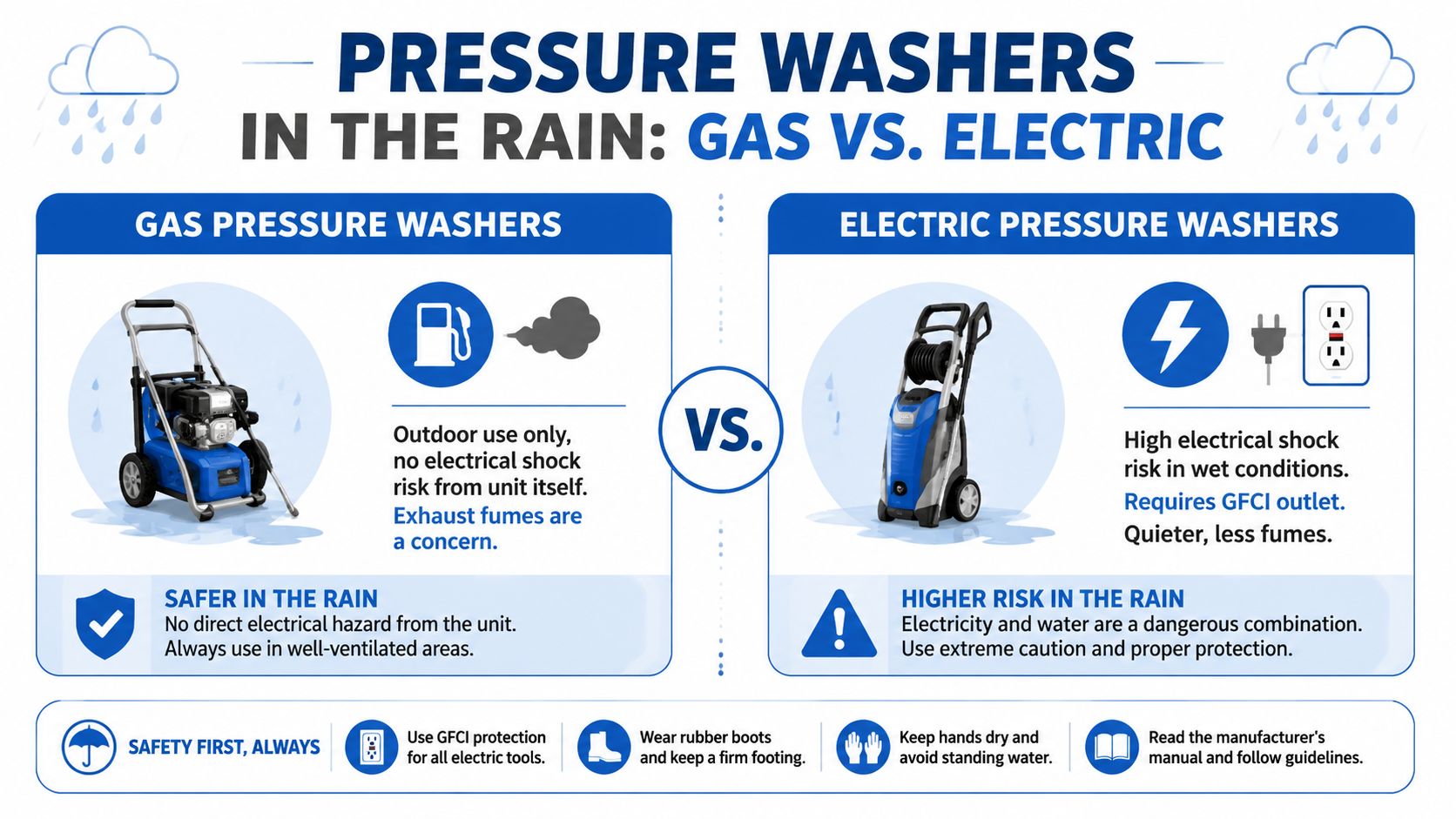
Electric units and active rain don't mix
Manufacturer guidance is blunt. Kärcher's safety position as summarized here states that electric pressure washers should not be used in rain, with 0% tolerance for precipitation. The same source ties that warning to OSHA's 29 CFR 1926.404 electrical safety regulations and notes over 450 pressure washing-related shocks in wet conditions, with 22% being fatal.
That's enough to end the debate for homeowners and most property managers. Electric machines are convenient, quieter, and common for light-duty jobs, but convenience doesn't outweigh electrical risk in rain.
The problem isn't just the motor housing. It's the whole chain:
| Machine type | Rain use reality | Main concern |
|---|---|---|
| Electric pressure washer | Not appropriate in rain | Shock hazard through power source, cord, outlet, and equipment |
| Gas pressure washer | Sometimes workable in light rain for trained operators | Slip risk, visibility, runoff control, and exhaust management |
Why professionals lean gas outdoors
Gas units remove the direct cord-to-outlet shock issue from the machine itself. That doesn't make rainy work automatically safe, but it does remove the biggest reason electric jobs should stop. For exterior cleaning crews, that's why gas-powered machines are the practical choice when conditions are marginal but still manageable.
That said, gas equipment has its own boundaries:
- Outdoor use only: Exhaust has to dissipate safely.
- Secure footing still matters: Gas power doesn't fix slippery concrete.
- Storm escalation still stops the work: Lightning, heavy wind, or low visibility change the call immediately.
- Chemical performance still matters: If rain is washing off treatment, the machine choice doesn't save the result.
What homeowners should take from this
If you own a small electric unit from a big-box store and you're staring at a wet patio, don't talk yourself into using it because the task seems minor. It's not worth it. Rain turns a simple setup into an electrical decision with real consequences.
If you're trying to understand what proper house washing should look like with the right equipment and process, this overview on pressure washing a house is a useful baseline.
The machine type changes the decision. Electric in rain is a stop. Gas in light rain is a judgment call for trained outdoor operators, not a green light for casual use.
How Rain Impacts Cleaning Quality and Efficiency
Even if a job is safe enough to perform, that doesn't mean the final result will be worth doing that day.
Rain can help cleaning. It can also ruin it. Both are true.
When light rain can help
On certain surfaces, a little moisture acts like a pre-soak. Dirt softens. Dust loosens. In Arizona, lightly damp conditions can keep cleaners from drying too fast on warm masonry, stucco, and concrete. That gives the operator a more even working window and can make rinsing smoother.
This matters most on jobs where the surface is dirty but not heavily stained, and where the cleaning process doesn't depend on long chemical dwell under dry conditions. A mild drizzle or overcast sky can also make visual control easier than direct afternoon sun reflecting off a bright driveway.
When rain starts hurting the result
Moderate or heavy rain changes the chemistry of the job. Detergent gets diluted. Vertical surfaces don't hold product well. Runoff becomes harder to control. You can also lose your visual read on what is clean because the whole surface is already wet.
The practical problems show up fast:
- You use more product for less effect
- You may miss spots hidden under a rain film
- Rinse water carries grime into adjacent areas
- Edges, corners, and buildup lines become harder to judge
If the work includes post-cleaning treatments, coatings, or anything that needs a dry surface to cure, rain is usually a deal-breaker. Cleaning might be possible, but finishing the full scope correctly won't be.
Quality depends on the surface
A flat concrete pad is one thing. A painted stucco wall, dumpster enclosure, storefront entry, or solar-adjacent area is another. The more detail, runoff sensitivity, or finish quality the job requires, the less tolerance there is for active rain.
That's why experienced crews don't ask only, “Can we keep working?” They ask, “Will this still meet the standard when it dries?”
A job isn't successful because the dirt moved during the wash. It's successful when the surface looks right after the weather clears.
A Pro's Guide for the Arizona Monsoon Season
Arizona changes this conversation because the rain here is often short, intense, and followed by heat. That means timing matters as much as technique.
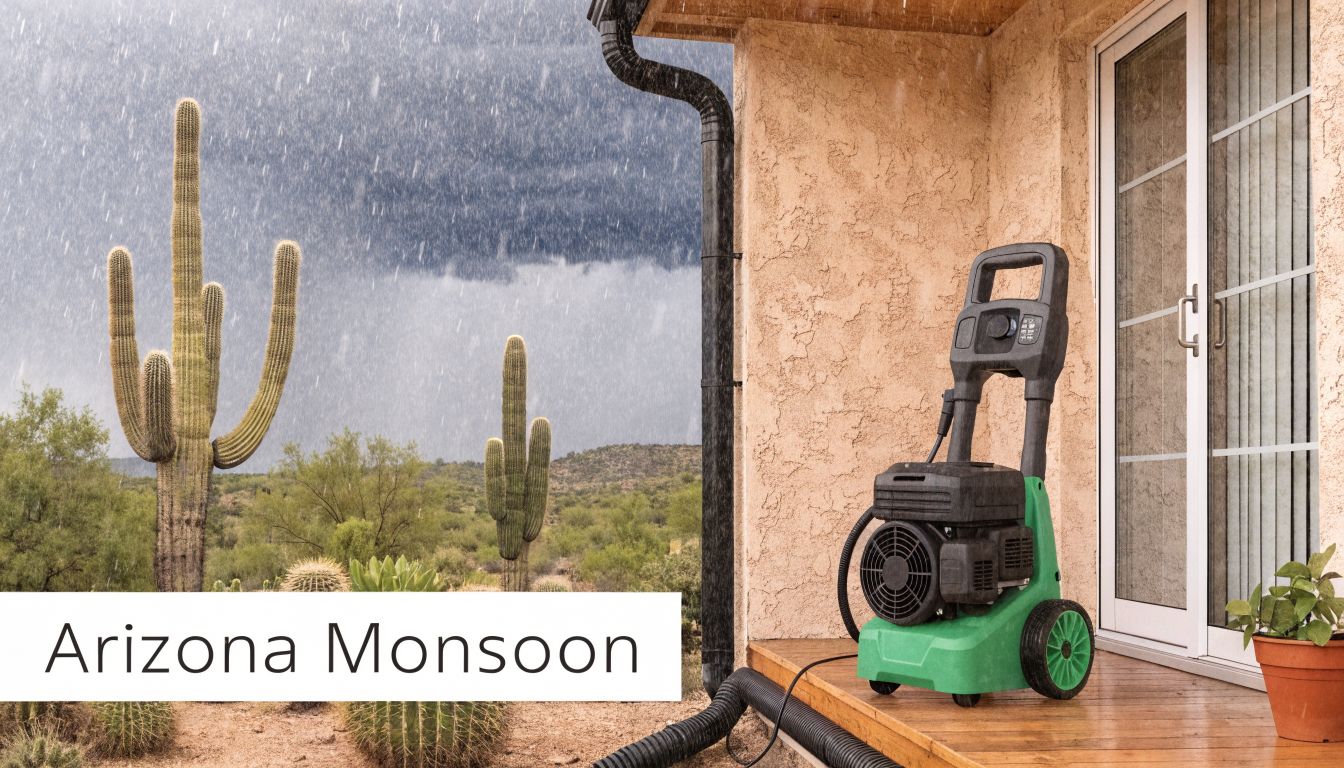
A broad industry reality supports that. A 2023 UAMCC survey summarized here found that 68% of professionals perform pressure washing in light rain, citing efficiency benefits. More important for Arizona properties, the same source says USDA data shows mold growth on stucco surges 300% within 48 hours post-rain in 100°F+ heat, and that EPA guidelines recommend washing 24 to 36 hours after rain, boosting efficacy by 50% for mold prevention.
That timing window is the local takeaway. In the Valley, the best move often isn't washing during the storm. It's scheduling the wash shortly after it.
What to do during monsoon season
For homeowners and managers in Phoenix, Scottsdale, Paradise Valley, Chandler, Tempe, and Gilbert, the practical playbook looks like this:
Pause for heavy monsoon cells
If rain is blowing sideways, runoff is moving across the slab, or visibility drops, wait. Arizona storms can intensify too quickly for on-the-fly adjustments to stay smart.Use the lull, not the peak
A brief break after rainfall is often more useful than trying to work through the storm itself. You get pre-soaked surfaces without the same level of dilution and visibility loss.Watch stucco and shaded walls early
After rain, moisture can linger on north-facing elevations, courtyard walls, and decorative block. In heat, that combination can feed quick biological growth.Inspect drainage paths first
Monsoon water often pushes silt onto walkways, patios, loading areas, and drive-thrus. If you wash before checking those paths, you can spread the mess instead of removing it.
Arizona surfaces that need smart timing
Stucco and painted masonry
These surfaces trap dust and show runoff lines fast. After a storm, they often clean better once surface water has settled but before heat bakes residue back onto the wall.
Drive-thrus and commercial walkways
These areas pick up mud, oils, and foot traffic immediately after rain. They also create slip concerns if left dirty. Timing the cleaning right after the weather passes can improve appearance and site safety.
Solar-adjacent and open-sky areas
Dust, mineral residue, and storm debris can collect fast in exposed areas. Once the rain ends, the desert sun starts drying everything unevenly. That's when spotting and residue become more stubborn.
For a local overview of exterior service timing and conditions, this page on power washing in Phoenix, Arizona gives useful context for Valley properties.
In Arizona, “after the rain” is often the better strategy than “in the rain,” especially on stucco, high-visibility entries, and surfaces that trap storm dust.
The Final Verdict When to Call the Professionals
So, can you pressure wash in the rain?
Yes, under controlled conditions. No, not as a casual DIY assumption.
That's the honest answer. Light rain doesn't automatically ruin a job. But once you factor in slick surfaces, electrical risk, runoff, changing weather, and the difference between gas and electric machines, the margin for error gets small fast.
For most homeowners, the biggest mistake is focusing only on whether water is coming out of the nozzle. Significant problems are harder to see until something goes wrong. A plug sits too close to runoff. A sealed patio gets slicker than expected. The detergent doesn't stay in place long enough to work. The wall looks clean while it's wet and streaky once it dries.
Commercial properties raise the stakes even more. Walkways, retail fronts, HOA common areas, dumpster pads, drive-thrus, and multi-unit entries all involve public-facing appearance and liability. In those settings, “probably fine” isn't a workable standard.
When it makes sense to stop and call a pro
- You only have an electric machine
- The surface is sloped, raised, algae-covered, or hard to inspect
- The storm pattern is changing by the hour
- The property has high-visibility traffic areas
- You need the result to look right the first time
Professionals bring the judgment that matters most in changing weather. They know when a light shower is manageable, when a machine choice changes the answer, and when the smarter move is to wait for the post-rain window that produces a cleaner and longer-lasting result.
If the goal is safe, reliable exterior cleaning in Phoenix, Scottsdale, Paradise Valley, Chandler, Tempe, or Gilbert, rain should never force a guess. It should trigger a better plan.
When weather turns a simple wash into a safety and timing decision, South Mountain Window Cleaning, LLC can help with professional exterior cleaning for homes, commercial properties, and high-rise buildings across the Valley. Their licensed, bonded, and insured team handles window cleaning, power washing, house washing, solar panel cleaning, and more with the equipment, training, and scheduling discipline needed for Arizona conditions.