

If you manage a Phoenix property right now, you probably know the feeling. The glass looked fine after the last cleaning, then a week of dust, heat shimmer, and wind left the façade looking tired again, and tenants started noticing before your crew did. In this climate, building maintenance service isn't a back-office chore, it's part of protecting curb appeal, tenant comfort, and the long-term condition of the property.
That's especially true across the Valley, where dust loads, UV exposure, and seasonal storm debris change the maintenance calendar in ways many generic guides never mention. A smart program has to account for the building envelope, the glass, the roofline, drainage, solar equipment, and the access needs of different property types. That's the difference between a property that stays presentable and one that constantly plays catch-up.
What Building Maintenance Service Covers
A Phoenix property manager once told me the building “wasn't dirty, just dusty.” On the ground, that can sound harmless. On a multi-tenant office or high-rise, dusty glass, streaked metal, clogged drainage, and neglected service areas send the same message, the building is being managed reactively.
More than fixing breakdowns
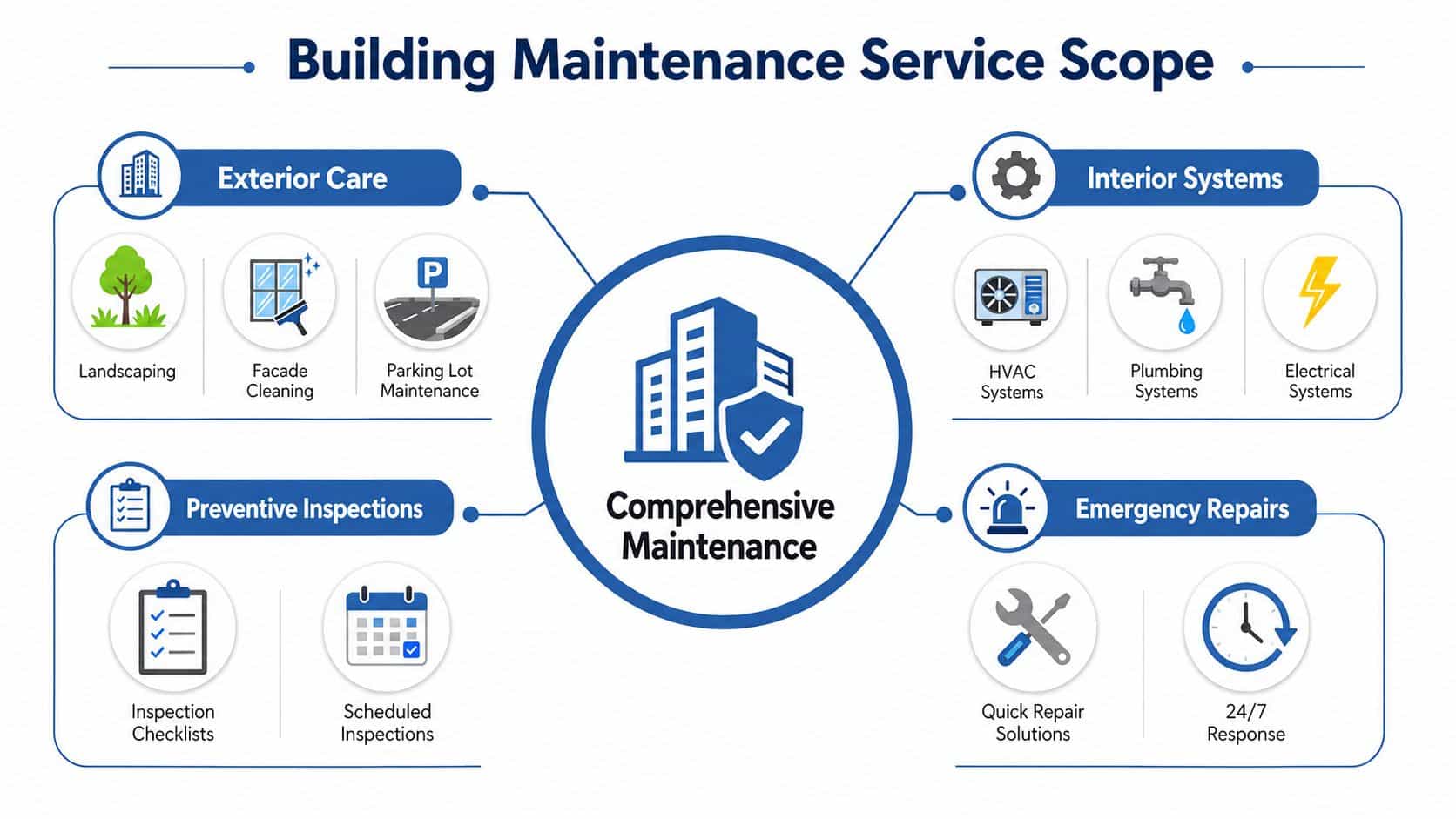
A real building maintenance service program covers routine upkeep, inspections, planned servicing, and repairs across the property. For commercial managers, that can include exterior glass cleaning, pressure washing, roof and gutter attention, solar panel cleaning, dumpster pad sanitation, and the checks that keep small problems from turning into access issues or water damage.
That classification matters because window cleaning isn't an informal add-on. The U.S. SIC manual places window cleaning inside building cleaning and maintenance services, alongside janitorial service, floor waxing, and office cleaning (OSHA SIC 7349). In practice, that means glass care belongs in the same operational conversation as other scheduled facility-support work.
What a complete scope looks like
A complete service plan usually starts with the building envelope and works inward. Exterior glazing, frames, ledges, gutters, drains, and hardscape all need attention because they affect appearance, water control, and safety.
Practical rule: if a service affects drainage, tenant access, visibility, or heat load, it belongs in the maintenance plan, not in a “when we have time” pile.
For Phoenix sites, that often means combining several jobs into one coordinated schedule, not treating each task as isolated labor. A good contractor can wash glass, remove grime from façades, clean access routes, and document what's being maintained, when, and to what standard. That shift from random chores to structured maintenance discipline is what property teams need.
Exterior Services That Protect Your Phoenix Property
Phoenix weather is tough on buildings in a way that's easy to underestimate. Dust lands on glass and horizontal surfaces, sun bakes residue into the finish, and monsoon season can turn a small drainage issue into a larger mess overnight. Exterior service isn't cosmetic here, it's preventive protection.
Window washing, power washing, and the desert problem
Window washing removes more than just visible dirt. It clears dust film, mineral residue, and buildup that make a property look older than it is. On commercial buildings, that matters for storefront visibility, tenant perception, and the basic sense that the property is being actively cared for. South Mountain Window Cleaning also offers coordinated commercial building exterior cleaning for properties that need more than glass alone.
Power washing supports the same goal on walls, sidewalks, drive lanes, and other hard surfaces. In a dry climate, grit accumulates fast, and once soil and oils sit long enough, they're harder to remove cleanly. That's why exterior cleaning works best when it's scheduled before the buildup becomes embedded.
Roof edges, gutters, solar panels, and sanitation
Gutter and roof care matter because monsoon debris doesn't just sit there politely. It can block runoff paths and leave water where it shouldn't be, especially around roof edges and drainage points. Solar panel cleaning also deserves a real place in the plan, because dust on the surface can interfere with performance and make the array look neglected even when the system is otherwise sound.
Dumpster pad sanitation is another service that often gets ignored until tenants complain or a site inspection turns it into a problem. The area around waste handling affects odor, pests, and the visual standard of the property. If you're managing mixed-use, retail, or multifamily assets, that one zone can shape the whole first impression.
Practical rule: in Phoenix, the exterior maintenance plan should match exposure, not convenience. South-facing glass, rooftop equipment areas, and high-traffic pads usually need more attention than protected or shaded zones.
Neglect shows up differently by service. Dirty windows reduce curb appeal first, then client confidence. Clogged drains create water concerns. Dirty solar panels and stained hardscape make the site look undermanaged. Regular exterior service keeps those issues from stacking up.
Why Preventive Maintenance Delivers Stronger ROI
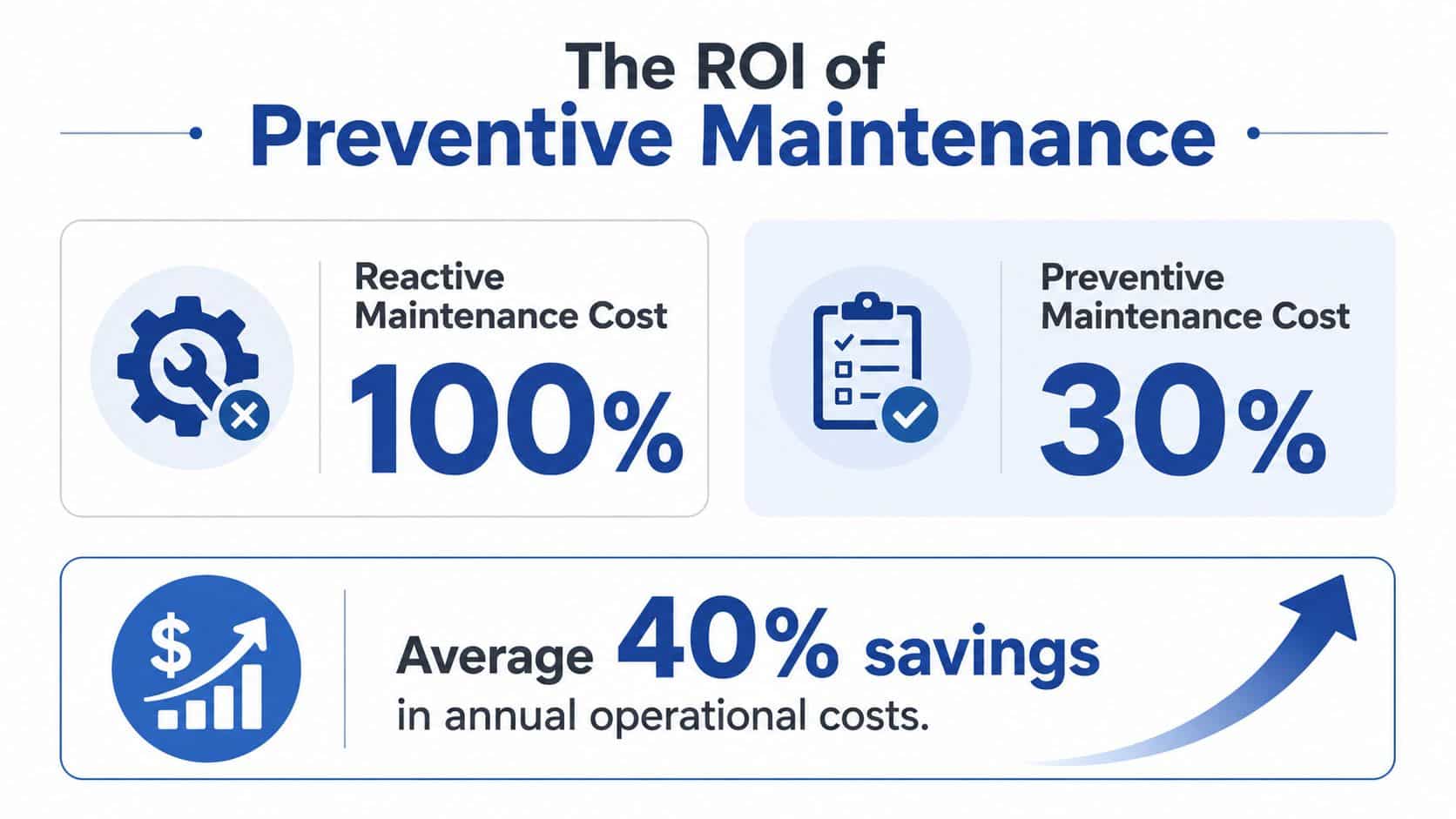
A Phoenix property can look presentable on Monday and show dust lines, streaked glass, and clogged runoff paths by the end of the week. Once that happens, reactive work usually costs more because the task has become bigger, the surface has been harder to clean, and the site has already taken the hit in appearance and tenant confidence. Preventive maintenance pays better because it keeps those problems small enough to handle on schedule.
Industry guidance points in the same direction. One source reports that 54% of all maintenance costs are allocated to preventive maintenance, and another found preventive maintenance reduced unplanned downtime by 45% on average in facilities (IFMA knowledge library). Another facilities-safety source says every $1 of deferred maintenance can grow into $4 in later capital renewal costs. Those figures are about facilities in general, but the principle fits exterior service in Phoenix. If dust, sun, and drainage issues are left alone, the cleanup later is usually harder and more expensive.
What the budget really buys
For U.S. commercial buildings, maintenance spend was reported at $2.45 per square foot in 2023, and U.S. office buildings averaged $4.50 per square foot in maintenance budget spend (worldmetrics.org). For property managers, that matters because small changes in service frequency, site access, or vendor efficiency can shift the budget across a large portfolio faster than people expect.
Preventive maintenance services are a practical model for that reason, and Forge Reliability's preventive maintenance services page shows how scheduled care is organized around planned work instead of emergency calls. The value is in the structure. Planned work is easier to budget, easier to review, and easier to explain to ownership when the site stays in better condition through dust season and summer heat.
Why exterior care helps ROI
Exterior maintenance supports ROI in three direct ways. It protects curb appeal, which affects tenant confidence and leasing decisions. It also lowers the chance that small issues turn into access problems, drainage problems, or surface damage. It gives property teams a schedule they can plan around instead of a scramble after the property starts looking neglected.
Practical rule: if a task can be planned, inspected, and repeated, it belongs in preventive maintenance. If you only notice it after damage shows up, it is already late.
In Phoenix, that matters even more because sun and dust do not wait for convenience. Properties that stay ahead usually treat exterior maintenance as a standing operating expense, not an occasional rescue job.
Building a Maintenance Schedule for Arizona Climate
A Phoenix maintenance schedule cannot be copied from a temperate-market checklist. Dust storms, monsoon debris, and long stretches of UV exposure change both the timing and the priority of work. A property that looks fine in January can need a different service rhythm by late summer, especially if exterior glass, roofs, and paved areas take direct sun all day.
Build the calendar around exposure
Start with the asset register, then rank what fails first and what affects tenant experience most. Maintenance guidance recommends documenting building systems, prioritizing HVAC, electrical, and safety assets first, and using manufacturer intervals plus historical failure data to set task frequency (MaintainX building maintenance guidance). For exterior work, the same logic applies by exposure. South-facing glass, rooftop access points, and high-traffic loading areas usually need tighter scheduling than sheltered surfaces, because they take the most dust, heat, and glare.
Phoenix seasons shift the workload in predictable ways. Spring brings dust and pollen. Summer heat hardens residue and stresses materials. Monsoon season adds debris and drainage risk. Winter changes sunlight angles and can expose buildup that was harder to see earlier in the year.
Match service frequency to building type
Single-story retail often needs a different cadence than a high-rise office tower or condominium. Low-rise properties usually need more frequent attention on storefront glass, sidewalks, and pad areas. High-rise work requires access planning, safety coordination, and repeat service intervals that fit roof access, anchor points, and building operations.
A practical way to set the cadence is straightforward:
- Monthly attention: high-visibility glass, entry zones, loading areas, and other surfaces that shape first impressions quickly.
- Quarterly attention: larger exterior washes, drainage checks, and scheduled cleaning around heavier weather periods.
- Annual review: the whole maintenance calendar, with adjustments based on building use, weather, and problem history.
For interior systems, professional guidance also notes that inspection and test intervals can range from 12-monthly for the most critical installations to five-yearly for the most secure (planned maintenance guidance). That range gives property managers a useful rule for outside work too. Critical assets need more frequent review, lower-risk items can sit on longer intervals, and the schedule should reflect actual exposure instead of habit.
Practical rule: don't schedule Phoenix maintenance by the calendar alone. Schedule it by the surface, the exposure, and the season.
If HVAC upkeep is part of the same property plan, air conditioning maintenance can be scheduled alongside exterior service so the building does not depend on separate, conflicting calendars. That coordination matters on Arizona properties, where mechanical strain and exterior wear often peak at the same time.
For property teams building a broader checklist, an annual home maintenance checklist can be a useful reference point for turning seasonal tasks into a repeatable schedule. The point is not to copy a residential list line by line. It is to use the same discipline, then adapt it to commercial exposure, tenant traffic, and desert conditions.
Understanding Costs and Pricing Models
Property managers usually want a simple answer on price, but pricing in building maintenance service depends on more than a single rate sheet. Height, access, frequency, surface type, and service scope all push the number up or down. A ground-level storefront clean and a high-rise glass program aren't the same job, and the quote should reflect that.
Compare the common pricing models
Some vendors price per square foot, which can work well for recurring exterior programs when the building layout is straightforward. Others price per service, which makes sense for one-off jobs or properties with uneven access. Bundled maintenance packages can be useful when a site needs window cleaning, power washing, and related exterior work on a fixed schedule.
The most useful pricing conversation is not “what's cheapest,” it's “what's included.” A low quote that skips documentation, access coordination, or follow-up can become expensive if it leads to missed standards or repeat visits. A fair quote should make it clear what surfaces are covered, how often the work happens, and what conditions change the final price.
| Cost Factor | Impact on Pricing | Phoenix-Specific Considerations |
|---|---|---|
| Building height | Increases access complexity and labor planning | High-rise work needs roof access, anchor planning, and safety coordination |
| Service scope | Broad scopes cost more than a single-task visit | Exterior glass, power washing, gutters, and pads often get bundled |
| Frequency | More frequent service raises annual spend but reduces buildup | Dust and sun make recurring visits more practical than waiting |
| Accessibility | Hard-to-reach surfaces require more setup | Rooflines, courtyards, and tight setbacks add time |
| Surface condition | Heavy buildup means more labor and sometimes specialized cleaning | Hard water spots and baked-on residue can change the method |
| Site operations | Working around tenants and traffic affects scheduling | Retail, hospitality, and occupied offices need tighter coordination |
South Mountain Window Cleaning's cleaning services cost page is a useful reference point if you're comparing how contractors explain scope and price in actual practice.
What to watch for in quotes
A suspiciously low quote often hides something, usually scope gaps, weak insurance, poor documentation, or inconsistent scheduling. An inflated quote can be just as unhelpful if it bundles services you don't need. The best vendor is the one whose pricing matches the site conditions and the reporting you need.
Selecting a Qualified Maintenance Vendor
A maintenance vendor can improve how a property presents, or it can add more risk than it removes. On high-rise and commercial sites, the wrong fit often shows up as uneven service, thin records, and liability exposure that could have been avoided. In Phoenix, the choice matters even more because dust, heat, and strong sun expose sloppy work faster than a milder climate does.
Start with proof, not promises
Use contract terms to see how a vendor operates. ENERGY STAR's building operations guidance says service contracts should define what information must be reported, how it should be reported, and who receives reports, invoices, and documentation. It also says owners should require the contractor to provide a copy of its safety and accident records for the past two years, including lost-day cases, plus proof of at least minimum liability insurance and, where applicable, workers' compensation coverage. Those details belong in the contract, not in a sales conversation (ENERGY STAR O&M service contracts).
That is the first screen. If a vendor cannot talk clearly about reporting, insurance, and safety history, the site is too important for guesswork.
Look for operational maturity
The U.S. General Services Administration says a healthy building cleaning plan should be based on cleaning needs, including the areas to be cleaned and the levels of service, and that the plan should be implemented, monitored, and audited for quality assurance (GSA building operations and maintenance services). That standard works well for vendor selection. A qualified contractor should be able to describe scope, frequency, monitoring, and follow-up without drifting into vague promises.
A vendor review should usually cover:
- Insurance and coverage: ask for written proof, not verbal reassurance.
- Safety history: request documented records and incident reporting practices.
- Scheduling systems: see whether service is tracked or handled by memory.
- Documentation: confirm that invoices, reports, and photo records stay consistent.
- Quality control: ask how work is reviewed and corrected when it misses the standard.
Practical rule: if the vendor cannot show how the service is monitored, it is not being managed, it is being guessed.
South Mountain Window Cleaning, LLC is one option in this category for Phoenix-area residential, commercial, and high-rise window washing, plus related exterior cleaning services. The question is whether the vendor's process matches your property's access, safety, and documentation requirements.
Creating Your Property Maintenance Plan Template
A workable plan starts with ownership, standards, and a realistic view of what Phoenix weather does to a property. Dust builds fast, sun breaks down surfaces, and heat changes how often crews can safely work outdoors. The plan should define who owns each task, what acceptable results look like, and how service gets checked after completion.
Use a simple structure
Start with the building zones. Entry glass, rooftop areas, parking interfaces, dumpster pads, and courtyards each need a clear service level and a set frequency. Assign one person to schedule the work, another to confirm it was completed, and a final reviewer to approve exceptions.
Use the building maintenance checklist from South Mountain Window Cleaning as a starting point if you need a practical format for that structure. The value comes from turning a checklist into a working process that fits the property, not from treating it like a one-time handout.
A plan also needs a seasonal layer. In Phoenix, the same exterior can need different attention in dry, dusty stretches than it does after storms or during heavy tenant traffic. If your schedule does not reflect that, it will look organized on paper and fall behind in the field.
Add monitoring and accountability
Track what was done, note any misses, and keep photo records when they help confirm the result. Planned maintenance guidance in building services also points to defining what is maintained, what labor and materials are needed, when tasks happen, how often they repeat, how the work is managed, and how results are reviewed and monitored. That same structure works well for exterior service contracts.
A strong template usually includes:
- Service scope: what gets cleaned or inspected.
- Service level: what acceptable results look like.
- Timing: monthly, quarterly, seasonal, or annual.
- Documentation: reports, invoices, and photos.
- Review process: who signs off and how exceptions are handled.
Keep room in the plan for monsoon cleanup, dust events, and tenant changes. A property maintenance program should follow the building's actual exposure, not the assumptions in the original spreadsheet. For Phoenix managers, that usually means tighter exterior schedules, more attention to glass and hardscape, and faster follow-up when wind or sun leaves visible wear.