
A lot of Phoenix-area basement projects start the same way. Someone wants more usable space. A guest room in Chandler. A workout room in Gilbert. A media room in Paradise Valley that finally gets the teenagers upstairs.
Then the practical question shows up. Can that basement be finished safely and legally?
For many homeowners and property managers, the answer comes down to one feature that gets overlooked early and gets expensive later: the egress window. If the basement will function as a habitable room, especially a bedroom, the window cannot be treated as a design detail. It is part of the life-safety system of the space.
In Arizona, that matters for more than plan approval. Desert dust, hard sun, and monsoon runoff all affect how these windows perform over time. A code-compliant opening that sticks, fills with debris, or drains poorly can become a real problem when someone needs it.
Planning Your Basement Project Safely
A basement remodel usually begins with the fun decisions. Flooring. Paint. Lighting. Maybe a wet bar. Maybe bunk beds for visiting family. The safety work rarely gets the same attention at first, especially when the basement already has a small window and the room “looks finished enough.”
That is where projects go sideways.
A homeowner may assume an existing basement window is good enough because it brings in daylight. A property manager may inherit an older lower-level room that has been used informally as sleeping space for years. On paper, both can look workable. In practice, a non-compliant egress setup can stop a permit, force redesign, or leave the space unusable for the purpose the owner had in mind.
Start with the use of the room
The first question is not what style of window you want. It is how the room will be used.
If the plan involves a bedroom or other habitable basement space, the egress window needs to be part of the project from day one. That affects layout, excavation, exterior clearance, and drainage planning. It also affects budget because the opening may need structural work, waterproofing, and a properly sized well outside.
Arizona projects reward early site checks
In the Phoenix metro, exterior conditions matter more than many people expect. Hard-packed soil, decorative rock, irrigation lines, walkways, and tight side yards can complicate a window retrofit. Even if the interior room is straightforward, the outside access may not be.
That is why practical project planning starts outside, not inside.
- Check grade and drainage: Water needs to move away from the well, not into it.
- Check access: Crews need room for excavation, cutting, and debris removal.
- Check nearby maintenance issues: Overflowing gutters or poor roof drainage can worsen water problems. This guide on https://www.southmountainwindowcleaning.com/how-to-clean-gutters-safely/ is useful if roof runoff is already part of the problem.
- Check window operation: A basement window that is hard to open now will not improve after dust buildup and age.
Tip: If a basement remodel begins with cabinetry and drywall plans before anyone verifies the egress opening, the project is already at risk of rework.
The safest basement projects treat the egress window as a required system, not an upgrade. That mindset saves time, protects occupants, and avoids the common Arizona mistake of building a nice lower-level room around the wrong window.
More Than a Window A Lifeline and a Legal Mandate
A basement fire changes the math fast. If smoke cuts off the stair route, the window has to work as an escape opening for the person inside and an entry point for first responders outside.
That is the primary job.
Owners often focus on daylight, airflow, or how the window looks from the room. Those points matter, but they do not determine whether the space can function safely in an emergency. An older basement window can seem acceptable during normal use and still fail the moment someone has to get out quickly.
According to IRC guidance summarized by Building Code Trainer, the opening standards are tied to real escape use, including a minimum net clear opening and a maximum sill height intended to keep the window reachable and usable during an emergency.

Safety is the first issue
Basements create a different risk profile than rooms on the main floor. Occupants are below grade, visibility can drop quickly, and smoke can collect along the only interior path out. A compliant egress window adds a second way to escape when the stairway is no longer usable.
It also gives firefighters a predictable access point. That matters on a real call. A small hopper or decorative slider may let in light, but it may not provide enough clear space for emergency use.
Compliance affects how the room can be used
A basement room does not become a legal bedroom because it has a closet and a bed. It has to meet code for sleeping-room escape and rescue openings. Property owners researching basement bedroom egress requirements usually run into this point once permits, appraisals, or resale questions come up.
In the Phoenix area, that has practical consequences. If the room is represented as livable space but the window does not meet code, the issue can surface during a sale, an inspection response, an insurance review, or a tenant dispute. The room may still be usable for storage or an office, but it may not support the value or bedroom count the owner expected.
Arizona owners also need to think past the opening itself
In this climate, a compliant egress window is only part of the job. The surrounding well has to stay clear, drain correctly, and open without obstruction after a dust storm or monsoon rain. I see owners spend heavily on a remodel, then ignore the outside condition that keeps the window functional.
That hurts safety and appearance at the same time.
A clean window well, operable sash, and visible signs of maintenance tell buyers, tenants, and inspectors the lower level was finished responsibly. In desert markets, curb appeal is not limited to the front elevation. Exterior cleanliness, drainage control, and code-ready access points all support property value.
Key takeaway: A basement egress window has to perform under pressure. It protects occupants, supports legal use of the room, and adds value when it stays clean, operable, and ready for Arizona weather.
Decoding the Core Basement Egress Window Requirements
A basement remodel can look finished, clean, and expensive and still miss the one measurement that matters in an emergency. I see that happen when owners focus on the window unit size instead of the usable escape opening.
The measurement that controls compliance is the net clear opening. That is the actual unobstructed space available when the window is fully open, not just the glass size or the rough opening in the wall.
The numbers that matter
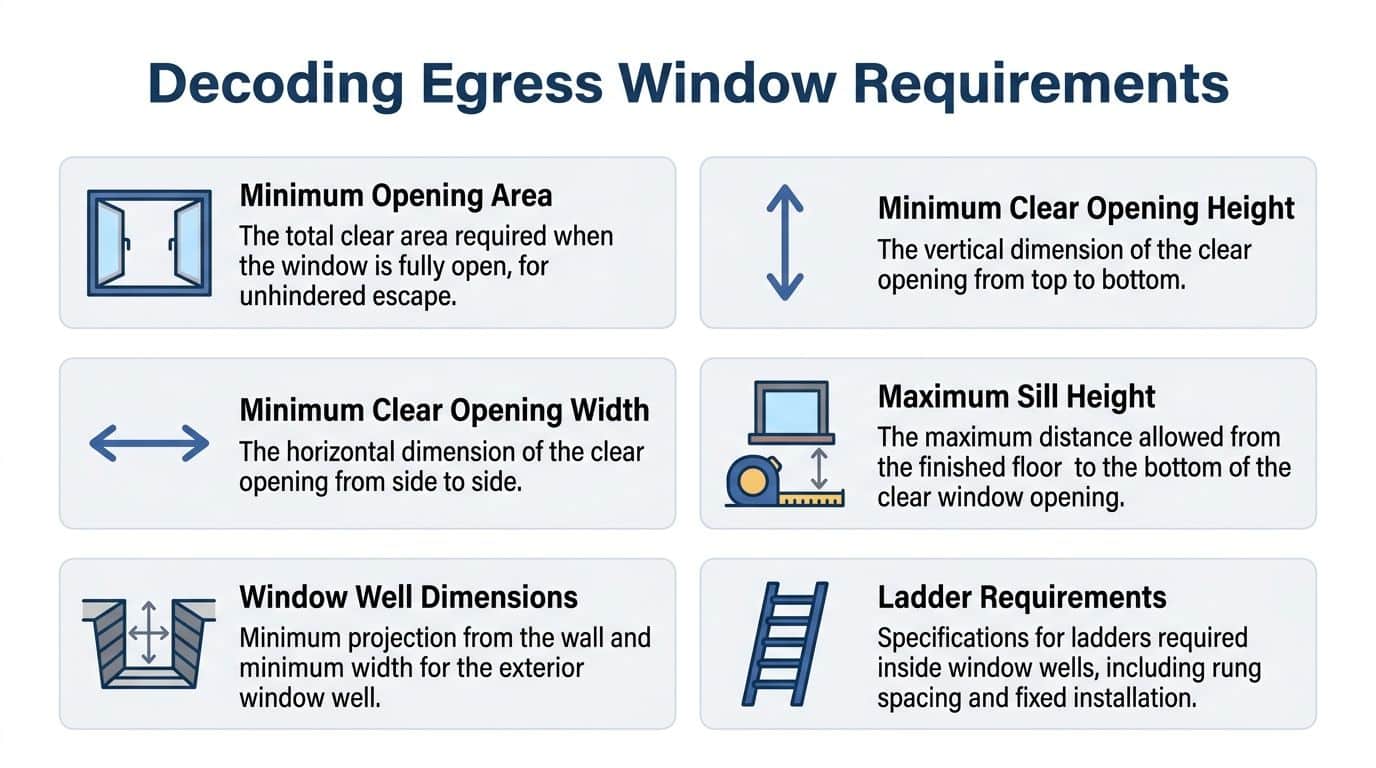
For a basement egress window, the code baseline is straightforward:
- Minimum net clear opening: 5.7 square feet
- Minimum clear opening width: 20 inches
- Minimum clear opening height: 24 inches
- Maximum sill height above finished floor: 44 inches
- Minimum window well horizontal area: 9 square feet
- Minimum window well projection: 36 inches
These numbers are simple on paper. Field conditions are where owners get tripped up.
A window can meet the height requirement and still fail on width. A large-looking unit can fall short once the sash is open. A below-grade opening can meet interior dimensions and still fail because the exterior well is too tight to use safely. In Arizona, I also tell owners to look at what happens after a monsoon pushes debris into the well. A code-sized opening that sticks, binds, or fills with runoff is a bad setup even before an inspector sees it.
IRC egress window requirements at a glance
| Requirement | IRC Specification |
|---|---|
| Net clear opening | 5.7 square feet |
| Minimum clear opening height | 24 inches |
| Minimum clear opening width | 20 inches |
| Maximum sill height above finished floor | 44 inches |
| Minimum window well horizontal area | 9 square feet |
| Minimum window well projection | 36 inches |
What owners often misunderstand
The listed size on a manufacturer spec sheet does not automatically equal the clear opening you can crawl through. Operating style matters.
A horizontal slider often loses usable opening because only part of the frame clears. A casement can perform better in a tighter opening because the sash swings out and leaves more open space. That is why contractors often recommend casement units when an existing foundation opening limits your options.
The room use matters too. If the space is being marketed, rented, or appraised as a bedroom, the window has to support that use. This guide on basement bedroom egress requirements adds useful context for that part of the decision.
Make the measurements practical
These dimensions are easier to apply on site when you treat them as real-use checks instead of abstract code language:
- Measure with the window fully open. Closed-window dimensions do not count.
- Measure from the finished floor to the sill. New flooring can change the number enough to create a problem.
- Check how the sash opens. Insect screens, hardware, and opening angle can all reduce usable space.
- Look at the exterior condition. A well that collects dirt, rock, or runoff can interfere with operation and drainage.
- Verify access for maintenance. Owners who already deal with cleaning hard-to-reach second-story windows usually understand this quickly. A window only helps if it stays operable.
Practical rule: If a measurement only works after rounding up or making excuses, expect trouble during plan review, inspection, or resale.
Why older windows create expensive surprises
Older basement windows were often installed before the lower level was treated as sleeping space. Some were never intended to qualify as emergency escape openings. Others may have been acceptable at the time and still do not fit the current project scope.
That is where costs climb. Owners keep the old opening to avoid cutting concrete or changing the wall layout, then learn late that the room cannot be approved for the intended use. In Phoenix-area properties, that can affect value, rental positioning, and buyer confidence. It also creates an appearance problem. A newly finished basement paired with an undersized, dirty, or poorly drained egress window signals shortcuts.
A quick field checklist
Before permits or construction go too far, verify these items on site:
- Measure the clear opening with the sash fully open.
- Measure from finished floor to sill based on the final floor assembly.
- Check the exterior grade to confirm whether a window well is part of the system.
- Confirm the window style delivers enough usable opening, not just enough frame size.
- Match the opening to the room use so the space supports the legal purpose claimed for it.
Checking these basics early keeps the project cleaner, the permit path simpler, and the finished space easier to defend during inspection or sale.
Understanding Window Well and Ladder Specifications
A below-grade egress window only works if the space outside it works too. During a monsoon storm, a window well can fill fast with runoff, gravel, and windblown debris. If that well is too tight, poorly drained, or hard to climb, the opening may meet the plan on paper and still fail the homeowner when it matters.
The well has minimum size requirements
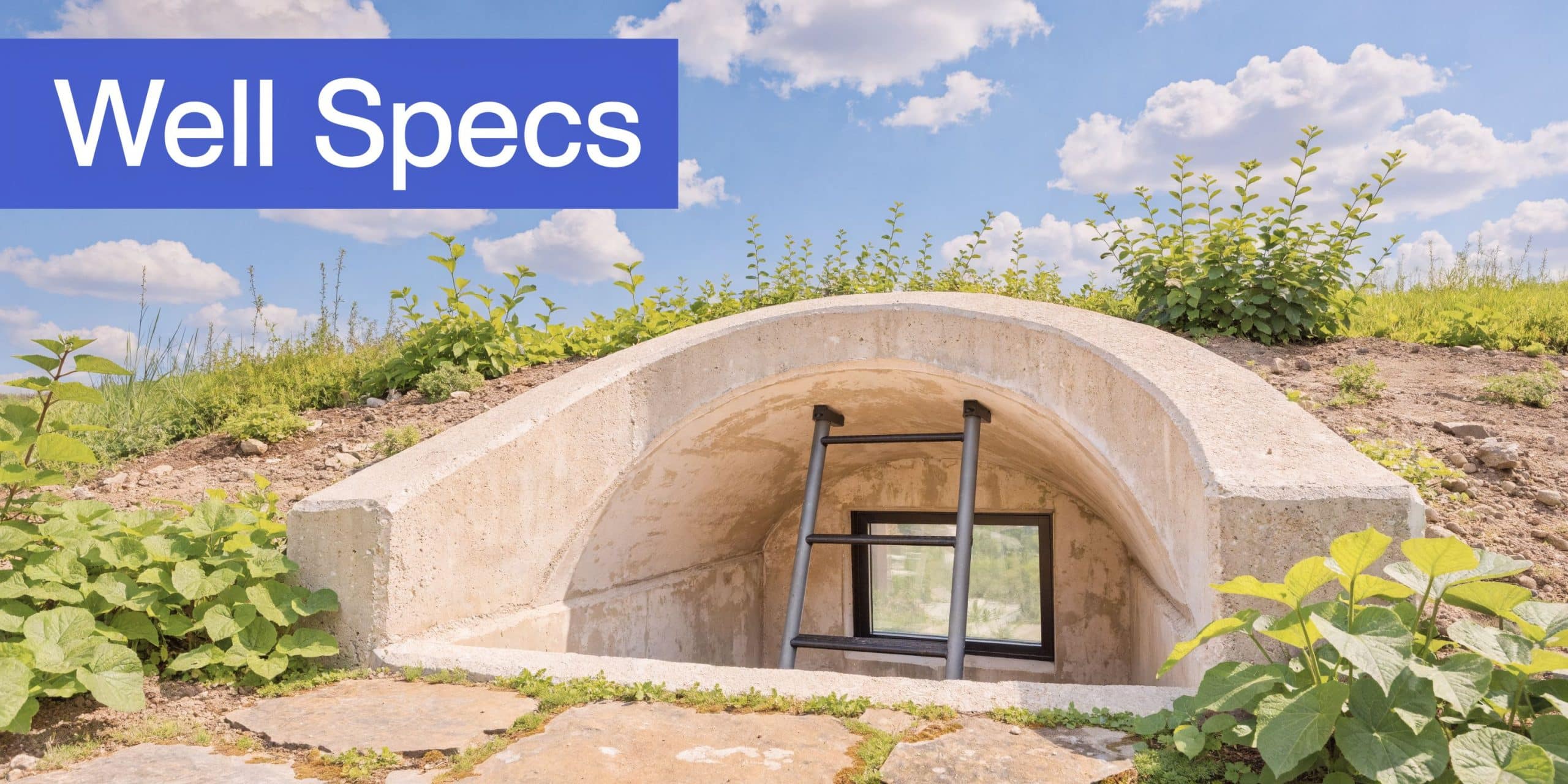
The well is part of the exit route, so it needs enough clear space for a person to open the sash, move through the opening, and climb out without twisting sideways into corrugated steel or concrete. Tight wells are a common field mistake on retrofit jobs because owners focus on the window unit and treat the exterior pocket as an afterthought.
That shortcut shows up later. Inspectors look at usable space, not just the presence of a well, and buyers notice when a finished lower level has a cramped, dirty, awkward exit point.
When a ladder is required
Deep wells need a fixed ladder or steps so the exit path remains usable. As noted earlier, once the depth passes the code threshold, the climbing aid has to be permanently installed and positioned so it helps rather than blocks the opening.
Placement matters as much as the ladder itself. I have seen wells with add-on ladders that crowd the sash, sit loose against the wall, or force a person to turn before getting a foot on the rung. A compliant setup gives a straight, predictable path from the window to grade.
Drainage is where Arizona owners get caught
Drainage decides whether the well stays functional year after year. In the Phoenix area, dust storms dump fine debris into the well, then summer rain packs it into the drain path. The result can be standing water against the foundation, stained masonry, and a muddy exit route that no one wants to trust.
A high-quality window well is defined by its function. It stays open, drains correctly, and provides a clear exit path.
That has a curb appeal side too. A clean, dry well with clear glass reads as maintained. A stained well full of silt and dead leaves suggests deferred maintenance, even if the basement finish is new.
What works in real conditions
Owners get better long-term performance when they maintain the well like any other exterior opening on the property.
- Keep the well clear: Decorative rock, planters, furniture, and storage should stay out of the exit path.
- Control roof and yard runoff: Downspouts, grading, and irrigation should move water away from the well, not toward it.
- Check the drain after storms: Monsoon season exposes clogs quickly.
- Clean the window and track: Dirt in the sash or track can make the unit harder to open under pressure.
- Use safe access practices: Homeowners dealing with harder-to-reach exterior glass often review safe second-story window cleaning methods before trying to handle access on their own.
The best wells are simple to inspect and easy to maintain. Open space, sound drainage, solid hardware, and a clear climb out protect safety, help inspections go smoothly, and keep the exterior looking cared for in the desert climate.
Retrofitting an Egress Window Your Project Guide
Retrofitting an egress window into an existing basement is one of those jobs that looks simple in the finished photo and very involved in real life. The wall opening has to be sized correctly. The structure has to be protected. Water has to stay outside. The exterior well has to function as part of the escape path.
For many owners, the biggest surprise is how much of the project happens before the new window ever goes in.
Choosing the right window style
Window style is not just an aesthetic choice in a retrofit. It affects whether you can achieve the required clear opening without making the wall cut larger than necessary.
Casement windows are often the easiest path to compliance because the sash swings open and clears the opening well. Sliding and double-hung units may work in some layouts, but they can reduce usable opening space because part of the frame remains blocked when the unit is open.
That is why many failed plans start with the wrong product selection. The owner chooses the style that matches the rest of the home, then learns that the egress opening is too tight.
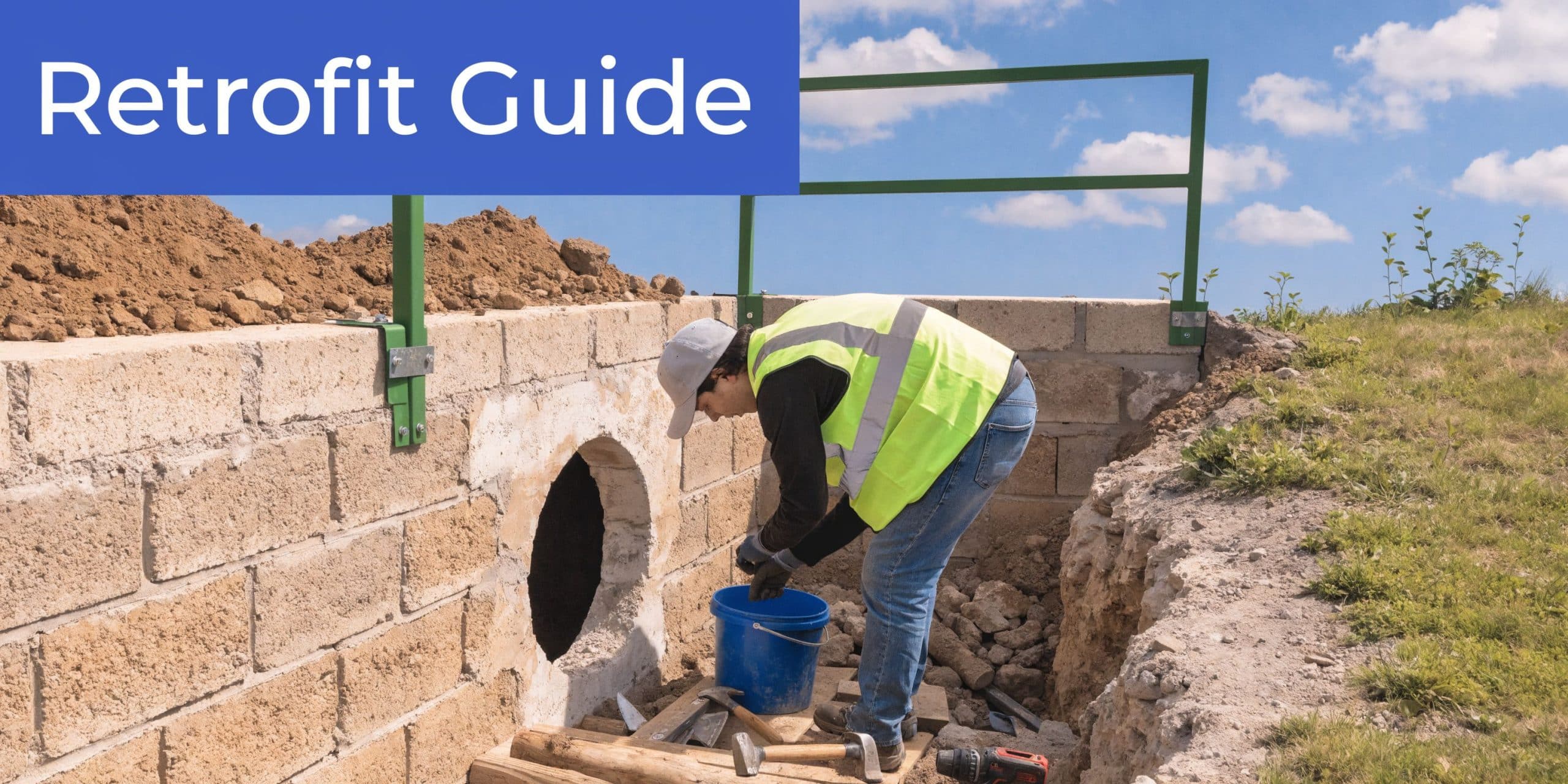
What the retrofit usually involves
A typical project includes several separate tasks, each of which has its own risk if handled poorly.
Layout and excavation
Crews mark the opening and excavate outside for the future well. Access and soil conditions affect how cleanly this goes.Foundation cutting
Concrete or block walls are cut to create the rough opening. This is precision work. Sloppy cuts create problems that show up later in framing and waterproofing.Framing and support
The new opening needs proper structural treatment so loads are handled correctly.Window installation
The unit is set, sealed, and adjusted so it opens smoothly and fully.Waterproofing and drainage work
This area determines whether many projects succeed or fail over time.Well installation and finish grading
The outside escape path must remain accessible after the yard is restored.
Costs and budgeting in Arizona
Owners usually want a single clean price, but retrofit work rarely behaves that way. The Pella guide notes that egress installation costs vary based on labor complexity, window type, and local permit requirements, and that Arizona factors such as soil conditions for excavation and desert-climate waterproofing needs can shift costs away from generalized national assumptions (pella.com).
The practical takeaway is to budget for unknowns. Digging conditions, access limitations, existing utilities, and drainage corrections can all change the final scope.
A good estimate should separate likely work from possible corrective work. If a proposal treats foundation cutting, well drainage, and waterproofing like minor add-ons, ask more questions.
Where retrofit projects go wrong
The most common failures are not dramatic. They are ordinary shortcuts.
- Wrong operating style: The window looks large but does not deliver the required clear opening.
- Poor sill planning: Finished flooring gets added later and changes the sill height problem.
- Weak waterproofing detail: The opening is technically installed but vulnerable to leaks.
- Drainage assumptions: The crew assumes the well will “probably drain fine” after backfill.
For owners preparing for the mess and cleanup side of a basement project, this post on https://www.southmountainwindowcleaning.com/cleaning-after-construction/ is a practical reminder that post-build dust and debris management deserve planning too.
A visual overview of the installation process can also help set expectations before bids come in:
Hiring with the right expectations
An egress retrofit is part excavation job, part structural opening, part window install, and part drainage project. That mix is why low bids can become expensive bids later.
Ask contractors how they will measure the net clear opening, how they plan to waterproof the cut opening, and how the well will drain during a hard storm. Those answers tell you more than a glossy proposal ever will.
Key takeaway: A successful retrofit is not just a new basement window. It is a coordinated opening, drainage, and escape system that works on paper and in real weather.
Navigating Permits Inspections and Common Pitfalls
Permits are where many basement egress window projects stop feeling hypothetical. Once plans go to review, vague assumptions get replaced by measurements, elevations, and inspection standards.
That is a good thing.
A permit process forces the project to answer the questions that too many informal remodels avoid. Is the opening compliant? Is the well properly planned? Will the finished room be legal for the intended use? Those are not paperwork details. They are the part that protects the owner from expensive mistakes.
Why permits are not optional
An egress opening affects life safety, structure, and weather resistance. That makes permit review a normal part of the work, not an extra burden.
In Arizona jurisdictions, the exact process can vary, but the pattern is consistent. Plans are reviewed. The opening and well work are inspected. Corrections are issued if the built work does not match approved details.
Property managers should view this as risk control. If a lower-level room is occupied and the egress work was done informally, the owner may inherit avoidable liability later.
Mistakes that trigger rework
Some errors are so common they are worth checking before the first tool comes out.
The wrong window was selected
A unit can look big in a showroom and still fail after installation because the clear opening is too small when fully open. This happens often with certain slider or hung configurations.
The finished floor was ignored
Sill height should be measured from the finished floor, not an earlier construction stage. Add flooring at the end and a once-acceptable sill can become noncompliant.
Drainage was treated like landscaping
Window well drainage is part of the egress system. If it clogs, floods, or fills with debris, the exit path is compromised.
The exterior access path was narrowed later
Owners sometimes add decorative rock, planters, grates, or storage near the well after the project is complete. Those additions can reduce usability fast.
Inspection prep that saves headaches
A simple review before inspection can catch most obvious issues:
- Operate the window fully: It should open smoothly without force or special tricks.
- Check the clear path: No bars, grates, or added features should interfere with escape.
- Verify outside conditions: The well should be open, accessible, and free of construction debris.
- Document the property condition: For managers handling multiple buildings, a consistent review routine helps. This commercial maintenance guide is useful for broader oversight: https://www.southmountainwindowcleaning.com/commercial-property-inspection-checklist/
Practical advice: If a contractor treats permit review like an annoyance instead of part of the job, that is a warning sign.
The best projects pass because the details were handled correctly from the start. The worst ones fail for ordinary reasons. Wrong window. Wrong height. Poor drainage. Missing documentation. None of those are glamorous problems, but all of them cost time and money to fix.
Your Egress Window Homeowner and Manager Checklist
A basement bedroom passes inspection, then the first hard monsoon pushes mud and runoff into the window well. By August, the drain is half buried, the tracks are gritty, and the window that looked fine at final inspection no longer opens the way it should.
That is the part Arizona owners miss. Egress compliance is not only an installation issue. It is an ownership issue, especially in the Phoenix area where dust, desert landscaping, and sudden storm water can turn a code-compliant exit into a liability.
I see the same pattern with exterior openings across the Valley. If the well stays clear, the window operates smoothly, and water has somewhere to go, the system usually holds up well. If maintenance slips, problems show up fast. Safety is the first concern. Property condition and curb appeal follow right behind it, because a stained well, dirty glass, and standing water make a finished lower level look neglected.
Pre-finish checklist
Before the room goes into regular use, verify the details in person.
- Confirm the intended room use: The egress opening should match how the space will be occupied.
- Test the window fully open: It should open from the inside without unusual force, sticking, or a workaround.
- Measure from the finished floor: Sill height needs to be checked from the final surface, not from concrete before flooring goes in.
- Inspect the exterior opening: The well should allow a clear exit path with no decorative rock, covers, or stored items reducing usable space.
- Check the drainage plan: A window well needs real water management, not a bare hole that collects runoff.
- Keep the paperwork together: Permit records, approvals, product information, and contractor notes should stay in the property file. If you need a general overview of permit workflow, this guide on how to get a building permit is a useful primer.
Seasonal maintenance checklist
A good egress window needs routine attention. In Arizona, that schedule should follow the weather.
After dust storms
Inspect tracks, sashes, screens, and the bottom of the well. Fine dust works into moving parts and can make a window feel heavier or rougher long before it looks dirty.
Before monsoon season
Clear out sediment, leaves, trash, and loose garden material. If the property drains toward the house, pay close attention to the well because that is where runoff problems often show up first.
After heavy rain
Look for standing water, mud buildup, and signs that the drain is slow or blocked. One flooded well is enough to justify corrective work before the next storm.
During routine cleaning
Clean the glass, frame, and tracks so the unit stays easy to operate. That helps appearance, but the bigger issue is function. An egress window that binds during an emergency has failed its job.
During turnover or annual inspections
Managers should add egress windows to the same review used for smoke alarms, door hardware, and other life-safety items. Storage bins, patio décor, security additions, and tenant improvements often interfere with access over time.
What homeowners and managers should watch for
Some warning signs deserve prompt attention because they usually get worse, not better:
- The window sticks, drags, or does not stay open cleanly
- Water sits in the well after a storm
- The well fills with gravel, mulch, or windblown debris
- The ladder feels loose, awkward, or hard to reach
- The area inside or outside becomes a storage zone
- The opening is technically present but hard to use quickly
A compliant egress window stays compliant only if the path out remains usable. For Arizona property owners, that means treating the well like part of the drainage system and the window like part of the safety system.
Clean, operable egress windows also present better. They make basement spaces feel maintained, help inspections go smoother, and support property value. In the desert, the long-term win is simple. Keep the opening clean, keep the well draining, and check it again after rough weather.