
For commercial property managers in Phoenix, Scottsdale, and across the Valley, maintaining pristine curb appeal and operational safety isn't just a goal; it's a necessity. Arizona's unique climate, from intense sun to seasonal dust storms, presents constant challenges. A robust commercial property inspection checklist is your most powerful tool for proactive maintenance, ensuring tenant satisfaction, and protecting your asset's value. This guide moves beyond generic advice to provide 10 specialized, actionable checklist templates designed by South Mountain Window Cleaning for the real-world demands of managing commercial properties in areas like Chandler, Tempe, and Gilbert.
This article breaks down everything from IICRC-certified window assessments to high-rise safety protocols and seasonal maintenance schedules tailored for the Arizona environment. You'll learn how to transform routine inspections from a tedious task into a strategic advantage, identifying opportunities to bundle services like window cleaning, power washing, and solar panel maintenance. To standardize your documentation and ensure thoroughness in your maintenance program, consider utilizing a robust property inspection report template to capture findings consistently.
Let's explore how a structured approach, backed by a reliable partner like South Mountain Window Cleaning, can keep your property looking its best year-round, enhance safety, and ultimately improve your bottom line. We'll provide clear steps and practical insights to make your inspection process more effective, starting now.
1. IICRC (Institute of Inspection, Cleaning and Restoration Certification) Commercial Window Inspection Checklist
For property managers who demand a proven, professional standard for their building's appearance, the IICRC’s framework for window inspection is indispensable. This isn't just a generic to-do list; it's a structured methodology developed by the Institute of Inspection, Cleaning and Restoration Certification, the leading authority in the industry. Using an IICRC-based checklist ensures every window evaluation is thorough, consistent, and documented to professional standards. It moves beyond a simple pass/fail glance and focuses on specific metrics like soil levels, seal integrity, and glass condition.
This method is crucial for establishing a baseline of your property's condition. For instance, high-rise office buildings in downtown Phoenix use these standards to guarantee that tenant views remain pristine, a key factor in lease renewals. Similarly, management companies with properties spread across Scottsdale, Tempe, and Chandler rely on IICRC checklists to ensure uniform quality from their cleaning vendors. It’s a powerful tool for accountability and quality control.
Putting the IICRC Standard into Practice
Successfully integrating this standard into your commercial property inspection checklist requires a few direct actions:
- Standardize Your Team: Ensure all maintenance staff or contracted vendors, like the professionals at South Mountain Window Cleaning, are trained on IICRC window inspection criteria. This creates consistent evaluations across your entire portfolio.
- Go Digital: Use a tablet or phone app to manage the checklist. This allows for easy photo documentation and note-taking, creating a digital paper trail for every inspection.
- Establish a Baseline: During the first inspection, take detailed photos of all windows. These initial images become the benchmark against which all future cleanings and inspections are compared.
- Reference in Contracts: Specify adherence to IICRC standards within your service level agreements (SLAs) with cleaning contractors. This sets clear, measurable expectations for performance from the start.
By adopting an IICRC-based approach, you shift from subjective observations ("the windows look dirty") to objective data ("light soil and hard water staining noted on 75% of west-facing second-floor windows"). This level of detail is critical for effective property management and budget allocation.
2. Commercial Building Exterior Inspection Checklist (Multi-System Approach)
A piecemeal approach to exterior maintenance is inefficient and costly. The multi-system exterior inspection moves beyond isolated tasks, creating a unified framework that assesses windows, frames, gutters, fascia, and surfaces needing power washing in a single, coordinated cycle. This method, favored by top commercial property management associations, ensures that interconnected issues are identified and addressed together, preventing small problems from escalating. It's about seeing the building exterior as a complete system, not a collection of separate parts.
This coordinated strategy is particularly effective for managing the appearance and integrity of large-scale properties. For instance, retail shopping centers across the Valley use this type of checklist to schedule window cleaning in tandem with facade and sidewalk power washing, creating a consistently pristine customer experience. Likewise, high-rise office complexes in Scottsdale and Paradise Valley benefit by tracking windows, gutters, and building surfaces together, which streamlines vendor management and budgeting for companies like South Mountain Window Cleaning. This integrated approach ensures every exterior element contributes to the property's overall value and appeal.
Putting the Multi-System Approach into Practice
Integrating a multi-system exterior inspection into your commercial property management routine involves several key actions:
- Create Structured Sections: Design your checklist with clear, distinct sections for each service area: windows, gutters, power washing surfaces, and signage. This keeps the inspection organized and ensures no element is overlooked.
- Use a Standardized Rating Scale: Implement a simple 1-5 condition rating for every item on your list (e.g., 1 = Poor, 5 = Excellent). This objective data makes it easy to prioritize repairs and cleaning schedules across your entire property portfolio.
- Schedule Seasonally: In Arizona, dust storms and intense sun take a toll. Conduct these comprehensive inspections seasonally to proactively manage build-up and UV damage, especially after the monsoon season.
- Link Findings to Actions: Connect each identified issue directly to a recommended service. For example, a "3 – Moderate Staining" rating on a storefront can be linked to a recommendation for professional commercial pressure washing.
By evaluating the entire building envelope at once, you can coordinate multiple services-like window cleaning and gutter clearing-in a single visit, reducing tenant disruption and operational costs. A holistic exterior review also supports a more accurate long-term maintenance budget.
3. High-Rise Window Cleaning Safety & Inspection Checklist
For high-rise properties, a standard window cleaning checklist is simply insufficient. The risks are greater, the equipment is specialized, and the regulatory oversight is far stricter. A specialized High-Rise Window Cleaning Safety & Inspection Checklist is therefore a non-negotiable tool for property managers of tall buildings in Phoenix and Scottsdale. This document focuses on verifying compliance with OSHA regulations, confirming worker and equipment certifications, and assessing access protocols before any work begins. It shifts the focus from just cleaning quality to a comprehensive safety and risk management framework.
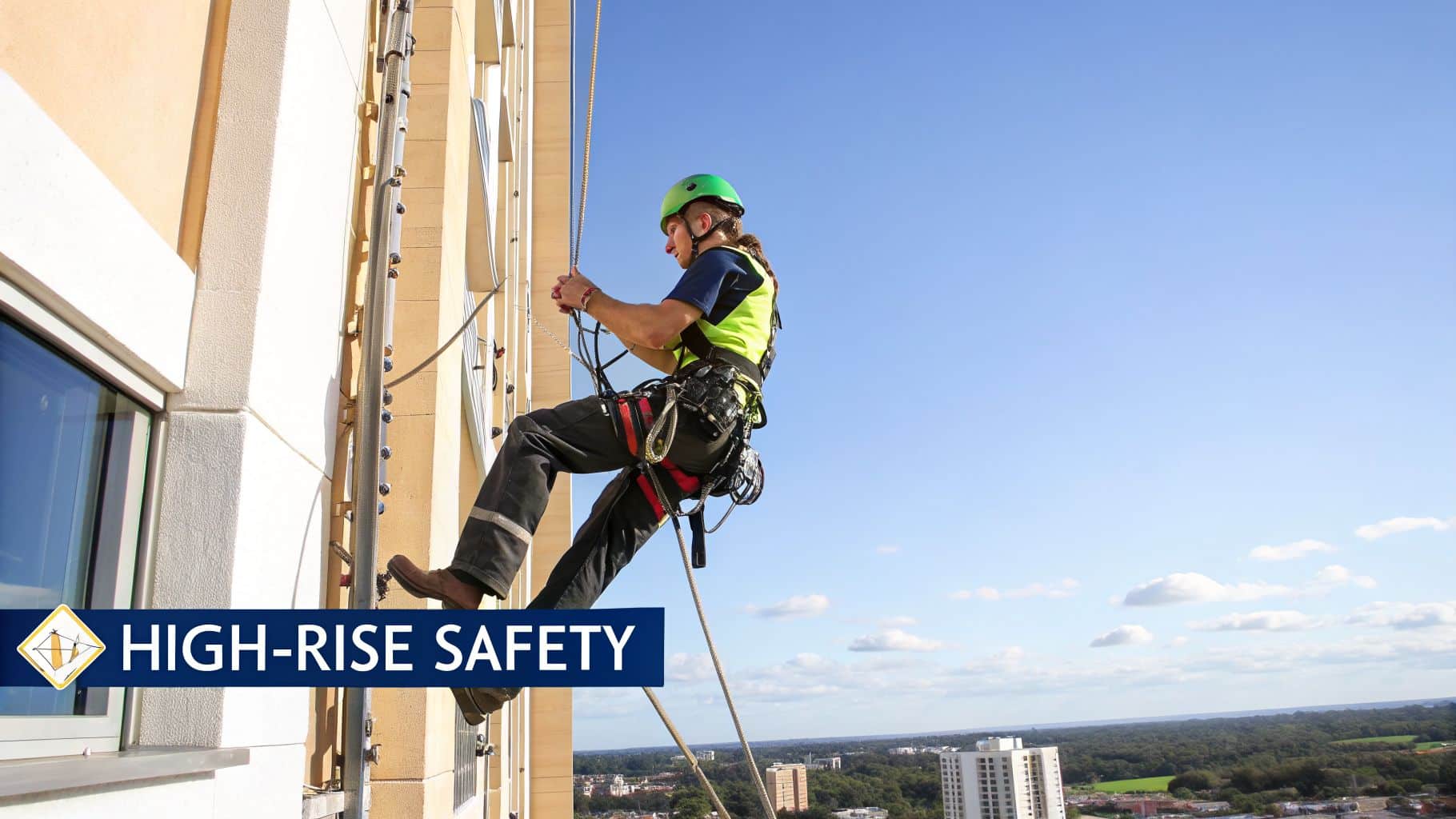
This level of due diligence is standard practice for major commercial properties. For example, the managers of office towers in Phoenix's downtown corridor use these checklists before every cleaning cycle to protect their assets and tenants. Likewise, luxury condominiums in Paradise Valley require their high-rise window cleaning specialists to provide this documentation as proof of competence and safety adherence. It’s a critical step in vendor qualification that ensures only certified, insured professionals work on your building.
Putting High-Rise Safety Standards into Practice
Effectively using this checklist as part of your commercial property inspection checklist involves several key actions:
- Verify Certifications: Before work starts, require vendors to provide current worker certifications like IRATA or SPRAT. Ensure the team at South Mountain Window Cleaning, for example, can present these credentials.
- Audit Equipment: Document the certification dates for all rigging, ropes, and safety equipment. This creates a record and helps you ensure the vendor is using properly maintained gear.
- Set Weather Protocols: Clearly define weather thresholds for operations, including maximum wind speeds and temperature ranges. Work should not proceed if conditions are unsafe.
- Confirm Insurance Levels: Request proof of insurance that meets or exceeds your property’s requirements, often $2 million or more for high-rise work, before allowing any team on-site. The complexities of this work demand a dedicated approach; you can learn more about high-rise window cleaning and its specific safety protocols to better prepare.
By making a high-rise safety checklist a mandatory part of your vendor engagement process, you move beyond hoping for a safe outcome to actively ensuring it. This documentation provides a clear, defensible record of your due diligence and commitment to safety for tenants, employees, and the public.
4. Commercial Storefront & Retail Window Inspection Checklist
For retail, restaurant, and hospitality businesses, first impressions are everything, and window cleanliness directly impacts customer perception and sales. A Commercial Storefront & Retail Window Inspection Checklist is a specialized tool that moves beyond general maintenance to focus on aesthetic presentation, signage clarity, and entry-point visibility. This approach treats windows as a critical marketing asset, ensuring they invite customers in rather than deterring them.
This targeted method is vital for maintaining brand standards and driving foot traffic. For instance, high-end retail centers in Scottsdale and Phoenix implement weekly window inspection schedules to uphold a consistent, luxury brand appearance across all storefronts. Similarly, drive-thru restaurants in Gilbert and Chandler use detailed checklists to guarantee that customer-facing glass meets stringent health and cleanliness standards, a key factor in the dining experience. For hospitality properties in Paradise Valley, pristine windows are a non-negotiable part of meeting guest expectations for luxury and comfort.
Putting the Storefront Standard into Practice
Successfully using this focused checklist for your commercial property inspection requires attention to customer-facing details:
- Set a Clear Schedule: Establish inspection frequencies (weekly, bi-weekly) based on your business’s traffic, location, and environmental factors. For example, increase inspections during Arizona’s dusty spring season (April-June).
- Maintain Visual Consistency: Take inspection photos from the same vantage points and at similar times of day. This creates a reliable visual record for comparing the effectiveness of cleanings over time.
- Assess Signage and Promotions: Make "visibility of key signage" a rated item on your checklist. Dirty or streaked glass can obscure important promotional materials, directly affecting revenue.
- Include Interior Glass: A comprehensive inspection must account for interior windows, partitions, and display cases. Professionals like South Mountain Window Cleaning can address both sides to ensure a flawless presentation.
- Inspect During Business Hours: Conduct occasional inspections while your business is open to see exactly what your customers see, identifying glare, smudges, and sight-line obstructions from their perspective.
By adopting a retail-focused inspection, you shift from a simple cleaning task to a strategic part of your customer experience management. It's about ensuring your physical storefront is as polished and inviting as your brand itself.
5. Solar Panel Cleaning & Inspection Checklist
For properties with solar installations, a specialized inspection template is no longer optional; it's a direct driver of ROI. This checklist moves beyond basic upkeep and provides a structured framework for assessing panel condition, cleaning needs, and overall system efficiency. Developed from best practices, this process identifies issues like dust accumulation, hard water deposits, and bird droppings that degrade performance. A formal solar panel inspection checklist ensures that your investment in renewable energy continues to pay dividends.
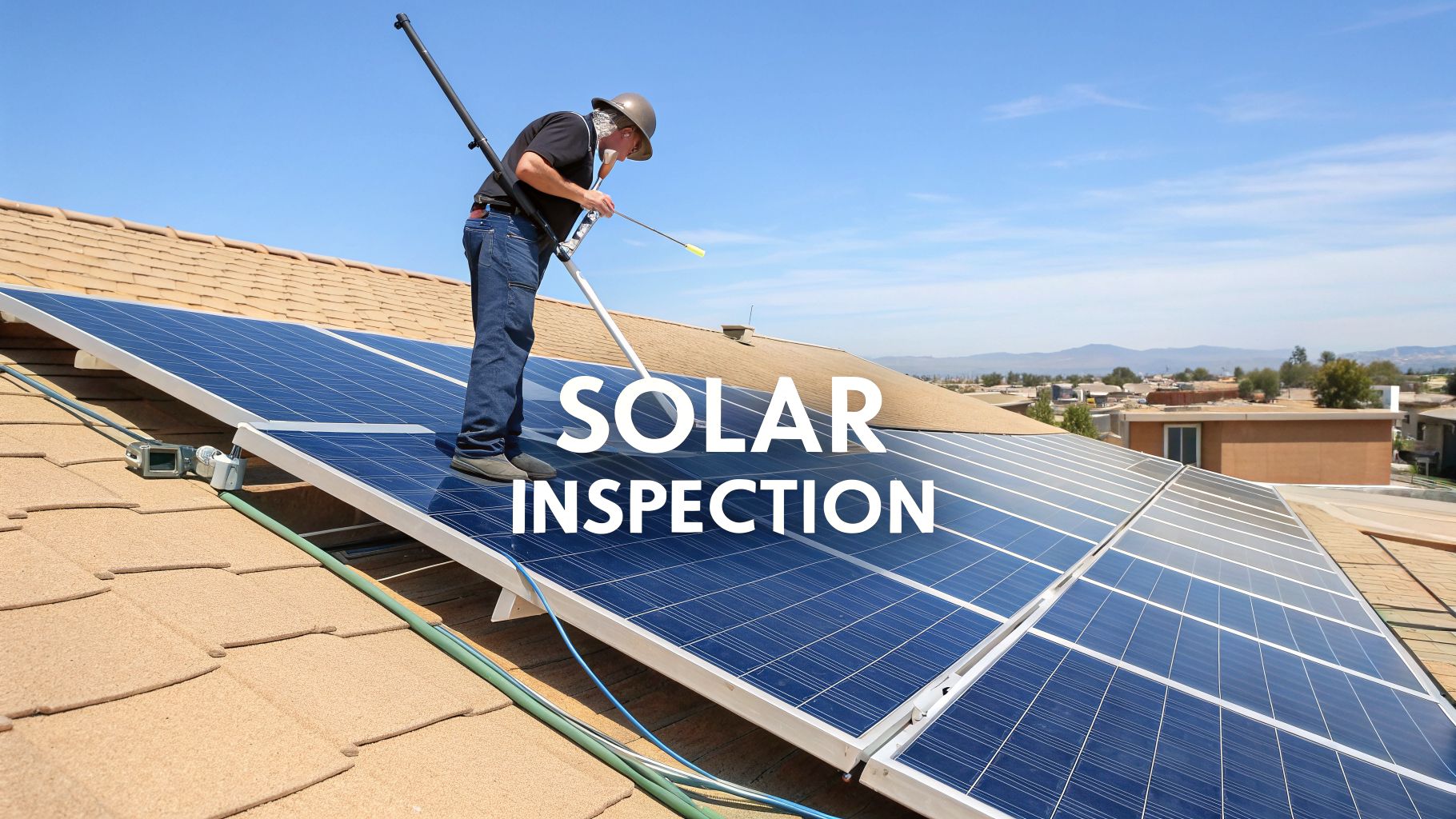
This approach is especially critical in Arizona, where dust and hard water are significant factors. For example, commercial properties in Phoenix and Scottsdale often see a 15-25% drop in efficiency that is fully recoverable with professional cleaning. Likewise, residential clients in Gilbert and Chandler frequently discover that mineral deposits from Arizona's hard water are limiting their solar output. By integrating a solar-specific checklist into your maintenance schedule, you can proactively protect your asset and maximize energy production.
Putting the Solar Panel Standard into Practice
Successfully integrating this standard into your commercial property inspection checklist requires a few direct actions:
- Document Initial Output: Before any cleaning, record the current energy output of your system. This data establishes a clear performance baseline to measure the financial return of professional cleaning.
- Schedule for Peak Season: Arizona's dust season (April-June) requires more frequent attention. Plan for a deep cleaning in the spring to ensure maximum efficiency before the peak summer heat and air conditioning loads hit.
- Demand Pure Water: Ensure your service provider uses a pure-water system, like the one employed by South Mountain Window Cleaning. This method prevents the mineral spots and residue that tap water leaves behind, which can hinder performance. For more details on the process, you can learn how to clean solar panels professionally.
- Bundle Services for Efficiency: Coordinate your solar panel cleaning with other routine maintenance, such as window cleaning. This streamlines operations, reduces site disruption, and often leads to cost savings with your vendor.
By using a dedicated solar panel checklist, you change the conversation from "the panels look dusty" to "we restored 22% of lost energy production by removing accumulated dust and mineral deposits." This objective data is fundamental for demonstrating value and making informed maintenance decisions.
6. Property Condition Assessment (PCA) Commercial Inspection Checklist
For building owners and investors who need a complete picture of a property's financial and physical health, the Property Condition Assessment (PCA) is the gold standard. This goes far beyond a simple pass/fail inspection. Governed by standards from ASTM International, a PCA is a deep, investigative report that establishes a baseline for every major system, from the foundation to the rooftop. It identifies immediate repair needs and forecasts long-term capital expenditures, making it a vital document for any serious commercial real estate transaction.
This assessment is crucial for due diligence and strategic planning. For instance, commercial property buyers in Phoenix and Scottsdale routinely commission a PCA before an acquisition to uncover hidden liabilities that could affect the final purchase price. Similarly, property management firms use the findings from a detailed PCA to justify large-scale renovation budgets to building owners, providing a clear, data-driven rationale for capital improvements. Even lenders often require PCA documentation before financing a commercial real estate purchase.
Putting the PCA Standard into Practice
Successfully using a PCA-style commercial property inspection checklist to protect your investment requires a methodical approach:
- Prep for Presentation: Coordinate professional services like exterior power washing and window cleaning from a trusted vendor like South Mountain Window Cleaning right before the PCA. A clean, well-maintained appearance creates a positive first impression and can subtly influence the assessment.
- Document the Baseline: Use high-quality, high-resolution photography for all major systems, including HVAC units, electrical panels, plumbing, and the building envelope. These images become the definitive record of the property's condition at a specific point in time.
- Prioritize and Plan: Sort the identified issues into distinct timelines: immediate needs, short-term projects (1-3 years), and long-term capital replacements (3-10 years). Focus first on items that impact property value, safety, and tenant satisfaction.
- Estimate Costs: Attach realistic cost estimates to each identified repair or replacement item. This step translates the physical assessment into a financial roadmap, helping all stakeholders understand the monetary implications of the report's findings.
Adopting a PCA framework shifts your perspective from daily maintenance to long-term asset management. Instead of just fixing what’s broken, you’re creating a strategic plan to preserve and increase the property's value over its entire lifecycle.
7. Preventive Maintenance & Cleaning Schedule Checklist
For property managers aiming to shift from reactive fixes to proactive care, a Preventive Maintenance & Cleaning Schedule is a foundational tool. This isn't just about scheduling tasks; it's a calendar-based strategy for inspection and cleaning that anticipates needs before they become costly problems. The checklist establishes regular frequencies for services based on property type, location, and environmental factors, ensuring consistent upkeep and preventing long-term deterioration. This method is the backbone of any effective commercial property inspection checklist, turning maintenance into a predictable, manageable process.
This proactive approach is essential for preserving property value and tenant satisfaction. For example, bustling retail centers in Chandler and Gilbert often implement twice-monthly storefront cleaning during peak shopping seasons to maintain curb appeal. Likewise, office parks in Phoenix schedule monthly window inspections and quarterly deep-cleaning cycles to combat the constant desert dust, ensuring a professional appearance for tenants and their clients. It’s a system of accountability that ensures nothing is overlooked.
Putting a Preventive Schedule into Practice
Successfully integrating a scheduled checklist into your property management workflow involves a few key actions:
- Align with Local Conditions: Structure cleaning schedules to account for Arizona’s seasonal patterns. Increase window and exterior washing frequency from April to June when dust is most prevalent, and build in flexibility for emergency cleanings after major dust storms or haboobs.
- Use Scheduling Software: Employ a computerized maintenance management system (CMMS) or scheduling app to assign tasks, track completion, and monitor compliance. This creates a digital record for analyzing trends and adjusting frequencies.
- Set Clear Benchmarks: Define success in your service contracts. Specify that windows must be cleaned every four weeks or that storefronts must remain free of smudges. This gives vendors like South Mountain Window Cleaning clear, measurable goals.
- Schedule for Minimal Disruption: Plan inspections and cleanings during off-hours or low-traffic periods to avoid interrupting tenant operations. This is especially important for high-traffic retail and office environments.
By adopting a preventive maintenance schedule, you move from putting out fires to preventing them entirely. Your focus changes from "What broke today?" to "What is our scheduled service for this week?" This level of organization is critical for efficient budgeting and maintaining a first-class property.
8. Gutter, Downspout & Drainage System Inspection Checklist
For property managers safeguarding their assets against water damage, a dedicated gutter, downspout, and drainage system inspection is a non-negotiable part of any complete commercial property inspection checklist. This specialized template moves beyond a simple visual check and focuses on the entire water management system, from gutter integrity and downspout flow to fascia condition. It’s a proactive measure to prevent costly structural repairs, mold remediation, and foundation issues caused by uncontrolled water.
This focused approach is critical for managing properties in Arizona's unique climate. For instance, commercial buildings in Gilbert and Chandler must address heavy dust and debris accumulation from the spring dust season, which can create concrete-like blockages. Likewise, multi-unit properties in Scottsdale and Paradise Valley schedule comprehensive gutter cleaning and inspection before the summer monsoon season (June-September) to ensure their systems can handle intense rainfall without overflowing and damaging landscaping or stucco.
Putting the Gutter & Drainage Standard into Practice
Successfully integrating this inspection into your maintenance routine requires a methodical approach to protect your investment:
- Schedule Seasonally: Conduct inspections seasonally, with a critical pre-monsoon assessment in May or June for any Arizona property. This timing allows for cleaning and repairs before the heaviest rains arrive.
- Document with Photos: Photograph any evidence of overflow, rust, sagging, or deterioration. These images provide clear documentation for maintenance requests and prove essential when assessing vendor performance or filing insurance claims.
- Check Discharge Points: Ensure all downspouts effectively channel water away from the building's foundation. Look for signs of erosion or pooling water at the discharge area, which indicates a grading problem that needs correction.
- Integrate with Other Services: Bundle gutter inspection and cleaning with other exterior services. When professionals from South Mountain Window Cleaning are already on-site for window or facade washing, adding a gutter check is an efficient and cost-effective strategy.
A clogged gutter is more than an eyesore; it's a direct threat to your building's structural integrity. By treating the drainage system as a critical component of your property's health, you shift from reactive repairs to proactive asset protection. This detailed inspection is the first line of defense against water intrusion. To ensure this work is done correctly, review our guide on how to clean gutters safely.
9. Post-Cleaning Quality Assurance & Customer Satisfaction Inspection Checklist
For service-based businesses where results are everything, a Post-Cleaning Quality Assurance (QA) checklist is the final, critical step in the service delivery process. This isn't just about a quick look-over; it's an internal quality control system that verifies work against contractual standards, documents before-and-after conditions, and confirms customer satisfaction. This process turns a good service into a great one by building trust and guaranteeing consistency.
This method is fundamental for maintaining a high standard of work, especially in a competitive market. For instance, after completing a high-rise window cleaning for a major corporate campus in Phoenix, South Mountain Window Cleaning technicians use a QA checklist to photograph and document every section, providing the property manager with verifiable proof of completion. Similarly, commercial cleaning teams in Scottsdale use this process to confirm power washing results meet the client's exact specifications before packing up their equipment, preventing costly return visits. It is an essential part of any professional commercial property inspection checklist.
Putting the QA Standard into Practice
Successfully integrating a QA checklist into your workflow ensures every job ends on a high note and reinforces your commitment to quality.
- Standardize Your Language: Use a consistent vocabulary in your checklist that matches customer expectations, such as 'streak-free,' 'spot-free,' and 'no residue.' This ensures everyone is evaluating work against the same criteria.
- Systemize Photography: Mandate that technicians take before-and-after photos from the exact same angles and distances. This creates a clear, undeniable visual record of the value provided.
- Inspect in Optimal Conditions: Conduct final window inspections in direct, natural light. This is the best way to accurately identify any remaining streaks or water spots that might be missed in poor lighting.
- Formalize Client Sign-Off: If your contract specifies it, have the client or property manager sign off on the completed checklist. This formally closes the job and confirms their satisfaction, minimizing future disputes.
By implementing a formal QA inspection, you create a feedback loop that protects your business and delights your clients. It documents that the job was done right, identifies areas for team training, and provides the proof needed to stand behind a satisfaction guarantee with complete confidence.
10. Seasonal & Environmental Condition Assessment Checklist (Arizona-Specific)
For property managers in the Grand Canyon State, a generic commercial property inspection checklist simply won’t cut it. An Arizona-specific seasonal and environmental assessment is crucial for addressing the state's unique and often harsh conditions. This specialized approach accounts for the intense UV exposure, monsoon-driven damage, hard water mineral deposits, and the relentless dust kicked up by haboobs. It’s a proactive strategy to protect property value and maintain curb appeal against a constant environmental assault.
This methodology is essential for maintaining operational readiness and aesthetic quality. For instance, retail storefronts in Chandler and Tempe use this focused checklist to schedule emergency cleaning after haboob events reduce visibility to near zero. Similarly, high-rise buildings in downtown Phoenix rely on seasonal assessments to inspect for wind-driven damage and seal degradation following the violent monsoon season, ensuring tenant safety and preventing costly water intrusion.
Putting the Arizona-Specific Standard into Practice
Successfully using a seasonal and environmental checklist requires adjusting your maintenance calendar and methods to the local climate:
- Proactive Dust Season Scheduling: Educate tenants about Arizona’s intense dust season (typically April-June). Work with a provider like South Mountain Window Cleaning to increase window cleaning frequency to bi-weekly or even weekly during these months to combat constant grime.
- Combat Hard Water: Use a pure-water cleaning system, which is standard for professional services. This deionized water leaves no mineral residue, preventing the hard water spots common from Arizona's mineral-heavy water supply and protecting glass integrity.
- Pre- and Post-Monsoon Inspections: Schedule thorough property assessments before the monsoon season (May-June) to identify vulnerabilities. Conduct another inspection after major storms to document any damage with time-stamped photos for insurance claims and repair records.
- Prioritize Solar Panel Efficiency: Arizona's abundant sunshine is a major asset for properties with solar panels, but dust accumulation can cause significant efficiency drops. Schedule professional cleanings in both the spring (post-dust season) and fall to maximize energy production year-round.
By adopting an Arizona-focused environmental assessment, you shift from a reactive, damage-control mindset to a proactive, preventative maintenance strategy. This approach not only keeps properties in Phoenix, Scottsdale, and Paradise Valley looking pristine but also mitigates long-term damage from sun, wind, and dust.
Top 10 Commercial Property Inspection Checklists Comparison
| Checklist | Implementation Complexity | Resource Requirements | Expected Outcomes | Ideal Use Cases | Key Advantages |
|---|---|---|---|---|---|
| IICRC Commercial Window Inspection Checklist | Moderate — structured, standards-driven process | Trained inspectors, digital documentation tools, time for detailed reporting | Professional-grade inspections, standardized records, compliance evidence | High-rise and large commercial properties needing industry-recognized audits | Credibility from certification, strong documentation, vendor performance benchmarking |
| Commercial Building Exterior Inspection (Multi-System) | High — broad scope across systems | Multi-skilled inspectors, longer inspection time, photography, reporting software | Holistic condition assessment, prioritized maintenance list | Retail centers, mixed-use properties, portfolios needing bundled services | Identifies bundled opportunities, comprehensive baseline for budgets |
| High-Rise Window Cleaning Safety & Inspection | Very High — safety-critical and regulated | Specialized training (IRATA/SPRAT), certified equipment, insurance verification | OSHA-compliant operations, reduced liability, clear vendor qualifications | Tall office towers, luxury high-rises, sites requiring rope-access safety | Ensures regulatory compliance, minimizes risk, validates vendor credentials |
| Commercial Storefront & Retail Window Inspection | Low–Moderate — aesthetic-focused, simpler scope | On-site inspectors, photo documentation, timing during business hours | Improved customer-facing appearance, measurable presentation standards | Retail storefronts, restaurants, hospitality venues | Direct impact on sales perception, easy client-facing metrics, simple to implement |
| Solar Panel Cleaning & Inspection | Moderate — technical but focused | Solar knowledge, pure-water systems, performance monitoring tools | Restored energy output, extended panel life, data-driven cleaning cadence | Commercial/residential solar owners, properties bundling solar with cleaning | Energy efficiency gains, ROI demonstration, competitive bundled service |
| Property Condition Assessment (PCA) | Very High — multidisciplinary and detailed | Engineering expertise, extensive documentation, cost-estimating tools | Transaction-grade condition reports, capital planning inputs | Real estate transactions, lender due diligence, major capital planning | Comprehensive valuation support, identifies major deferred maintenance |
| Preventive Maintenance & Cleaning Schedule Checklist | Moderate — ongoing discipline and coordination | Scheduling/CMMS software, recurring inspections, vendor management | Consistent appearance, fewer emergencies, predictable budgeting | Office parks, shopping centers, managed portfolios | Reduces reactive costs, extends asset life, predictable service delivery |
| Gutter, Downspout & Drainage System Inspection | Low–Moderate — focused, seasonal emphasis | Access equipment, inspection tools, seasonal scheduling | Mitigated water damage risk, improved drainage performance | Properties vulnerable to storms or heavy debris, residential/commercial roofs | Prevents costly water issues, straightforward assessment, pairs with cleaning |
| Post-Cleaning Quality Assurance & Customer Satisfaction | Low — routine QA after services | QA checklist, before/after photos, customer sign-off process | Verified service quality, faster dispute resolution, training insights | All service jobs where client satisfaction and guarantees matter | Supports satisfaction guarantees, documents results, improves consistency |
| Seasonal & Environmental Condition Assessment (Arizona-Specific) | Moderate — regionally specialized | Local climate expertise, pure-water systems, seasonal scheduling | Adjusted cleaning frequencies, reduced weather-related damage | Arizona properties facing dust, monsoons, hard water challenges | Localized recommendations, justifies frequency adjustments, differentiates provider |
Partner with the Experts for a Flawless Commercial Property
Navigating the complexities of property maintenance begins with a solid plan, and the detailed checklists provided in this guide offer the framework for that success. From the broad strokes of a Property Condition Assessment (PCA) to the focused details of an IICRC window inspection, each checklist serves a distinct purpose. They work together to build a complete picture of your asset's health, ensuring nothing falls through the cracks. This systematic approach transforms reactive repairs into proactive care, safeguarding your investment and boosting its market appeal.
The true value of a commercial property inspection checklist is not just in identifying issues but in the consistent, professional action that follows. A checklist is a map; you still need a skilled navigator to traverse the terrain. For property managers and owners across the Phoenix metro area, from the bustling retail corridors of Scottsdale to the high-rise offices in Tempe, this means partnering with a team that understands the local challenges and possesses the right tools and training for the job.
From Checklist to Action: The South Mountain Difference
Merely ticking boxes on a form doesn't clean a window or clear a gutter. The real work begins once the inspection is complete. This is where a partnership with a dedicated, professional service provider becomes essential. Consider the checklists we've covered:
- Exterior and High-Rise Inspections: These demand an eye for detail on everything from window seal integrity to surface grime. Our teams are not only trained in high-rise safety protocols but also know how to spot and rectify issues like hard water staining on glass and dirt buildup on frames, directly addressing items on your checklist.
- Arizona-Specific Seasonal Assessments: Our region's harsh sun and powerful monsoon storms require specialized attention. We see the effects firsthand, from dust-caked solar panels that lose efficiency to gutters clogged with storm debris. Our services are designed to specifically combat these local, seasonal challenges.
- Preventive Maintenance Schedules: A key part of your checklist is scheduling routine cleanings. With our computerized scheduling and reliable service, we make it easy to implement your preventive plan. You can set up recurring window cleanings, power washing, and solar panel maintenance, ensuring your property remains in top condition year-round without constant oversight.
Key Takeaway: A well-maintained checklist is a living document that drives action. It loses its power without a reliable partner to execute the required maintenance tasks with precision and professionalism. Your checklist identifies the "what," and a trusted vendor like South Mountain Window Cleaning provides the "how."
For businesses in Phoenix, Scottsdale, Paradise Valley, Chandler, Gilbert, and Tempe, we are more than just a cleaning company. We are a crucial part of your property management strategy. As a licensed, bonded, and insured partner with a $2 million insurance policy, we offer the reliability and peace of mind that commercial property managers demand. Our status as a partner for Amazon and Google Home Services, alongside over 400 five-star reviews, speaks to our commitment to quality.
By turning your inspection findings into a clear action plan executed by our experts, you protect your property's value, enhance its curb appeal, and create a welcoming environment for tenants and customers. Don't let a completed checklist gather dust. Let it be the first step toward a pristine, well-maintained property that stands out for all the right reasons.
Transform your commercial property inspection checklist from a list of tasks into a record of accomplishments. Partner with South Mountain Window Cleaning, LLC to handle the demanding work of exterior maintenance, from high-rise windows to ground-level storefronts. Contact South Mountain Window Cleaning, LLC for a fast, free quote and let our insured, professional team protect and elevate your commercial investment.