
Search for how to remove grease stains from concrete and the answers come back nearly unanimous: rent a pressure washer, or buy the strongest degreaser on the shelf and blast it. Both skip the two questions that decide whether the stain goes away. How far has the oil traveled into the slab, and where is the wash water going to end up?
The stakes run past curb appeal. The U.S. Environmental Protection Agency reports that used oil from a single oil change can contaminate up to 1,000,000 gallons of freshwater, and that American households improperly dispose of approximately 193,000,000 gallons of used oil annually, roughly the equivalent of 17 Exxon Valdez oil spills. A greasy driveway rinsed toward a catch basin feeds that number directly.
Pressure washing is a rinse step, not a removal method. Grease sitting on top of the pores lifts away; grease already soaked in gets pushed deeper and spread sideways by a narrow nozzle at close range. Real removal starts with a dry absorbent, climbs only as far up the ladder as the stain forces you, and keeps every drop of contaminated water where you can collect it. Match the method to the stain and the runoff problem mostly solves itself.
Match the Method to the Grease Stain
Two grease stains that look identical can need opposite treatments. The difference is depth. Grease still sitting on the surface is a lifting problem, because an absorbent pulls it out of the liquid phase before it migrates. Grease that has soaked into the pores is a wicking problem, because nothing you put on the surface touches it until you draw it back up and out.
The University of Georgia Extension builds its stain guidance on exactly that split. Its first instruction is to absorb free-standing grease with paper towels or absorbent cloths, and it warns specifically against wiping, since wiping spreads the oil and drives it further in. From there it prescribes dry cement over the area for at least 24 hours, repeated until no more oil comes up. Only when a residual stain persists does it move to a paste of 1 part trisodium phosphate (TSP) to 6 parts water, a full day of drying, and a scrub with clear water. Contamination that has fully set in gets a third treatment entirely: mineral spirits or paint thinner, covered with dry cement, talcum powder, cornstarch, or kitty litter, and repeated as needed.
Four situations cover nearly every stain a homeowner or property manager will meet, and each one has a different first move.
| Stain situation | First move | Main treatment | What to expect |
|---|---|---|---|
| Fresh spill, still wet | Blot and lift, never wipe | Dry cement, kitty litter, or cornstarch for 24+ hours | Often gone within 24-48 hours |
| Recent dried drip (days old) | Absorb what you can, then degrease | TSP paste (1 part TSP to 6 parts water), dry, scrub, rinse | Clear in 1-2 treatments over 2-3 days |
| Old set-in stain (months or years) | Pull the oil back out | Mineral spirits worked in and covered with dry cement; repeat | Fades in 2-3+ cycles; a faint ghost may remain |
| Large greasy area (drive-thru, dumpster pad, lot) | Contain drains, then degrease | 20-25% degreaser dwell 10-15 minutes, agitation, controlled rinse | Same-day improvement; may need repeat visits |
| Any stain near a storm drain | Isolate the drain first | Dry cleanup and absorbents; collect all wastewater | Prevents runoff violations and waterway contamination |
The logic behind the order matters more than the products. Aggressive first moves are what ruin slabs and spread oil, so you start with the least violent method that can plausibly work and escalate one rung at a time.
The escalation rule: if a method removes nothing after one honest cycle, the answer is a different method, not more of the same one applied harder.
One category of product never belongs in this ladder. The National Park Service sorts concrete cleaning into three broad families, water methods, abrasive surface treatments, and chemical treatments, and cautions that strong acids such as muriatic or hydrofluoric acid can damage concrete and harm people, animals, site features, and the environment. Grease is a hydrocarbon, not mineral scale, so acid attacks the cement paste holding the slab together while doing almost nothing to the oil. Leave it on the shelf.
Find your row above and jump to the procedure that matches it. A wet spill from this morning and a two-year-old garage stain share little beyond the color.
How to Remove Fresh Grease Stains Step by Step
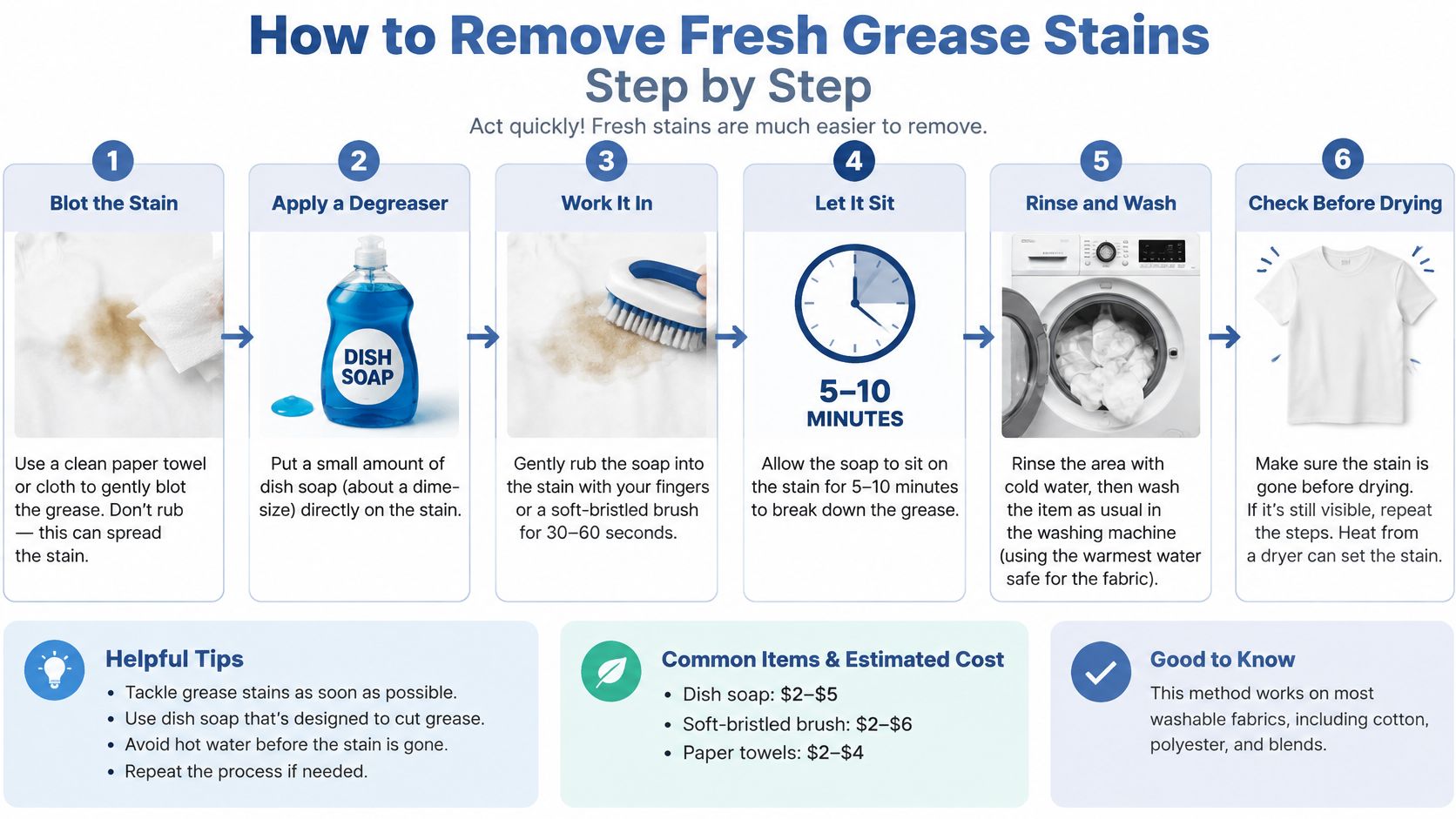
A fresh spill runs from minutes to about a day old: an oil-change drip on the driveway, a burger's worth of grease beside the grill, a splash when a fryer gets dumped. The routine below is the same for all three, and patience does most of the work.
The University of Georgia Extension recommends an absorption-first approach for oil on concrete, and the reason is simple: every minute liquid grease spends on the surface is time it spends soaking into pores you can't reach with a brush. Left alone, one oil drip can eventually affect 10-20 square feet of concrete through repeated exposure, according to Lawn Theory. Speed is the cheapest tool you own.
- Blot and lift, never wipe. Press paper towels or an absorbent cloth straight down on the puddle and lift. Wiping drags oil across clean concrete and presses it into pores that were fine a second ago, which is the single most common way a small stain becomes a big one.
- Cover the area with a dry absorbent. A generous layer of dry cement, kitty litter, talcum powder, or cornstarch. Dry cement is the most aggressive of the four and kitty litter is the cheapest for a large spill, so match the material to the size of the problem.
- Leave it alone for at least 24 hours. The powder wicks oil out by capillary action, and that takes hours rather than minutes. Sweeping after twenty minutes and calling it done is the second most common mistake.
- Sweep up and repeat. If the absorbent comes up stained, lay down a fresh layer and give it another day. Stop when a new layer comes up clean, not when you get bored.
- Treat the shadow with a TSP paste. Mix 1 part trisodium phosphate to 6 parts water, spread it over what's left, let it dry a full day, scrub with a stiff brush, then rinse with clean water. TSP is caustic, so nitrile gloves and eye protection aren't optional here.
- Bag the waste. Contaminated absorbent goes into a trash bag and then the bin. Sweeping it toward a gutter or storm drain just relocates the pollution, and in Arizona that means the next storm carries it straight into a wash.
At 48 hours, success looks like a faint gray shadow that fades as the slab dries, or no mark at all.
Judge the result on dry concrete. A wet slab hides stains and a dry one reveals them, so give the surface a full day before you decide whether another absorbent cycle is worth it.
Test every step in an inconspicuous spot first. A discolored patch in the corner of a garage is a cheap lesson, and the same mistake across a whole driveway is not. Once the oil is out and the slab is dry, a uniform pass over the entire surface blends the repair area with the rest of the concrete, which is the step our pressure washing for driveways covers when you'd rather hand it off.
How to Pull Set-In Grease Out of Concrete
Old stains resist cleaning because the oil is no longer on the concrete. It has migrated into the pore structure, oxidized, and darkened, so a brush only ever touches the top fraction of a millimeter. Scrubbing a months-old stain is like washing the outside of a sponge to get at what's inside it. The goal shifts from cleaning the surface to extracting from depth.
Poulticing does that. A solvent thins the oil so it can move, and an absorbent sitting on top draws it upward as the solvent evaporates. The method below is the one the Cortec technical newsletter describes, and it works on motor oil, hydraulic fluid, and grease alike.
- Set up the site first. Work outdoors or with the garage door wide open and a fan running, and kill every ignition source, including pilot lights and a hot engine. Mineral spirits are flammable, and a closed garage builds fumes faster than expected.
- Wet the stain with mineral spirits or paint thinner. Pour a small amount directly on the mark and work it in with a brush so it reaches the pores rather than sitting on top.
- Cover the wet area immediately. Dry cement, talcum powder, cornstarch, or kitty litter, laid on thick enough to hide the concrete. If you wait, the solvent flashes off and the oil stays put.
- Give it about 24 hours. The solvent lifts the oil and carries it up into the absorbent as it evaporates. Covering the poultice with plastic slows evaporation and extends the working time in hot weather.
- Sweep and repeat until it stops fading. Two cycles is normal. Three is common on a stain that has been baking for years.
Expectations are where most guides go quiet. Field testing of a biological cleaner reported in the same newsletter found a 15-day hydraulic-oil stain faded 50% after one treatment and was nearly eliminated after a second, while a bitumen stain older than six months lightened only 30% after the first application and needed another round for further reduction. Stain chemistry and age drive the result, not the brand on the bottle.
Ask not whether a product removes grease, but how many cycles it takes and when full visual removal stops being realistic.
If solvents aren't an option, enzymatic and biological degreasers are the slower, fume-free path. They eat the oil over days or weeks rather than lifting it in a day, which suits a property manager who can treat an area and walk away. What doesn't work is pressure. Blasting a set-in stain drives contamination deeper and spreads it sideways across adjacent concrete, and a poultice pulls in the opposite direction.
For a second opinion on how different slabs and climates behave, driveway stain tips for Ventura homeowners covers the coastal version of the same problem. On an unsealed slab, accept that a faint ghost may be permanent. Fading a stain by 80% and living with the rest is often the honest outcome.
Clean Large Grease Areas Without Runoff Problems
A drive-thru apron, a dumpster pad, and a restaurant walkway are not big versions of a driveway stain. They are containment jobs that happen to involve cleaning. The oil is spread over a wide area, the slab usually slopes toward a drain, and the volume of wash water is large enough that a mistake leaves the property.
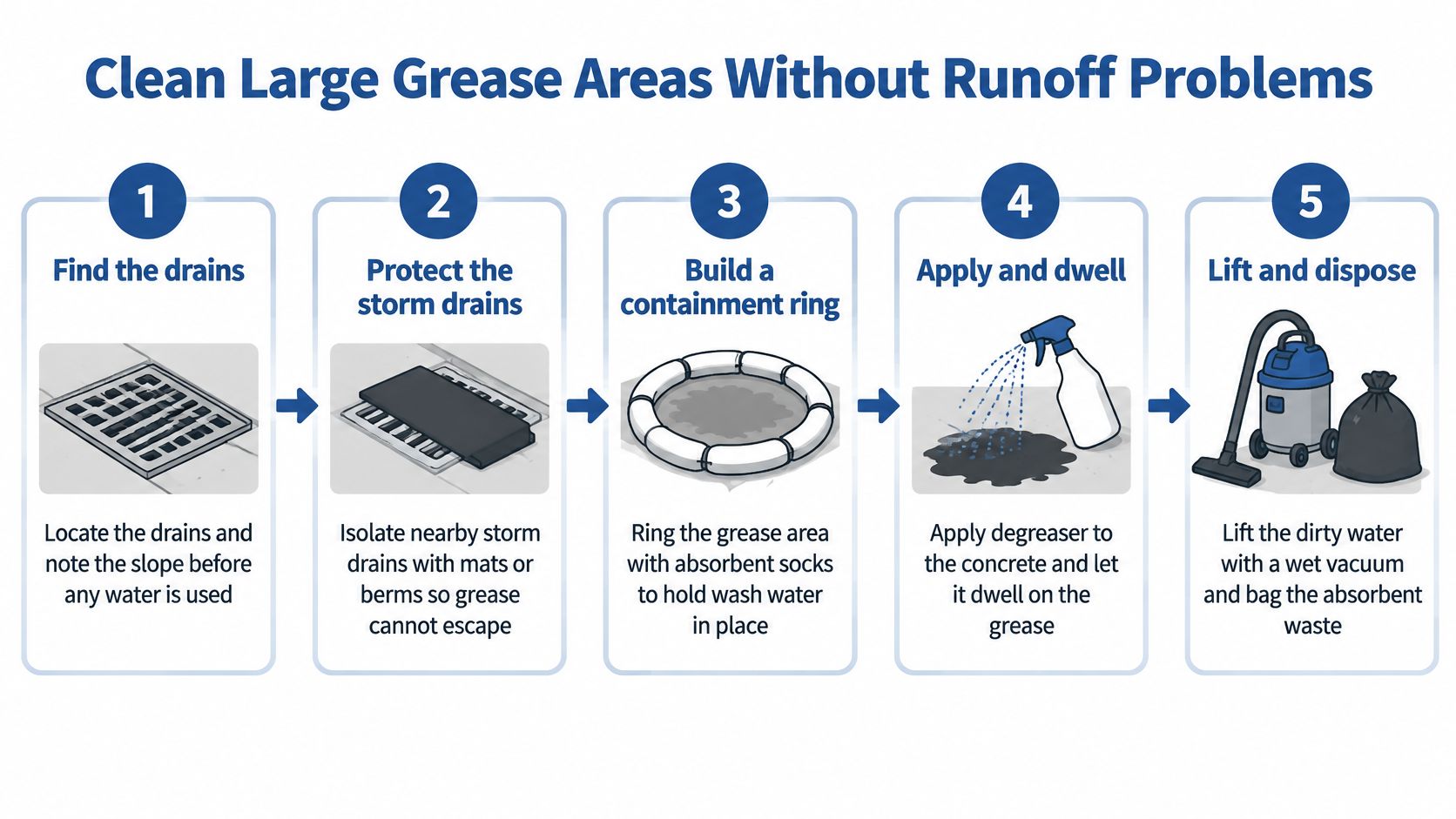
The EPA's industrial stormwater guidance recommends dry cleanup whenever possible and prohibits hosing down areas when that could expose pollutants to stormwater. Its broader stormwater material notes that oil and debris from paved areas reach storm drains and local water bodies, and recommends immediate spill cleanup, proper disposal of absorbents, and keeping grease containers and dumpsters covered. None of that is optional housekeeping. It's the difference between a clean pad and a discharge violation.
Containment comes before chemistry, every time.
- Find the drains and the slope. Walk the pad before any water touches it, note which way it falls, and mark every catch basin within reach. A lot that drains to a corner inlet needs a different plan than one that drains to a planted berm.
- Isolate what you can't avoid. Berms, drain covers, or absorbent socks around the inlets. Water that can't reach the drain can't carry oil into it.
- Dry-clean first. Scrape or absorb standing grease, sweep solids into a bag, and get the loose material off the slab. Everything removed dry is one less thing in your wash water.
- Pre-wet a small test section. A light mist holds the cleaner where you put it instead of letting it run to the low corner, and it shows you how the surface reacts before you commit.
- Apply and hold the dwell. The EPA's surface-washing guidance sets a general benchmark of roughly 20-25% product concentration with a 10-15 minute contact time, and its reference to pore cleaning describes about 60 psi of water supply doing the work, which is a fraction of what a typical gas pressure washer delivers. Agitate with a stiff nonmetallic brush and never let the product dry on the slab.
- Recover the wastewater. Wet vac, berm, or pump-out before the final rinse. This is the step that separates a compliant job from a problem, and it's the one that gets skipped when a crew is in a hurry.
- Rinse at controlled pressure, then dispose of what you collected. Low, even pressure finishes the surface without driving residue sideways, and the collected water goes wherever your local rules say it goes.
Here's the process in motion on a commercial surface.
Arizona properties carry an extra reason to get this right. Storm runoff in the Valley doesn't soak away, it moves fast across hard surfaces and into retention basins and washes, so anything left on a restaurant sidewalk or a parking lot has a short trip to somewhere it doesn't belong. Our flat surface cleaning work on restaurant walkways, drive-thru lanes, and dumpster pads around Phoenix and Scottsdale starts with drain protection for that reason.
The rule is blunt. Wash water containing oil never gets left on the slab, pushed toward a gutter, or rinsed into a catch basin, and it applies to a two-foot stain on a residential driveway exactly as it applies to a 4,000-square-foot lot. More water and higher pressure are not automatically better. Rinsing a dissolved hydrocarbon just moves it somewhere you can't recover it.
How Sealed Concrete and Arizona Heat Change the Method
Before you pick a cleaner, find out what the grease is sitting on. Drop a little water on the stain and a little on clean concrete nearby. If it beads and sits on both, a sealer is present. If it darkens and disappears on the clean patch but beads on the stain, the sealer is worn. If it soaks in everywhere, the concrete is bare.
What a sealer changes
On a sealed slab, grease sits on the coating rather than in the pores, which makes it a surface problem and usually an easy one. It also makes solvents dangerous. Mineral spirits and paint thinner can soften, cloud, or strip a sealer, so skip the poultice entirely on coated concrete. Dilute a degreaser, test it on an inconspicuous corner, work it gently with a soft brush, and wipe rather than scrub. Bare concrete is the opposite case: the absorption-first routine and the poultice steps are open to you there.
What heat and monsoon season change
Arizona adds three constraints that don't show up in national guides.
- Timing: a slab in full summer sun gets hot enough to burn a bare foot and to flash off a poultice before it can work. Schedule degreasing for early morning or late afternoon, and keep your hands off dark asphalt after mid-morning.
- Moisture management: heat dries a TSP paste or a degreaser within minutes, so mist the surface lightly through the dwell window and leave absorbent sitting on the stain between visits instead of pulling it early.
- Monsoon forecasting: from July through September, check the forecast before any wet work. Rain on an unrinsed slab carries oil into desert washes and storm drains, which undoes the cleaning and creates the exact problem you were trying to prevent.
Arizona's dry air pulls moisture out of a slab fast, so give a freshly washed surface a full dry day before you judge the stain or schedule a sealer application. If sealing is on the schedule, let the concrete dry time set the timing instead of assuming same-day work is safe.
Plan on repeat visits rather than a single heroic pass. I would rather re-treat a faint shadow than burn the surface paste off a slab that was otherwise fine.
When to Call a Professional for Grease Stains
Do the math on effort before you do the math on price. A fresh drip, a scatter of driveway spots, or a stain you're willing to treat across a weekend is a DIY job, and the methods above will handle it. Call someone when the stain covers a large area, sits within reach of a storm drain, keeps coming back at a restaurant or garage, or has already survived two or three honest DIY cycles. At that point you're paying for hot-water equipment, commercial degreasers, and wastewater recovery, not just labor.
If you'd rather hand it to a crew than run a third cycle, this guide to hiring a professional to pressure wash your property covers what to ask before anyone shows up.
Cost is where this decision usually gets made. HomeGuide's 2026 listing puts DIY concrete oil-stain cleaning at $3-$10, commercial degreasers at $10-$30, and professional pressure washing at $100-$300 (HomeGuide). A whole slab costs more than a spot: HomeFixx reports that professional cleaning for a standard 400-600-square-foot two-car driveway typically runs $150-$400.
| Cleaning option | Typical cost | Best for |
|---|---|---|
| DIY absorbents (kitty litter, cement, cornstarch) | $3-$10 per stain | Small fresh spills on driveways and garage floors |
| Commercial degreaser | $10-$30 per product | Set-in drips and recurring trouble spots |
| Professional spot cleaning | $100-$300 | Stubborn or widespread stains needing pro equipment |
| Full two-car driveway wash (400-600 sq ft) | $150-$400 | Whole-surface restoration before sealing |
| Grease or oil add-on to pressure washing | 25%-50% on top of base price | Restaurant, garage, and fleet-parking maintenance |
That last line surprises people. SnapToolSuite notes that oil, rust, or grease stain removal commonly adds 25%-50% to a base pressure-washing price because it needs degreaser and a second pass.
Prevention is cheaper than any row in that table. Seal bare concrete once it's clean, keep a bag of kitty litter and a bag of dry cement on hand, and wipe new drips within a day. When you hire anyone, ask one question before work starts: how will you collect and dispose of the wash water? A crew that can answer it specifically is a crew that has done this before.
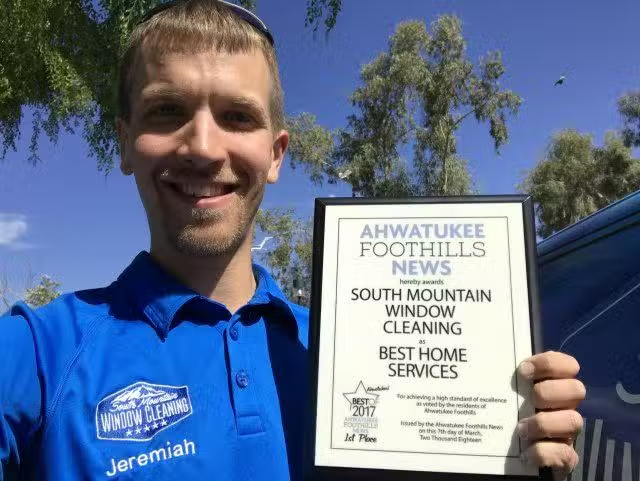
Grease on concrete is a runoff problem as much as a stain problem, and South Mountain Window Cleaning, LLC handles both sides of it for properties across Phoenix, Scottsdale, Paradise Valley, Chandler, Tempe, and Gilbert. Flat surface pressure washing covers driveways, walkways, decks, parking lots, and other flat surfaces, and the team also provides full service power washing for drive-thrus, dumpster pads, walkways, building exteriors, and more, with wash water managed rather than pushed toward a drain. Visit South Mountain Window Cleaning, LLC for a fast, free quote before the next spill sets.