

You notice it when you pull in after work. The concrete looks dull. The tire arcs are darker than the rest of the slab. Fine desert dust has settled into every pore, and a few spots near the garage have turned into stains you've stopped seeing until the sun hits them just right.
In Phoenix and the East Valley, a driveway gets dirty differently than it does in wetter climates. Windblown dust, baked-on grime, irrigation overspray, leaked fluids, and mineral residue all layer together. That's why pressure washing a driveway can make such a dramatic difference. Done right, it sharpens the whole front of the house. Done poorly, it leaves stripes, etched lines, and damage that's hard to hide.
Your Driveway Is Dirtier Than You Think
A driveway usually looks “not too bad” until the surface is cleaned. Then the contrast becomes obvious. What reads as normal wear is often a mix of compacted dust, traffic film, tire marks, oil residue, and stains that have been cooking in Arizona heat for months.
That buildup matters because the driveway is one of the largest visible surfaces on the property. Clean windows help. Fresh trim helps. But if the concrete at the front of the home is blotchy and grimy, it pulls attention immediately.
Many homeowners start with the right instinct. They want to handle it themselves over a weekend and restore the concrete without paying for a full exterior service call. In plenty of cases, that's realistic. A driveway can absolutely be a good DIY pressure washing project.
A clean driveway changes curb appeal faster than almost anything else outside the house.
The catch is that driveways are simple only from a distance. Once you're standing over the surface with a machine in your hands, the details decide the result. The wrong pressure, the wrong nozzle, poor overlap, or letting detergent dry in direct sun can leave the slab looking worse than before.
What Arizona grime usually looks like
- Traffic film and dust: Desert air leaves a fine layer everywhere, and vehicles grind it into the surface.
- Oil and fluid spots: These need more than a quick rinse.
- Mineral residue: Hard water and runoff can leave pale deposits or uneven patches.
- Rust and irrigation staining: Common near edges, curbs, and planter lines.
If you're comparing methods and want a material-specific primer first, this guide on the best way to clean concrete driveway is a useful companion.
Planning Your Project for a Flawless Finish
By 10 a.m. in Arizona, a driveway can already be hot enough to fight you. Detergent flashes off faster, rinse water dries in patches, and stains that looked simple at sunrise start setting back into the concrete. Good planning prevents that kind of uneven result.
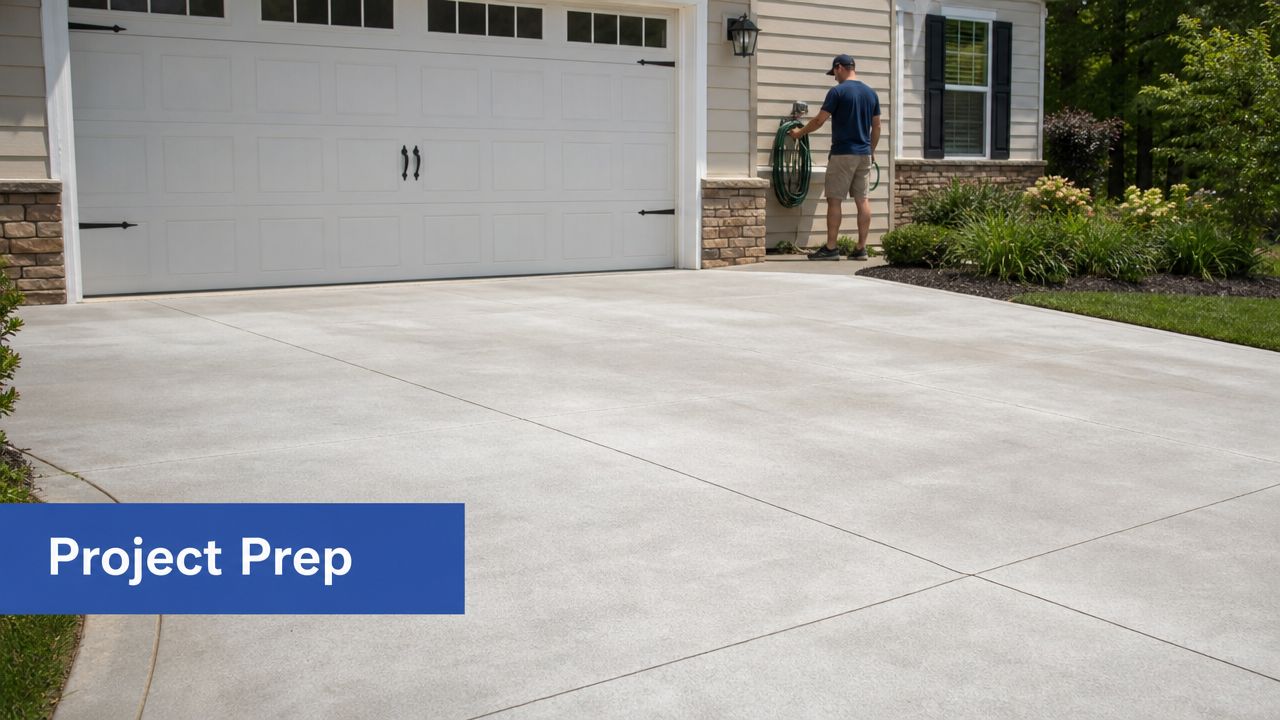
Clear and protect the area
Start by opening up the whole work zone. Move cars, bins, planters, doormats, hose reels, basketball hoops, and anything else that forces you to stop and restart. Consistent passes matter on concrete, and clutter is one of the main reasons DIY jobs end up striped.
Sweep first while the surface is still dry. Fine desert dust, small gravel, and dried leaves turn into muddy debris once water starts moving. That slurry gets pushed into control joints and onto garage thresholds, which adds cleanup and can scratch nearby painted surfaces.
Cover or pre-wet anything that should not catch overspray. On Arizona homes, that usually means lower stucco, metal gates, wood trim, door bottoms, and plants near the driveway edge. Desert landscaping is low maintenance, but young shrubs and ornamentals still react badly to strong cleaners.
Wear the gear that matches the risk
Pressure washing concrete is not complicated, but it can go wrong fast.
- Safety glasses: Grit and cleaner bounce back harder than many homeowners expect.
- Closed-toe shoes with grip: Wet concrete and overspray make footing less stable.
- Gloves: Better control on the wand, hose, and stain-treatment bottles.
- Hearing protection: Smart if you are running a gas unit for more than a few minutes.
One habit causes a lot of injuries. People try to adjust their stance, switch hands, or change nozzles while standing on a wet slope. Shut the machine down and reset properly.
Practical rule: If your footing feels sketchy before you pull the trigger, stop and fix that first.
Identify the surface before you set pressure
This step saves driveways.
Standard broom-finished concrete can handle a different approach than stamped concrete, pavers, natural stone, or asphalt-based surfaces. Homeowners get into trouble when they copy a generic pressure setting from a video and assume every driveway is the same material.
According to this material-specific driveway cleaning guide, block paving is typically cleaned around 1,500 to 2,000 PSI and then re-sanded, while tarmac should stay below 2,000 PSI and natural stone below 1,500 PSI. That lines up with what I see in the field. The more decorative or fragile the surface, the more the job depends on restraint and technique, not raw force.
Stamped and colored concrete deserve extra caution because surface damage is usually permanent. Once etching shows up in direct Arizona sun, it is hard to hide.
Plan for timing, runoff, and realistic costs
Early morning is usually the safest window in Arizona. Cooler concrete gives cleaners time to work, and you have a better chance of rinsing evenly before the slab heats up. If you want a fuller breakdown of seasonal timing and heat-related drying issues, this guide on the best time to pressure wash house is worth reading before you book a rental or block out a Saturday.
Also check where the water will go. Driveways that slope toward the garage, sidewalk, or street need a plan before you start. Dirty runoff can carry oil residue, rust treatment, and loosened grime into places you then have to clean twice.
Cost matters, but so does rework. Rental fees, fuel, detergent, stain removers, and your time add up quickly if the first pass leaves lap marks or misses deep oil spots. If you are comparing DIY against hiring out, this overview on budgeting for your cleaning project helps frame the decision in practical terms.
The fundamental question is simple. Are you cleaning light soil on standard concrete, or are you trying to correct years of baked-in Arizona staining without damaging the surface? That answer should shape the whole plan.
Choosing the Right Pressure Washing Arsenal
It is common to fixate on the machine and overlook the attachment setup. In practice, the nozzle, cleaner, and technique matter just as much as the unit itself.
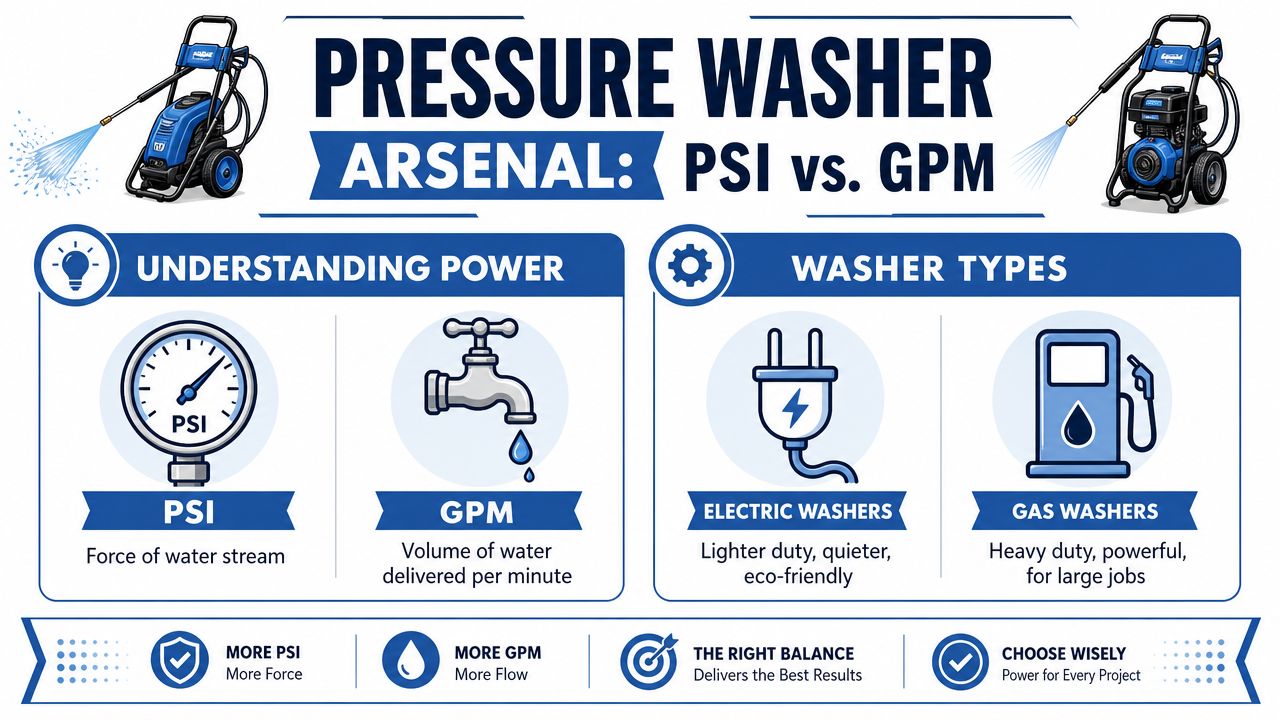
Match the machine to concrete, not your ego
For durable surfaces like concrete, a pressure washer capable of 1,500 to 3,000 PSI is generally recommended to remove grease, mold, and mildew without damage when used correctly, as noted in this guidance on pressure washing your driveway and how often to do it.
That range tells you something important. More pressure isn't automatically better. If the machine is too weak, you spend all day chasing stains. If it's too aggressive, you scar the surface and leave permanent wand marks.
What your nozzle choice really changes
A pressure washer doesn't clean the same way with every tip. The fan angle changes how concentrated the stream is, how much risk you carry, and how smooth the finish looks.
| Nozzle type | Best use | Risk level |
|---|---|---|
| Black soap nozzle | Applying detergent at low pressure | Low |
| Green fan nozzle | General concrete cleaning | Moderate |
| Yellow narrower fan | More aggressive work on stubborn grime | Higher |
| Red pinpoint nozzle | Rarely appropriate on driveways | Very high |
The red tip is where DIY jobs go sideways. It's too focused for broad flatwork and can cut ugly lines into concrete in a second. For most homeowners, a wider fan or a surface cleaner is the smarter play.
The one attachment that changes everything
A surface cleaner is the biggest upgrade for large flat areas. It holds the spray at a fixed height and reduces visible striping compared with a wand-only approach. It also speeds up coverage and gives a more uniform result when you move at a steady pace.
That's why many pros use a mixed workflow:
- Surface cleaner for the main field
- Wand for edges, control joints, corners, and tight spots
- Targeted spot treatment for oil or rust before the main wash
If you're still weighing methods, this breakdown of the difference between power washing and pressure washing helps clarify the terminology and where each approach fits.
Cleaners matter, but only when they fit the stain
Not every mark needs detergent. Some do.
Use a concrete-safe degreaser for oil spots. Use a targeted rust or mineral remover only if the product is appropriate for your surface. Arizona driveways often show white, chalky residue or stubborn edge staining from irrigation and runoff, and those don't always respond to plain water.
Pick products that are made for the material you're cleaning. “Stronger” isn't a real strategy if the chemical leaves residue, discolors the slab, or harms nearby landscaping.
South Mountain Window Cleaning, LLC also provides flat-surface pressure washing for driveways and similar hardscape areas, which can be one practical option when homeowners don't want to sort through machine, nozzle, and cleaner choices themselves.
Your Step by Step Guide to a Pristine Driveway
You start at 8 a.m. because the slab already feels warm, and by the time you reach the middle of the driveway, the Arizona sun is baking cleaner onto the surface faster than expected. That is how a simple wash turns into streaks, residue, and a second round of work.
The job goes better when the sequence stays controlled from the first sweep to the final rinse.
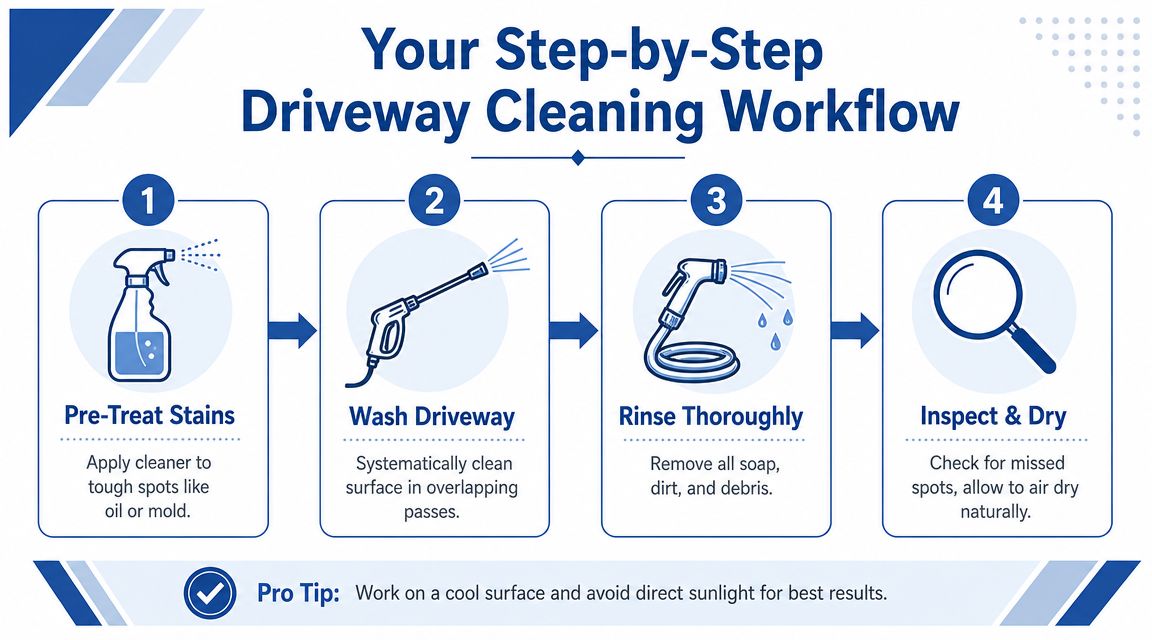
Treat stains before the main wash
Arizona driveways collect more than loose dirt. They often hold fine dust, irrigation minerals, oil drips that have baked into porous concrete, and dark tire marks that plain water will not fully remove.
Pre-treat those spots first. Use a cleaner that matches the stain, give it time to dwell, and scrub if the product calls for it. On a hot driveway, watch the surface closely. If the cleaner starts drying, rinse and reset. Letting chemical dry on concrete can leave its own mark.
Always test a small, less visible area before committing to the full slab. That matters even more on older concrete, colored finishes, or decorative surfaces that can react unevenly.
Work from high to low
Start at the highest point of the driveway and work with the slope, not against it. Home Depot's guide on how to pressure wash your driveway outlines the standard sequence: apply detergent with a low-pressure nozzle, allow dwell time, then rinse with controlled overlapping passes.
That pattern keeps dirty runoff moving away from areas you have already cleaned. On many Arizona properties, that runoff also carries fine dust and mineral residue, so working downhill helps prevent re-depositing grime onto a section that already looks finished.
Use this order:
- Sweep the slab: Remove gravel, leaves, and loose dust so you are not grinding debris across the surface.
- Pre-treat stains: Give oil, rust, and dark traffic marks attention before the main wash.
- Apply cleaner evenly: Use a low-pressure tip and keep coverage uniform.
- Allow dwell time: Watch the surface and do not let product dry in direct sun.
- Rinse in steady passes: Keep your pace, overlap slightly, and follow the slope of the driveway.
To see a driveway cleaning process in motion, this video gives a helpful visual reference.
Keep your spacing and rhythm consistent
Lowe's recommends testing a small area first, keeping the spray tip at a safe working distance, and using enough pressure for concrete without getting so aggressive that you scar the surface. That advice sounds basic, but many DIY jobs go sideways from neglecting it.
The mistake is chasing one stubborn mark by moving the tip closer and slowing down too much in a single spot. That concentrated stream can leave one patch cleaner than the rest, or worse, rougher than the surrounding slab. Once the texture changes, rinsing does not fix it.
Slow, overlapping passes beat frantic spot-blasting every time.
If you are using a surface cleaner, finish the perimeter and tight areas with the wand, then clean the open field in sections from top to bottom. That keeps your workflow organized and makes it easier to manage runoff before it pools or dries back onto the concrete.
Don't judge the finish while the slab is still wet
Wet concrete can hide striping, leftover staining, and uneven cleaning. Let the driveway dry enough to reveal its true state before deciding whether a section needs another pass.
That pause saves time. It also prevents the common Arizona mistake of over-cleaning a warm slab that already looks darker because it is still holding moisture.
If your longer-term plan includes coating instead of just cleaning, surface prep matters. This guide on how to paint your Melbourne concrete driveway is useful for seeing why a clean, uniform surface matters before any finish goes on.
Avoiding Common DIY Pressure Washing Disasters
Most ugly results come from one bad assumption. People think driveway cleaning improves when pressure increases. In reality, the finish improves when control increases.
Tiger stripes come from inconsistency
Those zebra-like lines aren't random. They come from uneven overlap, changing pace, or lifting and dropping the wand during each pass.
To avoid tiger-striping, professionals emphasize consistent, overlapping passes and often use post-treatment methods. For stubborn striping, a second pass in a different direction may be needed for a more uniform finish, based on practitioner discussion in this guide on surface cleaning techniques and stripe reduction.
If stripes start appearing, don't respond by getting closer with a sharper nozzle. That usually makes the difference in texture worse.
Etching happens faster than people expect
Concrete is durable, but the finish can still be damaged. Hold a concentrated stream too close, pause in one place, or use a tip that's too aggressive, and you can carve visible lines into the slab.
Common causes include:
- Standing still while spraying
- Using a narrow tip on broad flatwork
- Trying to blast out one stain instead of pre-treating it
- Cleaning decorative or older concrete like it's a fresh garage pad
Once etched, the surface may look permanently lighter or rougher in that area.
The goal is uniform appearance, not maximum force.
Pavers and edges need a lighter hand
Driveways with joints, borders, decorative bands, or nearby expansion cracks need more care than a plain concrete rectangle. Aggressive washing can dislodge sand between pavers, force water into cracks, and leave edge buildup that gets pushed back onto cleaned sections.
Watch the runoff too. Dirty water tends to collect in low corners and along the curb line. If you keep pushing grime around without rinsing those zones clear, it settles back into crevices and stains again.
Sun and timing can sabotage the finish
In Arizona, heat changes the workflow. Detergent can dry before it has time to work properly, and that leads to residue, blotchy patches, or unnecessary rework. That's why sectioning the driveway matters. Clean manageable areas and finish each one fully before moving on.
A rushed driveway often looks okay from the street and bad from the garage. That's the giveaway. The person cleaning chased visible dirt and ignored process.
When to Call the Pros at South Mountain Window Cleaning
You finish a Saturday driveway wash, let the slab dry, and then problems emerge. Tiger stripes, lighter wand marks, stubborn rust near the irrigation line, and a dirty border along the curb that looked fine while the concrete was wet. That is usually the point where a professional would have been the cheaper option.
Some driveways are simple. Others have old oil spots, decorative bands, pavers tied into the apron, hard-water staining, or damage from a previous high-pressure pass. Those jobs call for more than a rental machine and extra effort. They call for correct pressure, the right cleaner, and a process that protects the surface while still getting an even result.
Why local experience matters in Arizona
Arizona driveways build up a specific kind of mess. Fine dust settles into porous concrete, intense sun bakes in stains faster than many homeowners expect, and mineral-heavy sprinkler overspray leaves deposits that do not rinse off with pressure alone. Add summer heat, and detergents can dry too fast if the technician is not working in the right sequence.
Local experience matters because the surface tells you what it can handle. A newer broom-finish slab in Ahwatukee is different from older concrete in central Phoenix or a decorative driveway in Scottsdale. The right approach changes with age, finish, drainage, and stain type. Good results come from reading those variables before the trigger gets pulled.
What you are paying for when you hire out
The primary value is fewer mistakes and a more even finish.
South Mountain Window Cleaning is licensed, bonded, and insured. That matters on jobs where runoff control, overspray, surface protection, and equipment setup all affect the outcome. It also matters if the driveway sits next to stucco, painted garage doors, garden edging, or fragile joint sand that can be damaged by poor technique.
Homeowners also pay for diagnosis. Oil needs one treatment. Rust needs another. Efflorescence and hard-water buildup are different again. Pressure alone will not solve all three, and using the wrong chemical can make the stain stand out more once the slab dries.
If you are weighing the DIY route against hiring help, this guide on when to hire a professional to pressure wash your property lays out the decision clearly.
A clean driveway should dry evenly, look consistent from the street to the garage, and stay free of avoidable damage. If the surface is delicate, heavily stained, or already showing DIY mistakes, bringing in a trained crew from the start is the safer call.
If you want help with driveway cleaning or other exterior washing around your home or property, contact South Mountain Window Cleaning, LLC for a fast, free quote.