
Chattanooga's climate normals run from the 1991–2020 period, and typical monthly precipitation is about 4.63–5.06 inches, so recurring inspections and cleaning make more sense than relying on rain to wash glass. The common Chattanooga mistake is assuming a standard wash will fix mineral spots, mildew film, or pollen staining, when each needs diagnosis before anyone picks up a squeegee.
A homeowner may notice a milky haze after a wet summer, then find the shaded panes look worse than the sunny ones. That doesn't automatically mean the glass needs a stronger chemical or more frequent scrubbing. It means someone should identify whether the residue is pollen and organic film, mineral deposits, or splash from sprinklers, masonry, or landscaping before choosing a cleaning method.
Why Chattanooga Windows Get Dirty Faster Than You Expect
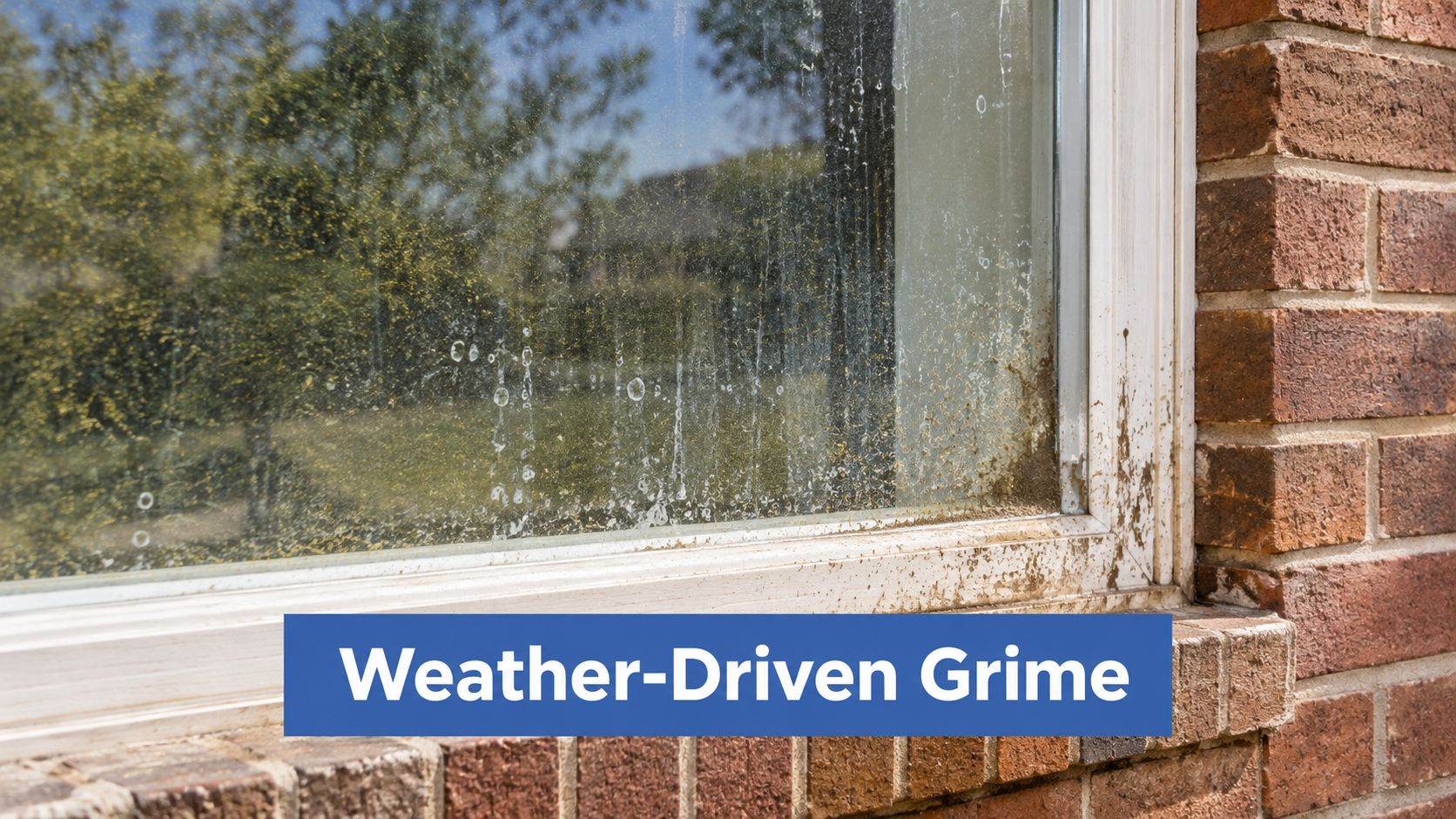
A wet season can leave a home's windows looking worse than they did before the rain started. Storms carry dust and pollen onto glass, and with rain arriving most months plus humid air slowing every dry-out, residue stays damp long enough to bond to the pane. That is why a wash schedule tied to the condition of the glass beats one tied to the calendar here.
Skip the guesswork on which contaminant you are dealing with. Walk the north elevation first: shaded panes there typically show the soft organic film, while the south-facing glass near the driveway carries hard outlines from irrigation overspray. Photograph both before any wash so you can tell whether the next visit changed anything.
Diagnose before choosing a cleaning method
Start with a slow lap around the building. Note which side faces prevailing weather, where tree cover keeps glass damp, and whether sprinklers or roof runoff reach the panes. A good cleaner separates routine surface soil from deposits that need controlled restoration, and refuses aggressive scraping or harsh chemistry that could damage coatings, seals, frames, or nearby finishes.
Practical rule: If a spot survives ordinary washing, ask what the mark is and which process is safe for that glass before anyone reaches for a stronger cleaner.
Storefronts, entrances, and lower floors beside parking areas or planted beds collect grime faster than sheltered upper windows. Keep a simple log after each visit: façade orientation, nearby water sources, deposit type, and how the glass looked a week later. When the same mark returns in the same place, the source is usually irrigation overspray, drainage, or construction runoff, and fixing that source matters more than booking another routine wash.
What a Chattanooga Window Cleaning Service Actually Includes
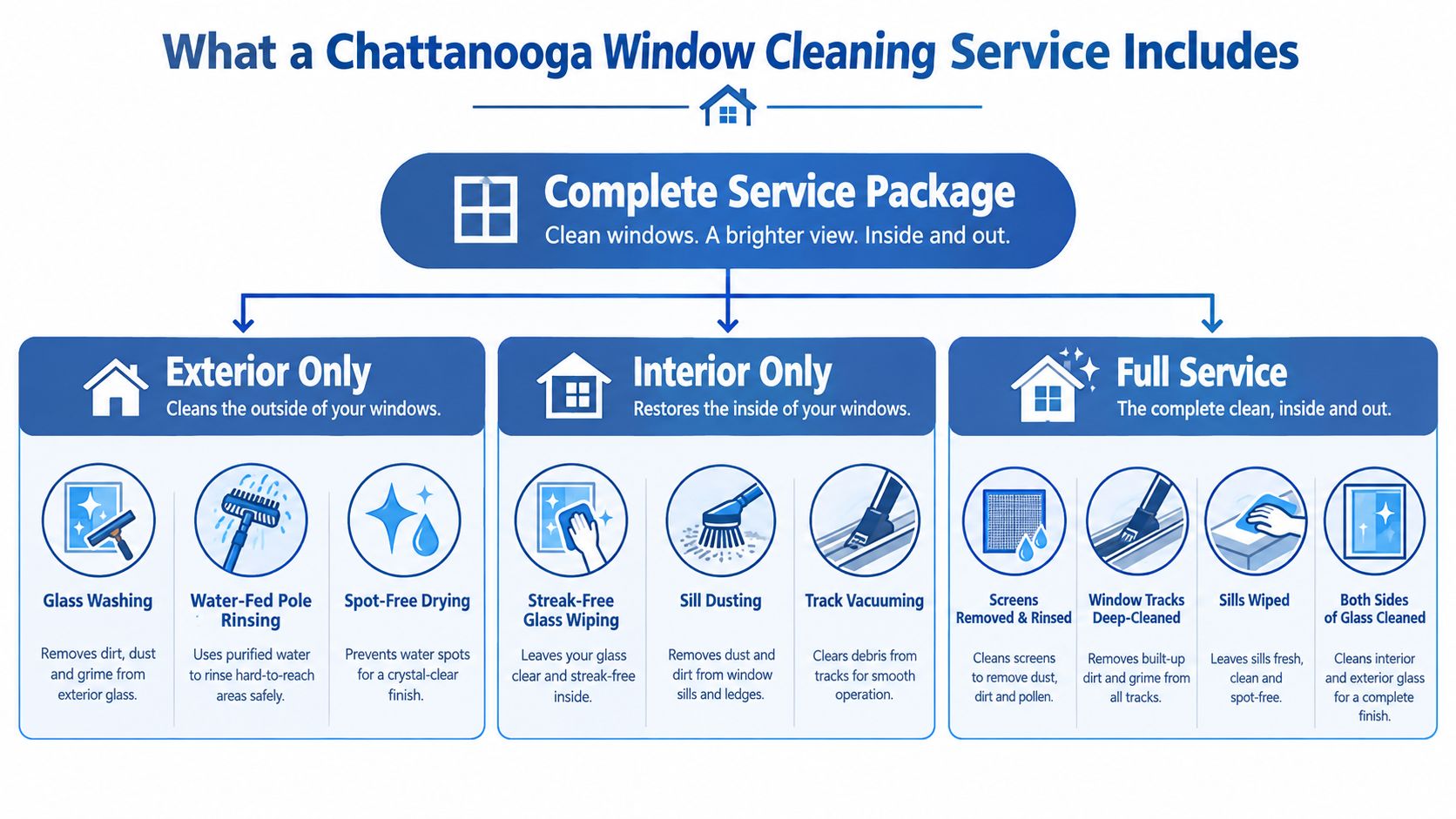
A quote should spell out which glass gets cleaned, what happens to screens and tracks, and whether the service covers inside, outside, or both. “Window cleaning” can mean very different things from one contractor to another. Compare the scope before you compare the price.
Match the service tier to the property
Exterior-only service focuses on outside glass. Depending on access and the building, a crew may use hand tools or a water-fed pole system to wash and rinse panes. Ask whether the quote includes spot-free drying, frame wiping, and cleanup around the work area.
Interior-only service addresses fingerprints, dust, and smudges inside. A thorough quote should say whether the crew wipes sills, vacuums tracks, and protects floors and nearby furnishings. Those details matter just as much as the glass itself.
Full service covers both sides of the glass and may include removing and rinsing screens, cleaning tracks, and wiping sills. Confirm whether screens are included or billed separately, and whether “track cleaning” means a quick wipe or removal of accumulated debris.
The same clarity applies to commercial work. A small storefront may need recurring exterior glass service, while a multi-storey office building requires a separate access plan. A high-rise rope-descent job is not a larger version of a house wash. It involves documented access equipment, building coordination, and safety procedures.
Before scheduling, ask the contractor to list exclusions. Screens, deep track cleaning, mirrors, ceiling fans, and solar panels may be bundled or charged as add-ons. Don't assume an item is included because it's mentioned in a company's general service description. For screen care, see this guide to cleaning window screens.
A short video can also help you understand what a professional window-cleaning visit may involve.
How Chattanooga's Climate and Architecture Change the Job
The Miller Brothers complex at 629 Market Street combines five buildings constructed before 1907, with storefront display glass, arched and rectangular upper-floor windows, brick piers, corbelling, and a sheet-metal cornice, as recorded in its National Register documentation. That mix of glass, brick, and ornament is where a standard storefront pass goes wrong. Runoff has to be controlled near masonry, frames need protection, and existing wear should be documented before anyone touches the glass.
Chattanooga's humidity and pollen load add their own problem. Shaded and north-facing panes grow a thin biological film, while sprinkler overspray and dried rain leave mineral deposits that behave completely differently under a squeegee. Treat both like ordinary dirt and you either grind residue across the pane or waste a visit. A competent crew identifies the contaminant first, then picks the method.
Older façades need careful planning
Warehouse Row shows how varied the city's commercial building stock is. The first building dates to 1904, additional buildings went up in phases through 1929, and the district, including the Edney Building, was added to the National Register in 1984, according to this history of Warehouse Row. A single block can hold different window shapes, transoms, masonry types, and access limits.
Before work starts on a preservation-sensitive façade, have the contractor name the access method and explain how they'll manage water near masonry and protect frames and adjacent finishes. Ask for a written note of existing damage or unusual deposits. That record separates pre-existing issues from anything noticed afterward.
Apply the same diagnostic habit to homes and newer storefronts. Ask whether ordinary washing will remove a spot or whether it needs a separate, controlled treatment. This overview of window water spots and their causes helps you tell hard-water etching from simple residue, so you don't pay for the wrong fix.
What Drives Window Cleaning Prices in Chattanooga
A defensible quote reflects the work, access, and condition of the glass. It shouldn't rely on a vague “whole house” label or a low starting price that changes once the crew arrives. Ask what's included, what costs extra, and why the contractor chose that method.
| Property Type | Main Price Drivers | Common Add-Ons |
|---|---|---|
| Residence | Number and size of panes, access, stories, condition, and whether both sides are included | Screens, tracks, mirrors, ceiling fans, solar panels |
| Storefront | Glass area, visit frequency, entrance exposure, operating hours, and access | Door glass, frame wipe-down, scheduled maintenance |
| High-rise | Building access system, anchor documentation, equipment, site coordination, and safety planning | Façade washing, difficult-access areas, additional surface work |
For a home, compare an exterior-only quote with an interior-and-exterior quote, and check whether screens and tracks are included. This guide to the cost of residential window cleaning can help you understand the variables without treating one price as right for every property.
Compare scope, not just the total
A storefront's quote may depend less on a one-time deep clean than on how often the glass needs attention and whether crews can work without disrupting customers. A high-rise proposal should explain access and safety costs plainly. If the estimate treats rope descent as a simple per-window charge, ask what's included in the planning and building coordination.
Recurring service can make budgeting more predictable, but don't accept a discount that hides a weaker scope. Request the per-visit service description and clarify what happens when a crew finds hard deposits, damaged seals, or a blocked access point.
A useful quote makes it easy to tell what you're paying for, and what would trigger an additional charge.
Good administration matters, too. Property managers who want clearer records can review this resource on a best invoicing setup for cleaning pros. For your own vendor comparison, request an itemized estimate with the service date, areas covered, exclusions, and any proposed follow-up treatment. That gives you a fair basis for comparing contractors without guessing at what their totals include.
Safety, Insurance, and High-Rise Contractor Vetting
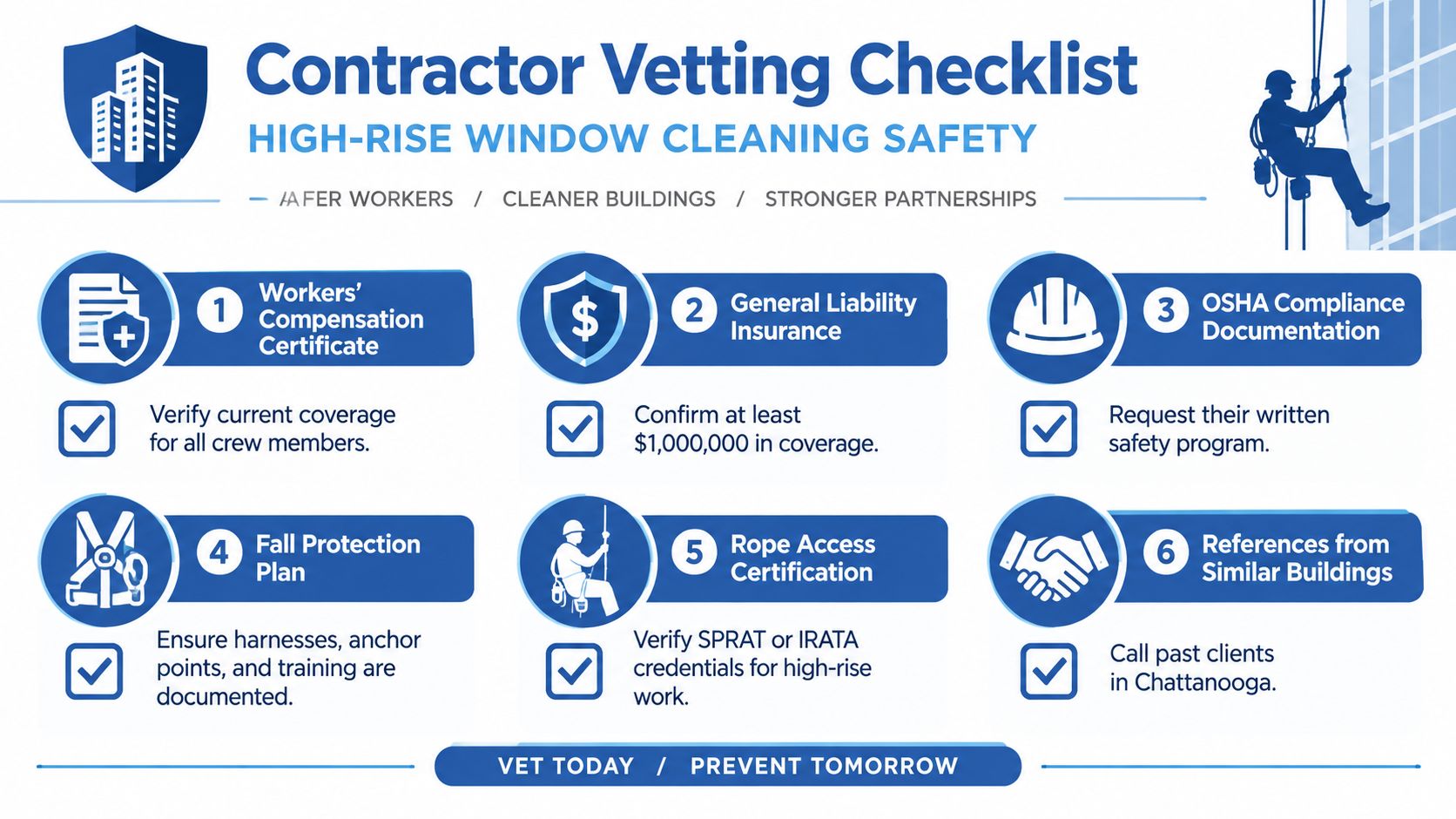
Insurance is necessary, but it doesn't prove that a building's anchors are usable or that a suspended operation has a workable rescue plan. Before approving high work, request the safety documents and have the contractor explain how they apply to your property.
Verify the plan, not just the certificate
OSHA's rules apply to employers using suspended scaffolds and powered platforms, even though there isn't one single federal standard titled specifically for window cleaners. For rope-descent work, OSHA-related guidance identifies owner-side requirements that include written certification that permanent anchorages can support at least 5,000 pounds per attached worker, separate personal fall-arrest systems, pre-shift equipment inspections, worker training, and a rescue plan. OSHA's general rope-descent framework limits work to 300 feet above grade, with an exception when another method is infeasible or creates a greater hazard. See the OSHA interpretation on suspended scaffold stabilization and ask your contractor how the proposed method fits the site.
Request these records before work begins:
- Anchor documentation: Current certification, inspection history, and written confirmation that the building's designated anchors suit the proposed equipment.
- Worker preparation: Equipment-specific training, competent-person inspections, and separate fall protection where applicable.
- Site controls: A hazard assessment covering roof access, tiebacks, electrical risks, pedestrian exclusion, weather stoppages, and communication.
- Emergency response: A site-specific rescue plan that covers retrieval if the equipment fails or a worker cannot return to the roof.
A written plan should also identify who controls roof access and who contacts building staff if conditions change. If the vendor can't explain the rescue procedure in plain language, don't approve the job.
The Select Insurance Group's Tennessee liability guide offers useful context for reviewing liability coverage, but a policy alone can't verify anchors, training, or safe work methods. Use this window-cleaning insurance overview as another starting point, then ask for the actual documents relevant to your property.
When Cleaning Is Not the Answer
A cleaner should sometimes tell you not to book another wash. If a mark remains after ordinary cleaning, the glass may be etched or mineral deposits may need specialist treatment. If the stain returns in the same place, check for irrigation, runoff, failed seals, deteriorating caulk, or vegetation touching the façade before paying for repeated visits.
That distinction protects the glass and the building. Aggressive scraping or acidic products can damage coatings, seals, frames, and nearby finishes. A contractor who promises to remove every mark without first identifying it is guessing.
Ask the cleaner to document the area, explain what they believe caused the problem, and state what routine cleaning can and can't achieve. If the issue points to glass damage or a building-envelope defect, get a qualified restoration or envelope professional involved. Cleaning removes soil. It doesn't repair a leak, replace failed caulk, or reverse etched glass.
Booking a Chattanooga Window Cleaner and FAQs
Make the booking call with a clear description of the job. Note whether you need a home, storefront, or high-level service; which windows are affected; whether the concern is haze, spots, pollen, or visible splash; and whether screens or tracks should be included. Ask for a written scope and a separate explanation for any restoration work.
Questions to settle before scheduling
Should I ask for interior and exterior cleaning? If the haze is visible from inside, ask the contractor to identify which surface carries it. If both sides need attention, get a full-service quote rather than assuming the exterior wash includes the interior.
Does rain mean I should wait to book? Not necessarily. Rain can leave or spread residue, and it doesn't reliably clean the glass. A condition check is more useful than trying to predict a perfect stretch of weather.
What should a historic-building owner mention? Tell the contractor about preservation requirements, fragile frames, unusual window shapes, known leaks, and any limits on water use or access. Ask them to document existing conditions before the work.
How do I know whether the estimate is complete? Check that it names the panes or areas included, inside or outside service, screen and track treatment, access method, exclusions, and the process for handling persistent spots. For high-rise work, don't approve the proposal until the building-access and rescue documents are addressed.
A good contractor should answer directly, distinguish cleaning from restoration, and explain why the proposed approach suits your glass. If the answer is only “we'll make it shine,” keep asking.
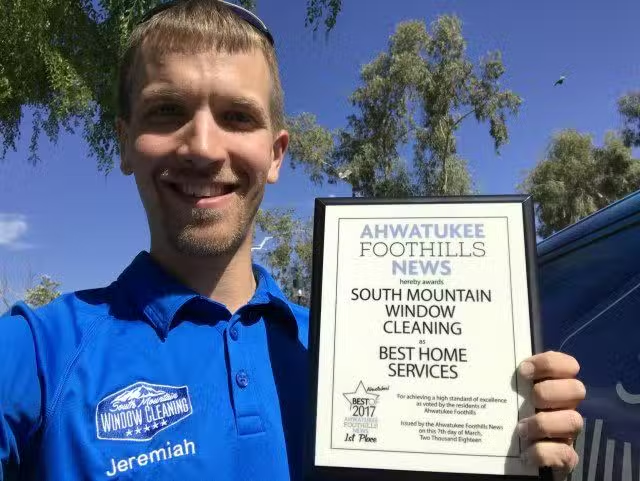
South Mountain Window Cleaning, LLC provides residential, commercial, and high-rise window washing in Phoenix, Scottsdale, Paradise Valley, Chandler, Tempe, and Gilbert, Arizona. For professional service that takes glass condition, access, and the right cleaning method seriously, visit South Mountain Window Cleaning, LLC to request a quote.