
A second-story gutter can look harmless from the driveway. Then you climb a ladder, find a trough packed with mesquite leaves and monsoon grit, and realize you're balancing a bucket while trying to keep one hand on the fascia. That's the moment most homeowners face the critical question: should you climb higher, try to clear the gutter from the ground, or call a crew that does this work every week?
For gutter cleaning for a 2 story house, the right answer depends less on motivation than on debris, access, roof design, and your tolerance for fall exposure. Dry leaves are one problem. Wet, compacted muck, blocked downspouts, gutter guards, and sagging sections are another. The practical goal is to choose the access method that clears the system completely without turning routine maintenance into an avoidable accident.
Standing Under a Two-Story Gutter and Wondering What to Do
The homeowner on the ladder usually starts with good intentions. The extension ladder is leaning against the eave, the bucket is swinging against the siding, and a clump of old leaves has fallen onto the shoulder. One hand reaches into the gutter while the other tries to maintain balance. In Phoenix Valley neighborhoods, the debris may include dry mesquite leaves, palo verde pods, roof grit, and material washed down during a monsoon storm.
At that point, there are three legitimate choices.
The three access decisions
Ladder work gives you direct access. You can scoop debris by hand, inspect seams, check hangers, and reach a blocked outlet. It also puts your body where the risk is highest, especially when you start leaning sideways instead of moving the ladder.
Ground-based tools keep both feet on the ground. A telescoping gutter wand, dry vacuum attachment, or curved blower kit can work well on loose, dry leaves and small twigs. These tools become much less convincing when the gutter contains wet sludge or when the blockage is hidden inside the downspout.
A professional crew handles access, debris removal, flushing, and cleanup as one job. The value isn't just speed. An experienced crew can recognize a separated seam, a sagging run, a damaged fascia board, or an outlet that looks clear from above but drains poorly below.

I'm not against homeowners doing their own maintenance. I am against pretending that every two-story gutter responds to the same tool. A ground vacuum can be the sensible choice for a dry, open run. It can also give false confidence if it leaves compacted material in the corners or fails to clear the downspout.
Practical rule: Choose the method based on what is inside the gutter and what happens at the outlet, not simply on how high the gutter appears from the ground.
The money matters, but it shouldn't be the only comparison. A ladder setup takes time, a ground tool may leave hidden blockage, and a professional visit costs more because it includes labor, equipment, access control, and responsibility for doing the work safely. The next decision is the risk itself, because second-story gutter cleaning sits in a very different category from clearing a first-floor porch gutter.
Why Two-Story Gutter Cleaning Is a Higher-Risk Job
Second-story gutter work combines height with an awkward task. You are reaching into a narrow channel, pulling against stuck debris, handling a bucket or hose, and looking upward while your body shifts. Every movement affects your balance, especially when the ladder is positioned on uneven ground.
Safety guidance places serious ladder-fall exposure in the 8 to 20 foot range, which overlaps the height of many second-story gutters. The same guidance cites more than 500,000 U.S. ladder-related emergency-room visits annually, with about 20,000 tied directly to gutter cleaning. These figures are summarized in ladder safety guidance for gutter cleaning. They show why a second-story job needs more planning than a quick climb. For a practical breakdown of setup, tool control, and fall prevention, see our guide on how to clean gutters safely.
Residential ladder use creates much of the exposure. One safety source reports that 97% of ladder-related emergency-room visits involve residential use, while fractures account for 46% of ladder-fall injuries treated in U.S. emergency rooms. Those figures appear in residential ladder injury safety information. A serious injury does not require a dramatic roof height. A short slip onto hard landscaping, a block wall, or decorative rock can be enough.
Phoenix conditions make access less forgiving
The Phoenix Valley adds practical complications. Sun-baked roof materials can make sealants and gutter components more vulnerable during inspection and repair. Summer wind can catch an extension ladder or drive dust and debris into your face. Rocky desert landscaping offers less forgiving footing than a level lawn, and irrigation can leave soil or pavers slick near the foundation.
Ground conditions matter as much as the ladder. A setup beside a pool deck, uneven planter, retaining wall, or decorative gravel surface may never become stable. Reaching sideways to avoid moving the ladder only increases fall exposure.

The access method should keep your footing stable, the tool controlled, and the gutter visible without overreaching. Ground tools beat ladders when debris is dry, loose, and visible. Ladders make more sense for compacted buildup or close inspection, but only with a stable setup. When those conditions are missing, an insured, safety-trained crew is worth the premium because the price covers equipment, access control, labor, and responsibility for completing second-story work safely.
Choosing the Right Access Method for Your Two-Story House
Four methods cover most residential situations: an extension ladder, a telescoping pole, a gutter vacuum, and a blower attachment. None is universally superior. Each one solves a different part of the job.
| Method | Typical Cost | Best For | Watch Out For |
|---|---|---|---|
| Extension ladder | Equipment and labor vary | Compact debris, inspection, hands-on clearing | Overreach, unstable ground, ladder movement, fall exposure |
| Telescoping pole | Purchase or rental cost varies | Light dry debris and open gutter runs | Limited force, poor visibility, wet buildup |
| Gutter vacuum | Equipment or service cost varies | Dry leaves and loose material with less ground mess | Hidden blockages, wet sludge, awkward roof geometry |
| Curved blower kit | Equipment cost varies | Fast removal of dry leaves and twigs | Dust, scattered debris, wet material, gutter guards |
The ground-tool decision rule
For a two-story house, ground tools beat ladders when the debris is dry, loose, and visible. A telescoping pole can pull or rinse light material. A blower can move dry leaves quickly, although it may spread dust and debris around the perimeter. A vacuum offers better containment when the attachment reaches the gutter and the material is dry enough to lift.
The limits become obvious with decomposed muck, compacted seed pods, and wet debris. These materials stick to the gutter floor and corners. Air may pass over them, while a vacuum may lift only the loose layer. A pole can push material farther along the run without removing the underlying blockage.
Current guidance on gutter cleaning tools for a two-story house also points out that many second-story gutters sit around 18 to 25 feet above the ground, beyond the useful reach of standard short tools. Telescoping systems can help, but height alone doesn't guarantee control or a complete clean.
When the ladder or a crew becomes realistic
Use direct access only when the ladder can stand on solid, level ground and the work can be performed without leaning outside the rails. A ladder stabilizer and three points of contact are basic requirements, not optional accessories.
Call a crew when the gutter has guards that must be unbolted, the roof runoff pattern sends heavy debris into one section, the downspout is blocked underground, or the gutter has sagging and separated sections. A ground tool can't inspect what it can't see. For a useful comparison of ladder-free approaches from another service market, see this guide to professional gutter cleaning Columbus from HIBCO ROOF LLC. The access principles transfer well, even though the local debris and roof designs differ.
South Mountain Window Cleaning publishes a related explanation of how to clean gutters without a ladder, including the situations where ground access is more practical than climbing.
How to Clean Two-Story Gutters the Right Way
A complete cleaning starts before the first scoop. Walk the property from the ground and look for sagging runs, detached downspouts, loose flashing, branches touching the roofline, and areas where water has stained the fascia. Put a tarp below the work area, prepare a bucket or debris bag, and wear gloves and eye protection. If the ladder cannot sit securely, stop there and change the method.
For safe extension-ladder access, place the ladder on solid, level ground and use a stabilizer. Keep your body centered between the rails, maintain three points of contact, and move the ladder rather than leaning around the corner. The Home Depot gutter-cleaning guide also recommends removing debris first and flushing with a hose afterward to confirm that the system drains.
Remove the material before adding water
Start at the end farthest from the downspout. Use your hand or a plastic gutter scoop to lift out leaves, pods, sediment, and compacted material. Working away from the outlet keeps you from pushing a heavy mass into the opening and gives you a clearer view of how much debris the run contains.
Drop the waste into a bucket or onto the tarp. Don't wash a heavy layer of sediment into the downspout. Water may move the top layer while leaving a dense plug at an elbow or at the bottom shoe.
After the channel is visibly clear, flush the downspout from the top with a garden hose. Work from the far end toward the outlet, then direct water through each downspout opening. If the flow is slow, check the bottom elbow or shoe for accumulated material. Disassembly may be necessary when the blockage sits below the visible opening.

The final rinse should travel through the gutter channel toward each outlet. Watch for water escaping at seams, dripping behind the gutter, or pooling in a low section. Inspect hangers and end caps while the system is wet, because leaks and poor pitch are easier to spot during flow testing.
A gutter isn't clean if the trough is empty but the downspout still can't carry water away.
Trim branches that repeatedly drop material into the run, but keep ladder work separate from aggressive tree cutting. Large limbs, roof access, and electrical hazards call for a qualified professional. When stable ladder access isn't available, use a ground tool for suitable dry debris or shift the entire job to a trained crew.
For property owners comparing broader exterior maintenance options, Safeguard Roofing LLC gutter services provides useful context on gutter clearing and related roofline work.
The cleaning sequence is shown here in video form:
How Often Two-Story Gutters Need Cleaning and What It Costs
A two-story gutter beside mature mesquite can go from clear to troublesome between scheduled visits. Plan on cleaning once or twice a year, often in spring and early fall, according to current gutter cleaning price and maintenance guidance. In the Phoenix Valley, mesquite, palo verde, and other debris-producing trees justify checking the gutters more closely because leaves, seed pods, and dust can enter throughout the year.
Use the gutter's condition, not the calendar, to set the next visit. Overflow during rain, brown fascia staining, plants growing in the channel, pests near downspouts, or pooling water by the foundation all call for an earlier inspection. Gutter guards reduce large debris but do not eliminate maintenance. Fine material can collect beneath or around the guard, and the outlet can still block.
For a two-story home, ground-based tools beat ladder work when the runs are open, dry, and reachable from stable ground. They are a sensible choice for light, loose debris and repeat maintenance. Ladders remain the better access method when buildup is wet, packed, hidden under guards, or blocking a downspout. Hiring an insured, safety-trained crew costs more, but second-story access adds exposure that a long pole cannot remove.
What the service usually costs
Published 2026 cost guides place two-story gutter cleaning around $140 to $360 per job, with per-linear-foot pricing commonly rising to about $1.00 to $2.50 because of ladder height, roof access, and labor risk. Another guide places a typical two-story job around $225 to $340 for a 150-foot house, while one source describes two-story work as about 50% more than single-story cleaning, as summarized in the same Thumbtack gutter cleaning price guide. Actual quotes vary with access, debris, downspouts, and repairs.
| Method | Typical Cost | Best For | Limitations |
|---|---|---|---|
| DIY | Mostly equipment, disposal, and your time | Safe access and light debris | You carry the fall exposure and may miss hidden blockage |
| Ground-tool rental or purchase | Varies by tool and equipment quality | Repeat maintenance on dry, open runs | Tools may not handle wet buildup or guarded gutters |
| Professional cleaning | Commonly priced within published two-story ranges | Clearing, flushing, inspection, and cleanup | Higher upfront price than a simple dry-debris pass |
The lowest quote can become expensive if a missed blockage sends water toward the fascia, roof edge, or foundation. Bundling gutter work with window cleaning may also lower the practical cost per visit when the same crew is already on site.
South Mountain Window Cleaning explains the factors behind gutter cleaning cost, including home height, debris, and system condition. Treat online ranges as starting points, not promises for a property an estimator has not seen.
When an Insured, Safety-Trained Crew Is the Smarter Move
Hiring a crew for a two-story home isn't a luxury purchase. It's a way to transfer a concentrated access risk to people whose equipment, training, insurance, and workflow are built around that kind of work.
The safety sources cited earlier place more than 500,000 ladder-related emergency-room visits each year in the United States, with about 20,000 connected directly to gutter cleaning. The question isn't whether every homeowner will fall. The question is whether a difficult, high-task deserves professional controls when the downside of one mistake is severe.
What to verify before scheduling
Ask for practical evidence, not just a polished truck or a confident estimate.
- General liability insurance: Request a current certificate and verify the coverage applies to the work being performed. South Mountain Window Cleaning, LLC states that its business services carry a $2 million insurance policy, as described in its company information.
- Workers' compensation: Any crew member working on the roof or ladder should be covered by the company's policy rather than relying on your homeowner's insurance.
- Fall-protection practices: Ask how the crew handles stabilizers, standoffs, roof edges, and difficult ground conditions. OSHA window-cleaning guidance emphasizes secure footing, fall prevention, and appropriate equipment inspection. Its broader window-cleaning enforcement guidance is a useful reference for understanding why access planning matters.
- Documented training and a written guarantee: A satisfaction policy should explain what happens if a downspout remains blocked or an area needs a return visit.
A company that can't provide a certificate of insurance, insists on cash-only pricing, appears after a storm with aggressive door-to-door offers, or arrives without stabilizers deserves caution. Price is only one part of the comparison. You're also paying for protection of the siding, roofline, landscaping, workers, and other people who may be near the property.
For companies and property managers, a formal outsourced health and safety resource can help clarify the difference between informal assurances and documented safety responsibilities. Residential customers can apply the same mindset on a smaller scale.
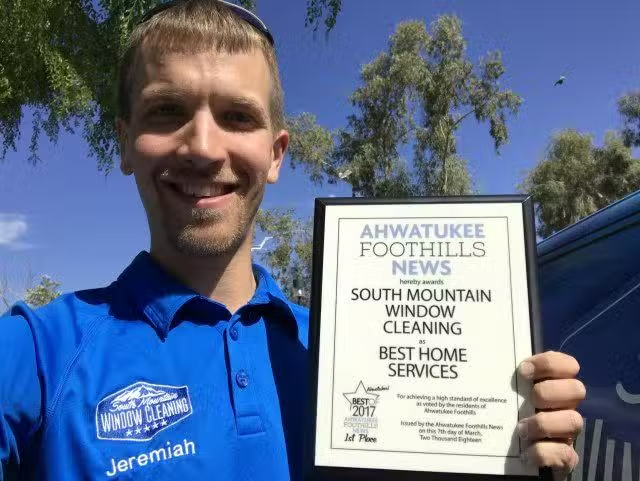
South Mountain Window Cleaning, LLC provides residential and commercial exterior cleaning in Phoenix, Scottsdale, Paradise Valley, Chandler, Tempe, and Gilbert, including gutter cleaning and window washing. Its published service information also describes safety-trained technicians, pure-water systems for high glass work, and a satisfaction guarantee. Before hiring any provider, review bonded versus insured contractors so you understand what each credential does and doesn't protect.
Key Takeaways for Two-Story Gutter Care
A two-story gutter is not just a longer version of a first-floor gutter. Height changes the access method, the time required, the equipment needed, and the consequence of a mistake.
Save this checklist before you head outside:
- Inspect from the ground: Look for overflow, fascia staining, sagging sections, separated seams, plant growth, and pooling near the foundation.
- Match the tool to the debris: Use a telescoping pole, vacuum, or blower for dry, loose material when the run is open and visible.
- Don't force a ground tool: Wet sludge, compacted pods, blocked downspouts, difficult tile runoff, and gutter guards often require direct inspection or professional access.
- Keep the schedule practical: Plan on cleaning once or twice a year, commonly in spring and early fall, then adjust around local tree activity and visible warning signs.
- Treat ladder placement as a stop-or-go decision: Solid, level footing and a stabilizer matter. Never compensate for a poor position by leaning or overreaching.
- Check the downspouts: A clean trough doesn't prove that water can leave the system. Flush each outlet and investigate slow flow.
- Verify the crew: Ask for liability coverage, workers' compensation, safety procedures, training, and a written satisfaction policy before work begins.
The reliable system is the one that moves water away from the roofline and foundation without forcing you to gamble with a ladder. If the access feels unstable or the gutter condition is beyond a dry-debris pass, hiring an insured, safety-trained crew is the sensible maintenance decision.
South Mountain Window Cleaning, LLC offers gutter cleaning for residential properties along with window washing and other exterior-cleaning services across the Phoenix Valley. Visit South Mountain Window Cleaning, LLC to request a quote for two-story gutter cleaning and schedule a safer inspection of your gutters and downspouts.