

You're standing in the driveway with a box of tangled lights, a ladder that never feels quite steady, and a roofline that's higher than it looked from the street. The first strand works, the second one flickers, and the extension cord disappears under a planter. That's when a festive project starts looking like an electrical and access problem.
A professional Christmas light installation service solves more than the appearance of the display. The right crew handles design, equipment, roof-safe mounting, electrical planning, seasonal maintenance, removal, and storage. For Arizona homes and commercial properties, that matters even more because dust, intense sun, hard water, exposed roofs, and difficult elevations can turn a simple decoration job into a property-care assignment.
Why Homeowners Are Upgrading to Professional Holiday Lighting
A crooked roofline, dark sections, and exposed cords can make a holiday display look unfinished before guests even reach the door. The problem becomes more serious when installation involves a steep roof, mature trees, fragile stucco, or electrical troubleshooting. Arizona homeowners should treat those conditions as exterior service work, not casual decorating.
A professional Christmas light installation service starts with the property rather than a box of lights. The crew studies the architecture, identifies safe access points, and plans the display around rooflines, trees, entries, and walkways. Commercial-grade LED products, measured runs, consistent color temperatures, and surface-appropriate mounting create a cleaner result than clips placed wherever they happen to fit.
That planning also separates a polished display from scattered bright spots. A smaller home may need only a defined roofline and an entry accent. A larger property could use tree wrapping, illuminated walkways, window outlines, or restrained lighting around architectural details. Homeowners seeking more ideas can review these suggestions to transform your yard with holiday lights.
The value is bigger than the weekend
The holiday lighting market supports residential, commercial, hospitality, and property-management work. One industry estimate places the global Christmas lights and decorations market at about $8.6 billion in 2026, with commercial applications representing 42% of demand and North America holding 38% of regional share (market overview). The figures point to an established service category, not a one-off retail trend.
Professional installation also protects the property. Experienced crews know which clips can hold securely, where cords need protection, and which surfaces or trees should be left alone. They can identify access and electrical problems before an installer is standing at height, reducing the chance of damage to gutters, shingles, stucco, painted trim, or landscaping.
Ask providers what equipment they use, how they handle high-access work, and who responds when a section fails. This practical guide can help you choose a holiday lighting company.
Practical rule: If the job requires a lift, roof access, electrical troubleshooting, or work above a comfortable ladder height, treat it as an exterior service project, not a weekend decorating task.
The Full Lifecycle of a Professional Lighting Project
A complete holiday lighting project starts before the first bulb goes up and ends after every component has been removed and stored. If a quote only describes installation, ask what happens before and after that visit.
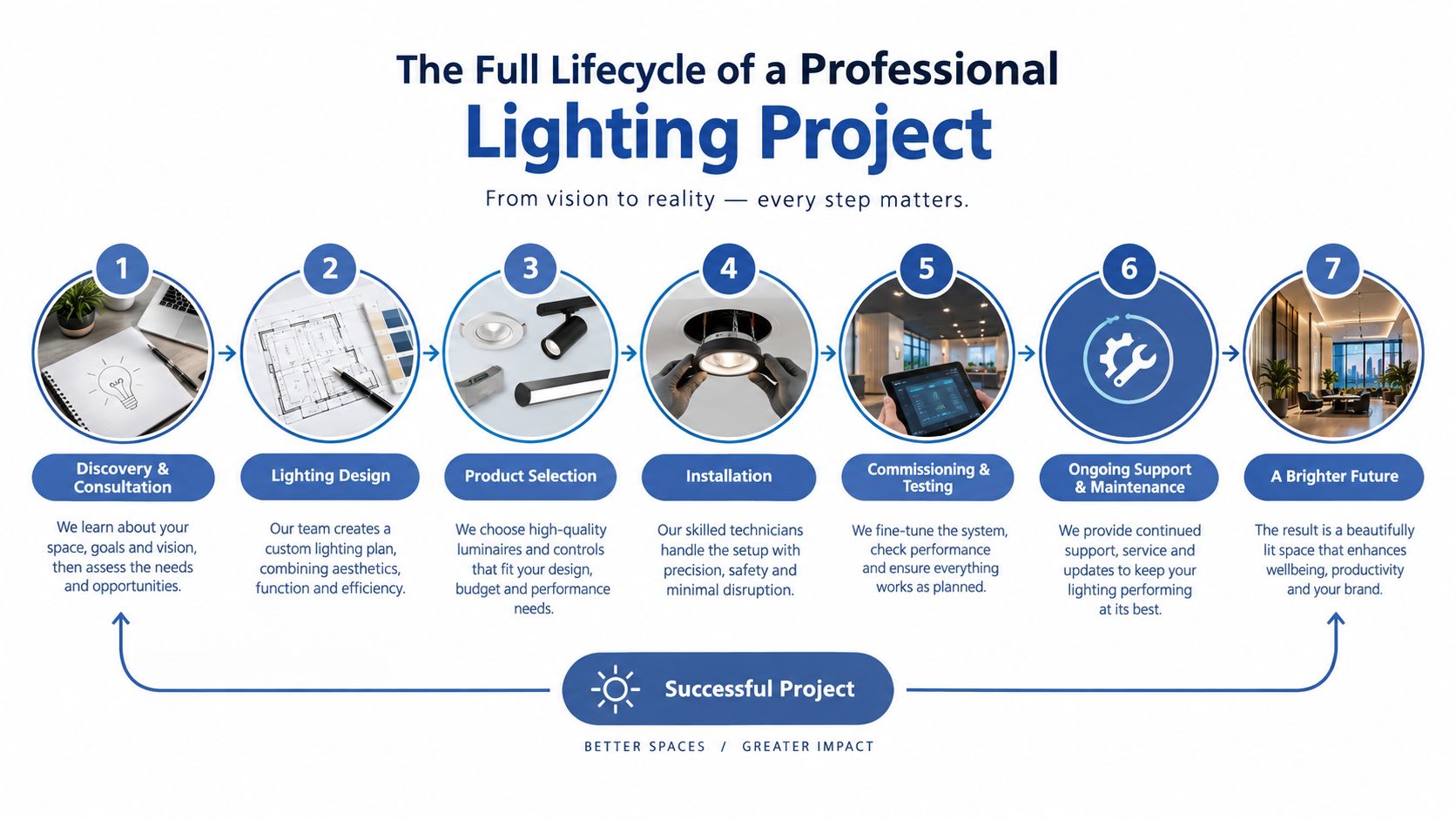
1. Consultation and property assessment
The provider should walk the property, discuss your preferred look, and inspect access conditions. The conversation should cover roof pitch, trees, outdoor features, outlets, timers, control preferences, and any areas you don't want touched.
A good design follows the building. It might emphasize a long front gable, frame an entry, or keep commercial lighting low enough that it complements signage rather than competing with it. For additional outdoor planning ideas, these design tips for backyard lighting are useful because they connect fixture placement with the way people move through a property.
2. Design and measurement
Installers measure rooflines and determine how many light runs, clips, extension leads, controllers, and connection points the design requires. That measurement prevents the common DIY problem of discovering that the final section is either too short or overloaded with improvised connections.
The design should also show what isn't being lit. Restraint matters. A well-planned display leaves visual breathing room and avoids placing heat, cords, or fasteners where they could harm the property.
3. Hardware selection
LEDs have become the dominant product choice in the U.S. holiday lighting market. Industry summaries report that LEDs account for 70% to 75% of Christmas or holiday lighting sales in the United States, while one source reports that 95% of commercial Christmas light installations in the U.S. use LEDs (holiday lighting industry data). LEDs use less power, produce less heat, and support longer, brighter runs when properly specified.
Commercial-grade products also tend to provide better consistency than mixed retail strands. The installer can match bulb shape, spacing, wire color, and brightness across the project instead of combining whatever survived last season.
4. Installation and testing
The crew installs clips and supports suited to the surface, routes cords away from pinch points, and keeps connections protected from weather. They should test each circuit and inspect the display from the street, not just from directly beneath the roof.
The installation phase is only one part of the service. Professional Christmas light setup should include a clear plan for service calls if a section fails, a timer shifts, or wind affects a component.
5. Maintenance, takedown, and storage
Seasonal maintenance keeps one failed section from becoming a dark display for the rest of the season. At removal, the crew should take down lights carefully, inspect reusable components, coil them without sharp bends, label them by area, and store them in a dry, controlled environment.
That final step protects the investment and makes the next installation faster. It also prevents the familiar January mistake of throwing everything into one box and hoping next season's version of you will solve it.
Understanding Pricing and What Drives Your Final Quote
A basic roofline can produce a very different quote from a multistory Arizona home with steep sections, tile, mature trees, and limited access. Roofline length matters, but access, surface conditions, design density, tree work, removal, storage, controls, and electrical requirements often determine the labor and equipment a project needs.
Published pricing guidance places typical jobs at about $220 to $650, while fuller packages can range from $750 to $5,000 or more. Multistory homes can reach at least $1,800 (holiday light installation pricing guidance). These figures are broad reported ranges, not a promise for any Arizona property. Use them to compare scope, not to demand a fixed price from every installer. See our breakdown of Christmas light installation cost factors in Phoenix for a practical quote checklist.
Compare the scope, not just the total
| Service Tier | Typical Scope | Key Cost Factors |
|---|---|---|
| Basic roofline | Front roofline, entry accents, standard LED runs | Linear footage, roof height, clips, outlet access, installation labor |
| Expanded residential | Rooflines, windows, trees, walkways, removal | Tree wrapping, multiple elevations, design density, maintenance, storage |
| Premium architectural | Full-property design with coordinated roof, yard and garden areas, and facade lighting | Complex access, lift requirements, custom layout, controllers, removal and storage |
| Commercial managed display | Retail, hospitality, office, or community property lighting | Site logistics, operating-hour restrictions, multiple structures, safety planning, seasonal service |
A single-story ranch with an accessible outlet does not require the same planning as a multistory property with steep roof sections, delicate tile, trees near power lines, or a commercial facade that needs after-hours access. Roof pitch and height affect crew time, equipment selection, and the method used to reach each installation point.
Tree wrapping can change the quote quickly. A few trunk accents require far less labor than evenly spacing lights through mature branches. Permanent or app-controlled systems also need separate pricing because mounting hardware, controls, service expectations, and long-term access differ from temporary seasonal strands.
Ask for an apples-to-apples proposal
Require every proposal to identify whether it includes design, installation, maintenance, removal, storage, replacement bulbs, timers, lift charges, and electrical work. Separate line items make competing bids easier to compare and expose charges that a low headline price may omit. Use this guide on how to compare lighting design quotes to judge the actual scope before choosing a provider.
Arizona's hard water can affect nearby glass and exterior surfaces. Minerals may leave cloudy spots as water dries, so ask whether the crew will protect windows during installation and whether post-season exterior cleaning should be scheduled separately. An Arizona-focused maintenance guide recommends checking problem panes monthly, drying windows after storms, and rinsing high-risk elevations quarterly (Arizona hard water guidance).
For a permanent system, compare value across several seasons. Include installation and removal, maintenance, controls, appearance, and convenience in the discussion. Seasonal service suits owners who want changing displays, while permanent lighting can fit properties where daily curb appeal and fewer annual disruptions matter more.
Safety Protocols and Electrical Code Compliance
A ladder and extension cord do not qualify someone to install lights on a multistory home or commercial building. Holiday displays combine temporary wiring, electrical loads, weather exposure, high-access work, and property-specific hazards. A professional christmas light installation service must manage those risks through a documented process, not improvised decisions.
The National Electrical Code treats temporary holiday lighting and related wiring as temporary installations that must be removed within 90 days, according to NFPA holiday lighting guidance. OSHA guidance for temporary lighting limits use to 600 volts nominal or less (OSHA temporary lighting guidance). The removal date belongs in the project plan from the start, especially for commercial displays and public-facing properties.
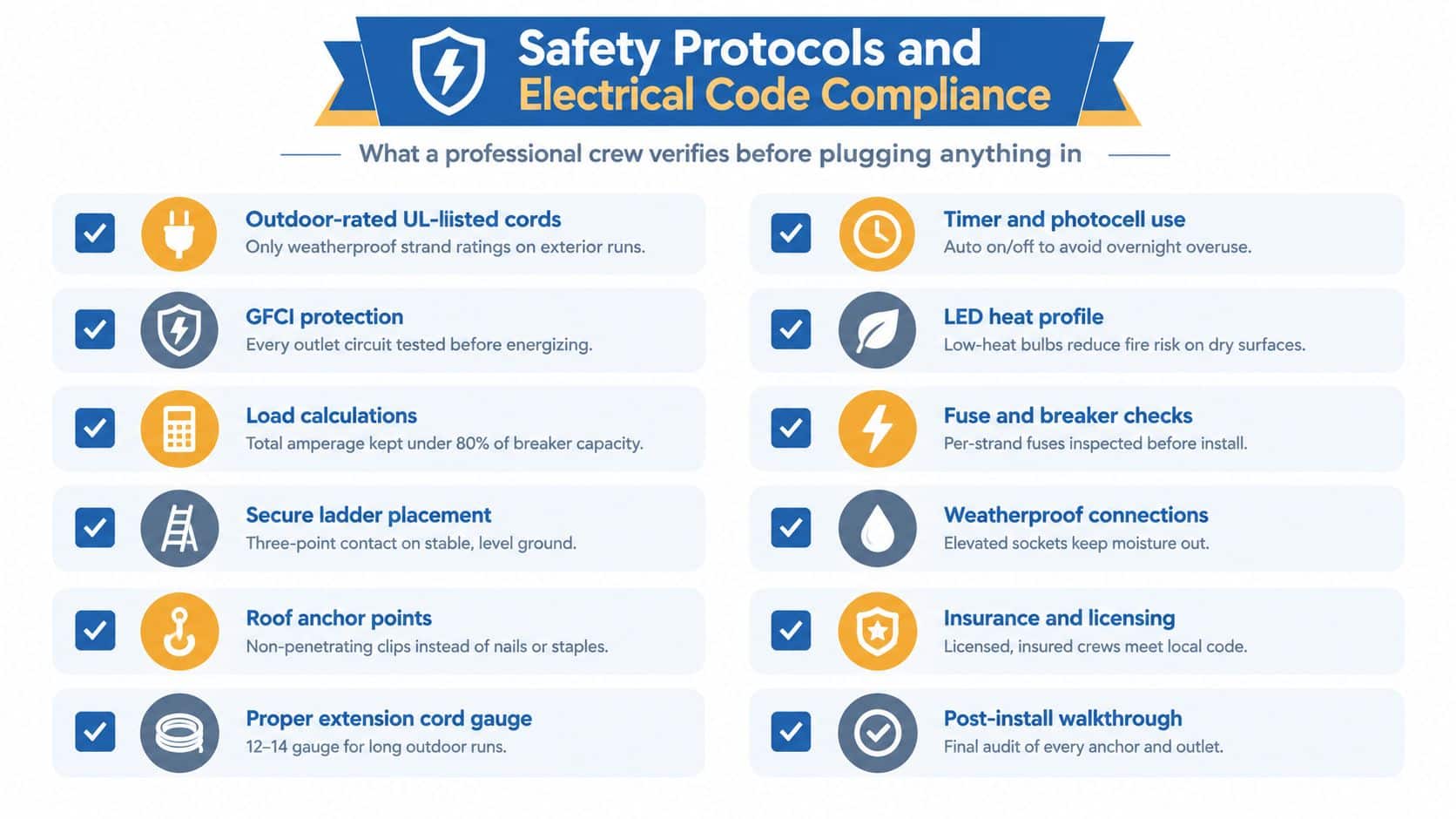
Electrical checks before installation
A qualified crew confirms that exterior components are listed for outdoor use, cords are protected from physical damage, and connections stay clear of standing water. The installer should test GFCI protection before energizing the display and verify that the planned load matches the circuit.
Mounting methods matter just as much. The crew should avoid nails and staples that penetrate roofing or siding. Use clips and supports suited to each surface, keep cords away from pinch points, and place timers or photocells where technicians can reach them during service.
High-elevation work requires a written plan
OSHA window-cleaning guidance permits rope descent systems above 300 feet only when an employer shows that other access methods, including powered platforms, are not feasible or would create a greater hazard. OSHA identifies the ANSI/IWCA I-14.1-2001 consensus standard as the source of that limit (OSHA rope descent guidance).
Holiday lighting is different from window washing, but the access principle still applies. The provider should select the safest practical method, whether that means a properly positioned ladder, lift access, or another engineered system. For suspended exterior work, a written safety program should address hazard identification, fall protection, equipment inspections, employee training records, and rescue procedures (high-rise safety planning guidance).
OSHA has documented severe window-washing incidents, including a worker who fell four stories after climbing outside without proper fall protection (OSHA citation detail). The lesson for Arizona property owners is direct: access shortcuts can produce serious injuries, property damage, and liability.
Homeowners who want to understand the equipment involved can review this guide to ladder safety equipment.
Before hiring, request proof of insurance, the high-area access plan, the outlet and GFCI procedure, the removal date, and the response process for display failures. Vague answers indicate unresolved risk, regardless of the quote.
Why Year-Round Exterior Experts Outperform Seasonal Pop-Ups
A holiday lighting crew finishes the display, disappears after removal, and may never answer when a gutter clip pulls loose or a cord stops working. That gap creates avoidable risk. Hire a company with a local office, a documented service process, and someone responsible for calls throughout the season.
Year-round exterior specialists already work around roofs, glass, stucco, walkways, solar panels, gutters, and difficult elevations. Their technicians understand surface protection, equipment placement, and property access before lighting enters the plan. That experience does not make every exterior cleaner a lighting specialist, so ask specifically about holiday installations. It does give the company a better base for evaluating access and protecting the property.
Look for systems, not seasonal enthusiasm
Request proof of general liability insurance, workers' compensation where applicable, and written procedures for elevated work. Ask who manages the project, how service requests are recorded, and whether removal and storage appear in the agreement. A licensed, bonded, and insured business should provide those documents without resistance.
For complicated properties, expect the same discipline used for other high-access exterior work. The provider should identify hazards, select suitable access equipment, inspect that equipment, train workers, and define what happens if an emergency occurs. Decorative lighting still involves ladders, roofs, electrical connections, and people working above occupied areas. Treat the plan with the seriousness of any other exterior service.
Combine seasonal work with exterior maintenance
Installation often reveals dirty glass, clogged gutters, dusty stucco, or neglected solar panels. Bundling these services is not required, but scheduling them together can prepare the property before guests, customers, or tenants see it at night. South Mountain Window Cleaning, LLC provides window cleaning, power washing, solar panel cleaning, and seasonal Christmas light installation, giving property owners one company to consult about related exterior work.
Choose the provider that explains its process plainly. A polished website and a low introductory price do not replace insurance documents, trained workers, suitable equipment, and a contract stating what happens during the season. Those details separate a dependable exterior service company from a temporary lighting seller.
How to Prepare Your Property for the Installation Crew
The crew can work more safely and efficiently when the property is ready before arrival. Preparation doesn't mean climbing onto the roof or testing wiring yourself. It means clearing the work area, identifying risks, and making access predictable.
Complete this pre-installation checklist
- Clear driveways and loading areas: Move vehicles, trailers, toys, furniture, and stored materials so ladders or lifts can reach the planned work zones.
- Open required gates: Give the project manager instructions for side yards, rear courtyards, roof-access doors, and commercial service areas.
- Secure pets: Keep dogs and other animals indoors or in a separate area while workers carry ladders, cords, and equipment.
- Trim obvious obstructions: Remove low branches or notify the crew about trees that block roofline access. Don't prune near electrical lines unless a qualified professional handles it.
- Test exterior outlets: Make sure outlets are accessible and free of debris. Report tripped breakers or nonworking GFCI outlets before installation day.
- Mark fragile landscaping: Point out newly planted trees, delicate shrubs, irrigation heads, decorative stone, and shallow outdoor lighting.
- Remove competing decorations: Take down old strands, fragile ornaments, inflatables, or signs that occupy the same mounting and power areas.
- Share property rules: Commercial managers should provide loading restrictions, quiet hours, tenant requirements, alarm procedures, and approved parking locations.
- Confirm the design boundaries: Tell the crew which windows, trees, walls, signs, and roof sections are off-limits before equipment arrives.
A short walkthrough with the project manager prevents avoidable surprises. Show the location of the electrical panel, exterior outlets, water features, irrigation controls, and any area where a lift could damage pavers or compacted soil.
Don't ask an installer to improvise around an unknown hazard. If you know a roof section has loose tile, a stucco area has recently been repaired, or a tree has unstable limbs, disclose it before the quote becomes a work order. Clear information protects the property and gives the crew a chance to adjust the design.
Experience the South Mountain Window Cleaning Difference
A successful holiday display should look good from the street, operate reliably through the season, and come down without leaving a property problem behind. That requires more than attractive bulbs. It requires design judgment, careful mounting, electrical awareness, safe access, and a defined end-of-season process.
South Mountain Window Cleaning serves Phoenix, Scottsdale, Paradise Valley, Chandler, Tempe, and Gilbert, along with communities across the Valley. The company provides residential, commercial, and high-rise window washing, plus power washing, solar panel cleaning, and seasonal Christmas light installation.
Its holiday lighting package is structured as an all-inclusive service with design, installation, maintenance, removal, storage, and custom-cut professional-grade LED lighting. That lifecycle approach gives homeowners and property managers one service plan instead of separate arrangements for setup, emergency fixes, takedown, and storage.
What property owners should expect
South Mountain Window Cleaning is licensed, bonded, and insured, with a $2 million insurance policy, a 100% satisfaction guarantee, and 400+ five-star reviews as stated by the company. Its clean-cut, safety-trained technicians use professional exterior-cleaning equipment and computerized scheduling, while customers can request fast, free quotes online or by phone.
The company is also identified as a trusted vendor for Amazon and Google Home Services. For commercial clients, that operational background matters because recurring exterior work depends on communication, scheduling, documentation, and dependable site access.
Arizona properties need practical service, not decoration that ignores the building. Dusty glass, sun exposure, difficult rooflines, hard water, commercial access restrictions, and high elevations all deserve attention before the first strand is connected. A professional plan accounts for those conditions instead of treating every property like a flat suburban facade.
Book a consultation before your preferred installation window disappears. Ask for a written scope, confirm safety and insurance details, review the removal and storage plan, and choose a crew that can keep the display maintained after the initial installation.
South Mountain Window Cleaning, LLC offers custom professional-grade LED Christmas light installation with design, installation, maintenance, removal, and storage for homes and businesses across the Valley. Visit South Mountain Window Cleaning, LLC to request a fast, free quote and schedule a safe holiday lighting consultation.