

A great Christmas light setup starts with a solid plan, not just a box of lights and a ladder. As experts in residential and commercial property services across Phoenix, we've seen it time and time again—the most dazzling, stress-free displays are the ones that were thought out beforehand. This guide will help you turn your holiday vision into a reality, whether you're decorating a home or a high-rise.
Crafting Your Holiday Vision
Every fantastic Christmas light display, whether on a modern Scottsdale home or a sprawling Phoenix business, begins long before the first bulb is hung. It's all about creating a look that fits your property's style and captures the exact holiday mood you're going for. This is a core part of our service, blending aesthetics with technical know-how.
A little planning ahead prevents those classic frustrations, like running out of lights halfway through, overloading circuits, or ending up with a jumbled design. Think of your home or business as the canvas and the lights as your paint—a principle we apply to all our services, from window washing to holiday lighting.
Define Your Holiday Lighting Theme
First things first, you need to decide on a theme. Are you picturing a classic, elegant look with warm white lights outlining the roof? Or maybe a vibrant, multi-colored winter wonderland for the whole neighborhood to enjoy? Your theme will guide every other decision you make.
Take a look at your property's style. For the stucco and terracotta so common in Paradise Valley and Tempe, a simple warm white or single-color display can look incredibly sophisticated. For a sleek commercial storefront in Gilbert or a high-rise in downtown Phoenix, cool white or blue lights often create a crisp, modern vibe.
Some popular themes we see a lot are:
- Classic Elegance: Using mostly white lights (warm or cool) for a timeless feel that highlights the architecture.
- Winter Wonderland: A mix of cool white and blue lights, often with icicle lights and snowflake projectors to create a frosty, festive scene.
- Candy Cane Lane: A fun, playful theme using alternating red and white lights. It's always a crowd-pleaser.
- Colorful Celebration: A joyful mix of big, multi-colored bulbs (like C7 or C9s) for a high-energy display that really pops.
Once you pick a theme, try to stick with it. This creates a polished, professional result and avoids that chaotic look that happens when you mix too many styles. To see how we’ve brought different visions to life across the Valley, check out our gallery of professional installations.
Map Your Property and Power Sources
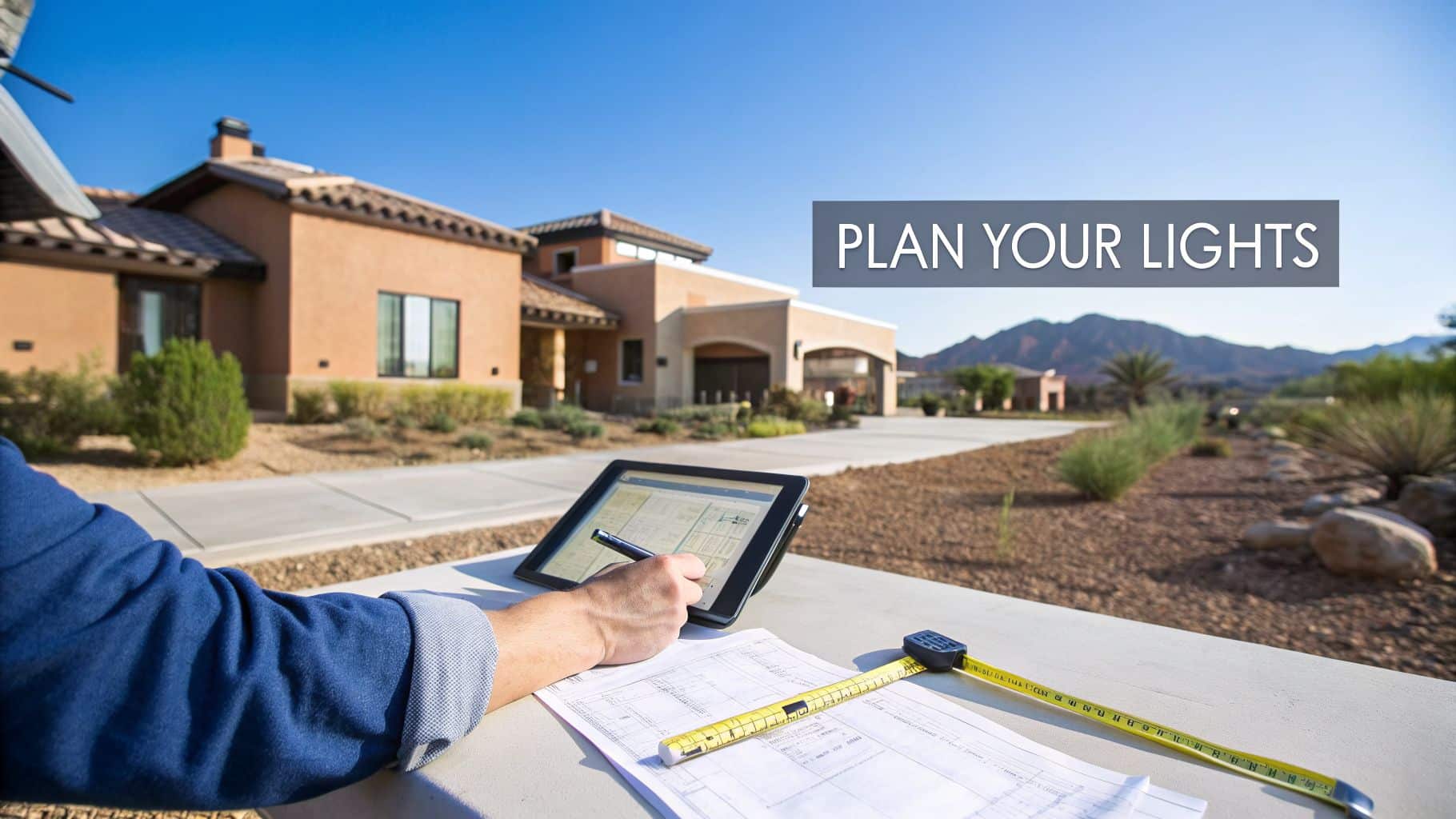
With your theme decided, it's time to map out your property. You don't need a professional blueprint—a simple sketch works just fine. Walk your property and measure the key areas you plan to light up.
Make sure to measure rooflines, gables, windows, and doorways. Don't forget landscaping elements like the height and width of trees and shrubs you want to wrap. If you're lining a driveway or pathway, get that measurement too.
As you’re mapping, find all your outdoor electrical outlets. This is a critical step. Mark each outlet on your sketch so you can plan your extension cords. For bigger homes in Chandler or large commercial properties, you have to think about the power load to avoid tripping breakers.
A good rule of thumb: Never connect more than three strands of old-school incandescent lights end-to-end. With energy-efficient LEDs, though, you can often safely connect 20 or more.
This simple diagram shows how we think about the planning process, moving from the initial idea to a practical power plan.
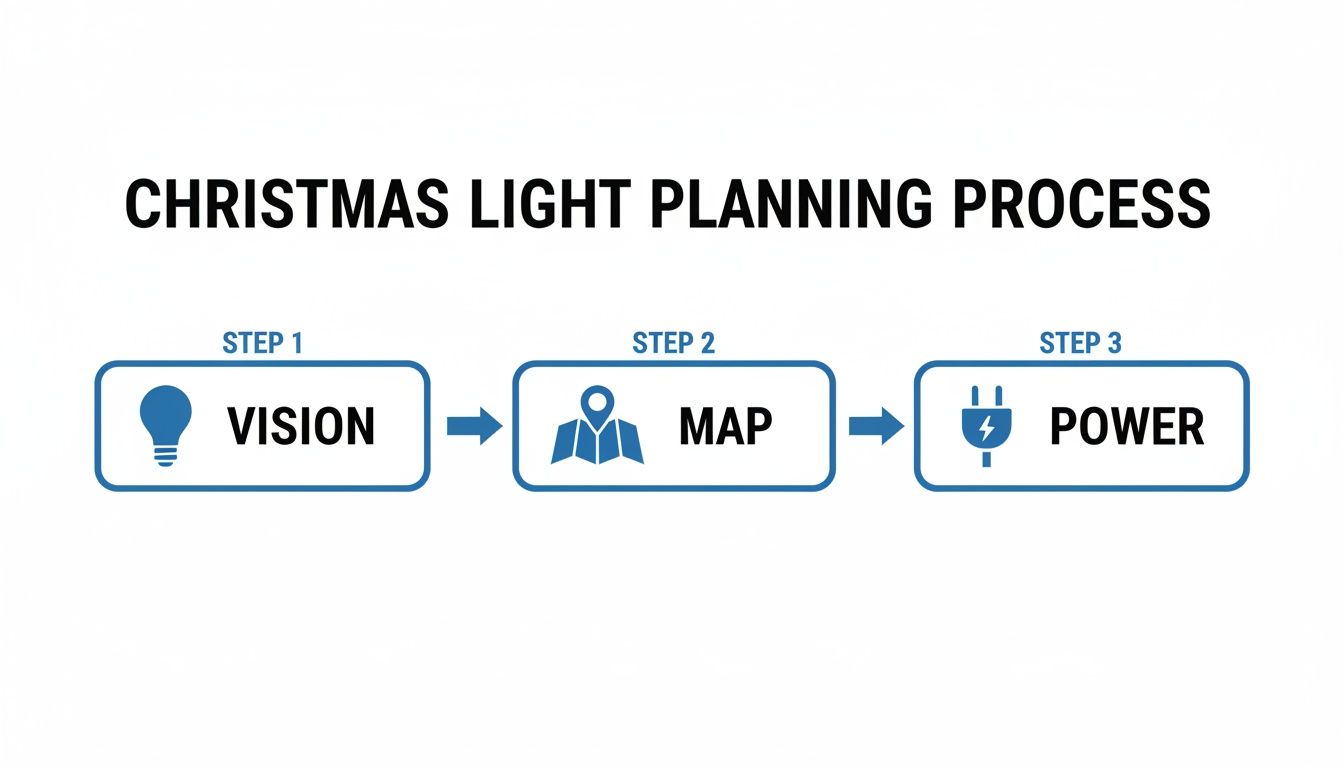
Breaking it down into these three stages—Vision, Map, and Power—is the key to a safe, functional, and beautiful holiday display.
To help you stay organized, we put together a simple checklist. Use this planner to track your project from start to finish.
Your Holiday Lighting Project Planner
Use this checklist to organize your holiday lighting project from concept to completion, ensuring no detail is overlooked for a flawless setup.
| Planning Phase | Key Action | Pro Tip for the Arizona Climate |
|---|---|---|
| Vision & Theme | Choose your style (e.g., Classic White, Colorful, etc.). | Warm white lights beautifully complement stucco and desert landscaping. |
| Measurement & Mapping | Sketch your property and measure all areas to be lit. | Measure during the day, but visualize the look at night for the best effect. |
| Power Source Location | Mark all available outdoor outlets on your map. | Use UV-resistant extension cords and clips; the Arizona sun is brutal on plastics. |
| Light & Material List | Calculate the number of light strands and clips needed. | Opt for commercial-grade, weather-resistant LED lights to withstand heat and monsoons. |
| Safety Check | Inspect all lights and cords for damage before installation. | Always use a GFCI outlet for outdoor lighting to prevent electrical shock. |
Following a clear plan like this is the single best thing you can do to ensure your holiday lighting project is a success and looks fantastic all season long.
Choosing the Right Lights and Tools
Once you’ve got a design sketched out, your project's success really comes down to the materials you pick. The right lights and tools are what separate a stunning, professional-looking display from a project that just leaves you frustrated. At South Mountain Window Cleaning, we only use commercial-grade materials to guarantee quality.
Holiday lighting has come a long, long way in recent years. It’s not just a niche hobby anymore; the global Christmas lighting market has exploded to over $20.261 billion. A huge part of that is the demand for better, smarter lights. We're seeing a massive 23.7% annual growth in high-end smart lights—the kind you can control with an app to get millions of colors. People want more from their displays. You can actually see some of these impressive holiday lighting market trends at Bright-Max.com.
All this new tech is exciting, but it also means you have to be more careful about what you buy. For any outdoor display here in Arizona, whether it's for a Paradise Valley estate or a Gilbert storefront, your first and best choice should always be LED (Light Emitting Diode) lights. No question.
Why LEDs Are the Best Choice for Arizona
We all remember the old incandescent bulbs, but their flaws really stand out in our desert climate. They get hot, they guzzle energy, and the fragile glass bulbs seem to break if you just look at them wrong. LEDs fix every single one of those issues.
Here’s why we exclusively use LEDs for all our professional installations across Phoenix:
- Energy Efficiency: LEDs use up to 90% less energy than the old bulbs. This is huge. It means you can run a much bigger, brighter display without tripping a breaker or getting a nasty surprise on your electric bill.
- Durability: Most LED bulbs are made from a tough epoxy plastic, not glass. You can drop them or knock them against a stucco wall during setup, and they won't shatter. This saves so much time and money on replacements.
- Low Heat Output: LEDs stay cool. This is a massive safety upgrade, slashing the fire risk. It also means you can wrap them around our delicate desert trees and shrubs without scorching the leaves and branches.
- Longevity: A good set of LEDs will last for tens of thousands of hours—often 10 times longer than incandescent strings. You get years of reliable use instead of having to replace them every season.
In our experience working on residential, commercial, and even high-rise properties in Scottsdale and Tempe, the durability of LEDs against the intense Arizona sun and occasional winter storms is a game-changer. They don't fade or become brittle as quickly as older-style lights.
Matching the Bulb to the Job
Not all LEDs are the same, and the bulb style you choose will completely change the look of your display. Picking the right one is all about knowing where you're going to put it.
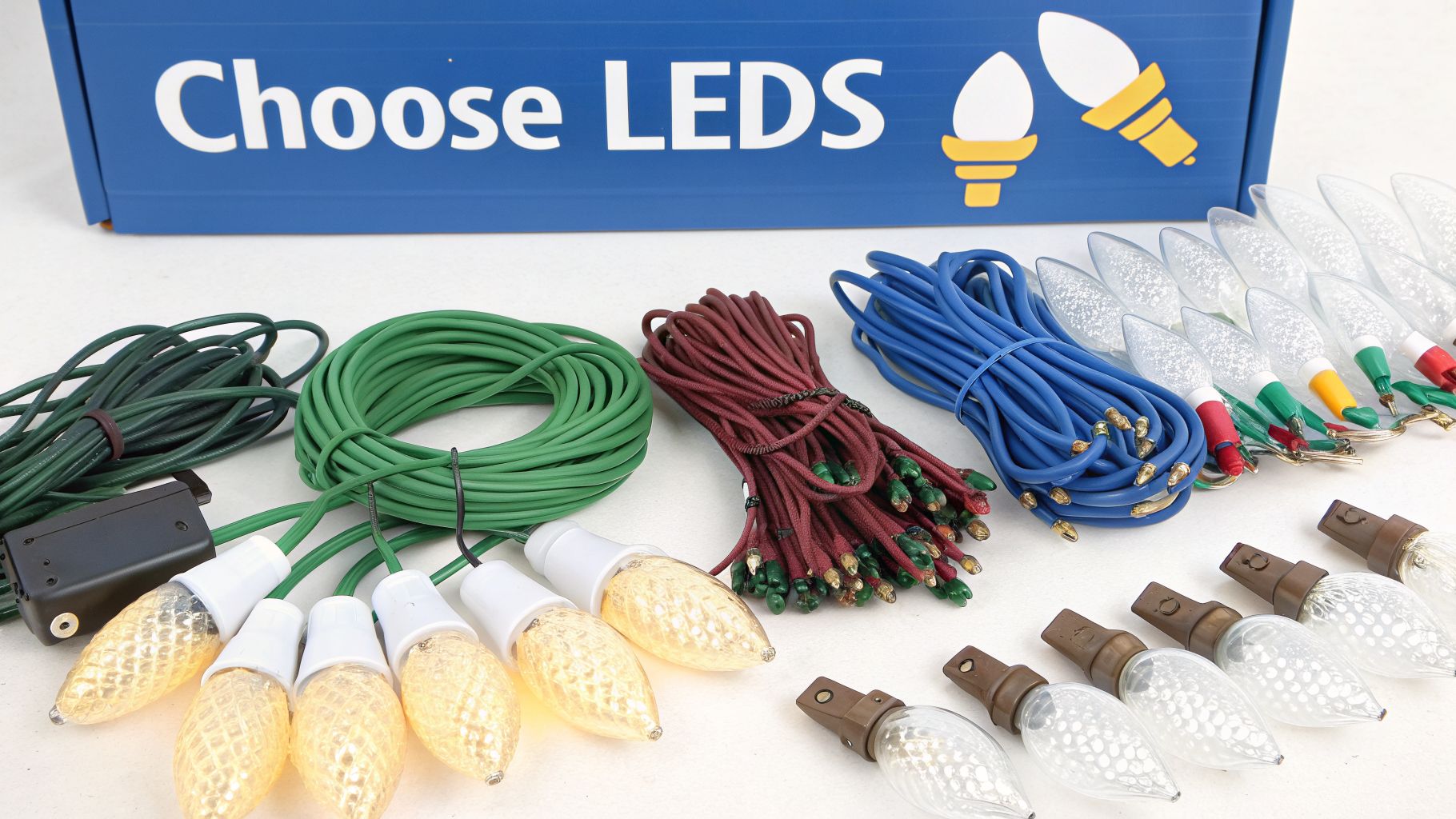
- C9 Bulbs: These are the big, classic bulbs you see on postcard-perfect houses. They are absolutely perfect for outlining rooflines, gables, and major architectural features. Their size makes a bold statement that looks fantastic from the street.
- C7 Bulbs: A bit smaller than C9s, these bulbs are also great for rooflines but give a slightly more refined look. We find they work beautifully for outlining windows, doorways, and the facades of smaller commercial buildings.
- Mini Lights: These are your workhorses for all the detail work. We use thousands of them to wrap tree trunks, shrubs, and railings. Because they're so lightweight, they're perfect for delicate desert plants like mesquite or palo verde trees.
Essential Tools for a Professional Installation
Having the right tools is just as important as having the right lights. A well-prepared toolkit makes the job safer, faster, and ensures your hard work stays put all season. Here's a quick rundown of what you absolutely need for any serious Christmas light setup.
Installation Tool Checklist
| Tool | Purpose & Pro Tip |
|---|---|
| Specialized Light Clips | Get clips designed for your specific surfaces. For Phoenix-area homes, that means having stucco clips and tile roof clips. We find that "all-in-one" or universal clips are often the best investment. |
| Heavy-Duty Extension Cords | Always, always use outdoor-rated cords. Pay attention to the gauge—a lower number (like 12 or 14 gauge) means a thicker, safer cord that can handle more power over distance. |
| Smart Outdoor Timer | A timer puts your display on autopilot, saving you energy and hassle. Get a heavy-duty, outdoor-rated smart timer that you can control from your phone. It's a lifesaver. |
| Sturdy Ladder & Stabilizer | Safety first. Use a high-quality ladder and get a stabilizer attachment, especially if you're working on uneven ground or around delicate landscaping. Don't take chances. |
| Zip Ties or Twist Ties | You can never have too many. They're perfect for securing lights to railings, bundling extra cord for a clean look, and just general problem-solving. Make sure you get UV-resistant zip ties so they last in the Arizona sun. |
Putting Up Lights Safely: A Hazard-Free Guide
A stunning holiday display is what everyone aims for, but it should never, ever come at the cost of safety. In all our years providing professional services across Phoenix and Scottsdale, we've seen that safety is usually the first thing to get overlooked when folks decide to hang their own Christmas lights.
Taking the right precautions is about more than just avoiding a trip to the ER. It’s about protecting your family and your home from things like electrical shorts or, even worse, a fire. Thankfully, a little bit of know-how goes a long way in making sure your holidays stay merry and bright.
Mastering Ladder Safety In Arizona Landscapes
It’s a sad fact, but holiday-related falls send thousands of people to the hospital every single year. Most of these accidents involve a ladder. Getting up on the roof to hang lights has its risks, and our unique Arizona terrain adds its own set of challenges, especially on multi-story homes or commercial buildings.
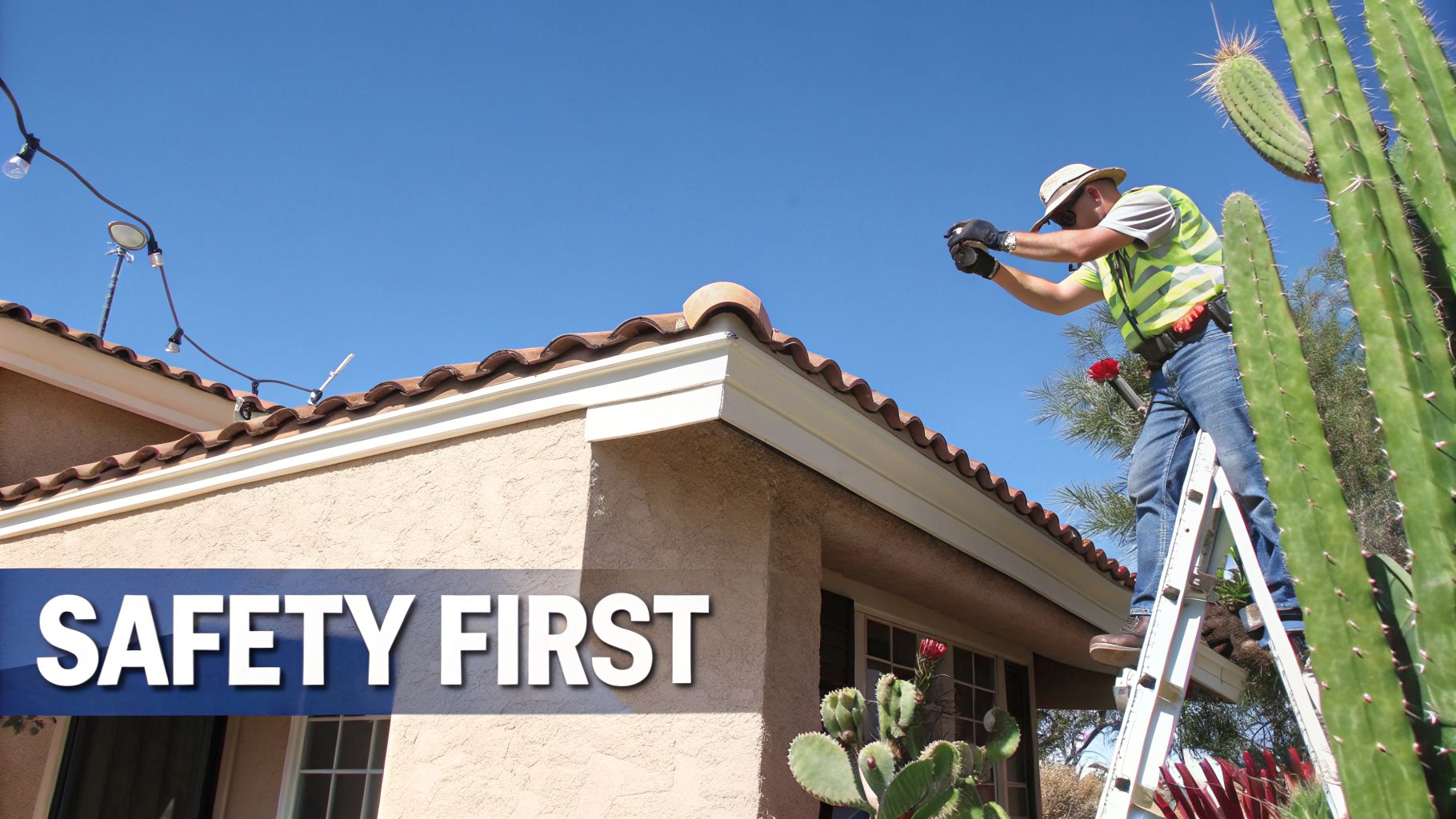
When you're setting up a ladder, always look for solid, level ground. Our desert landscaping often means you have to watch out for soft sand or loose gravel patches. And it probably goes without saying, but if you're working near a cactus, give yourself plenty of room. The last thing you want is a painful run-in if you happen to slip.
A few non-negotiable ladder rules we live by:
- Maintain Three Points of Contact: This is crucial. Always keep two feet and one hand, or one foot and two hands, on the ladder. Don’t stretch to get that one last clip—it’s always safer to climb down and move the ladder.
- Use the 4-to-1 Rule: For every four feet you climb up, the base of the ladder should be one foot away from the wall. This angle is your best friend for stability.
- Have a Spotter: Whenever you can, ask someone to hold the base of the ladder steady. This is especially important when you’re up high or the ground feels a little questionable.
If your home has a really high or complex roofline, it’s worth thinking twice. Working at heights, including on high-rise buildings, is where calling in a pro like our trained and insured team at South Mountain Window Cleaning becomes a really smart move. We've got a lot of experience with ladder safety, which you can read more about in our guide on how to clean gutters safely.
Electrical Safety For A Flawless Christmas Light Setup
Electrical hazards are the other big risk factor. Everyone knows water and electricity don't mix, and even though we live in a dry climate, Arizona does get its share of winter rain. Every single part of your setup, from the bulbs to the extension cords, absolutely must be rated for outdoor use.
Check the tag for the "UL" (Underwriters Laboratories) mark, which means it's been safety tested for the elements. Never, ever use indoor lights or cords outside. They just don't have the weather-resistant shielding to prevent shorts and fire hazards.
Pro Tip: Always plug your display into a Ground Fault Circuit Interrupter (GFCI) outlet. These are the outlets with the little "test" and "reset" buttons. They're designed to shut off power instantly if they sense a problem, which dramatically cuts down the risk of electric shock. Most modern homes in Gilbert and Chandler already have them on exterior walls.
You also have to be careful not to overload your circuits. As we covered in the planning section, you need to know your power limits. A standard 15-amp circuit can handle around 1,800 watts. Modern LEDs are incredibly efficient, but it's still possible to trip a breaker if you're plugging too much into a single outlet.
Protecting your connections from moisture is key. Using proper weatherproof junction boxes is a great way to shield plugs and connections from rain, adding another solid layer of safety to your setup.
Finally, do a quick check on local rules before you start. Many neighborhoods in Scottsdale and Paradise Valley have HOA guidelines about when lights can go up and come down. A quick look at your city or HOA ordinances can save you a lot of trouble later on.
DIY vs Professional Christmas Light Setup
It’s the classic holiday debate for every Phoenix property owner: should you hang the Christmas lights yourself, or is it time to call in a professional? There really is no single right answer. The best choice comes down to your budget, how much free time you have, and frankly, how comfortable you are on a ladder.
Let’s get real about the pros and cons of both options. As a company that provides expert installations for residential, commercial, and high-rise clients, we can offer a clear perspective so you can figure out what’s best for your property.
The Appeal and Reality of a DIY Christmas Light Setup
The biggest reason to go DIY is that feeling of satisfaction. There’s a certain pride in stepping back to admire a display you put together with your own hands. You get total creative freedom, and for a lot of people, untangling those lights is just part of the holiday tradition.
And of course, there's the chance to save some money. When you handle the labor, you're only paying for the materials. But it’s really important to look at the hidden costs that can sneak up on you.
- Time Commitment: A good-looking light display doesn't happen in an afternoon. You have to plan it out, measure everything, shop for supplies, test all the bulbs, do the actual installation, and then take it all down again in January. For a typical home, you’re easily looking at 15-20 hours or more.
- Safety Risks: We’ve mentioned it before, but working on ladders and with electrical wiring has some very real dangers. One slip can cause serious injury or damage your home, turning a fun project into a holiday nightmare.
- Material Quality: The lights and clips you grab from big-box stores usually aren't made to handle the intense Arizona sun or strong winds. You’ll often see faded colors and brittle plastic, meaning you might have to replace everything every couple of years.
For many homeowners, the DIY route is a rewarding experience. But for those with two-story homes, complex rooflines, or limited free time, the initial cost savings can quickly be outweighed by the stress and physical demands of the job.
The Clear Advantages of a Professional Installation
Hiring a professional service, like our team here at South Mountain Window Cleaning, turns your Christmas light setup from a weekend-long chore into something you can just sit back and enjoy. This is especially true for commercial properties in places like Tempe or beautiful homes in Paradise Valley where aesthetics and safety are paramount.
Professional holiday lighting has become a serious business. The industry is on track to hit $10.87 billion in the U.S. by 2031, mostly because people want amazing displays without the risk and hassle. For a business in Chandler, a professional installation isn't just about looking festive; it's a direct investment in curb appeal that brings in customers. You can find a deeper analysis of holiday light installation trends and see how much the market has grown.
Here’s what you’re really paying for when you hire an expert team:
- Unmatched Safety: Our technicians are trained and insured to work at any height, even on high-rise buildings. We use professional-grade safety gear and are backed by a $2 million insurance policy, taking all the risk off your plate.
- Commercial-Grade Products: We source lights and materials you just can't buy in a retail store. They are designed to last for years and perform brilliantly all season long.
- Guaranteed, Flawless Results: We have years of design experience. We know exactly how to accent your property's architecture and create a polished, stunning look that makes people stop and stare. Your satisfaction is always guaranteed.
- Full-Service Convenience: A pro installation means we do it all: a custom design, all the materials, the complete setup, any maintenance needed during the season, and the full takedown and storage after New Year's. It's truly a hands-off experience.
If you’re thinking about hiring a pro, it helps to know what to look for. Check out our guide on how to find professional Christmas light installation services near you for some practical tips.
Cost-Benefit Analysis for Phoenix Properties
At the end of the day, the choice between DIY and pro often comes down to the numbers. Here’s a straightforward table to help you compare.
| Factor | DIY Approach | Professional Service (like South Mountain) |
|---|---|---|
| Upfront Cost | Lower (materials only). But you might need a new ladder or other tools. | Higher (includes labor, design, and commercial-grade materials). |
| Time Investment | High. You're looking at multiple days for planning, shopping, install, and takedown. | Zero. We handle everything for you, from start to finish. |
| Safety Risk | High. You take on all personal and property risk from falls or electrical problems. | Zero. Our crew is fully insured and trained for safety on the job. |
| Quality of Result | It varies. Depends on your skill, patience, and the quality of your lights. | Professional and guaranteed. A flawless, head-turning display every time. |
| Longevity | Lower. Retail-grade lights often only last 1-3 seasons in our Arizona climate. | High. Our commercial-grade materials are built to last for many years. |
Ultimately, a professional Christmas light setup is an investment in quality, safety, and your own peace of mind. For busy families, business owners, or anyone with a tricky roofline or high-rise building, it frees you up to actually enjoy the beauty of the holidays without all the extra work and risk.
Maintaining and Storing Your Holiday Display
Getting your Christmas lights sparkling is a great feeling, but the work doesn't stop there. A little bit of care during the season and a smart takedown plan are what protect your investment. More importantly, it’s what makes next year's project a fun tradition instead of a tangled, frustrating chore.
Think of it this way: a few minutes of maintenance now saves you hours of headaches later. This is part of the value we provide—ensuring your display remains perfect all season long.
In-Season Care and Troubleshooting
Even with the most careful installation, things can go wrong. A strong gust of wind or an Arizona winter storm can knock things around, but most issues are simple fixes if you know what to look for.
One of the most common calls we get is about an entire section of lights going out. With modern LED strings, it's almost never a single burnt-out bulb. The first thing you should always check is the connection between strands—give it a good push. The other culprit is usually a tripped GFCI outlet. Before you start climbing ladders, find that outlet and press the "reset" button.
Pro Tip: Before the holiday season even begins, it’s a good practice to walk your property and make a mental note of any potential maintenance needs. This proactive approach is part of a solid home care routine. To help, we’ve created a helpful annual home maintenance checklist you can follow.
After a storm rolls through, do a quick walk-around. Check for any lights that have popped out of their clips and snap them back into place. If you used zip ties on railings or posts, give them a little tug to make sure they're still secure.
The Takedown: A Step-by-Step Guide
When the season ends, fight the urge to just yank everything down and toss it in a box. I promise you, a methodical takedown is the secret to a pain-free setup next year. Our professional service includes a careful takedown and storage process.
- Pick a Good Day: Always wait for a clear, dry day. Wrestling with lights in the rain isn't just miserable; it's a safety hazard when you're dealing with electricity.
- Work in Reverse: Unplug everything first! Then, start removing your display in the opposite order you put it up. If you finished with the bushes, start there.
- Inspect as You Go: As you take down each string of lights, give it a quick once-over. Look for frayed wires, cracked bulb casings, or damaged sockets. It’s so much easier to toss a bad string now than to find it when you’re on a ladder next October.
Smart Storage for a Tangle-Free Next Year
This is where the pros really shine. The goal isn't just to put the lights away; it's to pack them so they're protected, organized, and ready to unspool perfectly next season. A messy storage job is the #1 cause of tangled, broken lights.
We’ve seen every storage system imaginable, and the best ones are often the simplest. You don't need to spend a fortune on special containers.
- Wrap, Don't Wind: Please, never wrap lights around your arm and elbow. This creates tight kinks that break the delicate wiring inside. Grab a flat piece of cardboard and cut a notch in each end, or buy a cheap light reel. Wrap the lights smoothly and evenly.
- Label Everything: This is a game-changer. Use a marker and some masking tape to label each strand. A simple note like "Front Roofline – Left" or "Mesquite Tree" will save you an unbelievable amount of time and guesswork.
- Use Solid Bins: Ditch the cardboard boxes. Sturdy plastic bins with locking lids are your best friend. They'll protect your lights from moisture, dust, and any critters looking for a home.
Once the festive season concludes, knowing how to efficiently pack and organize your decorations can help you effectively save space during the holidays and keep your dazzling light display pristine until next year.
Your Christmas Light Setup Questions Answered
After years of decking out homes and businesses all over the Valley, you start to hear the same questions. From a business owner in Gilbert to a homeowner in Scottsdale, everyone wants to know a few key things before they commit to a holiday display. As a company offering window washing and holiday lighting, we've heard it all.
Let's clear up some of those common questions about cost, timing, and the nitty-gritty details. Getting these answers sorted out is the final step before you can sit back and enjoy a beautiful, stress-free holiday season.
How Much Does a Professional Christmas Light Setup Cost in the Phoenix Area?
This is always the first question, and the honest answer is, it really varies. The final cost depends on the size of your property (whether residential, commercial, or high-rise), how intricate you want the design to be, and the kind of lights we use.
For most residential homes, a full-service professional job can run anywhere from a few hundred dollars to several thousand. For commercial properties, we typically price by the linear foot, which usually lands between $12 and $28. That price almost always covers everything:
- A custom design session to map it all out
- All the commercial-grade lights and gear needed
- Full installation by our trained crew
- Season-long maintenance (if a bulb goes out, we fix it)
- Complete takedown and storage after the holidays
A big trend we're seeing, especially with businesses, is permanent lighting. The upfront cost is higher, often $60 to $100 per linear foot for commercial jobs, but it saves you money year after year. Plus, you get year-round lighting for any occasion, which is why it's getting so popular.
When Is the Best Time to Schedule My Christmas Light Installation?
My best advice? The sooner, the better. Seriously. Quality companies like ours at South Mountain Window Cleaning start booking up our holiday schedule as early as September. By the time mid-November rolls around, our calendar is almost always packed solid.
Booking early does more than just save your spot. It means you get the installation date you actually want, so your home is lit up and looking festive right after Thanksgiving. If you're doing it yourself, I'd still suggest getting everything up by the first week of December. Just do yourself a favor and test every single light strand in October—it gives you time to hunt down replacements without panicking.
The holiday lighting industry is a huge market, on track to hit $10.87 billion in the U.S. by 2031. All that growth means more people are hiring pros, and those prime installation slots disappear fast. You can explore detailed 2025 market analysis here to learn more about the trends.
Can I Use the Same Lights for My Roof and My Desert Plants?
You could, but for a truly polished look, you really shouldn't. Using the right light for the right job creates layers and depth that make the whole design pop.
Bigger bulbs, like the classic C7 or C9 lights, are perfect for rooflines, gables, and outlining the main features of your home. Their size and brightness make a bold statement that looks incredible from the street.
When it comes to wrapping trees, shrubs, and especially our unique desert plants like palo verdes or ironwoods, mini lights are the way to go. They’re much lighter, so they don’t weigh down delicate branches, and the look is more subtle and elegant up close. For bushes and hedges, net lights can be a real time-saver, giving you even coverage in minutes.
No matter what, always choose LED lights for your landscaping. They produce very little heat, so there's no risk of scorching your valuable plants. Your yard will thank you for it long after the holidays are over.
Ready to skip the tangled wires and rickety ladders this year? The professional, insured team at South Mountain Window Cleaning creates beautiful, custom holiday lighting for residential, commercial, and high-rise properties across Phoenix, Scottsdale, Chandler, and the entire Valley. Let us handle everything from the design and installation to the takedown, so all you have to do is enjoy the season.
Get your free, no-obligation Christmas light setup quote today!