

Most homeowners start with the wrong assumption: if a curtain says blackout, the room will become completely dark. That label usually describes the fabric, not the finished installation. In Phoenix and Scottsdale, where intense sun finds every opening around a window covering, the question is not how to blackout windows. It's how to stop light from bypassing the material at the top, sides, and bottom.
A dense curtain can block nearly all light through its center while still leaving a bright halo around the perimeter. The same installation problem can also undermine heat control, privacy, and sleep quality. The practical solution is to choose a suitable material, then treat the window like an opening that needs a proper seal.
The Truth About Blackout Labels and Light Leakage
A blackout fabric and a blackout room aren't the same thing. Fabric manufacturers can specify darkening performance at about 99%, with some materials reducing light transmission from roughly 40% to about 1%, but the result depends on the fabric's construction, color, and installation. Delius' dimout fabric specifications illustrate why the material rating is only one part of the finished result.
The weak point is usually the edge. Light can pass between the panel and the wall, above the rod or headrail, beneath the sill, or through the gap where two curtain panels meet. In a desert bedroom, direct sunlight makes those small openings obvious. A curtain may look substantial from across the room while leaving enough perimeter leakage to disturb sleep.
Lux readings reveal the installation problem
Independent testing and customer-review aggregation found that ordinary blackout curtains commonly left 8 to 52 lux at the center of a room, while roller shades without side channels showed about 4 to 22 lux. Sealed-track systems were the only systems reported as reaching effectively 0 lux in that dataset. The findings are summarized in uBlockout's lux-meter testing of blackout solutions.
Those figures don't mean every curtain will produce the same result. They do show why a product label can't promise the darkness you want. The panel may be opaque, but the installation geometry still determines whether light reaches the room.
Practical rule: If you can see a bright line around the treatment, the problem is the mounting system, not necessarily the fabric.
Consumer Reports has also cautioned that not all curtains marketed as blackout deliver true blackout performance. A 2026 analysis cited typical bedroom edge-gap leakage of about 10 to 40 lux, above the 5 to 10 lux melatonin-suppression threshold often discussed in sleep research. Consumer Reports' blackout-curtain guidance reinforces the point that frame fit and edge coverage deserve as much attention as the textile.
Why sealed perimeters work better
Near-total darkness requires a continuous barrier. Side channels, overlapping panels, magnetic closures, wrap-around rods, and top valances all serve the same purpose, they prevent light from traveling around the treatment.
Start by thinking of the window as a rectangle that must be covered beyond its visible glass. A curtain mounted only inside the frame leaves the sides exposed. A roller shade that fits the glass but lacks channels creates vertical gaps. A top-mounted panel without a valance allows light to spill over the headrail.
The most reliable installations combine dense material with a sealed perimeter. If darkness matters for a nursery, home theater, or shift-worker bedroom, don't spend the entire budget on a heavier fabric while ignoring the brackets, channels, overlaps, and sill seal.
Comparing the Best Window Blackout Methods
No single method suits every room. A home theater needs darkness and a clean appearance. A Phoenix bedroom facing west needs darkness plus solar control. A rental may need a removable option that doesn't damage trim.
| Method | Light Blocking (Lux) | Heat Reduction | Installation Difficulty |
|---|---|---|---|
| Blackout curtains with overlap and side seals | Can be very dark when the perimeter is sealed | Moderate, stronger with white-backed fabric | Moderate |
| Roller shades with side channels | Near-total darkness is possible with a sealed track | Moderate to strong, depending on backing and fit | Moderate to high |
| Static-cling blackout film | Covers the glass with minimal edge leakage on the pane | Can reduce incoming light, but thermal performance varies by film | Low to moderate |
| Magnetic blackout panels | Strong coverage when fitted tightly to the frame | Moderate, depending on panel construction | Low to moderate |
| Temporary foil or reflective panels | Blocks visible light effectively when fully sealed | Reflective surfaces can help limit radiant gain | Low, but appearance is utilitarian |
Curtains are flexible, but gaps decide the result
Blackout curtains work well when they're mounted outside the frame, extend beyond the window, and overlap at the center. A white or reflective backing is preferable in hot rooms because a dark exterior-facing surface can absorb solar energy and radiate some of that heat inward.
Standard curtains aren't automatically poor performers. They fail when installers treat them like decoration instead of a barrier. A wrap-around rod, broad side overlap, top valance, and magnetic side closures can turn a basic panel into a much more effective light-control system.
Roller shades need channels
A roller shade sits close to the glass and looks neat, but the exposed sides create a predictable path for light. Adding side channels and a bottom seal changes the performance substantially because the shade becomes a contained system rather than a loose sheet hanging in front of the window.
For a useful discussion of the difference between light-filtering solar products and room-darkening products, see this comparison of solar shades vs blackout shades. A solar shade may reduce glare and preserve an outdoor view, but it isn't the same tool as a sealed blackout shade.
Window films cover the glass itself, so they avoid the side-gap problem on the pane. They can look clean and work well where curtains aren't practical, but film won't cover the wall around the window or replace a full room-darkening treatment. Magnetic panels occupy a useful middle ground for renters because they can press against the frame without permanent hardware.
Temporary foil is effective in a strictly functional sense, especially for short-term sleeping arrangements. It's unattractive, may conflict with building rules, and can make window cleaning or inspection more difficult. For porch or exterior screening concerns, homeowners may also find practical context in South Mountain Window Cleaning's guide to the best screen for porch.
Choose based on the room's actual job. Use sealed roller shades for a polished theater or nursery, overlap-mounted curtains for flexibility and insulation, film for glass-only control, and magnetic or removable panels when the lease limits permanent changes.
Step-by-Step Installation for Total Darkness
The installation succeeds or fails at the measuring stage. Measure the window frame, the surrounding wall, the sill, the ceiling line, and any nearby handles or trim. You're planning the coverage area, not merely ordering a panel that matches the glass.
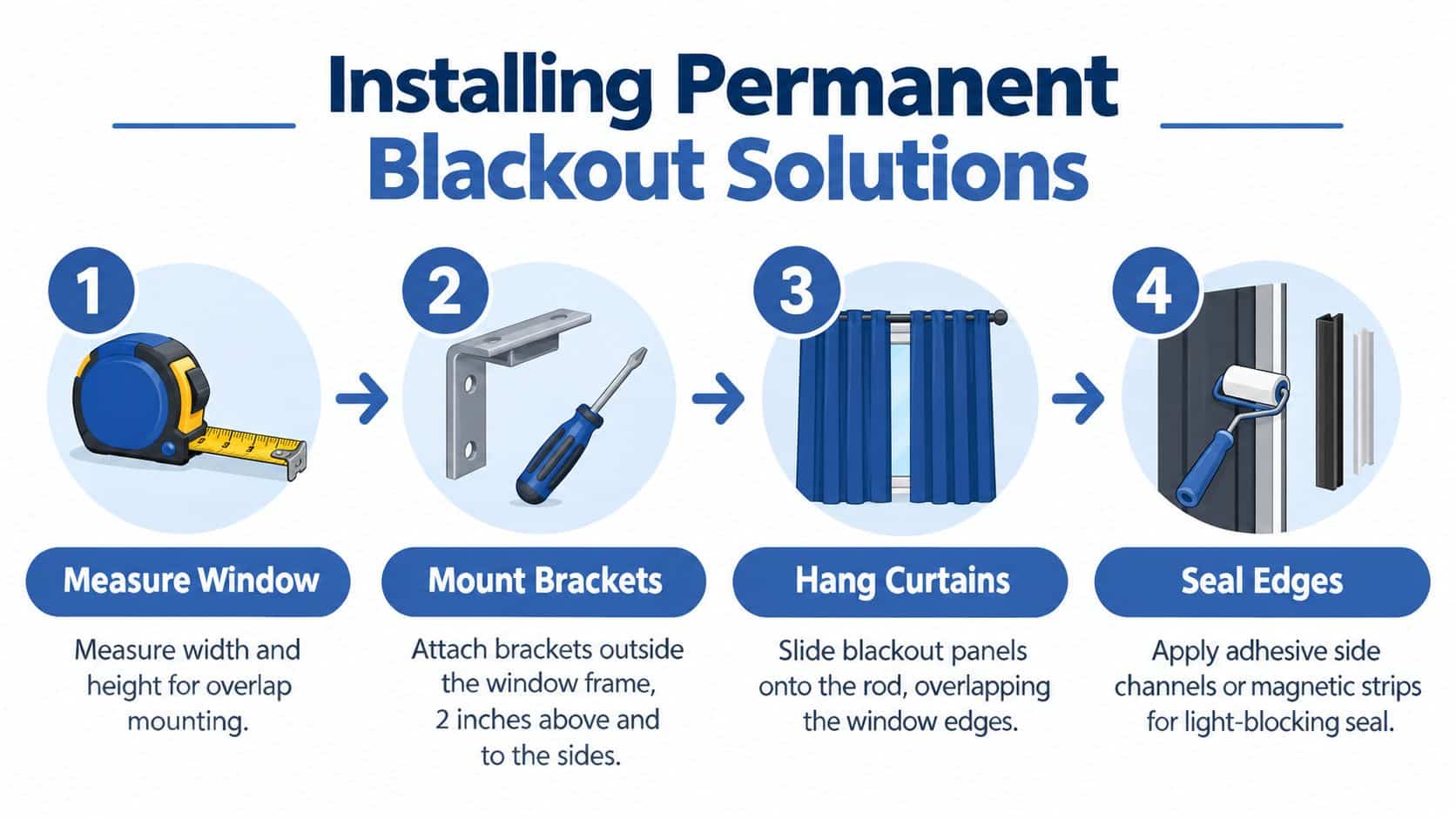
Overlap-mounted curtains
Measure beyond the frame. Record the full width and height of the window, then decide how far the curtain will extend on each side and above the opening. The panels need enough extra coverage to prevent a visible halo. Allow room for the center overlap, especially if two panels meet in the middle.
Use a wrap-around rod. Mount brackets outside the frame so the rod returns toward the wall instead of ending in open space. The provided installation visualization calls for brackets 2 inches above and to the sides of the frame. Keep the rod level, and check that the fabric will clear handles, locks, and nearby furniture.
Block the header. A top valance or tightly fitted cornice prevents light from spilling over the rod. A high rod alone doesn't seal the upper edge. If the ceiling or wall is bright, the reflected light can make the remaining leakage more noticeable.
Seal the side hems. Magnetic tie-backs or magnetic strips can pull the outer curtain edges against the wall. The closure should hold the fabric flat without creating a new gap. For a rental, removable fasteners may be preferable, but test them on an inconspicuous surface first.
Inspect at night. Turn off the room lights and stand inside the room while someone checks the window from outside with a light source, or inspect the perimeter during daylight. Look at the top, both side edges, the center overlap, and the sill.
A detailed window treatment guide from Tip Top Furniture & Mattresses can help with general measuring and mounting decisions, but the blackout-specific priority remains perimeter coverage.
Side-channel roller shades
Roller shades require more precise alignment. Mount the shade square to the window, then position the channels so the fabric enters them without rubbing or buckling. If one channel sits farther from the glass than the other, light and drafts can find the uneven edge.
Attach the side channels to clean, sound surfaces and follow the product's adhesive or fastener instructions. Add a bottom sill seal where the shade meets the sill, especially on windows exposed to direct morning or afternoon sun. Check that the lowered shade remains centered as it moves.
Don't judge the job from outside the room. Sit or lie where you sleep, because the angle of view changes how edge leakage appears. If a bright strip remains, adjust the channel, add a top cover, or revise the mounting position instead of replacing the fabric immediately.
Renter-Friendly and Temporary Solutions
Renters can still create a dark sleeping room, but the method has to respect the lease and the wall finish. The same rule applies as with permanent work: temporary hardware must still create continuous coverage. A tension rod with narrow curtains often looks tidy but leaves side gaps, so use a wide, weighted panel that reaches past the frame.
A tension rod works best inside a deep recess where the surrounding wall helps contain the fabric. If the window sits nearly flush with the wall, use removable hooks or adhesive-backed supports to hold the outer edges against the surface. Keep the fabric loose enough to close fully, but not so loose that it bows inward and exposes the sides.
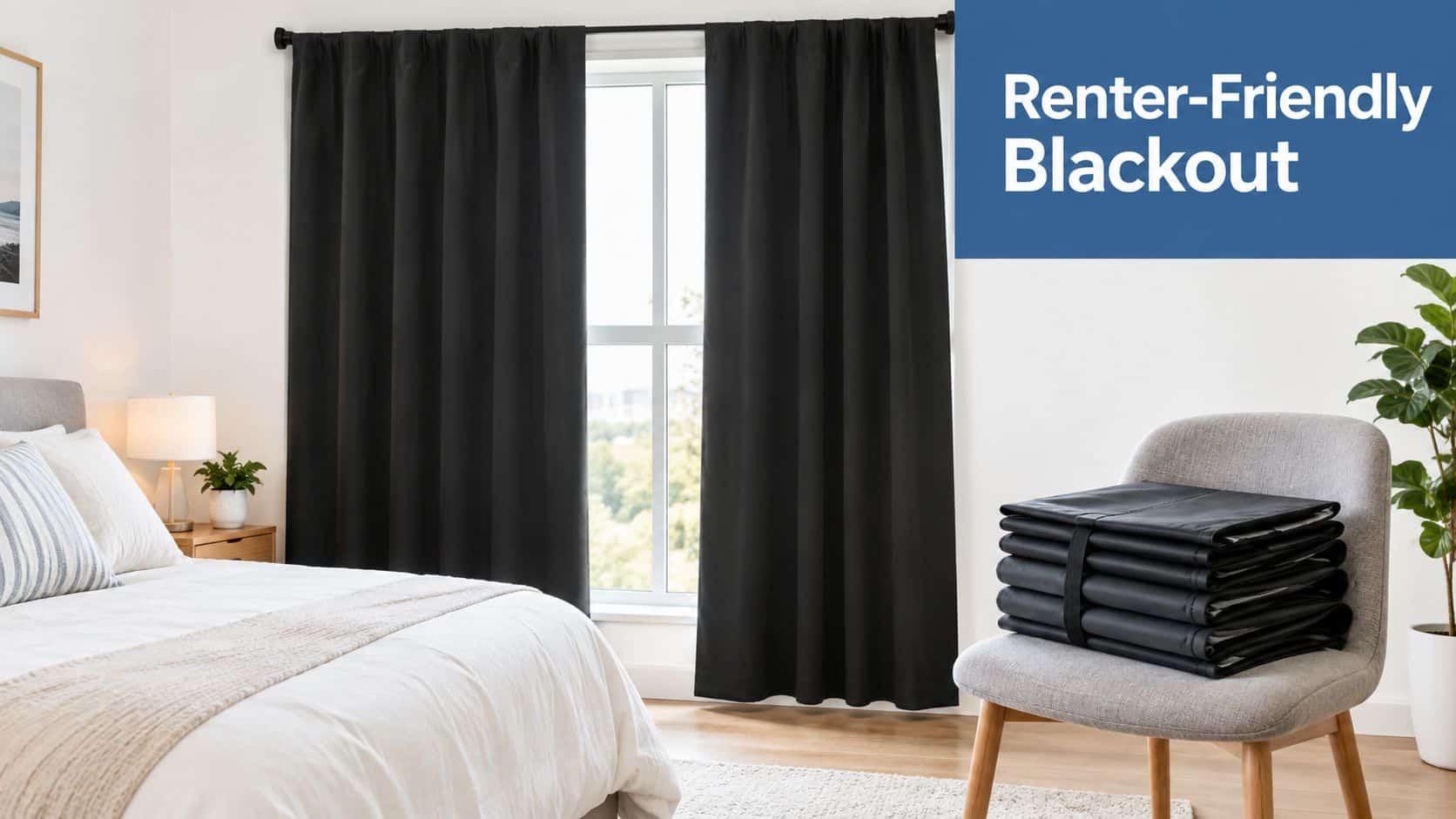
Removable options that respect the frame
Static-cling blackout film adheres to clean glass without permanent adhesive. It can provide close coverage over the pane and removes more cleanly than many glued products. Measure carefully, clean the glass thoroughly, and press out bubbles so the film sits flat. It won't block light that travels around the glass, so pair it with a removable curtain if the wall perimeter remains bright.
Magnetic panels are useful when the window has a metal frame or when you can install removable magnetic strips around the opening. The panel should overlap the frame rather than stop at the glass edge. This approach is especially practical for a nursery, guest room, or short-term shift-work schedule.
Suction-cup shades can be taken down quickly and work well for travel or temporary accommodations. Their performance depends on the glass condition and the seal around the edges. Check the cups regularly in hot weather because heat and dust can weaken the hold.
Hook-and-loop fabric panels offer a stronger edge seal than a loose curtain. Use removable strips designed for the wall surface, keep the panel broad enough to overlap the frame, and remove it slowly to reduce the risk of lifting paint.
The South Mountain Window Cleaning screen kit is relevant when removable coverings make it harder to access, clean, or reinstall window screens. Keep screens, tracks, and glass clean before applying temporary films or seals, because desert dust can interfere with adhesion.
For a rental, the most dependable temporary combination is often static-cling film on the glass plus a removable, wide curtain or fabric panel over the frame. It costs less than rebuilding the window treatment and respects the principle that darkness comes from closing the perimeter, not just darkening the center.
Managing Heat and Solar Gain in Arizona Homes
A room can be dark and still feel hot. In Phoenix-area homes, the west and south-facing windows deserve special attention because direct sun can load the glass and surrounding interior surfaces. A black curtain that blocks visible light may also absorb solar energy, then radiate warmth toward the room if its exterior-facing surface is dark and close to the glass.
Reflective or white-backed materials handle this problem more effectively than dark fabric alone. The U.S. Department of Energy states that medium-colored draperies with a white plastic backing can reduce solar heat gain through the covered window by about 33%, while windows account for roughly 25% to 30% of residential heating and cooling energy use. These figures apply to the covered window and the broader residential energy picture, not to a guaranteed whole-home bill reduction. The Department of Energy's residential window-coverings guidance explains why window treatments can matter without turning into a miracle efficiency upgrade.
Treat the windows that receive the punishment
Don't cover every window the same way. Prioritize the rooms where direct sun enters during the hottest part of the day, especially bedrooms, offices, and media rooms with large west-facing glass. A sealed blackout treatment on a shaded north-facing window may improve sleep, but it won't provide the same thermal value as treating sun-exposed glass.
Cellular or honeycomb shades add another layer because their internal cells trap air. In instrumented lab homes cited in the Department of Energy material, high-performing cellular shades reduced cooling-season HVAC energy by 10.4 ± 6.5% compared with ordinary vinyl blinds. That result doesn't promise the same outcome in every Arizona house, but it demonstrates why the treatment's structure and placement matter.
A separate 2024 building-energy study found blackout roller shades reduced sensible cooling energy by 70% versus unshaded conditions, while cellular shades performed better for heating, cutting heating loads by 55%. The study also reported similar overall annual performance across those shade types, a useful warning against choosing a product solely because it carries the word blackout. The IBPSA publication for that study provides the relevant comparison.
Exterior shading can reduce the solar load before it reaches the glass. Timber shade structures may be worth considering for patios and large outdoor exposures, and Utah Deck Supply's timber shade structures offer a reference point for that type of architectural approach. Inside the home, use reflective backing, tight seals, and consistent closure during peak sun.
Arizona homeowners comparing window work with household operating costs can also review South Mountain Window Cleaning's information about the average electric bill in Arizona. Treat blackout shades as one part of solar management, not a substitute for sound glass, exterior shade, insulation, and sensible thermostat control.
Maintenance, Safety, and Professional Exterior Care
Blackout treatments collect dust, especially around tracks, channels, and bottom seals. Vacuum fabric with a soft brush attachment, clean channels with a dry detailing brush, and avoid soaking coated textiles unless the manufacturer permits it. Water can affect backing, adhesive, and dimensional stability, which may leave a treatment less effective even when the fabric still looks clean.
Inspect the perimeter after major dust storms and during seasonal changes. Look for lifting adhesive, warped channels, loose magnetic strips, and a bottom seal that no longer contacts the sill. A small separation at the edge can turn a successful installation into a bright room at sunrise.
Keep operation safe
Corded shades create avoidable hazards around children and pets. Choose cordless, chain-tensioned, or motorized controls where the room is used by young children, and keep furniture away from operating hardware. Motorization also helps maintain consistent closure during the hottest part of the day, provided the system has a reliable manual override and its batteries or power supply receive regular attention.
High windows require a separate safety decision. OSHA says rope-descent systems above 300 feet are limited because wind and rope dynamics increase danger, and use at that height is allowed only when another access method isn't feasible or would create a greater hazard. OSHA's rope-descent guidance is a reminder that exterior access isn't a casual do-it-yourself task.
Building owners also must provide written confirmation that each rope-descent anchorage has been identified, tested, certified, and maintained. Each anchor must support 5,000 pounds in any direction for each attached worker, according to the referenced OSHA requirements summarized by FallProtect's window-washing anchor guidance.
Interior blackout work doesn't remove the need to maintain the exterior glass, frames, screens, and solar equipment. Dust on the glass changes the way daylight enters the room, while dirty screens and tracks can interfere with a treatment's fit. South Mountain Window Cleaning also provides sun screen cleaning in Phoenix, Arizona, along with residential, commercial, and high-rise window washing in Phoenix, Scottsdale, Paradise Valley, Chandler, Tempe, and Gilbert. Arizona solar-panel maintenance may also require recurring attention. One Phoenix-area recommendation calls for monthly cleaning from October through May, professional cleaning in June, and a rinse within 24 to 48 hours after major dust storms from July through September, as described by Phoenix Valley Solar. Broader Arizona guidance recommends cleaning panels three to four times per year, with extra service after dust storms, according to Solar Clean Hub's regional guidance.
South Mountain Window Cleaning, LLC provides residential, commercial, and high-rise window washing, screen and track care, solar panel cleaning, and exterior maintenance across the Phoenix area. If dusty glass, screens, or frames are undermining your blackout setup, visit South Mountain Window Cleaning, LLC to request a fast, free quote and schedule professional service.