
You've probably seen the failure already. A cinder block wall looks crisp after a spring repaint, then Phoenix heat exposes bubbles, peeling edges, chalking, and bare patches. The instinct is to blame the brand or buy a thicker coating. That's usually the wrong diagnosis.
The best paint for cinder block is the coating system that matches the wall's moisture condition. For a dry, sound exterior wall, that often means a 100% acrylic, water-based masonry coating. For a wall that wicks moisture or shows efflorescence, a breathable mineral system may be the better choice. For active water pressure, paint may be the wrong first move entirely.
| Wall condition | Best starting point | Main reason |
|---|---|---|
| Dry, sound block | Acrylic masonry coating | Practical adhesion, UV resistance, and maintenance |
| Hairline cracking | Elastomeric masonry coating | Adds crack-bridging ability |
| Damp or actively wicking block | Breathable mineral or silicate finish | Allows greater vapor movement |
| Efflorescence or below-grade seepage | Diagnose and correct moisture first | A topcoat won't stop pressure behind the wall |
Why Most Cinder Block Paint Fails in Phoenix Climate
A property owner in Scottsdale paints a south-facing block wall in spring. The surface looks sharp, the color is even, and the project seems finished. By late summer, the wall has blistered near the base, peeled around mortar joints, and chalked where the sun hits hardest. The owner buys a more expensive product and repeats the job, but the same failure returns.
The problem usually isn't the label on the can. It's the mismatch between a film-forming coating and a permeable masonry substrate. Cinder block is classified as permeable to water and water vapor at greater than +10 perms, according to this cinder block moisture and coverage guidance. The wall can absorb and release moisture even when it looks dry.
Breathability matters more than film thickness
When a coating restricts vapor movement, moisture can build pressure behind the film. That pressure may show up as blistering, peeling, or delamination, particularly where the wall receives irrigation overspray, monsoon moisture, roof runoff, or dampness from the opposite side.
Phoenix adds another burden. Intense sunlight heats exposed masonry quickly, while shaded areas and wet-dry cycles behave differently. A coating that dries too fast on the face or seals moisture into the block may fail sooner than a thinner, more vapor-open system.
Practical rule: Don't choose a coating because it promises the thickest shield. Choose one that can handle the wall's moisture movement.
That principle also protects curb appeal. A peeling wall undermines an otherwise clean exterior, so owners planning a broader refresh may find this curb appeal improvement guide useful when coordinating masonry, glass, and other visible surfaces.
The right question isn't “Which brand is best?” Ask whether the wall is dry, damp, or actively wicking moisture. That answer determines whether acrylic, elastomeric, mineral, or no topcoat yet is the responsible recommendation.
Surface Preparation Steps Before Painting Cinder Block
Preparation determines whether the coating bonds to masonry or merely covers dust and weakness. Phoenix exteriors collect fine desert grit, chalk, loose coating, salt deposits, and organic residue in the block's pores. A quick rinse won't reliably remove that contamination.
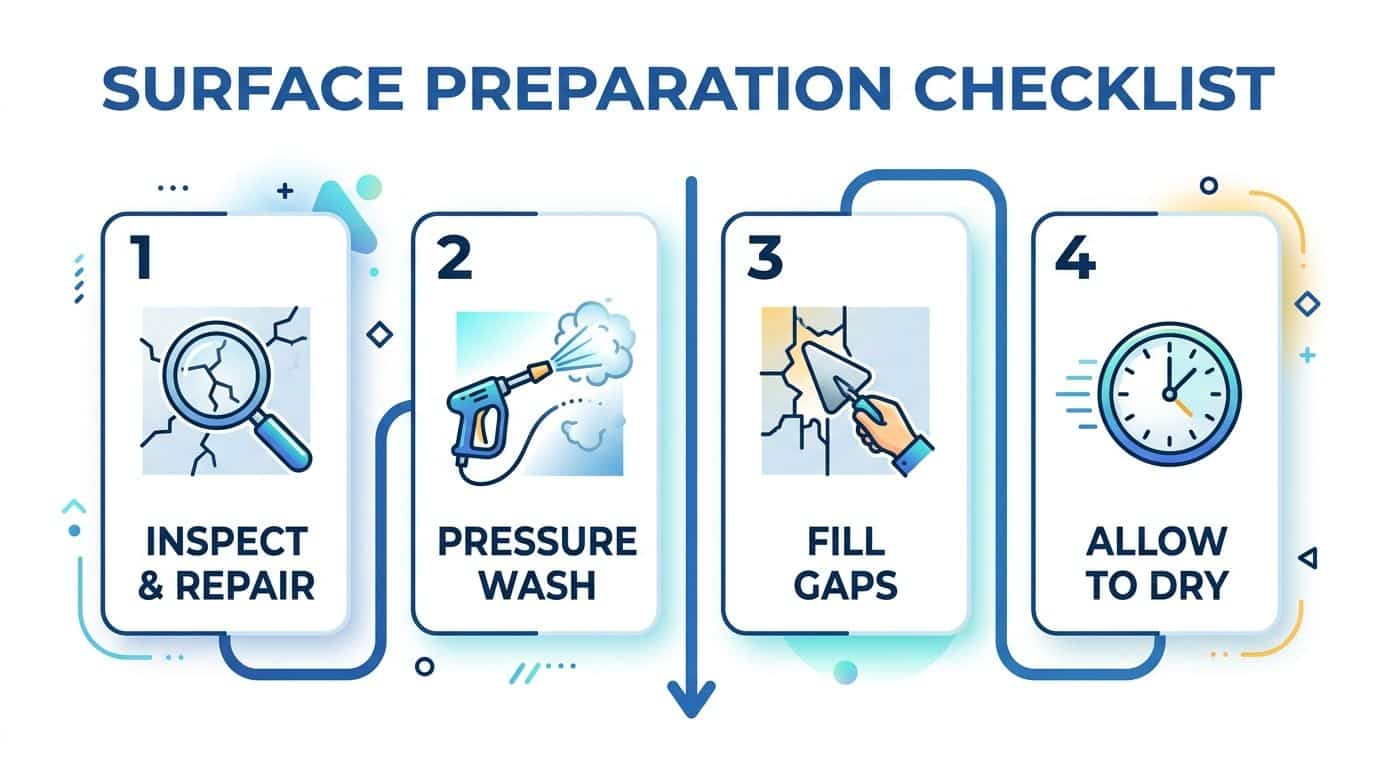
Follow the sequence
Inspect the wall. Look for peeling paint, chalking, cracks, efflorescence, damp areas, failed sealant, and staining that returns after cleaning. Mark problem areas before scheduling a crew or ordering materials.
Wash the masonry. Use controlled pressure washing to remove dust, grit, loose coating, and surface contamination. Don't blast aggressively enough to damage soft mortar or drive water deeper into the block. For a commercial building or multi-unit property, schedule washing early enough to allow drying and inspection before the coating crew arrives.
Remove efflorescence. White, powdery salt deposits indicate moisture movement. Brush and clean them with a masonry-appropriate cleaner, following the product directions. If the deposits return, stop treating them as a cosmetic defect. Recurring efflorescence requires moisture diagnosis.
Repair cracks and gaps. Use suitable hydraulic cement for compatible masonry repairs, or an exterior elastomeric filler where movement and fine cracking call for flexibility. Repairing only the visible paint failure leaves the substrate problem in place.
Let the block dry completely. Don't rely on a dry-looking face. Shaded walls, lower courses, and areas near irrigation may retain moisture longer. A proper primer guide for painting projects explains why priming supports more consistent adhesion and coverage.
Treat preparation as a production task
For a facility team, preparation needs a written sequence, access plan, containment plan, and weather window. Protect nearby windows, doors, landscaping, vehicles, and pedestrian routes. Cleaning a large exterior also creates runoff, so plan where dirty water will go.
A clean masonry surface can still fail if the wall remains damp or the old coating is unstable. Before paint touches the block, verify that repairs have cured, loose material is gone, and the surface can accept the selected primer.
Owners considering professional preparation can review exterior foundation painting guidance for related inspection and cleaning considerations. Skipping preparation is the fastest way to turn a repaint into another maintenance cycle.
Comparing Masonry Acrylic Elastomeric Primer and Breathable Finishes
Four coating categories deserve attention on Phoenix cinder block: standard masonry acrylic, elastomeric coatings, penetrating or masonry waterproofing primers, and breathable mineral or silicate finishes. They don't solve the same problem, and treating them as interchangeable is how owners end up sealing moisture behind a new surface.
| Paint Type | Breathability | UV Resistance | Crack Bridging | Cost per Gallon |
|---|---|---|---|---|
| Masonry acrylic | Good when the product is vapor-open | Good | Limited | Moderate |
| Elastomeric | Product-dependent, often less open than mineral systems | Good | Strong for hairline cracking | Higher |
| Waterproofing primer | Depends on formulation and intended use | Usually not intended as the final finish | Limited to moderate | Moderate to high |
| Mineral or silicate finish | Very high | Good when properly applied | Limited | Higher |
Masonry acrylic is the default for dry block
Modern masonry coatings are typically 100% acrylic and water-based, with technical data sheets specifying use on cured cinder block, poured and precast concrete, brick, and related masonry. Acrylic is usually the sensible choice for a dry, stable residential privacy wall or well-maintained commercial block exterior.
It offers a workable balance of adhesion, color retention, application simplicity, and vapor movement. It won't bridge meaningful cracking, so don't use it to disguise a wall that's moving or actively taking on water.
Elastomeric earns its place on cracked, exposed walls
Elastomeric coatings apply with more film build and can bridge hairline cracks. That makes them useful on rough, weather-exposed walls where surface movement is limited but visible. They're not a cure for hydrostatic pressure, leaks, or below-grade seepage.
If you need a plain explanation of the category, this resource on what an elastomeric coating is provides helpful background. The important maintenance point is simple: thicker doesn't automatically mean better. Check the product's permeability data before using elastomeric over a damp wall.
Primers and mineral systems solve different problems
A masonry waterproofing primer can support a system where moisture or alkali resistance requires it, but it shouldn't be treated as a universal substitute for drainage correction. Mineral silicate and limewash finishes deserve serious consideration on walls that need maximum vapor openness. They're less forgiving of poor preparation and may not offer the crack bridging or easy touch-up characteristics some owners expect.
For Phoenix properties, the winner depends on the wall. Acrylic wins for dry, sound block. Elastomeric wins for limited hairline cracking. Mineral finishes win where vapor release outranks washability. No coating wins against an unresolved water source.
How Permeability and Adhesion Ratings Determine Coating Performance
A product label can say “breathable” without giving you enough information to compare it. Technical data sheets become more useful when they report permeability in perms and standardized adhesion results.
A perm rating describes how readily water vapor passes through a coating. Testing commonly uses the ASTM E96 method. Higher vapor transmission generally indicates a more open system, which matters on cinder block because the substrate itself can move moisture.
Read the numbers together
Independent testing of one breathable masonry coating reported 28 to 30 perms at 11 mils, along with an ASTM D3359 adhesion rating of 5A, the best possible rating. The same report recorded ASTM D4541 cohesive failure in concrete at 155 psi, meaning the concrete substrate failed cohesively before the coating bond gave way. Those results appear in the independent breathable masonry coating test report.
That combination matters. Vapor openness without adhesion can leave a fragile finish. Strong adhesion without vapor openness can create a durable-looking moisture trap. On porous CMU, you want both properties aligned with the wall's condition.
Some comparable masonry barrier specifications target only greater than 23 perms and at least 3A adhesion, as noted in the same technical report. A higher-perm, higher-adhesion system therefore provides a stronger technical margin than a product that merely meets a baseline specification.
Mineral coatings can be far more vapor-open
Mineral silicate paints and limewash can report permeability around 75 to 85 perms, according to technical guidance on breathable paint. That makes them compelling for damp-prone masonry, but permeability isn't the only selection factor. Application compatibility, substrate condition, appearance, repairability, and exposure all matter.
Use the technical sheet as a filter, not as a substitute for inspection. If a manufacturer won't disclose meaningful permeability or adhesion information, don't assume the marketing language tells you how the coating will behave.
Before application, confirm the wall's drying condition and understand the relevant concrete drying guidance. A coating can't bond reliably to a substrate that's still releasing moisture or surface contamination.
Application Steps for Painting Cinder Block Exteriors
Once the wall is sound and dry, application should be controlled rather than rushed. Phoenix heat can make the surface dry quickly, but fast surface drying doesn't guarantee proper cure through the coating film.
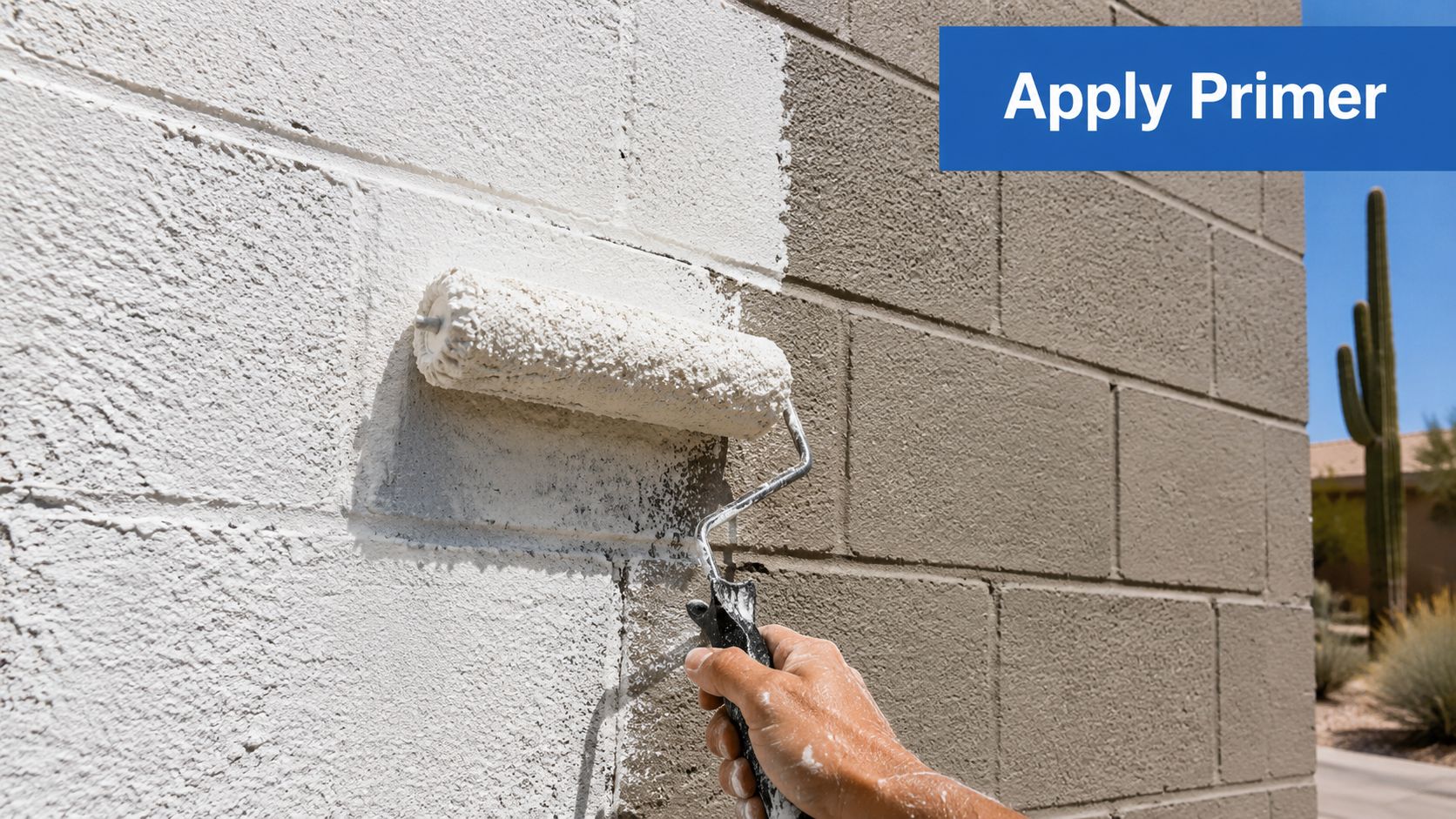
Begin with the primer. On dry, porous block, use a compatible masonry primer or block filler that the finish manufacturer approves. On a damp-prone wall, choose a system that preserves vapor movement. If the wall is actively wet, stop. Primer isn't a drainage repair.
Apply for texture, not just appearance
Use a thick-nap roller to push material into pits, joints, and irregular faces. A brush helps cut in corners and work coating into recessed areas. Spraying can improve production speed on larger commercial walls, but spray application should generally be followed by back-rolling so the coating reaches the textured surface.
Avoid flooding the wall with one heavy coat. Two controlled coats usually produce more even coverage while reducing the chance of creating an unnecessarily thick, moisture-restrictive film. Follow the product's recoat instructions rather than relying on touch alone.
This soft washing resource can help owners distinguish gentler exterior cleaning methods from aggressive pressure washing when nearby finishes or delicate surfaces need protection.
A representative acrylic masonry product lists 150 to 200 square feet per gallon on cinder block, with a one to two hour touch-dry time and a two to three hour recoat window at 77°F and 50% relative humidity, according to its technical data sheet. Those conditions are controlled reference conditions, not a promise for a hot Phoenix wall.
Don't trust optimistic coverage figures
An older Benjamin Moore masonry coating sheet listed theoretical coverage of 400 to 475 square feet per gallon, while the same product line later showed 100 to 200 square feet per gallon for cinder block, according to the cinder block coverage reference above. The difference illustrates how strongly porosity affects actual material use.
Budget by the wall's texture and absorption, not by the most favorable number on a label. Keep the application area shaded where practical, avoid coating a wall that's hot enough to flash-dry the material, and stop if weather or moisture conditions undermine the cure.
Durability Expectations and Cost ROI for Commercial and Residential Properties
Property owners aren't really buying paint. They're buying a service interval, a predictable appearance, and fewer emergency repairs. The cheapest coating can become the most expensive choice if it fails over moisture, damages adjacent finishes, or forces a premature repaint.
For Phoenix residential properties in Paradise Valley, Gilbert, Chandler, Scottsdale, and Tempe, a dry wall with modest exposure may justify a quality acrylic system. It's easier to maintain and typically costs less upfront than specialty breathable mineral coatings. A commercial owner managing repeated elevations, tenant access, and appearance standards may value a more technically advanced system even when the initial material and labor cost is higher.
Compare ownership cost, not just purchase price
Acrylic systems generally make sense when the substrate is stable and maintenance access is straightforward. Elastomeric systems can justify their added expense where hairline cracking and weather exposure would otherwise create repeated touch-up work. High-permeability mineral finishes can be attractive for damp-prone masonry because their vapor openness reduces the risk of trapping moisture, but they require careful preparation and compatible application.
The financial calculation should include:
- Preparation labor: Cleaning, repairs, masking, and drying often determine whether the coating succeeds.
- Access costs: Commercial walls may require lifts, traffic control, or phased work.
- Recoat disruption: A failed finish interrupts tenants, customers, residents, and facility operations.
- Water-related repairs: Paint won't correct drainage, hydrostatic pressure, or leaks. Ignoring those defects can push moisture into interior finishes and building components.
- Routine cleaning: Dust, salt, and grime make exterior maintenance part of the coating's useful life.
A property manager should request product data, expected maintenance procedures, and a moisture diagnosis rather than accepting a generic “exterior paint” recommendation. The wall's exposure and condition matter more than a premium label.
Solar equipment adds another maintenance concern around many Arizona properties. Dust accumulation on photovoltaic panels can reduce efficiency by up to 29.76% compared with panels cleaned daily, and one review recommends cleaning every three weeks in desert conditions to help keep output stable, as reported in this solar panel soiling review. A separate review reports daily energy losses above 1% on dusty modules and monthly efficiency drops exceeding 80% in some regions, as summarized in this photovoltaic soiling analysis. Coordinate wall washing and solar cleaning carefully so the maintenance plan protects both the envelope and the equipment.
Decision Checklist for Choosing the Right Cinder Block Paint
Use this checklist before you buy a gallon or approve a commercial scope.
Diagnose the wall first
- Is the wall dry? If yes, continue to coating selection. If no, identify irrigation, roof runoff, plumbing leaks, grading, or seepage.
- Is efflorescence returning? If yes, don't cover it. Repeated salt deposits point to continuing moisture movement.
- Is the wall below grade? If yes, evaluate waterproofing, drainage, and hydrostatic pressure before selecting a finish.
- Are cracks hairline and stable? If yes, elastomeric may help bridge them. If cracks are widening or structural, obtain a proper masonry assessment.
- Is the block sound and stable? If yes, acrylic is often a practical choice. If the surface is damp-prone, investigate breathable mineral or silicate systems.
Match the system to the property
For a dry residential wall, specify a 100% acrylic masonry coating with documented masonry compatibility and useful permeability information. For a rough, exposed wall with limited hairline cracking, consider elastomeric, but confirm that its vapor performance suits the substrate.
For a wall that actively wicks moisture, prioritize a vapor-open mineral system or another coating supported by technical permeability data. Do not select based on thickness alone. A waterproofing primer may support the repair plan, but it won't replace drainage correction or exterior water management.
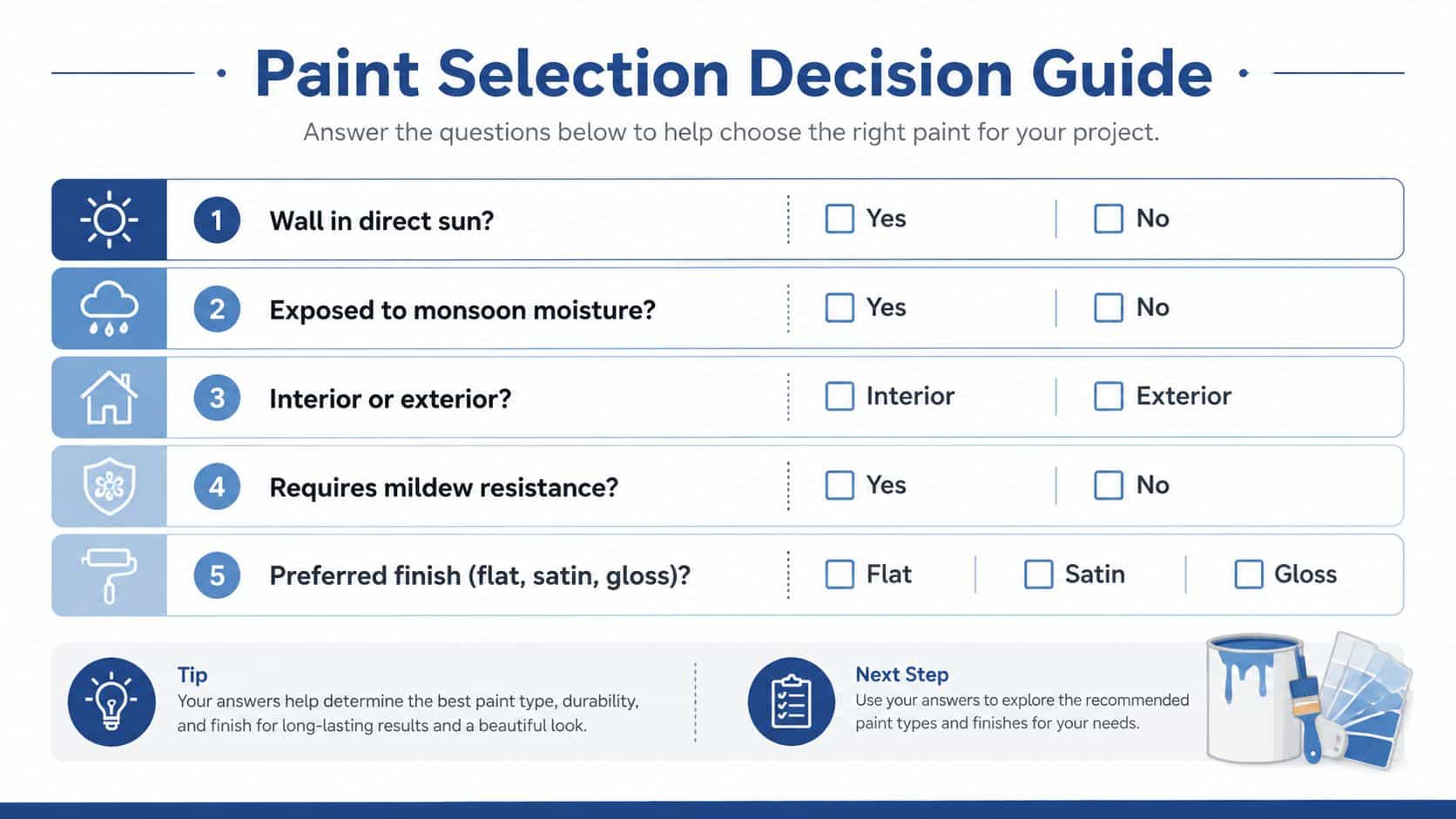
The best paint depends less on the brand than on whether the wall is dry, damp, or actively wicking moisture.
That's the decision most comparison articles miss. If the wall is wet from behind, painting first only hides the evidence and sets up another failure. Diagnose the moisture source, prepare the block properly, then choose the coating whose permeability, adhesion, UV performance, and crack response fit the actual conditions.
South Mountain Window Cleaning, LLC provides residential, commercial, and high-rise window washing in Phoenix, Scottsdale, Paradise Valley, Chandler, Tempe, and Gilbert, along with power washing for walkways, drive-thrus, and building exteriors that need careful preparation before masonry work. Visit South Mountain Window Cleaning, LLC to request a fast, free quote and coordinate exterior cleaning that leaves your cinder block and surrounding property ready for the next maintenance decision.