

Most homeowners pay about $900 for above-ground pool removal, and the typical national range runs from $300 to $5,000 depending on pool size and whether a deck is attached. The job often takes half a day to two days, and small pools can be done in just 2 to 6 hours.
That price range surprises a lot of Phoenix-area homeowners because above-ground pool removal is usually one of the more manageable demolition projects on a property, especially compared with in-ground pool removal, which is measured in the thousands to tens of thousands of dollars. It's still a real job, though, and the difference between a smooth removal and a messy one usually comes down to planning, drainage, disposal, and what happens to the yard after the frame is gone.
What to Expect When You Remove an Above Ground Pool
For most Arizona homeowners, above-ground pool removal lands in a workable price band. A standard job often comes in around $900 nationally, with published ranges commonly spanning $300 to $5,000 depending on size, access, and whether a deck has to come out too, and smaller pools often fall in the $300 to $1,200 range while larger or deck-connected projects can reach $5,000 or more. Those numbers are not abstract. Once a pool turns from a simple round frame into an oval setup with extra supports and a wood platform around it, the labor changes fast. See the national cost benchmark in Angi's above-ground pool removal guide.
What drives the price
The biggest price drivers are pool size, shape, attached decking, and site access. A small round pool is straightforward to drain, cut apart, and haul away. An oval pool or one tucked behind mature landscaping takes longer, and once a deck is attached, the job becomes a demolition project instead of a simple teardown.
Practical rule: if the pool came with a deck, expect the job to feel twice as complicated even when the frame itself isn't large.
In the Phoenix market, that matters because tight side yards, block walls, and mature citrus trees can slow equipment access. When access is poor, crews spend more time hand-carrying debris, which adds labor even if the pool itself is modest.
How fast the work usually goes
Timelines are one reason homeowners are often surprised by this project. Many removals finish in half a day to 1 to 2 days, and small pools can be wrapped up in 2 to 6 hours depending on the setup. A basic above-ground pool without a deck can also be priced around $500 to $1,200, while larger oval or deck-connected work can rise to $1,400 to $2,000 or more. One separate guide notes that removal prices have moved up about 5% to 8% since 2023, which matches the way labor and disposal costs have gone up in a lot of trades. For another contractor-style cost view, see Steve's Services pool demolition cost guide.
The comparison that really resets expectations is the gap between above-ground and in-ground work. A standard above-ground removal is usually far cheaper than concrete pool demolition, which commonly runs in the $8,000 to $20,000+ range. If you are deciding whether to keep or remove an aging backyard pool, that difference often drives the decision.
| Above-Ground Pool Removal Cost by Size | Estimated Cost Range |
|---|---|
| Small pool, up to about 12 feet | $300 to $1,200 |
| Medium pool | $500 to $2,000 |
| Large pool | $1,000 to $3,500 |
| Pool with deck | $5,000 or more |
Planning and Preparing for Pool Removal in Arizona
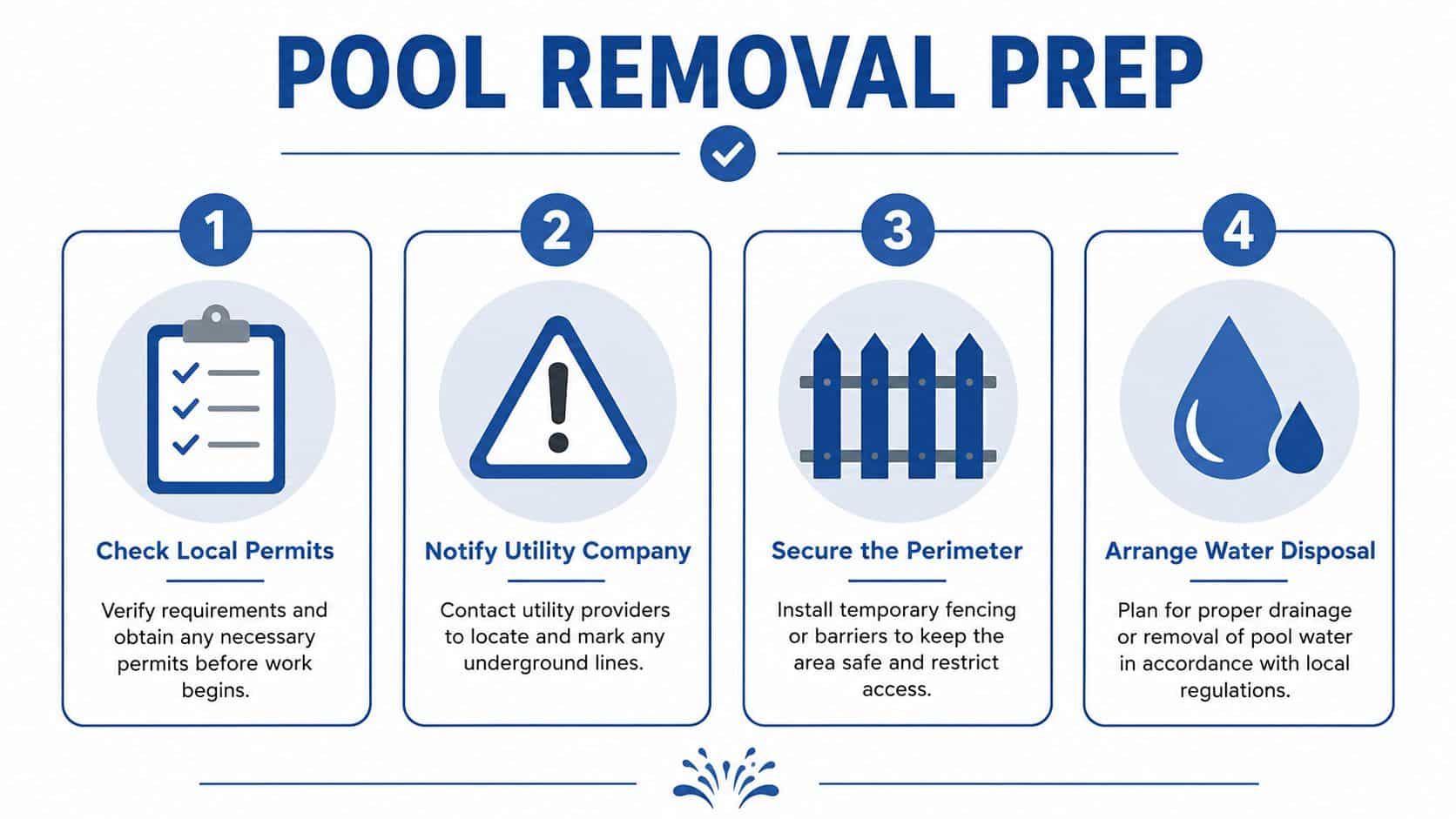
The jobs that go smoothly in Phoenix usually start with paperwork, utility marking, and a clear drainage plan. The jobs that turn into headaches usually skip one of those steps. In Arizona, you don't want to start cutting rails before you know where the underground lines are, what your city expects, and where the water is going to end up.
The first calls to make
A utility locate should be scheduled 1 week before work begins. That's the standard practical window in the removal guides, and it gives the mark-out crews time to identify gas, electric, and irrigation lines before anyone starts digging or pulling base material. A smart homeowner also checks with the local city or county about whether a demolition or grading permit is required, because Phoenix-area rules can vary by municipality and by the scope of work.
Water discharge is the other issue that gets ignored too often. One neutral guide warns to check local discharge regulations before pumping pool water off-site, and that's not a small detail in the Valley. You can't assume a storm drain or street curb is acceptable, so you need a plan that fits your property and local rules.
How to prepare the site
Clear furniture, pots, hose reels, and anything breakable away from the pool. In Arizona yards, that includes protecting desert landscaping that sits close to the pool edge, because one bad swing with a rail section can crush agave, cactus, or gravel borders in seconds.
Don't assume the drain phase is a quick splash-and-go task. If the hose isn't secured, runoff gets away from you fast and the yard pays for it.
The best prep checklist is simple. Make the locate call, confirm the permit question with your city, decide where the water will be discharged, and give yourself a clean work zone. If you're already thinking about the rest of the property, a related cleanup plan like construction site preparation helps set expectations for debris control and access around the home.
Tools, Materials, and the Step-by-Step Removal Process
A clean above-ground pool removal starts with the right pump and ends with the right disposal pile. The tools are basic, but the order matters. Get that order wrong and you'll fight the liner, overload the pump, or end up with water where you didn't want it.
Drain first, but not all the way
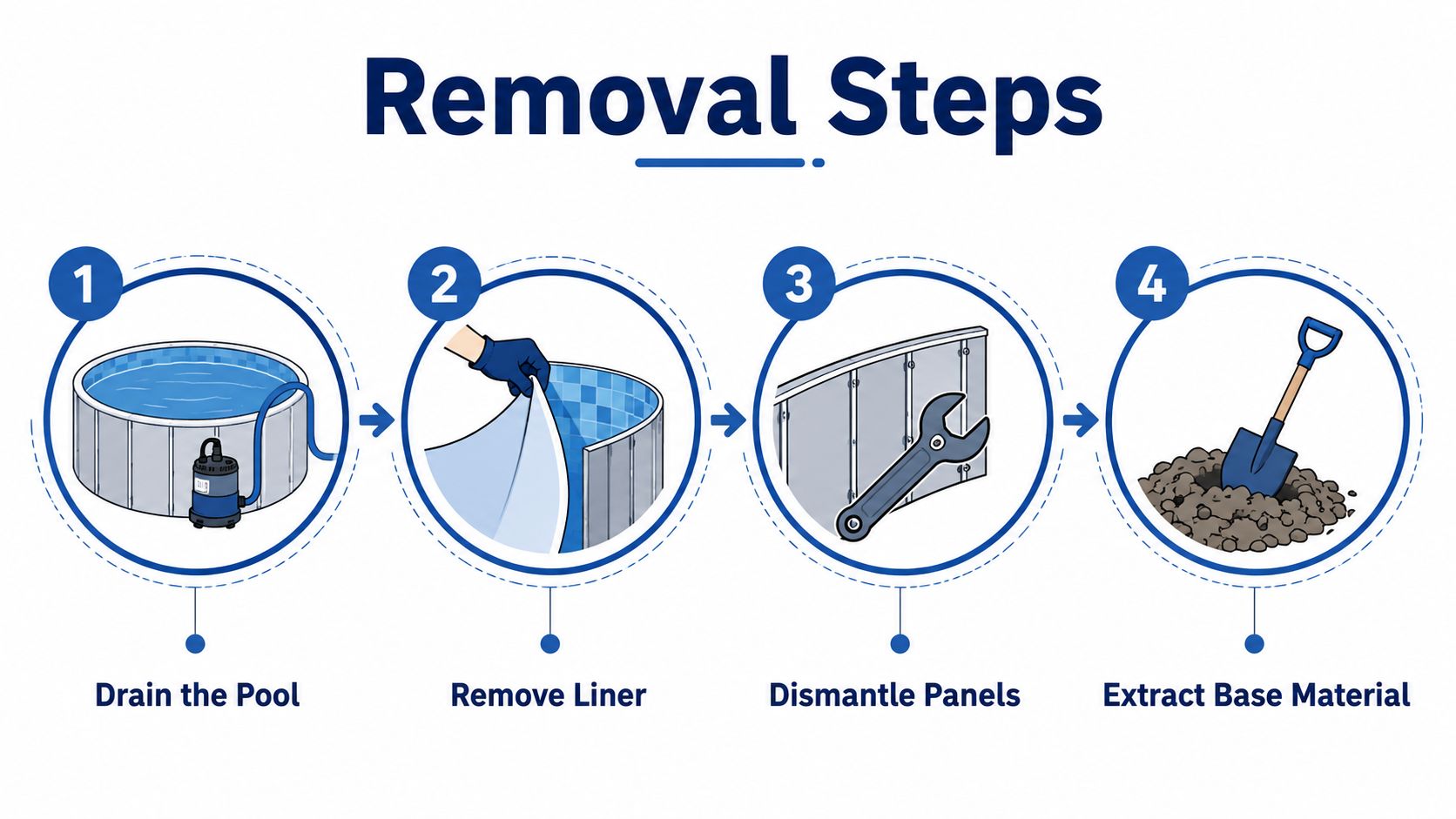
Use a submersible or sump pump at the lowest point of the pool and send the discharge to an approved drainage path away from the foundation. The drain phase can take several hours for a typical residential pool, and some very large DIY jobs can take up to three days if siphoning is used instead of pumping. The biggest mistake I see is rushing the drain and blasting water out too fast, which can flood part of the yard or create runoff issues.
Leave roughly 6 to 12 inches of water in the liner until the structure is partially disassembled. That water helps keep the liner supported while you pull top hardware and start breaking down the frame. If you dump the liner completely empty too early, it flops around and makes the rest of the job harder.
Pull it apart in reverse order
Once the water level is low enough, remove the cover, then the top rail, then the wall panels and frame sections. A typical residential pool can be done in a staged sequence, which is why many removal guides put the job in the 2 to 3 hour, 3 to 4 hour, 4 to 5 hour, or 4 to 6 hour range depending on whether it's a small round, medium round, large round, or oval pool. A deck changes that completely because the deck becomes separate demolition work.
A useful comparison for homeowners is site clearing cost factors Newcastle. The geography is different, but the trade-off is the same, once site access, hauling, and debris separation become part of the job, the labor picture changes fast.
The basic tool list is straightforward.
- Pump and hose: Move water where it's allowed to go, and keep the hose secured.
- Socket set and screwdriver: Remove rails, brackets, and fasteners without bending reusable parts.
- Utility knife: Cut the liner into manageable sections.
- Work gloves and pliers: Protect hands from sharp edges and stubborn clips.
A practical operator keeps metal stacked together, liner pieces bundled, and base material separated early. If you're moving straight into a full exterior cleanup afterward, the same disciplined approach matters on related work like pressure washing a house, where sequence and runoff control keep the property cleaner and safer.
Where Your Pool Materials Go After Removal
Homeowners often focus on the teardown and overlook disposal logistics, which can add hidden time and cost to the project. The frame does not disappear on its own, the liner does not recycle itself, and the base under the pool usually becomes the most labor-heavy part of the removal. Once you know where each piece goes, the contractor's quote makes a lot more sense.
Metal, vinyl, and base material don't travel the same path
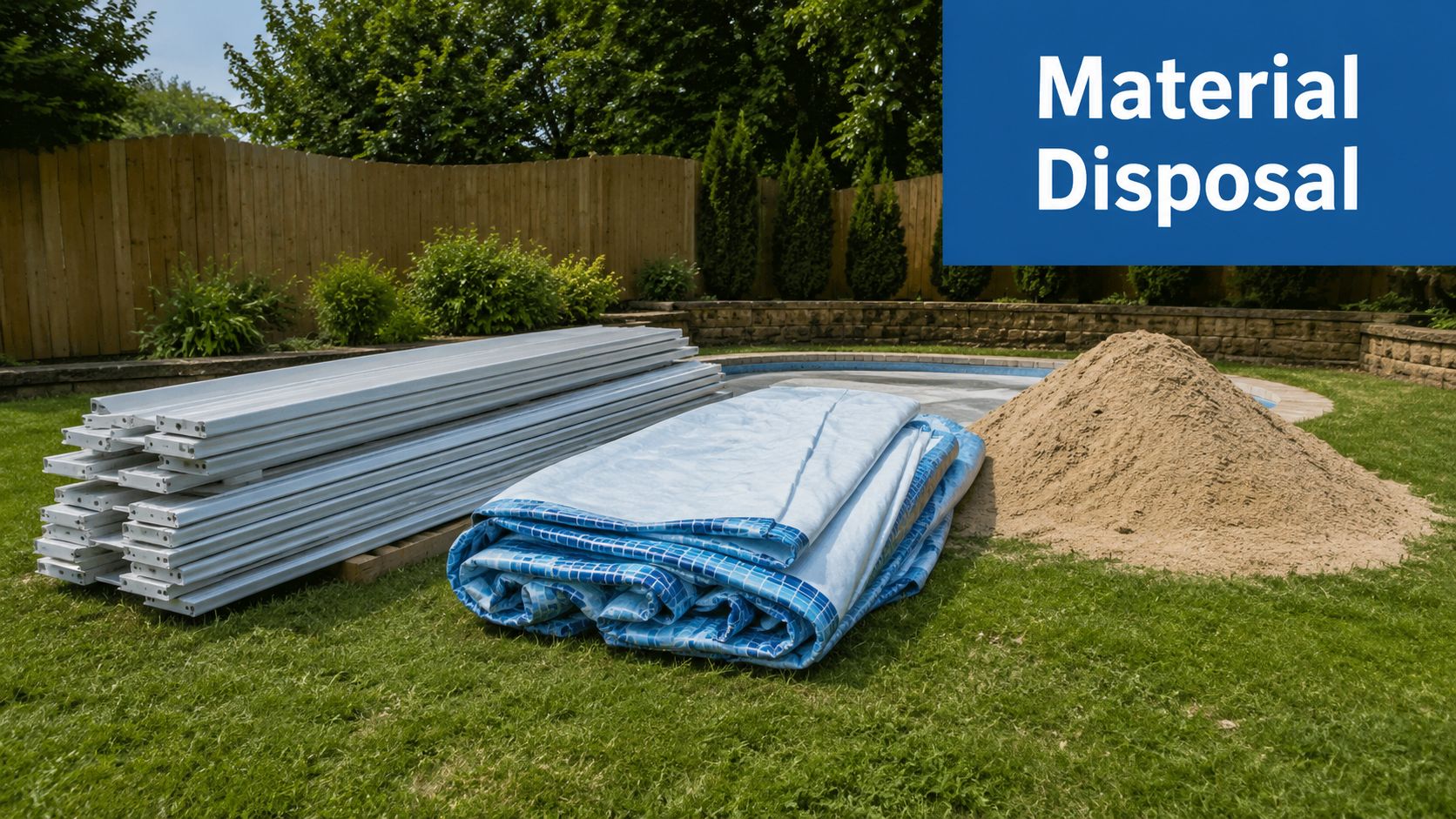
The metal frame is usually the easiest part to sort because steel and aluminum are commonly recyclable, and scrap yards often accept them if they're separated cleanly. The vinyl liner is a different story. In most cases it ends up in the landfill, even though some facilities may accept clean vinyl for recycling.
The sand or gravel base is where a simple-looking job starts to eat time. It has to be moved, loaded, and hauled, and if the pool sat on a sand bed, that material needs to be handled carefully so the yard is not left with a soft, uneven patch.
Practical rule: if you separate materials cleanly before the trailer shows up, you usually save time, money, and at least one extra headache.
What to expect from decks and wood parts
A wooden deck can sometimes be repurposed or sent to a wood recycling stream, but pressure-treated lumber needs careful handling. If the deck is attached, the disposal plan gets more complicated because you are managing mixed materials instead of a single stack of metal sections. That is why removals with decks cost more and take longer.
For homeowners who are planning a backyard redesign after the pool comes out, the next question is usually turf, garden beds, or a patio. A useful local reference for how that new surface sits over the old pool area is the Modern Yard Landscapes pool turf guide.
If you care about the house and the rest of the property looking finished, the same attention to debris separation matters on cleanup jobs like construction cleanup. The details are different, but the lesson is the same, clean material handling keeps the site manageable and the final result cleaner.
Site Restoration and Landscaping After Pool Removal

Removing the frame is only half the job. What stays behind is a footprint that can settle, hold water, or look fine for a few weeks and then turn into a problem after the first strong rain. In Phoenix, heat and monsoon runoff both punish sloppy grading, so the restore work matters as much as the teardown.
Why the ground needs proper rebuild work
Once the pool comes out, you're left with a low spot filled with sand, gravel, or compacted dirt. The proper fix is to add clean fill dirt, compact it in layers, grade it to match the surrounding yard, and then seed or sod quickly to help control erosion. If the compaction step gets skipped, the ground settles later and the backyard starts to dip where the pool used to sit.
That settling can do more than look bad. It can change drainage toward the foundation, create soft spots for future planting, and leave the yard with a patch that feels unstable underfoot. If you're planning a patio or a flat lawn, the grading work has to be right from the start.
What Phoenix weather changes
Arizona sun dries exposed soil quickly, and a monsoon can move it just as fast. Restoration in this market has to function as a drainage job, not a cosmetic one. The soil has to shed water cleanly and stay compact enough that the yard doesn't sink around the former pool footprint.
A lot of homeowners also use the old pool area for something new, like turf or a sitting area. That decision needs to be made before the surface goes in, because the base prep and drainage have to support the finish you choose. For readers comparing surface options, the Modern Yard Landscapes pool turf guide shows how the area can be finished once the old structure is gone.
A related cleanup detail shows up in swimming pool deck cleaning, because even after the pool is removed, the surrounding hardscape still shapes how finished the yard looks and how usable it feels. A clean teardown with a poor finish job still looks incomplete.
When to Hire a Professional for Pool Removal
A confident homeowner can handle some above-ground pool removals. A steel round pool with good access, no deck, and no buried surprises is a reasonable DIY project if you have the tools and a full weekend. The trouble starts when the pool is attached to a deck, tucked into a tight side yard, or sitting over utility lines you cannot verify.
A professional starts making sense once the job stops being straightforward. A crew that does this work regularly already knows how to drain without flooding the yard, how to separate materials quickly, and how to leave the site ready for restoration instead of leaving a pile of parts behind. If you are paying for the labor, drainage and cleanup should be handled correctly too.
When DIY makes sense
DIY can work when the pool is small, the frame is simple, and you are comfortable using hand tools. If you can reach the whole structure, dispose of the liner properly, and handle the base material without damaging the yard, you can save money by doing the labor yourself. You still need to follow the utility and drainage steps, because savings disappear fast when a bad discharge or broken line creates a bigger repair.
When to call a contractor
Hire a pro when any of these show up.
- Attached deck or platform: The removal turns into mixed demolition work, rather than a simple pool teardown.
- Tight access: If equipment cannot reach the backyard easily, labor goes up.
- Unknown utilities: Do not guess under a pool footprint.
- No time or tools: A rushed DIY job usually leaves a worse site.
A good contractor gives a line-item estimate that breaks out labor, disposal, and any added work. That is the same kind of discipline homeowners expect from professional demolition contractors in PA, because detailed scope and disposal planning are what keep the final invoice from turning into a surprise.
If a company cannot explain where the water goes, where the debris goes, and what happens to the ground afterward, keep looking.
For Phoenix homeowners, the vetting process should be direct. Ask about permits, drainage, insurance, and site restoration. Then ask what happens if they find a deck, hidden base material, or a section that does not come apart the way they expected. The right crew answers those questions plainly, because that is how you protect both the yard and your budget.
If you are getting your property back in shape after above-ground pool removal, South Mountain Window Cleaning, LLC can help you finish the exterior the right way with residential, commercial, high rise window washing, power washing, and other curb-appeal services across the Valley. Visit South Mountain Window Cleaning, LLC to request a fast, free quote and keep the rest of your property looking as clean and finished as the new backyard.