
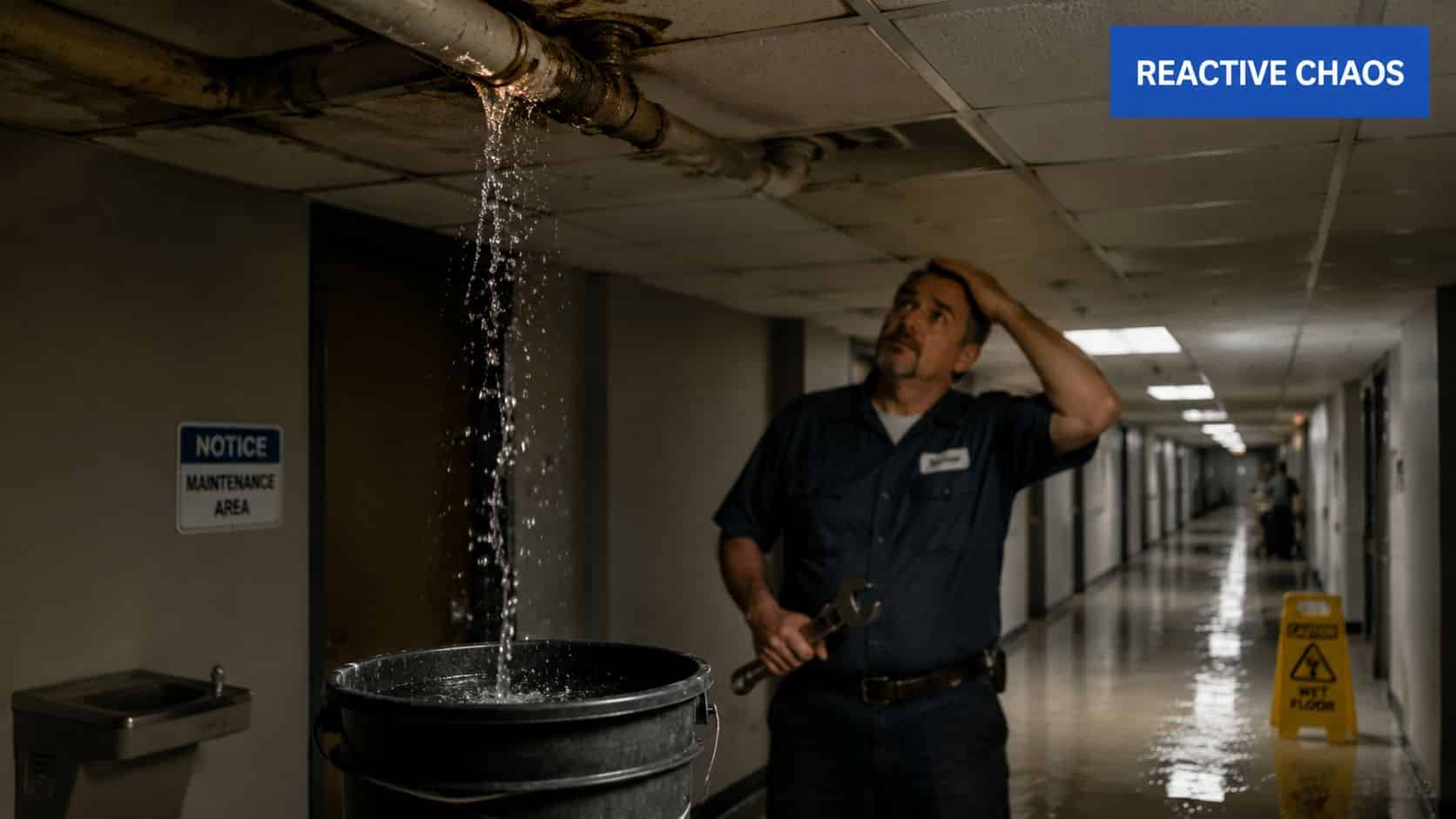
You're probably dealing with the same pattern most new property managers inherit. A tenant reports a leak. An HVAC complaint lands an hour later. Then the owner asks why the exterior looks tired even though janitorial costs keep rising. By noon, you're not managing a building. You're triaging one.
That's what reactive maintenance does. It hides risk until it turns into urgency.
A strong commercial property maintenance program changes the job completely. It gives you a schedule, a record, and a defensible reason for every dollar spent. It also forces you to treat the building exterior as part of operations, not as an afterthought. In Arizona, that matters. Dust, hard water, heat, monsoon runoff, and intense sun punish glass, seals, concrete, drainage paths, and solar panels long before a major failure gets anyone's attention.
From Reactive Chaos to Proactive Control
Most reactive buildings look busy from the outside. Work orders move. Vendors come and go. Tenants see activity. But the work is happening in the wrong order. The team responds after comfort drops, after water gets in, or after curb appeal slips enough that someone important notices.
A proactive program starts with a different assumption. The building will always tell you what it needs if you inspect it on purpose, document what you see, and assign the work before it becomes urgent.
What control actually looks like
Control doesn't mean zero surprises. It means you know which systems matter most, which tasks repeat, who owns them, and what “done” looks like.
That usually includes:
- Core systems on fixed intervals. HVAC, electrical, plumbing, fire life safety, access control, roofs, and drainage need recurring checks.
- Exterior envelope checks with real detail. Glass, frames, façade sealants, drains, tracks, walkways, and dumpster areas need attention because they affect water intrusion, appearance, and safety.
- Vendor scopes that match risk. In-house staff can handle some routine tasks. They shouldn't be improvising high-rise glass work or specialized exterior cleaning.
- Records that hold up under scrutiny. If a tenant complaint becomes an insurance issue, memory won't help you. Documentation will.
Practical rule: If a task only gets attention when someone complains, it belongs on a preventive schedule.
Why the exterior deserves a permanent place in the plan
A lot of maintenance plans are good at mechanical systems and weak on visible surfaces. That's a mistake. The exterior is where tenants, customers, and ownership form judgments first. It's also where neglected grime, clogged drainage paths, and failed seals start causing more expensive problems.
For Arizona properties, exterior upkeep is operational work. Clean storefront glass supports presentation. Clean walkways and entries reduce slip and appearance issues. Washed façades and window frames make inspections easier because crews can see deterioration, staining, and seal failure early.
Commercial property maintenance works best when planning, execution, budgeting, and verification all connect. If one piece is missing, the building drifts back into firefighting.
Building Your Proactive Maintenance Blueprint
A good maintenance plan doesn't begin with a vendor list. It begins with an asset map. If you don't know what you own, where it is, what condition it's in, and what rules govern it, your schedule will always be incomplete.
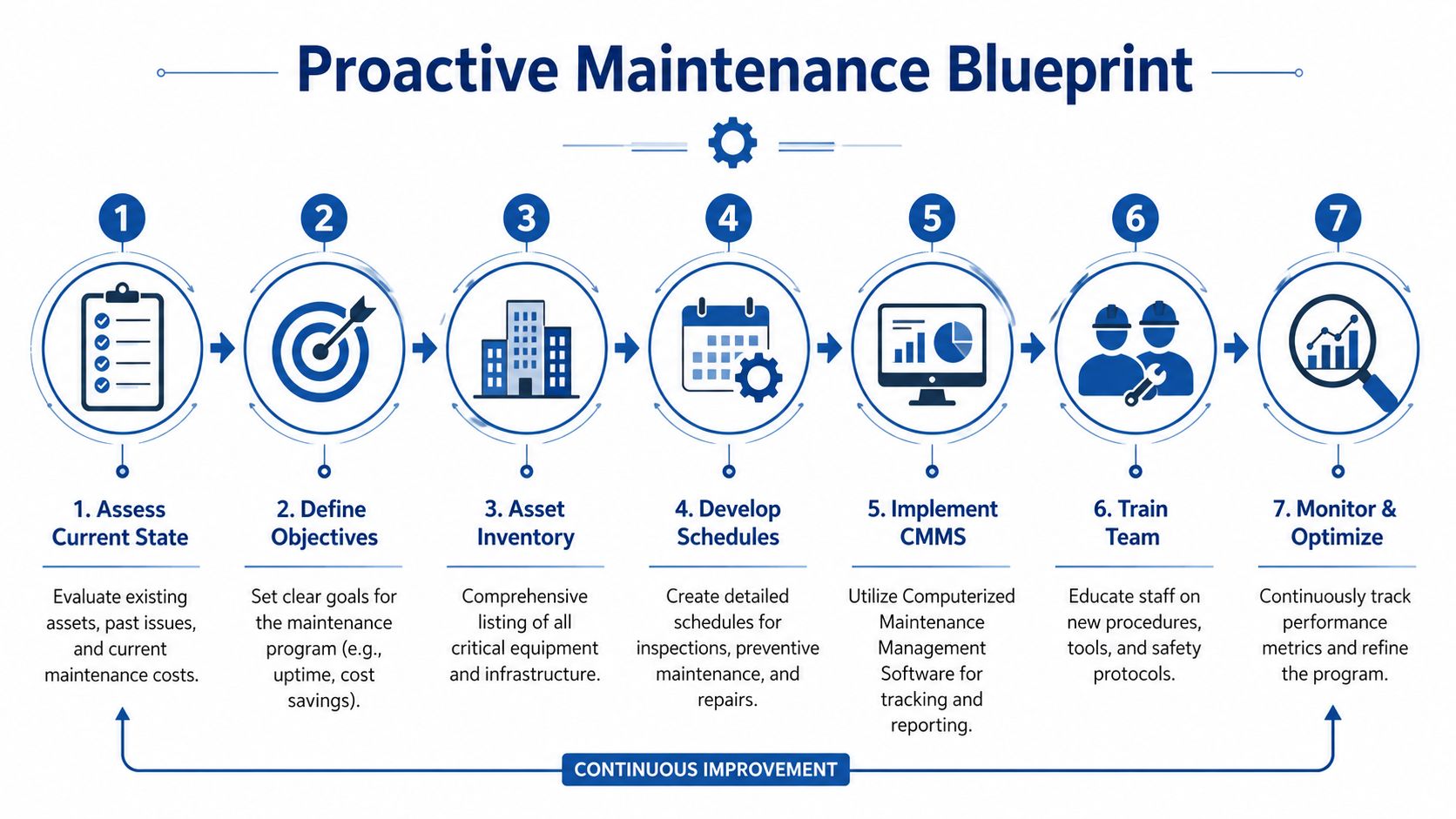
A robust commercial property maintenance program begins with mapping all building systems and their task requirements, then translating these into recurring work orders in a computerized maintenance management system. That approach can reduce recurrent failures by 30 to 40%, according to Visitt's commercial property maintenance overview.
Start with a complete asset inventory
Walk the property and build a list that's useful, not decorative. Include the obvious systems, then go further.
Your inventory should cover:
- Mechanical assets like rooftop units, split systems, exhaust fans, pumps, cooling components, and thermostatic controls
- Life safety items including alarm panels, extinguishers, emergency lighting, elevators, and access systems
- Envelope elements such as roofs, drains, windows, frames, sealants, entry doors, and façade transitions
- Site assets like irrigation controls, parking lot lighting, signage, gates, loading zones, sidewalks, and drainage points
For each item, log the location, manufacturer, model, service interval, warranty status, and last known service date. New managers often skip this because it feels tedious. It isn't. This is the foundation that keeps tasks from living in someone's memory.
Turn assets into recurring work
Once the inventory is done, convert it into calendar-based and condition-based tasks. A system you trust should generate work automatically, assign it, and keep a record of completion with notes and photos.
Examples of recurring structure look like this:
| Asset | Task type | Frequency |
|---|---|---|
| HVAC equipment | inspection and service | quarterly |
| Elevator systems | operational test | monthly |
| Roof drains and gutters | debris clearing and inspection | seasonal |
| Exterior glass and surrounding frames | cleaning and visual condition review | scheduled by exposure and use |
| Fire life safety items | compliance checks | per code and manufacturer interval |
If you're setting this up for the first time, VerticalRent's CMMS software guide is a useful plain-English resource for understanding how a CMMS organizes preventive work, records, and reporting.
Build compliance into the schedule
The safest maintenance calendar is the one that already reflects the rules. Manufacturer intervals matter, but they aren't the whole picture. You also need to align your schedule with fire-safety checks, ADA accessibility needs, building code obligations, and environmental requirements where applicable.
A schedule isn't finished when every asset has a date. It's finished when every required date has an owner.
That's where many plans fail. Teams create a spreadsheet, then still coordinate by email and memory. A proper workflow needs due dates, assigned responsibility, escalation, and proof of completion.
For a practical field-level reference, a commercial building maintenance checklist can help you spot gaps between what the property needs and what your current schedule covers.
Train around the plan, not around emergencies
A maintenance blueprint only works if the people using it know the standards. Define what a completed inspection includes. Require photos for exterior findings. Decide when a minor issue becomes a work order. Set expectations for vendor response, tenant communication, and closeout notes.
That discipline is what moves a building from constant interruption to controlled operations.
Mastering Seasonal Maintenance Schedules for Arizona
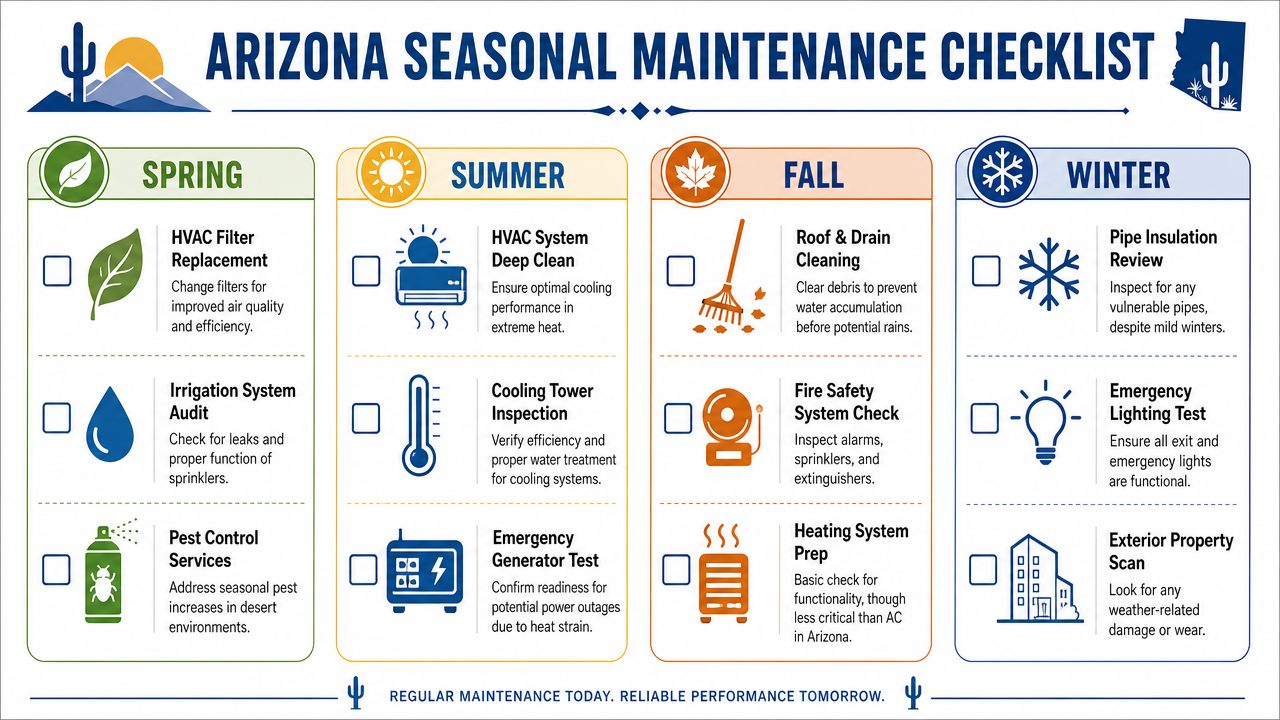
Arizona punishes generic schedules. If you use the same maintenance calendar you'd use in a mild climate, you'll miss the issues that drive wear here. Heat stresses cooling systems. Dust coats glass, tracks, and panels. Monsoon season exposes drainage weaknesses fast. Sun attacks sealants and finishes long before they look dramatic from the ground.
One of the biggest blind spots is the building exterior. Exterior leaks and appearance issues often start with neglected details that don't look urgent. Yet verified data notes that 40% of commercial building leaks originate from neglected façade and window sealing issues, and water infiltration can cost 2 to 3x more than proactive cleaning, based on the cited source in this industry discussion of façade and perimeter maintenance.
Spring and early summer priorities
Spring is when you prepare the property for sustained heat and visibility. Don't just focus on air conditioning. Use the season to reset the exterior so you can see what needs repair.
Focus on:
- HVAC readiness. Replace filters, inspect performance, and resolve airflow issues before peak demand.
- Glass and frame cleaning. Dust and residue hide failed sealants, drainage blockage, and frame wear.
- Walkway and entry washing. This improves appearance and removes buildup that can create slip risks when summer storms arrive.
- Solar panel cleaning. Dirty panels underperform, and cleaning should be done with the right tools and water quality.
The quality of solar cleaning matters. Verified data states that commercial solar panel cleaning should use specialized soft-brush tools and pure-water systems to avoid micro-abrasions that reduce photovoltaic efficiency by 15 to 20% annually, with post-cleaning verification of output metrics recommended, according to this solar panel cleaning service reference.
Monsoon and late summer watchpoints
Arizona managers know the damage usually isn't caused by one storm. It's caused by a property entering storm season with clogged drains, dirty tracks, compromised sealant, and neglected low points.
Use a tighter inspection rhythm for:
- Roof drainage and scuppers
- Window tracks and drainage paths
- Sealants at glass lines and façade joints
- Site grading at entries and loading areas
- Dumpster pads and service corridors that collect runoff and debris
If you manage in the Valley, monsoon timing matters less than readiness. A local reminder on cleaning windows during monsoon season in Phoenix is useful because it reframes window cleaning as part of visibility, inspection, and property presentation, not just aesthetics.
Clean exteriors make defect detection easier. Dirt hides failure.
Fall and winter in a desert market
Arizona winters are mild compared with colder regions, but that doesn't mean the season is passive. Fall and winter are when disciplined managers catch the wear left behind by summer exposure.
Use that period to review:
| Season window | High-value task | Why it matters |
|---|---|---|
| Fall | roof and drain cleanup | preps for rainfall and exposes damage |
| Fall | fire and life safety review | closes out deferred corrective work |
| Winter | exterior envelope scan | reveals cracks, seal failure, and staining patterns |
| Winter | emergency lighting and access checks | supports safety and audit readiness |
This is also the right time to schedule deeper exterior cleaning for façades, storefronts, and common approach areas. In retail, office, hospitality, and mixed-use environments, clean and well-kept exteriors help tenants feel the property is being managed, not merely occupied.
Selecting and Contracting the Right Maintenance Vendors
The cheapest vendor is often the most expensive contract on your file. You won't feel it on day one. You'll feel it when a worker gets hurt, when the glass looks bad after service, when the technician damages coated surfaces, or when a claim reveals the contractor's paperwork was thin and your standards were looser than they should've been.

For specialized exterior work, the right question isn't “Who can do this?” It's “Who can do this safely, repeatedly, and without creating a new problem?”
What to verify before award
For window cleaning and exterior services, insurance is not a footnote. Verified data states that commercial property maintenance for window cleaning and exterior services typically requires a minimum insurance policy of $1 million to $2 million to satisfy liability and workers' compensation obligations, and many property managers require that threshold in vendor contracts, as noted in this video reference on vendor insurance expectations.
Check these items before you sign:
- Insurance limits. Verify current certificates and match them to contract requirements.
- Scope clarity. Spell out whether the job includes frames, tracks, hard-water treatment, screen care, flatwork, or post-service verification.
- Safety documentation. High-risk work should come with training records, procedures, and compliance logs.
- Scheduling system. A vendor who can't schedule consistently will create tenant-facing problems.
- Property-specific method. Different surfaces require different tools. Pure-water cleaning, soft-brush methods, and pressure control matter.
Why exterior cleaning shouldn't be treated like generic labor
A lot of general maintenance teams can wipe interior glass, rinse a walkway, or spot clean an entry. That doesn't make them the right choice for high-rise work, expansive storefront systems, solar arrays, or hard-water-prone façades in the Phoenix market.
Verified data notes that high-rise window cleaning operations in major U.S. markets require fall protection certification, pure-water systems for sun-intense glass, equipment rated for heights exceeding 100 feet, and OSHA-aligned safety training with documented compliance logs, according to this reference discussing high-rise cleaning expectations.
That's the dividing line. Specialized vendors bring process, equipment, and risk controls. Generic labor brings a ladder and good intentions.
Here's a useful benchmark for response discipline. Verified data also states that commercial property managers in Arizona and the Southwest often require window cleaning vendors to provide computerized scheduling systems and quote turnaround within 24 hours, because scheduling delays affect presentation and tenant-facing operations, as described in this service scheduling reference.
After you establish your vendor standards, compare them against how emergency trades handle urgency in other building systems. The logic is similar in handling strata plumbing emergencies. You want clear scope, fast communication, proper documentation, and no guessing when conditions change on site.
A quick visual on what professional execution should look like:
Use a simple vendor scorecard
Don't rely on memory after site visits. Score vendors the same way every time.
| Criteria | What good looks like |
|---|---|
| Risk control | current insurance, written safety process, trained technicians |
| Service quality | clear scope, correct methods, consistent finish quality |
| Reliability | documented scheduling, responsive updates, closed-loop communication |
| Reporting | photos, notes, exceptions flagged quickly |
| Fit for property | understands high-rise, retail, office, hospitality, or mixed-use needs |
If you're vetting local options, a roundup of commercial property maintenance companies near me can help you compare service categories and identify which tasks belong with specialists rather than with your general facility roster.
Budgeting and Measuring Your Program's Success
Owners don't fund maintenance because they love maintenance. They fund it when you show that the program protects revenue, lowers disruption, and reduces avoidable risk. That starts with a budget tied to the property's operating profile.
According to the Building Owners and Managers Association, average annual commercial property maintenance spend ranges from $2.00 to $2.50 per square foot, with office buildings averaging about $2.15 per square foot, as summarized in this BOMA-based maintenance benchmark article.
That benchmark is useful, but don't treat it like a target you must hit exactly. Use it as a reasonableness check. Your actual number will move based on property type, age, location, use intensity, and how much deferred work you inherited.
Build the budget in layers
A defensible budget separates planned work from unstable work. If you mix everything into one line item, you won't know whether the program is improving or merely absorbing crises.
Use three buckets:
- Preventive work. Scheduled inspections, system servicing, exterior cleaning, recurring vendor contracts, compliance checks.
- Corrective work. Known repairs identified during inspections but not yet urgent.
- Reactive reserve. Leaks, failures, storm damage, and tenant-driven surprises.
The practical win is predictability. Planned exterior cleaning, for example, is easier to justify than emergency façade cleanup before an ownership tour or major tenant visit.
Measure what matters to ownership
You don't need a dozen KPIs. You need a few metrics that tell a clean story.
Track items like:
- Preventive versus reactive work mix
- Work order completion by due date
- Open repeat issues by system
- Tenant complaints tied to building condition
- Vendor response and closeout quality
- Visible condition scores for lobbies, entries, glass, and exterior approaches
If your reports only show spend, ownership will see maintenance as overhead. If your reports show avoided disruption and stable building condition, ownership will see management.
One practical way to support that reporting is to standardize inspections. A detailed commercial property inspection checklist helps you turn observations into comparable records across buildings and service cycles.
Don't ignore the labor side of maintenance
The sector is operationally heavy. Verified data notes that 39% of property managers report spending more than 20 hours per month handling maintenance requests, and U.S. property maintenance costs rose by about 12% in 2024, while insurance costs surged 26% during the same period, according to this commercial property management market report summary.
That matters because time has a cost even when it doesn't appear on the invoice. A better maintenance program should reduce coordination drag, cut repeat issues, and make vendor oversight easier. If it doesn't, the schedule exists on paper but not in practice.
The best budgets make room for specialized work that protects the property's appearance and envelope, not just the machinery behind the walls.
Integrating Safety Insurance and Compliance
A maintenance plan becomes valuable when it can stand up to scrutiny from an owner, an insurer, a regulator, or an attorney. That's where written standards, documentation, and contractor controls stop being administrative chores and start acting like protection.
Properties that follow a proactive, written property maintenance plan with regular inspections, timely repairs, and detailed documentation are least likely to face negligence claims, and failing to maintain that plan can constitute a breach of the reasonable standard of care, according to Expert Institute's discussion of commercial property standard of care.
Documentation is part of the work
If your team completes a task but leaves no record, you've only solved half the problem. Keep inspection logs, dated photos, vendor reports, corrective action notes, and proof that issues were assigned and closed.
That matters most in areas where risk accumulates subtly:
- Exterior slip and trip zones
- Water intrusion around windows and façades
- High-rise access and suspended work
- Accessibility barriers
- Fire life safety checks and service records
Match compliance to the task
Some work can be handled by your internal team. Some work needs licensed trades. Some work needs specialist contractors with training, insurance, and equipment specific to the hazard.
A solid commercial property maintenance program accounts for:
- OSHA-related safety expectations for hazardous work
- ADA accessibility issues that affect common areas and entries
- Building code obligations tied to systems and occupancy
- Vendor insurance and indemnification review
- Contract language that requires documentation, not just completion
For owners who need to think beyond the maintenance file and into overall risk transfer, a practical reference on commercial property coverage in Naples is useful because it shows how building condition, documentation, and coverage planning connect.
The safest property isn't the one with the fewest issues. It's the one that identifies issues early, acts on them quickly, and can prove it did both.
When you run maintenance that way, safety, insurance, compliance, curb appeal, and asset protection stop competing with each other. They become the same job.
If you need a specialized exterior cleaning partner in Arizona, South Mountain Window Cleaning, LLC serves commercial, residential, and high-rise properties in Phoenix, Scottsdale, Paradise Valley, Chandler, Tempe, Gilbert, and across the Valley. For property managers who need dependable window washing, power washing, solar panel cleaning, and high-rise service backed by professional scheduling and strong insurance, they're a smart vendor to keep on your bid list.