
A lot of homeowners make the same move when a sink starts smelling off or a shower drain turns slow. They grab bleach, pour some down the drain, and hope the problem disappears before it turns into a plumbing call.
In Phoenix, that shortcut shows up in all kinds of properties. Older homes in Tempe, luxury homes in Paradise Valley, restaurants in Scottsdale, and retail buildings across Chandler all run into the same basic issue. A drain smells bad, so bleach feels like the quickest answer. From a property maintenance standpoint, though, quick answers are where expensive mistakes usually start.
Heat, dust, hard water, and heavy system use already put enough stress on Arizona properties. Drain care has to fit into the bigger picture of protecting finishes, plumbing, indoor air, and liability. That matters whether you're maintaining a family home or a commercial building.
That Slow or Smelly Drain Is Tempting You
It usually starts small. The kitchen sink empties a little slower than normal. The guest bathroom has a sour smell in the afternoon. The laundry room drain gives off a whiff that makes you think something's dirty, even after you've cleaned the room.
The bottle under the sink looks like an easy fix.
From a maintenance perspective, that's where people get into trouble. Bleach can seem like a cleaning solution for everything because it smells strong and feels aggressive. But strong smell doesn't mean it's solving the right problem. In many homes, that odor is coming from buildup, residue, a dry trap, or a developing drainage issue. Bleach may knock down some bacteria for a moment, but it doesn't automatically correct what's causing the smell.
What pros notice right away
When I look at a property issue, I try to separate sanitizing from fixing. Those are not the same task.
- A smell problem might come from biofilm, food residue, soap scum, or sewer gas.
- A slow drain usually points to physical buildup or blockage.
- A recurring issue often means the problem sits deeper in the line than any bottle can reach.
If sewage is involved, the conversation changes fast. Health risk becomes the priority, and resources on preventing disease from sewage are worth reading because contaminated water isn't a normal cleaning problem. It's a hazard problem.
Drain maintenance also connects to the rest of exterior and whole-property care. Homeowners who stay on top of roof runoff and debris tend to avoid a lot of secondary problems, which is why practical upkeep habits like cleaning gutters safely matter more than people think.
A drain odor is often a symptom. Treating the smell without finding the cause is how minor maintenance turns into repeated maintenance.
The Truth About Bleach and Drain Blockages
Bleach does not clear a blockage. In the field, I see homeowners use it because the smell and the label make it feel like a strong fix. What it usually does is bleach the symptom, not remove the material slowing the line.
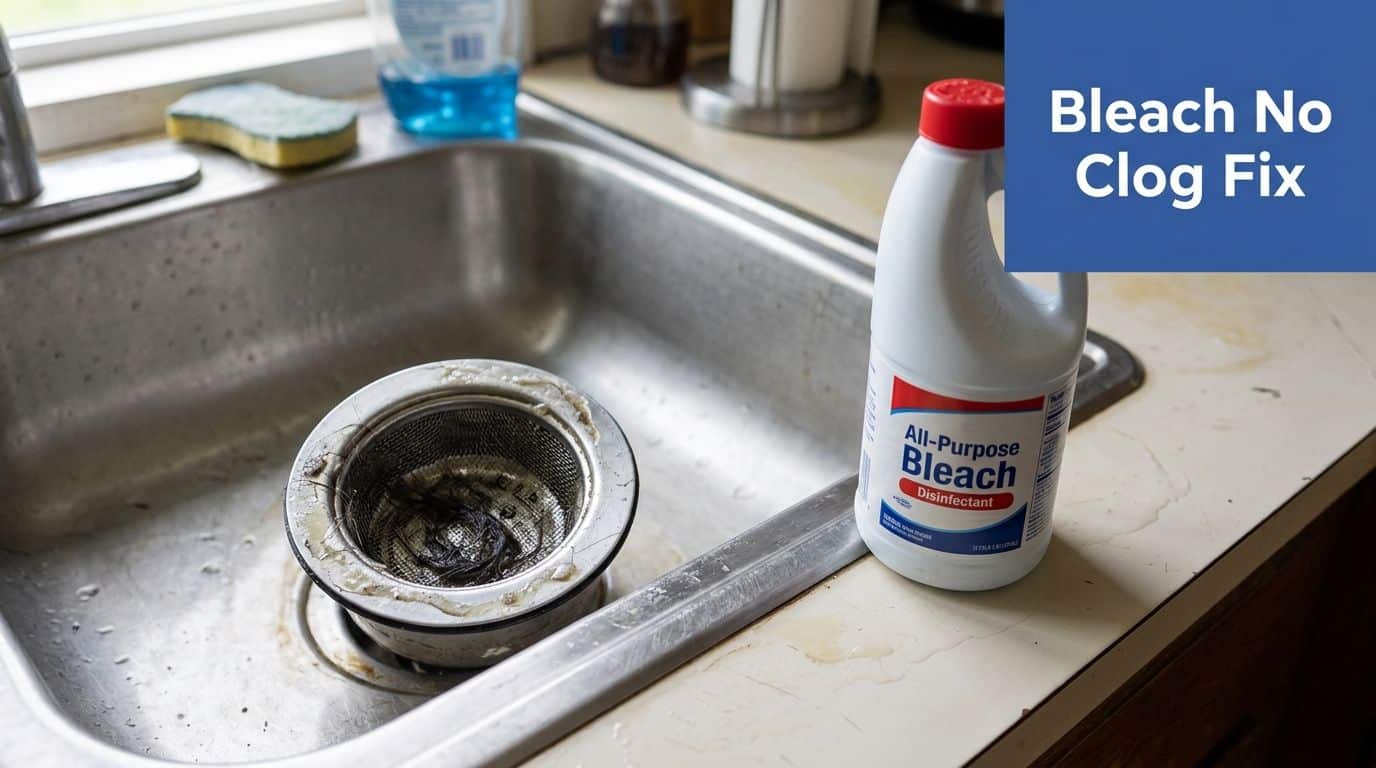
That matters more than people think in Phoenix. Heat speeds up odor problems, and repeated chemical use can turn a simple maintenance call into damaged trim, stained fixtures, or a plumbing repair that becomes a liability issue for a rental, storefront, or HOA-managed property. From a maintenance company's perspective, bleach is a poor choice when the underlying problem is buildup that needs to be removed.
Why the clog stays put
Hair, grease, soap residue, and food waste do not disappear because bleach hits them. They stay lodged in the trap, cling to the pipe wall, or catch more debris as water passes through.
What changes is the smell. Bleach can knock back odor-causing bacteria for a short time, so the drain seems better even though flow has not improved. That false sense of progress is how minor clogs become repeat problems.
Practical rule: A slow drain points to a physical restriction. Treat it like a blockage, not a sanitizing job.
That distinction is important on older properties and busy commercial sites. Pipes may already be worn, connections may be vulnerable, and one round of harsh chemicals often is not the only round that line has seen. If someone has already poured in another cleaner, adding bleach raises the risk fast.
A short visual can help show why bottle chemistry and real plumbing don't always match up:
What works better for a clog
Start with removal, not chemistry.
- Drain basket cleaning: Pull out hair, sludge, and debris from the basket or stopper.
- Mechanical clearing: Use a hand snake for reachable buildup, or have the line augered if the restriction is deeper.
- Trap inspection: Under-sink traps often hold the grease, soap paste, or food waste causing both odor and slow drainage.
If the goal is sanitation rather than clog removal, follow guidance for using disinfectant bleach and keep that job separate from clearing the line. In practice, the best results come from doing the unglamorous work first. Remove the obstruction, confirm the drain is flowing, then decide whether disinfection is even needed.
How to Disinfect Drains Safely with Bleach
A drain smells off after a garbage disposal splash, a pet accident cleanup, or a backed-up sink that has already been cleared. That is the narrow situation where bleach may have a place. From a maintenance company's point of view, the goal is controlled disinfection in a working drain, not a quick fix for a plumbing problem.
In Phoenix, I see homeowners use too much product because they assume heat, odor, and bacteria all call for a stronger dose. That usually creates the opposite result. More fumes, more residue concerns, and more risk if someone used another cleaner earlier. On managed properties, that also creates a liability issue if an occupant breathes in fumes in a small bathroom or laundry room.
Start with airflow and basic protection
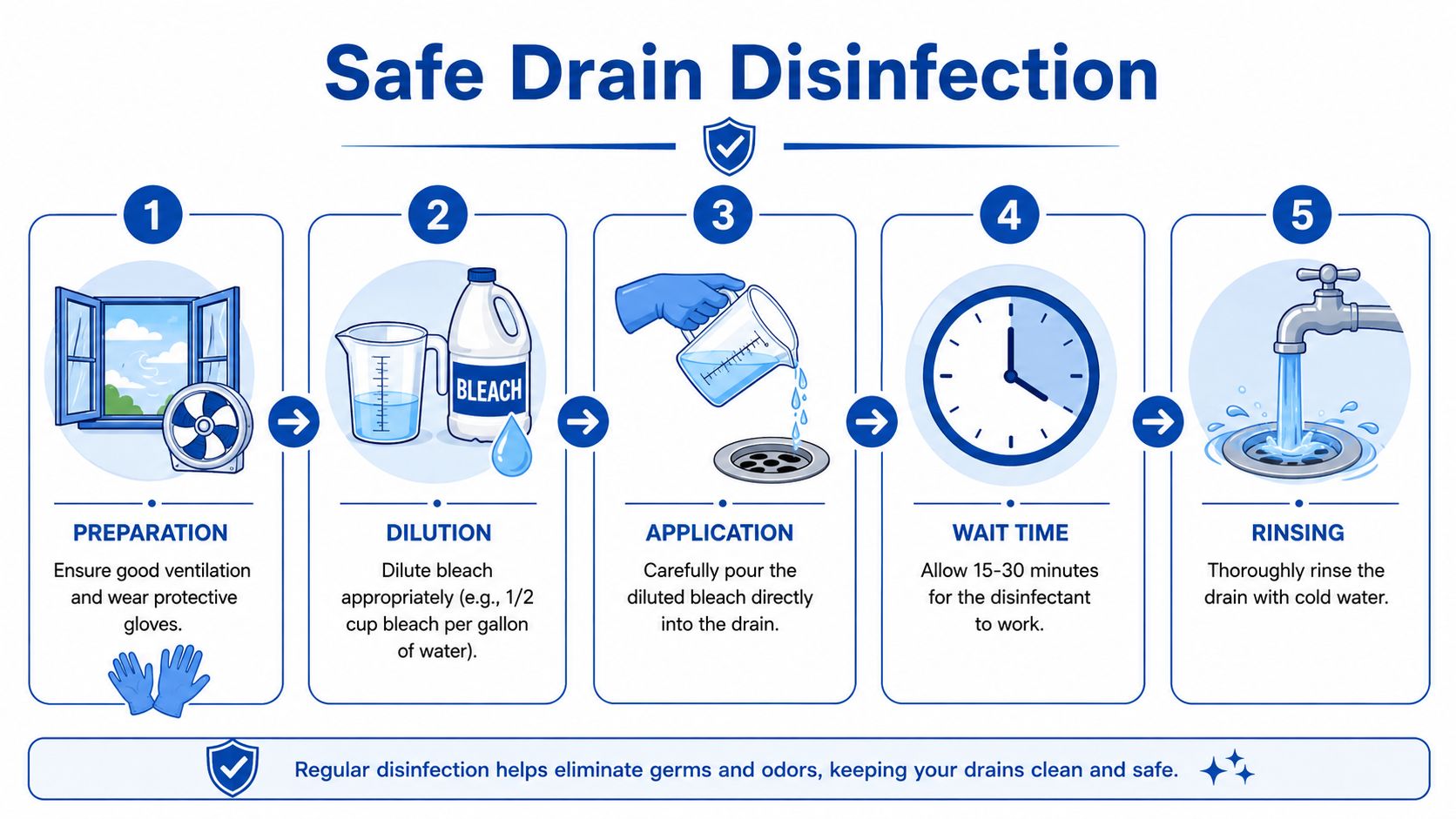
Get the room ventilated first. Run the exhaust fan. Open a window if the room has one. Put on gloves and eye protection before you uncap the bottle.
Skip bleach if the space already has a sharp chemical smell. A professional treats that as a stop sign, not a challenge.
For general sanitation guidance, this overview on using disinfectant bleach is worth reading because the same rule applies here. Correct dilution and brief contact time matter more than pouring in extra product.
Mix it weak and keep it moving
Use a diluted solution only. A practical best practice is a small measured amount of standard household bleach in a full gallon of water, then a slow cold-water flush right after so the solution does not sit in the trap or branch line.
That means no straight bleach from the bottle.
Here is the method I would trust on a drain that is already flowing normally:
- Measure the bleach: Use a measuring spoon or cup. Do not guess.
- Dilute in water first: Mix it into a gallon of water before it goes near the drain.
- Pour slowly: Keep splash-back down and let the solution move through the line.
- Flush with cold water: Send plenty of cold water after it to clear the trap and pipe walls.
On homes with delicate finishes nearby, I also watch for overspray. Bleach stains grout, etches some surfaces, and can create the same kind of avoidable maintenance problem you see when people use the wrong acid on masonry. If you have ever seen the fallout from cleaning brick with muriatic acid, the lesson is the same. Strong chemicals punish sloppy handling.
Keep contact time short
Bleach is not something to leave sitting in the drain for an hour while you do other chores. Pour it, flush it, and be done with it.
That short-contact approach matters on older homes and rentals where you cannot be sure what has gone down that line before. If there is any chance someone recently used vinegar, an ammonia-based cleaner, toilet bowl cleaner, or another drain product, do not add bleach.
Use this method sparingly
This is occasional disinfection, not routine maintenance. I would avoid it in a few situations every time:
- Septic properties: Bleach can interfere with the bacteria the system depends on.
- Slow drains or partial backups: The solution may sit in the wrong place instead of flushing through.
- Unknown cleaner history: If you do not know what was used earlier, do not mix chemistry in the pipe.
- Commercial or tenant-occupied spaces without ventilation: Fume complaints turn into safety and liability problems fast.
Used with restraint, bleach can sanitize a drain after a contamination event. Used casually, it becomes one more maintenance problem to solve later.
Understanding the Risks of Pouring Bleach Down Drains
A lot of homeowners reach for bleach because the drain smells bad and they want a fast fix before guests arrive or before work the next morning. I get the impulse. From a maintenance standpoint, the bigger concern is what that quick fix can do to the plumbing, the air inside the building, and the property owner's liability if something goes wrong.
On service calls, I look at bleach risk in three ways. Chemical reaction risk inside the line. System risk to plumbing or septic. Liability risk when the drain gets treated like a disposal point instead of part of the building.
Chemical reactions inside the drain
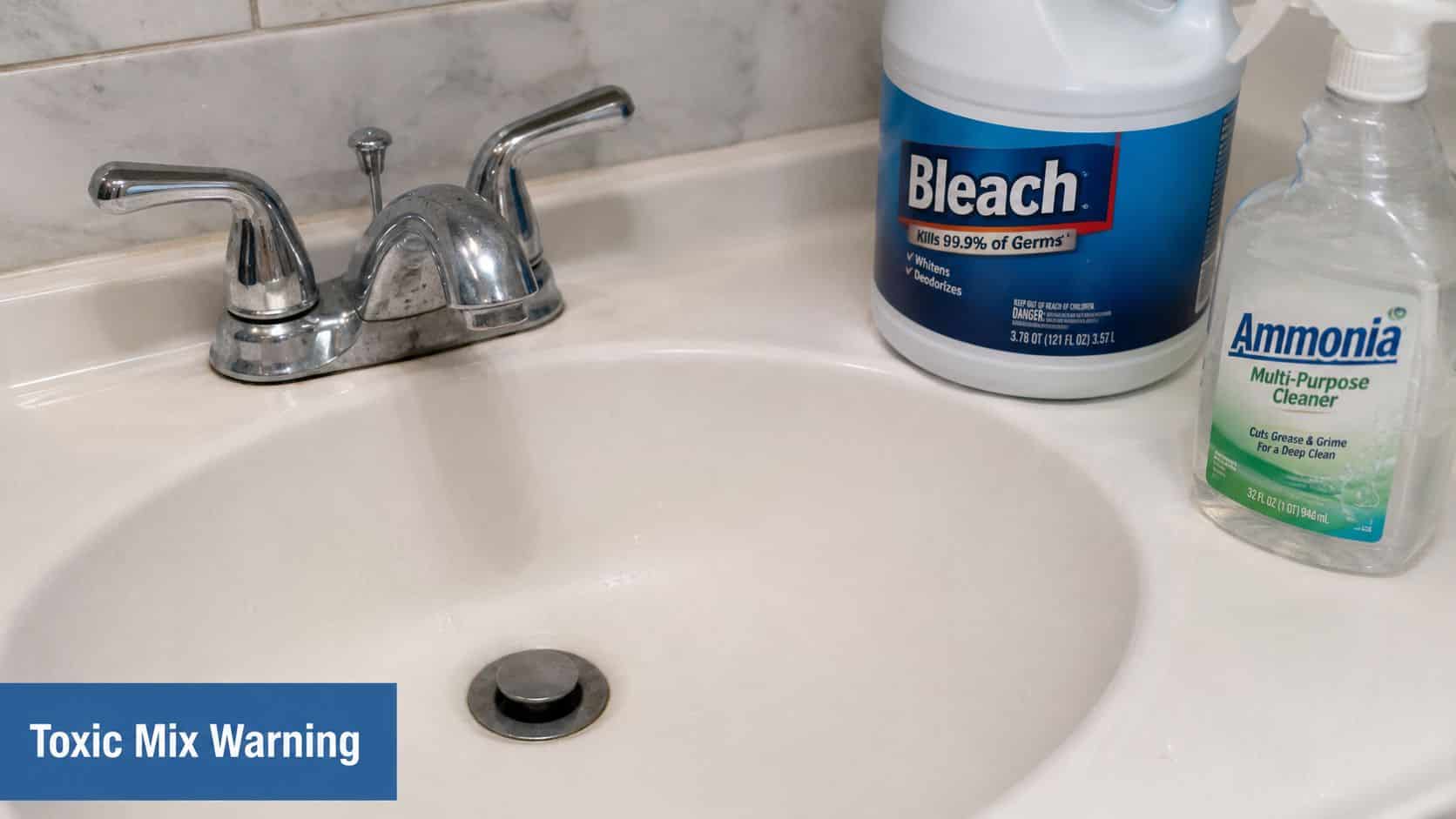
Bleach goes into a pipe with history. Soap residue, urine traces, old drain products, vinegar, toilet bowl cleaner, and ammonia-based cleaners can all still be in that line.
That matters because bleach can react with what is already there and create irritating, sometimes dangerous fumes. In a small bathroom or laundry room, you do not need much gas in the air before people start feeling it in their eyes and throat. In rental properties and commercial spaces, that turns into an occupant safety issue fast.
I see the same pattern across exterior cleaning. Strong chemistry causes trouble when people use it without knowing what surface or residue they are dealing with. The lesson is similar to cleaning brick with muriatic acid. The wrong product in the wrong place can leave damage behind long after the original stain or odor is gone.
Septic systems and hidden property damage
For septic homes, bleach is a poor habit. Septic systems depend on living bacteria to break down waste, and repeated bleach dumping works against that process.
Even on city sewer, bleach can add wear issues when people use it as a routine answer for every odor complaint. It does not remove the hair, sludge, grease, and soap buildup that usually causes the smell in the first place. The result is a drain that still has the same restriction, plus more chemical exposure on fixtures, seals, and surrounding surfaces if splashing or misuse becomes routine.
In Phoenix, heat makes maintenance mistakes show up faster. Odors intensify, neglected drains get worse quicker, and owners start throwing harsher products at a problem that really needs buildup removal or a plumbing inspection.
Commercial liability is real
Commercial properties have another layer to think about. Once staff start pouring bleach into floor drains, sinks, or mop basins without a clear policy, you are not just dealing with maintenance. You are dealing with training, ventilation, chemical handling, and exposure complaints.
A well-known example comes from SRP Environmental's summary of the Wal-Mart bleach disposal case. The dollar amount gets attention, but the practical lesson matters more for local property managers. If workers treat drains like a catch-all for chemicals, the cleanup bill can be the smallest part of the problem.
For a safer first response before anyone reaches for harsh chemicals, start with a guide to chemical-free drain unclogging. That approach lines up with how good maintenance works. Use the least aggressive method that solves the actual problem.
Smarter Alternatives for Clean and Clear Drains
A slow kitchen sink in July usually pushes homeowners toward the strongest product under the cabinet. From a maintenance standpoint, that is usually the wrong move. The best drain care method depends on what is present in the line. Hair, soap film, grease, food residue, and surface odor do not all need the same response.
On service calls, the drains that stay in better shape are the ones treated with simple, repeatable maintenance. The drains that give owners trouble are usually the ones hit with harsh chemicals first and physical cleaning last. In Phoenix, that pattern gets expensive faster because heat makes odor complaints more urgent and neglect harder to ignore.
What works better in real use
Enzyme cleaners are often the better fit for routine organic buildup because they work on the material coating the pipe walls over time. That matters in bathroom sinks, shower drains, and kitchen lines where residue keeps building back. Bleach does not remove that layer. It may reduce odor for a short time, but the drain usually still needs actual cleaning.
Mechanical cleaning is the stronger option for a real clog. Pulling hair from a stopper, clearing a trap, or snaking a line solves the problem at its source. That is the same logic good maintenance crews use on residential and commercial properties. Remove the material causing the slowdown instead of trying to wash over it with chemicals.
If you want a homeowner-friendly first step, this guide to chemical-free drain unclogging lines up with the approach professionals prefer. Start with the least aggressive method that addresses the actual blockage.
Drain Cleaner Method Comparison
| Method | Best For | Plumbing Safety | Environmental Impact |
|---|---|---|---|
| Bleach | Limited drain disinfection in carefully controlled situations | Poor choice for routine use because it can wear on materials and does not remove clogs | Higher concern because it adds a harsh chemical to the waste stream |
| Enzyme cleaner | Hair, grease, soap residue, food-related organic buildup | Generally a better option for regular maintenance because it works on buildup without the same harsh effect | Better fit for ongoing maintenance than bleach |
| Baking soda and vinegar | Light odor and minor surface-level residue | Usually gentler than harsh chemical cleaners, though it will not fix a serious blockage | Lower-impact option for minor maintenance |
| Mechanical cleaning | Real clogs, trap buildup, recurring slow drains | Strong choice when done properly because it removes the material causing the problem | Good option because it limits chemical use |
Practical choices for homeowners
For most homes, a simple routine works best.
- Use a drain basket: Catch hair and food before they enter the line.
- Choose enzyme maintenance: This makes more sense for ongoing organic buildup in sinks and showers.
- Use baking soda and vinegar selectively: Keep it for light maintenance, not major clogs. For broader household uses, this guide to a baking soda and vinegar cleaner gives helpful context.
- Remove clogs mechanically: If the drain is slow, pull the blockage out or have the line snaked.
From a liability and property-care perspective, the safer routine is also the smarter one. It protects plumbing, reduces chemical handling, and lowers the chance that a minor drain issue turns into fixture damage, surface staining, or a bigger maintenance call. Clean drains stay clear when buildup gets removed early.
Know When to Step Away and Call a Pro
There comes a point when more DIY effort just means more chemicals sitting in your plumbing. That's usually the point to stop.
If a drain keeps slowing down after you've cleaned the stopper and trap, the issue may be deeper in the line. If multiple drains are acting up at once, that can point to a larger drainage problem. If you hear gurgling, notice backup at the lowest fixture, or smell sewer gas that keeps returning, a bottle solution isn't going to diagnose that.
Signs the problem is beyond household maintenance
- Recurring clogs: The blockage is likely not at the surface.
- Several slow drains at once: That often suggests a branch line or main line issue.
- Persistent odors after cleaning: The source may be a venting problem, damaged seal, or hidden contamination.
- Visible staining or moisture nearby: That can indicate leakage, not just a dirty drain.
For homeowners dealing with moisture and organic growth outside the drain itself, related maintenance issues can show up on siding and exterior materials too. If that's part of what you're seeing, this guide on removing mold from siding helps separate surface cleaning from bigger moisture problems.
A good property owner knows when to stop pouring products into a problem and start looking for the cause. Bleach has a limited place in disinfection. It doesn't earn a regular place in drain clearing.
If you want help protecting the overall condition of your property, South Mountain Window Cleaning, LLC provides residential, commercial, and high rise window washing services in Phoenix, Scottsdale, Paradise Valley, Chandler, Tempe, Gilbert, Arizona. The team also handles exterior cleaning work that supports long-term property upkeep in Arizona's tough climate, helping homeowners and building managers keep surfaces clean, safe, and well maintained.