

The internet treats a baking soda and vinegar cleaner like a universal answer. It isn't. In Phoenix, that matters more than is often understood.
I work around glass, frames, screens, tracks, dust, mineral buildup, and sun-exposed exterior surfaces every day. That gives you a different view of DIY cleaning advice. Some home remedies are useful. Some are harmless but overrated. Some are fine in a toilet bowl or drain but become a bad idea the second they touch coated glass, metal trim, or solar panels baking in Arizona heat.
Baking soda and vinegar absolutely have a place in the house. They're familiar, inexpensive, and easy to keep on hand. But if you only remember the fun fizz and skip the chemistry, you can end up leaving residue behind on the very surfaces you wanted to make cleaner.
The Enduring Appeal of a DIY Cleaning Staple
People keep coming back to baking soda because it has a long track record and a reputation for being approachable. That reputation didn't come out of nowhere. Chemical Safety Facts notes that Ancient Egyptians used natural deposits of a similar mineral to clean their teeth and create paints, and it also explains that sodium bicarbonate is classified by the FDA as generally recognized as safe for certain uses.
That history matters. A cleaning ingredient that has been part of everyday life for that long feels trustworthy. It doesn't sound like a specialty chemical. It sounds like something your grandmother used, something you already have in a pantry, something that won't require a warning label the size of a poster.
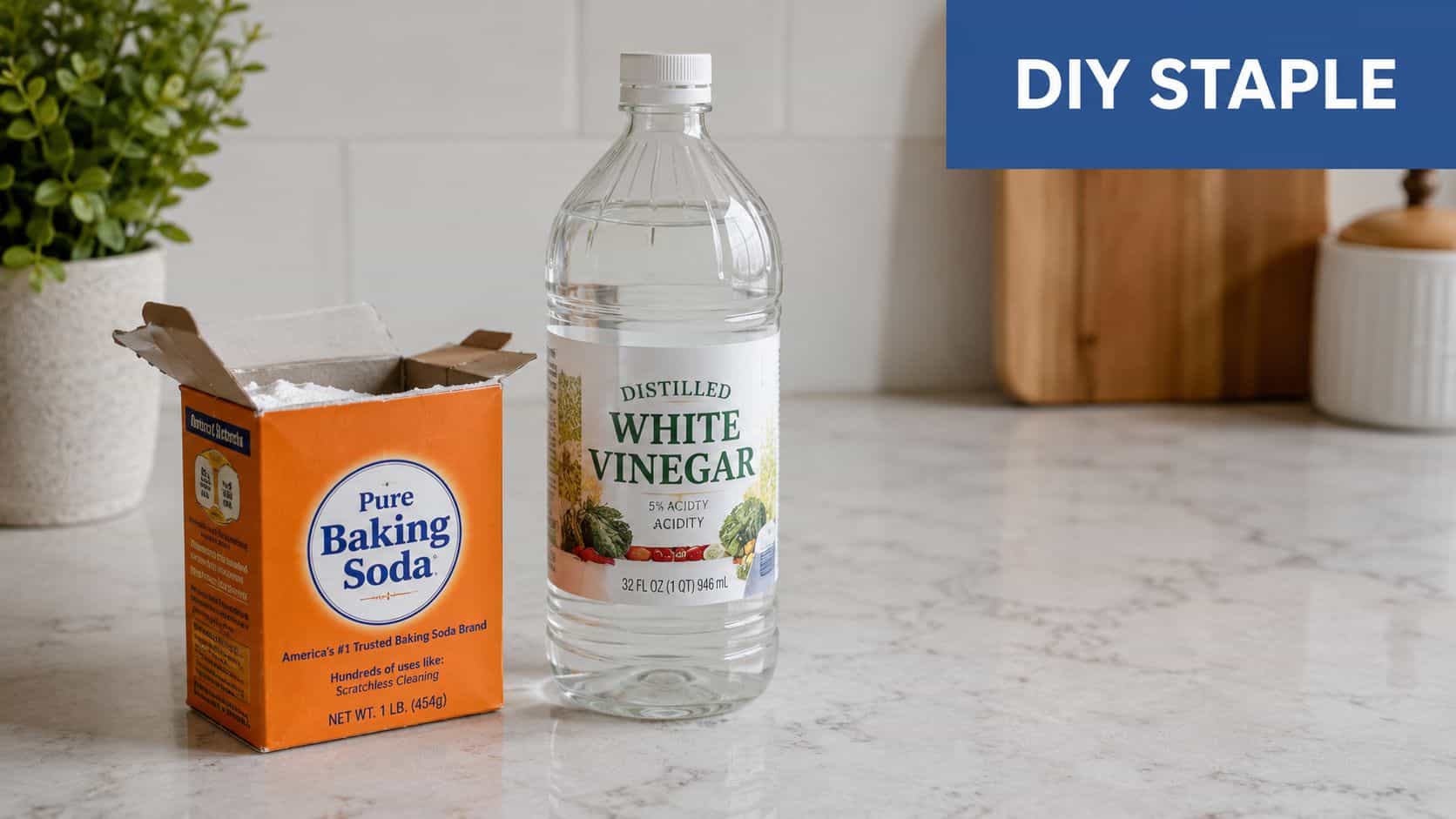
Why the combo became so popular
The appeal is simple.
- Low barrier to entry: Most households already have both products.
- Visible reaction: The bubbling looks active, so people assume it must be working hard.
- Multipurpose reputation: Homeowners use it for drains, toilets, sinks, ovens, and deodorizing jobs.
- Less intimidating feel: Pantry staples feel safer than harsh branded cleaners.
That popularity also creates a blind spot. Once a cleaning method gets repeated enough times, people stop asking whether it's the right tool for a specific surface.
A cleaner can be popular and still be the wrong choice for glass, metal, screens, seals, and exterior fixtures.
In Arizona homes, that distinction matters. Indoor jobs like deodorizing a drain are one thing. Exterior surfaces face dust, direct sun, quick evaporation, and hard water. Those conditions expose the limits of a baking soda and vinegar cleaner fast.
The Science Behind the Fizz What Really Happens
The fizz is real. The magic is overstated.
When acetic acid in vinegar reacts with sodium bicarbonate in baking soda, the result is water, sodium acetate, and carbon dioxide gas. The Conversation explains that for surface cleaning, the mixture is scientifically “basically salt water” because the reaction neutralizes the acid and the base.
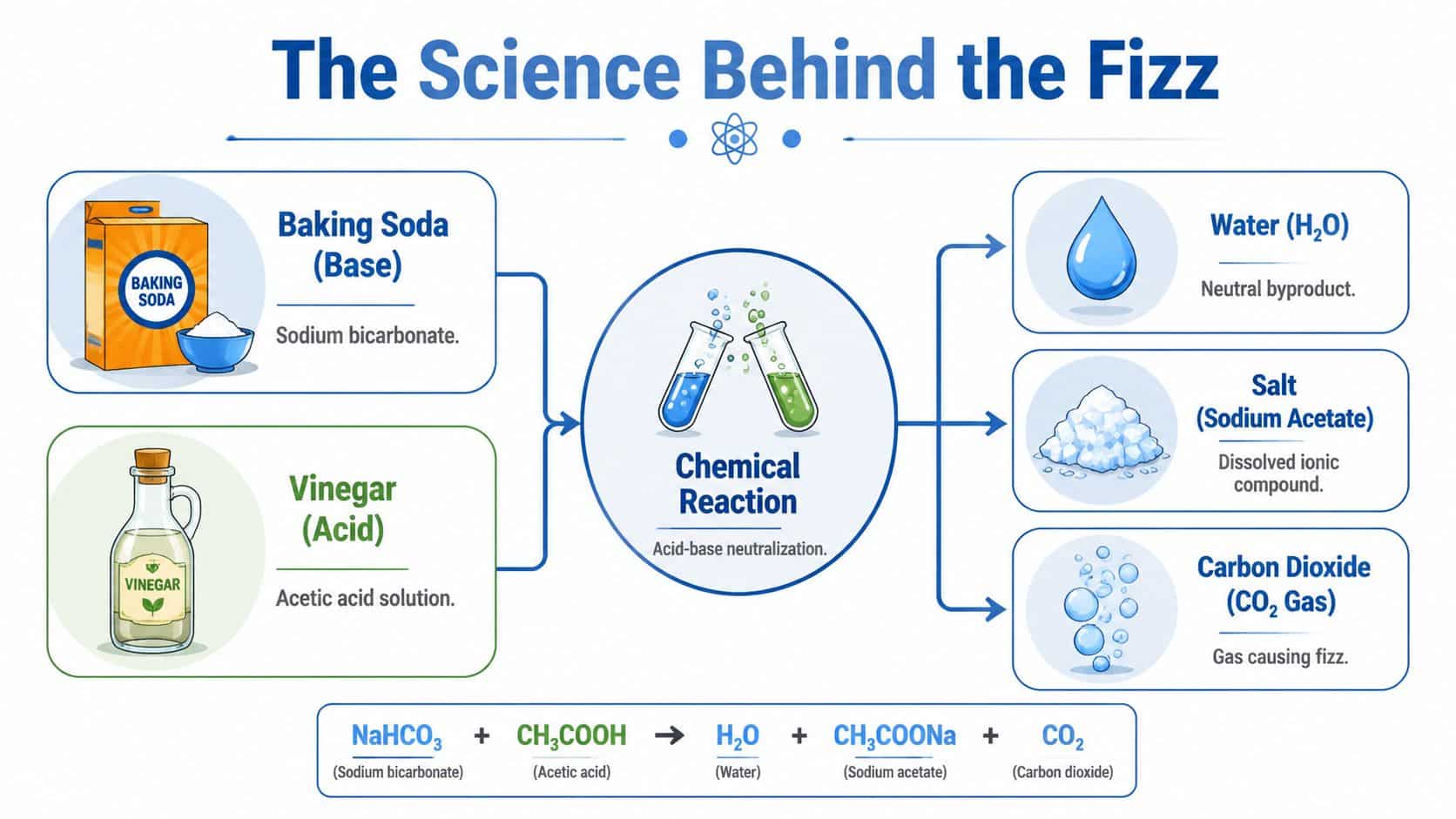
What each part is doing
Think of the reaction in three parts:
| Part | What it does | Why it matters |
|---|---|---|
| Baking soda | Acts as a mild abrasive before it reacts | Useful for scrubbing stuck-on grime |
| Vinegar | Brings acidity before it reacts | Better for descaling when used separately |
| Carbon dioxide gas | Creates the bubbling | Gives short-lived agitation, not lasting cleaning strength |
The problem is that many people mix them first and expect the foam to do everything. Once combined, you've spent much of the separate strengths of both ingredients.
What gets left behind
The overlooked piece is sodium acetate, a salt. On some surfaces, that leftover residue isn't a big deal if you rinse well. On others, especially glass and sun-exposed exterior materials, residue is exactly what you don't want.
That's why a lot of DIY glass advice falls short. A window can look decent while it's wet and still dry with haze, spotting, or a grabby film that attracts more dust. If you're dealing with mineral staining, that's a different problem entirely. A proper guide to removing hard water stains from windows has to address minerals, residue, and glass safety, not just bubbling action.
Practical rule: If the goal is descaling, use the acidic step intentionally. If the goal is scrubbing, use the abrasive step intentionally. Don't assume the mixed foam is stronger than the separate ingredients.
Effective DIY Recipes for Everyday Cleaning
Used in the right places, a baking soda and vinegar cleaner is still handy. I wouldn't dismiss it for low-risk indoor chores. The key is to use it where the reaction helps mechanically, not where residue, finish damage, or streaking will create a new problem.
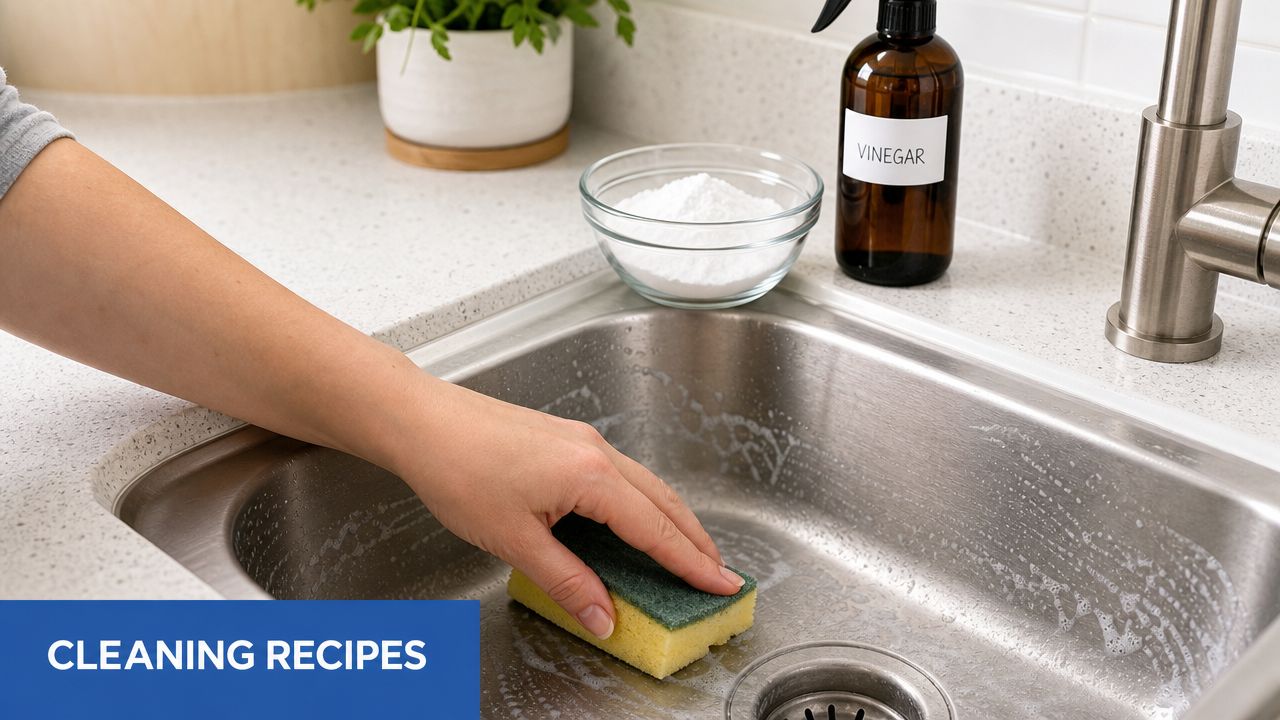
Drain freshening that actually makes sense
A drain is one of the better places for this method because you're not chasing a perfect cosmetic finish. You're trying to agitate grime and help move odor-causing buildup.
Use it like this:
- Start with hot water: Flush the drain first.
- Add baking soda: Pour in 1 cup.
- Add vinegar: Follow with 1 cup.
- Cover immediately: Use a drain plug or damp cloth so the fizz pushes downward.
- Finish the job: Rinse with hot water after the reaction settles, and scrub accessible parts if needed.
Skipping the cover is a common mistake. The reaction then vents upward at the sink instead of working deeper in the line.
Better uses around the house
This combo is also reasonable for a few contained, non-delicate chores:
- Toilet bowl freshening: Good for routine deodorizing and light buildup if you allow time before scrubbing.
- Garbage disposal deodorizing: A small amount can help with smell, followed by a thorough rinse.
- Sink touch-ups: Fine on many stainless sink surfaces if you rinse completely and don't treat the fizz as the whole cleaning step.
For broader exterior maintenance, choose your DIY methods carefully. Screens, frames, and surrounding trim can trap residue and dust. If you're cleaning screened outdoor spaces, Rescreen Rescue's lanai screen guide is a good example of how surface-specific guidance is more useful than one-size-fits-all cleaning hacks.
A lot of homeowners also jump from “this worked in the sink” to “this should work on the whole exterior.” That's where trouble starts. Exterior siding, trim, oxidation, and organic buildup usually call for a more targeted approach than pantry chemistry. If you want a better overview of what works on home exteriors, this guide to the best house washing solution is a better starting point.
Here's a quick visual walkthrough before trying it yourself:
Where DIY should stop
The moment the surface is expensive, coated, porous, prominent, or highly visible, DIY needs a stricter standard. A drain doesn't care about a streak. A front window does. A solar panel definitely does.
If you have to ask whether the residue matters, you're already in a category where testing on an inconspicuous area and using a surface-specific cleaner is smarter.
Surfaces You Should Never Clean with Vinegar
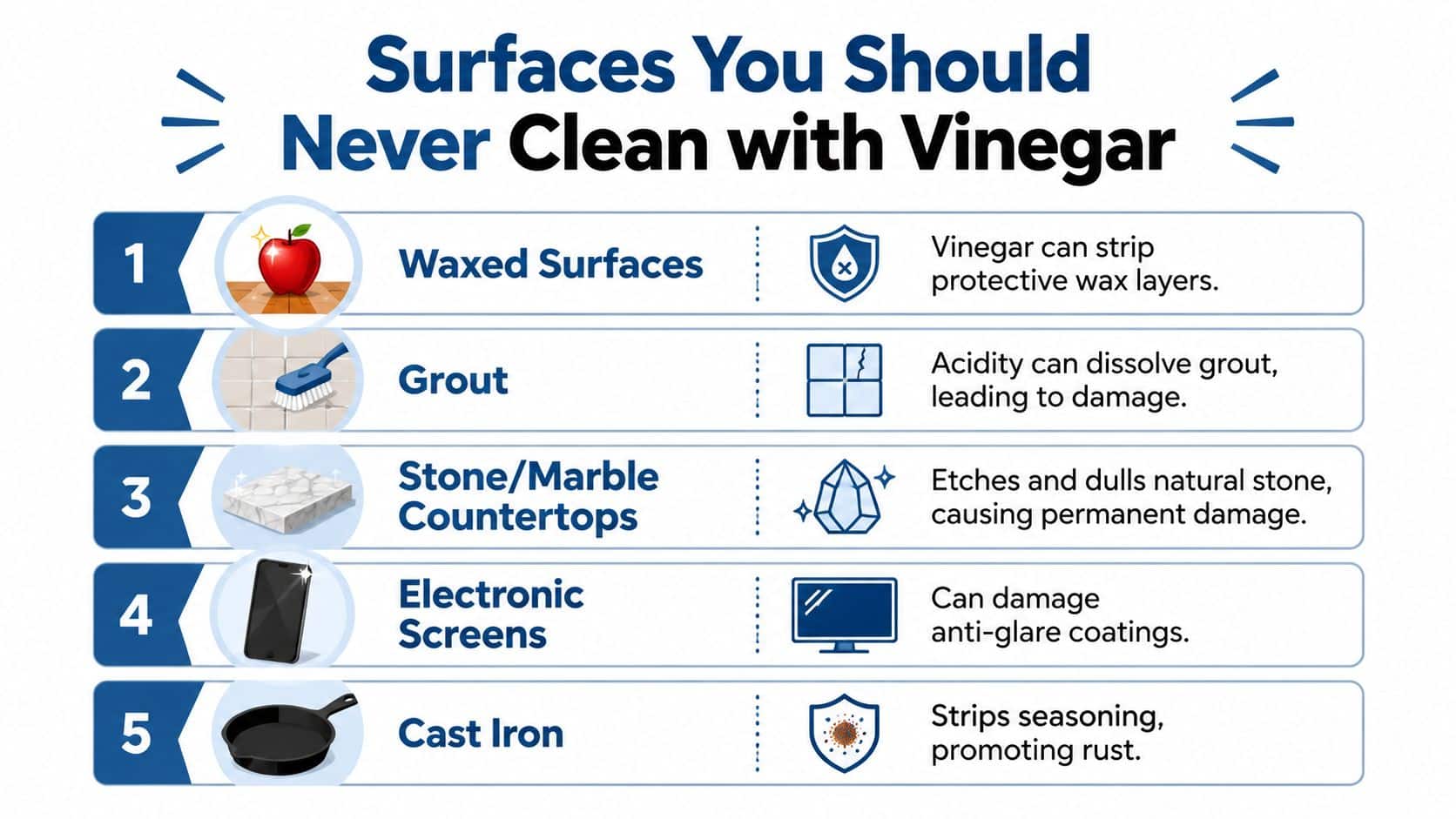
Vinegar gets recommended far too broadly. It's useful, but it isn't gentle just because it came from the kitchen. On sensitive materials, acidity can strip, dull, etch, or weaken the finish you're trying to preserve.
Better as separate tools
For stubborn grime, the smarter move is often separation. Dallas Makerspace guidance recommends a thick baking soda paste for ovens and using vinegar alone as a descaling soak for showerheads, instead of neutralizing both by mixing them together.
That principle helps you avoid two mistakes at once. First, you preserve the abrasive action of baking soda when you need scrubbing. Second, you preserve the acidity of vinegar when you need scale removal.
Never use vinegar on these surfaces
Some surfaces are poor candidates from the start.
- Natural stone: Marble, travertine, limestone, and many granite surfaces can lose their polished look when exposed to acidic cleaners. If you need product-specific guidance, this roundup of best granite cleaning products is more useful than generic vinegar advice.
- Waxed finishes: Vinegar can strip protective wax layers.
- Grout: Repeated acidic cleaning can weaken it over time.
- Electronic screens: Anti-glare and specialty coatings don't respond well to DIY acidic cleaning.
- Cast iron: Vinegar can interfere with seasoning and invite rust if misused.
Use extra caution on exterior materials
Arizona exteriors add another layer of risk because surfaces heat up fast and dry fast. That shortens dwell time and makes residue more likely to bake onto the surface.
Here's a simple comparison:
| Surface | DIY baking soda and vinegar cleaner | Better approach |
|---|---|---|
| Oven interior | Baking soda works well as paste | Use baking soda paste, wipe thoroughly |
| Showerhead | Mixing is less efficient | Soak with vinegar alone |
| Natural stone counter | Risky | Stone-safe cleaner only |
| Window glass with coatings | Poor choice | Glass-safe method with residue-free rinse |
| Vinyl siding | Inconsistent | Use a surface-appropriate house wash process |
For siding and other exterior materials, there's a difference between “won't melt it” and “is the right process.” Pressure, detergents, oxidation, trim, and runoff all matter. If you're comparing methods, this article on whether you should power wash vinyl siding gives a better framework than a viral cleaning hack.
Some cleaners fail because they're too weak. Others fail because they leave behind exactly what the surface doesn't need.
Why DIY Cleaners Fail on Arizona Windows and Solar Panels
Here, the baking soda and vinegar cleaner goes from merely limited to actively unwise.
The reaction leaves behind sodium acetate, a salt. In a hot, sunny climate like Phoenix, that salt-water residue can dry quickly on glass and panels, leaving a film. On solar panels, that residue can reduce efficiency by 15 to 20% and contribute to micro-corrosion on aluminum frames if it isn't thoroughly rinsed with pure water, based on the verified synthesis provided in the brief.
Why Phoenix makes the problem worse
Arizona sun speeds evaporation. Dust sticks to residue. Glass shows everything.
On a kitchen drain, that's irrelevant. On a storefront window, a high-rise panel of glass, or a residential solar array, it's a direct performance and appearance issue. The surface may look clean for a few minutes, then dry streaky, hazy, or slightly tacky.
Windows have another complication. Modern glass can include coatings, tempered surfaces, seals, and surrounding anodized or painted frames. A DIY mix that dries unevenly can leave more cleanup behind than it solves.
Why pure-water cleaning is different
Professional exterior cleaning for windows and solar doesn't rely on a pantry reaction. It relies on controlling residue.
A pure-water system matters because the goal isn't just to loosen dirt. The goal is to remove contamination and leave nothing behind. That's the difference between a panel that dries clear and one that dries with a film. It's also why solar cleaning needs a method built for performance surfaces, not foam that looks convincing on social media.
If you're comparing approaches for photovoltaic systems, this guide on how to clean solar panels is a better place to start than a homemade mix.
On glass and solar, a cleaner that leaves residue behind isn't a cleaner. It's one more layer to remove later.
Knowing When to Trust a Professional Cleaner
DIY cleaning works best when the stakes are low. A sink drain, a toilet bowl, a garbage disposal. Those are forgiving places to experiment.
Call a professional when the surface is valuable, exposed, difficult to access, or easy to damage. That includes modern windows, multi-story glass, storefronts, solar panels, delicate frames, and exterior surfaces where residue, spotting, or runoff matter. It also includes any job where the right result depends on specialized water quality, professional tools, and safe access methods.
A simple checklist helps:
- High-value surface: Glass, solar, specialty coatings, finished metal, or stone
- High visibility: Front elevations, entry glass, lobby glass, retail storefronts
- Height or access risk: Second-story windows, roof-mounted panels, atriums, high-rise work
- Residue sensitivity: Surfaces where streaks, spotting, or film are unacceptable
- Material uncertainty: You're not fully sure what the surface can tolerate
The smartest use of a baking soda and vinegar cleaner is narrow and specific. It's not a whole-property solution. It's not a glass restoration method. It's not a solar maintenance plan.
When appearance, longevity, and safety matter, the right equipment matters just as much as the cleaner itself.
If you want spotless glass, cleaner solar panels, and exterior cleaning methods that make sense for Arizona conditions, South Mountain Window Cleaning, LLC can help. Their team handles residential, commercial, and high-rise work across Phoenix, Scottsdale, Paradise Valley, Chandler, Tempe, and Gilbert using professional tools and pure-water systems designed to leave surfaces clean without the streaks, haze, or residue DIY methods often leave behind.