
If you're looking at dusty, faded vinyl siding in Phoenix, the first instinct is usually simple. Rent a machine, turn up the pressure, and blast the grime off.
That approach sounds efficient. It also causes a lot of avoidable damage.
For Arizona homeowners, the question isn't just whether vinyl siding can handle water. It's whether the method fits the material, the heat, and the way your siding is installed. Dust, sun exposure, irrigated landscaping, pool moisture, and extreme surface temperatures all change the risk. A cleaning method that seems fine in a generic how-to guide can become a bad choice on a hot Valley afternoon.
The High-Stakes Question of Power Washing Vinyl Siding
On a Phoenix afternoon, vinyl siding can be hot enough that a fast, aggressive wash does more than remove dust. It can stress older panels, drive water where it should not go, and leave you with damage that does not show up until later.
That is why this question carries real weight for Arizona homeowners.
CertainTeed says, “we do not recommend power washing vinyl or polymer siding” because of risks tied to moisture intrusion, damage, and discoloration, as explained in CertainTeed's vinyl siding cleaning guidance. In the field, that lines up with what experienced cleaners see. Vinyl handles gentle cleaning far better than brute force, especially after years of sun exposure and dust buildup in the Valley.
Why this question is more complicated than it sounds
Homeowners get mixed advice because vinyl siding can sometimes survive machine washing under controlled conditions. Surviving it is not the same as being the best choice for the material. In Arizona, the calculation changes fast. Intense UV, extreme surface temperatures, chalking, and fine airborne dust all make siding less forgiving than a generic online guide suggests.
The practical question is simple. Will this cleaning method remove buildup without shortening the life of the siding or increasing the chance of water intrusion?
That is also why the wording matters. Many people use power washing and pressure washing as if they mean the same thing, but they do not. This explanation of power washing vs. pressure washing gives a clear breakdown of the difference.
For vinyl siding, the trade-off is straightforward. More force may remove grime faster, but it also narrows your margin for error. On a cooler, sturdier surface, that risk may be manageable. On sun-baked siding in Phoenix, small mistakes with pressure, angle, distance, or water temperature can create expensive problems.
The same principle shows up on other delicate finished surfaces. Anyone familiar with pressure washing a ceramic coated car already understands that surface protection can be compromised by the wrong method, even when the goal is just to clean.
For most Arizona homes, the smarter starting point is low-pressure washing with the right cleaners, not maximum output from a rental machine. The goal is a clean exterior that still looks good next season, not a quick visual improvement that creates repair work later.
Understanding the Dangers of High-Pressure Cleaning
A Phoenix homeowner rents a pressure washer on a Saturday, stands a little too close to a sun-baked wall, and gets a fast visual improvement. A week later, a panel edge is loose, chalky oxidation is uneven, and water has been driven where it should not be. That sequence is more common in Arizona than people expect because heat and UV leave vinyl less forgiving.
Vinyl siding is designed to shed water, not resist concentrated force at close range. On a house that has spent years under intense sun, the margin for error gets smaller. Panels can become more brittle, surface fading makes wand marks stand out, and dust packed into seams can turn a quick rinse into a harsher cleaning attempt than the material should handle.
What high pressure actually does to siding
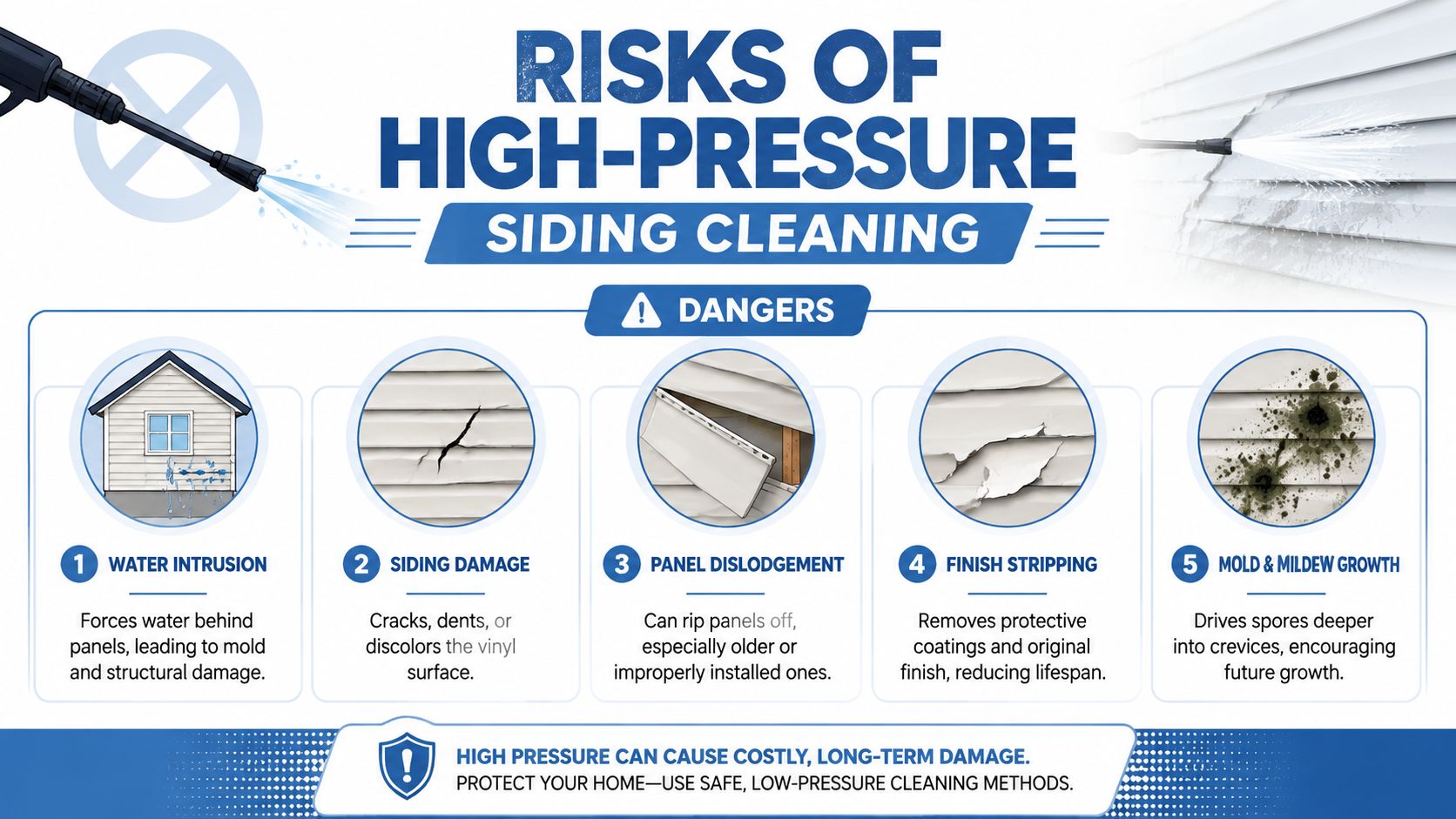
The first problem is direct surface damage. Too much pressure, the wrong tip, or working too close can crack a panel, leave visible lines, loosen overlaps, or scar the finish. Older siding is at higher risk, but newer vinyl can also be damaged by poor technique, especially during hot afternoon cleaning when the material has already expanded and softened.
The second problem is water intrusion. If the spray angle points upward or catches the lower edge of a panel, water can be forced behind the siding, around trim, and into gaps near doors, light fixtures, and windows. You may not notice anything from the curb. The trouble shows up later as staining, trapped moisture, or deterioration around the wall assembly.
Arizona adds another layer to this. Fine desert dust behaves differently than organic grime in wetter climates. It settles into laps, corners, and textured surfaces, then mixes with oxidation and road film. Homeowners often respond by increasing pressure, but more force usually means more risk, not better cleaning.
Five failure points homeowners miss
- Upward spray angle pushes water behind laps and into transitions.
- Close-range blasting concentrates force enough to mark or fracture vinyl.
- Hot, sun-exposed panels are less forgiving during aggressive washing.
- Dirty seams and edges tempt homeowners to linger too long in one spot.
- Mixed materials on the same elevation create mistakes when one setting is used for everything.
I see this on homes with vinyl accents next to stucco all the time. The method that might be tolerated on a harder surface can be a bad choice on vinyl, which is why washing stucco safely calls for a different approach than cleaning flexible cladding.
The same caution applies to other finished surfaces. The technique concerns involved in pressure washing a ceramic coated car come from the same basic reality. Water pressure is only part of the equation. Distance, nozzle selection, angle, and heat exposure decide whether you are cleaning the surface or shortening its life.
Practical rule: If you need force to make vinyl look clean, the method is probably wrong for the siding.
The Professional's Choice: Soft Washing Explained
Soft washing works because it changes the job. Instead of trying to knock contamination off with force, it uses low pressure and the right cleaning solution to break down dirt, organic buildup, and film so they can be rinsed away gently.
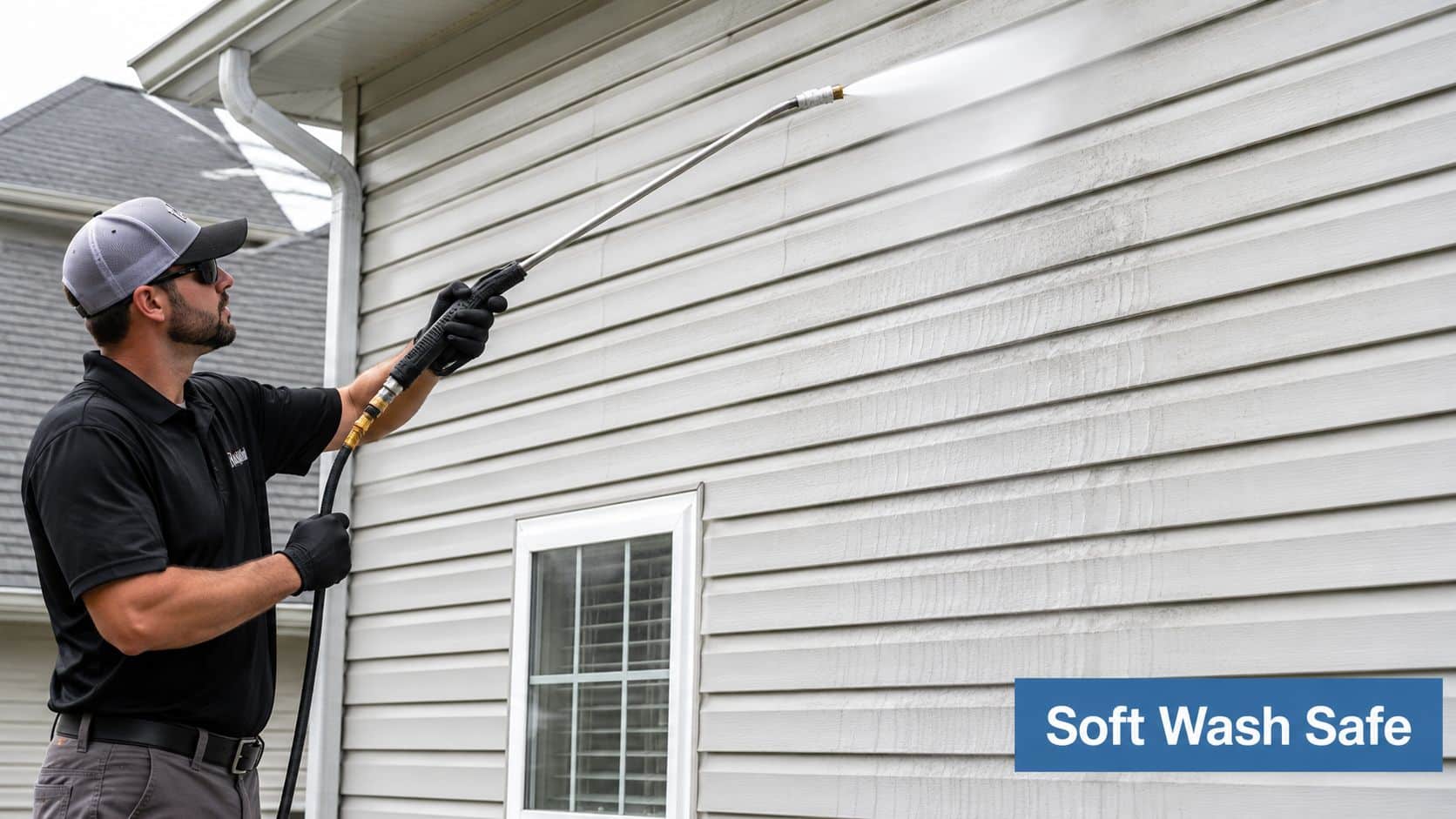
Consumer Reports treats soft washing as the safer default for vinyl siding because the bigger hazard isn't just surface damage. It's water getting behind the cladding and supporting hidden mold growth, as noted in its guidance on surfaces safe to clean with a pressure washer.
Why low pressure gives better control
On vinyl siding, the goal is simple. Wet the surface evenly, apply an appropriate cleaning agent, allow it to dwell, and rinse without driving water into vulnerable areas. That approach protects seams, trim, and penetrations.
Soft washing is especially useful when the siding has more than dust on it. Arizona homes often pick up a combination of airborne dust, cobweb residue, irrigation splash, oily traffic film, and shaded organic staining. High pressure might remove some of the surface layer, but it doesn't solve those issues as cleanly if the chemistry never gets time to work.
- Less mechanical stress means lower risk to panels and edges.
- More dwell time allows cleaners to loosen buildup instead of relying on brute force.
- Better rinse control reduces the chance of forcing water where it doesn't belong.
For homeowners comparing service options, this overview of soft wash house cleaning gives a straightforward explanation of how the process differs from standard high-pressure washing.
What professional soft washing looks like in practice
A careful technician doesn't start by squeezing the trigger. The job starts with inspection. Loose pieces, brittle areas, failing caulk, sun-stressed sections, and nearby plants all affect the plan.
Then the process becomes measured and deliberate:
- Pre-wet or protect nearby landscaping as needed.
- Apply siding-safe cleaning solution in manageable sections.
- Let the solution work.
- Rinse with controlled, low-pressure flow and correct spray angle.
- Check the finish from multiple sides because Arizona light reveals streaks fast.
This short walkthrough gives a visual sense of the process:
When homeowners ask should you power wash vinyl siding, the answer that protects the house longest is usually this: start with the least aggressive method that will fully clean it. In most cases, that's soft washing, not high-pressure blasting.
Signs Your Arizona Siding Needs a Professional Wash
A Phoenix-area home doesn't have to look filthy to need cleaning. A lot of siding problems start as a dull film that homeowners stop noticing because it builds slowly.
After a dust storm, the change is obvious. The wall faces that catch wind-driven dust look flat and tired. The trim lines stand out. Around hose bibs, irrigation heads, and shaded corners, the dirt sticks harder because moisture keeps it in place longer.
What local buildup usually looks like
Some homes get a tan or gray dust layer that settles into texture and panel seams. Others develop dark runoff lines under vents, trim edges, or roof transitions. If you have landscaping close to the house, you'll often see splash marks near the lower courses of siding.
Pool areas create a different pattern. Even in a dry climate, repeated moisture near patios and side yards can feed green or dark staining in shaded spots. North-facing walls, covered entries, and areas behind dense shrubs can hold contamination longer than homeowners expect.
In Arizona, “dry climate” doesn't mean “no biological growth.” It means growth tends to show up in specific micro-areas where shade and moisture stick around.
Clues that timing matters just as much as cleaning
Heat changes the job. Guidance for hot-weather markets warns that detergents can dry too quickly on hot siding, causing streaking and residue, and that heat can make vinyl more pliable and vulnerable to distortion or discoloration from cleaning agents, as explained in this power washing timing guide.
That matters a lot in Phoenix, Scottsdale, Chandler, Gilbert, and Paradise Valley. A wall that feels merely warm in the morning can be brutally hot later in the day. The same cleaning solution that behaves well in mild conditions can flash dry on sun-baked siding.
Watch for these signs that it's time to call in a pro instead of waiting longer:
- Dust that remains after a hose rinse means the buildup has bonded to the surface.
- Streaking under trim or fixtures often points to runoff patterns that need proper cleaning chemistry.
- Cobweb buildup at corners and eaves usually means the exterior needs more than a quick cosmetic rinse.
- Chalky, uneven appearance can signal oxidation, embedded soil, or sun-related wear that needs a gentler approach.
- Patchy discoloration near landscaping or pool areas suggests localized contamination that can worsen if ignored.
Arizona siding doesn't just get dirty. It gets dirty in a way that's tied to sun, airflow, irrigation, and heat. That's why method and timing matter together.
DIY Cleaning vs Hiring a Professional Service
A Phoenix homeowner can rinse a lightly dusty wall and get an acceptable result. That part is true. The trouble starts when the siding still looks dirty after the first pass and the fix becomes more pressure, a closer spray angle, or repeated passes on one hot section of wall.
In Arizona, that risk goes up fast. Vinyl that has spent years under intense sun can be less forgiving than it looks. Dust works into the texture, heat softens the material, and a rushed weekend cleaning can turn a cosmetic problem into loose panels, water behind the siding, or visible striping.
DIY makes sense only under narrow conditions. The siding should be in solid shape, reachable from the ground, and only lightly soiled. The method should stay gentle from start to finish.
What you're really paying for with a pro
A professional service brings more than equipment. It brings judgment.
That matters on vinyl because the right approach is often slower and more controlled than homeowners expect. A trained crew will check for brittle areas, gaps, loose edges, failed caulk lines, and spots where direct sun has already stressed the material. Then they choose a cleaning method that fits the siding's condition instead of forcing every stain to come off with pressure.
A good house wash in the Phoenix area usually includes:
- a pre-inspection of the siding and trim
- low-pressure application instead of blasting the wall
- cleaners matched to vinyl and the type of buildup present
- protection for plants, electrical fixtures, and nearby finishes
- timing the work so products do not dry too quickly on hot siding
- a final walkthrough to catch streaks, missed sections, or problem areas
For readers curious how established exterior companies frame these services, Pipeline On's pressure washing marketing guide gives a useful look at the process details reputable operators tend to highlight.
If you want a local example, professional pressure washing services in Phoenix typically cover the inspection, surface protection, and controlled washing steps that matter most on vinyl.
DIY vs Professional House Washing
| Factor | DIY Approach | Professional Service (South Mountain) |
|---|---|---|
| Equipment choice | Often based on what is available to rent or already in the garage | Selected for vinyl, soil level, and overall siding condition |
| Spray technique | Easy to get too aggressive when one area will not clean up quickly | Built around low pressure and safer spray angles |
| Problem spotting | Loose sections and failing seams are easy to miss | Checked before washing starts |
| Arizona conditions | Work often happens when the homeowner has time, not when the wall is coolest | Scheduled around heat, sun exposure, and drying speed |
| Property protection | Prep work varies a lot from one homeowner to another | Plants, fixtures, and adjacent surfaces are part of the plan |
| Damage risk | Higher if pressure, angle, or cleaner choice is off | Lower because the process is more controlled |
| Time and effort | Learning, setup, washing, and cleanup all fall on the homeowner | The homeowner avoids trial and error |
| Finish quality | Results can look uneven across different elevations | Results are usually more consistent across the exterior |
A pressure washer cleans fast. It also causes damage fast when the method is wrong.
For many Arizona homeowners, the comparison is not cost versus convenience. It is a small upfront saving versus the cost of warped vinyl, trapped moisture, or a wall that looks worse in full sun after the cleaning is done.
Your Essential Vinyl Siding Cleaning Checklist
A good checklist keeps this simple. Whether you hire the job out or handle a small section yourself, the standard should stay the same. Protect the siding first. Clean it second.
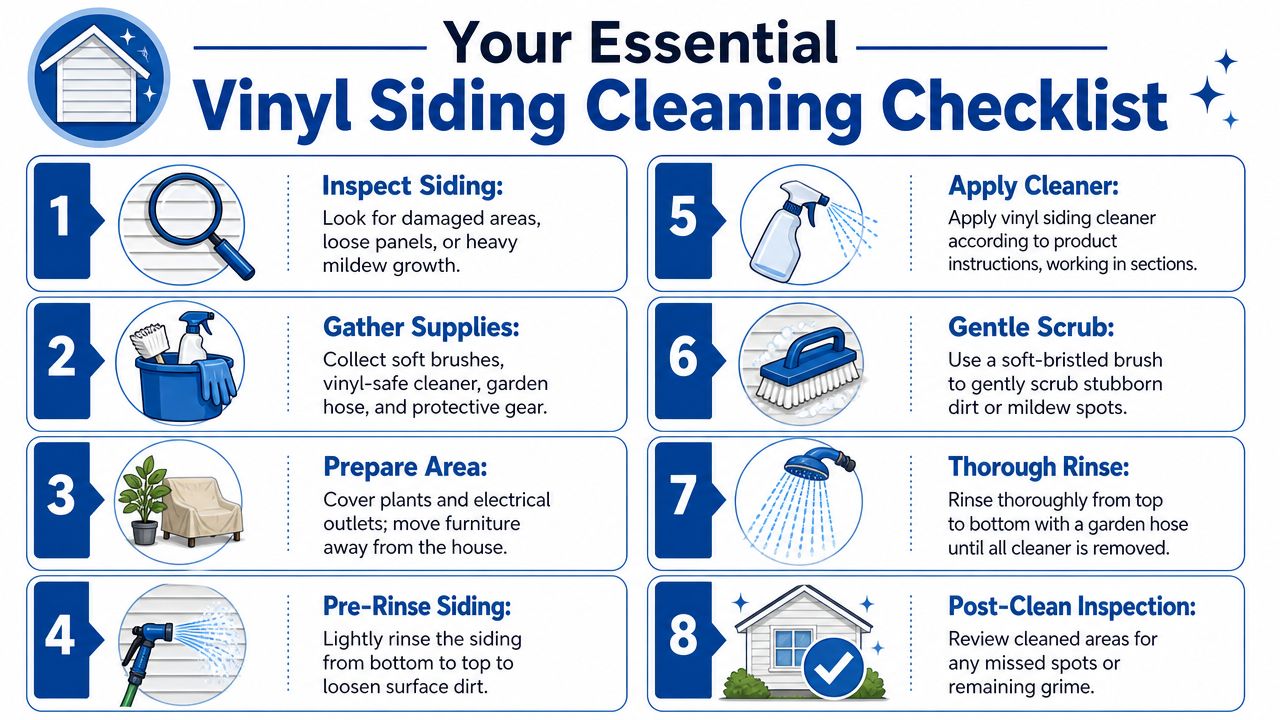
The checklist that actually matters
- Inspect before anything else. Look for loose panels, brittle areas, open gaps around penetrations, and sections that already show stress.
- Choose low pressure as the default. If someone proposes blasting the siding because it's “the fastest way,” that's a warning sign.
- Ask what cleaner is being used. Vinyl-safe products and controlled application matter more than raw force.
- Protect nearby plants and furniture. Landscaping, décor, grills, and electrical components should be accounted for before washing starts.
- Work in manageable sections. Large wet walls in direct Arizona sun create streaking and rushed rinsing.
- Avoid upward spraying. The spray angle should respect the way siding sheds water.
- Check the finish after rinsing. Walk the property and look at the siding from different angles. Residue and missed spots often show up differently in strong light.
- Stop if the siding isn't responding well. If a test area shows stress, discoloration, or poor rinse behavior, the method needs to change.
Questions worth asking a service provider
A solid contractor shouldn't struggle with these.
- Do you use a low-pressure or soft-wash method for vinyl siding?
- How do you handle hot walls in direct sun?
- What do you do to protect plants and adjacent surfaces?
- Will you inspect for loose or damaged siding before starting?
- How do you prevent water from being driven behind the panels?
The right cleaning plan should sound cautious, specific, and material-aware. If it sounds aggressive, it's probably too aggressive.
A practical maintenance rhythm
One home-cleaning guide says vinyl siding should be washed every 6 to 12 months as needed, and notes that a whole-house cleaning can take 3 to 5 hours depending on how dirty the exterior is, according to this guide to cleaning house siding by type. The same source says vinyl may tolerate up to 3,000 psi in ideal conditions, but warns that this is not a recommended target because that level can dent or damage the material.
That lines up with the safest takeaway for Arizona homes. Keep the siding on a regular maintenance cycle. Don't wait until buildup becomes severe enough that aggressive cleaning seems necessary.
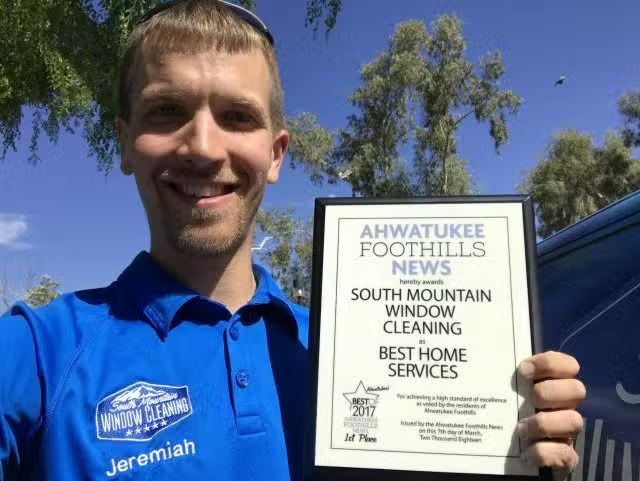
If your vinyl siding needs attention and you want a method that fits Phoenix conditions, South Mountain Window Cleaning, LLC handles exterior house washing with the low-pressure approach that delicate surfaces require. For homeowners in Phoenix, Scottsdale, Paradise Valley, Chandler, Tempe, and Gilbert, a careful inspection and the right cleaning process can restore the exterior without turning routine maintenance into a repair project.