
Tackling those stubborn, chalky water stains on your windows means you have to neutralize the mineral deposits left behind by our hard water. For most of us here in Arizona, the best place to start is with a simple DIY solution of equal parts white vinegar and distilled water. This mix is a fantastic first line of defense against the chalky residue from calcium and magnesium that gets baked onto the glass by our intense sun. The acidity in the vinegar does a great job of dissolving those minerals.
Why Do Arizona Windows Get So Spotty, Anyway?
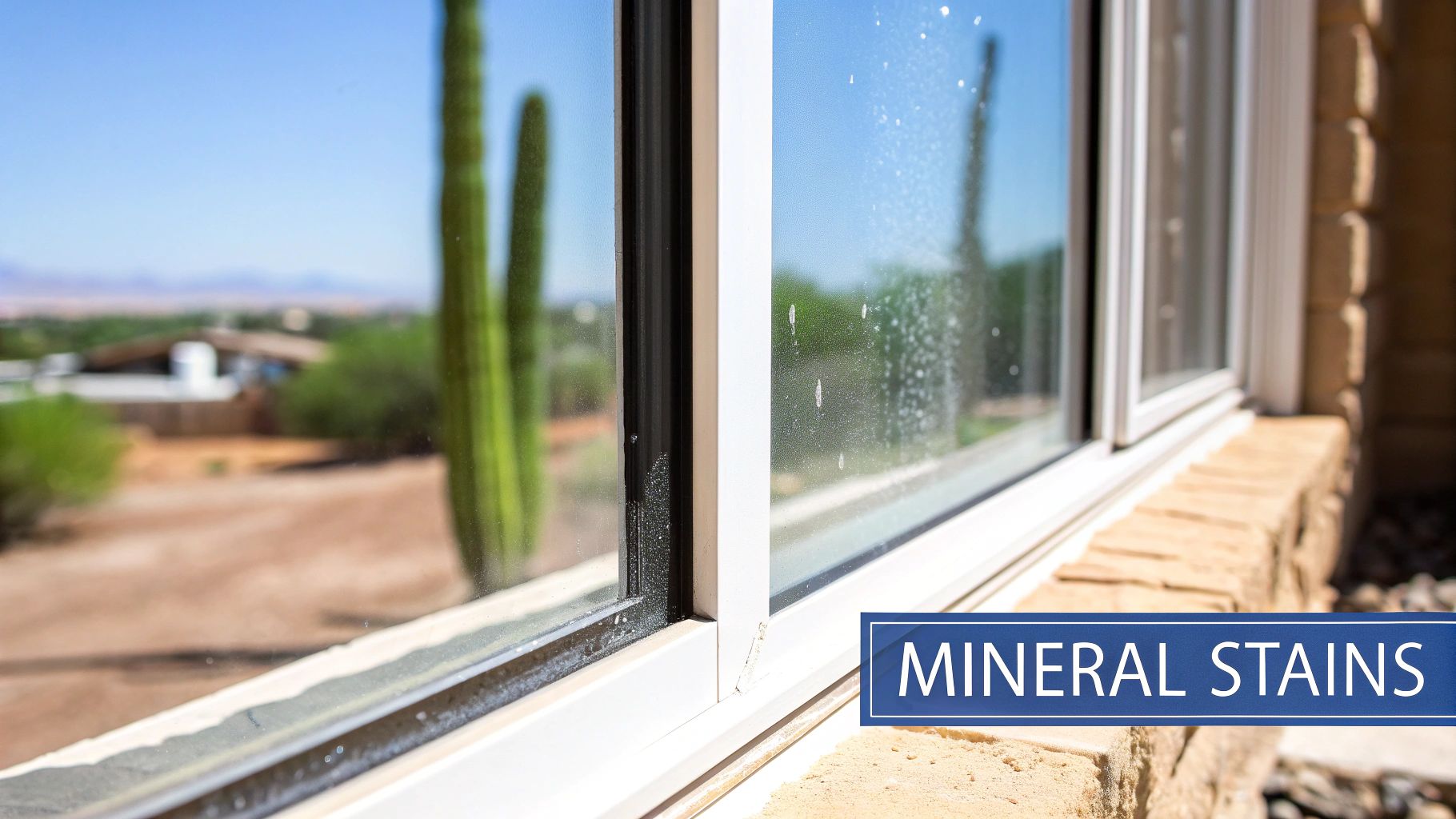
Ever feel like you clean your windows and they look cloudy again just a few days later? You’re not imagining it. The combination of the relentless Arizona sun and our unique water chemistry is the real culprit here. The water across Phoenix, Scottsdale, and the valley is notoriously "hard," which is just a way of saying it’s loaded with dissolved minerals like calcium and magnesium.
When water from a sprinkler, a hose, or even a monsoon rainstorm hits your windows, the heat makes it evaporate in a flash. The pure water disappears, but it leaves all those minerals behind. This happens over and over, essentially baking layers of these deposits onto the glass until you've got a stubborn, milky film.
The Two Types of Window Grime
It's really important to know what you're dealing with because not all window dirt is created equal. Figuring this out is the first real step to getting your windows clear again.
- Surface Grime: This is the easy stuff—everyday dust, pollen, and loose dirt. Your standard window cleaner and a good squeegee will usually wipe this layer away without much fuss.
- Mineral Stains: These are the tough ones. They’re the hard, chalky deposits left behind from evaporated water. They actually bond with the glass surface and won't come off with just soap and water.
This is exactly why that blue spray cleaner you have under the sink doesn't make a dent in those persistent spots. You’re fighting a chemical deposit, not just everyday grime. The crazy-high evaporation rates we have in our climate just make this problem worse, which is why cleaning them properly and promptly is so important.
It's a huge issue. In fact, you can see how widespread it is by looking at the professional side of things. The use of deionized water systems—which are designed specifically to prevent mineral spotting—has jumped by up to 50% since the mid-2010s.
Here's the kicker: if you let mineral deposits sit for too long, they don't just sit on the glass; they can permanently etch into it. Over time, that chemical reaction causes irreversible damage, and at that point, professional restoration is often the only fix.
This is especially true during certain times of the year, like our famous monsoon season. If you want to learn more about those specific challenges, check out our guide on cleaning windows during monsoon season in Phoenix.
To beat these stains, you need a specific game plan that goes after the minerals directly, which is exactly what we'll get into next.
Your Toolkit for Tackling Hard Water Stains

Before you even think about scrubbing, let’s talk about getting your gear together. Trust us, showing up to fight those stubborn hard water spots without the right tools is a recipe for frustration—and a whole lot of streaks.
You don't need a truck full of professional equipment, but having a few key items on hand makes all the difference. For most folks here in places like Gilbert and Chandler, the best place to start is your own kitchen pantry.
The Best DIY Cleaning Agents
When you're dealing with mineral buildup, you need something that can break down the tough calcium and magnesium deposits left behind by our water. The good news is, you've probably got what you need already.
- Distilled White Vinegar: This is the MVP for a reason. The acetic acid in vinegar is a champ at dissolving light to moderate mineral stains without harsh chemicals. It’s always our first recommendation.
- Baking Soda: Got some really caked-on spots? Mix up a paste of baking soda and water. It acts as a gentle abrasive that scrubs away deposits without risking scratches on the glass.
- Lemon Juice: Just like vinegar, the citric acid in lemon juice is great for cutting through those alkaline mineral stains we see all over Arizona. Plus, it smells a lot better.
Many people are also turning to eco-friendly cleaning solutions these days. They often use plant-based ingredients to get the job done, which is a great option for your home and the environment.
Must-Have Tools for a Flawless Finish
The cleaning solution is only half the battle. The tools you use to apply it and, more importantly, remove it are what separate a DIY job from a professional-looking one. A cheap towel or a worn-out squeegee will just spread the grime around, leaving you with lint and new streaks.
Before you start, here's a quick comparison of the most common solutions to help you choose the right approach for your windows.
Choosing Your Water Stain Removal Method
| Cleaning Solution | Best For | Application Method | Pros | Cons |
|---|---|---|---|---|
| Vinegar & Water | Light to moderate mineral spots, everyday grime | Spray on, let sit for 1-2 minutes, scrub, squeegee off | Inexpensive, non-toxic, readily available | Strong smell, may not be strong enough for severe stains |
| Lemon Juice | Similar to vinegar, effective on light stains | Apply directly or as a spray, let sit, then wipe | Natural, pleasant scent, effective acid | Can be sticky if not rinsed well, less potent than vinegar |
| Baking Soda Paste | Tough, stubborn mineral deposits | Apply paste to stains, gently scrub, rinse thoroughly | Gentle abrasive, great for targeted cleaning | Can be messy, requires thorough rinsing to avoid residue |
| #0000 Steel Wool | Severe, old, and etched-in stains | Use dry or with a cleaner, very light pressure | Highly effective on tough spots | High risk of scratching if used incorrectly; TEST FIRST! |
| Commercial Cleaners | Formulated for severe hard water buildup | Follow product instructions exactly | Powerful and fast-acting | Can be expensive, may contain harsh chemicals |
Picking the right method from the start saves a ton of time and effort. For most situations, starting with vinegar is the safest and most effective bet.
Now, let's talk about the hardware you’ll need to get that perfect, clear finish.
- High-Quality Microfiber Cloths: Get a small stack of these. You’ll want at least one for applying your cleaner and another clean, dry one for buffing out any final drips. They’re super absorbent and, most importantly, lint-free.
- A Professional-Grade Squeegee: This is the single most important tool for a streak-free window. A good squeegee with a sharp, flexible rubber blade removes every bit of water before it can dry and leave new spots. Don't cheap out on this one.
- Spray Bottle: A simple spray bottle is perfect for mixing and applying your vinegar solution evenly across the entire window.
- Non-Abrasive Scrubber or #0000 Steel Wool: For the absolute toughest stains that just won’t budge, one of these can give you the extra scrubbing power you need. But be careful! Always test it on a small, out-of-the-way corner of the glass first to make sure it doesn’t scratch.
If you’ve ever wondered what the pros have in their toolkits that makes such a big difference, you can read more about what professional window cleaners use to get those consistently perfect results. Once you have these items ready to go, you’re all set to get cleaning.
Tried-and-True DIY Methods for Spotless Results
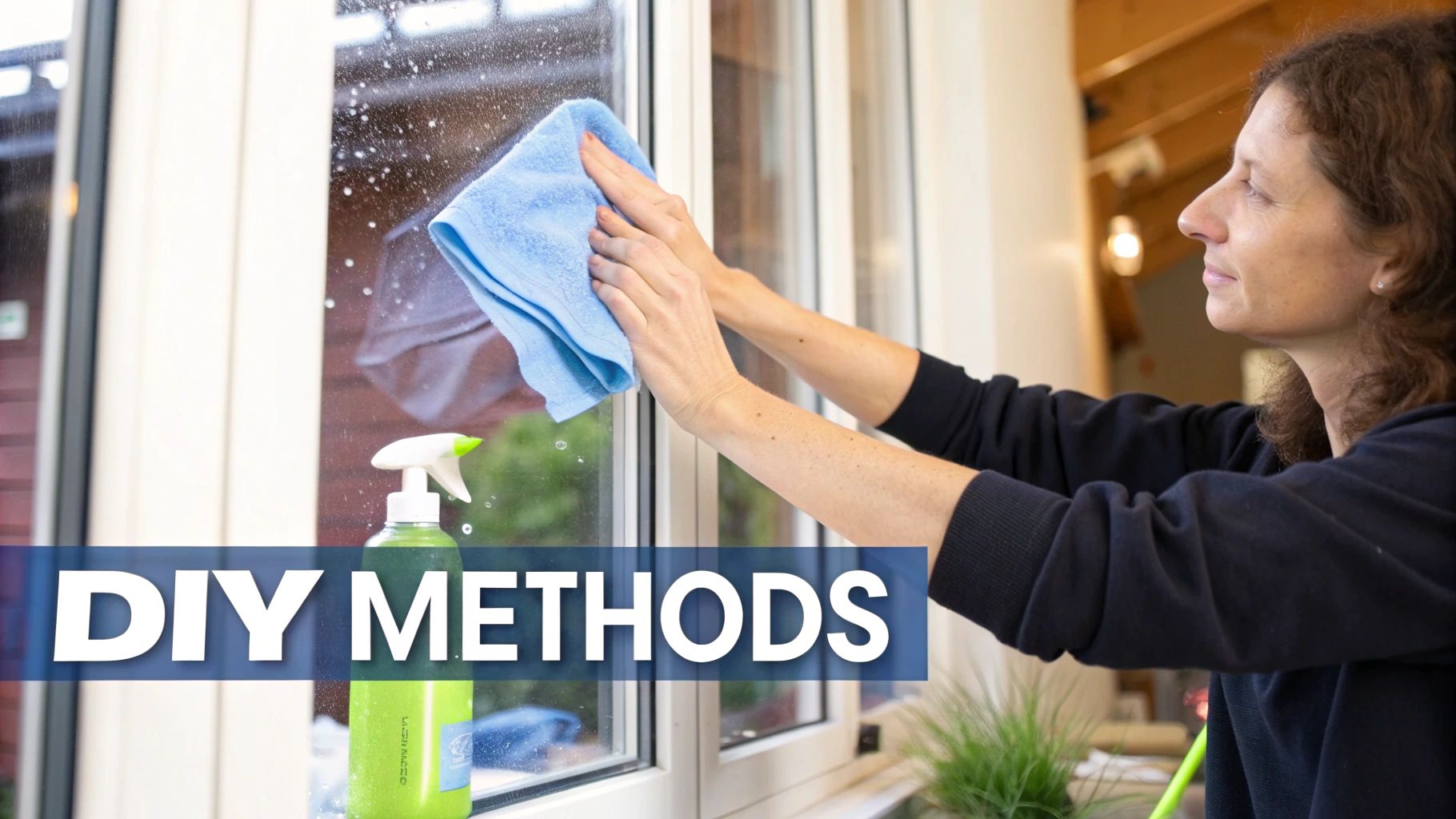
With the right game plan, you can tackle a lot of hard water stains yourself and get that crystal-clear view back. We've tested these techniques out in the field and always recommend starting with the gentlest solution first before bringing out the heavy hitters. Remember, the idea is to dissolve the mineral buildup, not just scrub it into oblivion.
Here’s a crucial tip from our years of experience cleaning windows under the intense Arizona sun: always work in the shade. Whether that means starting early, waiting until late afternoon, or just sticking to the shady side of the house, keeping direct sun off the glass is non-negotiable. If your cleaning solution dries before you can wipe it off, you’re just trading mineral spots for new streaks.
The Vinegar Solution for Lighter Stains
For those light to moderate hard water spots—the kind you get from a rogue sprinkler head in Tempe or Chandler—a simple vinegar solution is your best bet right out of the gate. The acetic acid in regular white vinegar does a fantastic job of breaking down those stubborn alkaline mineral deposits.
Here’s how our team at South Mountain Window Cleaning approaches this simple but powerful method:
- Mix it right: Combine equal parts distilled white vinegar and distilled water in a spray bottle. It's really important to use distilled water here; tap water is full of the very minerals that caused the stains in the first place.
- Apply and wait: Give the stained glass a generous spray. You want it good and wet. For the acid to really do its job, it needs a little time to sit. Let it dwell on the glass for at least 5-10 minutes.
- A little elbow grease: Grab a clean microfiber cloth and gently scrub the spots in a circular motion. You should start to feel the deposits breaking up under the cloth.
- Finish like a pro: Give the window a quick rinse with more distilled water, then pull out a professional-style squeegee to wipe the glass clean. Overlap each stroke slightly, and you'll get that perfect, streak-free shine.
Often, this is all it takes. For a more detailed breakdown of getting that flawless finish, check out our guide on the best way to clean windows.
Tackling Tougher Jobs with a Baking Soda Paste
So, what happens when the vinegar soak just doesn't cut it? That usually means the mineral layers are thicker and more baked-on, a common problem for homes in areas like Paradise Valley with well-established sprinkler systems. For these stubborn stains, a baking soda paste gives you a bit of mild abrasive power to physically lift the deposits without scratching the glass.
A quick word of caution: Always test any abrasive method, even a gentle one like this, on a small, out-of-the-way corner of the window first. This is just to make sure it’s safe for your specific type of glass, especially if you have aftermarket tints or special coatings.
Here’s how to make and use the paste:
- Make the paste: In a small bowl, mix baking soda with a tiny bit of water. You're aiming for a consistency like toothpaste—thick enough to stick to the glass.
- Apply to the spots: Using a microfiber cloth or soft sponge, dab the paste directly onto the hard water stains.
- Let it work: Let the paste sit for a few minutes. This gives the baking soda time to work on breaking down the minerals.
- Scrub gently: Gently work the paste into the stains with your cloth. The fine particles in the baking soda act like a gentle exfoliant, lifting the residue.
- Rinse completely: This step is critical. You have to rinse all the baking soda off the glass. Spray it down thoroughly with distilled water and finish with a squeegee for a clear, spotless result.
How to Keep Future Water Stains Away
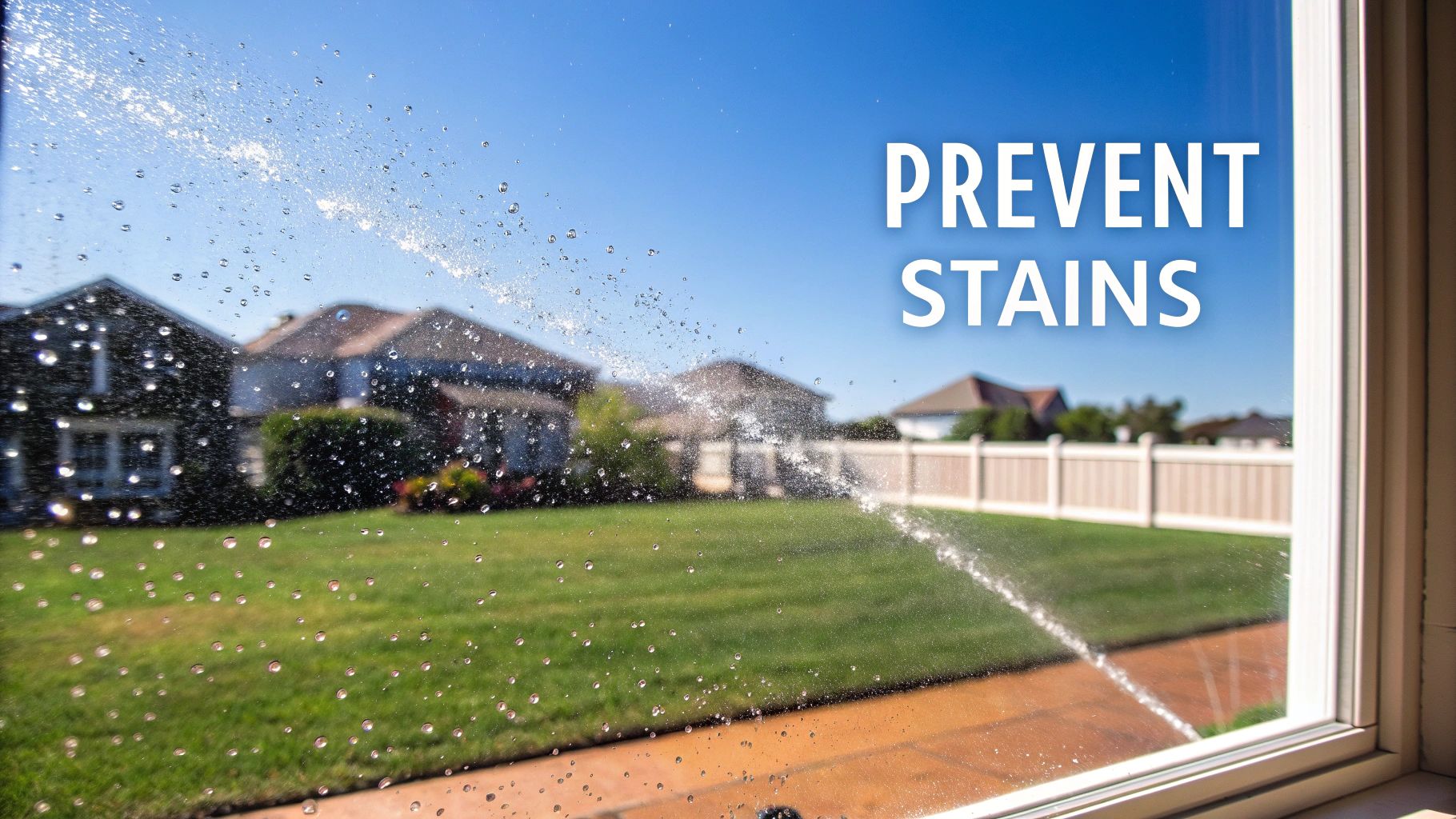
Getting those stubborn hard water stains off your windows feels like a huge win. But let's be honest, the real victory is making sure they don't come back. The secret is shifting from a reactive mindset—scrubbing spots away—to a proactive one. Here in Arizona, where the sun and hard water are a tough combination, prevention is always easier than a cure.
The good news? A few small changes to your routine can make a world of difference. Most of these tips are low-effort but have a massive impact, saving you hours of frustrating work down the line.
Adjust Your Sprinkler System
One of the biggest culprits we see causing window stains in Phoenix and Scottsdale is a rogue sprinkler system. Your early morning watering might be perfect for the lawn, but if it’s also dousing your windows, you're just setting yourself up for another cleaning project.
Take a moment to run your sprinklers and just watch. See where the water is actually going. Oftentimes, a simple tweak to the sprinkler heads is all it takes to aim the spray away from your glass. This one fix is probably the most effective thing you can do to stop "water stains on windows removal" from becoming a regular task on your to-do list.
Master the Squeegee and Dry Promptly
Water itself isn't the problem; it's what gets left behind when it evaporates. If you can get the water off the glass before it has a chance to dry, those minerals never get a chance to stick.
- Squeegee After Washing: A good-quality squeegee is your absolute best friend after cleaning. It whisks water away in seconds, leaving behind nothing but a dry, streak-free shine.
- Wipe Down Condensation: During our cooler months, condensation on the inside of windows can also leave spots. Just keep a clean microfiber cloth nearby to give them a quick wipe in the morning.
It's also worth noting that your home's internal environment plays a role. Things like maintaining good indoor air quality can help manage humidity levels, which in turn helps keep your windows cleaner.
Consider a Professional Glass Sealant
If you're looking for a more powerful, long-term fix, a professional-grade hydrophobic glass sealant is a fantastic investment. The best way to think about it is like waxing your car. It creates an invisible, ultra-smooth shield on the glass.
This protective layer makes the glass surface so slick that water can't cling to it. Instead, it beads up and rolls right off, taking most of the minerals with it. This drastically cuts down on mineral deposits and makes your regular cleaning way faster and easier.
While you can find DIY sealant kits, a professional application from our team at South Mountain Window Cleaning ensures you get the even coverage needed for it to work properly. This is a game-changer, especially for those hard-to-reach second-story windows you'd rather not clean all the time. It’s the ultimate defense against the relentless Arizona elements.
Knowing When to Call a Window Cleaning Pro
DIY methods are great for tackling light or moderate water stains, but sometimes a bottle of vinegar and a bit of elbow grease just won't cut it. It's important to know when to step back and call in a professional. This isn't just about getting a better result; it's about protecting your windows from permanent damage and keeping yourself safe.
Sometimes, the stains you’re seeing aren't just on the glass anymore—they’ve become part of it. After months or years under that intense Arizona sun, mineral deposits can actually bond with the glass surface. This chemical reaction, called etching, creates a permanent cloudy look that no amount of scrubbing will ever fix. At that point, you're looking at professional restoration, not just a simple cleaning.
Signs It's Time for Professional Help
Another huge factor is just plain accessibility. If you're looking up at second-story windows, commercial building facades, or panes on a high-rise, pulling out a ladder gets risky fast. No amount of money you save doing it yourself is worth a trip to the emergency room.
You should definitely consider calling a professional for water stains on windows removal if you run into any of these situations:
- The glass looks etched or cloudy and stays hazy even after you've given it a thorough cleaning.
- You're dealing with dangerously high or hard-to-reach windows that would mean setting up a tall, wobbly ladder.
- You have widespread, severe staining across most of your home or commercial property's windows—a project that can quickly become overwhelming.
- You simply lack the time or the right equipment to get the job done safely and effectively.
The South Mountain Window Cleaning Advantage
This is exactly where a service like ours makes all the difference for homeowners and businesses in Phoenix, Scottsdale, and across the Valley. We don’t just clean your windows; we restore them using advanced tech that’s impossible to replicate with a DIY setup.
Our secret weapon is a pure-water system. This isn't just filtered water from the store. It’s a multi-stage process that uses deionization to strip out 100% of the dissolved minerals lurking in Arizona’s hard tap water. When we rinse your windows with this pure water, it evaporates without leaving a single spot or streak behind.
This method guarantees a flawless, spot-free finish that a squeegee and tap water simply can't deliver. There's a reason it's the professional standard for residential, commercial, and even high-rise window washing.
Of course, understanding the investment is key. Professional window cleaning is a service, but it provides incredible value in protecting your home's curb appeal. Pricing surveys show that a typical residential visit can range from $150 to $400.
When you weigh the time, the safety risks, and the superior, longer-lasting results, calling a pro is often the smartest choice. If you're curious about how we determine pricing for a specific job, you can get a clearer idea by checking out our guide on the window cleaning cost per window. It’s not just about getting windows clean; it’s about getting professional-grade restoration and total peace of mind.
Still Have Questions About Window Stains?
Even after walking through the best ways to get your windows clean, a few questions always pop up, especially for property owners here in the Phoenix area. Getting straight answers can be the difference between a sparkling clean window and accidentally causing permanent damage.
Let's tackle some of the most common questions we hear from our clients in Scottsdale, Tempe, and all across the Valley.
Can Hard Water Stains Permanently Damage My Windows?
Yes, they absolutely can, and it happens faster than you'd think. When water from our sprinklers hits the glass and evaporates, it leaves behind tough mineral deposits like calcium and magnesium. If you let those sit, they start to chemically bond with the glass. Our intense Arizona sun really speeds up this process.
This reaction is called etching. It creates a permanent cloudy or hazy look that actually becomes part of the glass itself. Once a window is etched, regular cleaning just won't cut it. The only way to prevent it is to clean your windows regularly. If you're already seeing etching, you'll likely need a professional to polish the glass back to clarity.
Is It Safe to Use Abrasive Cleaners on My Windows?
You have to be extremely careful here. While a super-fine abrasive like #0000 steel wool or a simple baking soda paste can work on stubborn spots, anything coarser is just asking for trouble.
You should never use kitchen scouring pads, gritty powders, or any kind of stiff brush. They will scratch your glass in a heartbeat. Before you try any abrasive, no matter how gentle it seems, always test it out on a small, out-of-the-way corner first. This is especially important if you have tinted windows or a special low-E coating.
Our professional technicians know how to identify the type of glass and the severity of the stain. This lets them pick the right tool for the job, not just the strongest one. It’s about removing the deposits without hurting the window's integrity.
Why Do Professionals Use Purified Water Systems?
You might see our trucks and wonder why we invest in those fancy pure-water systems. The reason is simple: it’s the only way to get a perfectly spot-free finish in a hard-water area like Phoenix.
Our systems strip out 100% of the dissolved minerals from the water through a process called deionization. When we use this purified water for the final rinse, it evaporates and leaves absolutely nothing behind. No new spots, no streaks. It’s the industry's secret weapon for that flawless, crystal-clear shine you just can't get with tap water and a squeegee.
When your DIY efforts just aren't cutting it, or you want the kind of long-lasting results that only professional gear can deliver, South Mountain Window Cleaning is ready to help. Our technicians serve homes and businesses across Phoenix, Scottsdale, Paradise Valley, and the entire Valley, using advanced pure-water systems to bring your view back to life, safely and effectively. Schedule your free, no-obligation estimate today!