
Your patio looked fine yesterday, then the monsoon dust settled, the cushions got wet, and now they smell like a damp sponge left in the sun. That's the point where a lot of homeowners reach for a pressure washer and hope for the best. On outdoor cushions, hope is usually how seams get shredded, foam gets waterlogged, and mildew gets a head start.
Pressure washing outdoor cushions can work, but only when you treat it like a moisture-management job first and a cleaning job second. In Arizona, that matters more than people think. The cushions that usually end up ruined aren't the ones that got brushed too hard, they're the ones that got put away damp and stayed warm long enough for mildew to settle in.
Why Pressure Washing Outdoor Cushions Is Riskier Than It Looks
A driveway can take a direct blast. Outdoor cushions cannot. Concrete has no stitched seams, foam core, or fabric finish that reacts badly to concentrated spray, and that difference matters the moment the wand comes out.
What fails first
The first thing I look at is the seam. If the stitching already has stress in it, pressure can open it farther and drive dirty water into the cushion instead of flushing it out. Consumer and retailer guidance consistently points to low-pressure, wide-fan cleaning with the tip held several inches to at least 18 inches away, because close-range spray can tear fabric and weaken construction Decks.com.
Foam is the other weak point. It can hold water far longer than the fabric surface suggests, which is why a cushion can look clean and still smell wrong two days later. In the Arizona heat, the outside may dry fast while the center stays damp long enough for mildew to settle in. That is where most damage starts.
Read the cushion before you spray it
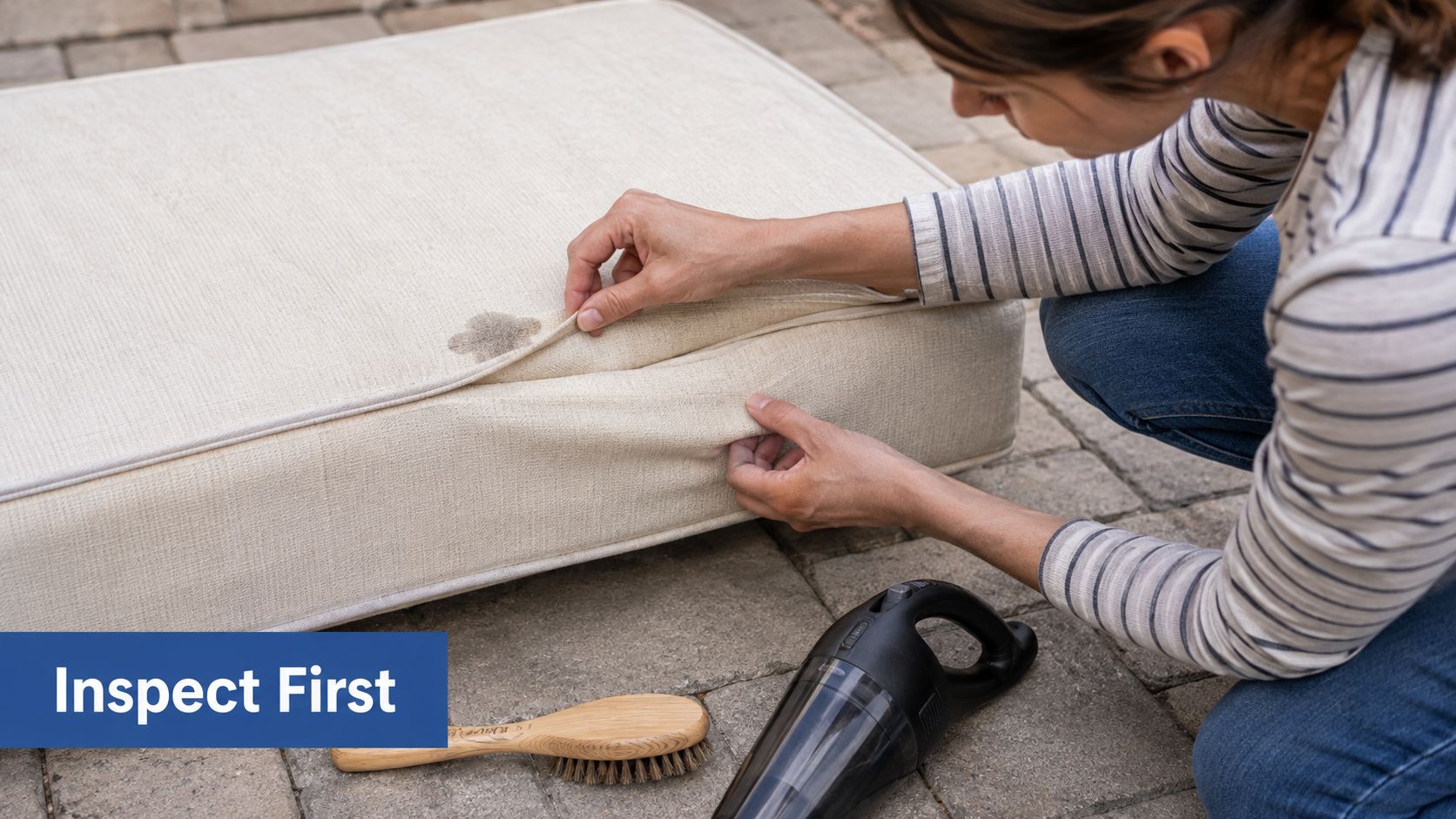
A smart inspection takes less time than repairing a ruined cushion. Check the care tag first, then look for torn seams, zipper problems, mildew staining, and foam that feels soft or broken down. If the tag shows a cleaner code that allows water-safe care, cautious wet cleaning is reasonable. If the cover is removable, the job gets simpler. Bonded covers, crumbling foam, or seams that are already lifting call for a gentler method.
A spot test is worth doing every time. Spray a hidden area for about 10 seconds, then watch for color bleed, pilling, seam lift, or a fuzzy surface reaction. If any of that shows up, back off and switch to hand cleaning.
Before you start, brush off loose grit, lay the cushions on a paved surface, and unstack them so spray can reach all sides. That prep matters in Phoenix, because desert dust turns into mud the second water hits it.
Use the right approach for pressure washing versus soft washing when the surface cannot handle aggressive force.
Dial In the Pressure Washer Settings and Nozzle
The wrong nozzle does more damage than the wrong soap. If the machine is set too hot and the spray is too narrow, the water doesn't just clean the cushion. It cuts into the weave and hammers seams.
Start with the softest usable setup
For cushions, the starting point is a wide-angle nozzle, usually a 40-degree tip or broader, with the machine in its lowest practical pressure mode. One guide goes even wider with a 65-degree tip and recommends holding the nozzle at least 2 feet from the fabric to reduce tearing risk Acme Pressure Washing. That distance rule is the part many ignore, then they wonder why the edge of the cushion looks fuzzy afterward.
Homeowner electric washers often sit in the 1,300 to 2,000 PSI range, but that number only tells part of the story. What matters on fabric is the combination of pressure, flow, nozzle angle, and distance. A high-flow machine can move grime effectively even when the pressure stays conservative.
Keep the wand moving, keep it angled, and keep it back. A stationary nozzle is what blows out seams.
Use distance as your control knob
For patio cushions, 18 to 24 inches is the practical safety zone. Closer than that and the concentrated impact starts to punish stitching and weave structure, especially on older or thinner covers. Perpendicular spray is the other mistake. Spray should glance across the surface, not hit seams head-on.
The soap nozzle is for injector use, not for touching the fabric. The black soap tip belongs in the low-pressure setup that pulls detergent from the reservoir. Once the cushion is being rinsed, switch to the wide fan tip and keep your passes moving.
If you need to slow down the cleaning, do it with dwell time and a second pass, not by moving the wand closer.
See a full house-washing setup for distance, overlap, and pressure control if you want the same discipline applied across other exterior surfaces.
Choose the Right Detergent and Mix It Correctly
Soap matters because cushions usually fail from biology and residue, not just visible dirt. Dust, pollen, bird droppings, and mildew respond better to the right cleaner than to more pressure, and that matters even more on outdoor fabric that has already spent too much time baking in Arizona heat.
Fabric-safe cleaners such as Simple Green, Folex, or a diluted dish soap mix are the safest starting point for most outdoor fabrics. Strong bleach, full-strength degreasers, and harsh citrus solvents can strip finishes or lighten prints, which is a bad trade when the fabric itself is still sound. If you want a broader look at detergent selection for exterior surfaces, this guide to the best house washing solution shows the same idea from a different angle.
Mix for the fabric, not for the stain
The usual dilution range for outdoor fabric cleaners is roughly 1:10 to 1:20 with water, depending on the product label and stain load. Use the machine's soap reservoir or injector, not a heavy pour of concentrate directly onto the cushion. Direct application can leave blotches, especially on lighter fabrics, and it can leave more residue behind than the dirt itself.
Let the cleaner sit on the surface for 2 to 3 minutes. That dwell time helps loosen embedded grime without letting the fabric dry out. If the surface starts flashing dry in the Arizona sun, give it a light mist so the cleaner keeps working Simple Green.
Don't overcomplicate runoff
On Arizona hardscapes, rinse water can carry grime, pollen, and cleaning residue across the patio fast. Keep the cushions on a paved area where runoff can move away instead of soaking back into the bottom seam or sitting in a low spot. That matters around pavers and stamped concrete, where dirty water likes to pool under the cushion edge and keep the foam damp longer than it should.
For a broader cleaning approach that respects upholstery materials, this guide to clean upholstery without ruining it is a useful reference point for what gentle chemistry looks like in practice.
The Actual Wash Technique That Protects the Seams
I start with a cool pre-rinse, not because the cushion needs a soaking, but because dry dust blocks the detergent from reaching the dirt. Once the surface grit is off, the soap can do its job on the stain instead of wasting itself on loose powder.
The pass pattern that works
The detergent goes on in slow, even horizontal passes. I don't stop on one spot, and I don't trace the seam line like I'm underlining it for a test. The wand stays moving, angled slightly so the spray glances off the stitching instead of driving straight into it.
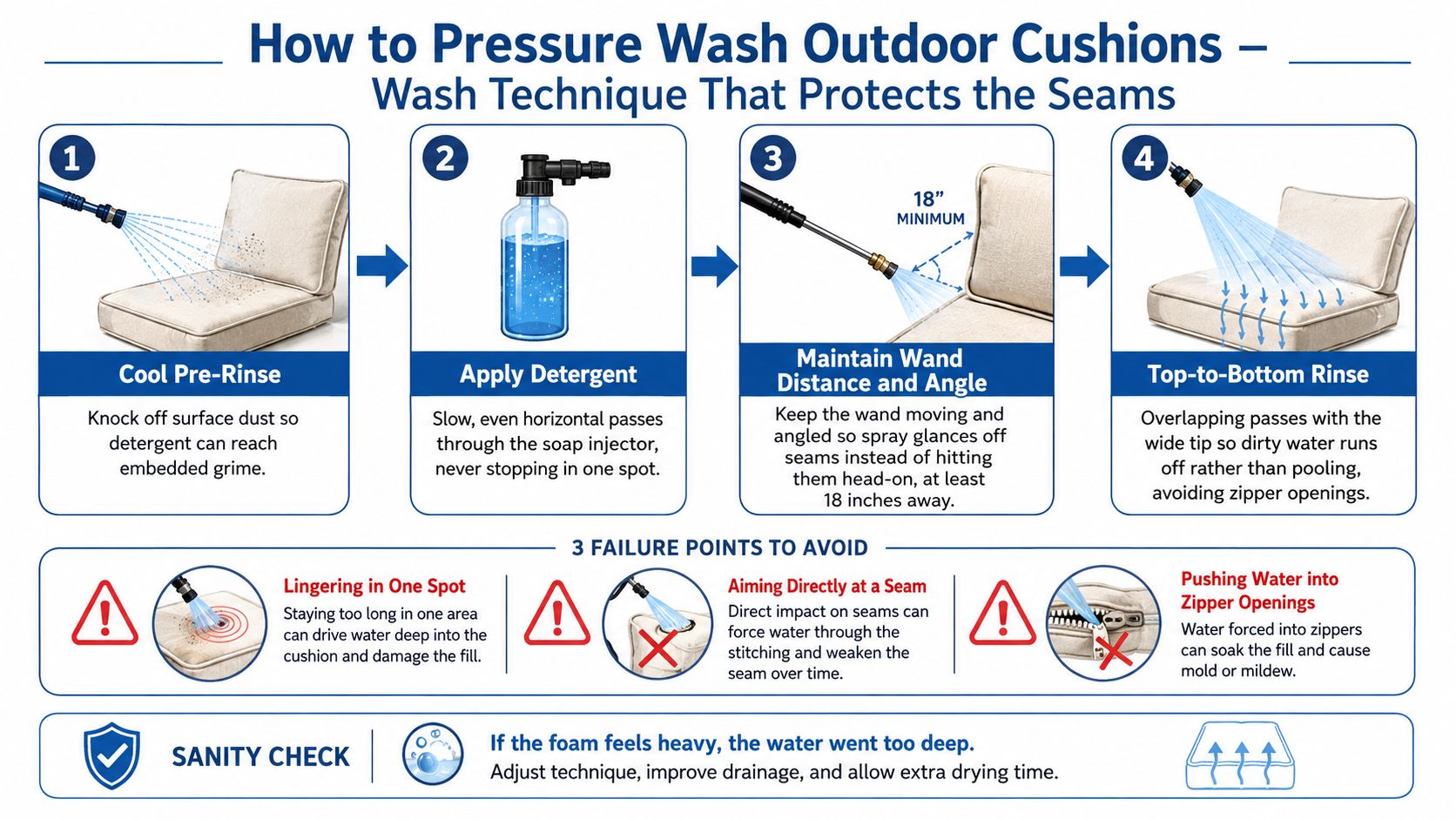
Once the soap has sat for its dwell time, I rinse with the same wide tip and work top to bottom so dirty water runs off instead of collecting in the lower edge. Overlapping passes matter more than blasting power. If you leave stripes in the fabric, you used too much pressure or moved too fast.
The mistakes that ruin good cushions
The three failures I see most are predictable. One is lingering in one spot, which digs into the weave. Another is aiming directly at a seam, which can force stitching apart. The third is pushing water into zipper openings, which turns the cover into a sponge.
If the foam feels heavy after the rinse, water went too deep. That's the point where the job stops being about cleaning and starts being about drying discipline.
Dry the Cushions So Mildew Does Not Win Later
Drying is the part people rush because the cushion looks clean and smells better. That's a mistake. If the foam stays damp, the problem doesn't show up right away, but it comes back as odor, staining, and mildew.
Why timing matters more than appearance
One cleaning guide warns that mold can grow in the foam within 24 to 48 hours if cushions are stored damp DD Home Services. That window is the reason cushions fail after cleaning. The fabric may look dry while the center is still holding moisture.
Arizona sun helps, but it cuts both ways. Full sun speeds drying, which is what you want. It also can fade fabric and bake leftover detergent into the fibers if you leave residue behind. That's why a thorough rinse matters as much as the drying position.
Drying methods that actually move moisture out
Stand cushions on edge in full sun so air can move through them. Rotate them occasionally so the underside gets exposure too. If the foam is especially wet, a box fan or shop vac can help pull moisture out faster by moving air across the cushion instead of just warming the outside.
Dry time isn't the same in every Arizona season. In dry Phoenix heat, cushions may be ready in a few hours. During monsoon humidity, the same cushion can take much longer. Shaded patios slow the process too, because you lose both heat and airflow.
How to know they're really dry
Use three checks. Touch the foam core, not just the cover. Pick it up and feel the weight, because wet foam is noticeably heavier. Then do the smell test. If it still smells damp or sour, it's not ready.
For storage, use breathable covers and keep moisture in mind. Plastic traps dampness, which is exactly what you don't want after a wash. If the cushions have to go away for the season, they should go away dry.
You can also compare the drying logic with the approach used for mildew on a windowsill, because the same rule applies everywhere moisture lingers.
Stain Troubleshooting and Fabric-Specific Adjustments
Not every stain needs a pressure increase. Most need a better first response. Bird droppings, tree sap, BBQ grease, rust bleed, and mildew rings all behave differently, so the safest move is to match the treatment to the mess instead of treating every spot like driveway grime.
Match the stain to the least aggressive fix
Bird droppings should get a cool rinse first, then a targeted dab with fabric-safe cleaner. Tree sap usually needs a spot pre-soak and a soft-bristle brush before any rinse pass. BBQ grease responds better to repeat cleaning with a fabric-safe detergent than to brute force spray. Rust bleed is stubborn, so treat it as a separate stain and don't chase it with more pressure. Mildew rings usually need repeat cleaning and careful drying, not a hotter setting.
Fabric changes the playbook
Sunbrella and other solution-dyed acrylics can handle more dwell time and generally tolerate a more deliberate cleaning routine. Olefin resists bleach better than some fabrics, but it doesn't like unnecessary heat. Polyester blends tend to fade faster under Arizona sun, so test a hidden spot before anything more aggressive. Vinyl strapping usually needs very little detergent at all, just enough to lift grime without leaving residue.
| Outdoor Cushion Fabric Settings at a Glance | ||||
|---|---|---|---|---|
| Fabric Type | Recommended Nozzle | Min. Distance | Dwell Time | Drying Method |
| Sunbrella and similar acrylics | 40-degree or wide fan tip | 18 to 24 inches | 2 to 3 minutes | Stand on edge in full sun, rotate as needed |
| Olefin | Wide fan tip | 18 inches or more | Short, controlled dwell | Full-air drying with good airflow |
| Polyester blends | Wide fan tip | 18 to 24 inches | Short dwell, spot test first | Shade first, then sun if fabric is stable |
| Vinyl strapping | Wide fan tip or gentle rinse | 24 inches if possible | Minimal | Wipe, rinse, and air dry |
If a fabric reacts badly to the spot test, don't force the issue. The cushion is telling you the cover or coating can't tolerate the same treatment as a more durable fabric.
Maintenance Rhythm and When to Call a Professional
Outdoor cushions hold up better with a light brush-and-rinse routine that keeps grit from working into the fabric, then a deeper pressure wash once or twice a year around monsoon prep and after the worst winter dust settles. In Arizona, moisture management matters as much as cleaning. Cushions that sit damp in storage are the ones that usually end up smelling sour or growing mildew, even if they were washed gently.
Know the line between normal wear and replacement
Some fading is normal in Arizona. Some softness in the foam is normal too. Persistent musty odor, seam separation, foam that doesn't bounce back, or stains that return after careful cleaning point to a cushion that is getting near the end of its service life.
Certain situations are better left to a professional. Bonded covers that can't be removed are one. Expensive designer cushions are another. Rental properties and HOA settings matter too, because the exterior standard is usually higher and consistency matters more. Raised seating around a pool deck or second-story terrace also raises the risk if you're not comfortable working safely with water equipment.
When the cushion is valuable, awkward to access, or already failing at the seams, another pass with the washer is usually the wrong move. A gentler method or a pro who knows the limits protects the fabric better.
A broader exterior maintenance schedule helps with the rest of the property too. Window washing, house washing, gutter clearing, solar panel cleaning, and patio cleaning all fit into the same seasonal Arizona routine when dust and sun are the main enemies. One insured crew can handle more of the exterior in a single visit, which saves time and lowers the chance that one job gets rushed while you're trying to keep up with the rest.